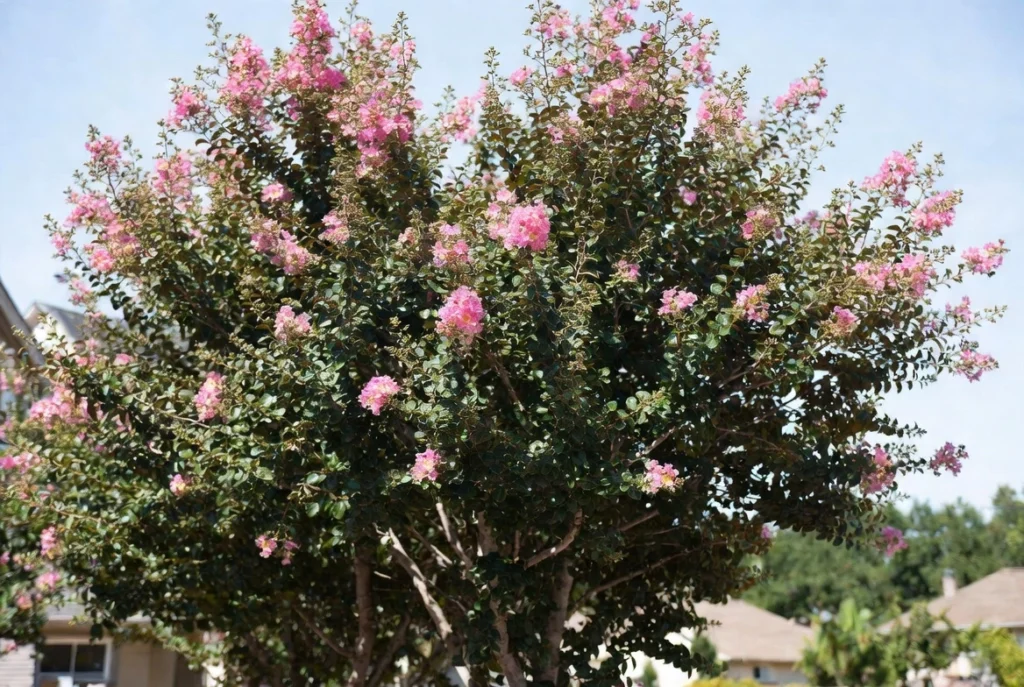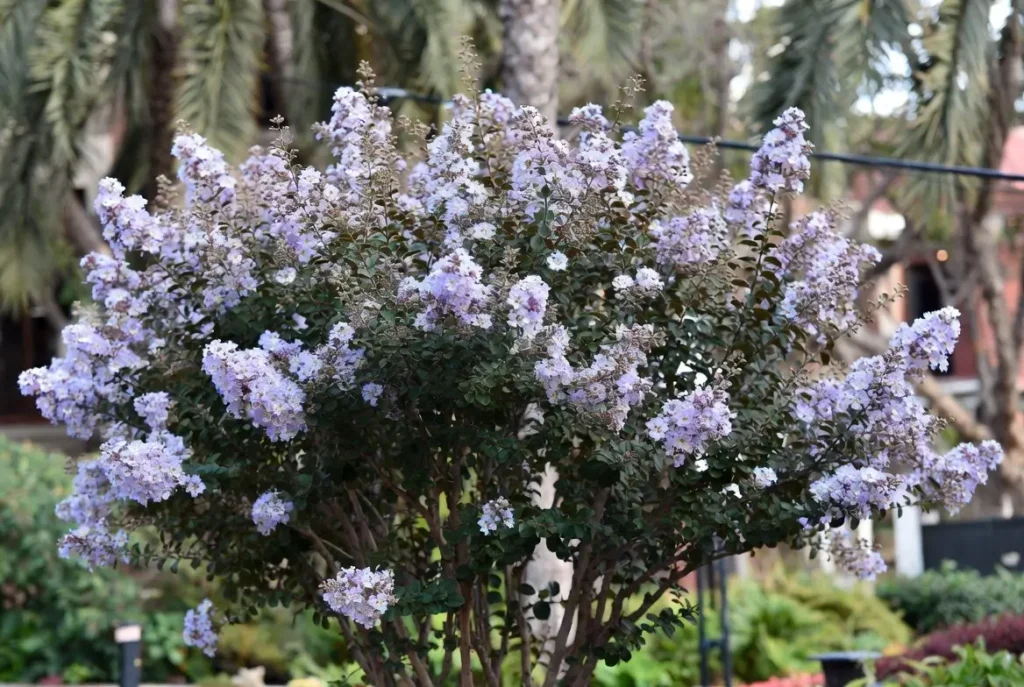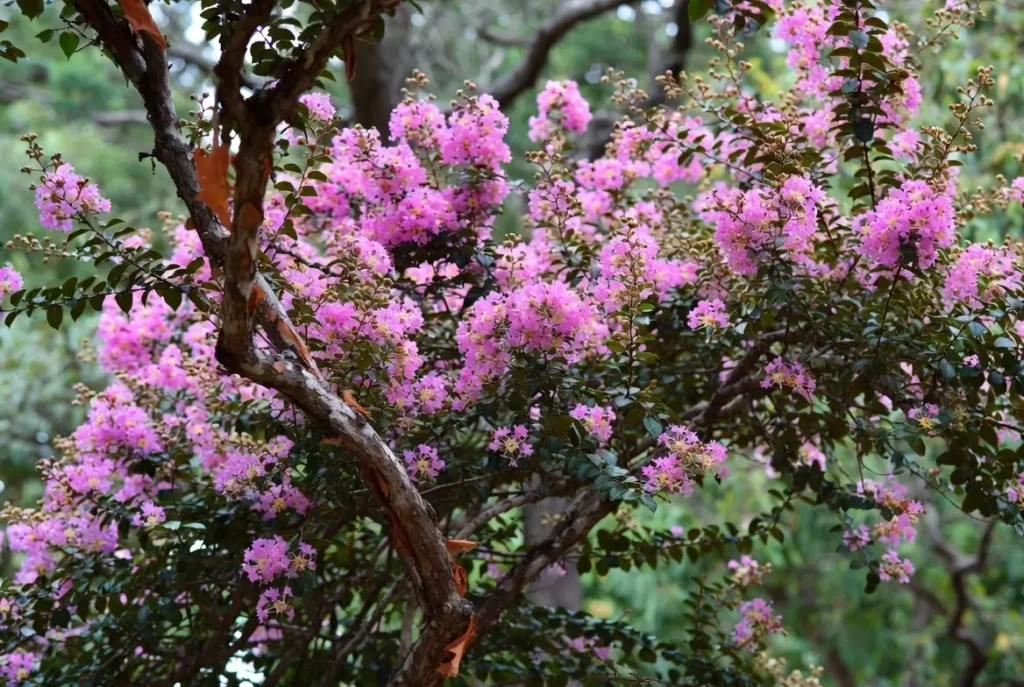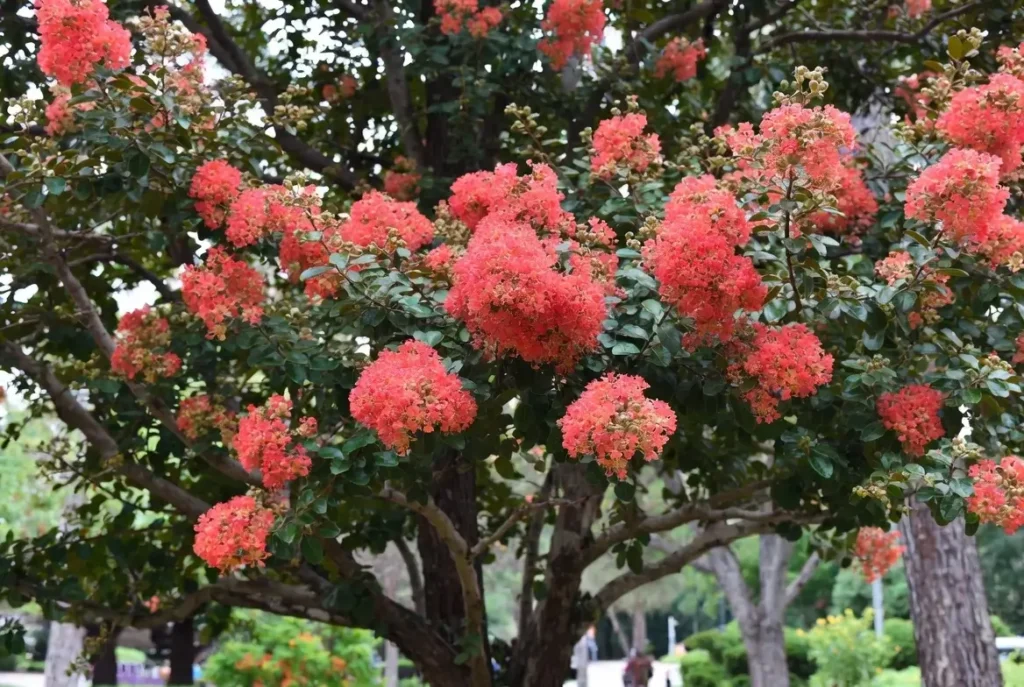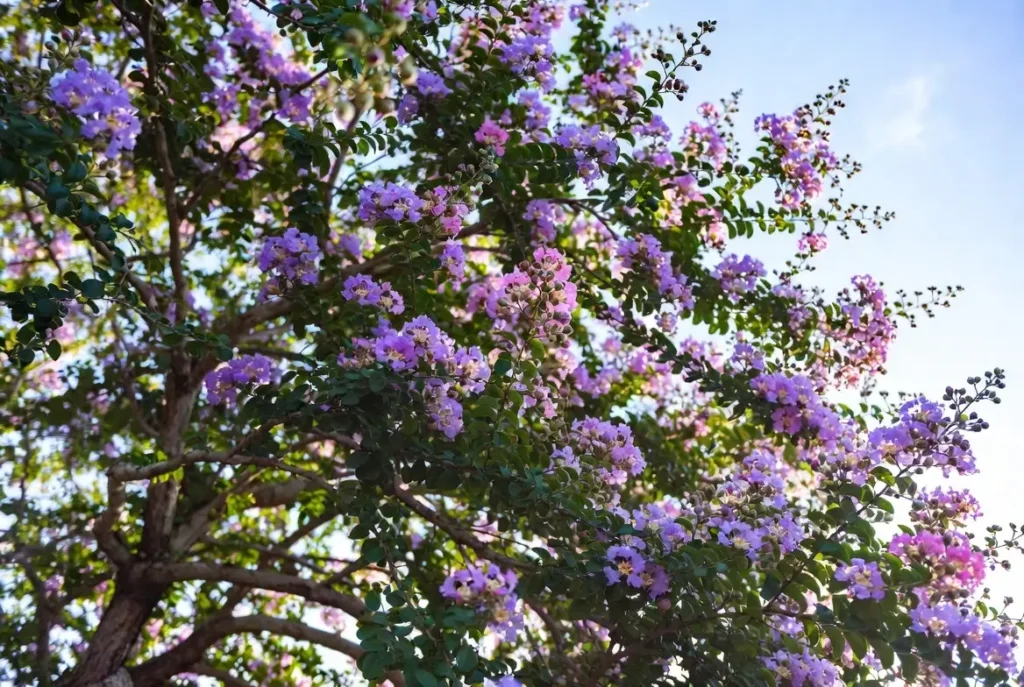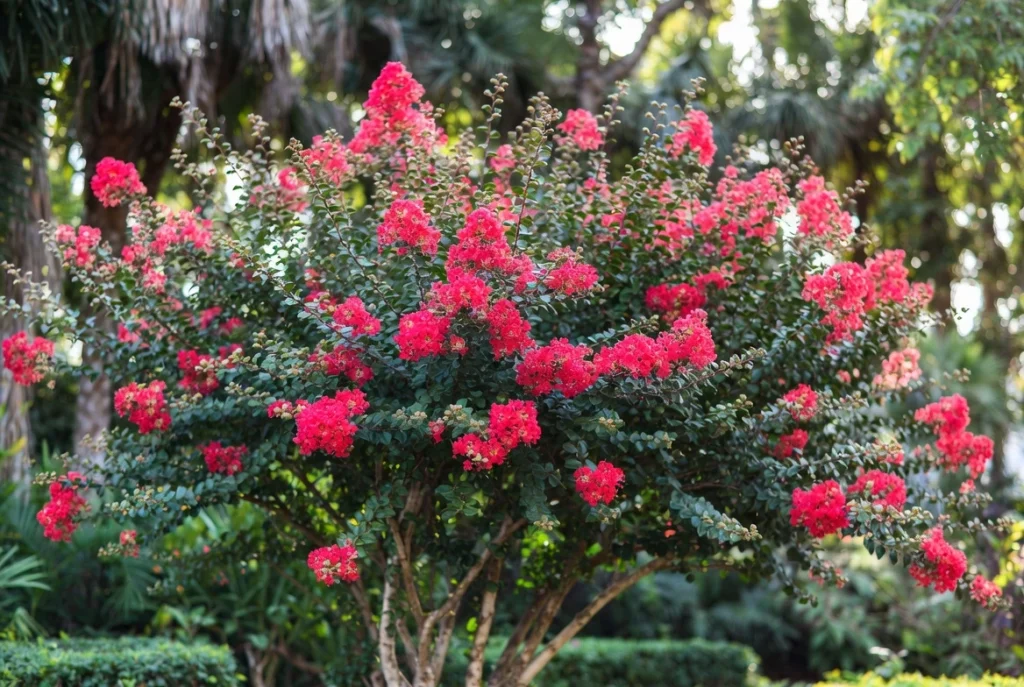
Crape myrtle (Lagerstroemia indica) is the defining summer-blooming tree of the American South — and increasingly, of gardens in zones 6 through 10 nationwide. No other flowering tree delivers 90–120 days of continuous blooms, peeling cinnamon bark, fiery fall foliage, and structural winter interest all from the same plant.
It is also the most misunderstood tree in American landscaping. Every spring, thousands of them are topped into flat-headed stumps — a practice so widespread and so damaging that it earned its own name: crape murder. This guide covers everything about crape myrtles, including exactly why crape murder happens and how to avoid it.
Crape myrtle belongs to the Lagerstroemia genus, which contains approximately 50 species native to Southeast Asia, the Indian subcontinent, and northern Australia. The species most widely grown in the United States is Lagerstroemia indica, native to China, and its hybrids with Lagerstroemia fauriei, introduced from Japan in 1956.
First introduced to the United States in Charleston, South Carolina, in 1786, crape myrtles remained primarily a Southern plant for nearly two centuries. Cold-hardy breeding programs — most notably at the USDA’s National Arboretum under Dr. Donald Egolf — produced disease-resistant, cold-hardier hybrids named after Native American tribes: Natchez, Muskogee, Tuscarora, Catawba, Zuni, and others.
Today, crape myrtles live for up to 50 years and can reach heights of 40 feet in optimal conditions.
Season | What Happens | Key Feature |
|---|---|---|
Summer (June–Oct) | Main bloom period. Flower clusters (panicles) 6–18 inches long at tips of new shoots. | 90–120 days of color |
Fall | Leaves turn yellow, orange, and red. Intensity varies by variety. | Fiery foliage |
Winter | Leaves drop. Peeling bark in cinnamon, tan, gray, and soft pink becomes main attraction. | Architectural bark |
Spring | Last major tree to leaf out. New leaves often emerge with a reddish tinge. | Watch for bud swell |
This is where most crape myrtle problems begin. Planting the wrong size for a space leads to either constant topping or a tree that overwhelms its spot. Match the mature size to the available space from day one.
Size Class | Height | Best Examples | Best Use |
|---|---|---|---|
Miniature | Under 3 ft | Chickasaw, Pocomoke, Victor | Containers, edging, small borders |
Dwarf | 3–8 ft | Berry Dazzle, Magic Series | Shrub beds, low hedges |
Intermediate | 8–15 ft | Catawba, Zuni, Acoma, Tonto | Residential front yards, specimen plants |
Standard/Large | 15–30 ft | Natchez, Muskogee, Dynamite, Tuscarora | Shade trees, privacy screens, street trees |
Very large | 30+ ft | Natchez & Muskogee (mature) | Large open landscapes only |
Color | Varieties | Mature Height |
|---|---|---|
White | Natchez, Acoma, Sarah’s Favorite | Natchez 30 ft | Acoma 10 ft |
Pink / Coral | Tuscarora, Sioux, Near East | 15–20 ft | 12–15 ft | 15 ft |
Red | Dynamite, Arapaho, Red Rocket | 15–20 ft | 20 ft | 20 ft |
Lavender / Purple | Muskogee, Zuni, Catawba, Twilight | 20–25 ft | 10–12 ft | 10–15 ft | 15–20 ft |
Dark foliage | Black Diamond Series | 8–12 ft (semi-dwarf) |
Late fall through early spring in most zones. Avoid planting in peak summer — heat stress during establishment increases failure rates. Fall planting allows roots to establish before winter, positioning the plant for vigorous first-year growth.
Crape myrtles tolerate a wide range of soils — sandy, clay, loamy. They prefer pH 5.5–7.5. The single non-negotiable requirement is drainage. In heavy clay, plant slightly above grade and create a raised mound to improve drainage. Research from the University of Georgia confirms that organic amendments in the planting hole are not necessary — backfill with the same soil removed from the hole.
New plantings need deep watering twice weekly for the first full growing season. Water at the root zone, not the foliage. Established crape myrtles are drought-tolerant but perform better with occasional deep watering during extended dry periods.
Apply a balanced fertilizer (10-10-10 or 12-4-8) in early spring, just before new growth begins — 1 lb per 100 square feet of root zone area. Avoid high-nitrogen formulas. A ratio with nitrogen as the dominant number (e.g., 25-3-3) pushes vegetative growth at the expense of flowers. Stop fertilizing by mid-August.
Maintain 2–3 inches of organic mulch around the root zone year-round. Keep it 6 inches from the trunk to prevent rot and rodent damage.
In zones 7 and warmer, no special winter care needed for established plants. In zone 6, mulch roots heavily (4–6 inches) and consider wrapping young plants with burlap. If winter damage occurs, do not panic — crape myrtles regenerate vigorously from the roots. Cut dead wood back to live tissue in spring when buds swell.
The truth: Crape myrtles flower on new wood produced each spring. They will bloom regardless of whether you prune. Topping is never necessary for flower production.
Topping destroys the tree’s natural form, creates ugly knobby growth points, promotes excessive suckering, increases disease susceptibility, and produces weaker, smaller flowers. Yet it happens because gardeners see neighbors doing it, or because landscapers bill by the hour.
When to prune: Late winter to early spring, before new growth begins. Never prune in late summer or fall — new growth stimulated by fall pruning is vulnerable to frost.
Problem | Cause | Solution |
|---|---|---|
Powdery mildew | Humid conditions, poor air circulation | Choose resistant varieties (Natchez, Muskogee, Zuni). Treat with neem oil or sulfur fungicide. |
Crape myrtle aphids | Small insects on new growth | Spray insecticidal soap or neem oil on leaf undersides. Natural predators often control without intervention. |
Sooty mold | Aphid honeydew secretions | Control aphids first. Wash leaves with dilute soap solution. |
Cercospora leaf spot | Fungal infection in rainy summers | Choose resistant varieties. Treat with chlorothalonil during warm, rainy periods. |
No flowers | Insufficient sun, wrong pruning, excess nitrogen | Ensure 6+ hours sun. Stop topping. Reduce nitrogen fertilizer. |
Yellowing leaves | Alkaline soil (pH above 7.5) or standing water | Test soil pH. Amend with sulfur if too alkaline. |