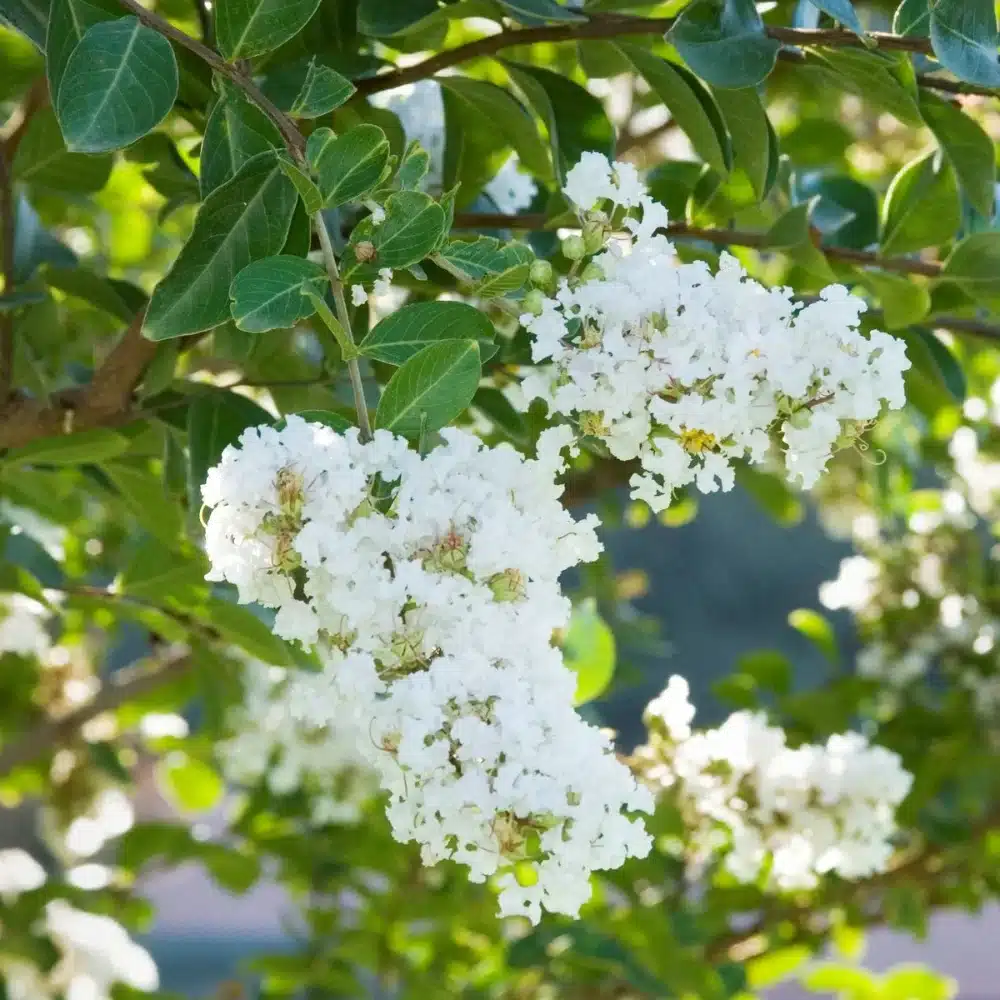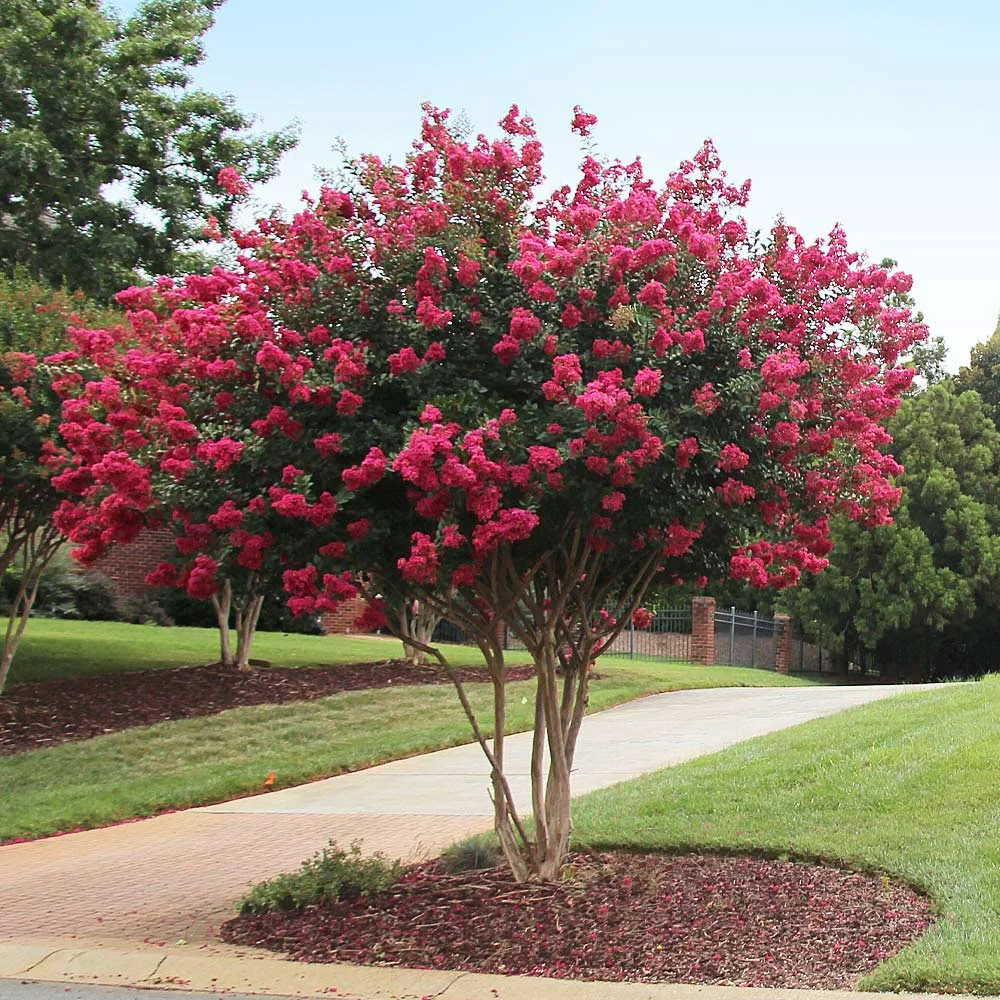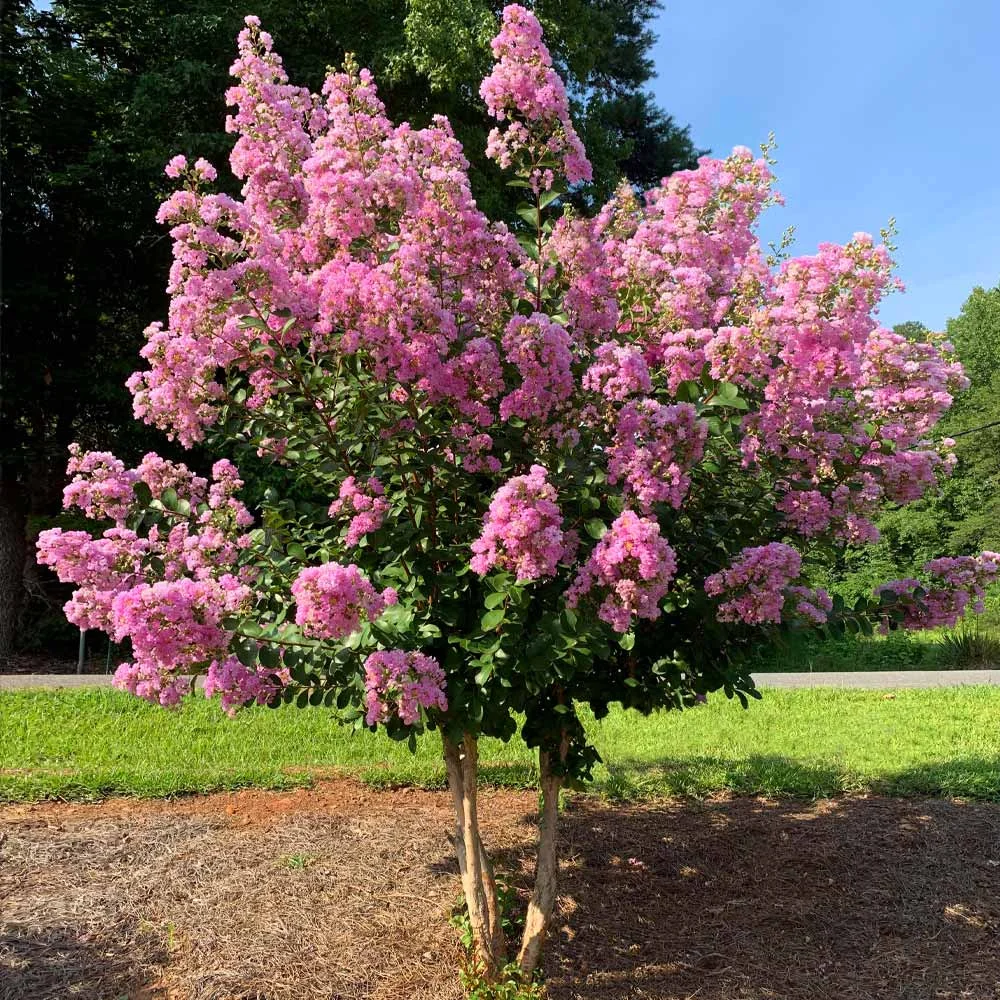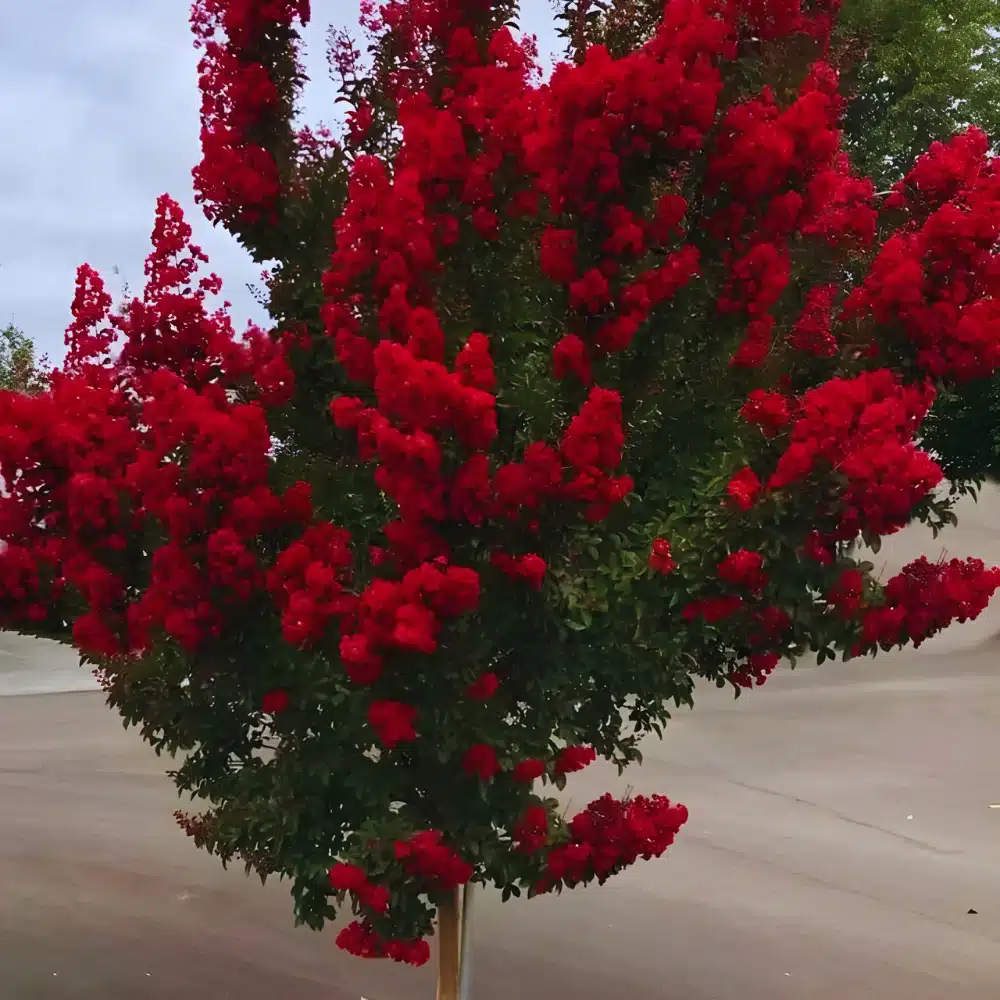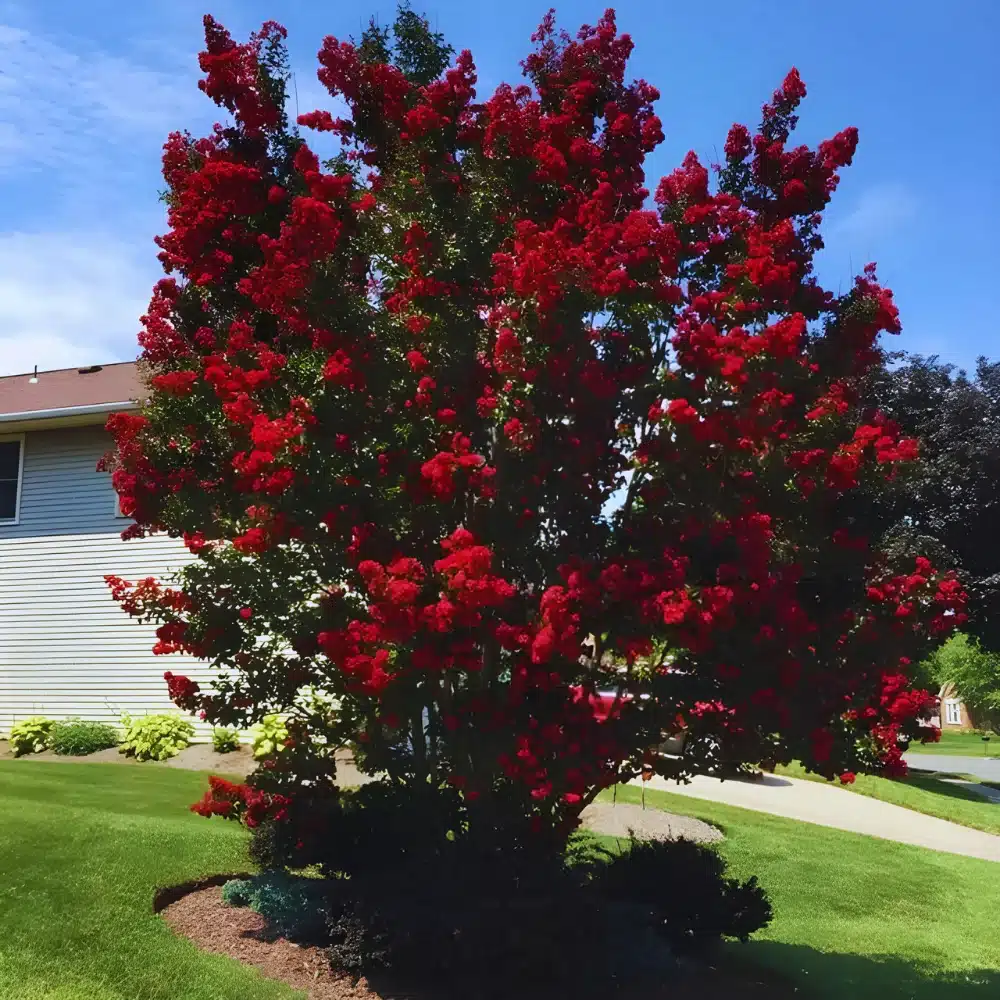
Dwarf crape myrtle delivers everything that makes standard crape myrtles so desirable — ruffled summer flowers, exfoliating bark, fall color — in a plant that tops out at 8 feet or less. For gardens where space is limited, dwarf forms make the crape myrtle accessible in ways the 20-foot standard varieties cannot.
Standard Lagerstroemia indica varieties grow 15–30 feet. The development of compact forms began when Lagerstroemia subcostata — a naturally smaller species — was introduced into breeding programs. The National Arboretum’s work under Dr. Donald Egolf produced the first popular compact hybrids, including Chickasaw and Pocomoke, in the 1980s. Commercial programs followed, producing the Magic Series, Animal Series, and Black Diamond Series.
Class | Height | Growth Habit | Best Use |
|---|---|---|---|
Miniature | Under 3 ft | Low, spreading mound | Containers, edging, small beds |
Dwarf shrub | 3–5 ft | Dense, mounding shrub | Low borders, mass plantings |
Dwarf to semi-dwarf | 5–8 ft | Upright, multi-trunk structure | Specimen shrubs, informal hedges |
Semi-dwarf | 8–12 ft | Small tree with visible bark | Specimen trees, screening |
Chickasaw Height: 2–3 ft | Width: 3–4 ft | Zones: 7–9 | Color: Pink to lavender One of the most compact crape myrtles available. Grows in a low, spreading mound with dense foliage and profuse blooms. Developed by the National Arboretum. Works as ground cover in groups of 3–5 plants spaced 2 feet apart. Excellent container choice. |
Pocomoke Height: 2–3 ft | Width: 3–4 ft | Zones: 7–9 | Color: Hot pink / deep rose National Arboretum selection with vivid deep pink blooms against dark green foliage. Self-pollinating and resistant to powdery mildew. Mounding habit stays naturally tidy. One of the most popular choices for container gardening. Attracts butterflies throughout bloom season. |
Victor Height: 3 ft | Width: 3–4 ft | Zones: 7–9 | Color: Deep red One of the very few genuinely miniature crape myrtles with deep red flowers. Dense, rounded habit with good fall color. Excellent for front border positions where a red accent is needed in a compact space. |
Berry Dazzle Height: 3–4 ft | Width: 3–4 ft | Zones: 7–9 | Color: Bright pink Rounded compact form with brilliant pink flowers from midsummer through fall. One of the best performers in containers due to its proportionate width-to-height ratio. Strong disease resistance. |
Magic Series (multiple cultivars) Height: 4–6 ft | Width: 4–5 ft | Zones: 6–9 | Color: Pink, red, white, lavender Notable for 2 reasons: cold hardiness into zone 6, and availability in multiple colors. Slightly bushier than most dwarf forms. Works as a low privacy screen, a hedge, or an informal border. Cold-hardy option for transitional zones. |
Rikki Tikki Pink Height: 3–5 ft | Width: 3–4 ft | Zones: 7–9 | Color: Bright pink with tricolor foliage Distinguishable by unusual tricolor foliage — green, purple, and silver-toned leaves — providing visual interest before flowers open. Blooms profusely in bright pink from midsummer to fall. Works well in mixed containers. |
Black Diamond Series Height: 8–12 ft | Width: 6–8 ft | Zones: 7–10 | Color: Red, pink, white, lavender, magenta (9 colors) Technically semi-dwarf, bred specifically to fit residential landscapes. The defining feature is near-black foliage that creates maximum contrast with vivid blooms. Bred for continuous flowering without deadheading. Strong disease resistance. Best for modern, high-contrast garden designs. |
Hopi Height: 7–8 ft | Width: 6–8 ft | Zones: 6–9 | Color: Medium pink National Arboretum hybrid with compact, rounded form and excellent powdery mildew resistance. Hardy to zone 6 — a strong choice for transitional zones. Orange-red fall foliage adds seasonal interest. |
Full sun is non-negotiable for best flowering. Minimum 6 hours of direct sunlight daily; 8 hours ideal. In partial shade, dwarf crape myrtles produce noticeably fewer blooms and become more susceptible to powdery mildew.
Well-drained soil with pH 5.5–7.0. Dwarf varieties tolerate clay and sandy soils better than most plants, but standing water at the root zone is fatal over time. In containers, use a premium potting mix — never straight garden soil, which compacts and loses drainage.
Water deeply twice a week for the first growing season. Once established, dwarf forms are drought-tolerant but bloom better with consistent moisture. In containers, check soil moisture daily in summer — container plants dry out 2–3 times faster than ground-planted specimens.
Apply balanced slow-release granular fertilizer (10-10-10) in early spring. Avoid high-nitrogen liquid feeds. One application per year sufficient for established plants. Container-grown dwarf crape myrtles benefit from liquid fertilizer every 4–6 weeks during the growing season.
Never top dwarf crape myrtles. Spring maintenance: remove dead or crossing branches. Summer deadheading: remove spent flower heads by cutting back to the first full-sized leaf — new flowering shoots emerge within 4–6 weeks. Remove suckers as they appear.
Variety Class | Minimum Container Size | Notes |
|---|---|---|
Miniature (Chickasaw, Pocomoke, Victor) | 10–15 gallon | Best for long-term container growing |
Dwarf (Berry Dazzle, Magic Series) | 20–25 gallon | Needs annual feeding |
Semi-dwarf (Black Diamond) | 30+ gallon | Better as ground-planted specimen |