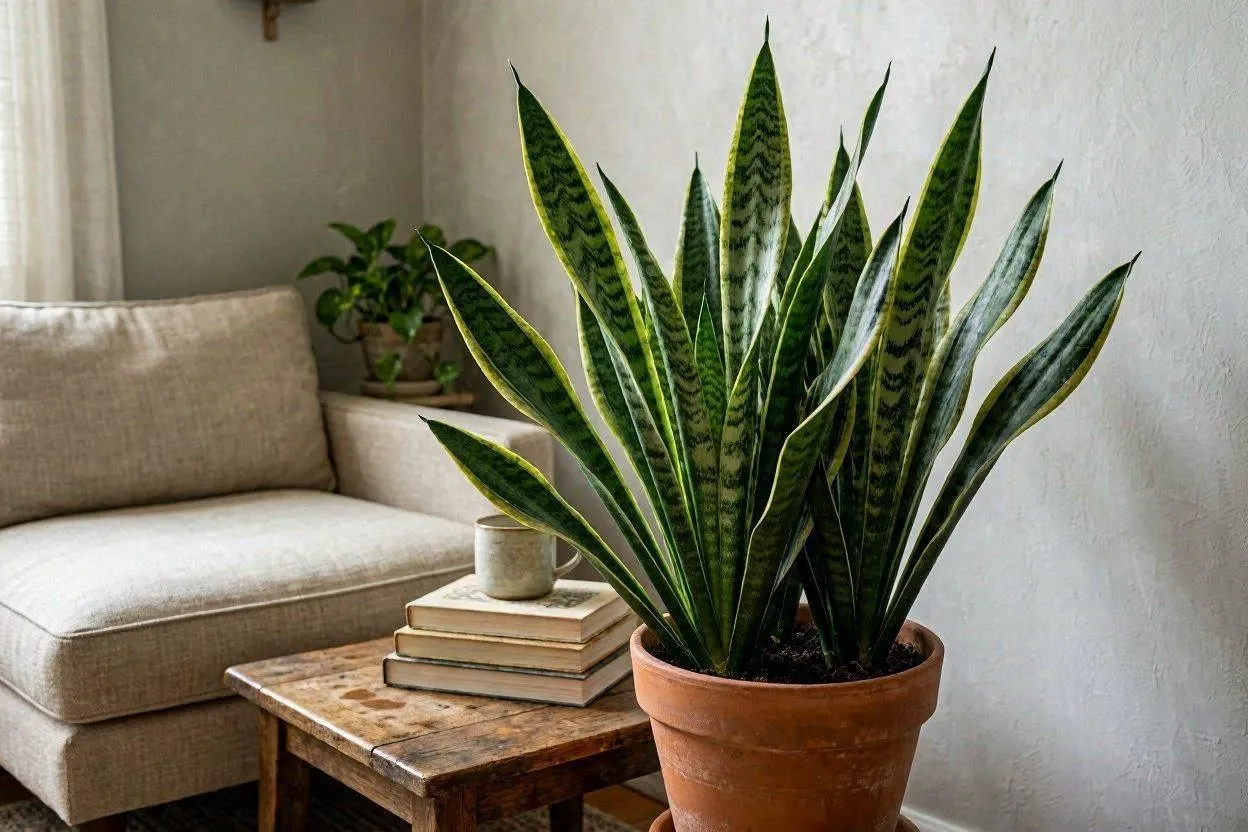
The best plants for bathroom spaces are pothos, snake plant, ZZ plant, Boston fern, bird’s nest fern and spider plant, because each one handles humidity and tolerates low light. Bright, steamy rooms add orchids and calathea. Darkness is different. No plant survives it, so a windowless bathroom needs a light-emitting diode (LED) grow light.
Key Takeaways
- Pothos, snake plant and ZZ plant are the most forgiving bathroom plants for low light and irregular watering.
- No houseplant survives long term in a windowless bathroom without 12 to 14 hours of LED grow light per day or regular rotation to a bright room.
- The American Society for the Prevention of Cruelty to Animals (ASPCA) lists Boston fern, bird’s nest fern, spider plant, calathea, cast iron plant and Phalaenopsis orchid as non-toxic to cats and dogs.
- Pothos, snake plant, ZZ plant, peace lily and lucky bamboo are toxic to cats and dogs and belong out of a pet’s reach.
- Shower humidity slows soil drying, so a finger test of the soil beats a fixed weekly watering schedule in a bathroom.
- Houseplants don’t meaningfully clean bathroom air or prevent mold, and an exhaust fan remains the real fix for moisture and odor.
What Makes a Plant Good for a Bathroom
A plant is good for a bathroom when it tolerates high humidity, low to medium light and temperature swings from hot showers, because those three conditions separate bathrooms from every other room in a typical US home, and plants that hate steam or need full sun decline quickly there.
Bathroom plants are tropical or shade-tolerant houseplants that cope with steam and dim sun. They ride out quick temperature changes too. Many of these species grow wild on rainforest floors or on tree trunks, where the air stays damp and the canopy filters sunlight.
Light matters most. Humidity helps tropical plants, but no amount of steam replaces the light a plant uses to make food. If you’re wondering what plants are best for bathrooms, look at the window before you look at the plant tag.
Temperature is a smaller worry. Most tropical houseplants stay comfortable between 60°F and 80°F (16°C and 27°C), a range that heated and air-conditioned US bathrooms usually hold.
Space comes last. Small bathrooms push plants onto windowsills, toilet tanks, shelves and ceiling hooks, so trailing and compact plants fit better than wide floor plants.
Pick for the light you’ve got. The best plants for the bathroom are the ones that match the brightest spot you actually have, not the spot you wish you had.
This table compares common bathroom light conditions and the plant types each one supports.
| Bathroom Light | Typical Setup | Plant Options |
|---|---|---|
| Bright indirect | Large frosted window facing south or west | Orchid, Boston fern, air plant, calathea |
| Medium | Unblocked east or north window | Bird’s nest fern, spider plant, peace lily |
| Low | Small or shaded window, plant far from glass | ZZ plant, snake plant, cast iron plant, pothos |
| No window | Overhead fixtures only | Low-light plant plus LED grow light |
Best Plants for Bathroom Conditions at a Glance
The best plants for bathroom conditions differ by light level: ZZ plant, snake plant and cast iron plant handle the dimmest rooms, ferns and calathea thrive in steam, and orchids need a bright window, so match the plant to the room before buying it.
This table compares 12 bathroom plants by light need, humidity fit, pet safety and placement.
| Plant | Light Need | Humidity Fit | Pet Safe | Best Spot |
|---|---|---|---|---|
| Pothos | Low to bright indirect | Good | No | Shelf or hanging pot |
| Snake plant | Low to bright indirect | Tolerates | No | Floor or counter |
| ZZ plant | Low to medium | Tolerates | No | Counter or toilet tank |
| Boston fern | Bright indirect | Excellent | Yes | Hanging basket near window |
| Bird’s nest fern | Medium indirect | Excellent | Yes | Counter or shelf |
| Spider plant | Medium to bright indirect | Good | Yes | Hanging pot |
| Peace lily | Low to medium | Excellent | No | Floor or counter |
| Cast iron plant | Low | Good | Yes | Floor corner |
| Phalaenopsis orchid | Bright indirect | Excellent | Yes | Windowsill |
| Calathea | Medium indirect | Excellent | Yes | Shelf near window |
| Air plant | Bright indirect | Excellent | Yes | Wall mount or shower caddy |
| Lucky bamboo | Low to medium | Good | No | Vanity or counter |
This table matches common bathroom conditions to the strongest picks and the plants to skip.
| Bathroom Condition | Top Picks | Skip |
|---|---|---|
| No window | ZZ plant or snake plant under a grow light | Orchid, Boston fern |
| Low light | ZZ plant, cast iron plant, pothos | Air plant, orchid |
| Bright and steamy | Orchid, Boston fern, air plant | Cacti, aloe |
| Small space | Air plant, lucky bamboo, small ZZ plant | Cast iron plant |
| Cats or dogs at home | Spider plant, Boston fern, calathea | Pothos, peace lily, ZZ plant |
| Frequent travel | ZZ plant, snake plant | Boston fern, calathea |
Searched “which plant best for bathroom” and landed here? Find your bathroom condition in the left column of the table, then choose from the Top Picks column on that same row. Ignore the Skip column.
The 12 Best Plants for Bathrooms Ranked
Pothos ranks first among bathroom plants because it tolerates low light, humidity and missed waterings, followed by snake plant, ZZ plant, Boston fern and bird’s nest fern, in a ranking weighted toward beginner success in typical US bathrooms rather than looks alone.
No single best plant for bathroom use fits every room. That’s why each profile below spells out light and water needs, plus pet safety, so you can judge the match for your own space.
1. Pothos
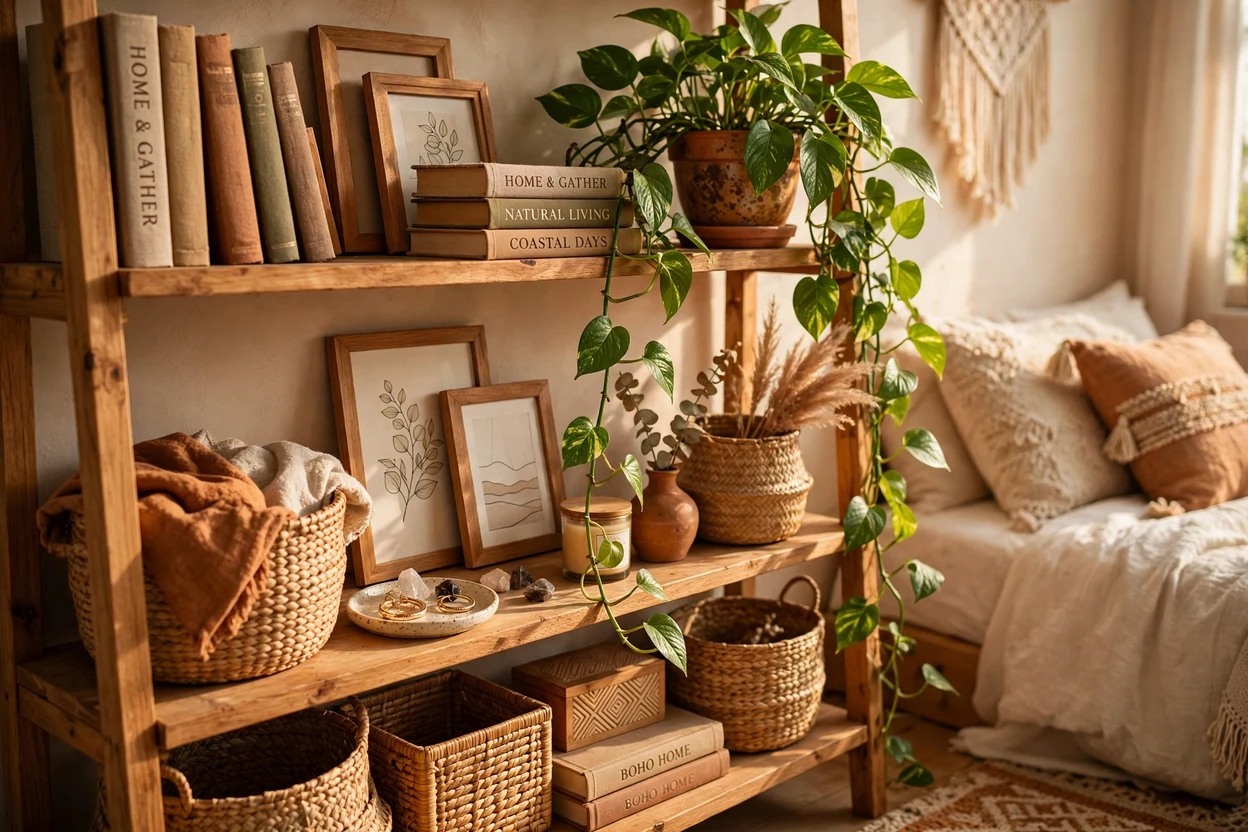
Pothos (Epipremnum aureum) is the most forgiving trailing plant for a bathroom. It grows in low light, though it speeds up noticeably once a nearby window gives it bright indirect light to work with. Shower humidity doesn’t bother it.
Water pothos when the top 2 inches (5 cm) of soil feel dry. Missing the cue is hard. The leaves droop when it’s thirsty, and the plant usually perks back up within a day of getting a thorough watering.
Golden pothos fades in dim rooms, losing some of the yellow streaking that makes it popular in the first place. Want steady color? Solid green varieties such as ‘Jade’ hold up better in low light.
pets are the catch. Pothos contains insoluble calcium oxalate crystals and is toxic to cats and dogs, so hang it well out of reach of paws and noses.
Got long vines? Trim them and root the cuttings in a glass of water on the vanity to start new plants without spending a cent.
2. Snake Plant
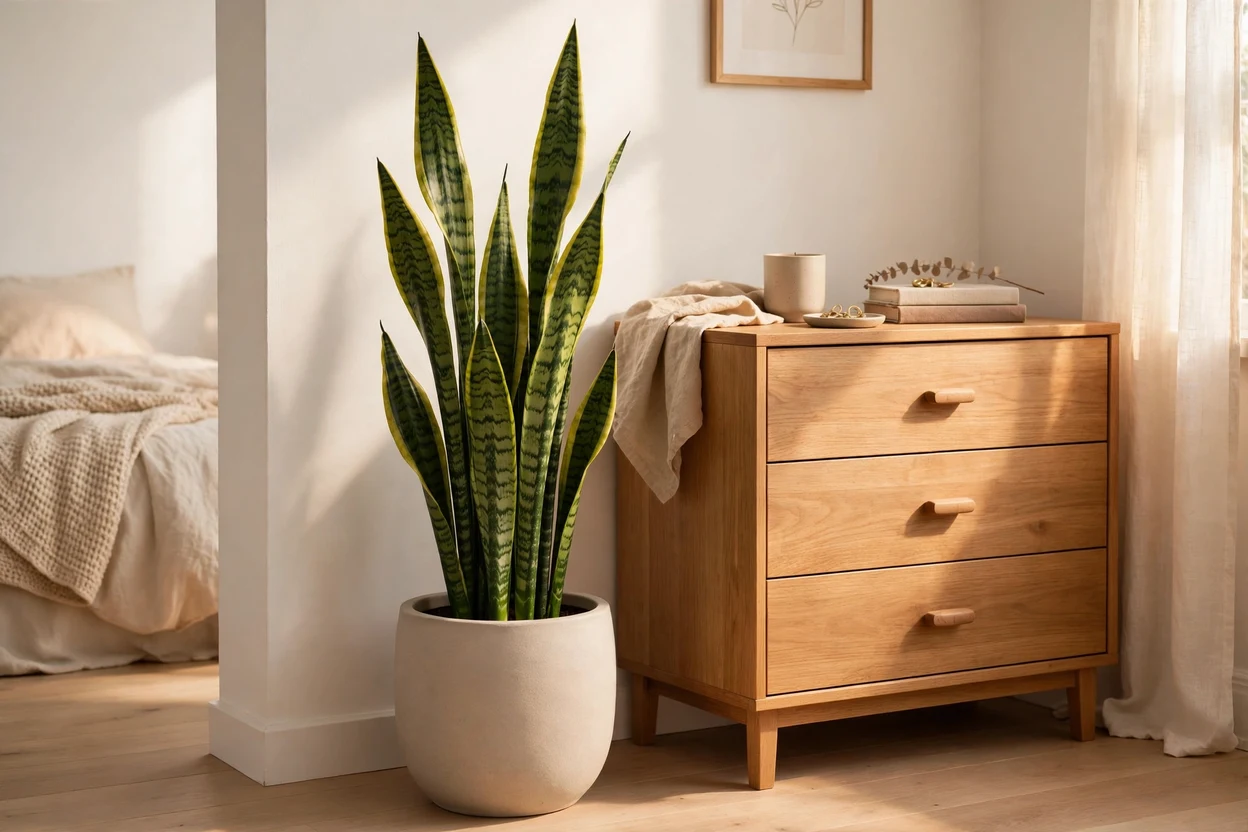
Snake plant (Dracaena trifasciata), formerly classified as Sansevieria trifasciata, stores water in thick upright leaves. That stored water lets a snake plant go 2 to 4 weeks between waterings in many bathrooms, which suits anyone who forgets the watering can.
Low light and humid air don’t faze it. Soggy soil does. Plant it in a terracotta pot with a drainage hole, using a gritty cactus mix so extra water runs straight through and the roots never sit wet.
Its narrow, vertical shape slips beside a toilet or into a floor corner, the kind of spot where a wide plant would just block traffic. Tight bathrooms suit it.
Keep pets in mind. The ASPCA lists snake plant as toxic to cats and dogs because the saponins it contains can cause vomiting and diarrhea.
3. ZZ Plant
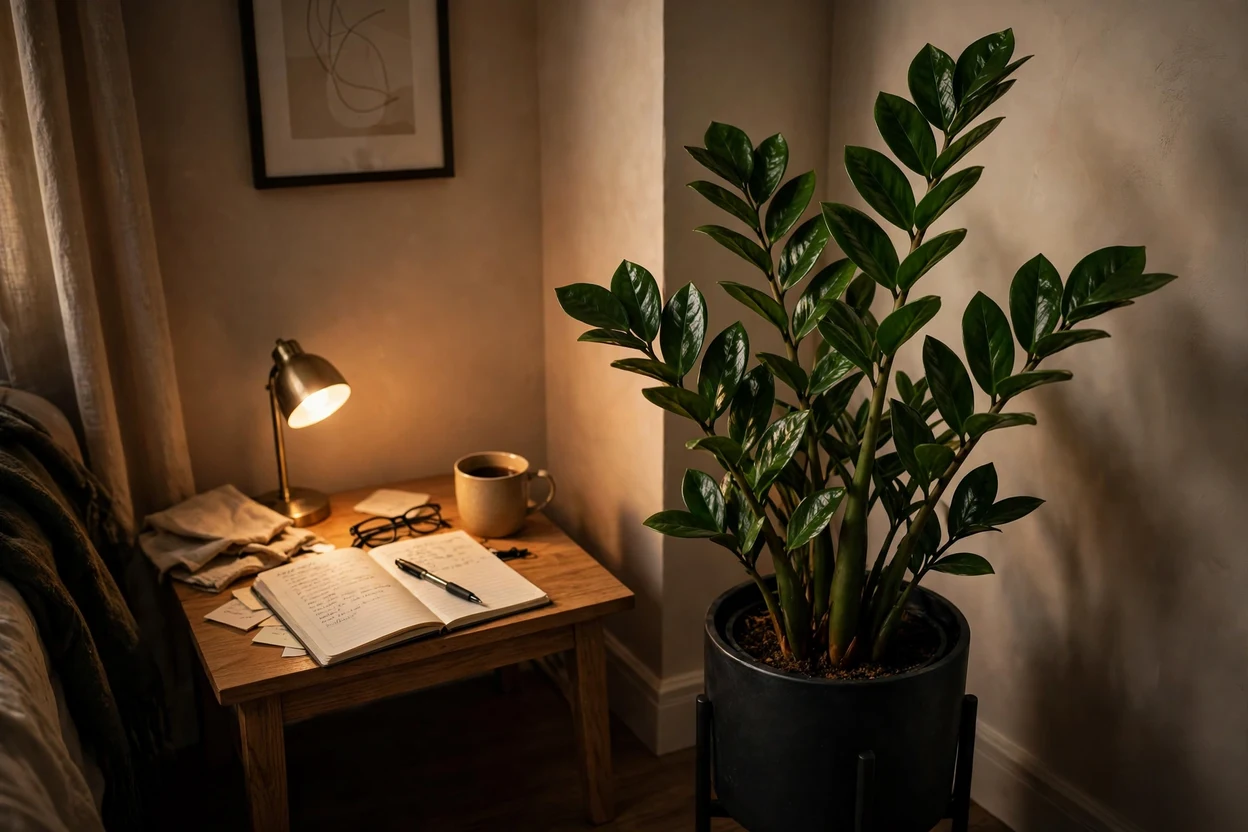
ZZ plant (Zamioculcas zamiifolia) is the strongest candidate for dim and windowless bathrooms. Two traits explain it. Potato-like rhizomes under the soil hold water in reserve, while the glossy leaves make the most of whatever weak light reaches them.
Hold off on the watering can. Water a ZZ plant only when the soil is completely dry, which can take 3 to 4 weeks in a humid, low-light room.
Growth is slow. That keeps a ZZ plant compact enough to sit on a narrow counter or the back of a toilet tank for years.
ZZ plant contains calcium oxalate crystals, so it isn’t pet-safe. Mind your skin too. After you handle a broken stem, wash your hands, because the sap that leaks out can irritate skin on contact.
4. Boston Fern
Boston fern (Nephrolepis exaltata) is the classic humidity lover. Living rooms are hard on it. Dry winter air from forced-air heating turns its fronds crispy, while a steamy bathroom keeps them lush.
Give Boston fern bright indirect light from a window, and keep its soil evenly moist without ever letting it turn soggy. Then hang it. A basket near the window lifts the arching fronds off the counter.
Expect some leaflet shedding after a move. That’s normal. Heavy browning is different, and it means the fern needs either more light or water on a steadier schedule than it’s getting.
Pet owners can relax. The ASPCA lists Boston fern as non-toxic to cats and dogs.
5. Bird’s Nest Fern
Bird’s nest fern (Asplenium nidus) grows wide, wavy fronds from a central rosette, and it handles less light than Boston fern does. Dimmer rooms work. Medium indirect light from an east or north window suits it best.
Aim the watering can carefully. Water the soil around the edge of the pot, not into the center of the rosette, because water pooling in the crown causes rot.
Cleanup is easier, too. Bird’s nest fern sheds far fewer leaflets than Boston fern, which means much less sweeping on a tile bathroom floor.
The ASPCA lists bird’s nest fern as non-toxic to cats and dogs. No need to hide it.
6. Spider Plant
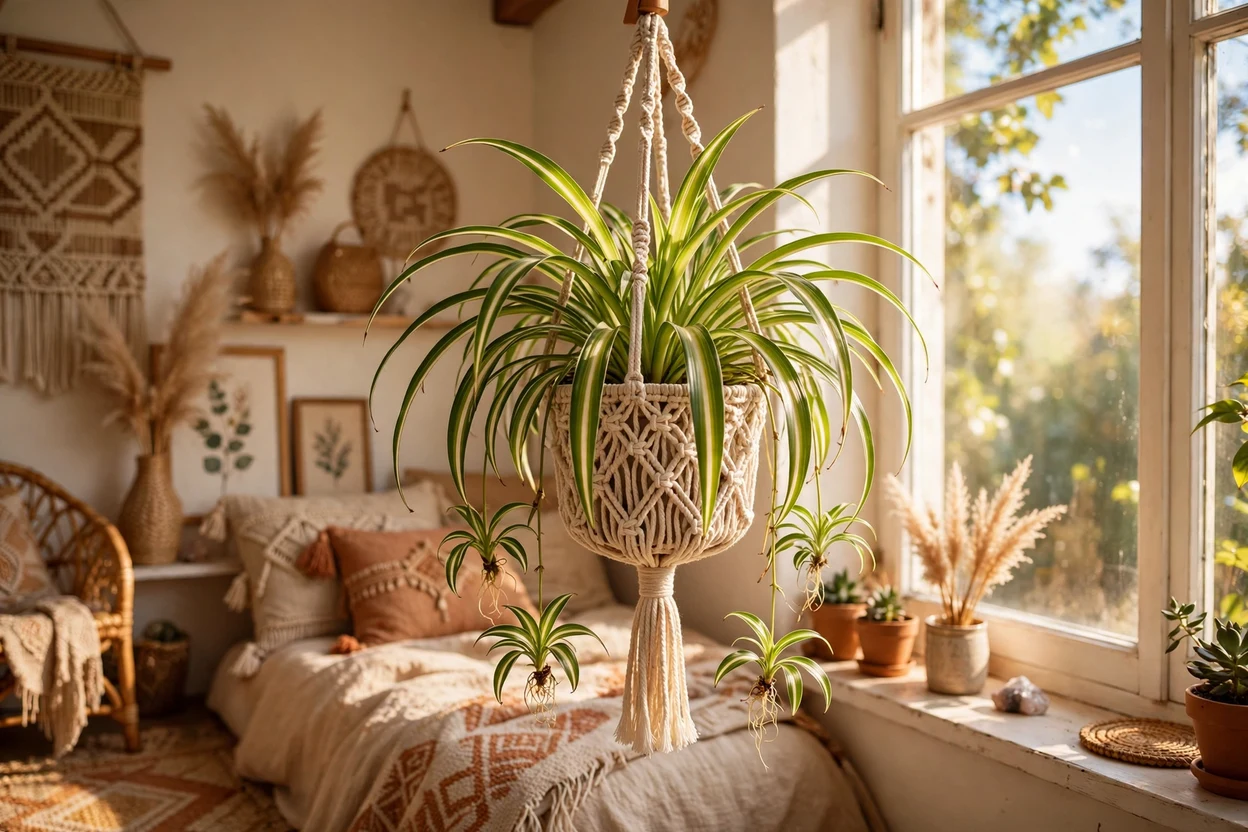
Spider plant (Chlorophytum comosum) is the top pet-safe pick for beginners. Medium light and humidity suit it. Over time, it sends out baby plantlets on long stems, and those dangling offshoots look natural spilling over the rim of a hanging pot.
Brown leaf tips are common on spider plants, and they often trace back to the fluoride and salts in tap water. Seeing a lot of them? Switch to distilled water or rainwater.
Water when the top inch (2.5 cm) of soil dries out. Missed a week? The thick white roots store water, so one skipped watering rarely causes harm to an established plant.
The ASPCA lists spider plant as non-toxic to cats and dogs. Cats still chew it, though. Hang the pot well above counter height if you want the plant to keep looking full instead of ragged from regular nibbling.
7. Peace Lily
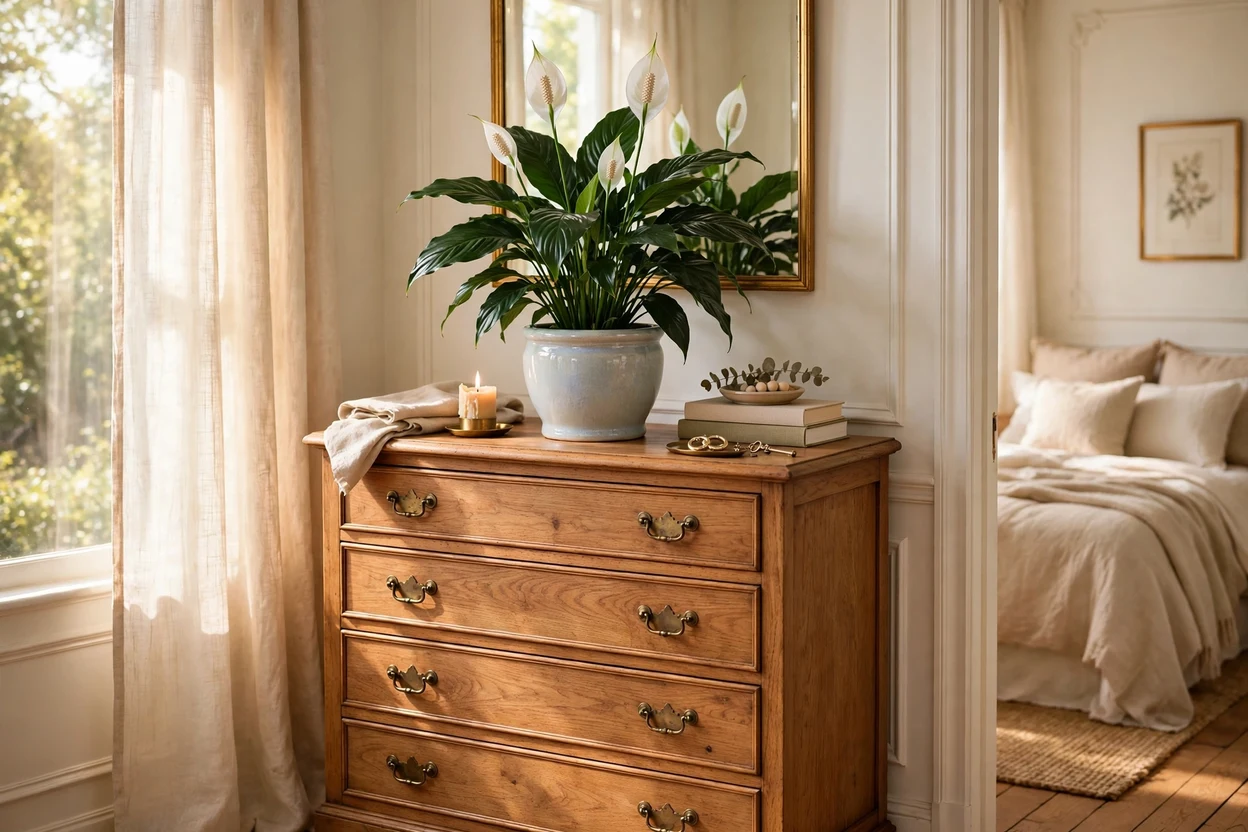
Peace lily (Spathiphyllum) is the only plant on this list that reliably flowers in low to medium light, with white blooms rising above glossy dark leaves. Bathroom humidity suits it.
It also tells you when it’s thirsty. A peace lily wilts dramatically when dry, then recovers within hours of watering, which makes it a handy reminder plant for new owners.
Pets change things. The ASPCA lists peace lily as toxic to cats and dogs. Its calcium oxalate crystals irritate the mouth and trigger drooling and vomiting, so skip it in any home where pets can reach the counter.
8. Cast Iron Plant
Cast iron plant (Aspidistra elatior) earned its name by surviving neglect in dim, drafty corners. Few plants care less about light. Almost no other common houseplant handles lower light, so it can fill a dim bathroom corner that other plants would struggle to survive in.
Plan for its size. Cast iron plant grows slowly and reaches roughly 2 feet (60 cm) tall, so it belongs in a floor corner of a medium or large bathroom.
Care is minimal. Water when the top 2 inches (5 cm) of soil dry. Every few weeks, wipe the broad leaves with a damp cloth to clear away the dust and soap residue that settle on them in a bathroom.
The ASPCA lists cast iron plant as non-toxic to cats and dogs.
9. Phalaenopsis Orchid
Phalaenopsis orchid, also called moth orchid, thrives in the warm, humid air of a bright bathroom. Finding one is easy. Nearly every US grocery store and big-box garden center sells Phalaenopsis orchids, so you won’t need a specialty nursery to track one down.
Set a Phalaenopsis orchid on a windowsill with bright indirect light. Avoid one thing. Direct afternoon sun through clear glass scorches its leaves, so a frosted pane or a sheer curtain makes a better filter between the plant and the sun.
Grow the orchid in bark or sphagnum moss instead of potting soil, and water when that medium feels nearly dry. Check the roots. Silvery ones signal thirst, while green ones mean the plant has enough water.
The ASPCA lists Phalaenopsis orchid as non-toxic to cats and dogs.
10. Calathea
Calathea, now classified in the genus Goeppertia, grows patterned leaves that fold upward at night. It craves steady humidity. That need makes a bathroom one of the few rooms in a typical home where a calathea actually looks its best.
Give calathea medium indirect light and keep the soil lightly moist. Tap water is a problem. The minerals in it brown the leaf edges, so fill the watering can with distilled water or rainwater instead every time.
Don’t start here. Calathea is fussier than the plants ranked above it, so choose it after you’ve already succeeded with an easier plant in the same bathroom.
The ASPCA lists calathea as non-toxic to cats and dogs.
11. Air Plant
Air plant (Tillandsia) grows without any soil at all, pulling in water and nutrients through tiny scales that cover the surface of its leaves. Steam helps. Shower humidity supplements watering, but it doesn’t replace it.
Soak an air plant in room-temperature water for 20 to 30 minutes once a week, then shake it and dry it upside down for a few hours. Water trapped at the base causes rot.
Air plants need bright indirect light, so a windowless bathroom won’t sustain one. Placement is flexible. A wall mount works, and so does a shower caddy, though an open glass globe on a bright shelf shows the plant off best.
Air plants are widely regarded as non-toxic to pets. Cats are another story. They love batting loose air plants off shelves and across the floor, so mount yours well out of reach of curious paws.
12. Lucky Bamboo
Lucky bamboo (Dracaena sanderiana) isn’t true bamboo. It grows in a vase of water and pebbles, a setup that keeps it clean and compact enough to sit on a vanity without any soil mess.
Keep the roots covered with water, and change that water every 1 to 2 weeks to prevent algae and odor from building up in the vase. Yellowing stalks? Chlorine, fluoride or stale water is usually to blame.
The ASPCA lists Dracaena species as toxic to cats and dogs, so keep lucky bamboo away from curious pets.
Can Plants Live in a Bathroom with No Window?
No, plants cannot live long term in a bathroom with no window unless they get artificial light designed for growth or regular trips to a brighter room, because every plant needs light to photosynthesize, and short bursts of vanity lighting do not supply enough energy to keep a plant alive for months.
Searches for the best plants for bathroom no light spaces often promise plants that “need no light.” No such plant exists. ZZ plant and snake plant simply decline more slowly than others, which buys time but never replaces the light they’re missing.
The right plant for bathroom no window setups is a slow, low-light species paired with a light source of some kind. Two fixes work. One is an LED grow light, and the other is a rotation schedule.
This table compares the two fixes with a third option, an artificial plant, for a windowless bathroom.
| Fix | Effort Level | Best For | Main Drawback |
|---|---|---|---|
| LED grow light | Low after setup | Any low-light plant | Needs an outlet and a timer |
| Plant rotation | Ongoing weekly task | Owners with two plants | Easy to forget |
| Artificial plant | None | Pure decor | Collects dust, no living benefit |
How to Install a Grow Light in a Windowless Bathroom
A full-spectrum LED grow light gives a windowless bathroom enough usable light to keep low-light plants growing month after month. Size matters. Clip-on and bulb-style grow lights fit small bathrooms best.
- Choose a full-spectrum LED grow light labeled for houseplants, in a clip-on, strip or screw-in bulb format.
- Plug it into a ground fault circuit interrupter (GFCI) outlet, which US electrical codes require in bathrooms.
- Mount the light above the plant at the distance listed in the manufacturer’s instructions.
- Keep the fixture and cord clear of the shower spray, sink splash and tub edge.
- Connect the light to a plug-in timer set for 12 to 14 hours per day.
- Watch new growth for 4 to 6 weeks and move the light closer if stems stretch toward it.
How to Rotate Plants Between Rooms
Rotation keeps a plant alive in a windowless bathroom without any equipment. The trick is a pair. Buy two identical low-light plants and swap them every 1 to 2 weeks, so each one spends half its time in the bathroom and half in a bright room.
- Pick two matching plants, such as two pothos or two ZZ plants.
- Place one plant in the bathroom and one near a bright window elsewhere.
- Set a recurring phone reminder to swap them every 1 to 2 weeks.
- Check soil moisture at each swap, because the bright-room plant dries faster.
What Is the Best Plant for a Low-Light Bathroom?
The ZZ plant is the best plant for a low-light bathroom, because its water-storing rhizomes and glossy leaves let it survive dim light and weeks without water, with snake plant, cast iron plant and pothos as the next strongest choices for a bathroom with a small or shaded window.
The best plant for bathroom low light conditions still needs some daylight. Definitions matter here. A small frosted window, or a window across the room from the plant, counts as low light, while a room with no window at all counts as no light.
This table compares the four strongest low light bathroom plants.
| Plant | Watering Interval | Growth Speed | Pet Safe |
|---|---|---|---|
| ZZ plant | Every 3 to 4 weeks | Slow | No |
| Snake plant | Every 2 to 4 weeks | Slow | No |
| Cast iron plant | When top 2 in (5 cm) is dry | Slow | Yes |
| Pothos | When top 2 in (5 cm) is dry | Fast | No |
Have pets? Choose cast iron plant, since it’s the only top low-light pick that the ASPCA lists as non-toxic to cats and dogs.
How to Tell If the Light Is Too Low
A plant shows light starvation through its growth pattern long before it actually dies, so the warning signs give you time to act. Watch for these:
- Long, stretched stems with wide gaps between leaves.
- New leaves smaller than older leaves.
- Variegated leaves fading to solid green.
- Stems and leaves leaning hard toward the window or light fixture.
- Soil staying wet for more than 2 weeks after watering.
Try a shadow check at midday. Hold your hand 1 foot (30 cm) above the plant and look at what it casts. A crisp shadow means bright light. Soft, blurry edges point to medium light, and when you can’t see any shadow at all, the plant is sitting in low light. For a more precise reading, light meter apps measure brightness in foot-candles.
Can Fluorescent or LED Vanity Lights Keep Plants Alive?
No, fluorescent and LED vanity lights cannot keep plants alive on their own, because they stay on for only minutes each day. Both bulb types do emit light that plants can use. So a vanity light left burning 12 or more hours every day would technically help a plant hold on in the bathroom. Still, it’s the wrong tool. A dedicated grow light on a timer costs less to run and works better.
Which Bathroom Plants Are Safe for Cats and Dogs?
Spider plant, Boston fern, bird’s nest fern, calathea, cast iron plant and Phalaenopsis orchid are safe for cats and dogs according to the ASPCA toxicity list, which makes them the right bathroom choices for US pet owners whose cats jump onto counters or whose dogs nose around the tub.
This table compares the pet safety of common bathroom plants based on the ASPCA list.
| Plant | ASPCA Status | Main Concern |
|---|---|---|
| Spider plant | Non-toxic | Cats chew leaves |
| Boston fern | Non-toxic | N/A |
| Bird’s nest fern | Non-toxic | N/A |
| Calathea | Non-toxic | N/A |
| Cast iron plant | Non-toxic | N/A |
| Phalaenopsis orchid | Non-toxic | N/A |
| Pothos | Toxic | Mouth irritation, drooling, vomiting |
| Peace lily | Toxic | Mouth irritation, drooling, vomiting |
| ZZ plant | Toxic | Calcium oxalate irritation |
| Snake plant | Toxic | Vomiting, diarrhea |
| Lucky bamboo | Toxic | Vomiting, drooling |
| Aloe vera | Toxic | Vomiting, lethargy |
Non-toxic doesn’t mean edible. A pet that eats a large amount of any plant, even one on the ASPCA’s non-toxic list, can still end up with an upset stomach.
Pet chewed a toxic plant? Call your veterinarian or the ASPCA Animal Poison Control Center at (888) 426-4435 right away, before symptoms have time to get worse. The center may charge a consultation fee.
Do Plants Like Shower Steam?
Yes, most tropical houseplants like shower steam, because ferns, orchids, calathea and air plants come from humid forests where the air stays damp year-round, and the bursts of moisture from daily showers offset the dry indoor air that forced-air heating creates in many US homes during winter.
Steam helps most when the bathroom also has a window. Without one, it’s not enough. A humid but dark room still starves a plant of the light it needs to make food, no matter how much moisture hangs in the air.
Plants That Dislike Constant Humidity
Desert plants struggle in a steamy bathroom. Cacti, aloe vera, echeveria and most other succulents prefer dry air and soil that dries fast, so constant humidity raises their risk of rot and fungal spots.
Snake plant and ZZ plant are exceptions. They tolerate humidity well, though their soil still has to dry out completely before you water them again, steam or no steam.
How to Hang Plants in the Shower
Got a shower with a window or a bright skylight? It can host plants directly in the stall or above the tub, which puts humidity lovers right where the steam is thickest. Here’s how.
- Confirm the shower gets bright indirect light from a window or skylight.
- Choose humidity lovers such as Boston fern, bird’s nest fern or air plants.
- Install a ceiling hook into a joist or use a heavy-duty tension rod across the shower.
- Hang plants in lightweight plastic pots with drainage holes and attached saucers.
- Position each plant out of the direct spray, because hot water and soap residue damage leaves.
- Move plants out before cleaning the shower with bleach or chemical cleaners.
Do Bathroom Plants Help with Mold or Smell?
No, bathroom plants do not meaningfully reduce mold or odors, because a few houseplants cannot remove moisture or air pollutants fast enough to compete with ventilation, and an exhaust fan running during and after every shower remains the proven fix for both bathroom mold and lingering smells.
The 1989 NASA Clean Air Study tested plants in small sealed chambers, not in real homes. That gap matters. A 2019 review by Drexel University researchers Bryan Cummings and Michael Waring estimated that a room would need 10 to 1,000 plants per square meter to match the air cleaning of normal building ventilation.
The U.S. Environmental Protection Agency (EPA) recommends keeping indoor humidity below 60 percent, ideally between 30 and 50 percent, to limit mold growth. Plants don’t help here. They add a small amount of moisture rather than removing it.
Bathroom plants still earn their place as decor, adding a calming touch of green to a room that’s usually all tile and porcelain. Buy them for looks. Air purification isn’t the reason.
How Often Should You Water Bathroom Plants?
Water bathroom plants when the top 1 to 2 inches (2.5 to 5 cm) of soil feel dry, not on a fixed schedule, because shower humidity and low light slow evaporation, so most bathroom plants need water less often than the same plants growing in a bright, dry living room.
Push a finger into the soil up to the second knuckle to check moisture. Then lift the pot. Dry soil weighs noticeably less, and with a little practice you’ll be able to judge thirst by the weight of the pot alone.
This table compares typical watering triggers for each bathroom plant type.
| Plant Type | Water When | Examples |
|---|---|---|
| Succulent-like | Soil is fully dry | ZZ plant, snake plant |
| Average tropical | Top 1 to 2 in (2.5 to 5 cm) dry | Pothos, spider plant, cast iron plant |
| Moisture lover | Top 0.5 in (1 cm) dry | Boston fern, calathea, peace lily |
| Epiphyte | Bark or moss nearly dry | Phalaenopsis orchid |
| Soil-free | Weekly soak | Air plant |
| Water-grown | Change water every 1 to 2 weeks | Lucky bamboo |
Common Care Mistakes in Humid Bathrooms
Overwatering kills more bathroom plants than low light does, because humid air keeps soil wet far longer than most owners expect. Watch the watering can. This table pairs each common mistake with its warning sign and fix.
| Mistake | Warning Sign | Fix |
|---|---|---|
| Overwatering | Yellow leaves, mushy stems | Water only after the finger test |
| No drainage hole | Soggy soil, sour smell | Repot into a pot with drainage |
| Constantly wet topsoil | Fungus gnats flying near soil | Let top inch dry, add sticky traps |
| Tap water minerals | Brown leaf tips | Use distilled water or rainwater |
| Cold drafts | Curled or spotted leaves | Move plants away from open windows |
| Cleaner overspray | Spotted, burned leaves | Move plants before cleaning |
Root rot starts below the soil line, so a plant that wilts while its soil is still wet needs a root check. Slide it out of the pot. Trim any black, mushy roots, then repot into fresh, dry mix.
Best Small Bathroom Plants for Shelves and Ceilings
The best small bathroom plants are air plants, lucky bamboo, compact ZZ plants and trailing pothos, because they fit on shelves, toilet tanks, windowsills and ceiling hooks without taking counter or floor space, which matters in the narrow full and half bathrooms common in US apartments and older homes.
This table matches small-space placements to plants that fit them.
| Placement | Best Plants | Pot Size (in / cm) |
|---|---|---|
| Windowsill | Phalaenopsis orchid, air plant | 4 to 5 / 10 to 13 |
| Toilet tank | Small ZZ plant, lucky bamboo | 4 to 6 / 10 to 15 |
| Floating shelf | Pothos, bird’s nest fern | 4 to 6 / 10 to 15 |
| Ceiling hook | Spider plant, Boston fern, pothos | 6 to 8 / 15 to 20 |
| Wall mount | Air plant | N/A |
Over-the-toilet shelving units turn unused vertical space into a plant shelf. Protect the finish. Set a saucer under every pot, because repeated drips from watering will mark both wood and painted surfaces over time.
Where to Buy Bathroom Plants in the USA
Great bathroom plants are sold at US big-box stores such as Lowe’s, The Home Depot and Walmart, at grocery chains such as Trader Joe’s, at online plant shops such as The Sill and Lively Root, and at local independent nurseries, with nurseries offering the most expert advice on matching plants to light.
Inspect before you pay. Each plant for bathroom use should pass a quick health check before purchase, whether it comes from a garden center shelf or arrives in a shipping box.
- Inspect the undersides of leaves for webbing, white cottony spots or tiny insects.
- Check that new growth looks firm and evenly colored.
- Lift the plant slightly to see whether roots circle tightly out of the drainage holes.
- Smell the soil and skip any plant with a sour or rotten odor.
- Ask whether online orders ship with heat packs if you order during freezing winter weather.
No verified price figures are available for these retailers. Expect variation. Plant prices shift from one store to the next and from season to season, with plant size changing the number as well.
Frequently Asked Questions
What Is the Easiest Bathroom Plant for Beginners?
Pothos is the easiest bathroom plant for beginners. It shrugs off low light and humidity, it forgives missed waterings, and its drooping leaves clearly signal when the plant is thirsty. Pets change the pick. Pet owners should choose spider plant instead, because pothos is toxic to cats and dogs.
Is a Snake Plant Okay in the Bathroom?
Yes. Snake plant handles bathroom humidity and low light well. Plant it in fast-draining cactus mix inside a pot with a drainage hole, and water only after the soil dries completely.
Can Bathroom Plants Cause Mold?
Yes, indirectly. Constantly wet soil can grow white surface mold and attract fungus gnats. Letting the top inch of soil dry between waterings, and running the exhaust fan during and after showers, prevents most of these problems.
Which Plants Can Hang from a Bathroom Ceiling?
Spider plant, Boston fern and pothos hang well from a bathroom ceiling. Anchor the hook in a joist. Then hang a lightweight pot with an attached saucer close to a window, where the plant gets the light it needs.
Can You Keep Eucalyptus in the Shower?
Yes. A cut eucalyptus bundle tied to the showerhead releases its scent whenever hot water fills the shower stall with steam. Replace the bundle once the leaves dry out and lose their fragrance. Keep pets away from it, though, because the ASPCA lists eucalyptus as toxic to cats and dogs.
Conclusion
The best plants for bathroom success start with an honest look at your light. Bright, steamy rooms can host orchids and ferns alongside calathea, while dim rooms call for ZZ plant, snake plant, cast iron plant or pothos. Match first. Buy second.
A windowless bathroom isn’t a dead end. Affordable LED grow lights and plug-in timers, both easy to find, let any US renter or homeowner keep a living plant beside the sink.
Start with one forgiving plant this season. Once it thrives, add a humidity lover or a hanging fern, and let a small bathroom garden grow alongside your confidence.