
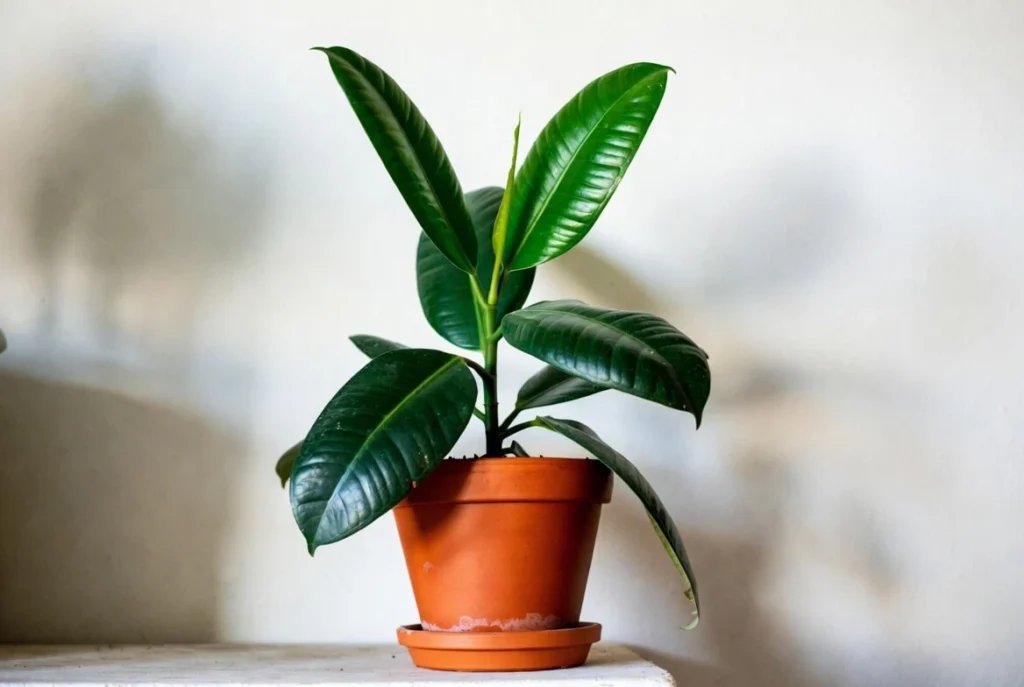
My rubber plant looked like a sad telephone pole for two years. One single trunk. Three leaves at the top. Zero branching. Then I learned the one thing that changes everything: you have to cut it.
Here’s what nobody wants to hear but everyone needs to know: there’s no magic spray or fertilizer that makes a rubber plant bushy. You have to prune it. That’s the method. That’s how it works.
Why Your Rubber Plant Won’t Branch On Its Own
Rubber plants grow tall in nature. Like 100+ feet tall in their native habitat in Nepal and Malaysia. They’re programmed to grow UP, not OUT. One main trunk reaching for sunlight above the forest canopy.
Your plant doesn’t know it’s in your living room. It’s doing what evolution trained it to do: grow straight up until something stops it. That something is you with pruning shears.
How to Make a Rubber Plant Bushy: The Cutting Method
Cut the main trunk. New branches grow right below where you cut. That’s it. That’s the whole method. I was terrified to do this the first time. Cutting a healthy plant feels wrong. But it’s the only way to force side shoots.
Here’s my exact process:
Step 1: Pick where to cut
- Cut above a leaf node (the bump where leaves attach)
- Leave at least 2-3 leaves below the cut
- Cut where you want the branching to start
I cut mine about 12 inches from the top. That left me with a decent-sized plant while creating room for new branches.
Step 2: Make the cut
- Use sharp, clean pruning shears
- Sterilize them with rubbing alcohol first
- Cut straight across, a few centimeters above the node
- Step 3: Deal with the sap Milky white latex drips everywhere immediately. Have a damp paper towel ready. Wear gloves. The sap causes skin irritation. I learned this the itchy way.
- Step 4: Wait New branches appear in 3-8 weeks. Usually you get two new branches per cut. Sometimes more. My plant produced three new side shoots from one cut. Each of those branches has grown 10+ inches in six months.
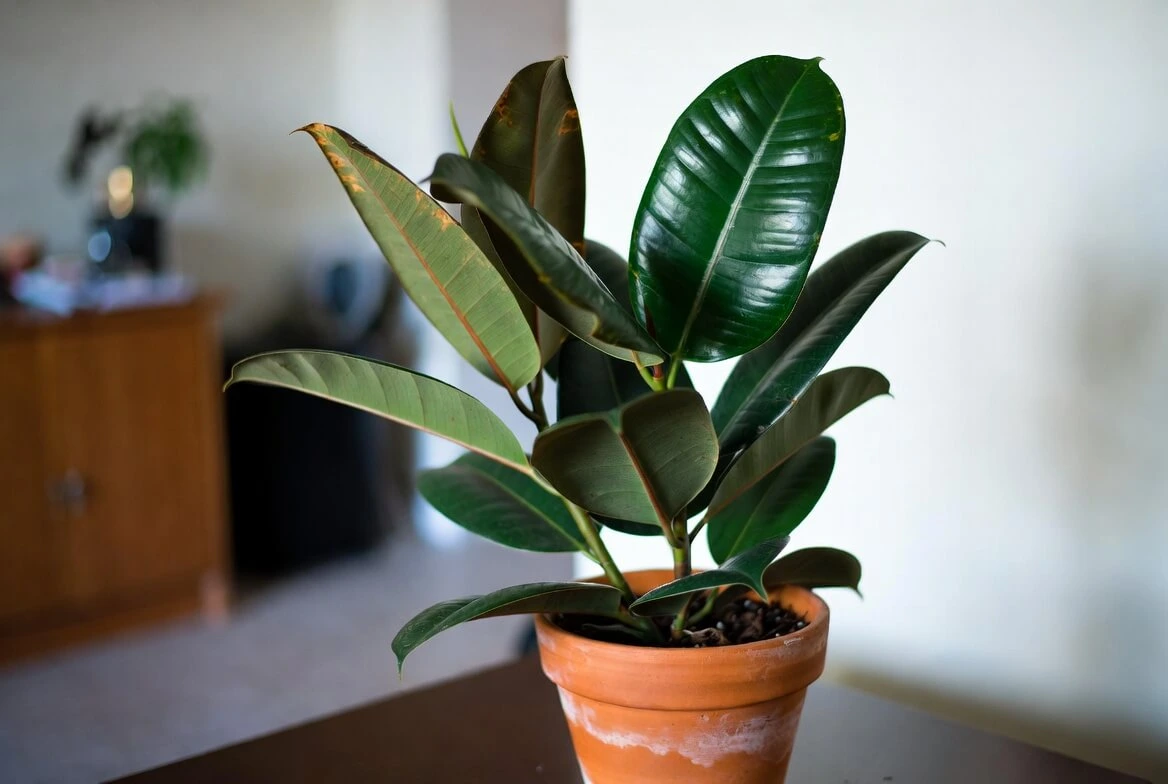
What Happens After You Prune Your Rubber Plant
The plant redirects energy from growing tall to growing wide.
Typical results:
- 2-3 new branches below the cut
- Sometimes additional shoots lower on trunk
- Fuller, bushier appearance
- More leaves overall
One of my readers cut her Ficus ‘Ruby’ and got two gorgeous pink branches within a month. The variegation on those new shoots was incredible.
The plant looked fuller immediately just from those two branches. Then she pruned those new branches six months later. Now she has six main branches. That’s the compound effect of pruning.
When to Prune Your Rubber Plant for Best Results
Early spring to early summer. That’s your window. The plant is actively growing. It recovers faster and produces new growth quicker.
I pruned mine in late March. New shoots appeared by mid-May. By August, those branches were 8 inches long with multiple leaves. Pruning in fall or winter? The plant grows slower. Recovery takes longer. You’ll wait months for results.
At Zoned Garden, we’ve helped thousands of plant enthusiasts master indoor plant care timing, and spring pruning consistently delivers the best results.
How to Grow Rubber Plant From Cutting
Don’t throw away what you cut off. You can propagate it. Here’s what works:
For flexible stems (younger plants):
- Take the cutting you removed
- Let it stop oozing sap
- Place in jar of water
- Change water weekly
- Roots appear in 4-6 weeks
- Plant when roots are 2+ inches long
For woody stems (mature plants): Air layering is your only reliable option. Water propagation doesn’t work well on mature, woody stems. I’ve successfully rooted three cuttings in water. All became full plants. Gave two to friends.
Pro tips for propagation:
- Use rooting hormone (increases success rate)
- Keep in bright indirect light
- Rinse cutting weekly to prevent mold
- Watch for tiny white bumps (roots starting)
- Be patient (takes 1-2 months)
You can also stick the cutting directly in moist soil instead of water. Cover with a plastic bag to increase humidity. Same timeline for roots.
For more detailed propagation techniques, check out our complete guide on rubber plant propagation at Zoned Garden.
How to Make a Rubber Plant Bushy Without Cutting
Here’s the truth: you can’t. Not really.
The only natural way to get a bushier rubber plant without pruning is to plant multiple rubber plants in the same pot. Two or three plants together = instant fuller appearance. But each individual plant will still grow as a single trunk unless you prune it.
Notching is the only semi-alternative:
- Cut 1/4 through the trunk at a node
- Don’t cut all the way through
- New branch may grow from that node
- Keeps the height
I’ve never tried this. It’s hit or miss from what I’ve read. Pruning is more reliable. Better light and proper care help the plant grow more vigorously, but they don’t create branching. They just make your single-trunk plant grow faster.
For comprehensive care instructions that complement pruning, visit our rubber plant care guide where we cover everything from watering to fertilizing.
The Pruning Mistakes That Ruin Results
- Cutting too much at once: Remove maximum 20-25% of the plant. More than that stresses it.
- Pruning in the wrong season: Fall and winter pruning means slow recovery and delayed results.
- Not having enough light: The plant needs bright light to produce strong new growth after pruning. Low light = weak, leggy branches.
- Forgetting about the cutting: If you want to propagate, deal with the cutting within an hour of making it.
I made the “too much light” mistake backwards. Kept my plant in low light after pruning. The new branches grew thin and stretched. Moved it to a bright window. Problem solved on the next round of growth.
Making Multiple Generations of Branches You can prune the new branches once they grow out. This creates even more branching. My plant now has three generations of branches from two rounds of pruning.
The multiplication effect:
- First cut: 1 trunk becomes 2-3 branches
- Second cut: 3 branches become 6-9 branches
- Third cut: You get the idea
Wait at least 6 months between heavy pruning sessions. Let the plant recover and grow. I prune mine every spring. Each time it gets bushier.
Post-Pruning Care for Maximum Growth
- Light is critical: Bright indirect light minimum. A few hours of direct morning sun is even better. Without enough light, new branches grow weak and spindly. The plant won’t achieve that full, bushy look.
- Water properly: The plant needs consistent moisture to support new growth. Check soil every few days.
- Fertilize during growing season: Liquid fertilizer every 2-4 weeks helps fuel rapid branch development.
My plant is in an east-facing window. It gets 4-5 hours of direct morning light plus bright indirect light the rest of the day. Growth is strong and compact.
If you’re dealing with variegated varieties like the stunning Ficus ‘Tineke’ or ‘Ruby’, proper light becomes even more critical. Learn more about maintaining that beautiful pink variegation in our variegated rubber plant care article at Zoned Garden.
Realistic Timeline for Bushy Growth
- Week 1-3: Nothing visible happens. The plant is healing and redirecting resources.
- Week 4-8: New shoots emerge as small bumps at nodes below the cut.
- Month 3-4: New branches are 4-6 inches long with several leaves.
- Month 6: New branches look like established parts of the plant.
Year 1: The plant looks completely transformed. Multiple branches. Fuller appearance. Actually bushy.
Patience is required. You’re not going to prune today and have a bushy plant next week. But the results are worth it.
How to Make a Rubber Plant Bushy FAQs
Can you make a rubber plant bushy without cutting it?
No, not really. Pruning forces branching. The only alternative is planting multiple plants together for a fuller look, but each individual plant stays single-trunked without pruning.
Where should I cut my rubber plant to make it bushy?
Cut a few centimeters above a leaf node where you want branching to start. New branches grow from the nodes just below your cut. Leave at least 2-3 leaves below the cut point.
When is the best time to prune a rubber plant?
Early spring to early summer during active growth. This gives the plant time to produce strong new branches before growth slows in fall and winter.
How long does it take for a rubber plant to get bushy after pruning?
New shoots appear in 3-8 weeks. Those branches take 3-6 months to grow out substantially. Full bushy appearance develops over 1-2 years with proper care.
Can I propagate the part I cut off my rubber plant?
Yes. How to grow rubber plants from cutting: Place the cutting in water, change water weekly, and wait 4-6 weeks for roots. This works best with flexible stems from younger plants.
Will my rubber plant die if I cut it? No, if you do it correctly. Leave at least 2-3 leaves on the plant and cut during the growing season. Don’t remove more than 25% at once.
The Real Secret to a Bushy Rubber Plant
Stop waiting for it to branch naturally. It won’t. The secret is simple: prune during spring, provide bright light, water properly, and wait for the results.
I transformed my sad single-trunk plant into a full, bushy specimen with two pruning sessions over 18 months. It went from three leaves at the top to 40+ leaves across eight main branches. Your rubber plant has the same potential. You just have to give it the signal to branch by cutting the main trunk.
How to make a rubber plant bushy isn’t complicated. Cut it. Care for it properly. Let time do its thing.
At Zoned Garden, we’re committed to helping you grow thriving indoor plants with practical, real-world advice that actually works. For more houseplant care tips and troubleshooting guides, explore our complete collection of indoor plant care articles.