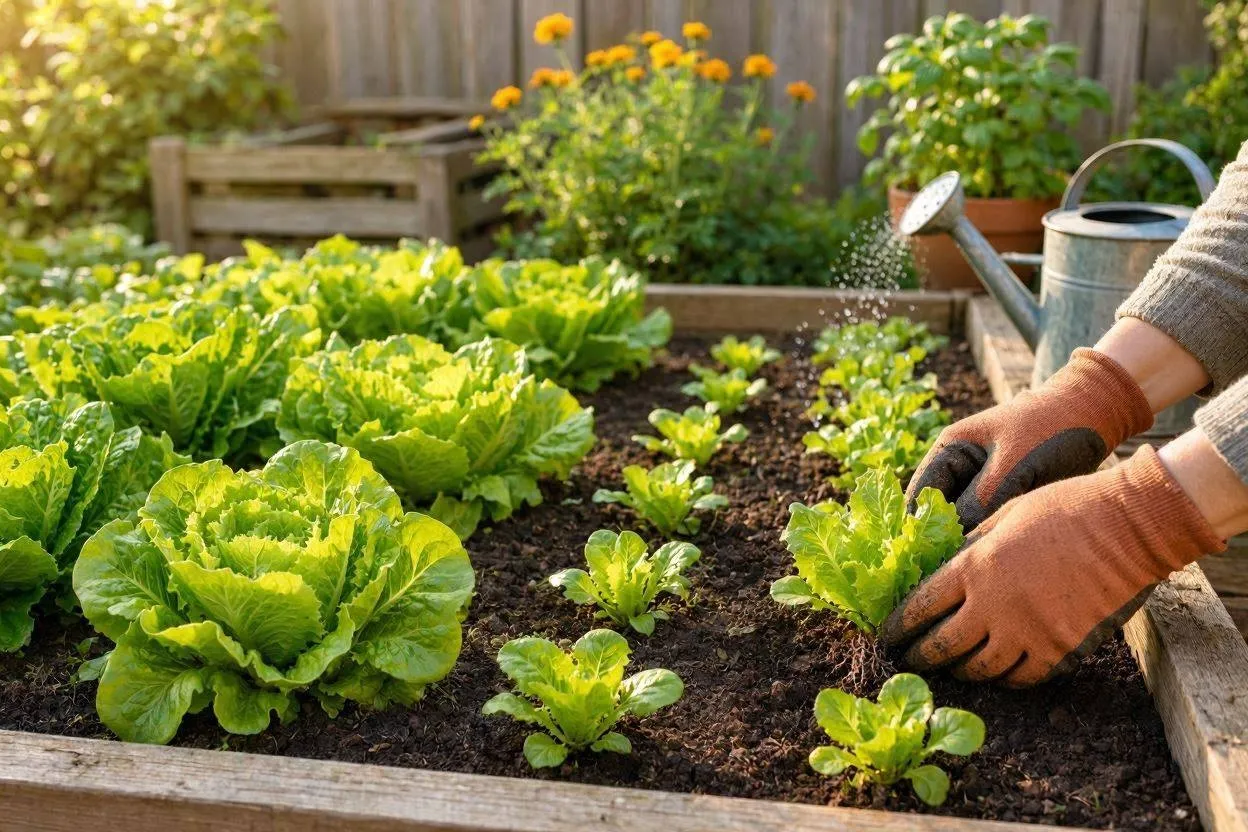
Lettuce rewards a beginner faster than almost any other vegetable. A packet of seeds turns into a full salad bowl within 6 to 8 weeks, and the plant tolerates mistakes that would kill a tomato or pepper outright. Success still depends on getting a few specifics right: timing the planting to your climate, spacing seedlings correctly, and watching for the two or three problems that account for most failed crops. This guide walks through every stage, from choosing a variety to storing the harvest.
Requirements to Grow Lettuce
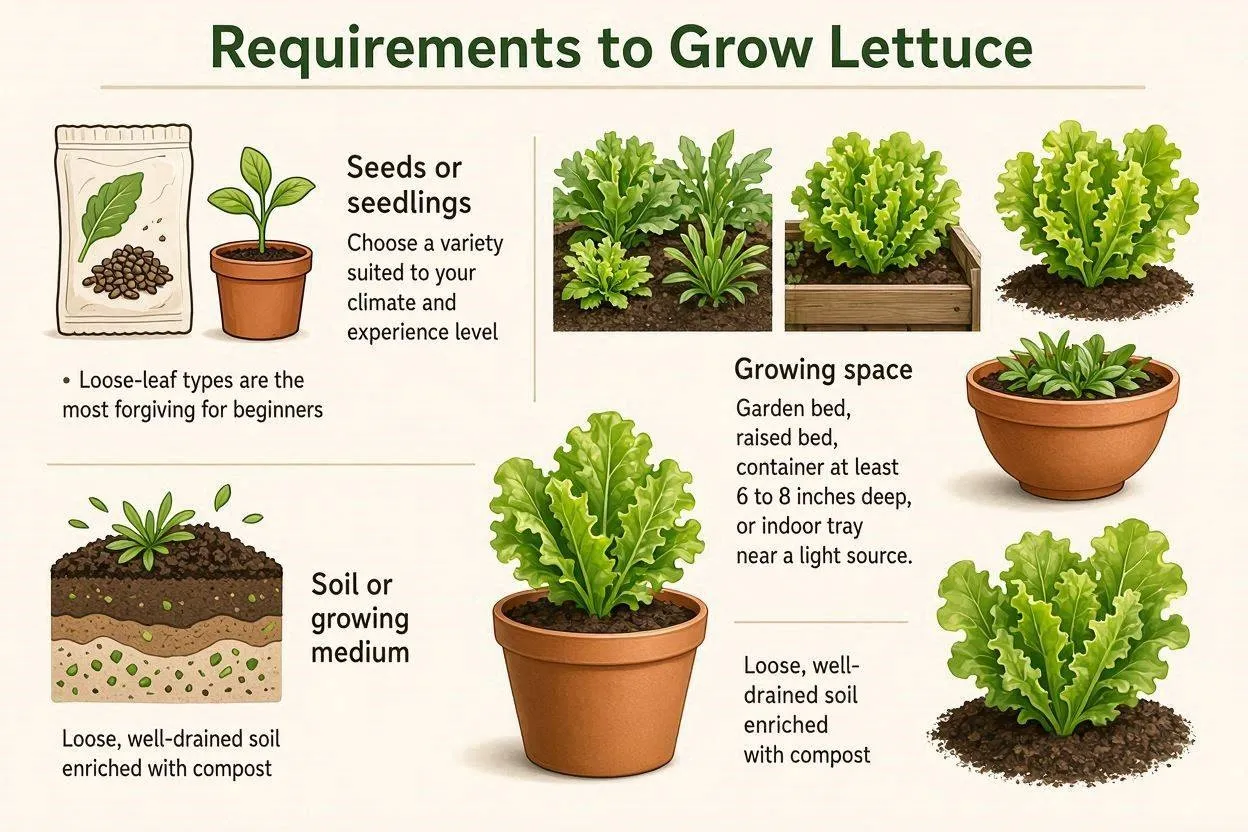
Before sowing a single seed, gather the basics that determine whether a lettuce crop thrives or struggles:
- Seeds or seedlings: Choose a variety suited to your climate and experience level (loose-leaf types are the most forgiving for beginners).
- Growing space: A garden bed, raised bed, container at least 6 to 8 inches deep, or an indoor tray near a light source.
- Soil or growing medium: Loose, well-drained soil enriched with compost, or a seed-starting mix for trays; a hydroponic reservoir works as an alternative.
- Sunlight or grow lights: 5 to 6 hours of direct sun outdoors, or 12 to 14 hours under a grow light indoors.
- Consistent water source: A watering can, hose with a fine spray attachment, or a self-watering planter/wicking mat for containers.
- Soil amendments: Compost, garden lime or elemental sulfur (for pH correction), and a balanced NPK fertiliser.
- Basic tools: A trowel, scissors for thinning and harvesting, and a pH testing kit.
- Pest deterrents: Iron phosphate slug pellets, companion plants like onions or chives, or a simple soap-and-water spray for aphids.
- Climate awareness: Knowledge of your USDA Hardiness Zone and local frost dates to time planting correctly.
The Growing Process at a Glance
Lettuce moves through a predictable sequence from seed to harvest:
- Choose a variety suited to your climate, space, and timeline (loose-leaf for speed, heading types for a fuller yield).
- Prepare the soil, testing and adjusting pH to the 6.0–7.0 range and working in compost and fertiliser.
- Sow the seeds, either direct in the garden bed or started in plug trays, keeping the surface consistently moist.
- Thin the seedlings about 2 weeks after germination to give remaining plants room to develop.
- Water and monitor daily, checking soil moisture and watching for early signs of pests or disease.
- Protect against bolting during hot stretches with shade cloth or the shadow of taller companion crops.
- Harvest by cutting outer leaves (loose-leaf) or the whole head at soil level (hearting types), ideally in the early morning.
- Store and use the harvest promptly, washing and drying leaves before refrigerating.
Repeating steps 3 through 7 every 2 weeks keeps a steady, staggered supply rather than one large glut.
Fees: What It Costs to Grow Lettuce
Lettuce is one of the cheapest crops to start, and most of the cost is a one-time setup rather than an ongoing expense:
| Item | Typical Cost Range |
|---|---|
| Seed packet (100+ seeds) | $2–$5 |
| Seedling starts (per 6-pack) | $3–$6 |
| Compost or potting mix (bag) | $8–$15 |
| Container with drainage (12–18 in) | $10–$25 |
| pH testing kit | $10–$20 |
| Garden lime or elemental sulfur | $6–$12 |
| Balanced NPK fertiliser | $8–$15 |
| Shade cloth | $10–$20 |
| Slug pellets or pest deterrents | $8–$15 |
| Small hydroponic kit (optional, indoor) | $40–$100 |
A basic outdoor bed can be started for roughly $20–$40 in one-time supplies, with seeds and compost as the main recurring cost each season. Indoor or hydroponic setups cost more upfront but reduce water and pest-related losses over time.
Application: Getting the Most Out of Your Harvest
Fresh lettuce has uses well beyond a basic side salad:
- Fresh salads and bowls: The most common use, especially for crisp romaine and butterhead varieties.
- Sandwiches and wraps: Loose-leaf and romaine leaves hold up well as a crunchy layer or a low-carb wrap substitute.
- Wilted or sautéed greens: A quick sauté with garlic and olive oil softens surplus leaves into a warm side dish.
- Chilled soups: Blending lettuce with stock, herbs, and a touch of cream makes a light, savory soup base.
- Juicing and smoothies: Mild-flavored leaf varieties blend easily into green juices without overpowering sweeter ingredients.
- Garnish and plating: Whole or shredded leaves add texture and color to plated dishes beyond the salad course.
- Composting: Any leaves past their prime (that aren’t diseased) can go back into the compost pile to enrich soil for the next planting.
Choosing the Right Lettuce Type
Lettuce splits into two broad categories: hearting types that form a dense head, and loose-leaf types that grow as an open rosette. Romaine, butterhead, and iceberg all belong to the heading group, and each takes 8 to 10 weeks to mature into a full head. Loose-leaf varieties, including oakleaf and salad bowl types, mature in 4 to 6 weeks and regrow after cutting, which makes them the better choice for a first-time grower. Red-leafed varieties resist heat stress slightly better than green ones, so a gardener in a warmer region gains a small buffer against early bolting by choosing red or bronze-tinted cultivars. Mixing 2 or 3 types in the same bed also spreads risk, since a disease or heat spell that damages one variety often leaves a more resistant neighbor untouched.
When to Plant Lettuce
Lettuce grows best in temperatures between 45°F and 75°F (7°C and 24°C), making spring and fall the two reliable planting windows across most of the United States. Check your USDA (United States Department of Agriculture) Hardiness Zone before sowing, since a Zone 8 gardener can direct-sow outdoors in February, while a Zone 4 gardener waits until April. Sow seeds outdoors 4 weeks before the average last frost date in spring, and again in late summer for a fall crop once daytime highs drop back under 75°F. Gardeners in Zones 9 and 10 can often skip the summer heat entirely and grow lettuce through the cooler winter months instead, treating it as a true cool-season crop year-round. Plant a small batch every 2 weeks rather than one large sowing, since this staggered approach spreads the harvest over months instead of concentrating it into a single week.
Soil Preparation and pH
Lettuce needs loose, well-drained soil enriched with 1 to 2 inches of compost worked in before planting. Test soil pH with a home kit or a sample sent to a local extension office, and aim for a range between 6.0 and 7.0, since lettuce struggles to absorb nutrients outside this band even when fertiliser is present. Add garden lime to raise the pH below 6.0, or add elemental sulfur to lower the pH above 7.0, then retest after 4 to 6 weeks before planting. Work a balanced NPK (Nitrogen, Phosphorus, Potassium) fertiliser into the top few inches of soil at planting time, since lettuce’s shallow roots can’t reach nutrients buried any deeper.
Sowing Lettuce Seeds
Direct Sowing Outdoors
Press lettuce seeds into the top 1/8 inch of soil, since these seeds need light to germinate and will fail to sprout if buried any deeper. Water gently with a fine spray to avoid washing the tiny seeds away, and keep the surface consistently moist until germination, which typically takes 7 to 10 days. Sow seeds in shallow rows spaced 12 inches apart, or scatter them across a bed for a denser cut-and-come-again planting. Label each row or section with the variety name and sowing date, since lettuce seedlings look nearly identical across varieties until the true leaves fill in.
Starting Seeds in Plug Trays
Fill plug trays with moistened seed-starting mix, then press 2 to 3 seeds into each cell rather than burying them. Cover the tray loosely with plastic wrap to trap humidity, and remove the covering once the first sprouts appear, usually within a week. Starting seeds this way keeps young seedlings away from ground-level slugs during their most vulnerable stage and allows for clean transplanting into the garden once the roots fill the cell.
Spacing and Thinning
Space loose-leaf lettuce 4 to 6 inches apart for full-size plants, or as close as 2 inches apart if the plan is to harvest young baby greens. Space hearting varieties, including romaine and butterhead, 10 to 12 inches apart to leave room for a full head to develop. Thin crowded seedlings 2 weeks after germination, snipping the weaker plants at soil level with scissors rather than pulling them, since pulling disturbs the roots of neighboring plants left to grow on.
Sunlight and Watering Requirements
Give lettuce 5 to 6 hours of direct sunlight daily for the strongest growth, though the plant tolerates partial shade better than most vegetables, particularly during the hottest part of summer. Water consistently rather than deeply, since lettuce roots stay shallow and dry out fast between waterings. Check soil moisture daily by pressing a finger about an inch into the soil; water immediately, if the soil feels dry at that depth, and hold off if it still feels cool and damp.
Growing Lettuce in Containers and Indoors
Choose a container at least 6 to 8 inches deep with drainage holes at the bottom, since lettuce’s shallow root system doesn’t need more depth than that to thrive. A container 12 to 18 inches wide comfortably holds 3 to 4 loose-leaf plants or a single head lettuce plant. Indoors, place containers near a south-facing window that receives 6 to 8 hours of light daily, or supplement with a grow light positioned 3 to 4 inches above the leaves for 12 to 14 hours a day if natural light falls short. A self-watering planter or a wicking mat under the container solves the biggest challenge of indoor growing, which is maintaining the constant moisture lettuce needs without daily manual watering. A small hydroponic kit works as a genuine alternative to soil-based containers, since lettuce’s fast growth and shallow roots make it one of the easiest crops to run through a simple nutrient-solution reservoir without complex equipment.
Preventing Bolting
Bolting happens when a lettuce plant shifts energy from leaf production into a flowering stalk, usually triggered by temperatures consistently above 80°F (27°C) or by long summer daylight hours. Once bolting starts, the leaves turn bitter within days and rarely recover their flavor. Delay bolting by installing a shade cloth over the bed during the hottest stretch of the season, and by planting lettuce in the afternoon shadow of taller crops such as tomatoes or corn. Harvest promptly once a plant shows the first signs of a central stalk forming, since waiting even a few extra days lets the bitterness set in fully.
Pests and Diseases
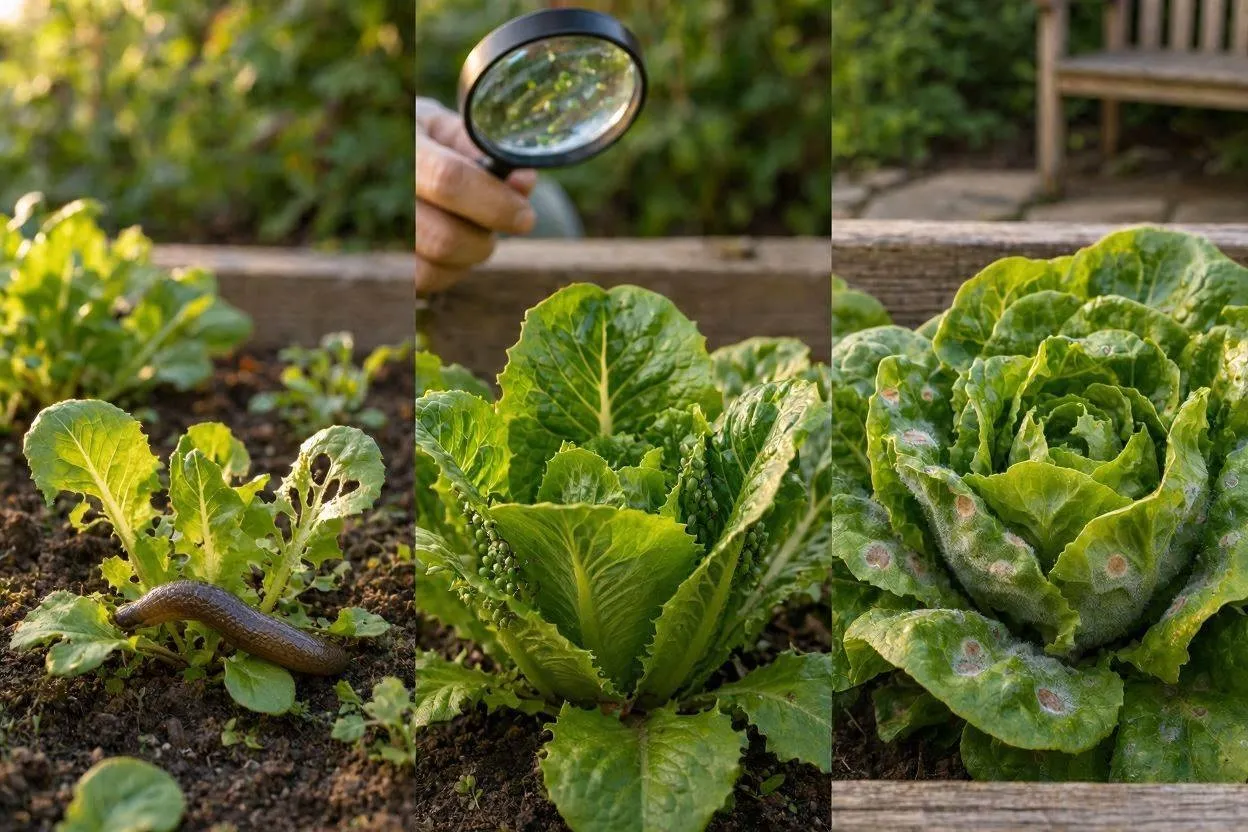
Most lettuce problems trace back to one of three causes: slugs at the seedling stage, aphids once plants mature, or fungal disease during humid weather. Catching any of these early keeps a minor issue from spreading through an entire bed.
Slugs and Snails
Slugs cause more damage to young lettuce seedlings than any other pest, since soft new leaves offer little resistance to their feeding. Check plants every evening or early morning, when slugs are most active, and remove any found by hand. Set beer traps at soil level to lure slugs away from seedlings, or apply pet-safe iron phosphate pellets around the bed perimeter as a barrier.
Aphids and Companion Planting
Aphids cluster on the undersides of lettuce leaves, causing curling and stunted growth as they feed. Plant onions, garlic, or chives near a lettuce bed, since the strong scent of these alliums disrupts the way aphids locate host plants by smell. Spray an infested plant with a mix of water and a few drops of dish soap, targeting the underside of affected leaves directly, if aphids appear despite companion planting.
Downy Mildew and Other Diseases
Downy mildew shows up as yellow patches on the upper leaf surface with a fuzzy gray growth underneath, most common during humid, wet weather late in the season. Space plants far enough apart for good air circulation, and water at the soil level rather than overhead, since wet foliage left standing overnight creates the exact conditions this fungus needs to spread. Remove and discard infected leaves immediately rather than composting them, since the fungal spores can survive in compost and reinfect a future crop.
Harvesting Lettuce
Harvest loose-leaf varieties by cutting outer leaves first, leaving the central growing point intact so the plant continues producing for weeks. This cut-and-come-again method can yield 2 to 3 additional harvests from the same plant, with each round producing slightly smaller leaves than the last. Harvest hearting types by cutting the entire head at soil level once it feels firm when pressed gently from the side. Pick lettuce in the early morning while leaves stay cool and crisp, since afternoon heat softens the leaves and shortens their shelf life after picking.
Storing and Using Fresh Lettuce
Wash harvested leaves in cold water and shake or spin them dry immediately, since trapped moisture speeds up decay in storage. Store dried leaves in a container lined with a paper towel inside the refrigerator’s crisper drawer, where they stay fresh for 5 to 7 days. Replace the paper towel every 2 days if it becomes visibly damp, since a wet liner reintroduces the moisture problem the towel was meant to solve. Use surplus lettuce beyond fresh salads by wilting it briefly in a hot pan with garlic or blending it into a chilled soup base with stock and herbs.
Best Lettuce Varieties to Try
These 5 varieties cover the full range of growing conditions and skill levels, from a fast first crop to a cold-hardy option for late-season planting.
- Little Gem: a compact romaine type with a sweet, crunchy heart, ready in about 8 weeks.
- Salad Bowl: a slow-to-bolt, loose-leaf variety available in red and green, harvestable continuously all summer.
- Black-Seeded Simpson: a fast-growing loose-leaf variety well suited to both garden beds and containers.
- Winter Density: a cold-hardy cos type suitable for late-season sowing and light winter protection.
- Buttercrunch: a heat-tolerant butterhead with a soft, buttery texture and strong bolt resistance.
Common Mistakes to Avoid
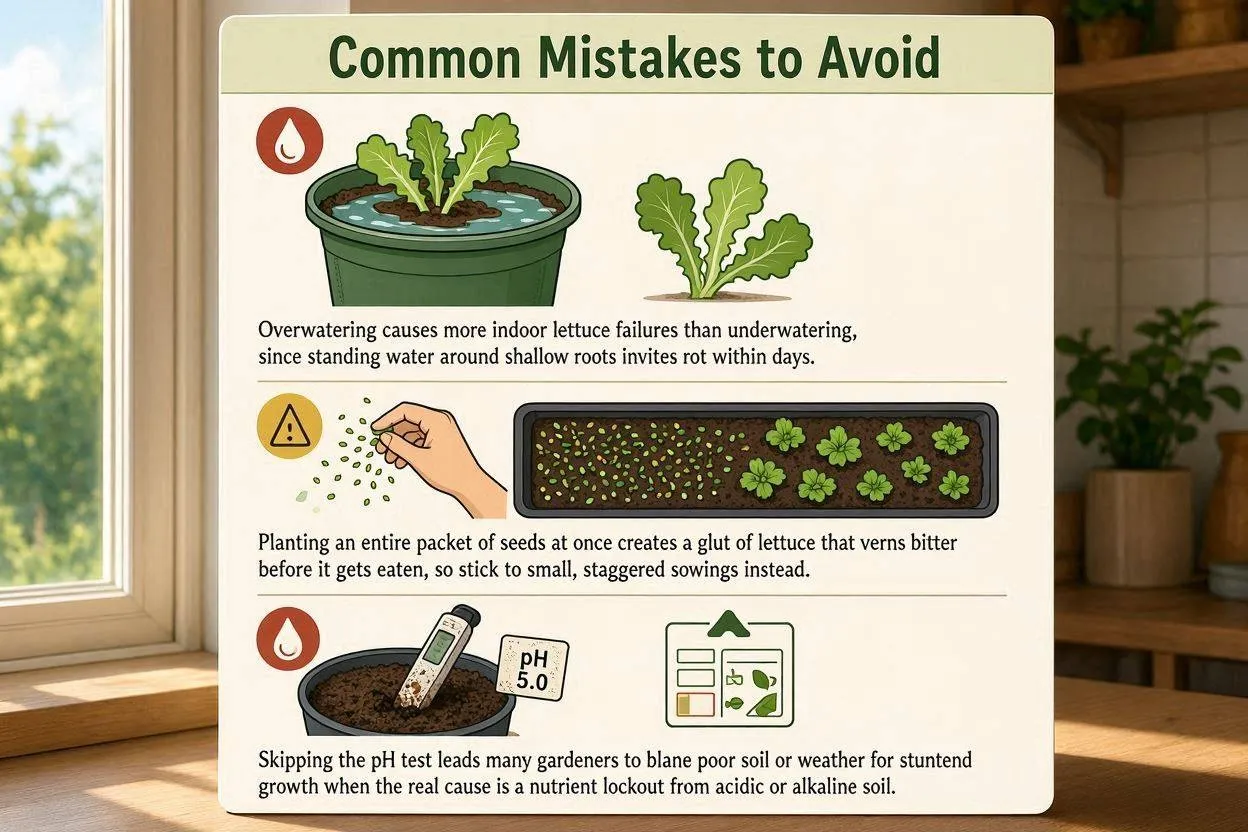
Overwatering causes more indoor lettuce failures than underwatering, since standing water around shallow roots invites rot within days. Planting an entire packet of seeds at once creates a glut of lettuce that turns bitter before it gets eaten, so stick to small, staggered sowings instead. Skipping the pH test leads many gardeners to blame poor soil or weather for stunted growth when the real cause is a nutrient lockout from acidic or alkaline soil. Leaving thinning too late crowds young plants and weakens all of them, rather than producing fewer, stronger seedlings.
Frequently Asked Questions
Does lettuce need full sun to grow well?
No, lettuce tolerates partial shade better than most vegetables. Give it 5 to 6 hours of direct light for the strongest growth, with afternoon shade helping during hot summer stretches.
How long does lettuce take to grow from seed?
Loose-leaf lettuce matures in 4 to 6 weeks; hearting types take 8 to 10 weeks. Baby greens can be harvested even sooner, often within 3 weeks of sowing.
Can lettuce grow back after cutting?
Yes, loose-leaf lettuce regrows after cutting if the central growing point stays intact. Hearting varieties do not regrow once the full head is removed at soil level.
What causes lettuce to taste bitter?
Bitterness usually signals bolting, triggered by heat above 80°F (27°C) or long summer daylight hours. Harvesting promptly once a central stalk appears limits the bitter flavor.
Is it safe to grow lettuce indoors year-round?
Yes, lettuce grows well indoors with 6 to 8 hours of light daily from a window or grow light. A self-watering container solves most indoor growing problems related to moisture.
Conclusion
Lettuce earns its reputation as the easiest vegetable to grow, but the gardeners who get the best results are the ones who treat the small details seriously: sowing on a schedule that matches their zone, keeping the soil evenly moist rather than deeply watered, and acting fast at the first sign of bolting or pests. Start with a forgiving loose-leaf variety like Black-Seeded Simpson or Salad Bowl, stagger your sowings every couple of weeks, and you’ll have a steady supply of fresh leaves rather than one overwhelming harvest that turns bitter before you can use it. Whether it’s a raised bed, a container on a balcony, or a tray on a windowsill, lettuce adapts to nearly any space — making it one of the few crops that rewards a first-time gardener just as reliably as an experienced one.