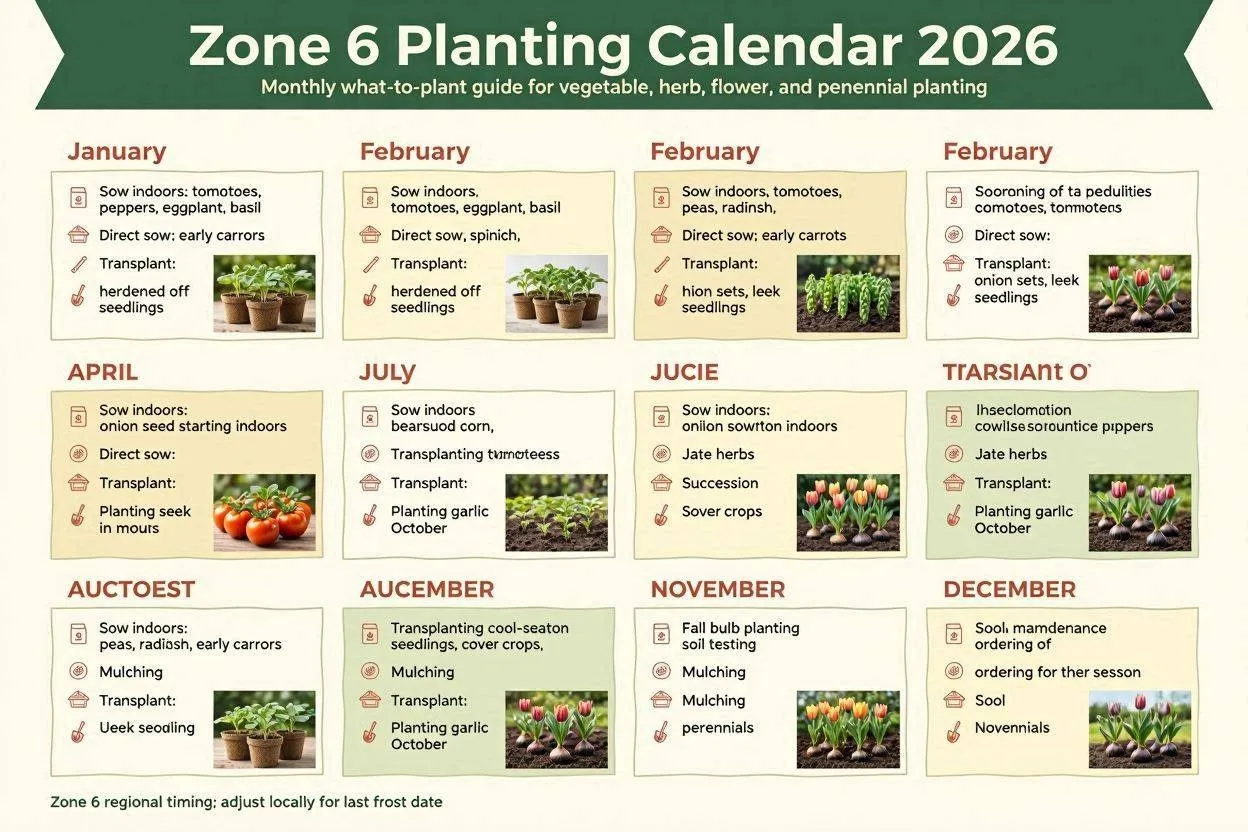
The last frost in zone 6 falls between April 15 and May 1, 2026, and the first fall frost arrives between October 15 and October 31. Those two dates control every planting decision you make this year. Everything else in this calendar counts backward or forward from them.
Zone 6 gives you a generous window. You get 150 to 180 frost-free days, which is enough time to grow almost any vegetable, herb, or annual flower sold in American garden centers. The catch is timing. Plant tomatoes two weeks early and one cold night kills them. Plant peas two weeks late and summer heat turns them bitter.
This calendar fixes the timing problem. It covers all 12 months, splits the dates for zones 6a and 6b, and includes soil temperatures because a thermometer tells you more than any calendar can.
Zone 6 Quick Facts
Zone 6 covers parts of 36 U.S. states, with average winter lows of -10°F to 0°F (-23°C to -18°C). The zone runs through Ohio, Pennsylvania, Missouri, Kentucky, Kansas, southern Michigan, Massachusetts, and stretches of New Mexico and Colorado.
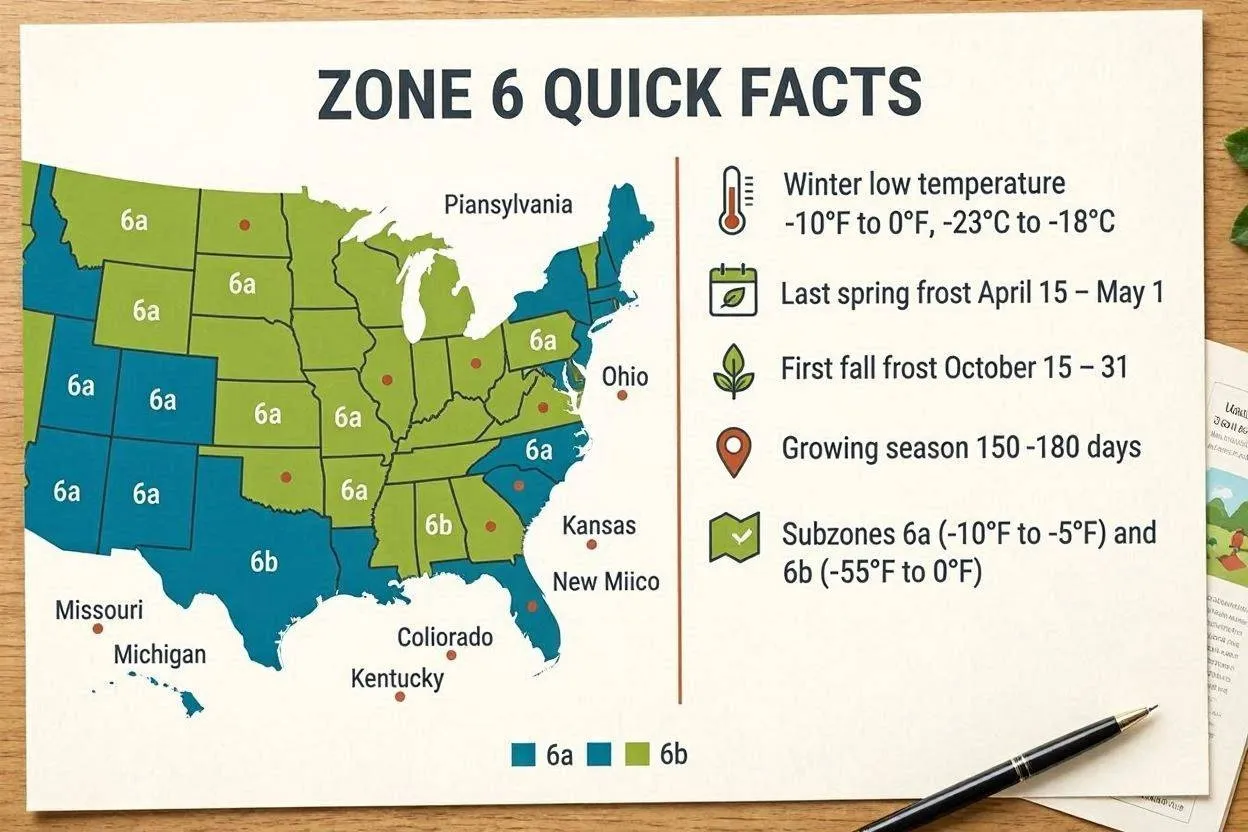
| Fact | Detail |
| Winter low temperature | -10°F to 0°F (-23°C to -18°C) |
| Last spring frost | April 15 – May 1 |
| First fall frost | October 15 – 31 |
| Growing season | 150–180 days |
| Subzones | 6a (-10°F to -5°F) and 6b (-5°F to 0°F) |
Find your exact subzone on the USDA (United States Department of Agriculture) Plant Hardiness Zone Map. Enter your zip code and the map returns 6a or 6b in seconds.
Zone 6 Frost Dates for 2026
Zone 6a gardeners should plan around a May 1 last frost, while zone 6b gardeners can plan around April 15. These dates are averages, not promises. A late cold snap hits zone 6 about 3 years out of 10, so keep row covers ready through mid-May.
| Subzone | Last Spring Frost 2026 | First Fall Frost 2026 | Frost-Free Days |
| Zone 6a | May 1 | October 15 | ~165 |
| Zone 6b | April 15 | October 31 | ~198 |
My rule after years of zone 6 gardening: trust the soil thermometer over the calendar, and trust the 10-day forecast over both.
Zone 6 Master Planting Table
Start warm-season crops indoors in March, direct sow cool-season crops in March and April, and transplant everything tender after the last frost in May. This table condenses the whole year into one view.
| Crop | Start Indoors | Transplant Out | Direct Sow | Harvest |
| Tomatoes | Mar 1–15 | May 10–20 | — | Jul–Oct |
| Peppers | Feb 20–Mar 10 | May 15–25 | — | Jul–Oct |
| Broccoli | Feb 15–Mar 1 | Apr 1–15 | Jul 15 (fall crop) | Jun, Oct |
| Lettuce | Feb 15 | Mar 25 | Mar 20–Sep 1 | Apr–Nov |
| Peas | — | — | Mar 15–Apr 10 | Jun |
| Carrots | — | — | Apr 1–Jul 15 | Jun–Nov |
| Beans (bush) | — | — | May 10–Jul 10 | Jul–Sep |
| Cucumbers | Apr 15 | May 20 | May 15–Jun 15 | Jul–Sep |
| Squash | Apr 20 | May 20 | May 15–Jun 20 | Jul–Oct |
| Corn | — | — | May 10–Jun 10 | Aug–Sep |
| Garlic | — | — | Oct 1–Nov 1 | Jul (next year) |
| Spinach | — | — | Mar 15, Aug 15 | May, Oct |
Print this table and tape it inside a kitchen cabinet. You will check it 30 times between February and June.
Month-by-Month Zone 6 Planting Guide
January
Plant nothing outdoors in January, and start onions, leeks, and celery indoors during the last week. These three crops need 10 to 12 weeks under grow lights before transplant time.
Garden tasks: order seeds before popular varieties sell out, test stored seeds for germination, and sketch your garden layout. Seed catalogs sell out of favorites like Sun Gold tomatoes and Cascadia peas by late February.
February
Start broccoli, cabbage, cauliflower, and lettuce indoors between February 15 and March 1. Peppers go into seed trays by February 20 because they germinate slowly, often taking 14 days even at 80°F (27°C).
Garden tasks: set up grow lights 2 inches (5 cm) above seed trays, buy a soil thermometer, and prune fruit trees while they stay dormant.
March
Start tomato seeds indoors March 1 to 15, and direct sow peas, spinach, and radishes outside from March 15 onward. Peas germinate in soil as cold as 40°F (4°C), so they handle March weather that would rot bean seeds.
Cool-season transplants like broccoli and cabbage can go outside in late March under row covers. My broccoli survived 26°F (-3°C) under a single layer of fabric last spring.
Garden tasks: run a soil test through your county Cooperative Extension office, spread compost on beds, and repair trellises.
April
Direct sow carrots, beets, lettuce, Swiss chard, and turnips throughout April, and transplant broccoli and cabbage by April 15. Potatoes go into the ground around April 10 in zone 6b and April 20 in zone 6a.
Hold your tomatoes indoors. April warmth tricks new gardeners every year, and a May 3 frost erases six weeks of seedling care in one night.
Garden tasks: harden off cool-season transplants over 7 days, thin carrot seedlings to 2 inches (5 cm) apart, and set up drip irrigation.
May
Transplant tomatoes, peppers, and eggplant after May 10 in zone 6b or May 15 in zone 6a, and direct sow beans, corn, cucumbers, and squash once soil reaches 60°F (16°C). May is the busiest month on this calendar.
Wait until Memorial Day weekend for melons and sweet potatoes. Both crops sulk in soil below 70°F (21°C) and never fully recover.
Garden tasks: harden off warm-season seedlings over 7 to 10 days, mulch tomato beds with 3 inches (7.5 cm) of straw, and stake plants at transplant time instead of after they flop.
June
Direct sow succession crops of beans, carrots, and summer lettuce through June, and transplant sweet potato slips by June 10. Harvest peas, spinach, and the first lettuce heads this month.
Garden tasks: scout for cucumber beetles and squash vine borers weekly, water deeply twice per week instead of lightly every day, and pull spring crops that bolt.
July
Start fall broccoli, cabbage, and cauliflower seeds by July 15, and direct sow a final round of bush beans and carrots by July 10. Fall crops planted now mature in October’s cool weather and taste sweeter than spring versions.
Garden tasks: harvest tomatoes, cucumbers, and zucchini every 2 days, feed heavy feeders like corn with fish emulsion, and shade new lettuce sowings with 30% shade cloth.
August
Direct sow spinach, kale, lettuce, radishes, and turnips between August 15 and September 1 for fall harvest. Transplant the fall brassicas you started in July by August 10.
Garden tasks: cure onions in a dry shaded spot for 2 weeks, save seeds from open-pollinated tomatoes, and order garlic for October planting.
September
Sow spinach and mache by September 15 for overwintering, and plant cover crops like winter rye in empty beds. Overwintered spinach survives zone 6 cold under row covers and feeds you in March before anything else grows.
Garden tasks: bring in green tomatoes before the first frost warning, plant spring bulbs like tulips and daffodils, and dig sweet potatoes before soil drops below 55°F (13°C).
October
Plant garlic between October 1 and November 1, roughly 3 weeks before the ground freezes. Each clove needs 4 to 6 weeks to root before winter. Hardneck varieties like German Extra Hardy handle zone 6 winters better than softnecks.
Garden tasks: harvest everything tender before the first hard frost, shred fallen leaves for free mulch, and empty hoses before freezing nights.
November
Mulch garlic beds with 4 to 6 inches (10 to 15 cm) of straw after the ground crusts over. Carrots and kale left in the garden sweeten after frost, so harvest them through Thanksgiving.
Garden tasks: drain irrigation lines, clean and oil hand tools, and dump diseased plant material in the trash instead of the compost pile.
December
Plan next year’s garden and review which varieties earned their space. Nothing goes in the ground this month, and that break matters as much as any planting date.
Garden tasks: photograph your beds for winter reference, inventory leftover seeds, and read one gardening book cover to cover.
Zone 6a vs Zone 6b: How to Adjust Your Dates
Shift every spring date 1 week later for zone 6a and every fall date 1 week earlier. Zone 6b gardeners in cities like Louisville, Kentucky get roughly 30 more frost-free days than zone 6a gardeners in places like Marquette County, Michigan.
Microclimates shift dates too. Three examples: a south-facing wall adds warmth worth half a zone, a valley floor collects cold air and frosts 5 to 7 days later into spring, and urban lots run 5°F (3°C) warmer than rural fields 10 miles (16 km) away. Watch where snow melts first in your yard. That spot is your warmest bed.
Soil Temperature Chart for Zone 6
Seeds germinate based on soil temperature, not air temperature, and a $12 soil thermometer prevents more failures than any other garden tool. Take readings at 9 a.m., 2 inches (5 cm) deep, for 3 consecutive days.
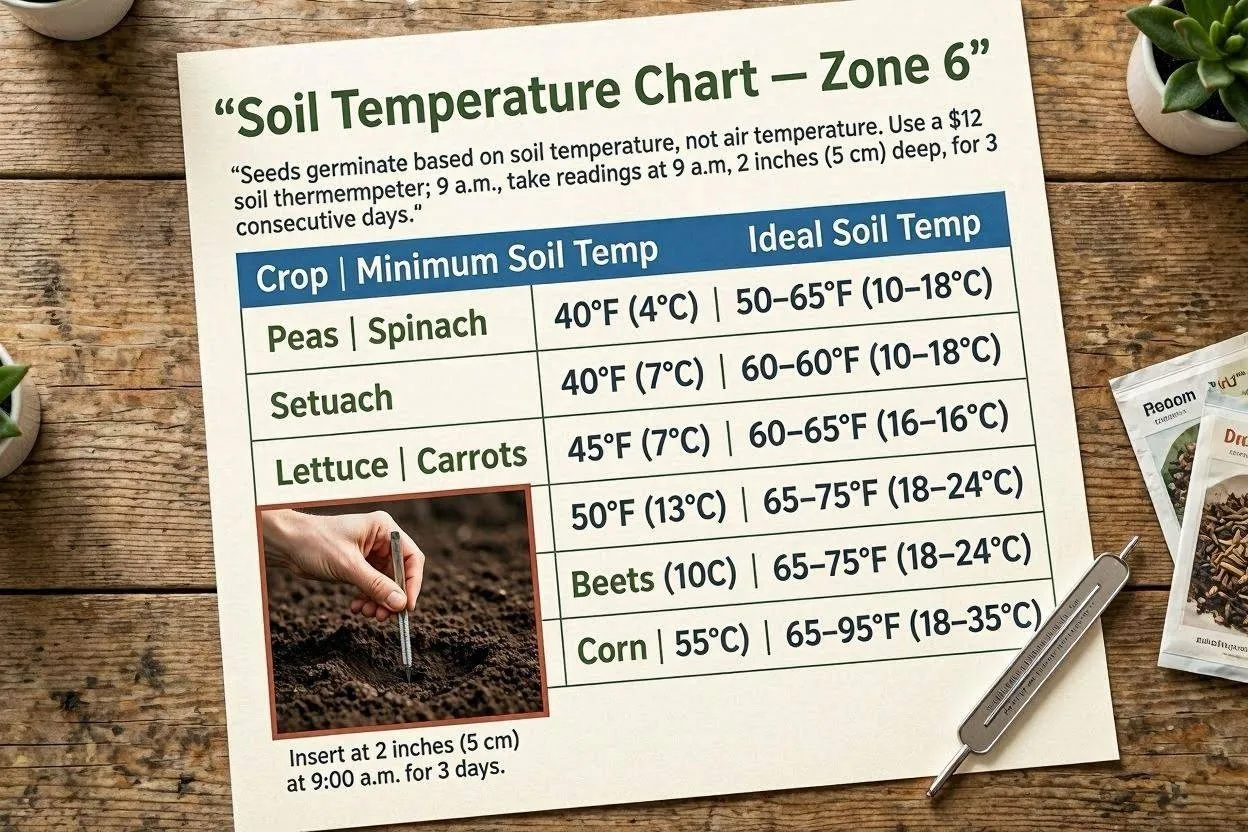
| Crop | Minimum Soil Temp | Ideal Soil Temp |
| Peas | 40°F (4°C) | 50–65°F (10–18°C) |
| Spinach | 40°F (4°C) | 50–60°F (10–16°C) |
| Lettuce | 45°F (7°C) | 60–65°F (16–18°C) |
| Carrots | 45°F (7°C) | 65–75°F (18–24°C) |
| Beets | 50°F (10°C) | 65–75°F (18–24°C) |
| Corn | 55°F (13°C) | 65–80°F (18–27°C) |
| Beans | 60°F (16°C) | 70–80°F (21–27°C) |
| Tomatoes | 60°F (16°C) | 70–80°F (21–27°C) |
| Cucumbers | 65°F (18°C) | 70–85°F (21–29°C) |
| Melons | 70°F (21°C) | 75–85°F (24–29°C) |
Zone 6 soil typically hits 50°F (10°C) in early April and 65°F (18°C) by mid-May.
Succession Planting Schedule for Zone 6
Sow lettuce, radishes, beans, carrots, and cilantro every 2 to 3 weeks for a continuous harvest instead of one overwhelming glut. One June week with 40 heads of lettuce teaches this lesson fast.
| Crop | Sow Every | First Sowing | Last Sowing |
| Lettuce | 2 weeks | March 20 | September 1 |
| Radishes | 2 weeks | March 20 | September 10 |
| Bush beans | 3 weeks | May 10 | July 10 |
| Carrots | 3 weeks | April 1 | July 15 |
| Cilantro | 2 weeks | April 1 | September 1 |
Skip lettuce sowings in July if you lack shade cloth. Lettuce seed refuses to germinate in soil above 80°F (27°C).
5 Zone 6 Planting Mistakes to Avoid
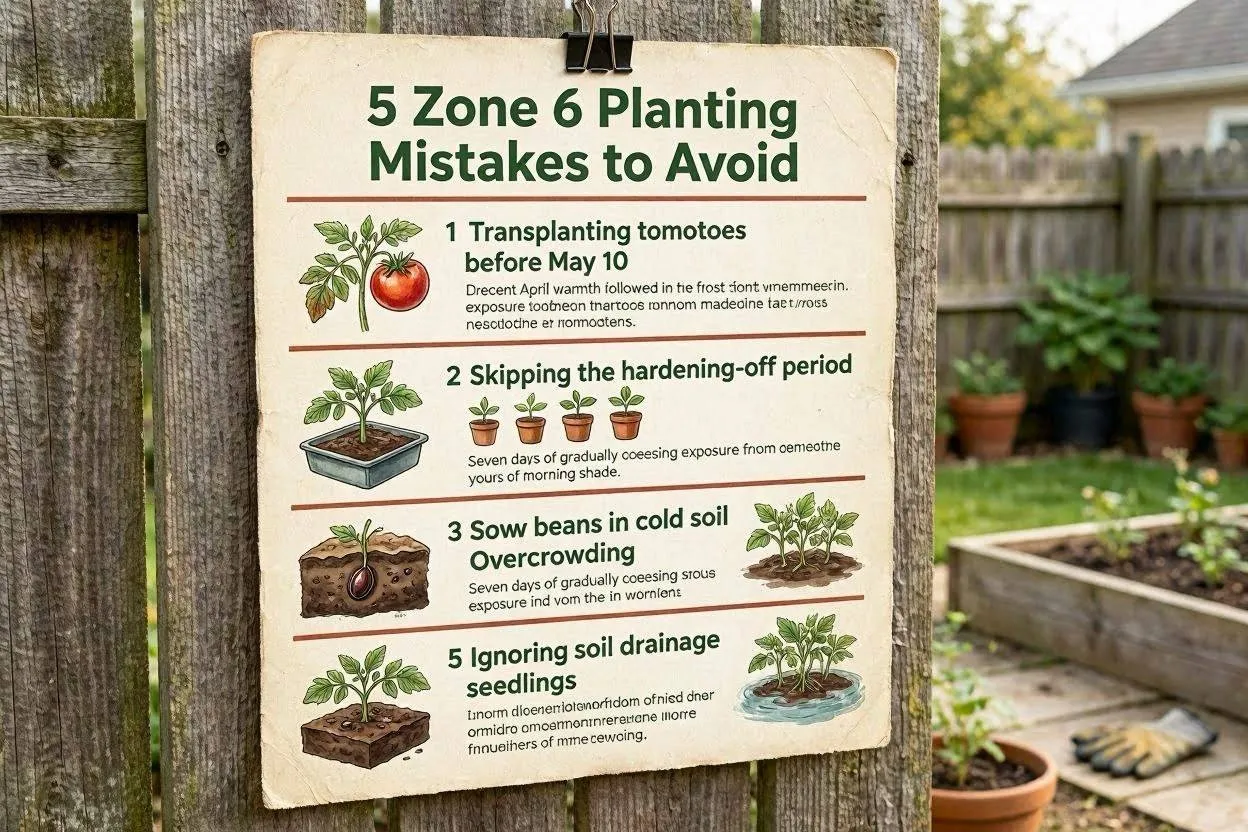
- Transplanting tomatoes before May 10. One April warm spell convinces thousands of zone 6 gardeners every year, and one May frost kills every plant set out early.
- Skipping the hardening-off period. Seedlings need 7 days of gradual outdoor exposure, starting with 2 hours of morning shade. Skipped hardening causes sunscald, wind damage, and stalled growth for weeks.
- Sowing beans in cold soil. Bean seeds rot below 60°F (16°C) soil. Gardeners blame bad seed when the real problem was a cold, wet bed.
- Planting garlic in spring. Spring-planted garlic produces marble-sized bulbs. Garlic demands fall planting and a winter chill to form full heads.
- Ignoring the fall garden. Zone 6 supports a full second season of kale, spinach, lettuce, and broccoli, yet most gardeners quit after tomato season and waste 60 growing days.
Zone 6 Planting Calendar FAQs
When should I plant tomatoes in zone 6?
Transplant tomatoes outdoors between May 10 and May 20 in zone 6. Start the seeds indoors March 1 to 15, which gives seedlings the 8 weeks they need before transplant.
What can I plant in March in zone 6?
Sow peas, spinach, radishes, and onion sets directly outdoors from March 15 onward. Broccoli and cabbage transplants can join them in late March under row covers.
Is zone 6a colder than zone 6b?
Yes, zone 6a runs 5°F (3°C) colder, with winter lows of -10°F to -5°F (-23°C to -21°C). That difference shifts safe planting dates about 1 week later in spring.
How long is the zone 6 growing season?
Zone 6 delivers 150 to 180 frost-free days, running from mid-April through late October. Season extenders like cold frames and row covers stretch that window by 4 to 6 weeks.
When do I plant garlic in zone 6?
Plant garlic cloves between October 1 and November 1 in zone 6. Fall planting lets roots establish before winter, and you harvest full bulbs the following July.
Start Your Zone 6 Garden Today
The 2026 season starts now, not in May. Order your seeds this week, mark your last frost date on the kitchen calendar, and start those onion seeds by late January. Save this planting calendar, print the master table, and check back each month for your next planting window. Your best garden year starts with one packet of pea seeds and a date circled in March.