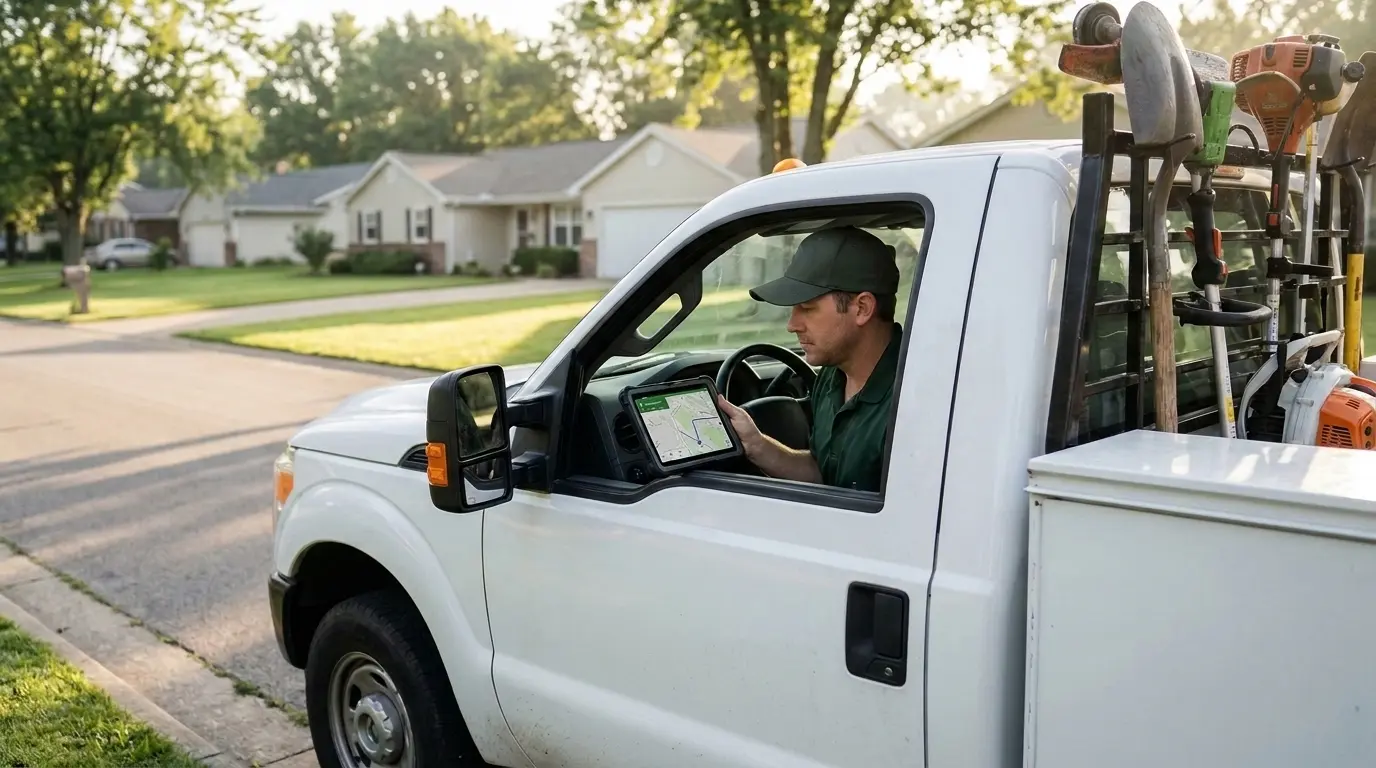
To hire a landscaper who is actually local, check three things before comparing quotes: where the office or equipment yard is, which towns the crew works in, and who answers the phone. None proves much alone; together, they show whether a crew is based near you or only advertises there. Most tips on how to hire a landscaper say to go local and stop there.
Why a Local-Looking Listing Can Mislead
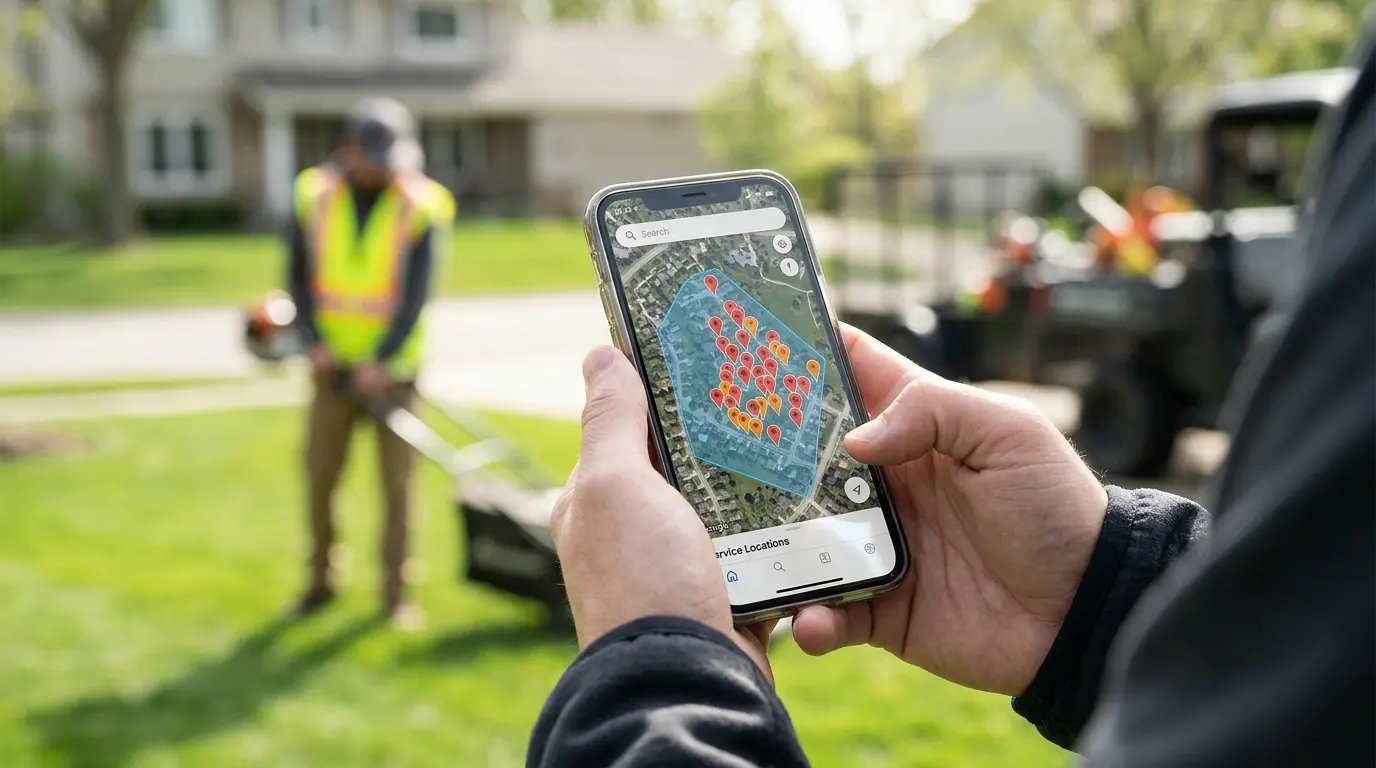
Under Google’s Business Profile guidelines, a crew without a storefront that comes to your yard is a service-area business and should hide its address, so a map listing without one can be normal.
The guidelines also keep a service area within about 2 hours of driving from the base, though larger areas may suit some businesses. So a listing covering your town can be two hours away. A P.O. box or a rented “virtual office” where the business doesn’t operate isn’t an eligible address.
Each clue answers a different question. On its homepage, nearbia.com, a project turning public records into a US business directory, lists a field note on all three and where each stops helping.
What each clue answers, and what it doesn’t prove.
Where Is the Office or Yard?
Ask where the trucks and mowers park overnight, and get the legal business name. A home address is normal for a small crew.
To verify a business address, search that name in your state’s business records, and watch for the registered agent. The U.S. Small Business Administration explains that this agent receives official papers for the company and must be in the state, and that many owners hire an agent service. That address may not be the yard.
No record? A sole proprietor may have none: the SBA says you’re automatically one if you do business without registering as another kind of business. Look for its trade name (DBA) with the state, county or city.
Check the Towns They Say They Serve
A town list on a website or profile is the company’s claim, not a record of jobs done there.
Two questions to ask a landscaper: which jobs have you done near my street this past year, and where does the crew start its day? For weekly lawn care: which day are you already in my area?
Check Who Answers the Phone
Google’s guidelines ask for a local number “instead of a central call center helpline number whenever possible,” under “the direct control of the business,” and rule out numbers that redirect callers elsewhere.
Both calls should point to one company and one base.
Call the website’s number and the map listing’s; ask who’s speaking and where the crew is based. If whoever answers promises a pro will call back, it’s likely a referral service. A local area code is a hint, not proof.
Do Landscapers Need a License?
It depends on the state: the SBA notes that industry requirements “often vary by state,” and a license may come from a state, county or city. California, for one, issues a separate C-27 Landscaping Contractor license through its Contractors State License Board.
If your state licenses the work, look up the number and match the name to your quote.
What Else to Check Before You Hire
The rest is standard advice on how to find a good landscaper.
| Check | How | Red flag |
|---|---|---|
| Experience | Years in business, jobs like yours, trade groups | “We do it all” |
| Nearby work | Neighbors’ recommendations and recent jobs near you; reviews on several sites, BBB included | Reviews naming no towns |
| Photos | Ask which show the crew’s own work | Photos nobody can place |
| Insurance | A certificate before work starts | “We’re covered,” nothing on paper |
| Quotes | Two or three written quotes after site visits | A firm phone price, or the lowest by far |
| Contract | Scope, dates and payment terms in writing | Pressure to sign today |
For deposit rules, ask the consumer protection office in your state. Local doesn’t guarantee good work, but you can check it.