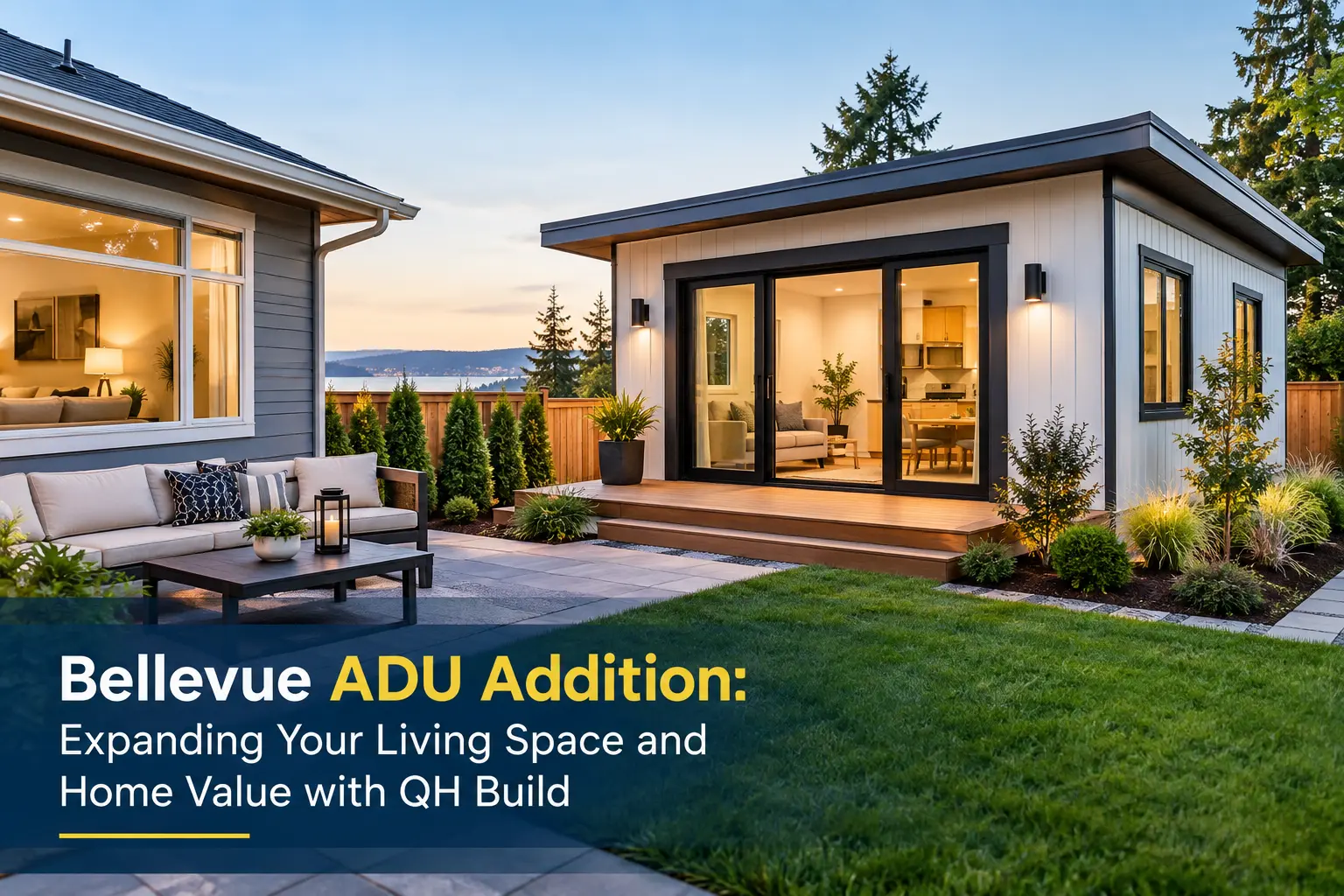
Bellevue, Washington, is one of the most sought-after places to live in the Pacific Northwest, and it’s not hard to see why. Strong tech employers, good schools, and well-kept neighborhoods keep pulling buyers in, so real estate values here have been climbing for years. If you already own property in Bellevue, that appreciation opens up an option a lot of homeowners overlook: instead of moving, you build an Accessory Dwelling Unit (ADU) on the lot you’ve already got. For anyone looking to expand their living space, make room for a growing or shrinking family, or start pulling in rental income, a Bellevue ADU addition tends to be one of the better property investments you can make right now.
An ADU lets you get more out of your existing lot without the cost and disruption of buying a new house. The catch is that building one means dealing with city zoning codes, structural engineering requirements, and coordinating multiple trades, which is a lot to manage on your own. That’s where a contractor who actually knows Bellevue’s permitting process earns their fee. QH Build has built a name for itself doing exactly this kind of work across Bellevue and the greater Eastside.
What Counts as a Bellevue ADU Addition?
An ADU addition is a self-contained secondary unit on the same lot as your main house, with its own kitchen, bathroom, bedroom space, and separate entrance. It functions as an independent home, even though it shares the property with your primary residence.
Homeowners in Bellevue generally pick between two structural approaches:
Attached ADUs (AADUs) are built into or connected to the main house. Think a ground-floor addition, a second-story bump-out, a converted garage, or a finished basement suite with its own exterior door.
Detached ADUs (DADUs), sometimes called backyard cottages, stand alone in the side or rear yard. They give both the primary household and the ADU occupants more privacy since there’s physical separation between the two living spaces.
Either way, you end up with more usable square footage on the same lot, and the addition can be designed to match your home’s existing style instead of standing out as an obvious add-on.
Navigating Bellevue’s ADU Zoning Rules
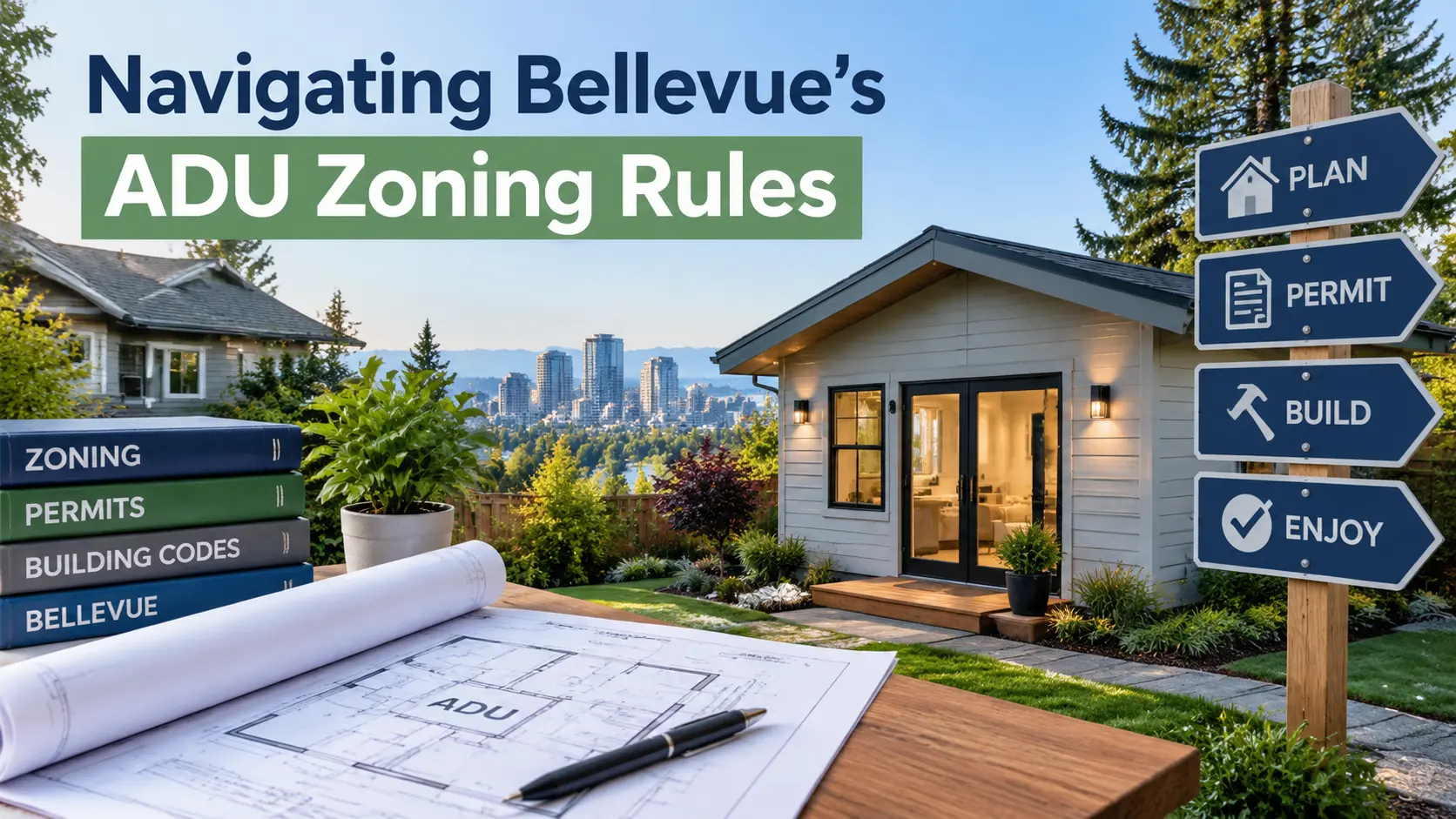
Washington’s HB 1337 and updates to Bellevue’s own municipal code have made ADUs considerably easier to build over the past few years. Owner-occupancy requirements have loosened, and floor-area caps now allow secondary units up to 1,000 square feet, which covers most of what homeowners actually want to build.
That said, the process still involves real requirements you can’t skip:
- Setbacks and lot coverage. Your ADU has to sit a certain distance from property lines, and there’s a cap on how much of the lot you’re allowed to build on.
- Tree retention. Bellevue takes mature tree preservation seriously enough that excavation near protected trees has to follow specific rules, so that’s worth checking before you fall in love with a particular layout.
- Utility connections. Electrical panel upgrades, plumbing tie-ins, sewer connections, and HVAC all need to be planned out and permitted correctly rather than figured out mid-build.
- Building code compliance. The unit itself has to meet current Washington State energy codes, fire separation requirements, and egress rules.
None of this is impossible to navigate, but it’s the kind of detail work that trips up first-time ADU builders who try to go it alone.
Why Homeowners Work with QH Build
QH Build is led by Andrii Klubov, and the company has built its reputation in Bellevue on residential construction, remodeling, and ADU additions specifically. The idea behind how they run projects is pretty simple: most of the stress in home construction comes from not knowing what’s happening or what things will cost, so they try to eliminate both.
Key Advantages of Partnering with QH Build
- End-to-end management. They handle the entire project themselves, from the first site visit and 3D architectural modeling through permit filing, framing, trade coordination, and the final walkthrough. You’re not managing five different contractors.
- Local permitting experience. They work directly with the City of Bellevue’s Development Services Department on engineering reviews, utility permits, and inspections, which cuts down on the delays that happen when paperwork gets lost between parties.
- Fixed-price contracts. Every project comes with a detailed estimate up front. Budget overruns are one of the most common complaints in residential construction, and this is how they try to avoid that outcome.
- Tailored design. Design work is matched to your existing home, and you get interactive 3D renderings before any ground is broken, so you can see how the space will actually feel rather than guessing from a floor plan.
- Materials built to last. They build with materials meant to last, not just materials that pass inspection cheaply.
The 5-Step Build Process
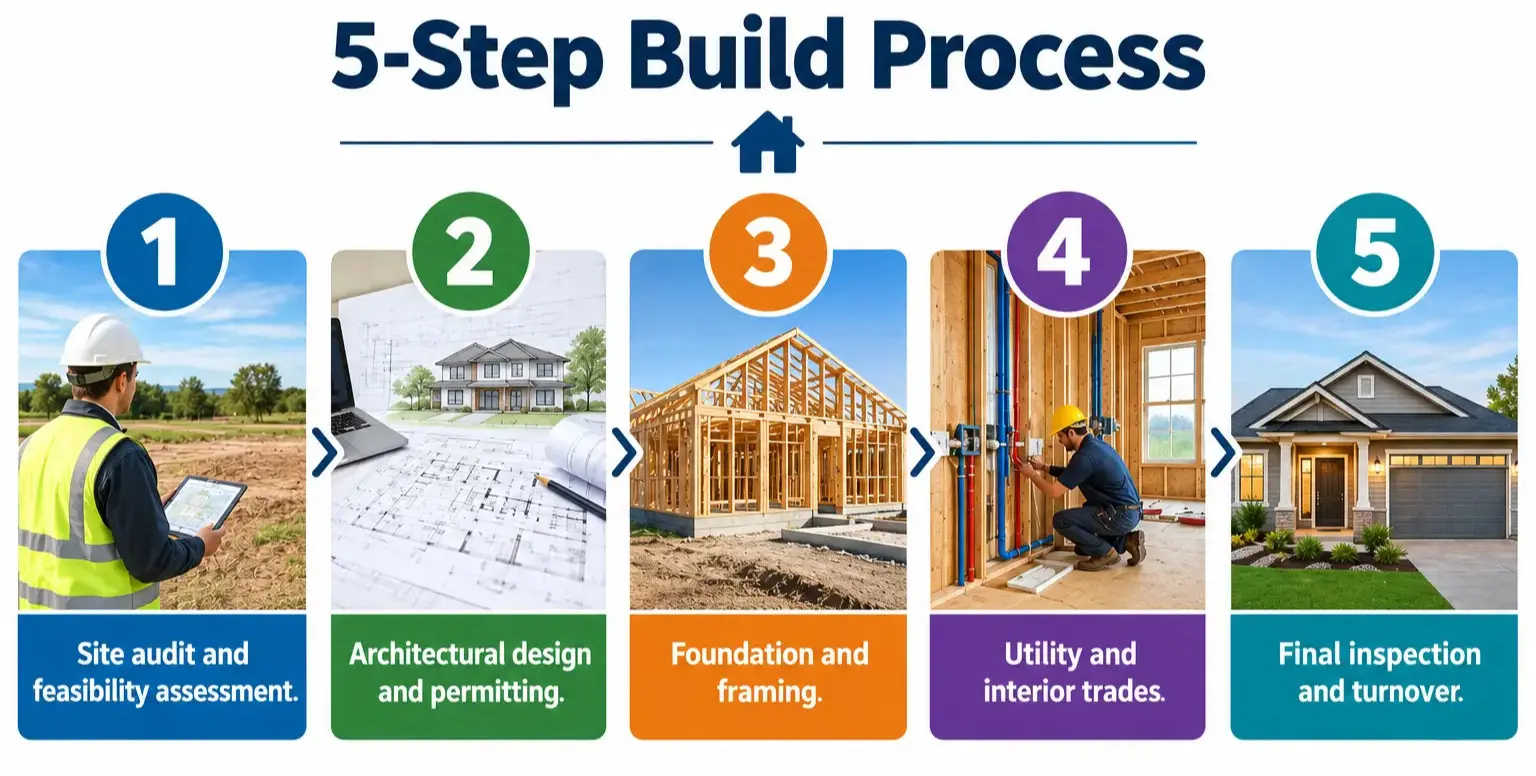
QH Build runs every ADU addition through the same five phases, starting well before anyone picks up a shovel:
- Site audit and feasibility assessment. Lot dimensions, existing utility capacity, structural attachment points, and whatever zoning constraints apply to your specific property all get evaluated first.
- Architectural design and permitting. The design team develops custom floor plans and 3D renderings, then bundles everything into a full permit package for the city.
- Foundation and framing. Site prep, foundation work, and structural framing, all built to code from the ground up.
- Utility and interior trades. Electrical, plumbing, insulation, drywall, cabinetry, flooring, and HVAC installation, the part that turns a frame into a livable space.
- Final inspection and turnover. Once the unit passes municipal inspection, it’s handed over ready to move into.
What an ADU Addition Is Actually Worth
Beyond the extra living space, an ADU addition tends to pay for itself in a few different ways.
Rental demand across King County is high enough that many homeowners cover a meaningful chunk of their mortgage with ADU rent alone. Beyond the monthly income, permitted square footage raises your home’s appraised value, which matters if you ever refinance or sell. And for families dealing with aging parents, adult kids who need a soft landing, or long-term guests, an ADU offers real privacy without anyone having to move across town.
Conclusion
A Bellevue ADU addition is a serious project, but it’s also one of the more reliable ways to get more out of a property you already own. The part that makes or breaks the experience is who you hire to build it. Zoning compliance, structural work, and trade coordination all have to come together correctly, and that takes a contractor who’s done it before in this specific city.
QH Build has built its business around exactly that combination: craftsmanship, honest pricing, and full turnkey management from start to finish.
To see recent projects or set up a consultation, visit https://qh-build.com/