
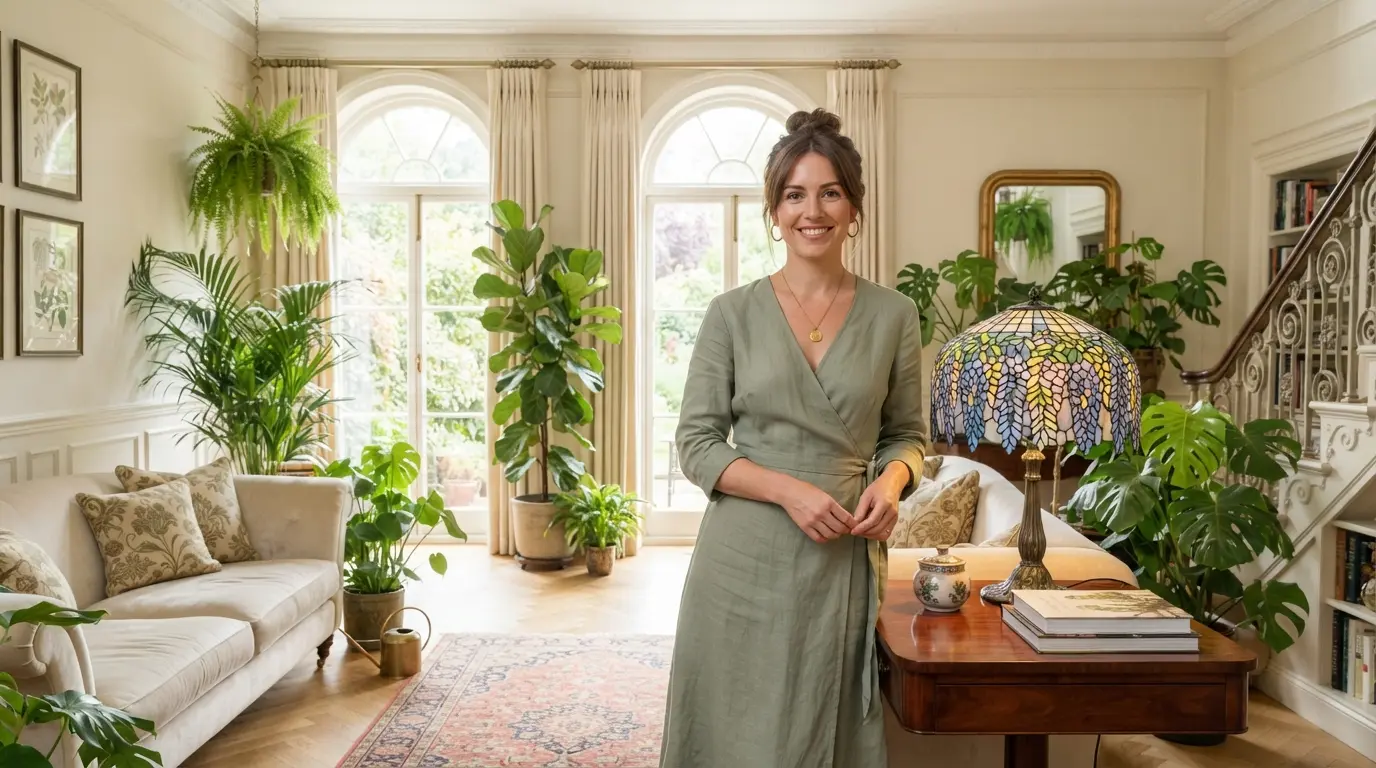
If your living room already leans toward the botanical (trailing pothos on a shelf, a fiddle-leaf fig in the corner, linen cushions in mossy greens), a plain lamp can feel like an afterthought. Stained-glass table lamps, on the other hand, pick up on that same natural language. Their leaded-glass shades are often patterned after leaves, blossoms, dragonflies, or vines, so instead of competing with your plants, they echo them. Used thoughtfully, they can turn a green-filled reading nook into something that feels curated rather than just decorated.
Choosing Colors That Complement Greenery
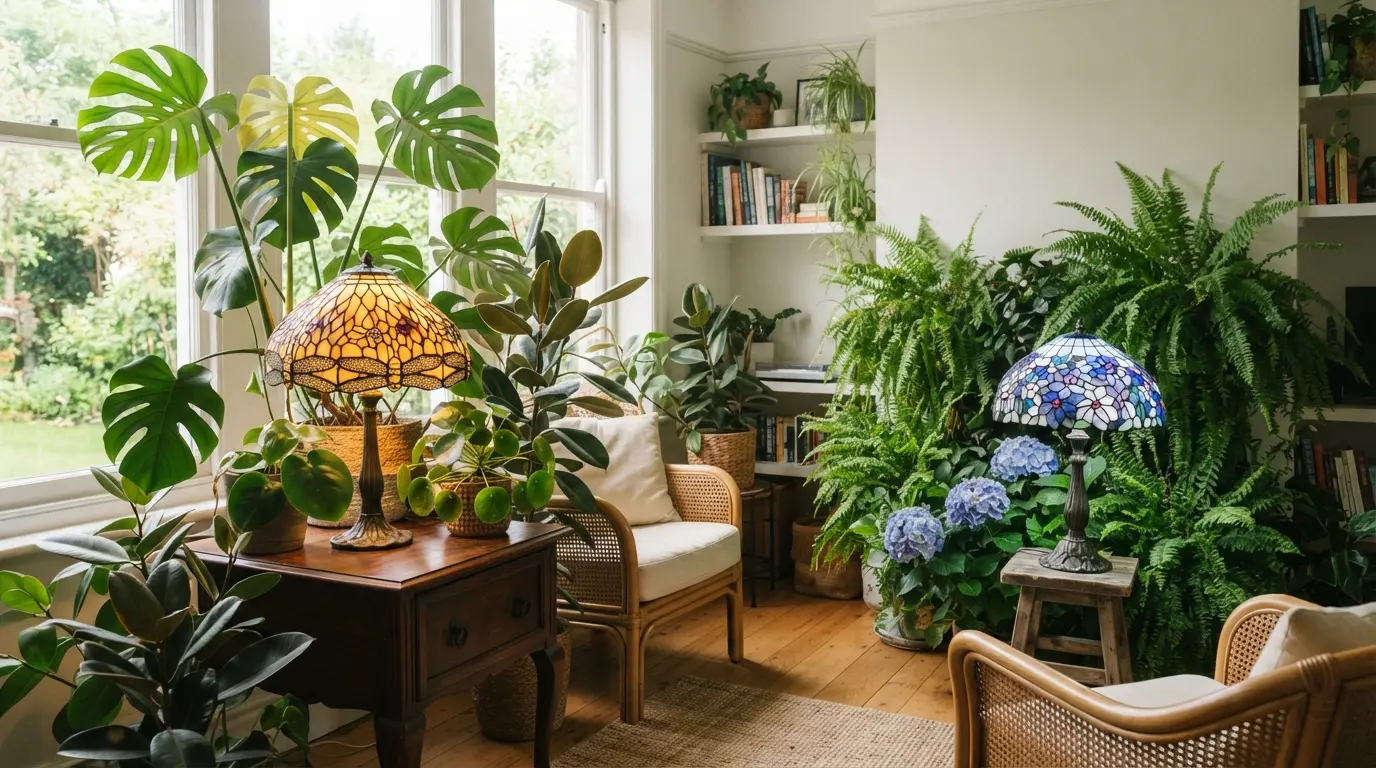
The easiest way to make Tiffany table lamps feel at home in a plant-filled room is to think of it the way you’d think of a companion planting: pick colors that play off what’s already there rather than fight it. Amber, moss green, and soft gold tones tend to blend into foliage-heavy corners almost seamlessly, especially near darker leaves like monstera or rubber plants. If your room leans more floral, with pinks and blush tones in your cushions or curtains, a shade with rose or cherry-blossom motifs can pull the whole look together. Blues and violets are worth considering too, particularly if you want the lamp to stand out as a focal point against green rather than blend into it, the way a delphinium or hydrangea pops against surrounding leaves.
Getting the Size Right for Where It’s Going
Scale matters more with stained-glass lamps than with plain ones, because the shade itself draws the eye. On a narrow side table next to an armchair, a smaller shade, the kind usually sold in the 20 to 30cm range, keeps the lamp from overwhelming the surface or blocking your view of the plants nearby. A console table or a wider surface behind a sofa can carry a larger lamp, often in the 40 to 50cm range, especially if it needs to balance out a tall planter or a cluster of foliage on the other end. In a dedicated reading corner, aim for a lamp whose shade sits roughly at eye level when you’re seated, so the light falls where you’re reading rather than glaring down at the page.
Building a Cozy, Plant-Filled Seating Area
A good garden-inspired seating nook usually layers a few elements: one or two larger plants for structure, smaller potted greenery at different heights, natural materials like rattan, linen, or wood, and then lighting that ties it together. This is where Tiffany table lamps earn their keep. Their glass patterns often mirror the shapes already in the room, so placing one on a side table next to a fern or a trailing plant creates a visual rhythm rather than a random assortment of objects. Keep the surrounding palette relatively calm (woven baskets, unglazed ceramic pots, a jute rug) so the lamp’s color and pattern can stand out without the room feeling cluttered.
Balancing Decorative Light with Everyday Function
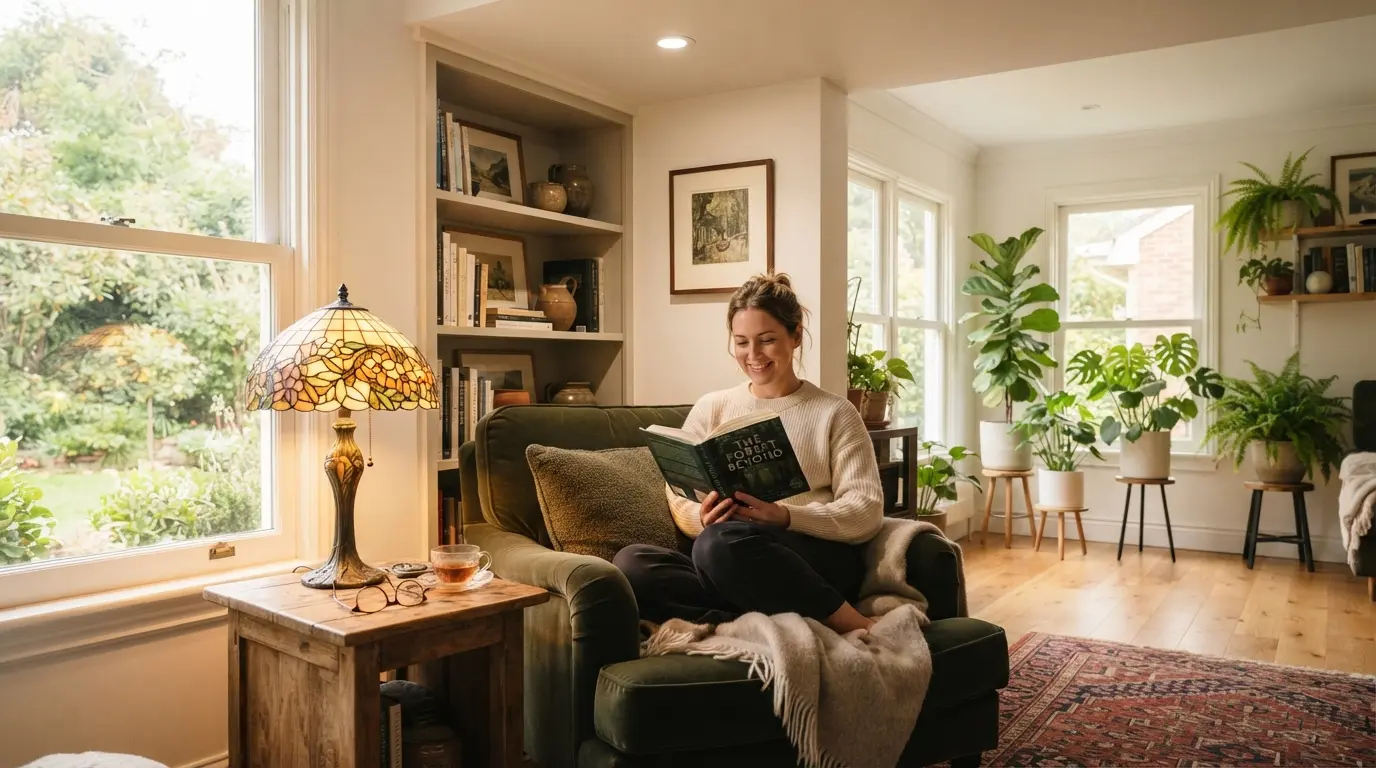
Stained-glass lamps are wonderful for ambiance, but they’re rarely bright enough to be the only light source in a room, especially for reading or close-up tasks. Pair one with a more functional light, such as a floor lamp with a plain shade, an overhead fixture, or a small adjustable reading lamp, so you have flexibility depending on the time of day. In the evening, the stained-glass lamp alone can create a warm, low-key glow that suits a quiet space filled with plants; during the day or for tasks like reading fine print, switch on the brighter secondary light instead.
Conclusion
A garden-inspired living room is really about layering: plants, natural textures, and light that feels warm rather than clinical. A well-chosen stained-glass table lamp, sized to its spot and colored to complement your greenery, can do a lot of that work on its own. No major renovation required, just a little attention to scale and tone.