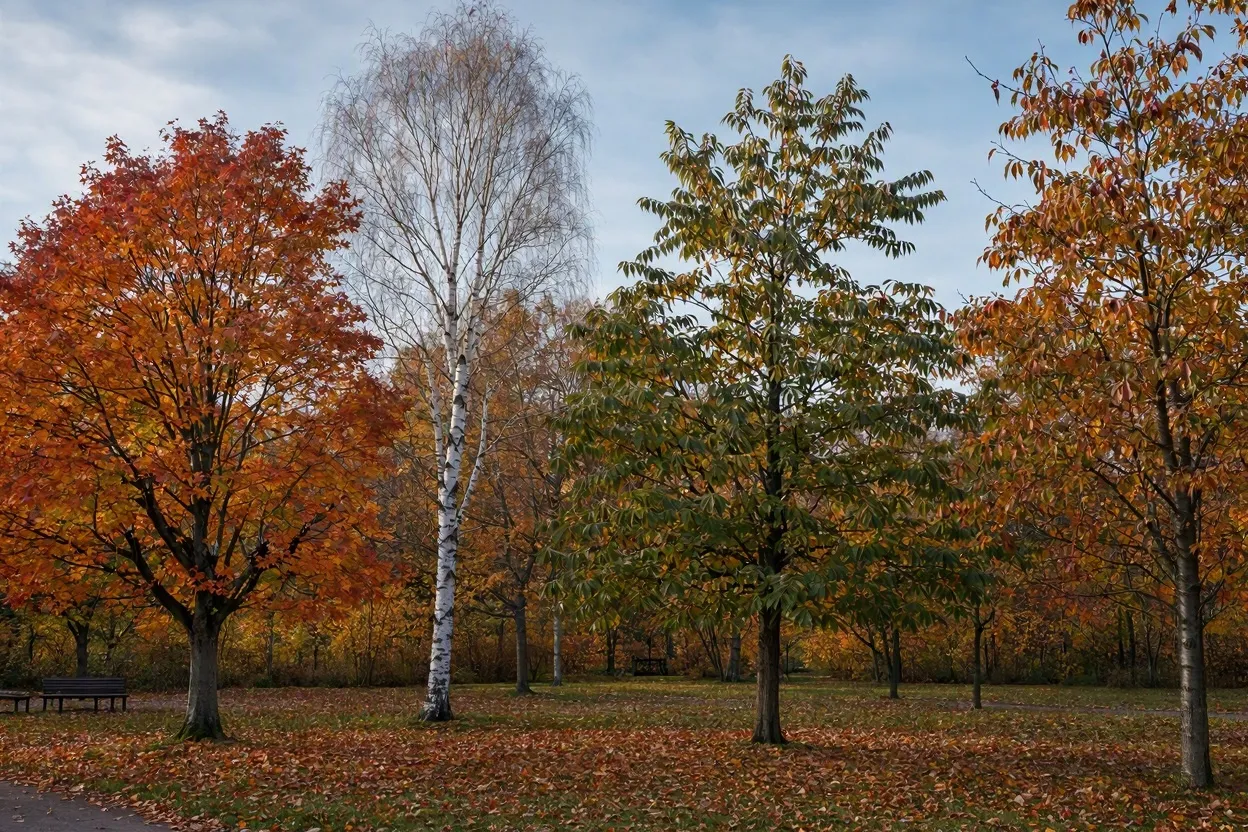
Trees not to prune in autumn include apple, pear, cherry, plum, peach, apricot, dogwood, redbud, magnolia, crape myrtle, Japanese maple, spruce, and pine. Fall cuts remove flower buds, trigger frost-tender growth, and open wounds to disease. University of Georgia (UGA) Extension advises waiting until late winter, around February or early March, and timing shifts with region, so check your state extension service.
Trees not to prune in autumn are species that lose flower buds, sprout frost-tender shoots, heal slowly, or develop wound infections when cut between leaf color change and full dormancy. Many gardeners reach for pruners during fall cleanup, Epic Gardening noted in October 2023, yet pruning stimulates new growth that cannot harden before frost. This guide names 11 tree types to skip and explains 5 reasons. Every species gets a safe pruning window.
Key Takeaways
- Late winter is the best pruning window for most trees: UGA Extension says fall is not the best time to prune most trees and shrubs and recommends February or early March, just before spring growth begins (UGA, updated May 2025).
- Fruit trees such as apple, pear, cherry, plum, and peach form flower buds from mid-summer to mid-fall, so autumn cuts reduce next year’s fruit (Epic Gardening, October 2023).
- Dogwood, redbud, and flowering cherry bloom on old wood, so these trees need pruning right after flowering, not in fall (UGA, updated May 2025).
- Fresh fall wounds sit in cool, damp weather that spreads fire blight, silver leaf, and Cytospora canker (Epic Gardening, October 2023).
- Wound paint and sealants are not recommended, because studies cited by UGA Extension show they slow healing (UGA, updated May 2025).
- Dead, diseased, infested, and hazardous branches are the only cuts worth making in fall (Elite Tree Care, October 2024).
What Are the Main Trees Not to Prune in Autumn?
The main trees not to prune in autumn are apple, pear, cherry, plum, peach, nectarine, apricot, dogwood, redbud, lily magnolia, crape myrtle, Japanese maple, spruce, and pine. Each of these species either sets flower buds in fall, grows frost-tender shoots after cutting, or develops disease through open wounds, according to UGA Extension and Epic Gardening.
For most, late winter is safe. Roundups of what to leave alone in fall often blend trees with shrubs and perennials, so the table below sticks to trees and lists the exact window and source for each type.
| Tree | Main fall risk | Safe pruning window | Source |
| Apple and pear | Flower bud loss; fire blight | Late winter to early spring | Epic Gardening, Oct 2023 |
| Cherry and plum | Silver leaf; flower bud loss | Late winter (one source says summer) | Gardening Chores, Nov 2023; Woman & Home, Nov 2024 |
| Peach and nectarine | Cytospora canker | Late winter to early spring | Epic Gardening, Oct 2023 |
| Apricot | Slow wound healing | Late winter to early spring, once buds show | Gardening Chores, Nov 2023 |
| Flowering dogwood | Flower buds on old wood | Right after bloom | UGA Extension, May 2025 |
| Redbud | Flower buds on old wood | Right after bloom | UGA Extension, May 2025 |
| Lily magnolia | Flower buds set the prior season | Midsummer, after bloom | Epic Gardening, Oct 2023 |
| Crape myrtle | Frost damage to young stems | January to early March, while leafless | Epic Gardening, Oct 2023; UGA Extension, May 2025 |
| Japanese maple | Sap bleeding; winter stress | Late winter or spring for heavy cuts | Epic Gardening, Oct 2023 |
| Spruce and pine | Interrupted hardening-off | Spring | Epic Gardening, Nov 2024 |
| Citrus, olive, persimmon | Pruning before harvest or bloom | After harvest, in late winter | Gardening Chores, Nov 2023 |
Why Should You Not Prune Trees in the Fall?
You should not prune trees in the fall because cuts remove next year’s flower buds, trigger frost-tender new growth, expose wounds to cool and damp weather, slow wound healing, and divert energy from winter storage. The reasons cited by UGA Extension, Epic Gardening, and Elite Tree Care fall into these 5 causes.
Reason 1: Cuts remove next year’s flower buds
Fruit trees form flower and fruit buds from mid-summer to mid-fall, then open them the following spring, Epic Gardening reported in October 2023. Cut a branch, lose its buds. Dogwood, redbud, and flowering cherry bloom on buds formed the previous season, UGA Extension notes, so dormant pruning sacrifices the next year’s flowers. A tree renovated during dormancy carries few flowers for at least a year.
Reason 2: New growth does not harden before frost
Autumn pruning stimulates new growth, and the fragile shoots don’t have time to harden before the first frost, which lowers winter hardiness, according to Epic Gardening (October 2023). Elite Tree Care (October 2024) makes the same point about tender buds. Edge-of-range trees face the highest risk. Fig trees are usually hardy in zones 8 to 12, and fall pruning reduces the ability of a cold-hardy fig in zone 7 to survive winter.
Reason 3: Cool, damp weather spreads disease
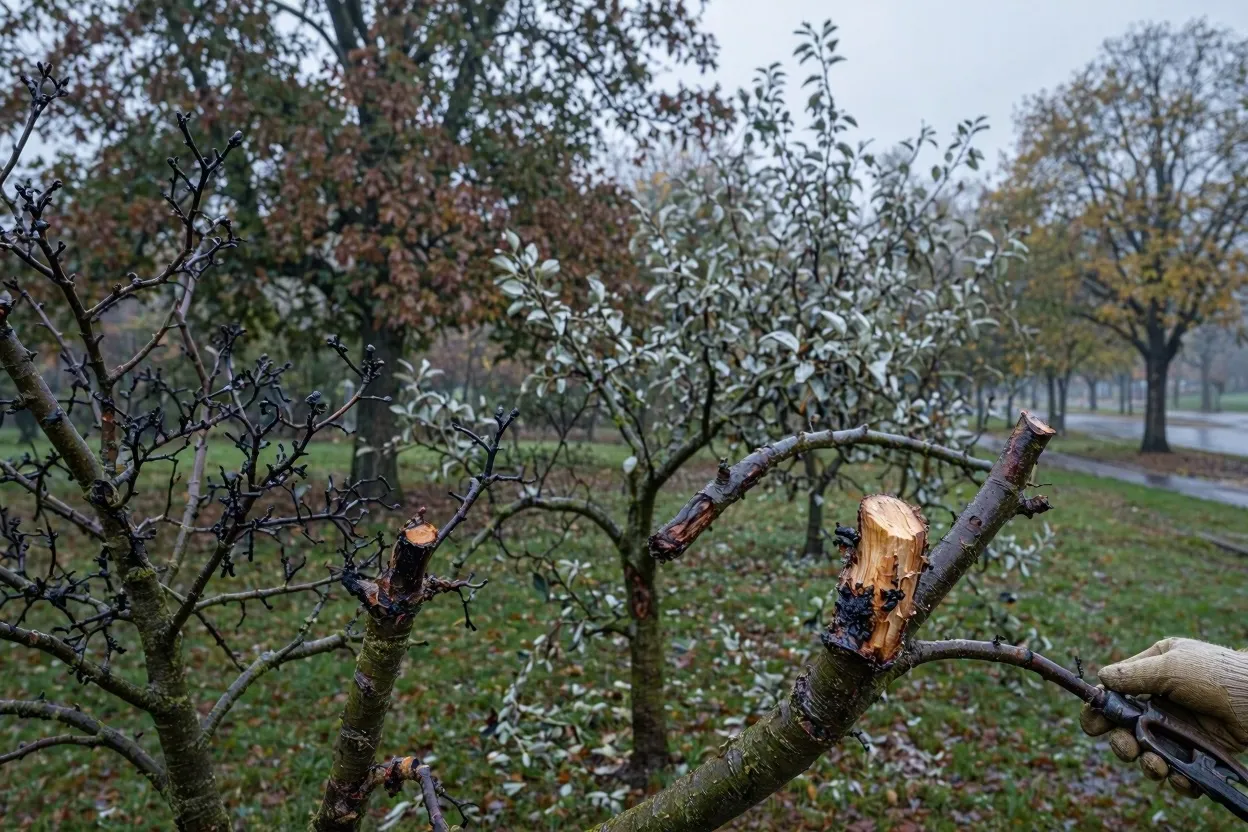
Cool, damp fall weather favors fungal spores and bacterial infections, and each fresh cut gives those pathogens an entry point, Epic Gardening reported in October 2023. Fire blight hits apple and pear trees, while silver leaf targets plums and cherries. Cytospora canker attacks peaches and cherries. Fall pruning doesn’t cause these diseases. Weakened or exposed trees are likelier to become infected. Epic Gardening (November 2024) adds oak wilt and Dutch elm disease to the list, and it states that oak wilt and bacterial canker have no proven home-gardener treatment.
Reason 4: Wounds heal slowly in cold weather
An open wound in winter is more likely to suffer damage from water freezing and thawing inside cracks in the exposed wood, according to UGA Extension (updated May 2025). Trees heal fastest during the spring growing season, and a wound that hasn’t closed by winter stays vulnerable, Elite Tree Care (October 2024) explains. Timing matters here. Late-winter pruning shortens the time a wound stays open, because rapid spring growth closes cuts quickly, UGA Extension says.
Reason 5: Trees redirect energy away from winter storage
In fall, trees concentrate sugars that act as natural antifreeze, while their cells shrink and their processes slow for dormancy, Epic Gardening reported in November 2024. Pruning at this stage forces energy into wound repair instead of root growth, while warm soil lets roots expand deeper. Reserves only go so far. Elite Tree Care (October 2024) notes that wounds consume the energy a tree stored for winter, leaving less to withstand cold and storms.
What Happens If You Prune a Tree in the Fall?
Pruning a tree in the fall reduces next spring’s flowers and fruit, produces frost-damaged shoots, and leaves open wounds exposed through winter. Epic Gardening (October 2023) warns that harsh fall pruning can weaken, stunt, or kill a young tree, and UGA Extension (updated May 2025) notes that open winter wounds suffer freeze-thaw damage.
The next question is what to do after an accidental fall cut. Follow these 6 steps:
- Stop pruning and leave the remaining branches in place.
- Leave every cut unsealed, because wound paint slows healing (UGA Extension, updated May 2025).
- Remove only dead, diseased, or hazardous wood.
- Bag diseased cuttings and keep them out of the compost (Epic Gardening, October 2023).
- Sanitize pruner blades with a 10 percent bleach solution between plants (UGA Extension, updated May 2025).
- Contact a certified arborist or your local extension office if cuts ooze or branches show sunken, discolored lesions (Epic Gardening, October 2023 and November 2024).
Which Tree Species Need the Most Caution This Fall?
Fruit trees, old-wood flowering trees, crape myrtle, Japanese maple, conifers, and warm-climate fruit trees need the most caution in fall. The 11 entries below name each species’ main risk and safe pruning window, drawn from UGA Extension, Epic Gardening, and Gardening Chores.
Apple and pear
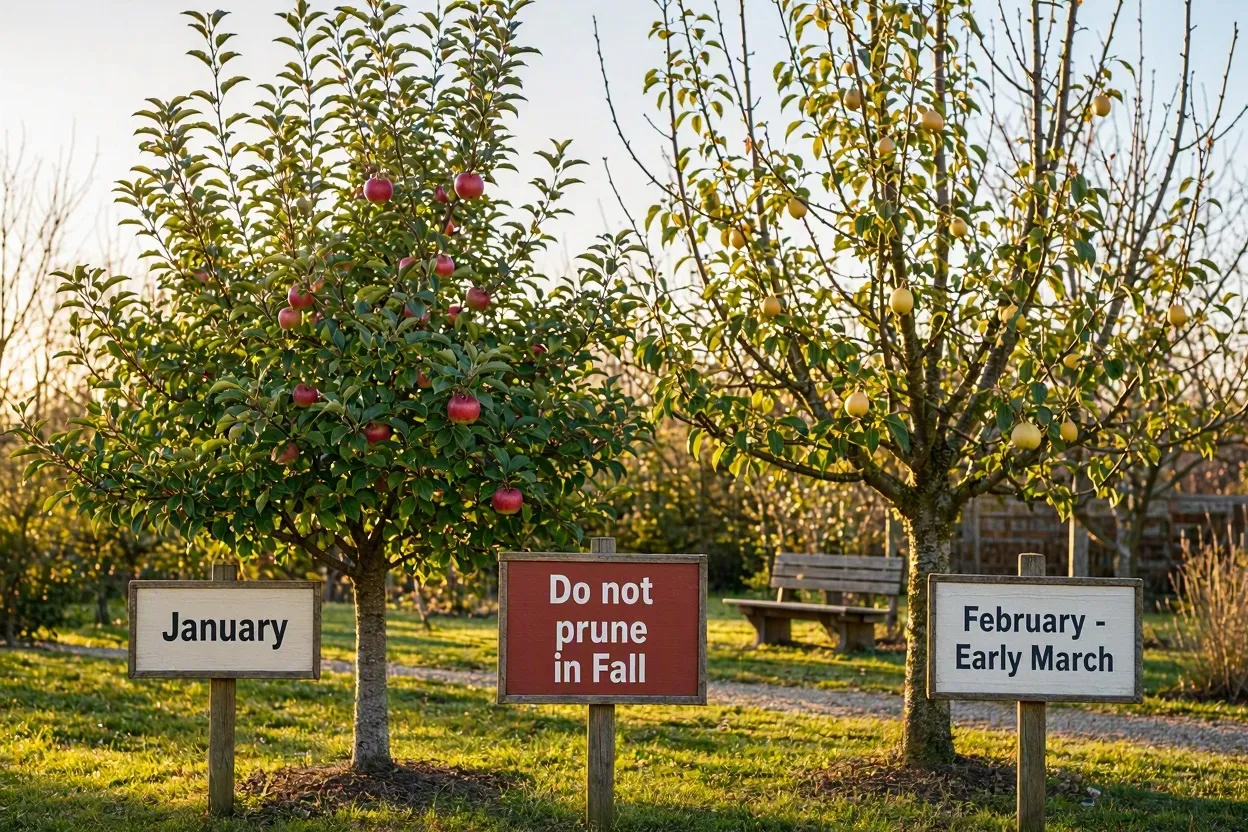
Apple and pear trees should not be pruned in fall; wait until late winter or early spring. Fall cuts remove flower buds that form from mid-summer to mid-fall and invite fire blight, a bacterial infection that oozes from cut surfaces and spreads through a small orchard, according to Epic Gardening (October 2023). Woman & Home (November 2024) names January as the pruning month for apple and pear trees. In Georgia, UGA Extension recommends February or early March for fruit trees. The two calendars differ.
Cherry and plum
Cherry and plum trees need a late-winter prune, not a fall cut. Silver leaf, a fungal disease of plums and cherries, enters through pruning wounds exposed to autumn air and moisture, Epic Gardening reported in October 2023. In late winter, dormant cherry trees stand bare with no buds, which makes pruning easy and safe, according to Gardening Chores (November 2023). Plums are trickier. Woman & Home (November 2024) quotes an expert who advises against winter pruning of plums to prevent silver leaf, so plum owners should confirm local timing with an extension office.
Peach and nectarine
Peach and nectarine trees should wait until late winter or early spring. Cytospora canker, a fungus that causes sunken, discolored lesions on branches, spreads faster after fall pruning because it attacks weakened trees, per Epic Gardening (October 2023). Peach scab and bacterial canker join the list of fall pathogens that enter open wounds, Epic Gardening (November 2024) adds. The pattern holds.
Apricot
Apricot trees should never be pruned in fall. Gardening Chores (November 2023) says apricots heal cuts poorly, and the wrong cut at the wrong time can kill the whole tree. The safe window opens in late winter or early spring, once new leaf and flower buds show on the branches. Dead wood is the lone exception. If an apricot has a dead branch in fall, remove only that branch and leave the wound unsealed, because UGA Extension advises against sealants.
Flowering dogwood
Flowering dogwood should be pruned right after bloom, not in fall. UGA Extension lists dogwoods among trees that bloom on old wood, meaning buds formed the previous season, so dormant pruning removes the next year’s flowers. Colored-bark dogwoods such as Cornus sanguinea follow a different rule. Gardening Chores (November 2023) advises waiting until late March or April to keep the winter bark on display. Bark changes the calendar.
Redbud
Redbud trees should be pruned right after they finish blooming. UGA Extension lists redbuds among old-wood bloomers and says most of these trees show obvious flower buds that warn against pruning. Cutting a dormant redbud doesn’t harm the tree itself, but it sacrifices the next spring’s flowers. Flowers pay the price. A redbud that needs renewal pruning in the dormant season produces few flowers for at least a year.
Lily magnolia
Lily magnolia should be pruned lightly in midsummer, never in fall. Epic Gardening (October 2023) explains that this deciduous shrub or small tree forms its flower buds the season before it blooms, so a fall cut removes the spring flowers. Summer timing is kinder. Pruning at midsummer, after the flowers fade, gives the tree long, warm days to regrow and set new buds before cold weather arrives.
Crape myrtle
Crape myrtle should be pruned in late winter while the tree is leafless, in January or February. Epic Gardening (October 2023) reports that the exact month depends on region and winter severity, and UGA Extension (updated May 2025) lists crape myrtles among trees best pruned in February or early March. Fall cutting strips the stems of their natural winter protection and exposes young growth to frost. Crape myrtle blooms on new growth, so winter pruning doesn’t reduce flowers. Topping is the classic error. Epic Gardening defines it as cutting off all the upper branches and names it the most common crape myrtle mistake.
Japanese maple
No, you should not prune Japanese maple in the fall. Pruning wounds on sap-producing trees bleed sap, and Epic Gardening (October 2023) reports that the dripping sap attracts pests and diseases and adds winter stress. Heavy pruning belongs in late winter or spring, when the tree is dormant and sap is less likely to flow. Summer is for removing damaged branches. Ideal Home (2025) extends the same warning to acers and birches that haven’t lost their leaves.
Spruce and pine
No, you should not prune spruce and pine in the fall. Conifers keep their needles all year and never enter full dormancy, but their bark and branches insulate against cold, so Epic Gardening (November 2024) recommends pruning them in spring like deciduous trees. Fall cuts interfere with the natural hardening-off process, and Epic Gardening (October 2023) adds that they leave wounds open to winter damage and infection. Holly is another matter. UGA Extension includes hollies and other evergreens in its February or early March window.
Citrus, olive, and persimmon
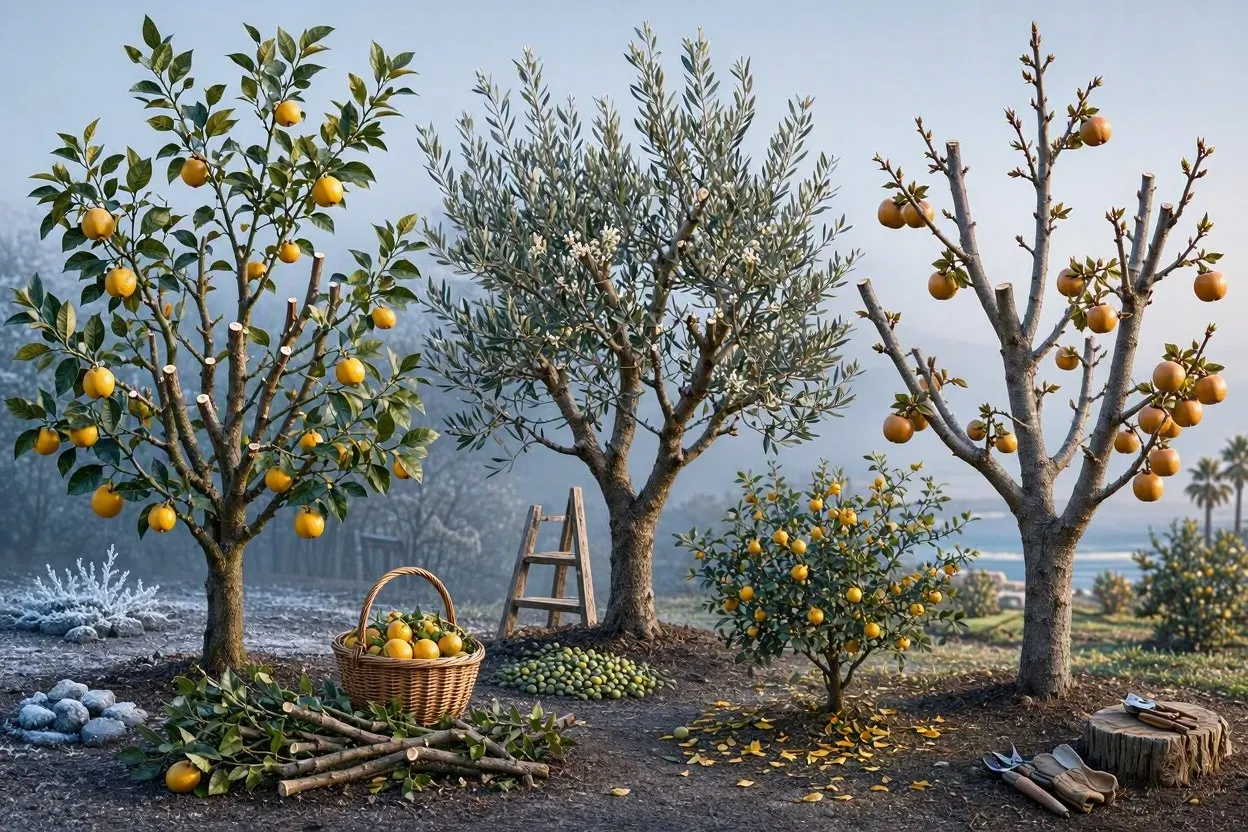
Citrus, olive, and persimmon trees should be pruned after harvest, not in fall while fruit or flowers are developing. Gardening Chores (November 2023) places winter-fruiting citrus pruning after harvest and after the last frost, in early spring. Olives get a window of about 1 month in late winter, after harvest and before new blossoms. Persimmon pruning starts in late winter and ends in early spring. Summer-fruiting lemon varieties can be pruned in fall, per the same source. Frost-free zones break the rule too. Epic Gardening (October 2023) lists citrus and tropical trees in zones 11 and 12 as exceptions, because those zones don’t typically see frost.
Should You Prune Fruit Trees in the Fall?
No, you should not prune fruit trees in the fall. Apple, pear, cherry, plum, peach, and nectarine trees form flower and fruit buds between mid-summer and mid-fall, so autumn cuts reduce next year’s harvest, according to Epic Gardening (October 2023). Wait until the trees are fully dormant in late winter or early spring.
Sources disagree on the exact month, so the table compares them.
| Source | Apple and pear | Cherry, plum, and other stone fruit | Date |
| UGA Extension | February or early March (fruit trees) | February or early March (fruit trees) | Updated May 2025 |
| Epic Gardening | Late winter or early spring | Late winter or early spring | October 2023 |
| Gardening Chores | Not covered | Cherry: late winter; apricot: late winter or early spring | November 2023 |
| Woman & Home | January | Summer; plums not in winter | November 2024 |
Late winter has the most support across these sources. Plums are the catch. Woman & Home advises against winter pruning of plums, so plum owners should confirm timing with a state extension service.
Is It OK to Prune Flowering Trees in the Fall?
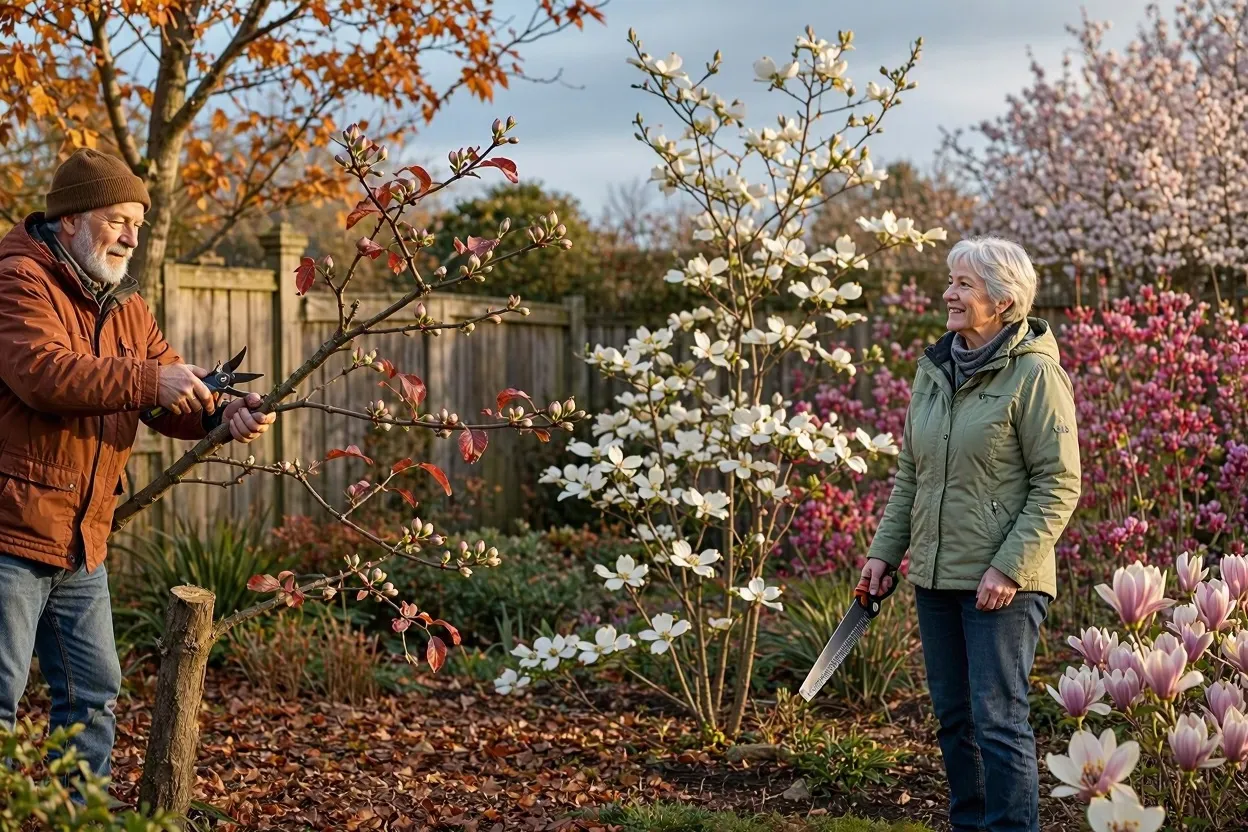
No, pruning flowering trees in the fall is not OK for species that bloom on old wood. Flowering dogwood, redbud, flowering cherry, and lily magnolia form next spring’s flower buds the season before, so autumn cuts remove them, according to UGA Extension and Epic Gardening. Prune these trees right after they finish blooming.
The next question is whether the tree still blooms next spring. Survival isn’t the issue, though. Flowers on the removed wood don’t return. UGA Extension says pruning dormant old-wood bloomers doesn’t harm the tree and sacrifices the following year’s flower buds. Visible flower buds on the branches mean wait.
Can You Prune Trees in the Fall?
Yes, you can prune trees in the fall, but only to remove dead, diseased, infested, or hazardous branches. Elite Tree Care (October 2024) and Epic Gardening (October 2023) support these sanitation cuts and place shaping and thinning in late winter. Treat fall as a cleanup window, not a shaping session.
What Can You Prune in the Fall?
You can prune 4 kinds of branches in the fall: dead, diseased, infested, and hazardous. Each cut removes a health or safety problem rather than shaping the tree.
- Dead branches: remove them, because dead wood attracts pests (Elite Tree Care, October 2024).
- Diseased branches: remove them immediately, bag them, and never compost them (Epic Gardening, October 2023).
- Infested branches: remove them to prevent further damage (Elite Tree Care, October 2024).
- Hazardous branches: remove weak, broken, or hanging limbs before snow and ice add weight (Epic Gardening, October 2023; Elite Tree Care, October 2024).
After an emergency removal, spray the wound with an organic fungicide such as copper, per Epic Gardening (October 2023).
Should You Seal Pruning Cuts With Wound Paint?
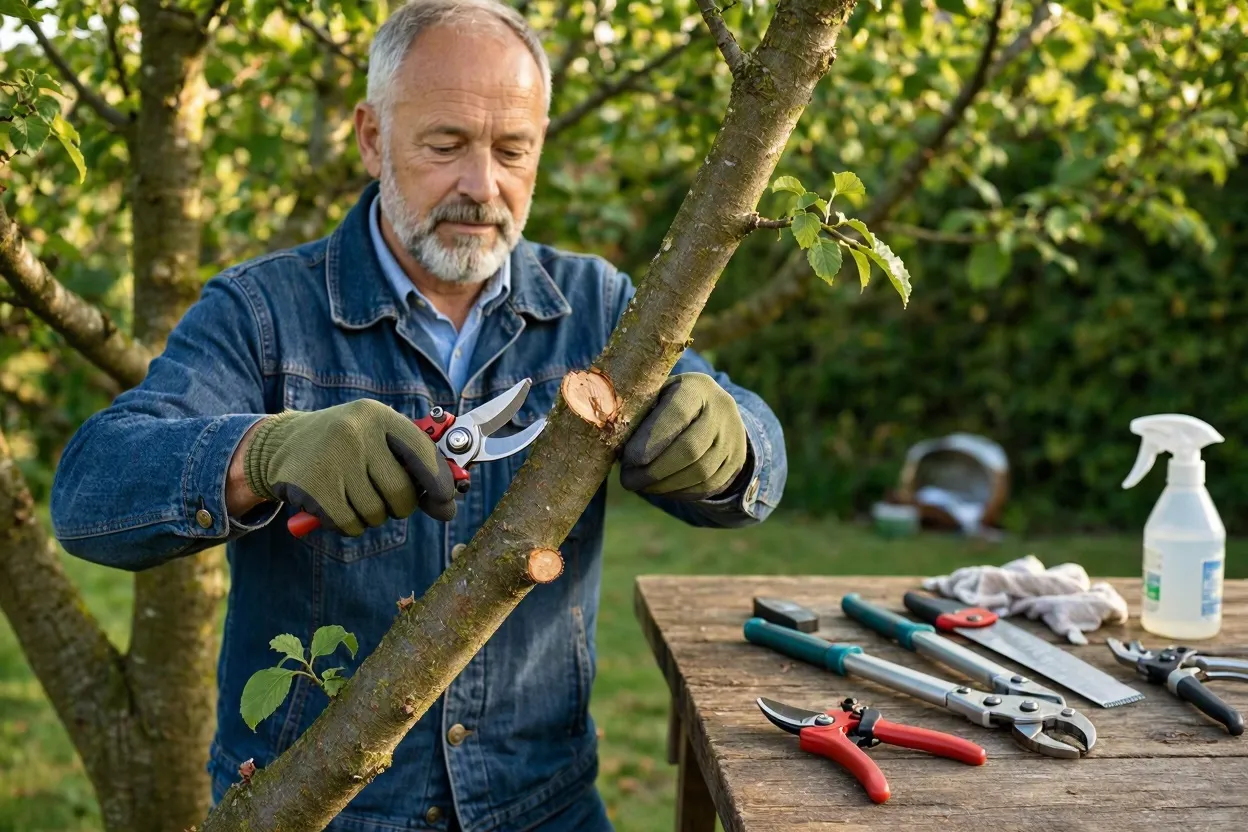
No, you should not seal pruning cuts with wound paint. UGA Extension (updated May 2025) states that numerous studies show pruning paints and sealants slow or delay healing and provide little or no benefit. University of Illinois Extension (2020), cited by Epic Gardening, explains that trees seal pruning cuts with their own wound tissue, a process that needs oxygen. Leave the sealing to the tree.
What should you use instead? Sharp tools make clean cuts that heal faster, per UGA Extension. Bypass pruners suit small branches, loppers handle branches up to 1.5 inches (3.8 cm) thick, a pruning saw suits branches wider than 2 inches (5 cm), and anvil-type pruners tend to crush limbs. Sanitize blades with a 10 percent bleach solution between plants.
When Is the Best Time to Prune Trees?
The best time to prune most trees is late winter, just before spring growth begins. UGA Extension puts that window at February or early March for fruit trees, shade trees, crape myrtles, and evergreens such as holly. Check your state extension service, because timing shifts with region and winter severity.
| Tree group | Prune when | Source |
| Fruit trees and shade trees | Late winter; February or early March in Georgia | UGA Extension, May 2025 |
| Old-wood flowering trees (dogwood, redbud, flowering cherry) | Right after bloom | UGA Extension, May 2025 |
| New-wood bloomers (crape myrtle) | Late winter, while leafless | Epic Gardening, Oct 2023 |
| Conifers (spruce, pine) | Spring | Epic Gardening, Nov 2024 |
| Sap-bleeding trees (maple) | Late winter or spring for heavy cuts | Epic Gardening, Oct 2023 |
| Warm-climate fruit trees (citrus, olive, persimmon) | After harvest, late winter to early spring | Gardening Chores, Nov 2023 |
Zone shifts the month, not the rule. The rule is to prune after trees go fully dormant and before spring growth begins. Epic Gardening (October 2023) ties crape myrtle timing to region and winter severity, and UGA Extension gives February or early March for Georgia.
FAQs
Can I prune my trees once the leaves fall?
Yes, but only to remove dead, diseased, or hazardous branches. Leaf drop signals the start of dormancy, and UGA Extension still recommends February or early March for most pruning.
What should I do if I already pruned my tree this fall?
Leave the cuts unsealed and remove only dead or diseased wood. Bag diseased cuttings. Call an arborist or your extension office if cuts ooze or branches show sunken, discolored lesions.
Does the best pruning time change by hardiness zone?
Yes. Epic Gardening ties crape myrtle timing to region and winter severity, and UGA Extension gives February or early March for Georgia. Check your state extension calendar for your zone.
Is sap bleeding from a maple harmful?
Yes, when it lasts. Prolonged sap loss weakens a tree and attracts pests to the wound, according to Ideal Home (2025). Epic Gardening recommends late winter or spring for heavy maple cuts.
Should I remove weak branches before winter storms?
Yes. Remove weak, broken, or hanging limbs before snow and ice arrive, because Elite Tree Care (October 2024) says storms can break them. Leave all other pruning for late winter.
Conclusion
Before late winter, identify each tree’s bloom type and mark the ones that bloom on old wood. Cut only dead, diseased, or hazardous branches. Nothing else needs cutting yet. Old-wood bloomers include dogwood, redbud, and flowering cherry, per UGA Extension, and each one needs pruning right after its flowers fade.
When late winter arrives, prune fruit trees, crape myrtles, shade trees, and hollies first. Pruning waits until just after bloom for dogwood, redbud, lily magnolia, and flowering cherry, while conifers wait for spring. A pair of sharp bypass pruners and a 10 percent bleach solution for sanitizing blades belong on the shopping list now. Trees not to prune in autumn reward a short wait with full flowers and healthy fruit. Cuts heal in weeks instead of months.