Bedroom decor ideas that bring in greenery, calm the room, and make your space feel finished.
Bedroom decor is not complete without something green. A well-placed plant adds color, texture, and height to your interior design, softens hard furniture lines, and makes the room feel calmer. Plants will not cure insomnia, but a styled bedroom with the right greenery is a more relaxing place to wind down. Below are eight bedroom plants that work as decor, with styling ideas for the nightstand, dresser, shelves, and floor corners, plus the plants to leave out of a bedroom interior.
8 Bedroom Plants That Double as Decor
1. Snake Plant: The Architectural Accent
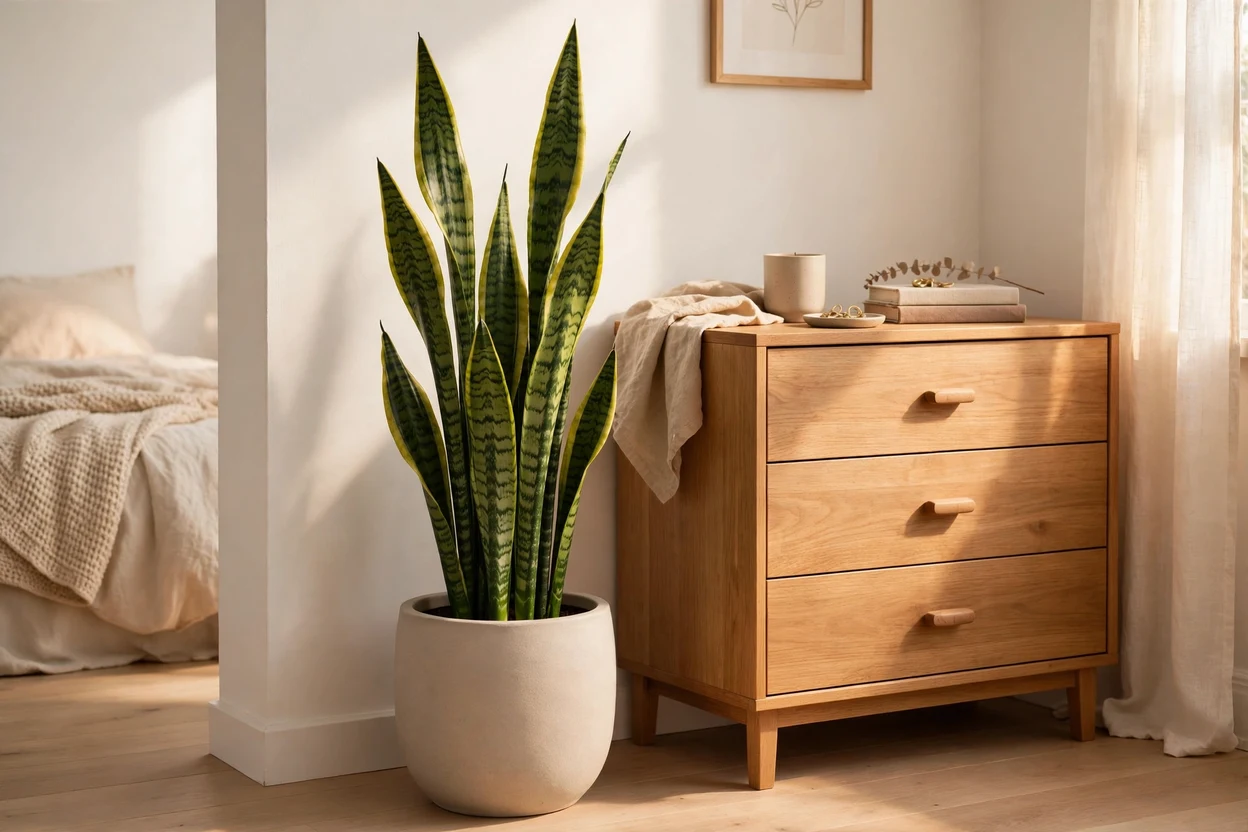
Snake plant has tall, upright leaves that give a bedroom a clean, modern line. Place it in a corner beside the dresser or next to the headboard, where it acts like a sculptural accent piece. A matte ceramic or terracotta planter in a neutral tone suits minimalist and Scandinavian interiors. It tolerates low light and needs water only every two to three weeks. It is toxic to pets if chewed.
2. Aloe Vera: The Nightstand Styling Piece
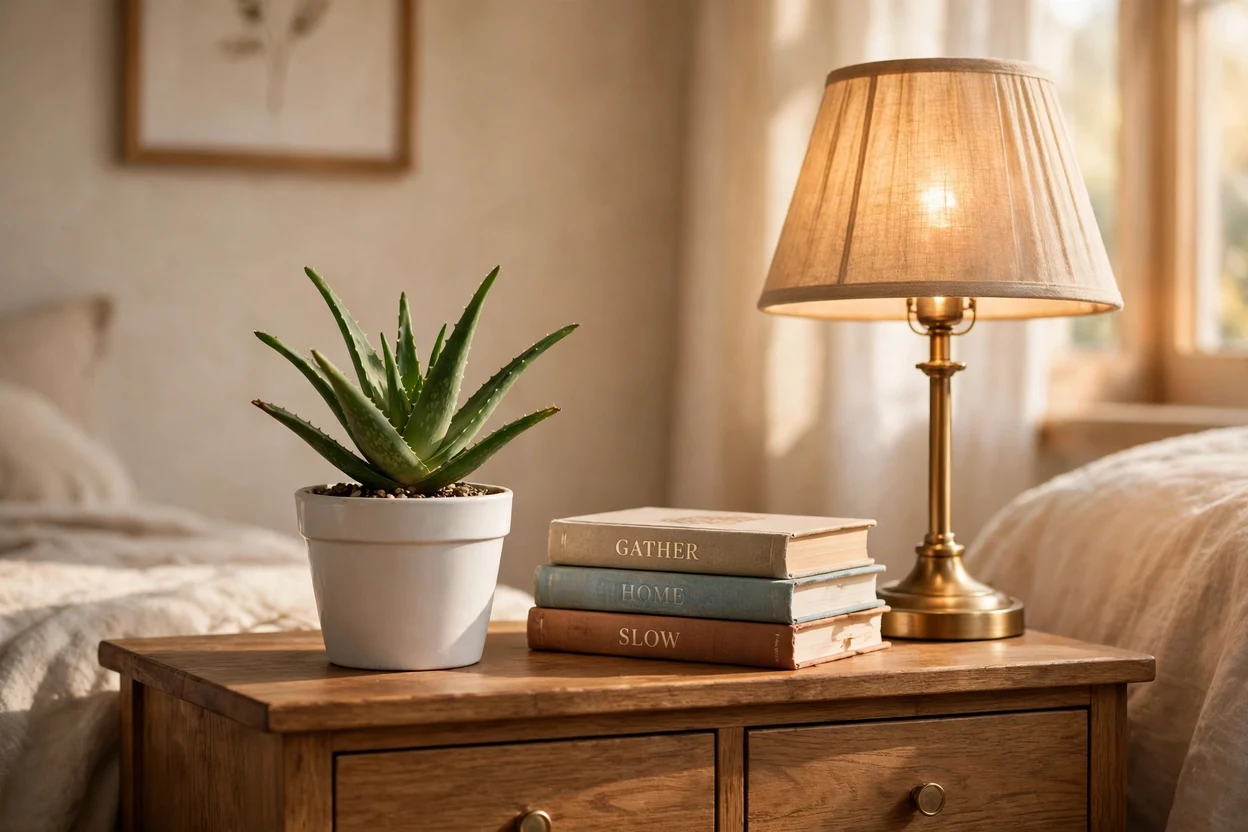
Aloe vera fits a 4-inch pot, which makes it a tidy decor accent for a nightstand or windowsill beside a lamp and a stack of books. Choose a small concrete or white ceramic pot for a modern look. It wants bright light near a south-facing window, and the ASPCA lists it as toxic to pets.
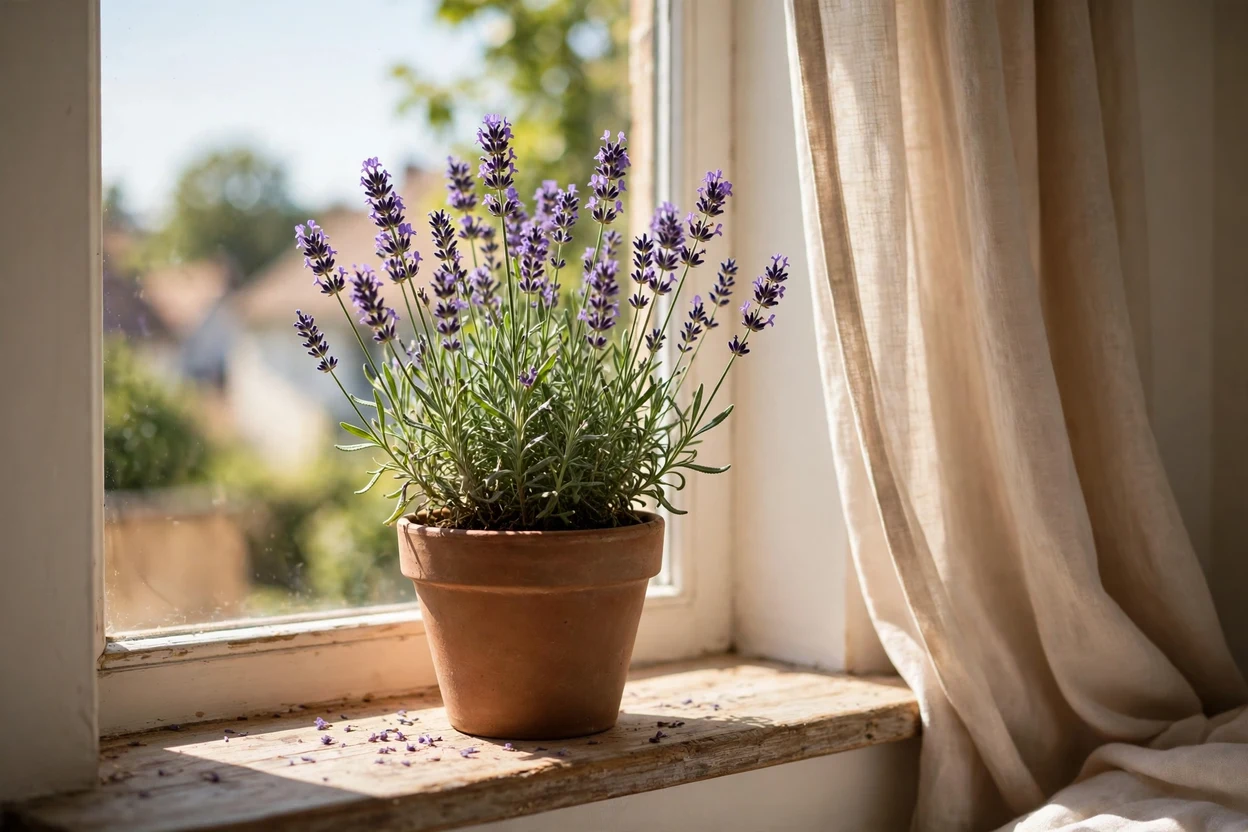
3. Lavender: The Scented Window Accent
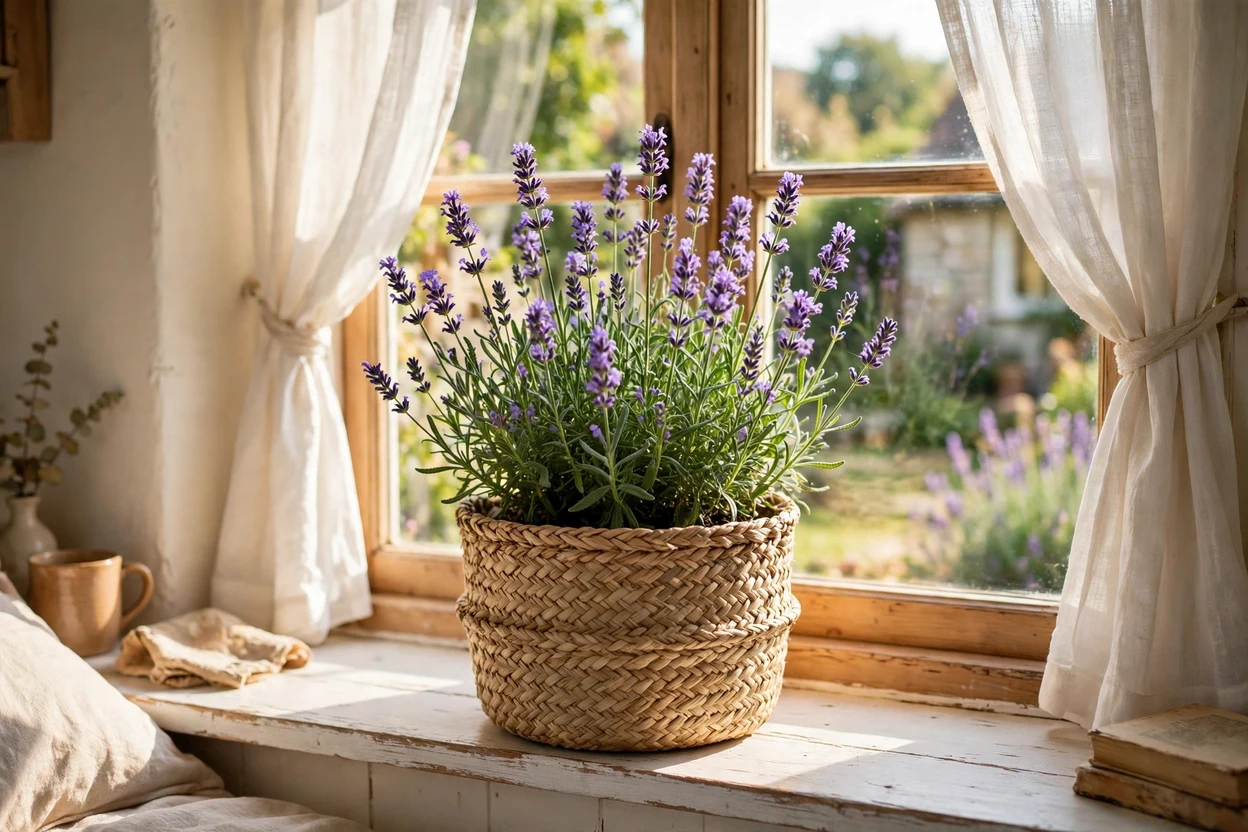
Lavender brings soft purple tones and a relaxing fragrance to a bedroom windowsill. It suits cottage, farmhouse, and French-country decor, especially in a woven basket or a simple clay pot. It needs about six hours of direct sun, so keep it by a south-facing window or add a full-spectrum LED panel in a dark room.
4. Peace Lily: The Elegant Dresser Plant
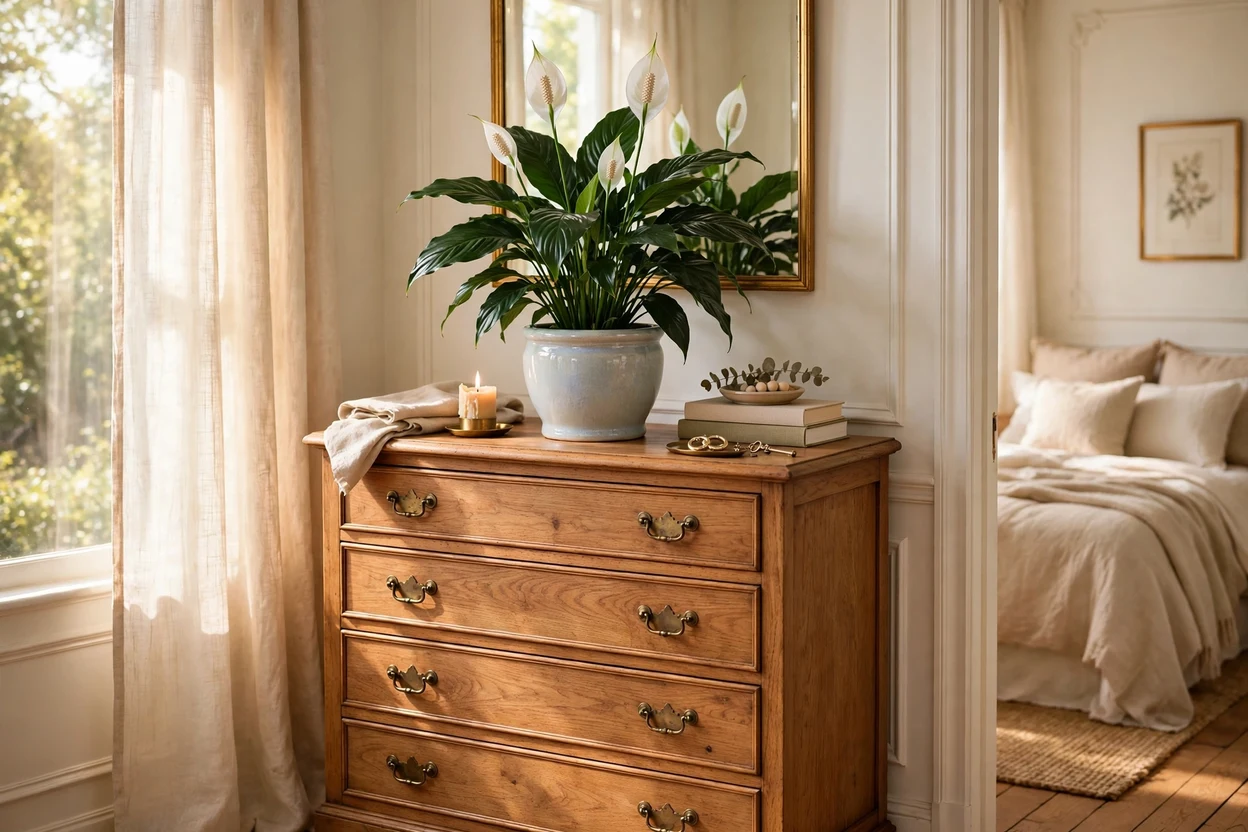
Peace lily has glossy dark leaves and white blooms that look elegant on a tall dresser or console. Pair it with a pale glazed planter for a classic, calm look. It likes low to medium indirect light and moist soil. Its leaves are toxic to pets and children, so keep it up high.
5. Spider Plant: The Hanging Basket Favorite
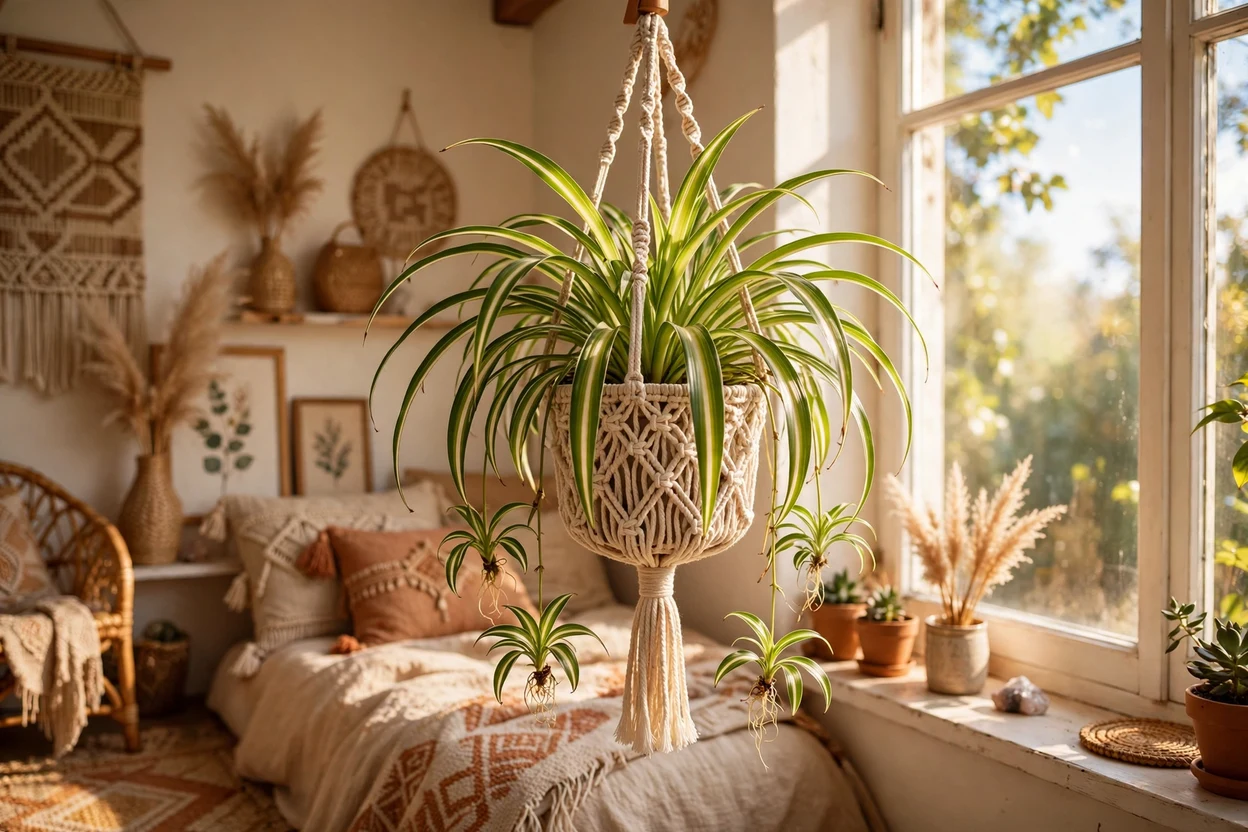
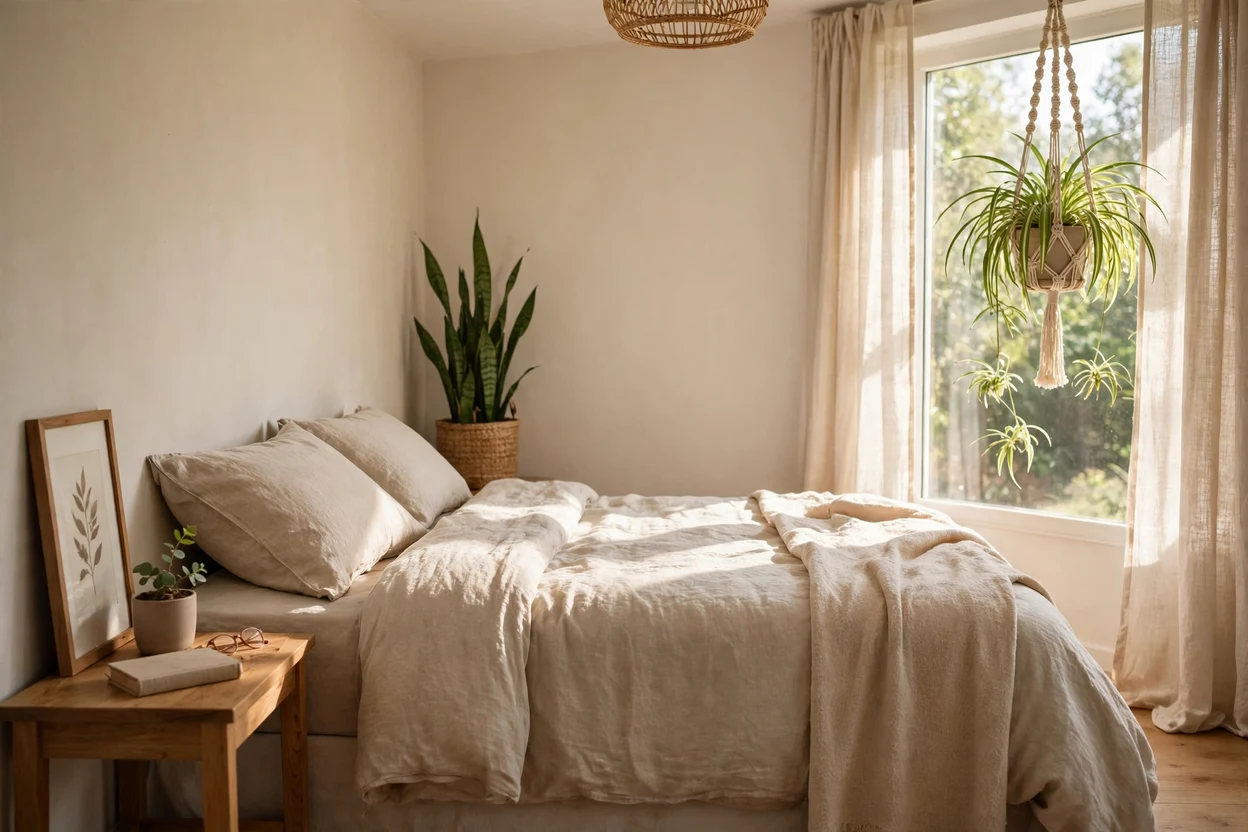
Spider plant is made for hanging decor. A macramé hanger or ceiling hook lifts it off crowded surfaces and adds movement and layers to the room, a natural fit for boho interiors. It prefers bright indirect light and is non-toxic to cats and dogs.
6. Pothos: The Shelf Trailer
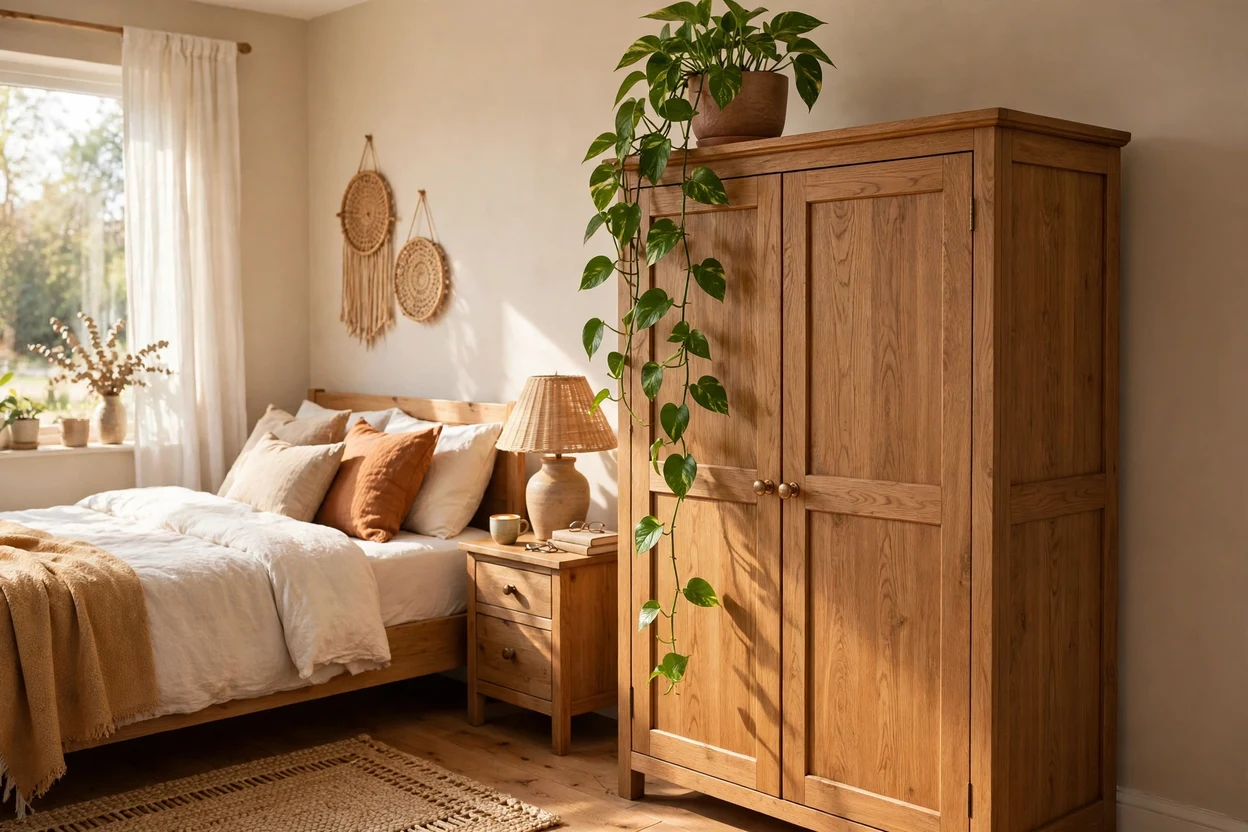
Pothos spills down bookshelves, floating shelves, and the top of a wardrobe, softening bare walls and straight edges. Mix it with woven baskets and wooden frames for a relaxed, layered look. It copes with low to bright indirect light, and it is toxic to pets, so keep it on a high shelf.
7. ZZ Plant: The Low-Light Statement Plant
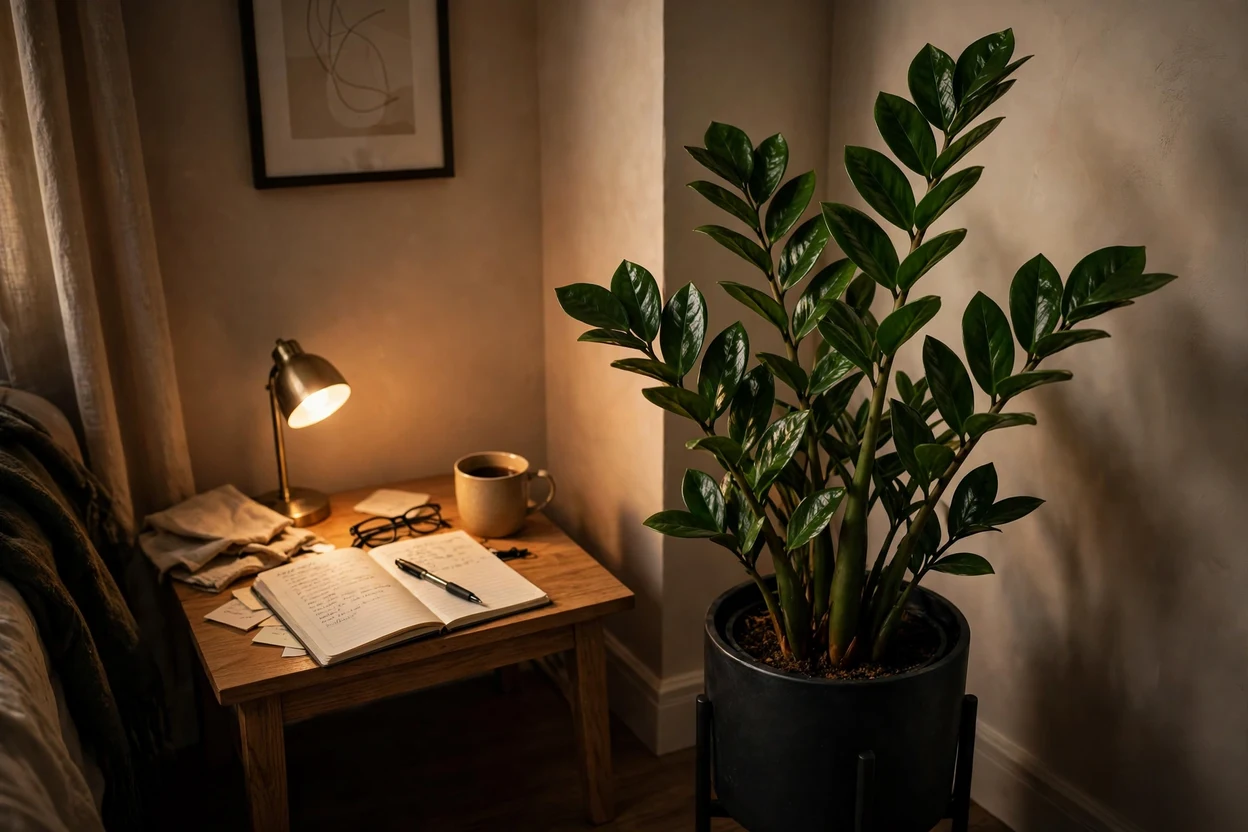
ZZ plant has glossy, deep-green leaves that look polished in a dark corner or on a desk. A black or charcoal planter makes a bold contrast against light walls. It stores water in its stems, so it needs watering only every two to three weeks. It is toxic to pets if chewed.
8. Prayer Plant: The Bedside Table Showpiece
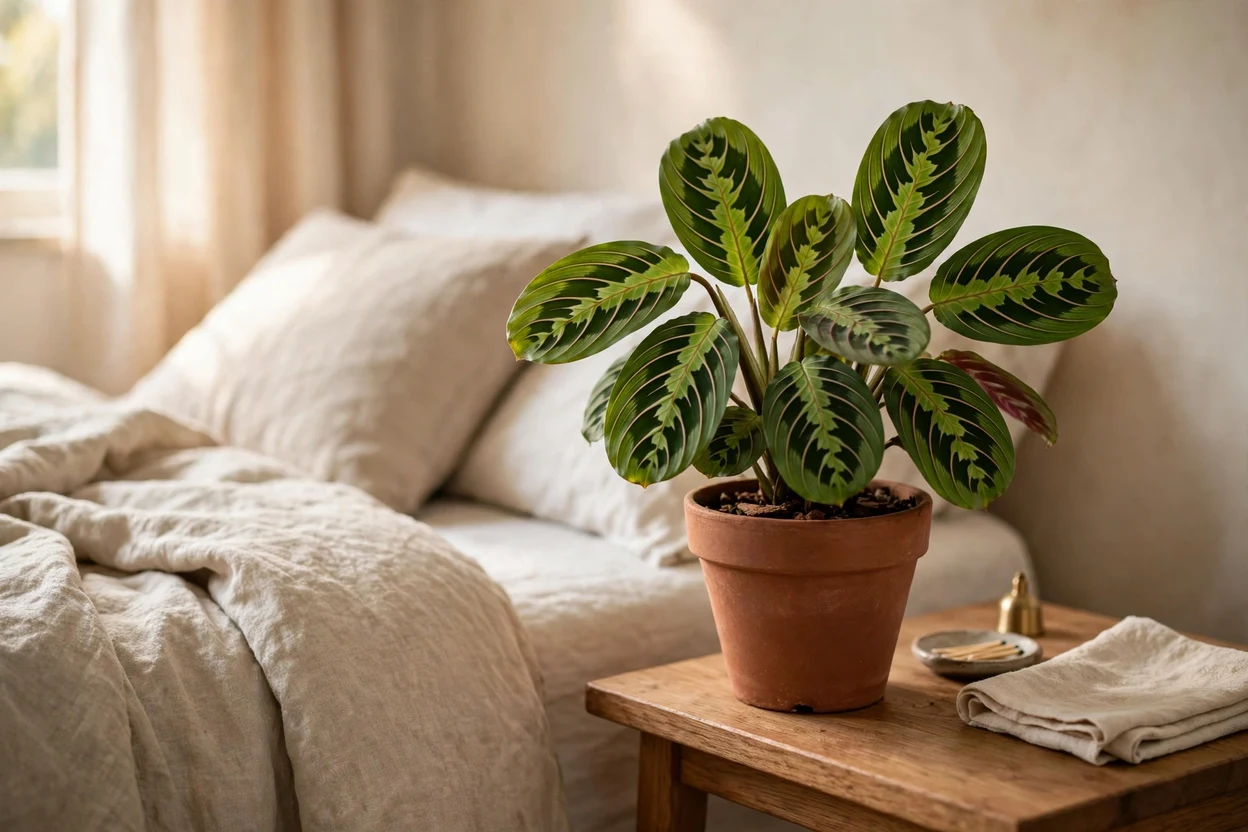
Prayer plant has patterned leaves that fold up at night, adding color and pattern to a bedside table. Pair it with a simple pot and a neutral linen palette so the leaves become the focal point. It prefers soft light from an east or west window and is safe for pets.
Bedroom Plant Styling Ideas
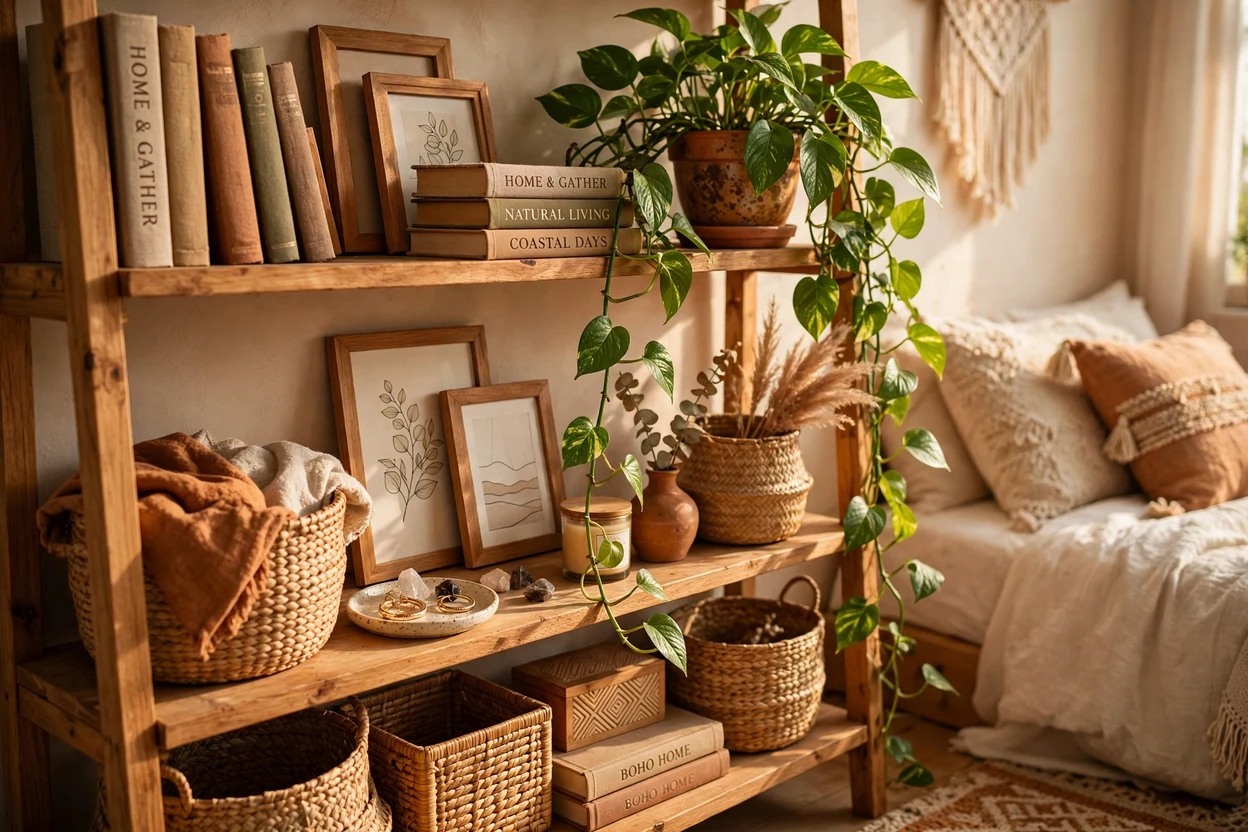
- Match the planter to your style. Terracotta and woven baskets suit boho and farmhouse looks, matte ceramic suits minimalist rooms, and glazed pots add polish to traditional interiors.
- Vary the heights. Combine a floor plant, a dresser plant, and a hanging plant to give the room layers.
- Keep the nightstand clear. One small plant, a lamp, and a book look intentional; a crowd of pots looks cluttered.
- Keep walkways open. Large pots near the bed become a trip hazard in the dark.
- Repeat colors. Echo the green with throw pillows, bedding, or artwork so the plants feel part of the scheme.
- Start small. Add one or two plants, then more once they are thriving.
Plants to Skip in a Bedroom Interior
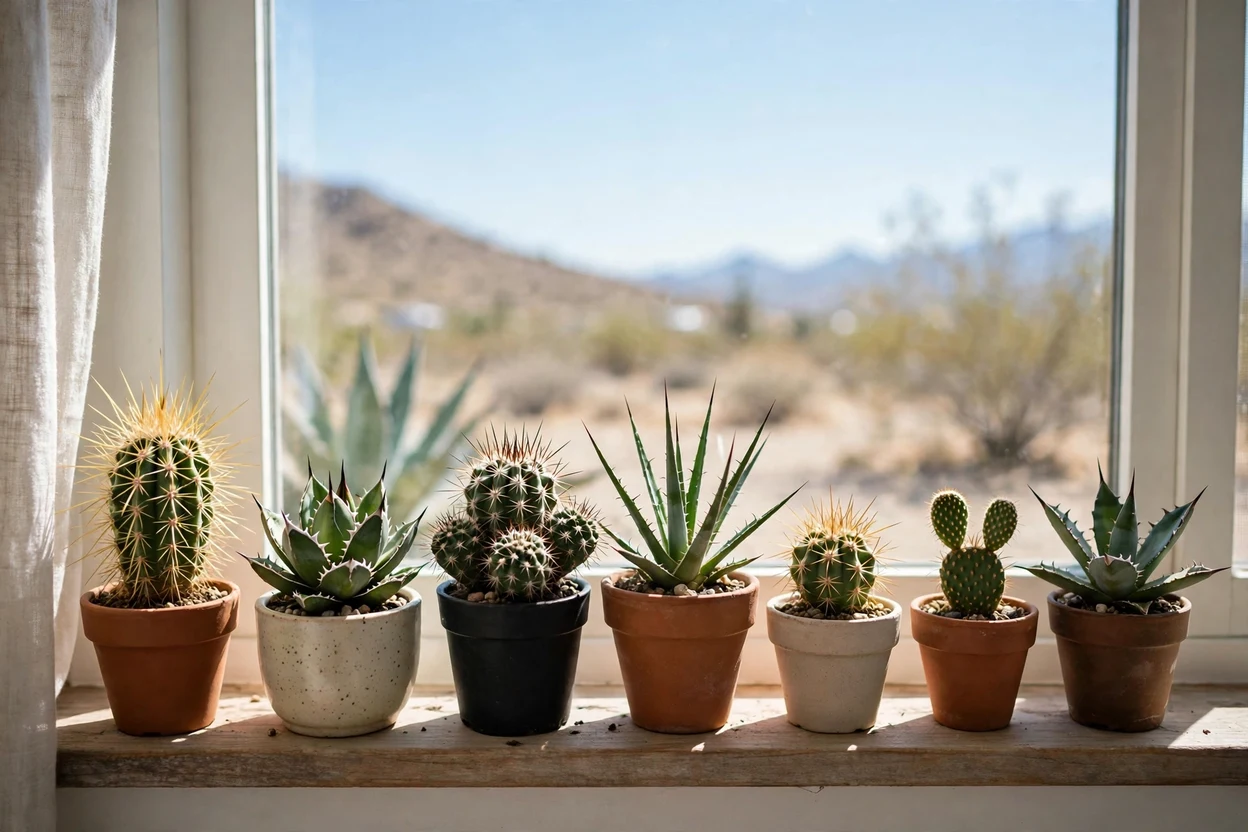
- Cacti, agaves, and other spined plants: the needles hurt when you stumble in the dark.
- Jasmine and citrus trees: the strong scent bothers light sleepers.
- Hoya, fiddle leaf fig, and crown of thorns: they shed or drip sticky sap onto bedding.
- Ficus benjamina and rubber plant: a poor fit if someone in the room has asthma or a latex allergy.
Do Bedroom Plants Help You Sleep?
Only indirectly. Plants add humidity and a calming look, and lavender offers a relaxing scent. Snake plant and aloe vera release oxygen at night, but the gain is small. The NASA Clean Air Study often cited for air-purifying plants was run in sealed chambers, so it does not prove a few pots clean a real bedroom. Houseplants are not a treatment for insomnia, and an open window still does more for air quality than any leaf.
Simple Care Tips
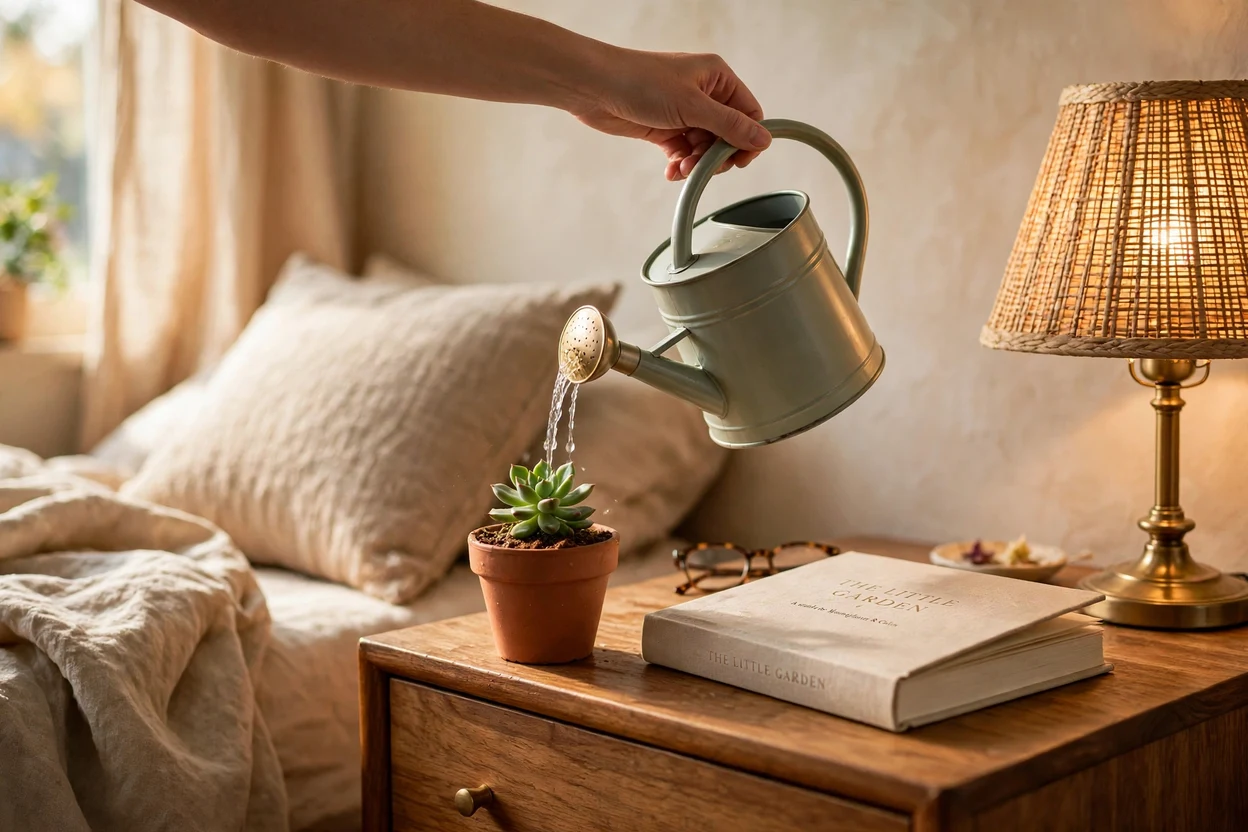
- Water only when the top inch (2.5 cm) of soil feels dry, and empty the saucer.
- Rotate each pot a quarter turn weekly so the plant grows evenly.
- Wipe broad leaves with a damp cloth to keep them glossy.
- Feed at half strength in spring and summer only.
- Keep pots away from heating vents and cold drafts.
FAQs
What are the best plants for bedroom decor?
Snake plant, pothos, spider plant, peace lily, and ZZ plant give you height, trailing greenery, and glossy leaves that suit most interior styles.
Where should you put plants in a bedroom?
Put small plants on the nightstand, tall plants in a floor corner, trailing plants on a shelf, and hanging plants near a window.
Which bedroom plants are safe for pets?
Spider plant and prayer plant are safe for cats and dogs. Snake plant, pothos, peace lily, ZZ plant, and aloe vera are toxic if chewed.
How many plants should a bedroom have?
There is no right number. Start with one or two and add more only when they thrive.
Do bedroom plants help you sleep better?
Only indirectly. Plants add humidity, softness, and a calming look to a bedroom, and lavender offers a relaxing scent, but no houseplant treats insomnia.
Conclusion
The best bedroom plants do two jobs at once: they finish your decor and make the room feel calmer. Pick the plant that matches your light, then style it to suit your room, with a tall snake plant in a corner, a pothos trailing from a shelf, a spider plant in a hanging basket, or a small aloe vera on the nightstand. Choose pet-safe spider plant or prayer plant if cats or dogs share your space, and skip spined, heavily scented, or sap-dripping plants. Start with one or two plants and add more once they thrive. Plants will not fix your sleep on their own, but a calm, well-styled bedroom makes it easier to wind down.