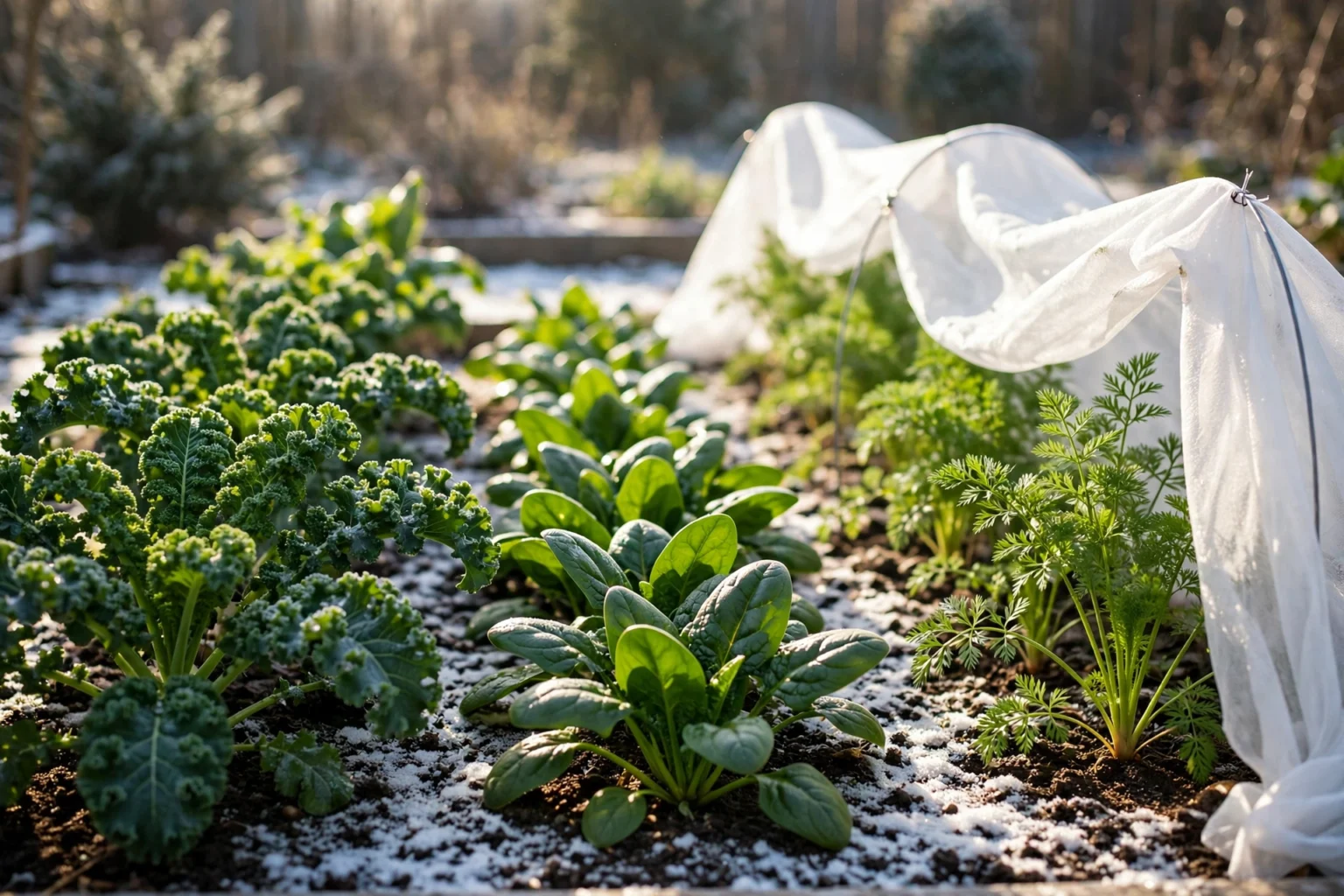
The best vegetable plants that grow in winter are cold-hardy, cool-season crops such as kale, spinach, collard greens, mache, carrots, garlic and Brussels sprouts. Frost doesn’t stop these crops. Several of them actually taste sweeter after a cold snap, and your garden’s USDA Hardiness Zone decides how much protection each one needs. Some grow in open ground, while others want row cover or a cold frame.
Key Takeaways
- Cold-hardy winter vegetables include kale, spinach, collard greens, mache, claytonia, carrots, parsnips, leeks and garlic.
- Winter planting starts in mid- to late summer in northern US zones and continues through December and January in Zones 8 to 10.
- To find the latest safe sowing date for a fall crop, add 14 days to the crop’s days to maturity and count that total back from the local first frost date.
- Most cool-season vegetables nearly stop growing once daylight drops below 10 hours, so plants must reach harvest size before that point.
- A floating row cover or a cold frame protects winter crops in most US zones without a heated greenhouse.
- Garlic goes in the ground in fall, 2 inches (5 cm) deep, for harvest the following summer.
What Are Vegetable Plants That Grow in Winter?
Vegetable plants that grow in winter are cool-season crops that tolerate frost and keep producing edible leaves, roots or bulbs after temperatures fall below 32°F (0°C). These crops span four broad groups. Leafy greens, brassicas, root vegetables and alliums all qualify, but they sort into three types based on how and when the harvest happens.
Gardeners researching plants and vegetables that grow in winter often mix up these three types, and that mix-up causes the most common winter garden mistake of all. It’s sowing too late. Expecting fast growth in December just doesn’t work.
The table below compares the three types of winter crops.
| Winter Crop Type | Examples | Harvest Window |
|---|---|---|
| Active growers | Spinach, mache, kale, claytonia, collards | Fall through winter, slower in midwinter |
| Overwintering crops | Garlic, overwintering onions, spring cabbage | Late spring to summer |
| In-ground storage crops | Carrots, parsnips, leeks, turnips | Dug as needed through winter |
Crops That Grow Actively in Winter
Some crops never quite stop. Active winter growers keep putting out new leaves through cold weather, especially under cover, and this group includes spinach, mache (corn salad), claytonia (miner’s lettuce), kale and collard greens.
Growth slows sharply in midwinter. Still, you can keep taking cut-and-come-again harvests whenever daytime temperatures climb above freezing and the leaves have had time to thaw.
Crops That Overwinter for Spring Harvest
Overwintering crops put down roots in fall, then wait out the coldest months nearly dormant before they finish growing in spring. Garlic is the best-known example.
Overwintering onions behave the same way. So do some spring cabbage varieties, and getting them in the ground in fall frees up garden space in spring while delivering some of the earliest harvests of the year.
Crops Held in the Ground for Harvest
In-ground storage crops reach full size in fall and then stay put in the soil, which works like a natural refrigerator. Carrots, parsnips, leeks and turnips keep well.
Spread a 6 to 12 inch (15 to 30 cm) layer of straw mulch over the rows, and the soil stays diggable through most cold spells. Tall stakes help. They’ll mark each row so you can find it under snow.
What Vegetables Grow Best in Winter?
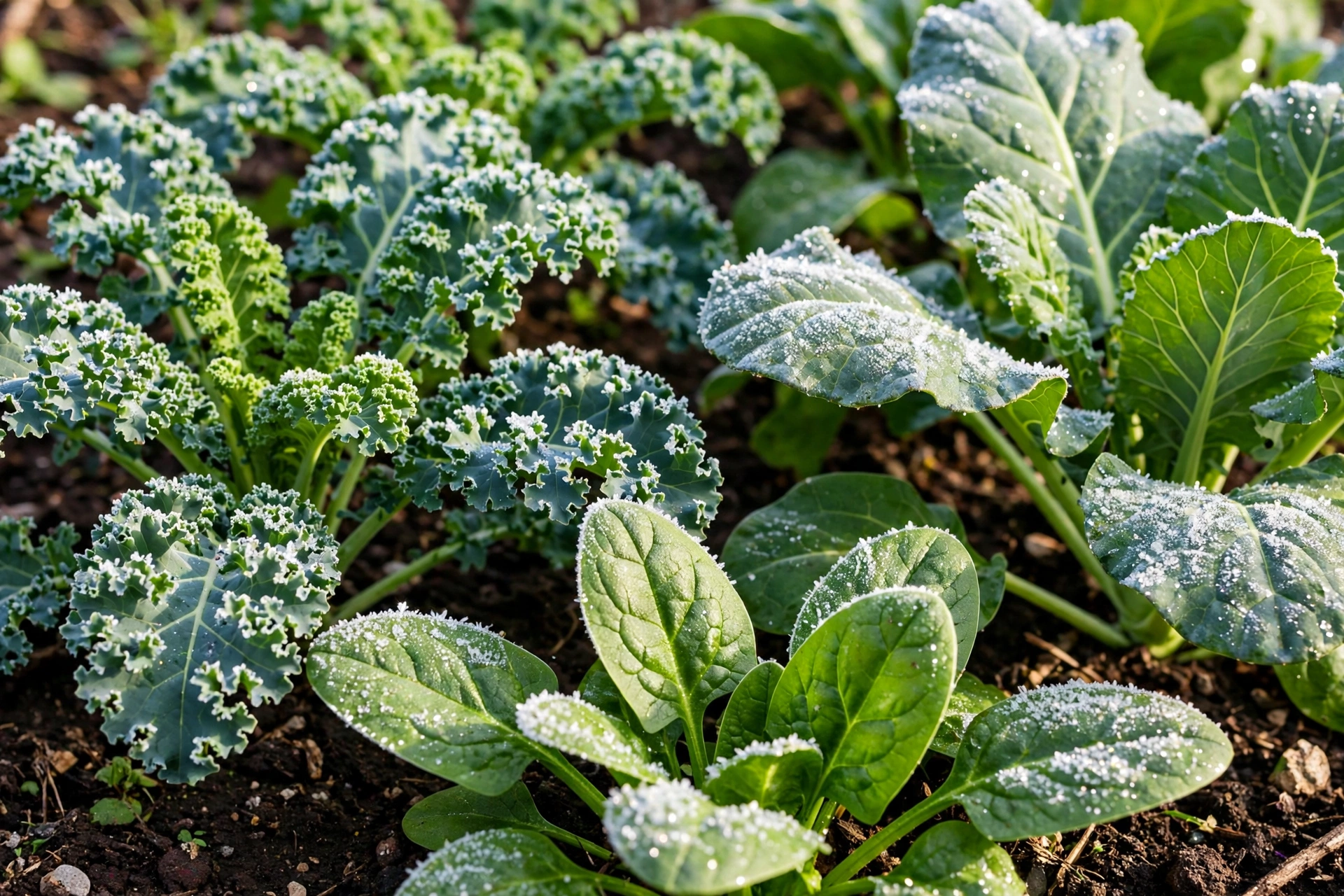
The vegetables that grow best in winter are spinach, kale, collard greens, mache, claytonia, carrots, parsnips, leeks, garlic and Brussels sprouts. These winter crops all survive hard frost. In USDA Zones 7 through 10, most of them grow without any cover, while colder zones need row cover or a cold frame for steady harvests.
The table below compares common winter vegetables by type, typical days to maturity and cold tolerance.
| Crop | Type | Days to Maturity | Cold Tolerance |
|---|---|---|---|
| Spinach | Leafy green | 40-50 | Very high |
| Kale | Brassica | 50-65 | Very high |
| Mache (corn salad) | Leafy green | 50-60 | Very high |
| Claytonia | Leafy green | 40-50 | High |
| Collard greens | Brassica | 60-80 | High |
| Lettuce | Leafy green | 45-60 | Moderate |
| Brussels sprouts | Brassica | 85-110 | High |
| Carrots | Root vegetable | 60-80 | High |
| Parsnips | Root vegetable | 100-120 | Very high |
| Radishes | Root vegetable | 25-30 | Moderate |
| Leeks | Allium | 100-120 | High |
| Garlic | Allium | About 9 months from fall planting | Very high |
Days to maturity vary by variety, so check the figure printed on your seed packet and plan around that number instead of a general chart. Trust the packet.
Leafy Greens
Spinach and mache are the most cold-hardy salad vegetables to grow in winter in US gardens. Neither minds cool soil. They germinate in it and survive hard freezes, and mache in a cold frame regrows quickly once early spring arrives.
Claytonia, also called miner’s lettuce, is a mild, succulent green native to western North America that thrives in cool, short days. When lettuce stalls, claytonia keeps going.
Lettuce handles light frost. Hard freezes are another matter, so give it row cover or a cold frame, and grow the cold-hardiest choices: varieties bred for winter, such as ‘Winter Density’, ‘Arctic King’ and ‘Rouge d’Hiver’.
Brassicas
Kale is the most dependable winter brassica in every US zone. Frost sweetens its leaves. In Zones 6 and warmer, kale plants keep cranking out leaves from fall into spring without needing to be resown.
Collard greens are a Southern winter staple from Virginia to Texas. Brussels sprouts run later. They mature in late fall, and the sprouts gain noticeably better flavor after the plants have been through a few frosts.
Broccoli and cauliflower are less hardy than kale and collards. Don’t wait on them. In Zones 3 to 6, harvest both crops before temperatures fall into the low 20s °F (about -6°C), because they won’t hold up the way their tougher relatives do.
Root Vegetables
Carrots and parsnips are the strongest root crops for winter. Cold soil works in their favor. Both convert starch to sugar as the ground chills, and parsnips develop their best flavor only after they’ve been through frost.
Beets and turnips handle frost well and store in the ground under mulch. Radishes win on speed. They mature in 25 to 30 days, which makes them the fastest crop for a late sowing squeezed in before the first frost arrives.
Alliums
Alliums are the onion family. Garlic is the hardiest member, and fall-planted cloves survive below-zero winters in northern states as long as they sit under a layer of straw mulch.
Leeks hold in the ground through winter, and hardy varieties such as ‘American Flag’ tolerate deep cold without much fuss. Bunching onions overwinter too. Try ‘Evergreen Hardy White’ for early spring scallions.
Onion timing splits by region. Southern gardeners set out short-day onion transplants from late fall through winter, while their northern counterparts skip winter planting and grow long-day onions planted in spring instead.
Which Winter Crops Grow in Your USDA Zone?
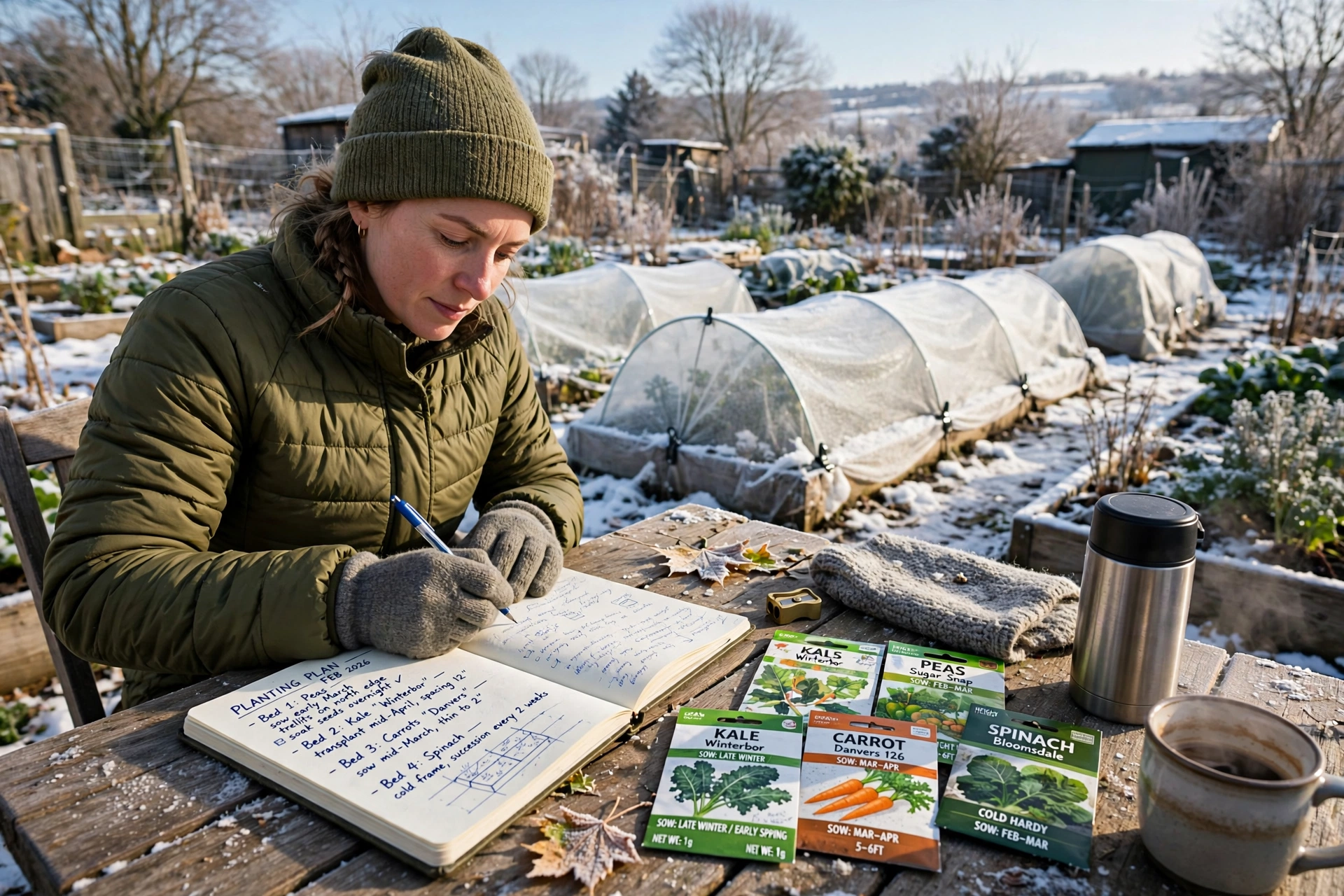
Winter crops grow in every USDA zone from 3 to 10, but the protection each crop needs changes with the zone. Southern zones have it easiest. Zones 8 to 10 grow most cool-season vegetables in open ground all winter, while Zones 6 and 7 need row cover for steady harvests. In Zones 3 to 5, active growth requires cold frames or hoop houses.
The USDA released an updated Plant Hardiness Zone Map in November 2023, based on temperature data from 1991 to 2020. About half of the country shifted into a warmer half zone compared with the 2012 map, according to the USDA. Your zone may have changed. Confirm it by ZIP code before choosing crops.
The table below matches common winter crops to the protection each one needs in each zone group.
| Crop | Zones 3-5 | Zones 6-7 | Zones 8-10 |
|---|---|---|---|
| Spinach | Cold frame | Row cover | Open ground |
| Kale | Cold frame or hoop house | Open ground or row cover | Open ground |
| Mache | Cold frame | Open ground or row cover | Open ground |
| Collard greens | Harvest before deep freeze | Row cover | Open ground |
| Lettuce | Cold frame or indoors | Cold frame | Open ground or row cover |
| Carrots | Heavy mulch, in-ground storage | Mulch, in-ground storage | Open ground |
| Garlic | Open ground, heavy mulch | Open ground, mulch | Open ground |
| Brussels sprouts | Harvest before deep freeze | Open ground | Open ground |
Northern Zones 3 to 5
Northern Zones 3 to 5 include much of Minnesota, Wisconsin, Maine, Montana and upstate New York. Timing is tight here. Fall crops go in during mid- to late summer, because the ground freezes early and daylight drops quickly once autumn arrives.
Garlic, mache and spinach are the best plants to plant in winter conditions this far north. Sow the spinach and mache in a cold frame in late summer, and they’ll survive winter before regrowing in early spring. Carrots and parsnips? Leave them in the ground under a thick straw mulch.
Middle Zones 6 and 7
Middle Zones 6 and 7 cover states such as Ohio, Pennsylvania, Kentucky, Tennessee, Virginia and much of North Carolina. Protection can stay light. A single layer of row cover is enough for kale, collards, spinach and mache to survive most winters in these zones.
Add a cold frame, and lettuce and other salad greens in Zones 6 and 7 stay harvestable through January. Garlic and leeks need less. They grow in open ground with just a light mulch.
Southern Zones 8 to 10
Winter isn’t downtime in the South. Across Southern Zones 8 to 10, it’s the main cool-season growing season, and the region includes the Gulf Coast, most of Texas and Florida, coastal and Southern California, and the low deserts of Arizona.
The best vegetables to plant in winter across these zones include lettuce, spinach, kale, collards, broccoli, cabbage, carrots, beets, radishes and onions. Central Texas is a good example. Gardeners there grow every one of them through winter and cover beds only during the occasional hard freeze.
South Florida and the Arizona low desert stay hot into early fall, so cool-season planting starts later there. Check local calendars. Your state’s Cooperative Extension Service, such as Texas A&M AgriLife Extension or University of Florida IFAS (Institute of Food and Agricultural Sciences) Extension, publishes them at the county level.
When Should I Plant a Winter Garden?
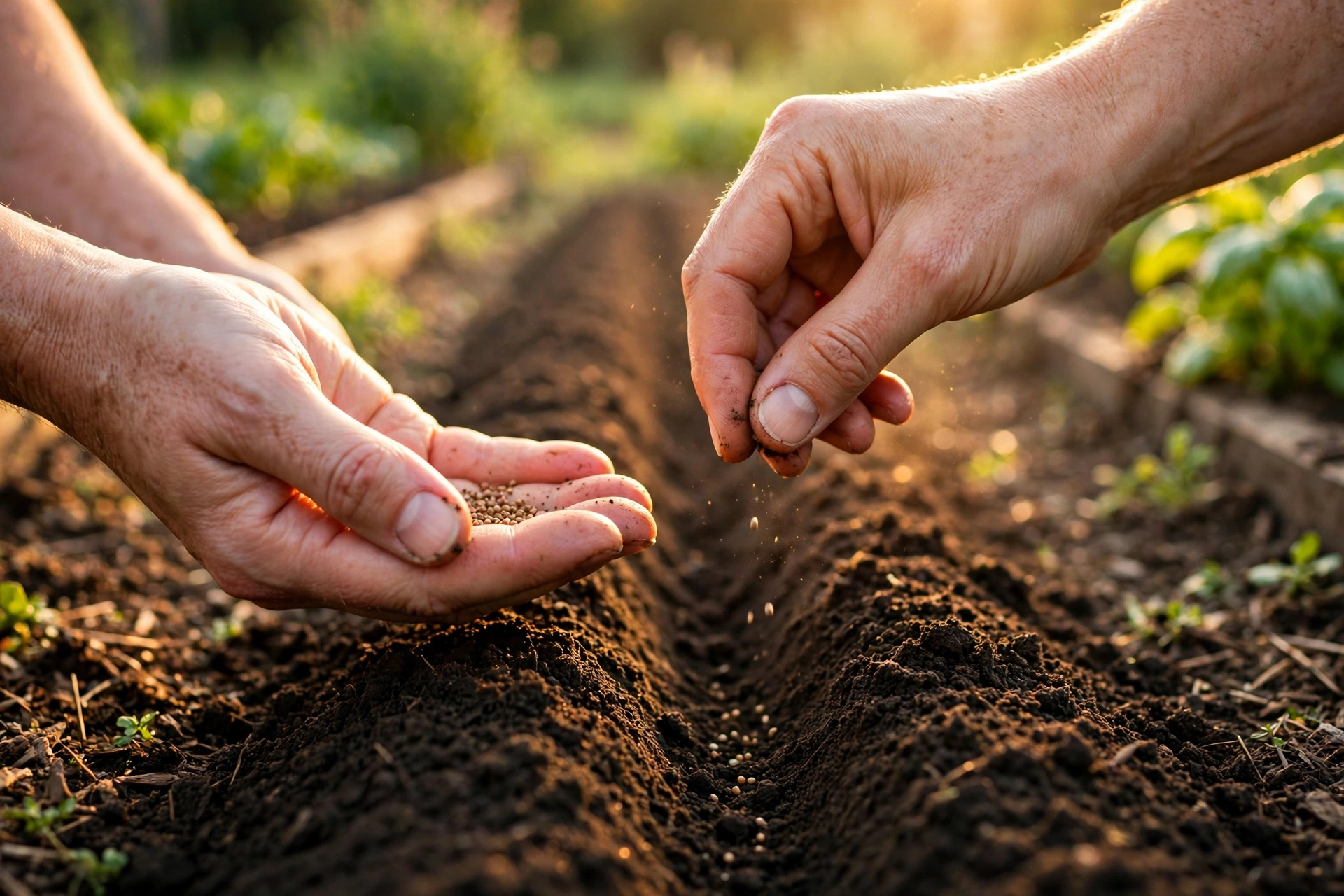
Plant a winter garden by counting back from your local first frost date, which means sowing in mid- to late summer in northern states and from early fall through winter in southern states. Daylight sets the real deadline. Crops need to reach near-harvest size before daylight falls below 10 hours, because growth almost stops after that point.
Find Your First Frost Date
Everything hinges on one number. Successful winter garden planting starts with the average first fall frost date for your exact location, so it’s worth pinning down before you buy a single seed packet.
1. Contact your county Cooperative Extension office, which publishes local frost dates and planting calendars.
2. Check the NOAA (National Oceanic and Atmospheric Administration) U.S. Climate Normals for freeze data from the weather station nearest you.
3. Cross-check the date with a frost-date lookup tool that searches by ZIP code.
4. Note the average date, and plan for frost arriving up to 2 weeks earlier in a cold year.
Count Back from the First Frost
The countback method is simple math. It turns the days to maturity printed on a seed packet into a firm sowing deadline that you can mark on the calendar.
1. Find the days to maturity on the seed packet.
2. Add 14 days as a fall factor, because shorter, cooler days slow growth.
3. Count that total number of days back from your first frost date.
4. Sow on or before the resulting date.
5. Repeat sowings every 2 weeks before the deadline for succession planting and a longer harvest.
The table below shows the countback method for three example gardens. Its frost dates are illustrations only. Replace them with the first frost date for your own location before you mark a single sowing on the calendar.
| Garden Scenario | Example First Frost | Crop (Days + Fall Factor) | Sow By |
|---|---|---|---|
| Zone 5 garden | October 10 | Spinach (45 + 14 = 59) | August 12 |
| Zone 7 garden | November 1 | Kale (60 + 14 = 74) | August 19 |
| Zone 9 garden | December 1 | Carrots (70 + 14 = 84) | September 8 |
Plan Around the Persephone Period
The Persephone period is the stretch of winter when daylight lasts fewer than 10 hours a day and most plants barely grow. Eliot Coleman popularized the term. The Maine grower is also the author of Four-Season Harvest and The Winter Harvest Handbook.
Length varies by latitude. Northern states sit through a longer Persephone period than southern ones, and South Florida never drops below 10 hours of daylight, so the period doesn’t apply there at all.
Find your local start and end dates with a sunrise and sunset calculator. Then time each sowing so the crop reaches harvest size before the Persephone period begins, leaving a full bed you can pick from all winter. That’s the goal.
Can Vegetables Survive Frost?
Yes, many vegetables survive frost, and hardy crops such as kale, spinach, collards, parsnips and Brussels sprouts handle temperatures in the low 20s °F (about -6°C). Cold triggers a change. Frost-tolerant crops convert stored starch into sugar as temperatures drop, and that sugar acts as a natural antifreeze inside the cells while making the harvest taste sweeter.
The table below compares frost levels and the crops that survive each one.
| Frost Level | Temperature (°F / °C) | Crops That Survive |
|---|---|---|
| Light frost | 29 to 32°F / -2 to 0°C | Lettuce, broccoli, cabbage and all hardy crops |
| Hard freeze | 28°F / -2°C and below | Kale, spinach, collards, mache, Brussels sprouts |
| Deep cold | Below 20°F / -7°C | Mache, garlic, mulched parsnips and leeks |
Kale, collards, Brussels sprouts, cabbage, carrots, parsnips and turnips all taste sweeter after frost. Be patient with greens, though. Wait until frozen leafy greens thaw completely before you go out to harvest them, because handling leaves while they’re still frozen bruises them.
Do I Need a Greenhouse for Winter Vegetables?
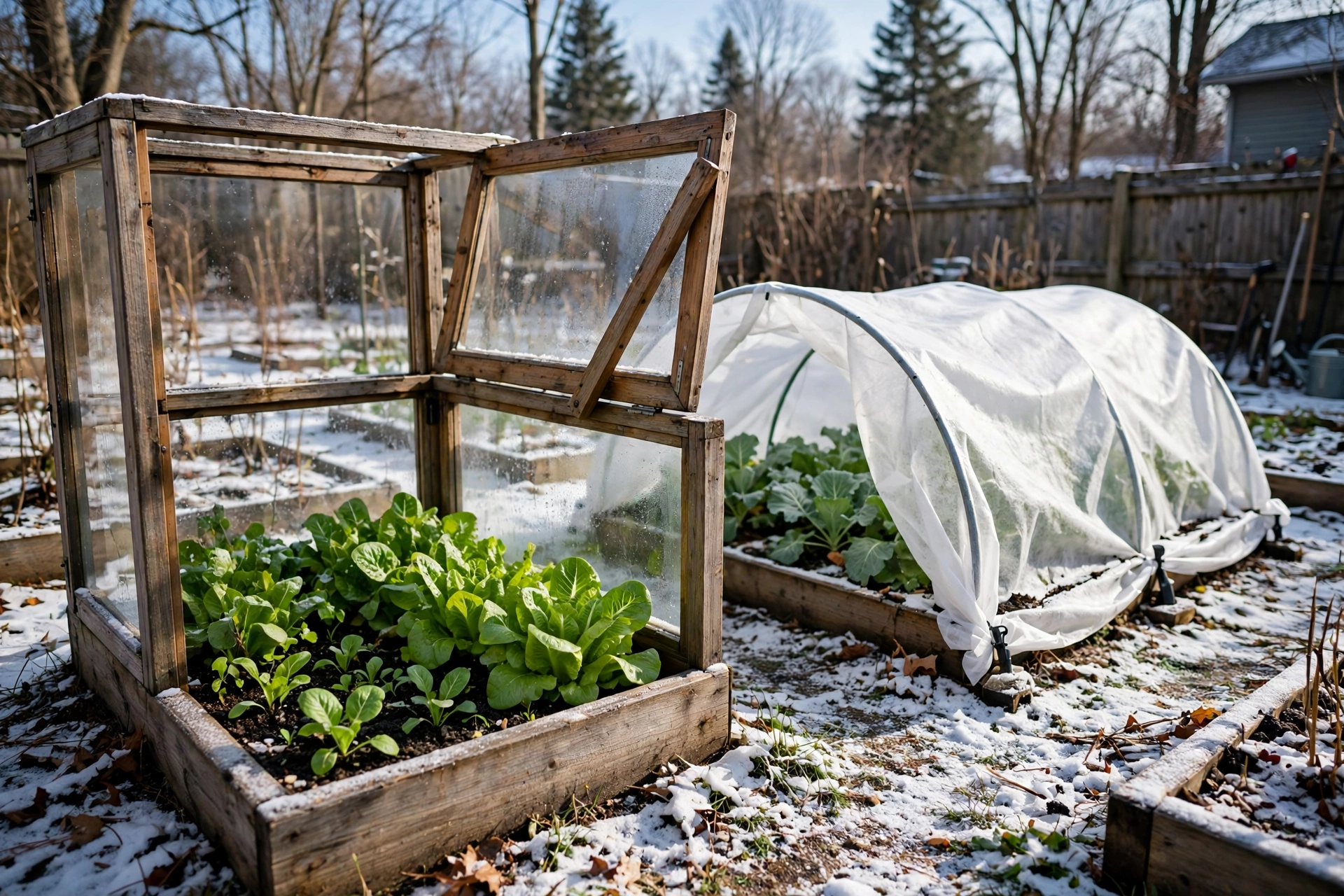
No, winter vegetables do not need a greenhouse, because a floating row cover or a cold frame protects hardy crops through winter in most US zones. Heat isn’t required. Row cover handles light frosts in Zones 6 to 10. Cold frames keep salad greens growing in Zones 3 to 7, while hoop houses suit anyone planning a larger winter garden with more ground to protect.
The table below compares the main winter protection methods by cost and use.
| Method | Cost Level | Best For | Ideal Zones |
|---|---|---|---|
| Floating row cover | Low | Frost protection over beds | 6-10 |
| Cold frame | Low to moderate | Salad greens in small beds | 3-8 |
| Low tunnel | Low to moderate | Rows of greens and roots | 4-9 |
| Hoop house | Moderate to high | Large winter harvests | 3-8 |
| Heated greenhouse | High | Tender crops and seedlings | 3-10 |
Floating Row Cover
Floating row cover is a lightweight spunbonded fabric that rests on crops or on wire hoops and traps ground heat overnight. Weight is the key spec. The heavier the fabric, the more protection it gives.
Lightweight cover runs about 0.5 oz per square yard (17 g/m²) and lets in the most light. Go up to heavyweight cover, at 1.5 oz per square yard (51 g/m²) or more, and you’ll trap more heat. It blocks more light, too. Manufacturers typically rate lightweight fabric at 2 to 4°F (1 to 2°C) of protection and heavier fabric at 6 to 8°F (3 to 4°C).
1. Lay the fabric loosely so plants have room to grow.
2. Anchor every edge with sandbags, soil or landscape staples spaced every few feet.
3. Add a second layer before a hard freeze.
Cold Frames
A cold frame is a bottomless box with a clear, hinged lid that turns sunlight into a warm microclimate for low-growing crops. Placement and venting matter.
1. Face the lid south to capture the most winter sun.
2. Open the lid on sunny days above 40°F (4°C) to prevent overheating.
3. Close the lid by mid-afternoon to trap heat for the night.
4. Bank soil, straw or leaves against the outside walls for insulation.
5. Brush snow off the lid so light reaches the plants.
Hoop Houses
A hoop house is an unheated, walk-in structure covered with greenhouse plastic. Eliot Coleman’s winter method goes a step further by laying row cover over the beds inside the hoop house, which gives crops two layers of protection without any heat. No heater needed.
Snow load comes first. Choose a hoop house frame rated for your area’s snow load, and if the structure is on the larger side, check local building codes and homeowners association (HOA) rules before construction begins.
Should Garlic Be Planted in Fall or Winter?
Garlic should be planted in fall, a few weeks before the ground freezes, so the cloves grow roots before winter dormancy. Timing depends on zone. In Zones 3 to 6, plant from late September through October. Warmer Zones 7 to 10 have a longer window, from October through December, and gardeners in every zone harvest the following summer when the lower leaves turn brown.
1. Buy seed garlic from a garden supplier or local nursery, because grocery-store garlic is often poorly adapted to local winters.
2. Choose hardneck varieties for Zones 3 to 6 and softneck varieties for Zones 7 to 10.
3. Separate bulbs into individual cloves just before planting.
4. Plant each clove pointed end up, 2 inches (5 cm) deep and 4 to 6 inches (10 to 15 cm) apart.
5. Cover the bed with 4 to 6 inches (10 to 15 cm) of straw mulch once the soil cools.
6. Thin the mulch in early spring when green shoots appear.
7. Harvest when about half of the leaves have browned, then cure the bulbs in a dry, shaded spot for 2 to 3 weeks.
Can You Grow Vegetables in Winter in Containers?
Yes, you can grow vegetables in winter in containers, and spinach, kale, lettuce, mache, scallions and radishes adapt best to pots. Pots need extra care. Container roots freeze faster than roots in the ground, so choose pots at least 12 inches (30 cm) deep and protect them during hard freezes.
1. Group containers together against a south- or west-facing wall.
2. Wrap each pot in burlap, bubble wrap or frost cloth.
3. Choose plastic, fiberglass or resin pots, because terracotta cracks during freeze-thaw cycles.
4. Water the soil before a freeze, since moist soil holds heat better than dry soil.
5. Move pots into an unheated garage or enclosed porch during extreme cold snaps.
6. Cover the plants with frost cloth on nights below 28°F (-2°C).
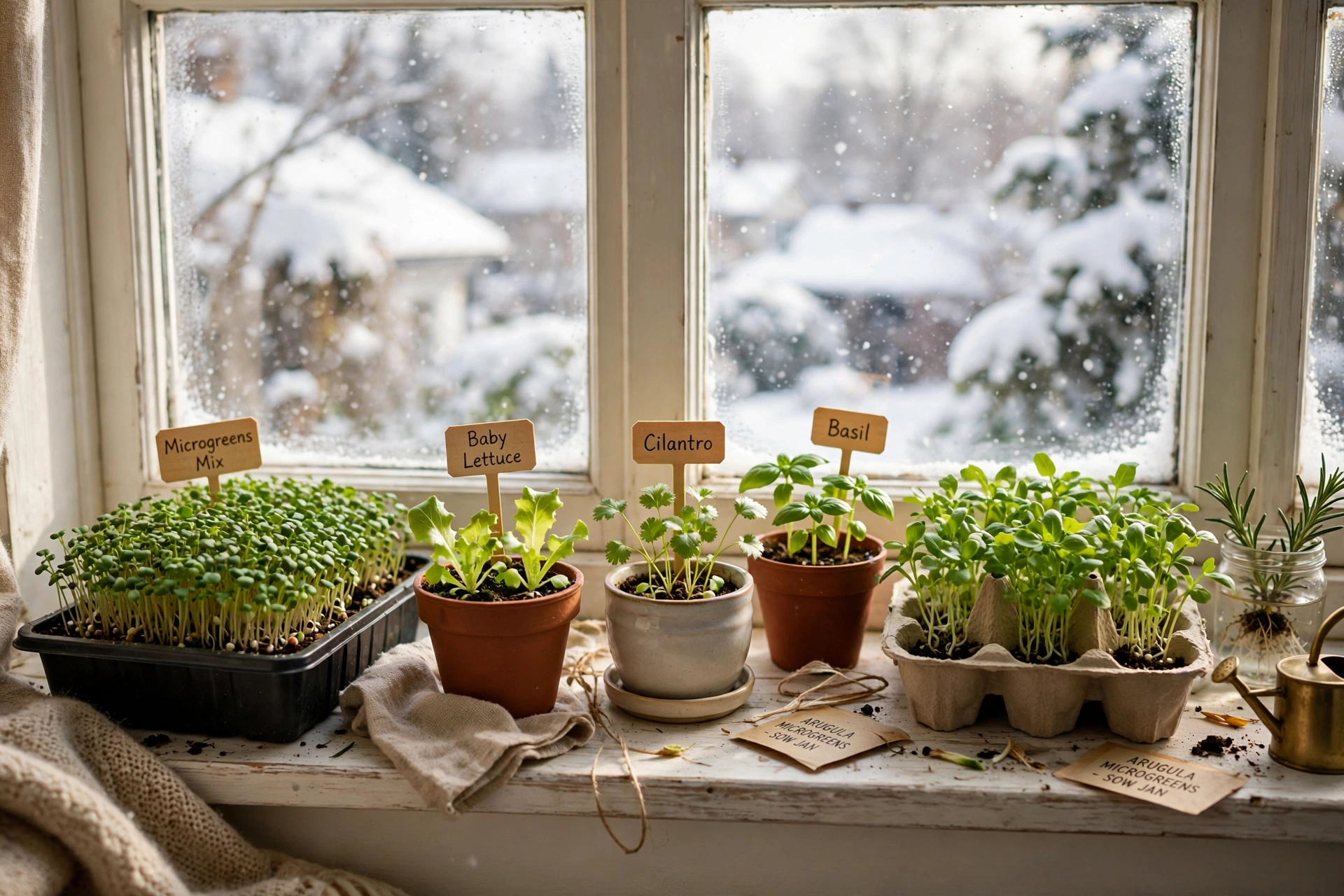
What Vegetables Can Grow Indoors in Winter?
Microgreens, pea shoots, leaf lettuce, spinach, scallions, radishes and herbs such as parsley and chives grow well indoors in winter. Light is the limiting factor. Most indoor winter crops need 12 to 16 hours of light a day, and a full-spectrum LED (light-emitting diode) grow light gives far better results than any winter windowsill can.
The table below compares common indoor winter crops by harvest time and light needs.
| Crop | Days to Harvest | Light Needs |
|---|---|---|
| Microgreens | 7-21 | Grow light, 12-16 hours |
| Pea shoots | 10-21 | Grow light or bright south window |
| Leaf lettuce (baby leaves) | 30-45 | Grow light, 14-16 hours |
| Scallions regrown from roots | 14-21 | Bright window or grow light |
| Radishes | 25-30 | Grow light, 14-16 hours |
Yes, indoor vegetables need grow lights in most US homes in winter. Windows fall short. Short days and low sun angles leave even south-facing glass too dim for steady growth, and the result is leggy, pale seedlings.
Frequently Asked Questions
What Can I Plant in December in the US?
In Zones 8 to 10, sow lettuce, spinach, carrots, radishes and beets, and set out onion and cabbage transplants as well. Colder zones have fewer options. Gardeners in Zones 3 to 7 can still plant garlic if the soil is workable, or grow microgreens indoors.
Can You Grow Lettuce in Winter?
Yes. Lettuce grows outdoors all winter in Zones 8 to 10 and inside cold frames farther north, as long as you pick cold-tolerant varieties like ‘Winter Density’ or ‘Arctic King’ for dependable leaves.
What Is the Easiest Vegetable to Grow in Winter?
Kale wins for beginners. It’s the easiest winter vegetable to grow because it germinates quickly, shrugs off hard frost and faces few pests in cold weather, and a single sowing yields leaves for months.
What Vegetables Grow in the Snow?
Kale, spinach, mache, collards, leeks, parsnips and Brussels sprouts survive snow cover. Snow actually helps. It insulates plants against wind and extreme cold, so a layer of it shields winter crops rather than harming them.
Can I Still Plant Vegetables in November?
Yes. Garlic and overwintering onions go in during November wherever the soil remains unfrozen, and Southern gardeners in Zones 8 to 10 can also direct-sow spinach, lettuce, carrots and radishes outdoors.
Conclusion
Vegetable plants that grow in winter turn the coldest months into a productive season in every US zone, from Minnesota cold frames to open beds in Texas and Florida. Start with your first frost date. Run the countback for two or three crops, then get row cover set up before the first hard freeze arrives in your area.
Keep a simple notebook each year that logs sowing dates, frost dates and harvest results. It pays off fast. After one season, those records become the most accurate planting calendar for your garden, and every new round of winter garden planting starts earlier and yields more.