The best fertilizer for indoor plants is a balanced, water-soluble liquid plant food diluted to half the label rate and applied to moist potting mix during the spring and summer growing season. This gardener’s feeding guide matches fertilizer type, N-P-K ratio and feeding frequency to each plant type and light level. Indoor gardening works the same way as gardening outdoors: roots need nitrogen, phosphorus, potassium and micronutrients to grow new leaves, stems and flowers. Leafy plants, flowering houseplants, succulents and orchids each need small tweaks to ratio and feeding frequency. Light decides the rest. A plant can only use as much fertilizer as its light lets it grow into, so brightness sets the ceiling for every feeding plan.
Key Takeaways
- A balanced or nitrogen-leaning liquid fertilizer with micronutrients, diluted to half strength, feeds most foliage houseplants well.
- Light level controls how fast a plant grows, so plants in low light need less frequent feeding than plants in bright windows or under grow lights.
- Most houseplants need fertilizer only during active growth, typically spring through early fall.
- A white crust on the potting mix and brown leaf tips signal fertilizer salt buildup, and a thorough flush with plain water corrects it.
- Coffee grounds, eggshells and banana peel water belong in the compost pile, not in container plants.
- Repotting, light, watering and feeding work together; fertilizer can’t fix poor soil, poor drainage or poor light on its own.
What Is the Best Fertilizer for Indoor Plants?
The best fertilizer for indoor plants is a complete liquid fertilizer that contains micronutrients and slightly more nitrogen than phosphorus, mixed at half the label rate. That formula suits pothos, philodendron, monstera, snake plant, ferns and most other foliage plants grown in containers. Specialty plants are the exception.
Houseplant fertilizer replaces the nutrients that potting mix loses through watering and root uptake. In a garden bed, soil life, compost and decaying leaves keep restocking the soil. A container can’t restock itself.
Most bagged potting mix contains no actual garden soil. Peat moss, coconut coir, pine bark and perlite make up the bulk of it, and those materials hold water and air around the roots while offering almost no natural nutrition. That’s the gap fertilizer fills.
Each time water drains from the pot, dissolved nutrients leave with it. Small pots feel this fastest. A plant in a 6-inch (15 cm) container pulls from a small, fixed volume of mix, so its supply runs low within a few months of repotting.
Does One Fertilizer Work for All Houseplants?
No, one general fertilizer covers most foliage plants, but several plant groups need a different fertilizer or a weaker dose. Cacti and succulents differ most. They want low nitrogen, gritty well-drained soil and only infrequent feeding.
Orchids are another outlier. Grown in bark rather than potting soil, they thrive on very dilute, frequent doses, while African violets do best on fertilizers made specifically for them.
Carnivorous plants such as Venus flytraps shouldn’t get standard fertilizer in their soil at all, since their roots are adapted to nutrient-poor bog soil. Fertilizer salts damage those roots.
Top Houseplant Fertilizer Picks Compared
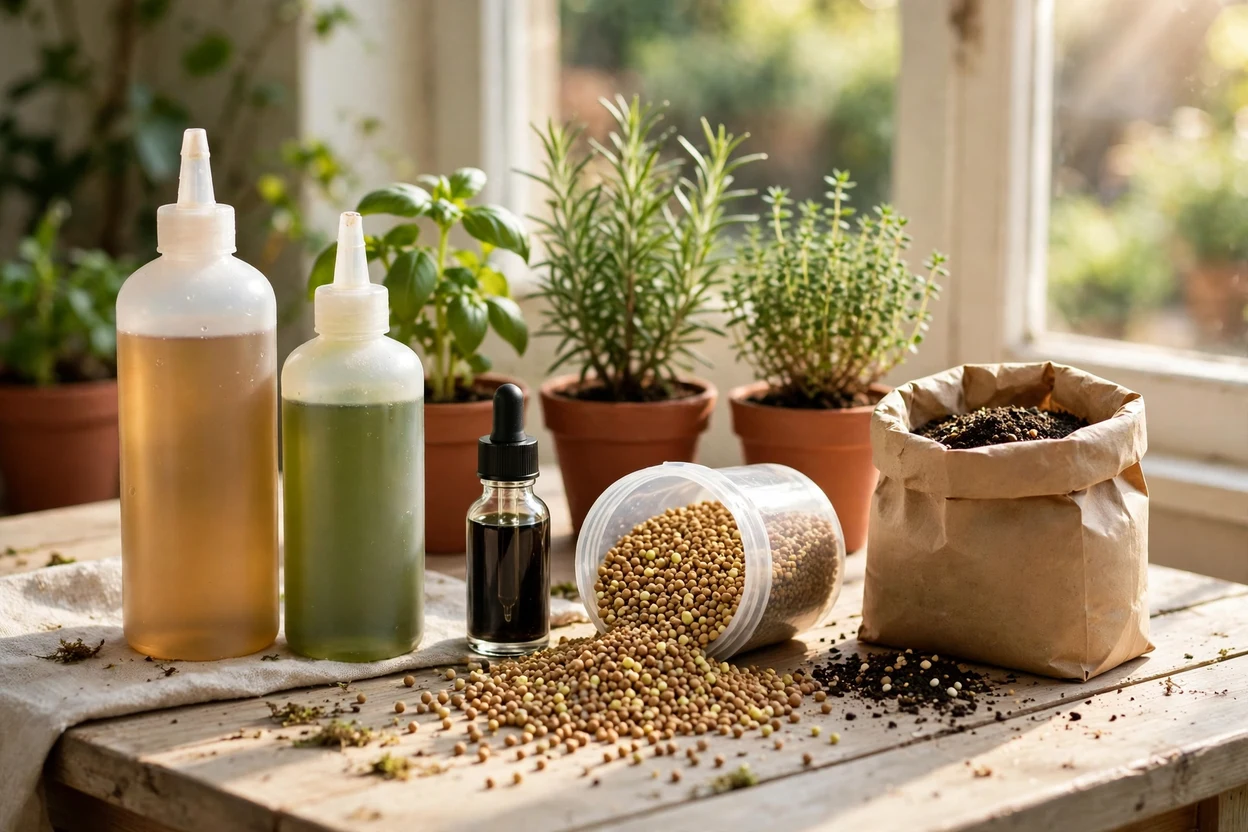
Houseplant fertilizers fall into four groups: liquid concentrates, liquid drops, slow-release granules and organic blends, and each group fits a different plant care routine. Liquids reward hands-on gardeners. Granules make more sense for busy growers, and organic blends appeal to gardeners who prefer natural plant food.
This table compares widely used houseplant fertilizers by form, best use and the growing setup each suits.
| Fertilizer | Form | Best For | Growing Setup |
|---|---|---|---|
| Dyna-Gro Foliage-Pro | Liquid concentrate | Foliage plants and aroids | Potting mix, LECA and grow lights |
| Schultz Plant Food Plus | Liquid drops | Beginner indoor gardeners | Small pots on windowsills |
| Miracle-Gro Indoor Plant Food | Liquid concentrate | Everyday foliage plants | Standard potting mix |
| Osmocote Smart-Release Indoor & Outdoor | Slow-release granules | Large containers | Floor plants and patio pots |
| Espoma Organic Indoor! Houseplant Food | Organic liquid | Herbs and organic gardening | Windowsill herb gardens |
N-P-K figures are left out on purpose. Formulas change, so read the guaranteed analysis on the current label before you feed your plants.
No single product is the best house plant fertilizer for every indoor garden. Fit beats brand. The best fertilizer for houseplants matches the plants you actually grow, your watering routine and the light in each room.
Best Liquid Fertilizer for Indoor Plants
Dyna-Gro Foliage-Pro has been a favorite among houseplant growers for years. The label lists a broad micronutrient package. It performs in regular potting soil, chunky aroid mixes and lightweight expanded clay aggregate (LECA), which makes it a strong candidate for the best liquid fertilizer for indoor plants in mixed collections and a top pick for the best liquid plant food overall.
Schultz liquid drops suit beginners, because you count the dose drop by drop and skip the measuring spoon. Miracle-Gro Indoor Plant Food is the most familiar option and works for most common foliage plants.
Whatever fertilizer you pick, look for a balanced or nitrogen-leaning ratio. Micronutrients matter too. Iron, magnesium, manganese and calcium should all appear on the label, since leaves yellow quickly when roots run short of them.
Best Organic Fertilizer for Indoor Plants
Espoma’s Indoor! liquid is the best organic fertilizer for indoor plants, and the best organic houseplant fertilizer for gardeners who want a ready-made product. It mixes the same way a synthetic liquid does in a watering can, and it was formulated specifically for houseplants. Easy choice.
Worm castings fertilizer makes a gentle top dressing. Spread a thin layer, about 1/2 inch (1.3 cm), over the potting mix in spring, and each watering carries a little more of their nutrients down to the roots.
Fish emulsion is the strongest common organic liquid fertilizer, and plants respond well to it. The smell lingers, though. Gardeners growing basil, mint, parsley or chives on a windowsill often treat an organic blend as the best plant food for indoor plants they plan to harvest and eat.
An OMRI Listed seal shows the product is approved for use in organic gardening.
Best Slow-Release Option
Osmocote Smart-Release is the most familiar slow-release fertilizer for container plants. Each coated bead lets nutrients out gradually as water moves through the potting mix, so a single application feeds the roots for many weeks. That’s the whole appeal.
Plant food spikes and fertilizer sticks offer similar convenience. There’s a catch. Because each one packs its nutrients into a single spot in the pot, spikes can burn any roots that grow up against them.
Is Liquid or Granular Fertilizer Better for Houseplants?
Liquid fertilizer, especially a water-soluble fertilizer, is better for most houseplants because it reaches the roots immediately, mixes to any strength and stops the moment you stop applying it. Slow-release granules win for gardeners who forget to feed. A single application lasts for several months.
Liquid houseplant food also lets you trim the dose in fall and halt it entirely in winter, when growth slows. Granules keep releasing nutrients into the soil once they’re in the pot.
This table compares liquid fertilizer, slow-release granules and spikes on five practical factors.
| Factor | Liquid | Granules | Spikes |
|---|---|---|---|
| Speed of Action | Immediate | Gradual over months | Gradual, localized |
| Dose Control | Full control each feeding | Fixed once applied | Fixed, concentrated in one spot |
| Effort | Every 2-4 weeks in season | One application per label interval | One set per label interval |
| Root Burn Risk | Low when diluted | Low when dosed correctly | Higher next to the spike |
| Best For | Most houseplants | Large pots and busy gardeners | Large pots only |
How Long Do Slow-Release Granules Last?
Slow-release granules last for the duration printed on the label. Heat changes things. Warm rooms and frequent watering both speed up release, so granules in a sunny, warm spot run out sooner than the label suggests.
What N-P-K Ratio Is Best for Houseplants?
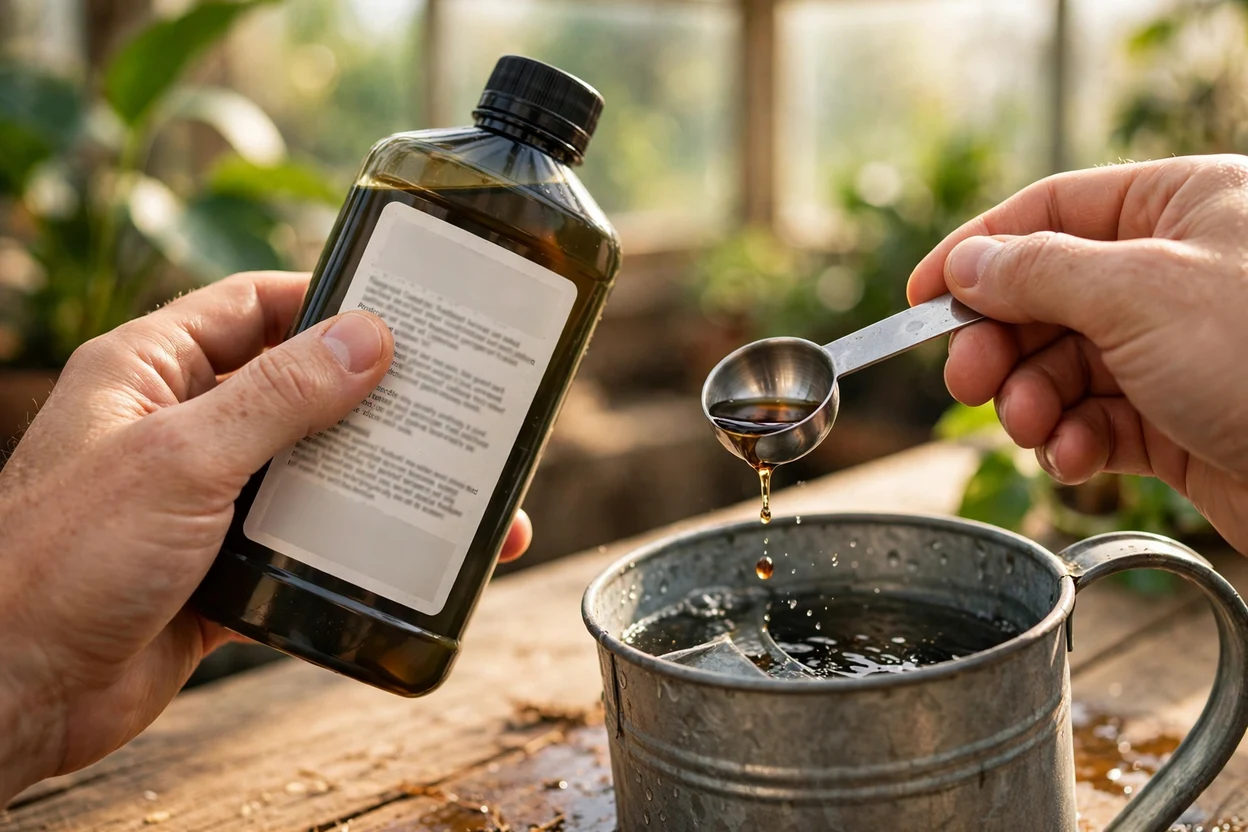
A balanced ratio such as 1-1-1 or a nitrogen-leaning ratio such as 3-1-2 is best for most houseplants, because leafy growth uses more nitrogen than any other nutrient. Ratio matters more than size. Dilution sets the final strength, so the relationship between the three numbers is what you’re really comparing.
Nitrogen (N) builds leaves and stems. Phosphorus (P) supports root growth and flowering, while potassium (K) helps plants manage water, resist stress and stay sturdy.
The example ratios below illustrate patterns rather than specific fertilizers, so match the pattern to the plant.
| Ratio Pattern | Example Ratio | Best For |
|---|---|---|
| Balanced | 1-1-1 or 10-10-10 | Mixed collections and general feeding |
| Nitrogen-leaning | 3-1-2 | Foliage plants, aroids and ferns |
| Low nitrogen | 1-2-2 | Succulents and cacti |
| Higher phosphorus | 1-3-1 | Flowering plants in bright light |
How to Read a Fertilizer Label
Every fertilizer label lists a guaranteed analysis, the three N-P-K numbers that gardeners use to compare plant foods.
| Label Item | What It Means |
|---|---|
| Guaranteed Analysis | Minimum nutrient percentages by weight |
| Total Nitrogen (N) | First number; feeds leaves and stems |
| Available Phosphate (P2O5) | Second number; supports roots and blooms |
| Soluble Potash (K2O) | Third number; supports overall plant vigor |
| Micronutrients | Iron, manganese, zinc and others in small amounts |
| Derived From | Ingredients that supply each nutrient |
Divide each number by the smallest one to compare two fertilizers. A 9-3-6 label and a 3-1-2 label share the same ratio, and the first is simply three times as concentrated.
Do Flowering Plants Need More Phosphorus?
No, flowering houseplants rarely need extra phosphorus, because light, not phosphorus, is the main trigger for indoor blooms. Given enough light and a balanced fertilizer, a flowering houseplant blooms on its normal schedule. Light comes first.
Bloom booster fertilizers with very high middle numbers add phosphorus the plant can’t use, and that surplus stays in the potting mix as salts.
Feeding Matrix by Plant Type and Light Level
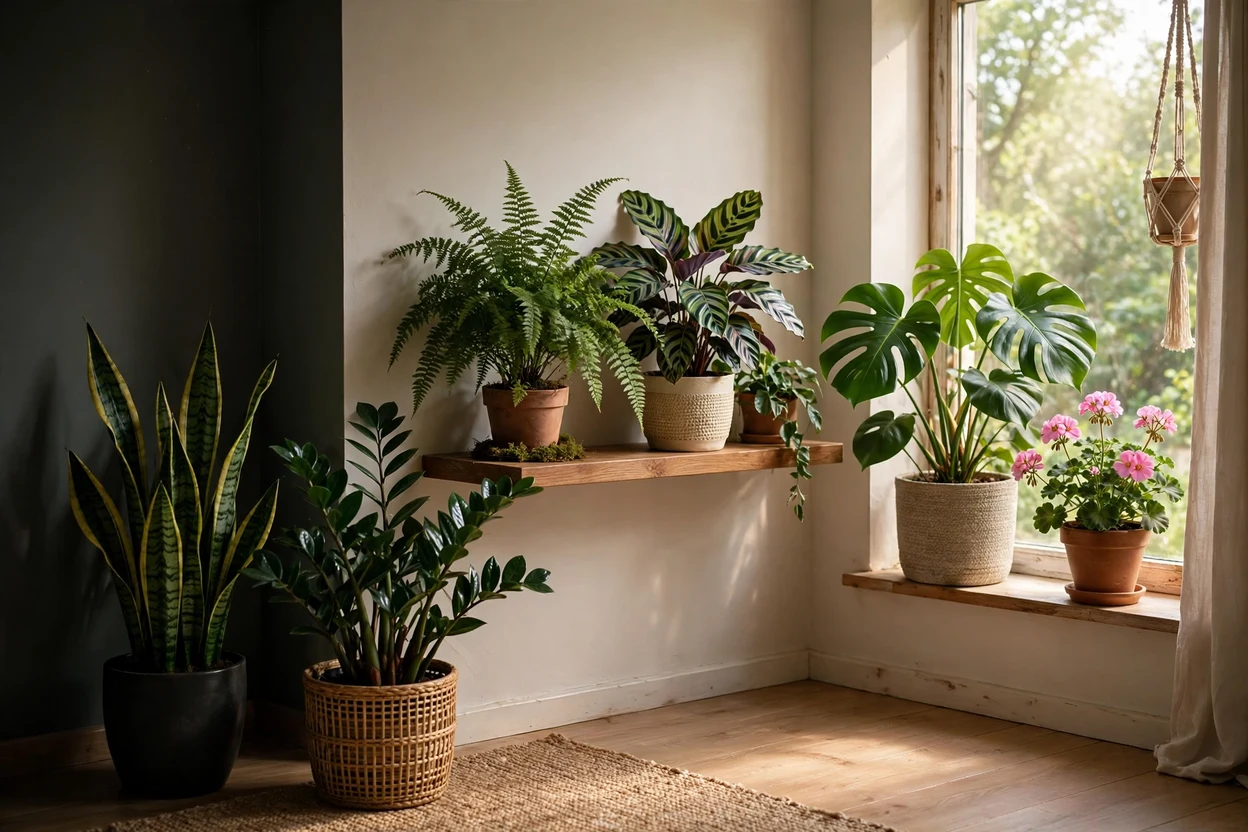
Light level sets how fast a houseplant grows, and growth rate sets how much fertilizer its roots can use, so a plant in low light needs a fraction of the feeding that the same plant needs in a bright south window or under grow lights.
“Half strength” means half the label rate, and “quarter strength” means one quarter of the label rate.
This table compares fertilizer strength and frequency for common houseplants across three light levels during the growing season.
| Plant Group | Low Light | Medium Light | Bright or Grow Light |
|---|---|---|---|
| Pothos and philodendron | Quarter strength, every 6-8 weeks | Half strength, monthly | Half strength, every 2 weeks |
| Monstera and alocasia | Quarter strength, every 6 weeks | Half strength, every 3-4 weeks | Half strength, every 2 weeks |
| Snake plant and ZZ plant | Do not feed | Quarter strength, 2-3 times per season | Half strength, every 6 weeks |
| Succulents and cacti | Do not feed | Quarter strength, 2-3 times per season | Quarter strength, monthly |
| Phalaenopsis orchids | Quarter strength, monthly | Quarter strength, every 2 weeks | Quarter strength, weekly |
| Ferns and calatheas | Quarter strength, every 6 weeks | Quarter strength, monthly | Half strength, every 3 weeks |
| Flowering houseplants | Half strength, every 6 weeks | Half strength, every 3-4 weeks | Half strength, every 2 weeks |
For monstera fertilizer, use a nitrogen-leaning liquid at half strength; for orchid food, use a dedicated orchid fertilizer at quarter strength. Treat the intervals as a starting point. When a plant pushes out steady new leaves, shorten the gap between feedings, and stretch it back out once growth stalls.
Feeding Plants Under Grow Lights
Plants under grow lights on a daily timer don’t slow down for winter, so they keep growing and need fertilizer year-round. Feed them at a steady half-strength rate every 2-3 weeks.
Constant feeding builds salts in the potting mix faster than seasonal feeding does, so watch for brown leaf tips or a crust forming on the soil surface.
Feeding LECA and Semi-Hydro Setups
LECA clay pebbles hold no nutrients, so every nutrient a semi-hydro plant receives comes from the water you give it. Add a complete fertilizer with micronutrients to every refill, mixed at reduced strength.
Flush the pebbles with plain water every few weeks to clear the white film of fertilizer salts that forms on the clay.
How Often Should You Fertilize Indoor Plants?
When gardeners ask how often to fertilize houseplants, the answer depends on growth and light. Fertilize actively growing indoor plants every 2-4 weeks at half strength from spring through early fall, and stretch the interval to every 6-8 weeks for plants in low light. Feeding indoor plants when new leaves appear, rather than by the calendar alone, keeps supply matched to growth. Growth is the signal.
Some gardeners swear by a “weakly, weekly” routine. They mix fertilizer at quarter strength and use it at every watering during the growing season, which gives the roots a steady, low supply.
Both methods work, and many gardeners simply feed indoor plants monthly in medium light. Pick one routine and stay consistent, so you can see how each plant responds.
Should You Fertilize Indoor Plants in Winter?
No, most indoor plants should not be fertilized in winter, because short days push them into a dormant period and unused fertilizer builds up as salts in the soil. Only fertilize in winter when a plant is still actively growing.
Three exceptions apply. Plants under grow lights can take quarter-strength feeding, and so can plants in very bright, warm sunrooms. Any plant pushing visible new growth qualifies too.
Should You Fertilize Newly Repotted Plants?
No, wait 4-6 weeks after repotting before you fertilize, because disturbed roots are sensitive and fresh potting mix often already contains fertilizer. Read the potting mix bag first. If it contains a starter fertilizer, skip feeding for the full period listed.
How long should you wait after repotting? Wait at least 4 weeks, and up to 6 weeks for sensitive plants or mixes with added fertilizer.
How to Fertilize Indoor Plants Step by Step
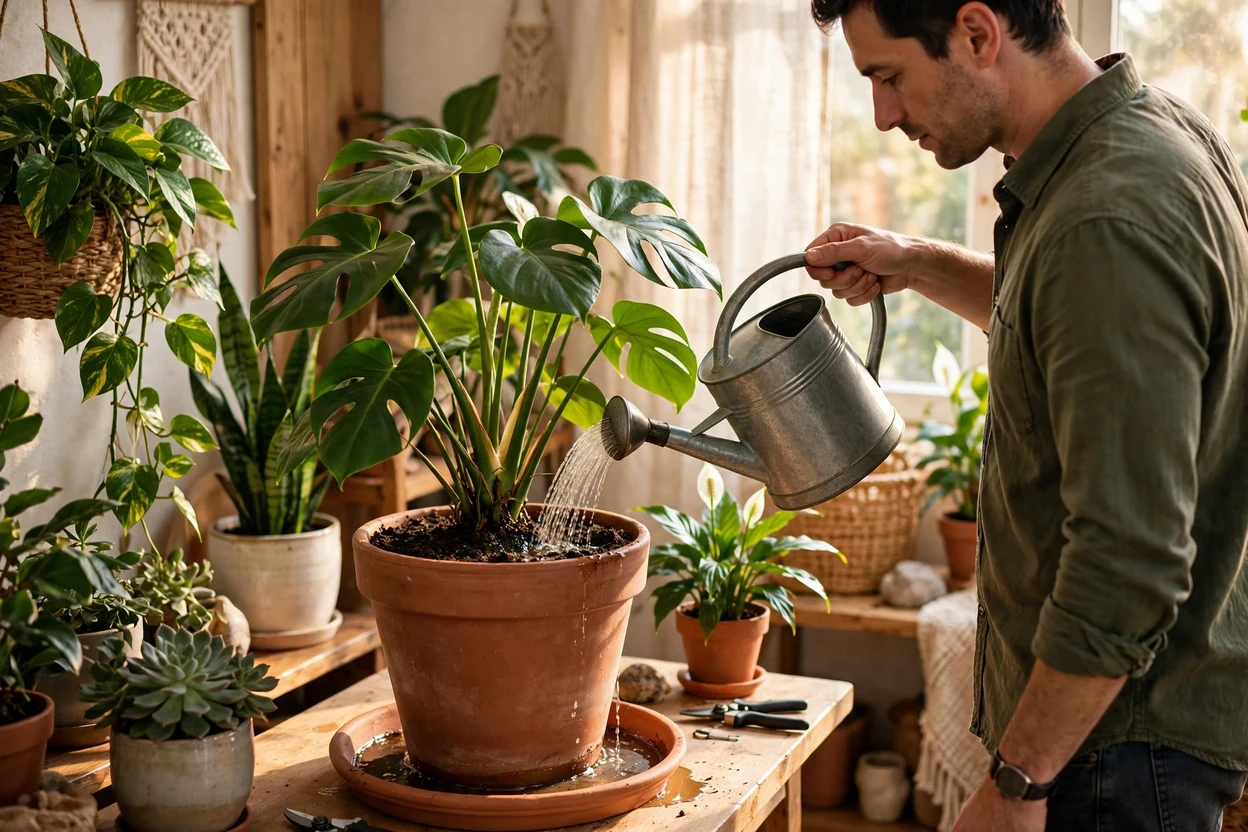
To fertilize an indoor plant, water it with plain water first, mix a liquid fertilizer at half the label rate, pour the solution evenly over moist potting mix until a little drains out, and empty the saucer. The order matters. Done that way, the fertilizer feeds the roots without burning them.
- Check the plant for new leaves or stems, which signal active growth.
- Water the plant lightly with plain water, because fertilizer on dry potting mix can scorch roots.
- Measure the fertilizer with a spoon or dropper and dilute to half strength, using half the label rate per gallon (3.8 L) of water.
- Mix the fertilizer into room-temperature water in a watering can and stir until fully dissolved.
- Pour the solution slowly and evenly across the soil surface until a small amount drains from the bottom.
- Empty the saucer after 15-30 minutes so roots do not sit in salty runoff.
- Write the date on a plant tag or garden journal to track your feeding interval.
- Flush the potting mix every 3-4 months by running plain water equal to about twice the pot’s volume through the potting mix.
Is Miracle-Gro Good for Indoor Plants?
Yes, Miracle-Gro is good for most indoor plants when you use an indoor-specific formula or dilute the all-purpose water-soluble version to half strength or less.
The all-purpose blue crystals are strong and fast-acting, so follow the houseplant rate on the label and cut it in half for plants in medium or low light.
Watch the potting mix, too. Many Miracle-Gro potting mixes already include fertilizer, so skip liquid feeding for the period stated on the bag after repotting into one.
Is Miracle-Gro Safe for All Houseplants?
No, standard Miracle-Gro formulas aren’t ideal for every houseplant. Succulents and cacti need much weaker doses. Orchids do better on dedicated orchid fertilizer, and carnivorous plants shouldn’t get standard fertilizer at all.
Salt-sensitive plants such as calatheas brown at the leaf edges when fed at full strength. Feed them at quarter strength instead, and flush the pot regularly so salts never accumulate around the roots.
Is Organic Fertilizer Better for Indoor Plants?
No, organic fertilizer is not better for indoor plants in every case; it releases nutrients more slowly and gently, which lowers the risk of root burn, but feeding results depend on dose and timing more than on source. Organic fertilizer shines with edible herbs and indoor vegetable starts.
Roots take up the same dissolved nutrients whether the source is organic or synthetic. Organic fertilizers need an extra step. Soil microbes must break them down first, and soilless potting mix holds fewer microbes than garden soil or compost, so release indoors runs slower.
| Factor | Organic | Synthetic |
|---|---|---|
| Release Speed | Slow, depends on soil microbes | Immediate for liquids |
| Root Burn Risk | Low | Higher if overdosed |
| Odor Indoors | Ranges from none to strong | None |
| Dose Precision | Moderate | High |
| Best For | Herbs and organic gardening | Most houseplants and LECA |
Organic fertilizer makes the most sense for windowsill herbs and vegetable seedlings, the plants you’ll actually harvest.
Do Organic Fertilizers Smell Indoors?
Yes, some do. Fish emulsion, blood meal and bone meal all give off a smell that’s hard to miss in a closed room. Worm castings and liquid blends made for houseplants carry little to no odor.
What Is a Good Homemade Fertilizer for Indoor Plants?
The best homemade fertilizer for indoor plants is homemade compost or worm castings from a home worm bin, used as a thin top dressing on the potting mix. Water saved from a freshwater fish tank during a routine change also gives plants a mild nutrient boost. Kitchen scraps are a different story. Coffee grounds, eggshells and banana peels don’t deliver reliable nutrition in pots.
Every homemade plant fertilizer or DIY plant food shares one weakness: nobody knows the dose. A commercial fertilizer label guarantees nutrient levels, while a kitchen recipe delivers a different amount every time.
Homemade Fertilizer Evidence Check
This table rates popular homemade fertilizers against general cooperative extension gardening guidance from university horticulture programs.
| Homemade Option | Claimed Benefit | Verdict |
|---|---|---|
| Homemade compost or worm castings | Slow, gentle nutrients | Good top dressing |
| Freshwater fish tank water | Mild nitrogen | Useful supplement |
| Used coffee grounds | Nitrogen and acidity | Poor; compacts and molds in pots |
| Eggshells | Calcium | Poor; breaks down too slowly |
| Banana peel water | Potassium | Poor; weak and attracts fungus gnats |
| Epsom salt | Magnesium | Use only for confirmed magnesium deficiency |
| Rice water | Trace nutrients | Weak; sours and smells quickly |
Do Coffee Grounds Help Houseplants?
No, coffee grounds do not help houseplants as a fertilizer, because they release nutrients slowly, compact into a dense layer and invite mold on the soil surface. Add them to an outdoor compost pile instead, where microbes break them down fully into compost you can later mix into garden beds or potting soil.
What Are Signs of Over-Fertilizing Houseplants?
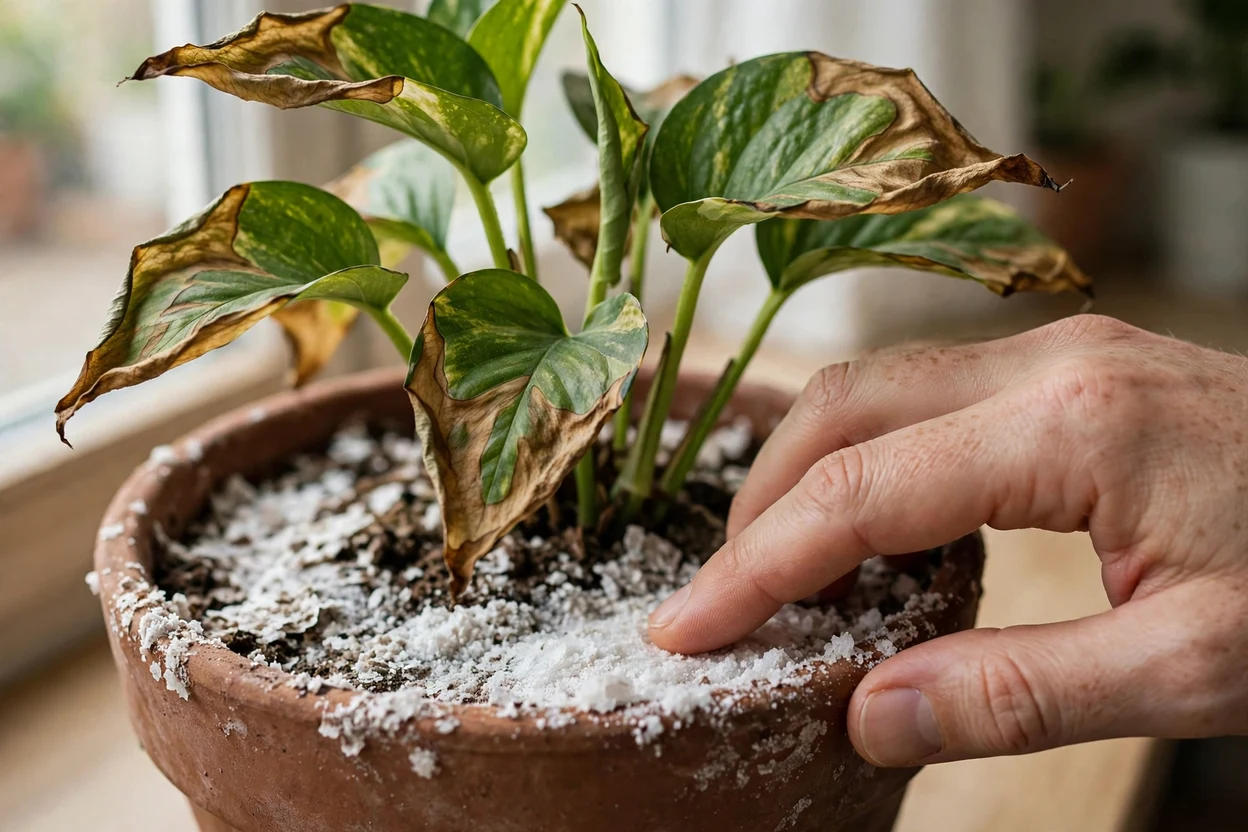
The main signs of over-fertilizing houseplants are a white or yellow crust on the soil, brown leaf tips and edges, wilting despite moist soil, and yellowing lower leaves. These signs of overfertilizing are also the main signs of fertilizer burn. Soluble salts are the culprit. They pull water away from roots and cause root burn, and leaching them out with plain water is the fix for an over-fertilized plant.
| Symptom | Likely Cause | Fix |
|---|---|---|
| White crust on soil or pot rim | Salt buildup | Flush and scrape off crust |
| Brown leaf tips and edges | Root burn from salts | Flush, then cut feeding in half |
| Wilting in moist soil | Damaged roots | Flush and pause feeding |
| Yellowing lower leaves | Excess salts or overwatering | Check drainage, then flush |
| Soft, leggy new growth | Too much nitrogen | Reduce feeding frequency |
Yellow leaves also signal underfeeding. Pale yellow new growth with green veins points to iron deficiency, while even yellowing of older leaves on an unfed plant indicates low nitrogen.
How Do You Fix Fertilizer Burn?
Fix fertilizer burn by stopping all feeding, leaching the salts out with plain water and resuming at quarter strength once new growth appears.
- Stop all fertilizer immediately.
- Scrape off any white crust and the top 1/4 inch (6 mm) of affected potting mix.
- Move the pot to a sink or bathtub with open drainage.
- Pour plain water slowly through the potting mix, using about twice the pot’s volume.
- Let the pot drain completely and empty the saucer.
- Prune leaves that are more than half brown with clean pruning shears.
- Repot into fresh potting mix if roots look brown and mushy.
- Resume feeding at quarter strength after the plant pushes healthy new growth.
Checking Salt Buildup in Potting Mix
Some indoor gardeners use a handheld EC (electrical conductivity) meter to check fertilizer salts in the water that drains from the pot. Test the runoff alongside your tap water. If runoff readings climb steadily over several weeks, salts are building in the potting mix and the pot is due for a flush. Watch the trend rather than chasing a single number.
Safe Fertilizer Storage
Store every fertilizer sealed, dry and out of reach of children and pets, ideally in a garden shed or high cabinet. If a pet swallows fertilizer, call the ASPCA Animal Poison Control Center at (888) 426-4435. Bury slow-release granules under a thin layer of potting mix rather than leaving them on the surface, and keep strong-smelling organic meals such as bone meal for outdoor garden beds.
Frequently Asked Questions
What’s the Best Plant Food for My Indoor Plants?
The best plant food for most indoor plants is a balanced liquid fertilizer with micronutrients, diluted to half strength during the growing season.
How Often Do I Feed My Houseplants?
Feed houseplants every 2-4 weeks during spring and summer, less often in low light, and not at all in winter unless they’re under grow lights.
What Fertilizer Should I Use for My Pothos?
The best fertilizer for pothos is a balanced or nitrogen-leaning liquid fertilizer at half strength every 2-4 weeks in spring and summer, since pothos put out most of their new growth then. Pothos in dim spots need feeding only every 6-8 weeks.
Can I Use Coffee Grounds to Fertilize My Plants?
No, coffee grounds compact and mold in pots, so add them to an outdoor compost pile instead.
Why Are My Plant’s Leaves Turning Brown After Fertilizing?
Leaves turning brown after fertilizing point to root burn from salt buildup, so flush the potting mix with plain water and cut the next dose in half.
Conclusion
The best fertilizer for indoor plants is the one that matches each plant’s light, growth rate and potting mix. Start simple. Mix a half strength fertilizer this growing season, match feeding frequency to each plant’s light, and let new leaves show you what each plant needs next.
Gardeners who read labels, track feeding dates and flush their pots regularly lose fewer plants to fertilizer burn and grow fuller, healthier houseplants. Those habits carry over to every new plant in the collection, indoors or out in the garden.