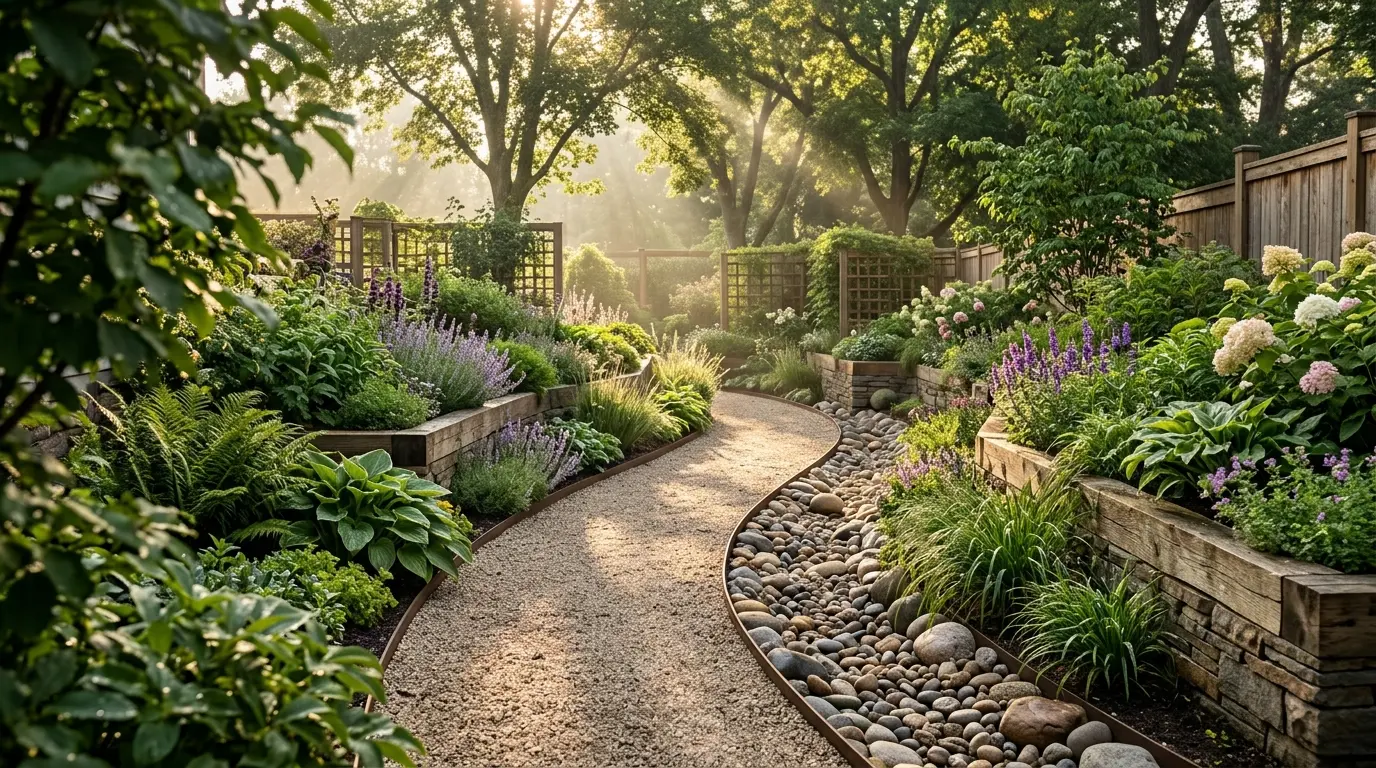
Gravel is one of the most versatile materials in the garden. It makes paths that drain, beds that suppress weeds, patios that cost less than pavers and drainage features that keep plants’ roots from sitting in water. But “gravel” covers dozens of products, and choosing the wrong one can mean stones that roll underfoot, wash away in storms or clog up a drain. Here’s how to match the stone to the job.
Understand the Two Big Categories
Angular (Crushed) Stone
Crushed stone has sharp, fractured edges. The pieces lock together when compacted, which makes them stable underfoot and ideal as a base layer. Common examples include crushed limestone, granite chips and “crusher run” (a mix of stone and fine dust).
Rounded Stone
Pea gravel and river rock have smooth, rounded edges from natural weathering. They feel nice underfoot and look soft and natural, but they shift and roll because they don’t interlock.
Knowing which category you need solves most gravel decisions.
Gravel for Garden Paths
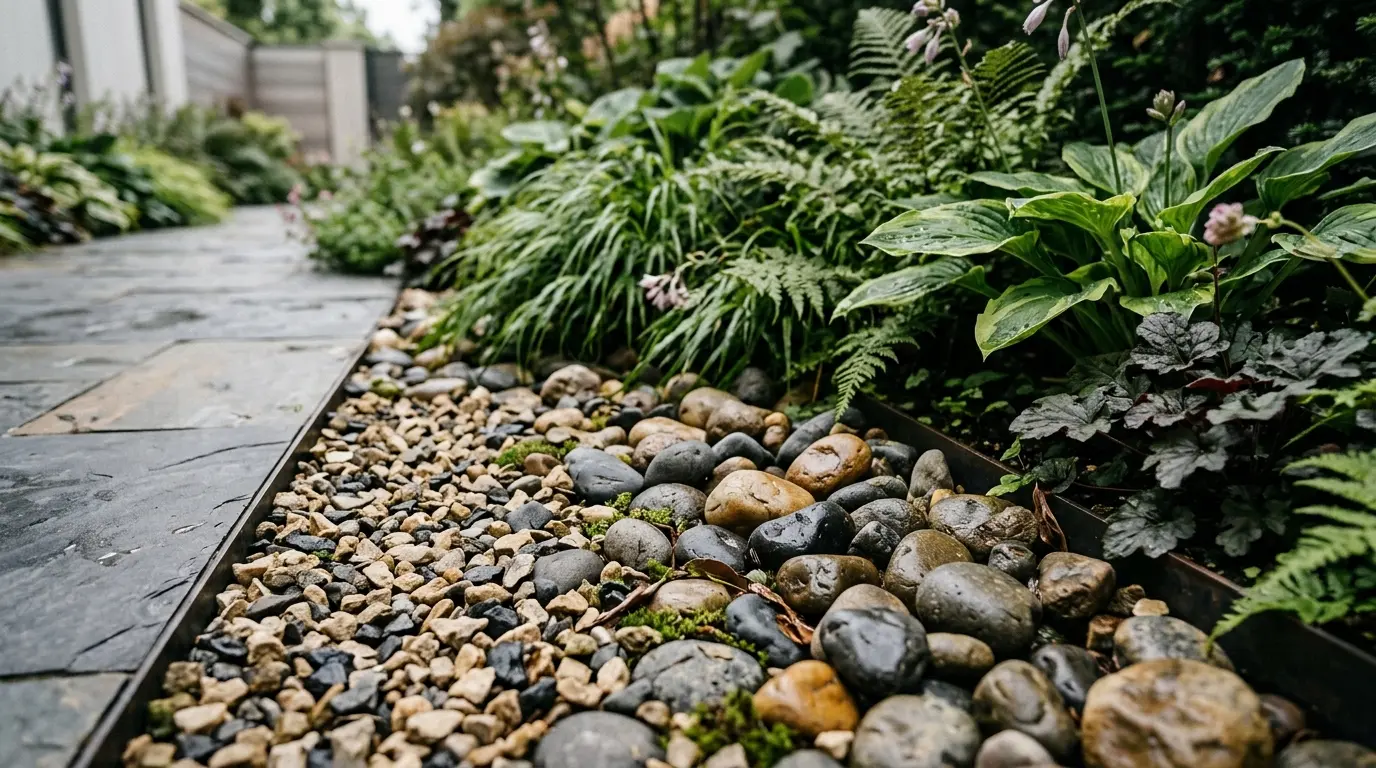
A good path should feel firm, drain quickly and stay put. For most paths:
- Base layer: 3 to 4 inches of compacted crushed stone.
- Top layer: about 1 to 2 inches of a decorative stone, such as decomposed granite, 3/8-inch crushed stone or pea gravel.
- Edging: steel, stone or timber edging keeps gravel from spreading into lawns and beds.
Pea gravel on top looks lovely, but keep the layer thin so it doesn’t feel like walking on a beach.
Gravel for Planting Beds and Mulch
Gravel mulch suits Mediterranean plants, succulents, alpines and drought-tolerant perennials that dislike wet crowns. It reflects warmth, discourages slugs and won’t break down like bark. Choose a colour that complements your plants and house: pale stone brightens shady areas, while darker stone absorbs heat and sets off silver foliage.
Use landscape fabric sparingly in planting beds. It can help in gravel gardens with few plants, but it makes it harder to add new plants later and doesn’t stop weeds that sprout in the gravel on top.
Gravel for Drainage
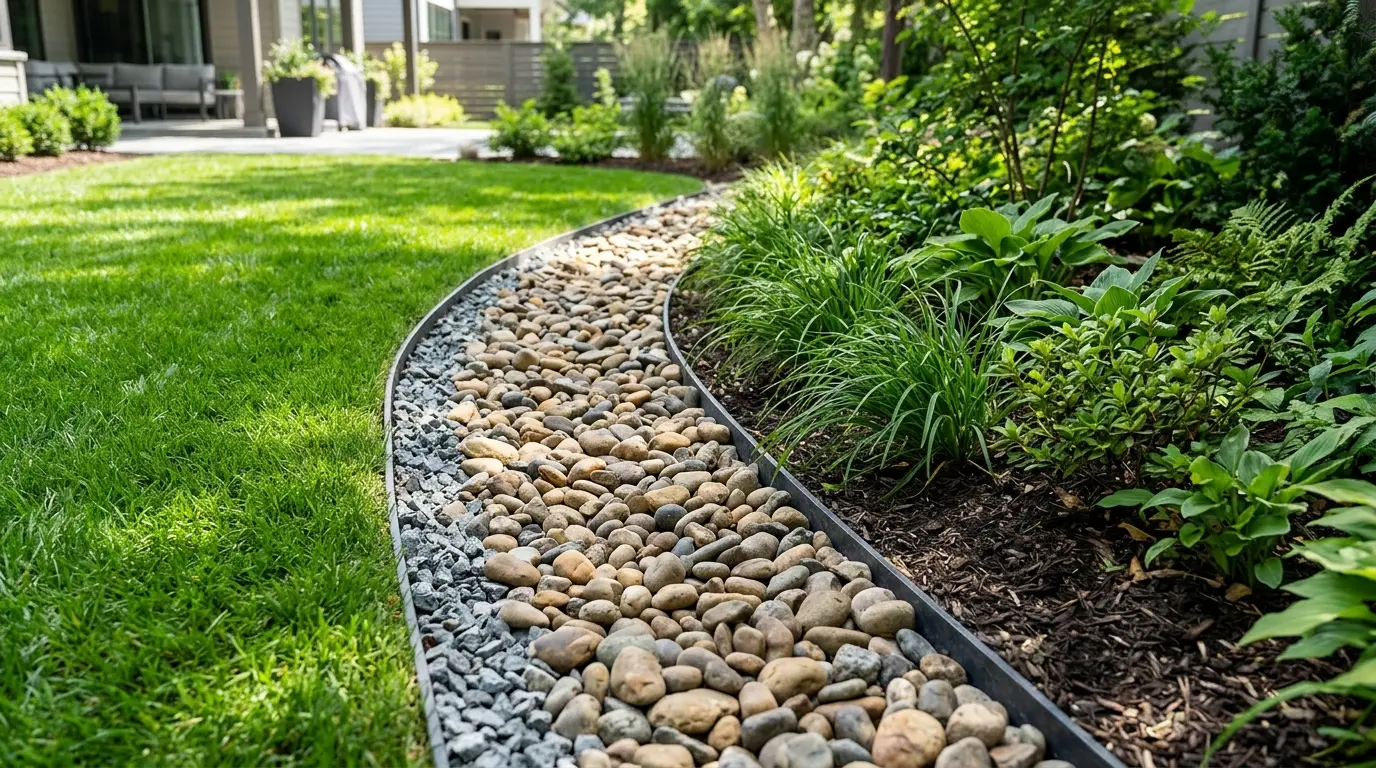
Drainage is where gravel choice matters most. Water needs open spaces to travel through, so the ideal drainage stone is clean (washed of fines) and fairly uniform in size. Dusty mixes like crusher run compact into a dense layer that holds water, the opposite of what you want.
Common drainage uses include French drains, dry wells, the backfill behind retaining walls and the bottom of raised beds on poorly draining sites. For a detailed comparison of sizes and types, this guide to the best gravel for drainage explains which stones keep water moving and which ones quietly clog a system.
Gravel Patios and Seating Areas
A gravel patio is an affordable, permeable alternative to solid paving. Rain soaks through instead of running off, which helps in yards with drainage issues. Build it like a path: excavate, lay a compacted crushed-stone base, add edging and finish with a top layer of small, angular stone or decomposed granite that won’t wobble under chairs.
Gravel is not right for every patio, though. If you want a smooth surface for dining furniture, a level area for a grill, or a long-term “outdoor room,” pavers or natural stone are more practical. Many homeowners combine both: a paver or flagstone patio with gravel borders and planting pockets. If you are weighing those options, landscape firms like warelandscaping.com show how different paver and stone patio designs work alongside planting areas.
How Much Gravel Do You Need?
To estimate, multiply length by width (in feet) by depth (in feet) to get cubic feet, then divide by 27 to convert to cubic yards. Most suppliers sell by the cubic yard or ton. Order slightly more than your estimate to allow for compaction and uneven ground.
Maintenance Tips
- Rake regularly to level the surface and redistribute stones.
- Top up every few years as gravel settles or migrates.
- Remove leaves promptly, because decomposing leaves create soil that weeds love.
- Pull weeds while small or use a flame weeder on paths.
Final Thoughts
The right gravel can make a garden more practical, more beautiful and better drained. Use angular crushed stone where you need stability, clean uniform stone where you need drainage, and rounded or decorative stone where looks matter most, and your paths, beds and patios will perform well for years.