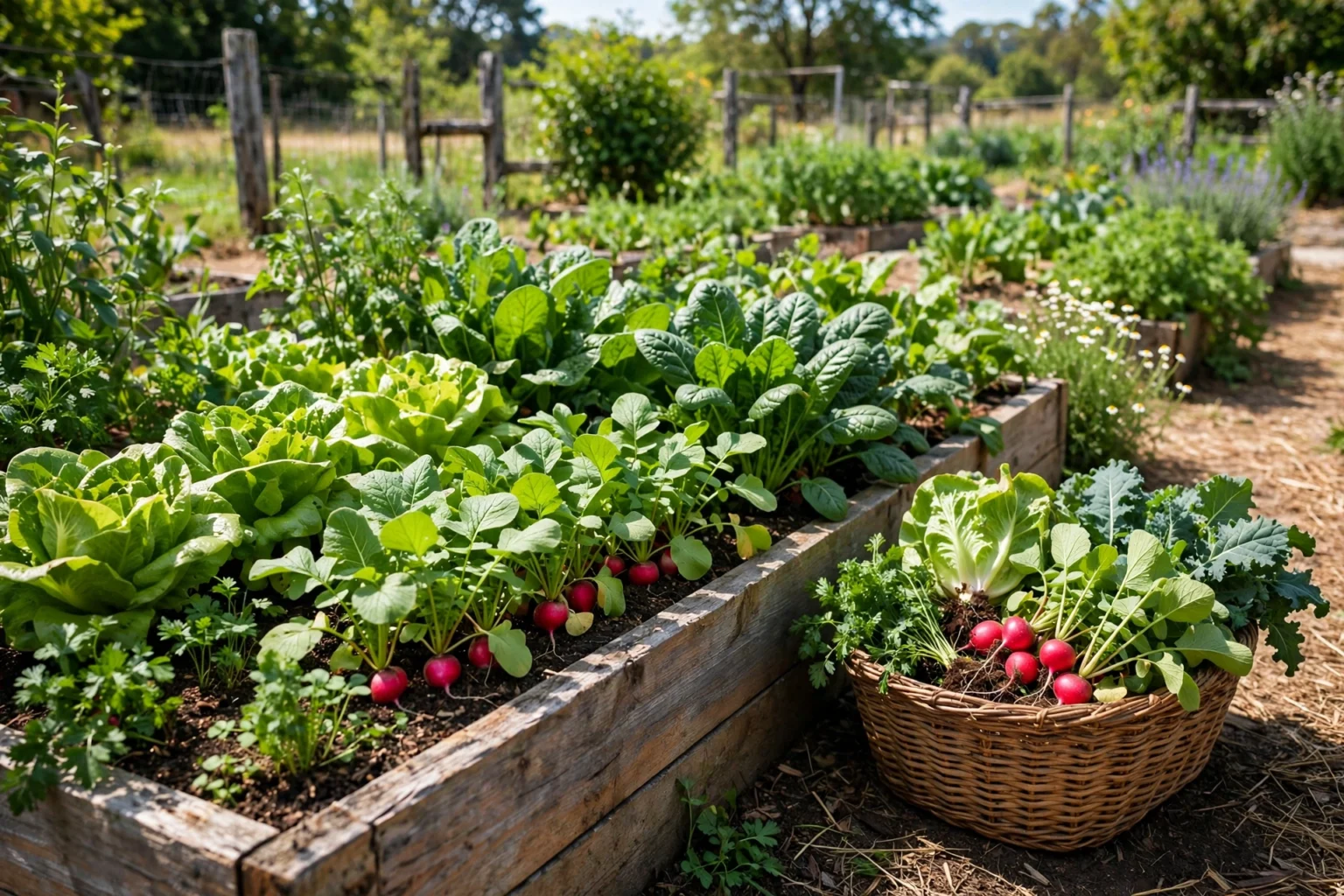
Fast growing vegetables are crops that reach a first harvest about 1 to 8 weeks after sowing, so home gardeners can eat from a bed, pot, or windowsill long before tomatoes ripen. Microgreens, radishes, arugula, leaf lettuce, and baby spinach lead the list. They’re not fussy. Most of them need nothing more than loose soil kept evenly watered and 6 hours of direct sun each day.
Key Takeaways
• Microgreens are the fastest vegetable crop and are ready to cut 7 to 21 days after sowing.
• Radishes are the fastest full-size root crop and typically reach harvest size in 21 to 30 days.
• Arugula, leaf lettuce, and baby spinach produce harvestable baby leaves in about 3 to 5 weeks.
• Bush beans and zucchini are the fastest warm-season vegetables and usually produce in 45 to 60 days.
• Hydroponic systems often bring leafy greens to harvest sooner than soil, but no verified universal speed figure exists.
• Sowing small batches every 7 to 14 days keeps quick crops coming all season.
What Are Fast Growing Vegetables?
Fast growing vegetables are food crops that produce an edible harvest within roughly 60 days of sowing, and often within 30 days. The group includes microgreens, salad greens, radishes, turnips, bush beans, and summer squash. Gardeners pick them for speed. They also fit small spaces and the short window between frosts.
Seed packets list “days to maturity,” the typical span from sowing to a full-size harvest. Transplanted crops work differently. For tomatoes and other crops usually set out as transplants, that count starts on the transplant date rather than the sowing date.
“Days to first harvest” runs shorter. Leafy crops like lettuce and kale give cuttable baby leaves weeks before they reach full size, so a 50-day lettuce can feed you at day 25.
The fastest growing crops share three traits. Seeds germinate quickly. The life cycle stays short, too, and the part you eat is useful well before the plant reaches full size.
What Vegetable Grows the Fastest?
Microgreens grow the fastest of any vegetable and reach harvest 7 to 21 days after sowing. Radishes lead the full-size crops. They reach harvest in about 21 to 30 days, and arugula and mustard greens follow close behind with leaf lettuce, giving cuttable baby leaves in roughly 3 to 5 weeks from seed.
The table below ranks common quick crops by days to first harvest and days to full maturity.
| Crop | First Harvest (Days) | Full Maturity (Days) | Season |
| Microgreens | 7-21 | N/A | Any, indoors |
| Pea shoots | 14-21 | N/A | Cool or indoors |
| Mustard greens | 20-30 | 40-50 | Cool |
| Radishes | 21-30 | 21-30 | Cool |
| Arugula | 21-30 | 35-45 | Cool |
| Leaf lettuce | 21-30 | 45-55 | Cool |
| Spinach | 25-30 | 40-50 | Cool |
| Kale | 25-30 | 50-65 | Cool |
| Hakurei-type turnips | 30 (greens) | 35-50 | Cool |
| Baby bok choy | 30-35 | 45-60 | Cool |
| Beets | 30-35 (greens) | 50-60 | Cool |
| Zucchini | 45-60 | 45-60 | Warm |
| Bush beans | 50-60 | 50-60 | Warm |
These ranges are typical seed-packet values. Always check the packet for your specific variety, because some radish and lettuce types run faster or slower than average.
Fast Growing Vegetables for Beginners
The easiest fast growing vegetables for beginners are radishes, leaf lettuce, arugula, bush beans, and zucchini, because each one germinates reliably, tolerates small mistakes, and grows well when sown directly in garden soil or containers. Start with radishes. They’re the hardest to kill of the group, and they give results in under a month, which makes them ideal first crops.
Radishes
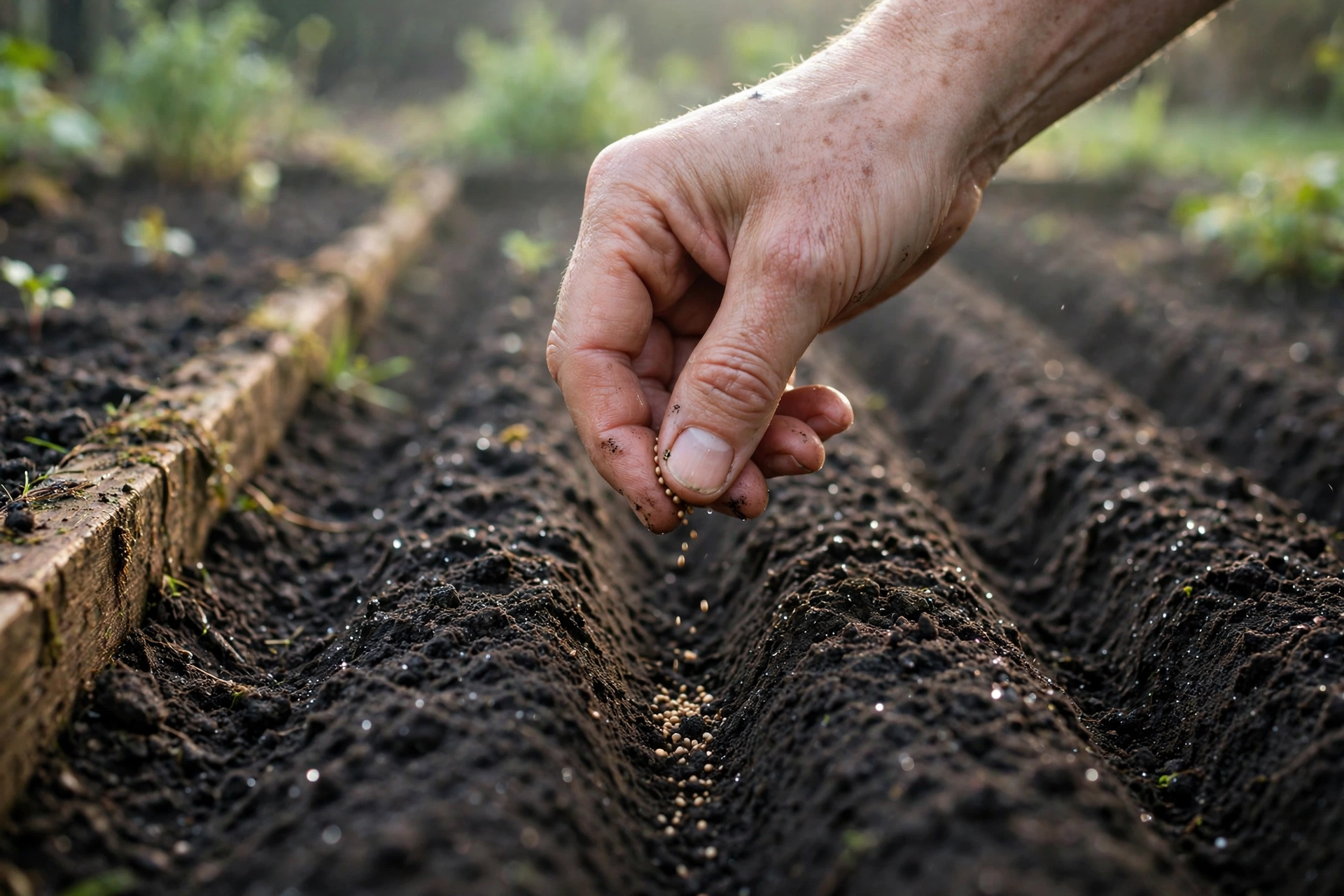
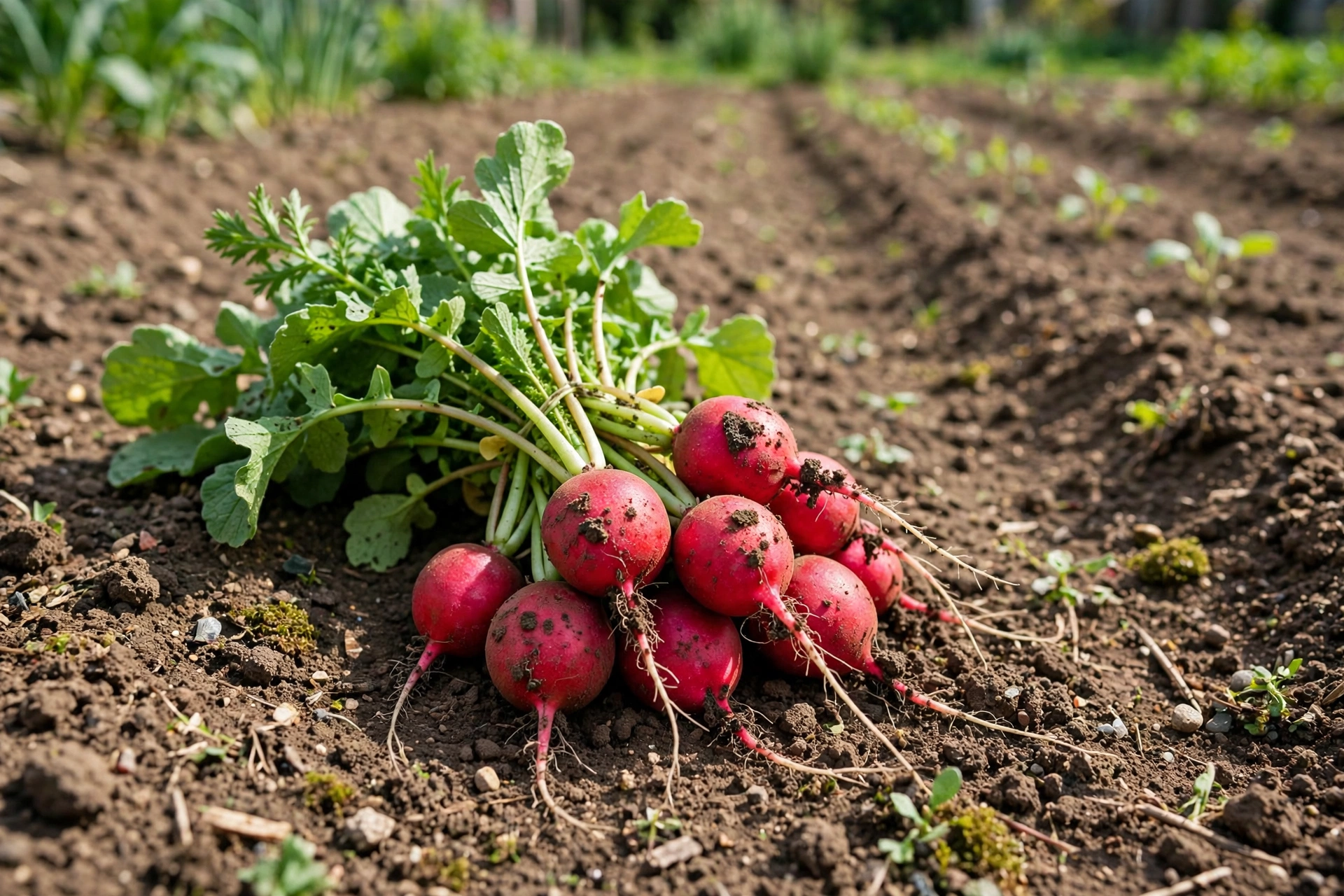
Radishes are the best first vegetable for new gardeners because they sprout in 3 to 7 days and reach harvest size in about 3 to 4 weeks. Sow seeds 1/2 inch (1.3 cm) deep. Cool spring or fall soil suits them.
Once seedlings show their first true leaves, thin them to 1 to 2 inches (2.5 to 5 cm) apart so each root has room to swell. Crowded radishes grow tops but no roots.
Pull radishes as soon as they hit full size. Waiting costs you. Leave them in the ground longer and the roots turn woody and hot, while the plants bolt quickly once temperatures start to climb.
Space isn’t a barrier. A container just 6 inches (15 cm) deep grows round radishes well on a patio or a balcony, which makes them an easy apartment crop.
Leaf Lettuce and Arugula
Leaf lettuce and arugula are the easiest salad greens to grow fast, with baby leaves ready in about 3 to 5 weeks. Sow seeds 1/4 inch (6 mm) deep. Lettuce seed germinates best under only a light covering of soil.
Both crops work as cut-and-come-again greens. Cut leaves 1 inch (2.5 cm) above the crown, and each plant regrows for another two or three harvests before it’s spent.
Heat is the main threat. When daytime temperatures stay above about 80°F (27°C), lettuce and arugula bolt, which means they turn bitter and send up tall flower stalks.
Bush Beans
Bush beans are the fastest warm-season legume, producing pods in about 50 to 60 days without a trellis. Patience pays here. Wait until the soil reaches at least 60°F (16°C) before sowing, because bean seeds rot when they sit in cold, wet ground.
Sow seeds 1 inch (2.5 cm) deep and 2 to 4 inches (5 to 10 cm) apart. Once pods appear, check the plants every 2 to 3 days and pick anything that’s ready, since regular picking keeps bush beans producing. Skipped pods slow the plant down.
Zucchini
Zucchini is the most productive fast vegetable, often yielding fruit within 45 to 60 days of sowing. Cold soil is the main risk. Plant seeds after your last frost date, and only once the soil itself has warmed to about 65°F (18°C) or a little higher.
Pick them young. Harvest fruits at 6 to 8 inches (15 to 20 cm) long for the best texture, because oversized zucchini turn seedy and slow the plant’s new fruit production.
Containers work too. Give each zucchini plant its own pot, one that holds at least 5 gallons (19 liters) of potting mix rather than a shared planter.
What Vegetables Can You Harvest in 30 Days?
Radishes, arugula, baby spinach, leaf lettuce, mustard greens, pea shoots, and microgreens can all be harvested within 30 days of sowing in good conditions. Most are cool-season crops. They’re picked at the baby stage, and turnip greens and baby kale also reach a first cutting right around the 30-day mark.
The 30-day list includes:
• Microgreens such as radish, broccoli, and mustard, at 7 to 21 days
• Pea shoots, at 14 to 21 days
• Radishes, at 21 to 30 days
• Baby arugula and mustard greens, at 20 to 30 days
• Baby leaf lettuce and spinach, at 21 to 30 days
• Turnip greens and baby kale, at 25 to 30 days
The whole trick is picking young. Full heads of lettuce and mature spinach plants take 45 days or more, so waiting for full size pushes you well past the 30-day mark.
How Fast Do Vegetables Grow from Seed?
Vegetables grow from seed to harvest in anywhere from 1 week for microgreens to 10 weeks or more for crops like full-size beets, carrots, and cucumbers. Germination alone takes 2 to 14 days. That spread depends mostly on soil temperature and seed age, with planting depth also playing a part. Warm, moist soil speeds both sprouting and growth.
Germination Speed and Soil Temperature
This table lists typical germination time and minimum soil temperature for common fast growing seeds.
| Crop | Germination (Days) | Min Soil Temp (°F / °C) |
| Radishes | 3-7 | 45 / 7 |
| Arugula | 3-7 | 40 / 4 |
| Lettuce | 4-10 | 40 / 4 |
| Spinach | 5-10 | 40 / 4 |
| Zucchini | 5-10 | 60 / 16 |
| Bush beans | 7-10 | 60 / 16 |
Cool-season crops sprout slowly in cold soil, but they still germinate, which is why radishes and arugula can go in weeks before beans. Warm-season crops aren’t so forgiving. Planted in cold ground, they often fail completely.
How to Speed up Germination
Germination speeds up when seeds sit in evenly moist soil at the right temperature and the right depth. Most of the fixes below cost little or nothing, and you can try them before the next sowing date on your calendar. These steps shorten the wait:
1. Buy fresh seed each year or test older seed on a damp paper towel.
2. Soak peas in water for a few hours before sowing.
3. Warm spring beds by covering them with black plastic for a week.
4. Place indoor trays on a seedling heat mat.
5. Keep the top inch (2.5 cm) of soil damp until sprouts appear.
Do Hydroponic Vegetables Grow Faster?
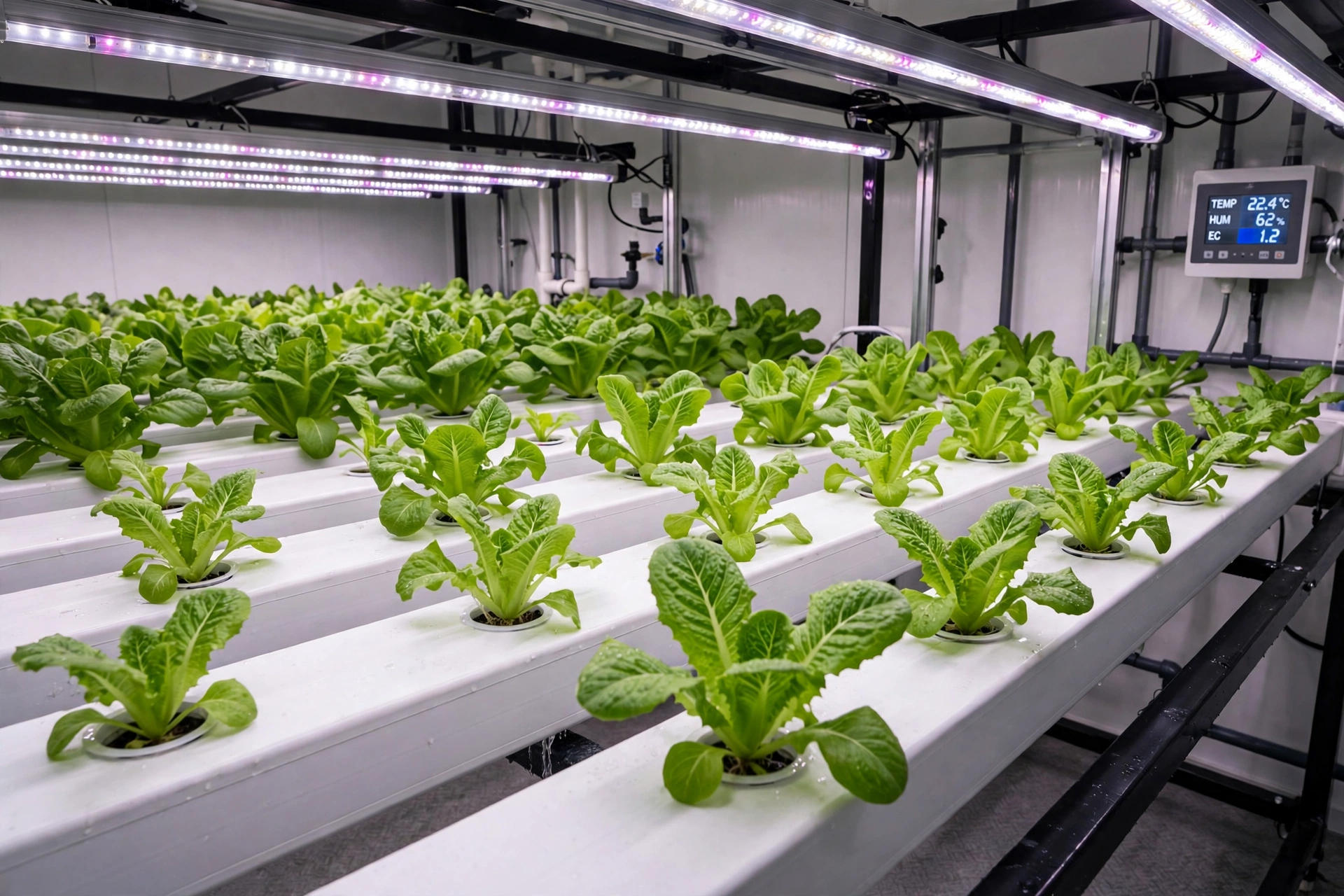
Yes, hydroponic leafy greens often reach harvest faster than soil-grown greens, because roots get constant water, oxygen, and dissolved nutrients. No verified universal percentage is available. Results swing with light and temperature, and nutrient strength changes the outcome as well, so any single figure would mislead. Lettuce, bok choy, spinach, and kale respond best to hydroponic growing.
Fruiting crops like zucchini and beans grow hydroponically too, but they demand bigger systems and stronger light, plus some kind of support. Leafy greens give beginners faster results.
Speed by Growing Method
This table compares four growing methods by speed and startup cost, along with the crops each handles best.
| Method | Best Fast Crops | Relative Speed | Startup Cost |
| Microgreen trays | Radish, pea, mustard | Fastest, 7-21 days | Low |
| Hydroponics | Lettuce, bok choy, spinach | Often faster than soil | Medium to high |
| Containers | Radish, lettuce, arugula | Matches soil if well fed | Low |
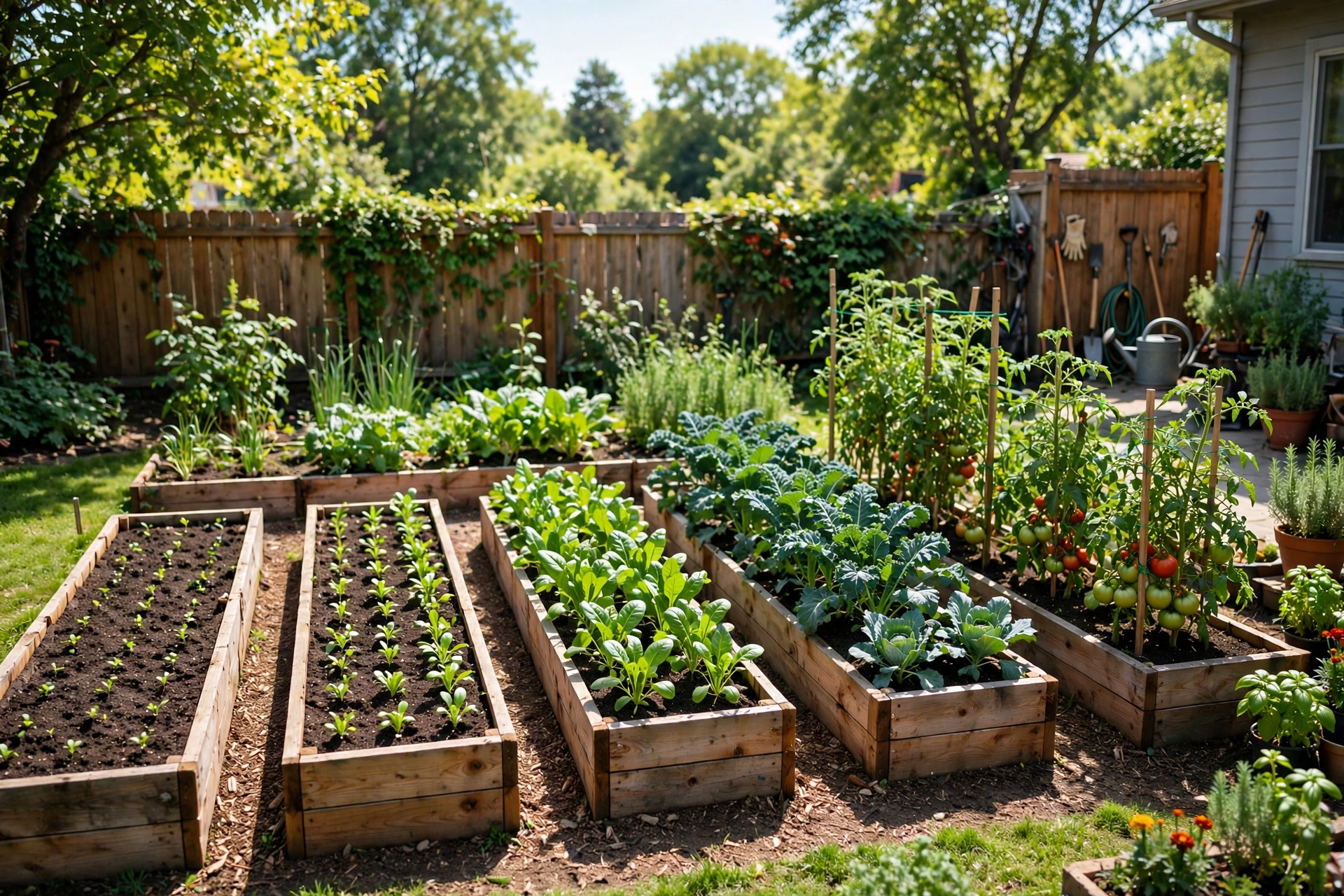
| Raised bed or ground | All quick crops | Seed-packet baseline | Low to medium |
The Cheapest Hydroponic Setup
The Kratky method is the cheapest hydroponic setup because it uses no pump, timer, or electricity. Start with a lidded tote or a wide-mouth jar filled with nutrient solution, then set a seedling in a net cup pushed through the lid. Roots follow the falling water line. Lettuce grows well this way on a sunny counter.
Can You Grow Fast Vegetables Indoors?
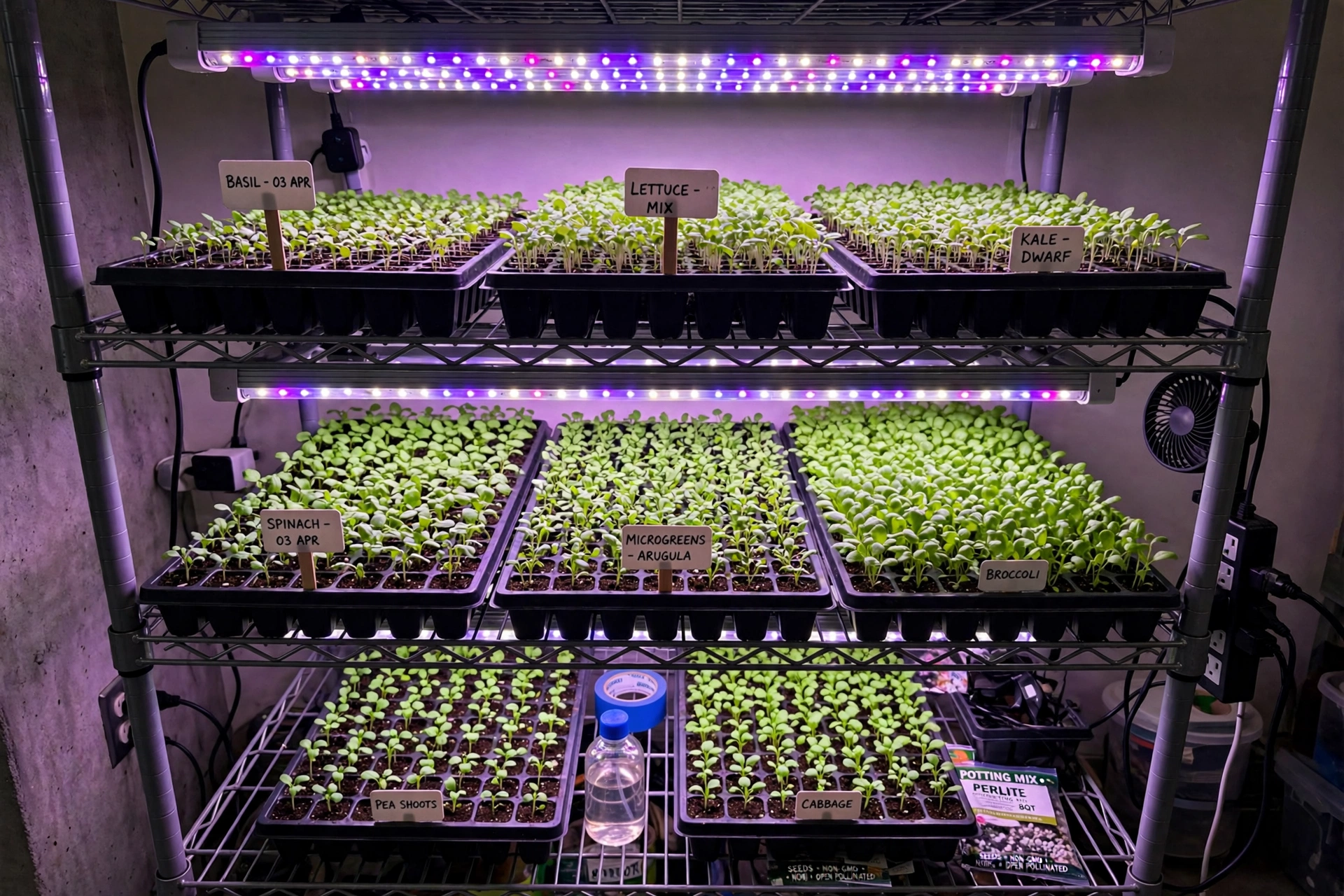
Yes, you can grow fast vegetables indoors using a bright south-facing window or light-emitting diode (LED) grow lights running 14 to 16 hours a day. The best indoor crops are microgreens, pea shoots, baby lettuce, arugula, and spinach. All stay compact. Each reaches harvest in about 1 to 5 weeks.
Light is the catch. Winter windows in northern states rarely provide enough of it. Without extra lighting, seedlings stretch toward the glass and flop over, and their leaves turn pale instead of a healthy green.
Hang LED grow lights at whatever height the manufacturer recommends, then raise them a little at a time as the plants grow taller. A cheap outlet timer handles the schedule.
Scallions offer a quick indoor shortcut. Set the white root ends of store-bought green onions in a glass of water, and new green shoots appear within about a week.
When to Plant Fast Crops in Your USDA Zone
Sow cool-season fast crops like radishes, lettuce, and spinach 2 to 6 weeks before your last spring frost, and plant warm-season beans and zucchini 1 to 2 weeks after it. Two things set these windows. One is your U.S. Department of Agriculture (USDA) Plant Hardiness Zone, and the other is the pair of frost dates for your exact location.
The USDA updated its Plant Hardiness Zone Map in November 2023. Those zones don’t track frost. They reflect average extreme winter low temperatures, so look up your frost dates separately through your state’s Cooperative Extension office or a ZIP code frost date tool.
The following table compares spring and fall sowing windows for six quick crops.
| Crop | Spring Sowing | Fall Sowing |
| Radishes | 4-6 weeks before last frost | 4-6 weeks before first frost |
| Arugula | 4-6 weeks before last frost | 4-6 weeks before first frost |
| Spinach | 4-6 weeks before last frost | 6-8 weeks before first frost |
| Lettuce | 2-4 weeks before last frost | 6-8 weeks before first frost |
| Bush beans | 1-2 weeks after last frost | 10-12 weeks before first frost |
| Zucchini | 1-2 weeks after last frost | 10-12 weeks before first frost |
In zones 9 and 10, which cover much of Florida and southern Texas along with Southern California, gardeners grow greens mainly from fall through early spring. There, summer bolts lettuce and spinach.
Cold zones pose a different problem. Gardeners in zones 3 to 5, such as Minnesota and northern Maine, get short seasons, so quick crops like radishes and bush beans fit the narrow frost-free window better than long-season vegetables.
Fall planting is too late when days to maturity plus about 2 extra weeks exceeds the time left before your first hard frost. Shorter fall days slow growth. Build in the buffer.
How to Grow Vegetables from Seed for the Fastest Harvest
The fastest harvest comes from choosing short-season varieties, sowing directly into warm, loose soil, keeping seeds evenly moist, and picking crops young. Vegetable seeds that grow fast still stall in compacted or dry ground, and cold soil holds them back just as badly. Prep matters as much as variety.
Follow these steps for a quick harvest:
1. Choose varieties with the lowest days to maturity listed on the seed packet.
2. Check soil temperature with an inexpensive soil thermometer before sowing.
3. Loosen the bed and mix in 1 to 2 inches (2.5 to 5 cm) of compost.
4. Sow seeds at a depth of 2 to 3 times their diameter.
5. Water gently and keep the top inch (2.5 cm) of soil moist until sprouts appear.
6. Thin seedlings to the spacing shown on the packet.
7. Side-dress leafy greens with compost or a balanced fertilizer after 2 weeks.
8. Harvest early and often to keep plants productive.
Sourcing seed is easy. US gardeners can find fast growing vegetables from seeds at Home Depot and Lowe’s, while local garden centers carry them as well. For mail order, try Burpee or Johnny’s Selected Seeds, and Baker Creek Heirloom Seeds sells them too.
A 30-Day Succession Planting Plan
A 30-day succession plan sows a small batch of quick crops every week, so a new harvest starts about every 7 days instead of all at once. Start week 1 about 4 weeks before your last spring frost, or about 8 weeks before your first fall frost. The rotation continues from there.
This weekly table shows what to sow and what to harvest.
| Week | What to Sow | What to Harvest |
| Week 1 | Radishes, arugula, microgreen tray | N/A |
| Week 2 | Leaf lettuce, spinach, microgreen tray | First microgreens |
| Week 3 | Radishes, mustard greens | Second microgreens |
| Week 4 | Radishes, baby kale | First radishes, baby arugula |
| Week 5 | Repeat week 1 crops | Radishes, baby lettuce, spinach |
Keep each batch small. A 3-foot (90 cm) row or a single container is plenty, and it prevents a glut of radishes that turn woody before you can eat them all.
What Vegetable Grows so Fast You Can Hear It?
Forced rhubarb grows so fast that growers report hearing it creak and pop as buds burst and stalks push upward in dark forcing sheds. The effect is famous in an area of West Yorkshire, England, called the Rhubarb Triangle, where growers harvest forced stalks by candlelight to keep the plants in darkness. Darkness is the whole point.
Rhubarb is a perennial, so that burst of growth comes from energy stored in an established crown rather than from a seed sown that season. Cool regions suit it. In the US, that means roughly zones 3 to 8.
Yes, you can force rhubarb at home. In late winter, cover a crown at least 2 to 3 years old with an upturned bucket or forcing pot to block all light, then harvest the pale, tender stalks once they reach usable length.
Give a forced crown the following year off, and don’t cover it again until it has had a full season to rest. Eat only the stalks. Rhubarb leaves contain oxalic acid and are toxic.
Mistakes That Slow Down Fast Crops
The mistakes that slow fast crops most are planting in the wrong season, crowding seedlings, watering unevenly, and harvesting late. Each mistake either delays growth or triggers bolting, and once bolting starts, the harvest of leafy greens and radishes is over. All four are fixable. Correct them and quick crops stay on their seed-packet schedule.
This table pairs each common mistake with its effect and its fix.
| Mistake | Effect | Fix |
| Sowing greens in summer heat | Early bolting, bitter leaves | Sow in spring or fall |
| Skipping thinning | Small or missing roots | Thin to packet spacing |
| Uneven watering | Split radishes, slow growth | Keep soil evenly moist |
| Cold soil for beans | Seed rot, poor sprouting | Wait for 60°F (16°C) soil |
| Late harvest | Woody roots, tough leaves | Pick at baby or full size |
| Low indoor light | Leggy, weak seedlings | Add LED lights, 14-16 hours |
Frequently Asked Questions
What Is the Fastest Growing Plant from Seed?
Garden cress and radish microgreens are among the fastest growing plants from seed, and both are often ready to cut in 7 to 14 days on a windowsill tray. Few crops beat them.
How Many Days Until Radishes Are Ready?
Most radish varieties are ready 21 to 30 days after sowing. Daikon is different. Long types such as daikon need 50 days or more, so check the seed packet before you plan a harvest date.
Can You Replant After a 30-Day Harvest?
Yes, you can replant right after a 30-day harvest. Pull the spent plants and work an inch (2.5 cm) of compost into the bed, then sow the next crop that same day. Switch plant families when you can.
What Fast Vegetables Can You Plant in Fall?
Radishes, spinach, turnips, arugula, and leaf lettuce suit fall planting. Timing matters most. Sow them 4 to 8 weeks before your first expected frost, and they’ll deliver a reliable cool-weather harvest as the days shorten.
Are Microgreens Worth Growing?
Yes, microgreens are worth growing. A shallow tray is all they need, with no garden required. They deliver fresh greens through every season of the year, even in apartments that have no outdoor growing area of any kind.
Conclusion
Fast growing vegetables give new and experienced gardeners the shortest path from seed to plate. Start this week. Set up a microgreen tray indoors and sow a row of radishes outside, then add lettuce and arugula, with spinach following on a weekly schedule. Bush beans and zucchini take over as the soil warms. Keep track of your frost dates and note which varieties perform best in your zone, so every season produces faster, larger harvests than the last.