The best flower bed ideas start with the yard. Pair a bed shape with an edging style, then build the plant list around the spot’s sun and soil plus its USDA Plant Hardiness Zone. Test the soil first. Group plants in height tiers and edge the bed for clean lines, and you’re most of the way there. A 2 to 3 inch (5 to 8 cm) layer of mulch finishes the job, giving you a low-maintenance bed that blooms from spring to fall.
Key Takeaways
- Match every plant to your USDA Plant Hardiness Zone and daily sun hours before choosing a design.
- A 4 by 8 foot (1.2 by 2.4 m) flower bed holds about 14 plants at 18-inch (46 cm) spacing.
- Raised flower beds need 8 to 12 inches (20 to 30 cm) of soil depth for most annuals and perennials.
- Spade-cut edging costs nothing, while steel, brick and stone edging last the longest.
- Plant perennials in spring after the last frost or in early fall at least 6 weeks before the ground freezes.
- Spread organic mulch 2 to 3 inches (5 to 8 cm) deep and keep the mulch a few inches away from plant stems.
What Are Flower Bed Ideas?
Flower bed ideas are design concepts that combine a bed shape, an edging style, soil preparation and a plant list to turn bare ground into a planted area with color and structure. A design only lasts when it fits the site. Fit comes down to the hours of direct sun and the soil drainage, with the local hardiness zone as the final check.
The USDA Plant Hardiness Zone Map divides the United States into zones based on the average annual extreme minimum winter temperature. Each zone spans 10°F (about 5.6°C). Find your zone by entering a ZIP code on the USDA Agricultural Research Service hardiness zone website.
Plant tags use these numbers. A tag that reads “Zones 4 to 8” means the plant survives winter lows in those zones, so a gardener in Zone 3 or Zone 9 should pick something else.
Soil controls everything else. A soil test through your county Cooperative Extension Service office reports pH and nutrient levels, so lime or sulfur goes in only when the pH calls for it, and fertilizer only when nutrients run low.
How Do You Design a Flower Bed for Beginners?
Design a beginner flower bed by measuring daily sun, testing the soil, choosing 3 to 5 plant types suited to your hardiness zone and arranging those plants in height tiers with the tallest in back. Start with a 4 by 8 foot (1.2 by 2.4 m) rectangle, since a gardener can reach its center from either long side. It’s a practical first bed.
Follow these steps to build a first bed:
- Record the hours of direct sun on the chosen spot from morning through late afternoon.
- Call 811 a few business days before digging so utility companies can mark buried lines. The required notice period varies by state.
- Outline the bed with a garden hose or marking paint.
- Remove the turf with a flat spade, or smother the grass with cardboard.
- Loosen the soil 8 to 12 inches (20 to 30 cm) deep and mix in 2 to 3 inches (5 to 8 cm) of compost.
- Set the potted plants on the soil surface, adjust the spacing, then plant each one at the depth of its nursery pot.
- Water deeply and spread mulch around the new plants without touching the stems.
Check Sun, Soil and Hardiness Zone
Sun exposure filters any plant list first. This table compares the three standard light categories you’ll find on US plant tags, from full sun down to full shade.
| Light Category | Direct Sun (Hours) | Example Plants |
|---|---|---|
| Full sun | 6 or more | Coneflower, black-eyed Susan, salvia |
| Partial shade | 3 to 6 | Astilbe, coral bells, hardy geranium |
| Full shade | Fewer than 3 | Hosta, ferns, bleeding heart |
Check drainage before you plant anything. Dig a hole 12 inches (30 cm) deep and fill it with water, then let it drain and fill it a second time. If the hole empties within a few hours, drainage is good. Standing water the next day is a problem, and the fix is either a raised bed or plants that tolerate wet soil.
Use Plant Height Tiers and a Color Scheme
Plant height tiers keep every plant visible. Plants 3 feet (91 cm) or taller belong at the back of a border bed, with plants 18 to 36 inches (46 to 91 cm) tall filling the middle. Anything under 18 inches (46 cm) lines the front edge. In an island bed, the tallest plants go in the center.
Odd numbers look natural. Group each plant in drifts of 3, 5 or 7, which read clearly from a distance, and repeat those same groups along the bed to create rhythm.
Keep the palette tight. Use 2 or 3 main flower colors plus foliage. Purple and yellow give strong contrast, as catmint does beside black-eyed Susan, while a mix of pink and lavender with white reads as a softer cottage look.
How Many Plants Does a Small Bed Need?
The math is simple. Divide the bed’s area in square feet by the area each plant needs, which is the spacing in feet multiplied by itself. This table compares plant counts for a 4 by 8 foot (1.2 by 2.4 m) bed of 32 square feet (about 3 m²).
| Plant Spacing (in / cm) | Area per Plant (Sq Ft / m²) | Plants per Bed |
|---|---|---|
| 12 / 30 | 1 / 0.09 | 32 |
| 18 / 46 | 2.25 / 0.21 | 14 |
| 24 / 61 | 4 / 0.37 | 8 |
Mixed beds combine spacings. In that case, work out each row on its own and add the row totals together to get the count for the whole bed.
Choose a Bed Shape and Layout
Choose a bed shape based on where people will view the bed: border beds suit fences and walls, island beds suit open lawns and foundation beds suit the front of a house. Gentle curves look natural, and they’re easier to mow around than sharp corners. Formal homes suit straight, square edges.
This table compares common bed shapes by location, depth and viewing side.
| Bed Shape | Best Location | Depth (ft / m) | Viewed From |
|---|---|---|---|
| Border bed | Fence, wall or property line | 4 to 6 / 1.2 to 1.8 | One side |
| Island bed | Open lawn | 4 to 8 / 1.2 to 2.4 | All sides |
| Foundation bed | Front of house | 4 to 6 / 1.2 to 1.8 | Street and entry |
| Corner bed | Lawn corner or driveway edge | 4 to 6 / 1.2 to 1.8 | Two sides |
| Raised bed | Poor soil, patio or deck | 3 to 4 / 0.9 to 1.2 | All sides |
Sketch the layout on graph paper at a scale of 1 square to 1 foot (30 cm) before you buy a single plant. Drawn plans prevent overbuying. They also show where each height tier belongs.
Any bed too deep to reach from its edge needs a narrow path or a few stepping stones so you never have to walk on the planted soil. Footsteps compact soil. They damage roots, too.
Front Yard Flower Bed Ideas
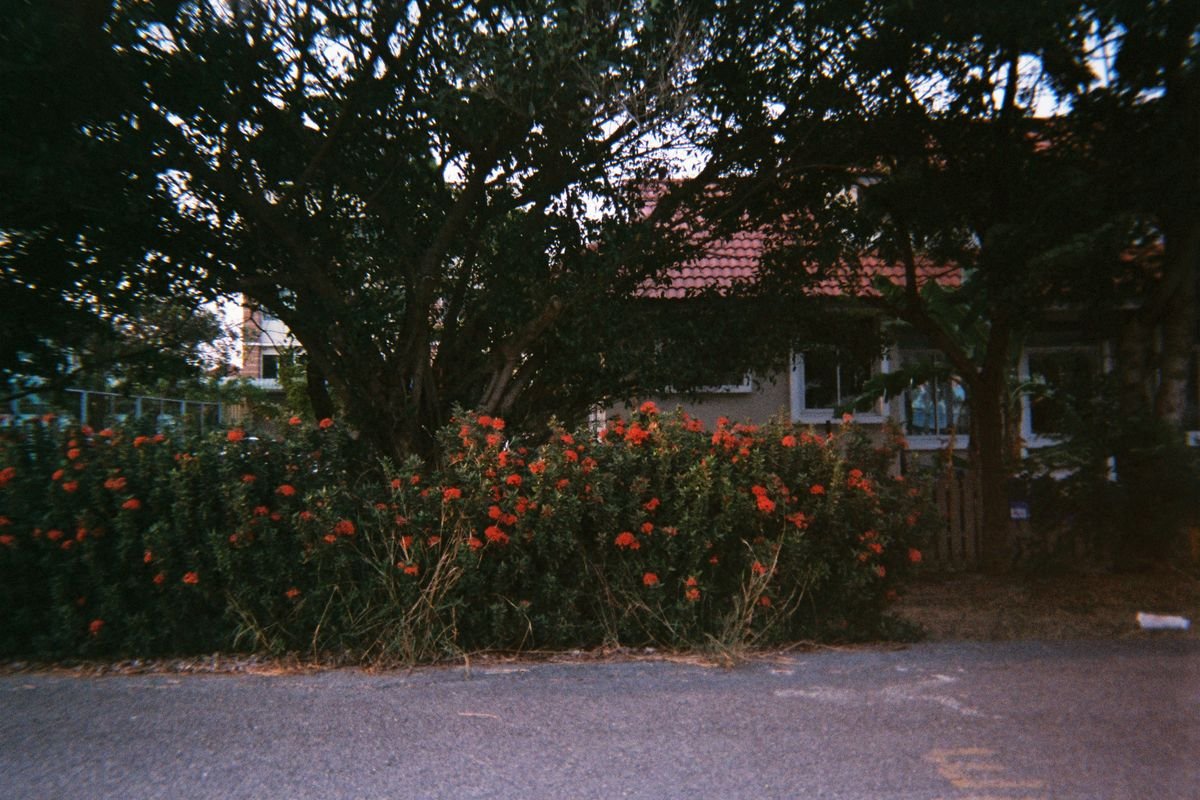
A front yard flower bed should frame the entry, create one clear focal point and repeat a few low-maintenance plants that look good from the street in every season. Front yard flower bed ideas need layers. Evergreen shrubs supply winter structure, while perennials carry the color from spring through fall.
Every bed needs a focal point. It gives the eye a place to land. A small ornamental tree or a large container near the entry works well, and so does a boulder, as long as every other plant supports that feature instead of competing with it.
Curb appeal comes from repetition. Repeat the same 2 or 3 plants on both sides of the walkway so the yard reads as one connected design from the street.
Foundation Planting Along the House
Foundation planting softens the hard line where a house meets the ground, and it needs space to do that well. Give these beds at least 4 feet (1.2 m) of depth. Shrubs and perennials need that room to layer.
Boxwood and inkberry holly suit the back of the bed, and dwarf arborvitae works there too, as long as each cultivar is rated for your hardiness zone. Leave a gap at the house, too. Each shrub’s mature edge should sit at least 12 inches (30 cm) from the siding.
Nursery pots mislead. Read the mature width on the plant tag instead, because a shrub that arrives 12 inches (30 cm) wide can spread to 4 feet (1.2 m) or more within a few years.
Slope matters here. Grade the soil so it falls away from the foundation and rainwater drains off rather than pooling against the walls of the house.
Mailbox and Walkway Beds
A mailbox bed is a small project. The visual payoff is large, though, and a circle or square 3 to 4 feet (0.9 to 1.2 m) across fits around most curbside posts.
Ring the post with low perennials. Dwarf daylily and catmint are easy picks, and creeping phlox works too, though a spot with 6 or more hours of direct sun can also support a clematis vine on the post itself.
Keep plants on the street side low and free of thorns, since the mail carrier has to reach the box. Watch the driveway, too. Tall plants there can block a driver’s view of the street.
Walkway beds look tidy at 18 to 36 inches (46 to 91 cm) deep, and plants along the path should stay under 24 inches (61 cm) tall. Taller foliage flops. It ends up sprawled across the walking surface.
Backyard Flower Bed Designs
Backyard flower bed designs can be larger and looser than front yard beds, because backyard beds serve the people using the space rather than the view from the street. Popular garden flower bed ideas for backyards include deep borders along fences and pollinator island beds in open lawn. Cutting beds near patios are another.
Backyard beds can screen neighbors and hide utility areas. They soften long runs of fence, too. Size each one to the time you actually have for care, because a large bed left unweeded looks worse than a small bed kept tidy.
Flower Bed Along a Fence
A fence gives a border bed a ready-made backdrop. Make the bed 4 to 6 feet (1.2 to 1.8 m) deep, but leave a 12 to 18 inch (30 to 46 cm) strip clear along the fence. That strip allows airflow. It also gives you access for fence repairs.
Joe Pye weed and hollyhock both make strong back-tier choices, and tall ornamental grasses earn a spot there as well. Train clematis or climbing roses on the fence itself. You get vertical color.
Check the bed’s orientation before choosing plants. A bed on the north side of a fence sits in shade for much of the day, so shade-tolerant plants suit that side better than sun lovers.
Pollinator Island Bed
Pollinator island beds sit in open lawn. People see them from all sides, so the tallest plants go in the center and heights step down toward every edge.
Native plants feed native bees better than most exotic ornamentals do, and the same goes for butterflies and moths. Aim for bloom in every season. Wild columbine opens in spring, purple coneflower and bee balm carry summer, and aromatic aster and goldenrod finish in fall, so pollinators find nectar all season.
Two databases help here. The Lady Bird Johnson Wildflower Center and the National Audubon Society each run a searchable native plant database that confirms which species are native to your state or region.
Skip broad-spectrum insecticides here. Leave some dead stems standing through winter, too, since many native bees nest inside hollow plant stems and rely on them.
Flower Bed Edging Ideas
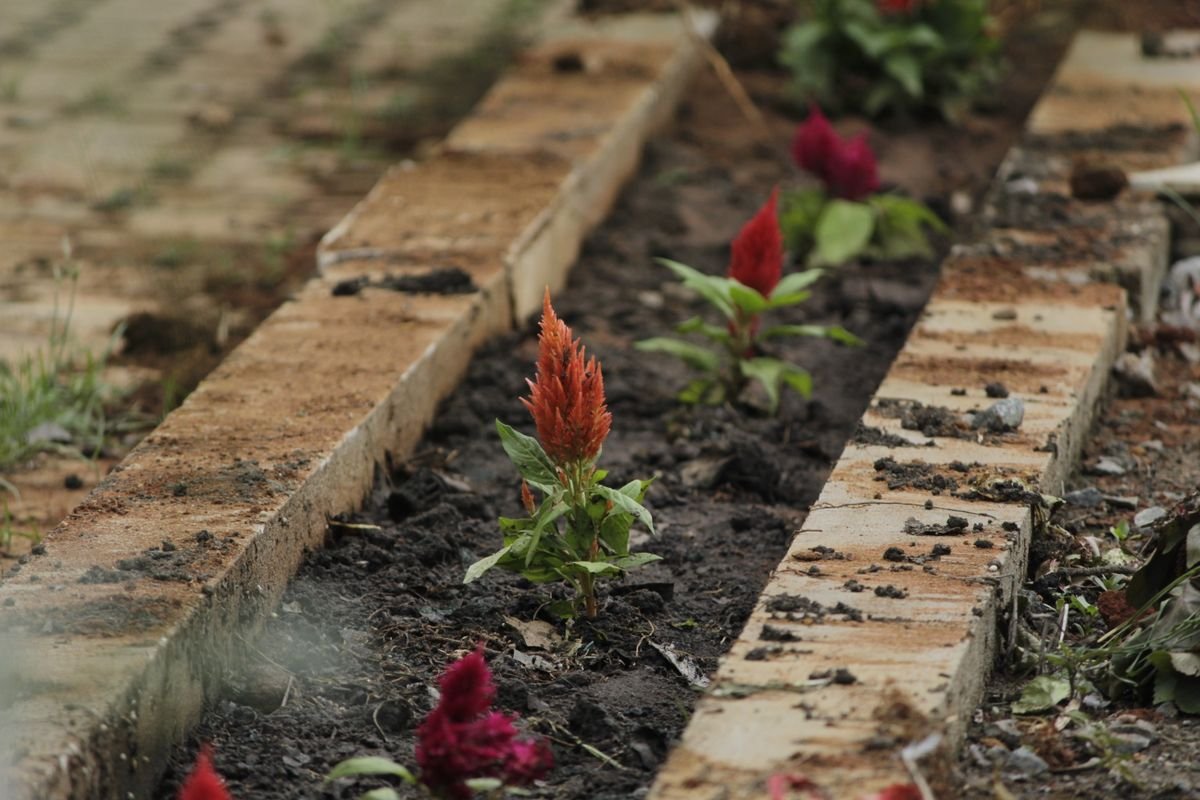
The best flower bed edging keeps grass roots out of the bed, holds mulch in place and gives the lawn mower a clean line to follow. Steel lasts the longest, and brick and stone match it. For cost, the picture flips. Plastic edging costs the least to buy, while a spade-cut edge costs nothing at all but needs recutting each season.
This table compares common flower bed edging ideas by relative cost, lifespan and style.
| Edging Material | Relative Cost | Lifespan | Best Style |
|---|---|---|---|
| Spade-cut edge | Free | Needs recutting each season | Natural, cottage |
| Plastic strip | Low | Short; frost can heave it | Budget, curved beds |
| Untreated wood | Low to medium | Several years; cedar lasts longest | Rustic, low raised edges |
| Steel or aluminum | Medium to high | Decades | Modern, clean curves |
| Brick | Medium | Decades | Traditional, formal |
| Natural stone | High | Decades | Cottage, rustic |
What Is the Cheapest Way to Edge a Flower Bed?
The cheapest way to edge a flower bed is a spade-cut edge, also called an English edge or trench edge. You need just one tool. A flat spade does the job, and so does a half-moon edger.
Follow these steps to cut a trench edge:
- Mark the edge line with a garden hose or string.
- Push the spade straight down about 4 inches (10 cm) deep along the lawn side of the line.
- Angle a second cut from inside the bed so it meets the bottom of the first cut, forming a V-shaped trench.
- Lift out the wedge of turf and soil, shake the soil back into the bed and compost the turf.
- Fill the bed side with mulch up to the trench, but not into it.
Recut the trench in spring, and go over it again any time you see grass creeping across into the mulch. Steel or brick gives a permanent edge.
Brick takes more prep. Set it in a trench 4 to 6 inches (10 to 15 cm) deep on a compacted sand base. Lay the top of each brick flush with the lawn so a mower wheel rolls right over it and you don’t have to string-trim along the bed.
Raised Flower Bed Planting Ideas
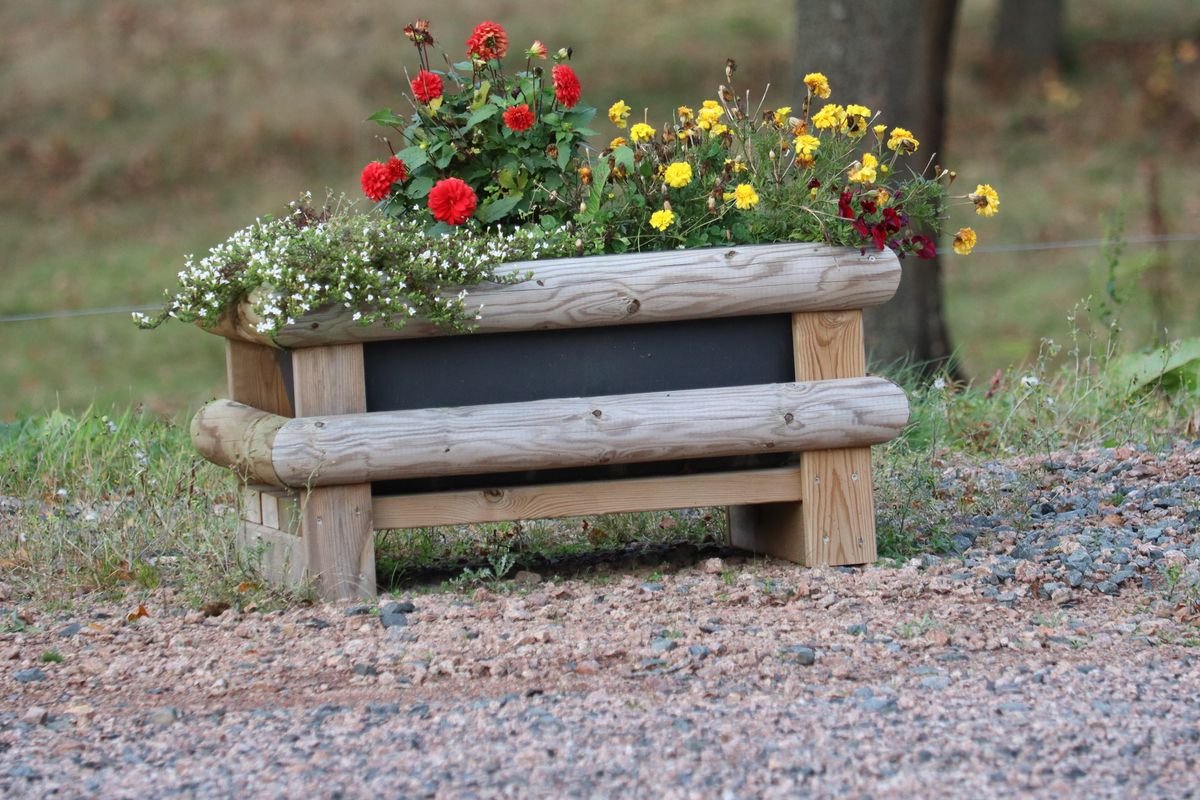
Raised flower beds solve poor drainage, heavy clay and back strain by lifting the planting area above ground level and filling it with loose, fertile soil. The best raised flower bed planting ideas pair two plant types. Compact, long bloomers fill the center. Trailing plants spill over the edges.
Untreated cedar and galvanized steel both make good raised bed frames, and natural stone or concrete block work just as well. Skip old railroad ties. They may contain creosote.
Width depends on access. A raised bed you can reach from both sides works at 3 to 4 feet (0.9 to 1.2 m) wide, but one set against a wall or fence should stay at 2 feet (61 cm).
Three strong planting combinations for raised beds:
- Cottage mix: Salvia, coreopsis and trailing verbena.
- Pollinator mix: Agastache, catmint and blanket flower.
- Cutting bed: Zinnias, cosmos and snapdragons.
How Deep Should a Raised Flower Bed Be?
Root size decides it. This table compares recommended soil depth in a raised bed by plant type and gardener need, from shallow-rooted annuals to beds built for seated gardening.
| Plant Type | Soil Depth (in / cm) | Example Plants |
|---|---|---|
| Shallow-rooted annuals | 6 to 8 / 15 to 20 | Petunia, sweet alyssum, impatiens |
| Most perennials | 8 to 12 / 20 to 30 | Coreopsis, salvia, catmint |
| Large perennials and small shrubs | 18 to 24 / 46 to 61 | Peony, dwarf hydrangea |
| Seated or low-bend gardening | 24 to 30 / 61 to 76 | Any; frame height reduces bending |
Roots can grow below the frame when a raised bed sits directly on loosened native soil. Concrete changes that. On a patio or other hard surface, the bed needs its full soil depth inside the frame, since roots have nowhere else to go.
What Soil Mix Fills a Raised Bed?
Fill a raised flower bed with about 2 parts screened topsoil to 1 part compost. Ready-made mix is fine. Buy raised bed mix bagged or in bulk from The Home Depot or Lowe’s, or from a local bulk soil supplier.
Skip straight potting mix. Bagged potting mix settles heavily in large volumes, and it dries out quickly once it’s spread across a big frame.
For volume, multiply length by width by depth, all in feet. Here’s an example. A 4 by 8 foot (1.2 by 2.4 m) bed filled 12 inches (30 cm) deep needs 32 cubic feet, or about 1.2 cubic yards (0.9 m³).
Top the bed with 1 to 2 inches (2.5 to 5 cm) of compost each spring. Soil settles. It breaks down over the course of each growing season too, and a fresh layer of compost replaces whatever has been lost.
Perennial Garden Plans by US Climate
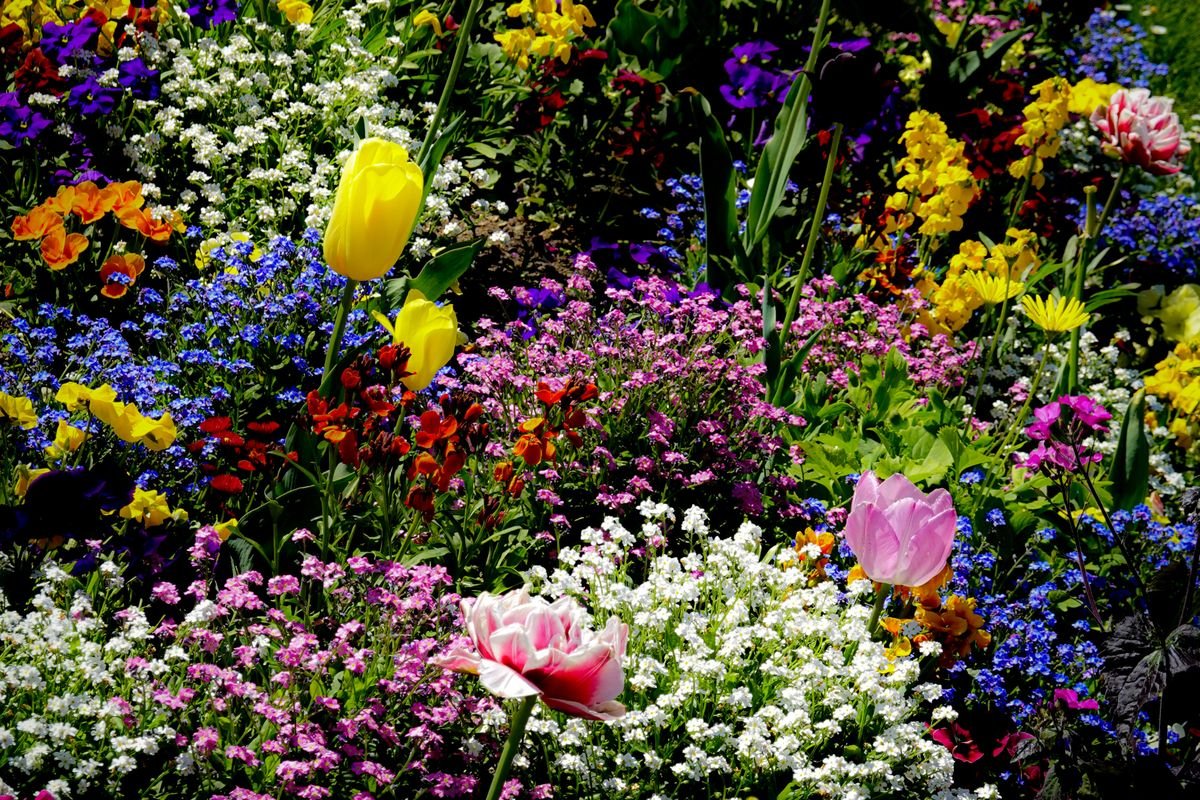
Perennial garden plans succeed only when every plant survives the winter lows and summer conditions of its region. Each sample plan below fills a 5 by 10 foot (1.5 by 3 m) border bed of 50 square feet (4.6 m²) in full sun. All use three height tiers.
Read every tag’s zone range. Cultivars of the same plant differ in hardiness, so a familiar name alone doesn’t guarantee a fit in your region. First-season gaps are normal, and annuals fill them nicely while the perennials establish.
Cold North Plan for Zones 3 to 6
Think cold winters and moderate summers. This plan fits the Upper Midwest and the Northeast, plus the northern Plains, where tough prairie and native perennials handle the climate best. This table lists the plants, tiers, counts, spacing and bloom time for the cold north plan.
| Plant | Tier | Quantity | Spacing (in / cm) | Bloom Time |
|---|---|---|---|---|
| Purple coneflower | Back | 3 | 24 / 61 | Midsummer to late summer |
| Siberian iris | Back | 3 | 18 / 46 | Late spring to early summer |
| Catmint ‘Walker’s Low’ | Middle | 3 | 24 / 61 | Late spring to fall with shearing |
| Black-eyed Susan | Middle | 3 | 18 / 46 | Midsummer to fall |
| Daylily ‘Stella de Oro’ | Front | 5 | 18 / 46 | Early summer to fall, repeating |
Humid Southeast Plan for Zones 7 to 9
Heat and humidity shape this plan. It suits the Southeast and the Gulf Coast, where heavy summer rain on top of that muggy weather favors plants that resist leaf disease. This table lists the plants, tiers, counts, spacing and bloom time for the humid southeast plan.
| Plant | Tier | Quantity | Spacing (in / cm) | Bloom Time |
|---|---|---|---|---|
| Swamp sunflower | Back | 2 | 36 / 91 | Fall |
| Gaura | Middle | 3 | 24 / 61 | Late spring to fall |
| Black-eyed Susan | Middle | 3 | 18 / 46 | Midsummer to fall |
| Stokes’ aster | Front | 3 | 18 / 46 | Late spring to summer |
| Daylily | Front | 3 | 18 / 46 | Early summer to midsummer |
Heavy clay needs compost mixed in before planting. Don’t crowd these plants. Full spacing lets air move freely through the foliage, which helps leaves dry quickly after rain and keeps leaf disease in check.
Dry West Plan for Zones 5 to 8
Water is the limit here. Low rainfall and lean soil in the Intermountain West and the high desert, along with other dry inland areas, favor drought-tolerant perennials. This table lists the plants, tiers, counts, spacing and bloom time for the dry west plan.
| Plant | Tier | Quantity | Spacing (in / cm) | Bloom Time |
|---|---|---|---|---|
| Russian sage | Back | 2 | 36 / 91 | Midsummer to fall |
| English lavender | Middle | 3 | 24 / 61 | Early summer to midsummer |
| Yarrow | Middle | 3 | 18 / 46 | Summer |
| Blanket flower | Front | 3 | 18 / 46 | Early summer to fall |
| Sedum ‘Autumn Joy’ | Front | 3 | 18 / 46 | Late summer to fall |
Go light on compost. Most of these plants prefer lean, fast-draining soil, and they do better under gravel mulch than they do under a layer of wood mulch. During the first summer, water deeply once every 1 to 2 weeks while roots establish.
What Is the Easiest Flower Bed to Maintain?
The easiest flower bed to maintain is a mulched bed of native or well-adapted perennials matched to the site’s sun and soil, planted densely enough to shade out weeds. Once plants establish, a low-maintenance flower bed on a drip line or soaker hose needs only weeding and a spring cleanup. Division comes up occasionally.
Some perennials barely need you. Daylily, black-eyed Susan, purple coneflower, catmint, sedum ‘Autumn Joy’ and hosta rarely need staking or spraying when they’re grown in suitable conditions.
Four habits cut maintenance further:
- Plant at the closest recommended spacing so foliage covers bare soil.
- Install a drip line or soaker hose under the mulch.
- Choose plants that stand without staking.
- Cut perennials back once in early spring instead of several times through fall.
What Flowers Bloom All Summer?
Flowers that bloom all summer include black-eyed Susan, coneflower, ‘Stella de Oro’ daylily, catmint, blanket flower and gaura among perennials, plus zinnia, petunia, lantana and vinca among annuals. Regular deadheading helps. Removing spent blooms stops seed production, which extends bloom time for most of these flowers.
This table compares long-blooming flowers by plant type and sun need.
| Flower | Plant Type | Sun Need | Bloom Season |
|---|---|---|---|
| Black-eyed Susan | Perennial | Full sun | Midsummer to fall |
| Purple coneflower | Perennial | Full sun | Midsummer to late summer |
| ‘Stella de Oro’ daylily | Perennial | Full sun to partial shade | Early summer to fall |
| Blanket flower | Perennial | Full sun | Early summer to fall |
| Zinnia | Annual | Full sun | Early summer to frost |
| Petunia | Annual | Full sun | Spring to frost |
| Lantana | Annual; perennial in warm zones | Full sun | Summer to frost |
| Vinca (Madagascar periwinkle) | Annual | Full sun | Summer to frost |
Succession planting fills bloom gaps. Pair spring bulbs such as tulips and daffodils with summer perennials, then add asters or mums for fall, so a new layer of color starts as the previous one fades.
Deadhead by snipping each spent flower back to the next bud or leaf. Catmint is different. Shear it back by about half after its first flush, and it’ll push out a second round of blooms later in the season.
What Flowers Grow Well in Shade?
Flowers that grow well in shade include hosta, astilbe, coral bells, bleeding heart, hellebore and lungwort as perennials, plus impatiens and wax begonia as annuals. Moisture is the catch. Most shade-tolerant plants need moist, compost-rich soil, because nearby tree roots compete for water in shaded beds.
This table compares shade-tolerant plants by type, shade level and bloom time.
| Plant | Plant Type | Shade Level | Bloom Time |
|---|---|---|---|
| Hosta | Perennial | Partial to full shade | Summer; grown mainly for foliage |
| Astilbe | Perennial | Partial shade | Early summer to midsummer |
| Coral bells | Perennial | Partial shade | Late spring to early summer |
| Bleeding heart | Perennial | Partial to full shade | Spring |
| Hellebore | Perennial | Partial to full shade | Late winter to early spring |
| Lungwort | Perennial | Partial to full shade | Early spring |
| Impatiens | Annual | Partial to full shade | Spring to frost |
| Wax begonia | Annual | Partial shade | Spring to frost |
Water deeply whenever the top inch (2.5 cm) of soil feels dry. Foliage helps fill the gaps. Ferns and Japanese forest grass add texture between the flowering plants, covering spots that blooms alone would leave bare.
Can You Plant a Flower Bed over Grass?
Yes, a flower bed can go directly over grass through sheet mulching, also called the lasagna method, which smothers turf under cardboard and organic layers instead of digging it out. There’s no sod cutting involved. The buried grass breaks down in place and adds organic matter to the soil, sparing you the heavy work of stripping turf by hand.
Follow these steps to sheet mulch a new bed:
- Mow the grass as short as possible and leave the clippings.
- Cover the area with plain brown cardboard, overlapping the seams by 6 inches (15 cm).
- Soak the cardboard thoroughly with a hose.
- Spread 4 to 6 inches (10 to 15 cm) of compost, leaves or other organic matter on top.
- Finish with 2 to 3 inches (5 to 8 cm) of wood chip or shredded bark mulch.
In a hurry? Cut an X through the cardboard and set each plant into a pocket of compost below, and you can plant right away.
When Should I Plant a Perennial Flower Bed?
Plant a perennial flower bed in spring after the last frost date or in early fall at least 6 weeks before the ground freezes, so roots establish before extreme temperatures arrive. Potted perennials are more flexible. Container-grown plants can go in any time the soil is workable, as long as you water them regularly through the first season.
Planting time shifts by hardiness zone. This table compares the best planting windows across US regions.
| Region | Best Window | Reason |
|---|---|---|
| Cold north (Zones 3 to 5) | Late spring to late summer | Short fall leaves little rooting time |
| Middle (Zones 6 to 7) | Spring or early fall | Mild seasons on both ends |
| South (Zones 8 to 10) | Fall through early spring | Avoids summer heat stress |
| Dry west | Fall or early spring | Uses cool-season moisture |
Local frost dates beat a national calendar. Your county Cooperative Extension Service office publishes average frost dates for each local area, so check those numbers before you pick a planting day.
Should I Put Mulch in My Flower Bed?
Yes, mulch belongs in nearly every flower bed, because a 2 to 3 inch (5 to 8 cm) layer of organic mulch suppresses weeds, holds soil moisture and moderates soil temperature. Keep it off the stems, though. Mulch piled against plant crowns and stems traps moisture and invites rot, so pull it back a few inches from each plant.
This table compares common mulch types by best use.
| Mulch Type | Best Use | Key Trait |
|---|---|---|
| Shredded hardwood bark | Sun and shade perennial beds | Stays in place on slopes |
| Pine straw | Acid-loving plants, Southeast beds | Light and easy to spread |
| Wood chips | Large beds, pathways | Low cost, slow to break down |
| Shredded leaves | Shade and woodland beds | Free and adds organic matter |
| Gravel | Dry west and drought-tolerant beds | Keeps plant crowns dry |
Refresh organic mulch each spring to bring it back to a 2 to 3 inch (5 to 8 cm) depth. Rake first. Loosening the old layer before adding new mulch lets water keep reaching the soil underneath.
Frequently Asked Questions
How Far from the House Should a Flower Bed Start?
A flower bed can start right at the foundation, but each plant should sit back at least half its mature width plus 12 inches (30 cm). The gap keeps air moving. It also protects the siding and leaves room for home repairs.
How Long Does Sheet Mulching Take?
Sheet mulching takes about 2 to 3 months in warm weather, since smothered grass breaks down faster in heat. Cold weather slows it. Layers built in fall usually give you a plantable bed by spring.
Do Shade Flowers Need Fertilizer?
No, most shade flowers need very little fertilizer. Compost covers it. One inch (2.5 cm) spread each spring feeds hostas, ferns and astilbe unless a soil test shows a specific nutrient deficiency.
How Wide Should a Flower Bed Be?
Most flower beds work best at 4 to 6 feet (1.2 to 1.8 m) from front to back. That depth fits three height tiers. You can still reach the center of the bed without ever stepping on planted soil.
Do Flower Beds Need Weed Barrier Fabric?
No, most flower beds perform better without weed barrier fabric. The fabric stops decomposing mulch from feeding the soil underneath, and weeds still sprout in the mulch on top of it. Skip it. Dense planting and thick mulch control weeds better.
Conclusion
The flower bed ideas that last are planned around real site conditions. Sun hours and soil drainage come first, with the local hardiness zone as the final filter. Start small. One bed sized to the time you have for care is plenty, and you can expand as plants fill in and gaps reveal themselves. Keep a simple notebook of bloom dates and empty spots each season, because those notes turn into better ideas for flower gardens every following year. Native plants and water-wise beds fit this zone-first approach in every US region, and so do pollinator plantings. The best next step is cheap: a soil test from your county extension office.