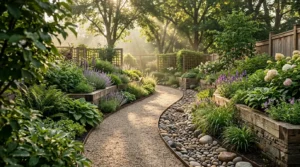
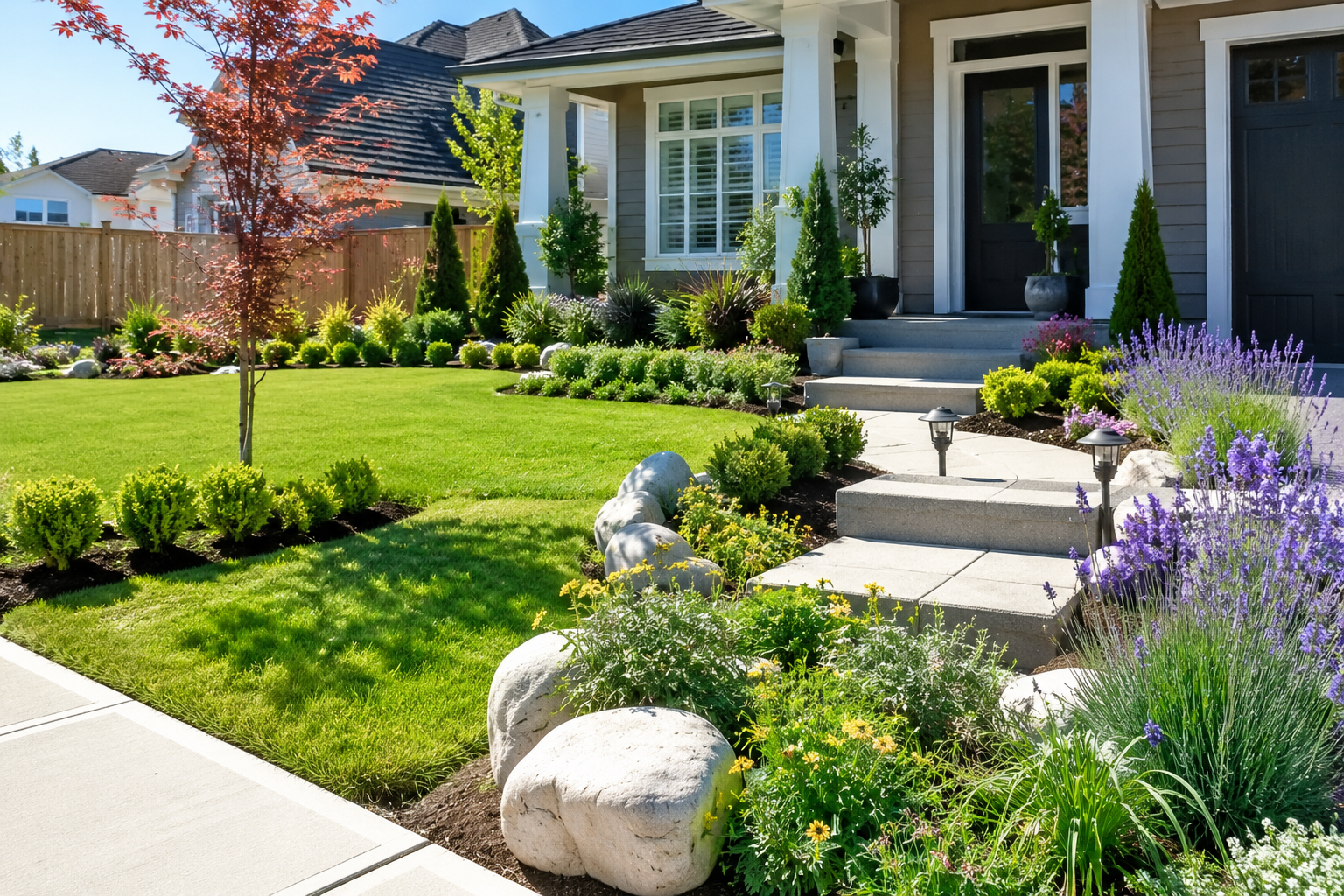
Your front lawn is the first thing every visitor, neighbor, and potential buyer sees. A well-designed front yard increases home value by 7–15% and takes no more effort to maintain than a plain grass lawn — if you choose the right design.
These 15 front lawn landscaping ideas range from zero-budget fixes to full redesigns. Each one includes what plants or materials to use, how much it costs, and how much maintenance it needs.
Before You Start: 4 Things to Assess

Jumping into landscaping without a plan wastes money. Spend 30 minutes on these 4 assessments first.
1. Know Your USDA Hardiness Zone
Your USDA zone determines which plants survive your winters. Plants rated for your zone or colder survive. Plants rated for warmer zones die in winter. Check your zone at the USDA Plant Hardiness Zone Map — it takes 30 seconds.
Daniel Copsey at ZonedGarden.com has grown plants across zones 4–9. Zone-wrong plant selection is the single most common and expensive landscaping mistake homeowners make.
2. Measure Your Lawn Area
Order too little mulch and you make a second trip. Order too much and you waste money. Measure before buying anything.
Use the ZonedGarden’s free Garden Area Calculator — it handles rectangles, circles, L-shapes, and irregular borders. Results appear in square metres (m²), square feet (ft²), and square yards (yd²) so you can match any supplier’s unit.
3. Check Sunlight Hours
Count how many hours of direct sun your front lawn gets between 9 AM and 5 PM. Full sun = 6+ hours. Part shade = 3–6 hours. Full shade = under 3 hours. Every plant recommendation below includes sunlight requirements.
4. Test Your Soil
Most front yards have compacted, nutrient-poor soil — especially in new builds where topsoil gets stripped during construction. A basic soil test (under $20 at any garden center) tells you pH and nutrient levels. Most front yard plants thrive at pH 6.0–7.0.
15 Front Lawn Landscaping Ideas for 2025
1. Replace Grass With Native Ground Cover
Traditional turf grass requires mowing every 7–10 days, watering 1–1.5 inches (25–38 mm) per week, and fertilizing 2–4 times a year. Native ground covers need none of that once established.
Best native ground cover options by zone:
- Creeping thyme (zones 4–9): grows 2–3 inches (5–7.5 cm) tall, handles foot traffic, produces pink flowers in June
- Wild ginger (zones 4–8): thrives in full shade, spreads to fill gaps, deep green leaves year-round
- Blue star creeper (zones 5–9): tiny blue flowers spring through fall, tolerates light foot traffic
- Creeping phlox (zones 3–9): carpets slopes with color in spring, drought-tolerant once established
Cost: $150–$400 (£120–£320) for a 500 sq ft (46 m²) front lawn. Zero mowing after year one.
2. Add Defined Mulch Beds Along the Foundation
Foundation planting — shrubs and perennials along the base of your home — is the single highest-impact front yard upgrade per dollar spent. It frames your home, hides exposed foundation, and creates instant structure.
To create foundation beds:
- Dig beds 3–4 feet (90–120 cm) wide along the house front
- Add 3–4 inches (7.5–10 cm) of dark hardwood mulch — dark mulch creates the strongest contrast
- Plant evergreen shrubs (boxwood, holly, or inkberry) at corners for year-round structure
- Fill gaps with perennials for seasonal color — coneflowers, black-eyed Susans, or salvia
Cost: $200–$600 (£160–£480) for a typical single-story front. Mulch refreshed once a year at $40–$80 (£32–£64).
3. Install a Flagstone or Permeable Paver Walkway

A defined walkway from the street or driveway to your front door adds structure and eliminates the muddy path that worn-grass foot traffic creates. Permeable pavers let rainwater soak through instead of pooling.
2 walkway styles that work in any front yard:
- Flagstone with ground cover: set irregular stone 1–2 inches (2.5–5 cm) apart, plant creeping thyme in the gaps. Cost: $300–$800 (£240–£640) for a 20-foot (6 m) path
- Concrete pavers with gravel borders: clean, modern look. Mix 24-inch (60 cm) square pavers with pea gravel edges. Cost: $500–$1,200 (£400–£960) installed
Compact sand 2–3 inches (5–7.5 cm) deep under any paver installation for stability and drainage.
4. Plant a Pollinator Garden Strip
A 3–4 foot (90–120 cm) wide pollinator border along your front walk or property edge replaces high-maintenance annual flower beds with plants that return bigger every year.
6 pollinator plants with year-round interest:
- Purple coneflower (Echinacea): zones 3–9, blooms July–September, seedheads feed birds through winter
- Black-eyed Susan: zones 3–9, blooms June–October, drought-tolerant once established
- Salvia ‘May Night’: zones 4–8, deep violet spikes, reblooms if cut back after first flush
- Russian sage: zones 4–9, silver foliage, lavender-blue flowers July–October
- Ornamental grasses (Karl Foerster): zones 4–9, 4–5 ft (1.2–1.5 m) tall, winter interest from seed heads
- Lavender: zones 5–8, fragrant, drought-tolerant, blooms June–August
These 6 plants cover bloom times from June through October with minimal deadheading and zero irrigation after the first season.
5. Create a Dry River Bed for Drainage Problem Areas
If your front lawn has a low spot that stays wet after rain, a dry river bed solves the drainage problem and adds a design feature at the same time.
To build a dry river bed:
- Dig a shallow channel 6–10 inches (15–25 cm) deep along the water flow path
- Line with landscape fabric to suppress weeds
- Fill with river rock: a mix of 2–4 inch (5–10 cm) stones creates the most natural look
- Edge with larger boulders (12–18 inches / 30–45 cm) for definition
- Plant ornamental grasses or sedges alongside for a streambed effect
Cost: $200–$500 (£160–£400) for a typical 15–20 foot (4.5–6 m) dry bed. No ongoing maintenance.
6. Use Evergreen Shrubs for Year-Round Structure
A front lawn with only seasonal flowers looks bare 6 months of the year. Evergreen shrubs give your yard structure in January that it has in June.
3 reliable evergreen shrubs for front lawns:
- Boxwood: zones 5–9, slow growing, holds shape without pruning, works as low hedge or specimen
- Holly (Inkberry or Blue Princess): zones 4–9, produces berries birds eat through winter, tolerates wet soil
- Dwarf Alberta spruce: zones 2–8, perfect cone shape, grows 6–12 inches (15–30 cm) per year, zero pruning needed
Plant evergreens in groups of 3 or 5 — odd numbers look more natural than pairs or rows.
7. Add Landscape Lighting for Nighttime Curb Appeal
Solar path lights cost $30–$80 (£24–£64) for a set of 8 and require zero wiring. Low-voltage LED systems cost $200–$600 (£160–£480) installed but last 15–20 years.
3 lighting placements that improve curb appeal the most:
- Path lights: 6–8 feet (1.8–2.4 m) apart along the walkway, pointed inward
- Uplighting: aim 1–2 spotlights at your home’s focal point — a tree, architectural feature, or front door
- Garden bed accent lights: low-voltage fixtures tucked into foundation beds light plants from below
Warm white (2700K–3000K color temperature) looks most natural. Cool white or blue-tinted lights look harsh on plant material.
8. Build a Low Retaining Wall or Raised Bed
A 12–18 inch (30–45 cm) retaining wall along a sloped front yard solves erosion and creates a planting bed in one project. Raised beds also elevate plants so they’re more visible from the street.
Material options:
- Natural stone: most expensive ($25–$40 / £20–£32 per sq ft installed), lasts indefinitely, looks best with traditional homes
- Concrete block: $15–$25 / £12–£20 per sq ft, durable, works with modern architecture
- Timber: $10–$20 / £8–£16 per sq ft, warmest look, replace every 10–15 years
Fill raised beds with 60% topsoil, 30% compost, 10% perlite or coarse sand. This mix drains well and grows strong root systems.
9. Plant a Specimen Tree as a Focal Point
One well-placed tree transforms a flat, featureless front lawn into a designed landscape. The tree becomes the anchor everything else relates to.
5 specimen trees for front lawns by size:
- Japanese maple (10–15 ft / 3–4.5 m): zones 5–8, spectacular red or orange fall color, works in small spaces
- Serviceberry (15–25 ft / 4.5–7.5 m): zones 3–9, white spring flowers, edible berries, orange fall color
- Crape myrtle (15–30 ft / 4.5–9 m): zones 6–9, flowers July–September, exfoliating bark adds winter interest
- Ornamental cherry (20–25 ft / 6–7.5 m): zones 5–8, dramatic spring bloom
- Dogwood (15–20 ft / 4.5–6 m): zones 5–9, spring flowers, red berries, fall color — 3-season interest
Plant trees 10–15 feet (3–4.5 m) from your home’s foundation. See our Crape myrtle care guide
for what the peeling bark means and how to keep this tree looking its best year-round.
10. Install a Low Picket Fence or Stone Wall Border
A 3–4 foot (90–120 cm) fence or low wall defines your property edge, adds character, and gives you a backdrop to plant against.
A white picket fence with a rose-covered gate is one of the most recognizable front yard designs — and it works because it creates clear visual structure. A low stone wall does the same thing with a more contemporary look.
Cost: Picket fence $15–$25 (£12–£20) per linear foot. Dry-stack stone wall $20–$40 (£16–£32) per linear foot installed.
11. Xeriscape for Drought-Prone Climates
Xeriscaping replaces high-water turf with drought-tolerant plants, gravel, and mulch. Once established, a xeriscaped front lawn needs no irrigation at all — University of California research shows native and drought-tolerant plants save up to 60% more water than conventional grass lawns.
Core xeriscape plants:
- Lavender: zones 5–8, silvery foliage, purple flowers, grows 18–24 inches (45–60 cm) tall
- Agave: zones 8–11, architectural form, zero water after first season
- Ornamental grasses (Blue Oat Grass): zones 4–9, silvery-blue color, 18 inches (45 cm) tall
- Rosemary: zones 7–11, edible and ornamental, handles full sun and no water once established
- Sedum (Autumn Joy): zones 3–9, succulent, pink flowers turn copper in fall, survives extreme drought
Group plants by water needs so irrigation (when used) targets only the thirstiest plants.
12. Create Defined Zones With Edging
Sharp edging between lawn, beds, and pathways makes a front yard look professionally designed for under $100 (£80). The single fastest visual upgrade you can make.
3 edging materials and their best use:
- Steel or aluminum edging: clean modern lines, lasts 20+ years, invisible once installed — $1–$2 (£0.80–£1.60) per linear foot
- Brick or stone edging: traditional look, sets easily without digging, $2–$4 (£1.60–£3.20) per linear foot
- Plastic landscape edging: cheap ($0.50–$1 / £0.40–£0.80 per foot), works for straight beds, warps in heat for curves
Re-edge beds every spring. An edging tool or half-moon spade cuts a clean 3–4 inch (7.5–10 cm) deep line in 30 minutes.
13. Plant a Peony Border for Spring Impact
Peonies are the highest-impact perennial for front lawns. They return bigger every year, live 50–100 years in the same spot, and need zero fertilizer after the first season.
- Plant in full sun with 6+ hours direct light — shade kills bloom production
- Set eyes exactly 1–2 inches (2.5–5 cm) below soil surface — too deep and they never bloom
- Space 3–4 feet (90–120 cm) apart — mature plants spread 3 feet wide
- Expect 3 years before peak bloom — they’re slow to establish but worth every year of waiting
See ZonedGarden’s complete peony color guide to choose varieties that suit your home’s exterior colors — from shell pink to deep magenta to white.
14. Use Containers for Instant Seasonal Color
Large containers flanking the front door or at driveway corners add color without committing to planting beds. Swap plants seasonally: tulips in spring, petunias in summer, ornamental kale in fall, evergreen branches in winter.
Container sizing rule: front-of-house containers need to be large — minimum 18 inches (45 cm) diameter. Anything smaller looks fussy from the street. Use containers 24–30 inches (60–75 cm) wide for maximum visual impact.
Fill containers with: 60% quality potting mix, 20% compost, 20% perlite. Water when the top 1 inch (2.5 cm) is dry in spring/summer, less in fall.
15. Reduce Lawn Area to Cut Maintenance by 40%
Most front lawns are larger than they need to be. Reducing grass area by 30–40% cuts mowing time proportionally and opens space for lower-maintenance planting beds.
How to reduce lawn area strategically:
- Convert the strip between the sidewalk and street — this parkway area dries out quickly and grows poorly. Replace with gravel and drought-tolerant perennials
- Widen foundation beds from the typical 2 feet (60 cm) to 4 feet (1.2 m) — doubled planting depth, dramatically improved appearance
- Add a curved island bed centered on your specimen tree — fills dead grass space and anchors the tree visually
- Install ground cover under any established trees where grass won’t grow anyway
Each square foot of grass you convert to planted bed saves approximately 30 minutes of annual mowing time over a 10-year period.
Front Lawn Landscaping Ideas: Quick Comparison
| Idea | Best For | Approximate Cost | Maintenance Level |
| Native ground cover | Replacing grass entirely | $150–$400 | Very Low |
| Foundation mulch beds | Instant curb appeal | $200–$600 | Low |
| Flagstone walkway | Structure + access | $300–$1,200 | Very Low |
| Pollinator garden | Year-round color | $100–$300 | Low |
| Dry river bed | Drainage problems | $200–$500 | None |
| Evergreen shrubs | Year-round structure | $150–$500 | Low |
| Landscape lighting | Nighttime appeal | $30–$600 | Very Low |
| Retaining wall | Slopes + raised beds | $500–$2,000+ | None |
| Specimen tree | Focal point | $150–$600 | Low |
| Fence or wall border | Definition + character | $300–$1,200 | Very Low |
| Xeriscape | Dry/hot climates | $500–$2,000 | Very Low |
| Sharp edging | Instant polish | $50–$150 | Once/year |
| Peony border | Spring impact | $100–$400 | Low |
| Containers | Seasonal color | $100–$400 | Medium |
| Reduce lawn area | Less mowing | $0–$200 | Reduces all |
How to Plan Your Front Lawn Landscaping

Start With One Section, Not the Whole Yard
Redesigning your entire front lawn at once is expensive and overwhelming. Pick one section — the foundation beds, the walkway, or the parkway strip — and do it well. One finished section looks better than an entire yard half-done.
Design for Year-Round Interest
A front lawn that looks great in July but bare in December needs rethinking. Build in 4-season structure:
- Spring: bulbs (tulips, daffodils) and early perennials (peonies, bleeding heart)
- Summer: coneflowers, salvia, ornamental grasses, lavender
- Fall: sedums, asters, ornamental grass seedheads, crape myrtle bark
- Winter: evergreen shrubs, ornamental grasses, berry-producing hollies, evergreen ground covers
Match Plants to Your Home’s Architecture
Formal homes (colonial, Georgian) suit symmetrical plantings — matched pairs of shrubs, straight-edged beds, clipped hedges. Cottage or craftsman homes suit informal plantings — curved beds, mixed perennials, self-seeding flowers. Modern homes suit clean lines, gravel, ornamental grasses, and architectural plants like agave or yucca.
Budget Realistically
A realistic front lawn landscaping budget for a typical single-family home (1,500–2,500 sq ft / 140–230 m² of front yard):
- Starter refresh (mulch, edging, 2–3 plants): $150–$400 (£120–£320)
- Mid-range redesign (new beds, walkway, shrubs): $1,500–$4,000 (£1,200–£3,200)
- Full transformation (hardscaping, trees, lighting, full planting): $5,000–$15,000 (£4,000–£12,000)
Material and plant costs are the same whether you DIY or hire out. Labor adds 50–100% to any project.
What Competitors Miss: Zone-Specific Advice
Most front lawn landscaping guides give the same lists regardless of where you live. That approach fails gardeners in zones 3–4 who can’t grow lavender, and wastes money for gardeners in zones 9–10 who don’t need cold-hardy evergreens.
Zone-specific planting works because it accounts for your actual climate — your last frost date, average summer highs, and winter lows. A plant rated for zone 7 survives minimum winter temperatures of 0°F to 10°F (-18°C to -12°C). A zone 9 plant survives minimum temperatures of 20°F to 30°F (-7°C to -1°C) — but dies in a zone 5 winter.
ZonedGarden’s approach: identify your zone first, then select plants. Every idea in this guide includes zone ranges so you know what works before you spend money.
FAQs
What is the cheapest front lawn landscaping idea?
Sharp edging and fresh mulch are the cheapest high-impact upgrades. Recut bed edges and add 3 inches (7.5 cm) of dark hardwood mulch for $50–$150 (£40–£120) on a typical front yard. The improvement is immediate and visible from the street.
How do I landscape a small front lawn?
Small front lawns benefit from vertical elements and one strong focal point. Plant a Japanese maple or ornamental cherry in the center. Surround it with a curved mulch bed. Replace the remaining grass with ground cover. Add containers at the front door. This 4-step approach works for front lawns under 300 sq ft (28 m²).
What plants need the least maintenance in a front yard?
The 5 lowest-maintenance front yard plants are: ornamental grasses (Karl Foerster or Blue Oat Grass), coneflowers (Echinacea), black-eyed Susans, creeping thyme ground cover, and evergreen boxwood shrubs. All are perennial, drought-tolerant once established, and require nothing beyond an annual cutback.
How long does it take to landscape a front yard?
A mulch-and-edging refresh takes one day. A new walkway with hand-laid flagstone takes a weekend. Full foundation planting with a specimen tree takes 2–3 weekends across a full season. Professional crews complete most front yard projects in 1–3 days.
Does front yard landscaping increase home value?
Yes. A well-designed front lawn increases home value by 7–15% according to real estate studies on curb appeal. The return is highest for foundation planting, defined walkways, and specimen trees — all of which are permanent improvements that buyers value.
What is the best low-maintenance ground cover for a front lawn?
Creeping thyme is the best all-around low-maintenance ground cover for zones 4–9. It grows 2–3 inches (5–7.5 cm) tall, handles light foot traffic, flowers pink in June, and needs zero irrigation after the first year. Blue star creeper works in shadier spots. Wild ginger is best for full shade under established trees.