

Here’s something nobody tells you about peony colors. You can get peonies in almost every color imaginable—white, pink, red, coral, yellow, even deep burgundy that’s nearly black. But blue? That’s where nature draws the line.
I’ve spent years growing peonies in every shade I could find, and I’ve watched countless gardeners waste money chasing “blue peonies” that don’t exist. So let me save you the disappointment right now: true blue peonies aren’t real.
But here’s the good news: the peony color spectrum is so vibrant and diverse that you won’t miss blue once you see what’s actually available.
From the softest blush pink to deep crimson red, from creamy ivory to bright lemon yellow, peonies offer one of the widest color ranges of any garden perennial. Some varieties even change color as they mature—opening coral and fading to peach, or starting pale pink and aging to pure white.
This guide covers all 14 colors of peonies you can actually grow, organized by color family. I’ll show you the best varieties in each shade, explain which colors work for different garden styles, and tell you exactly why blue peonies are biologically impossible (spoiler: it’s about pigments).
By the end, you’ll know which peony colors to plant and which varieties deliver the most reliable, vibrant blooms. Let’s start with the most popular color in the peony world.
Pink Peonies: The Most Popular Choice
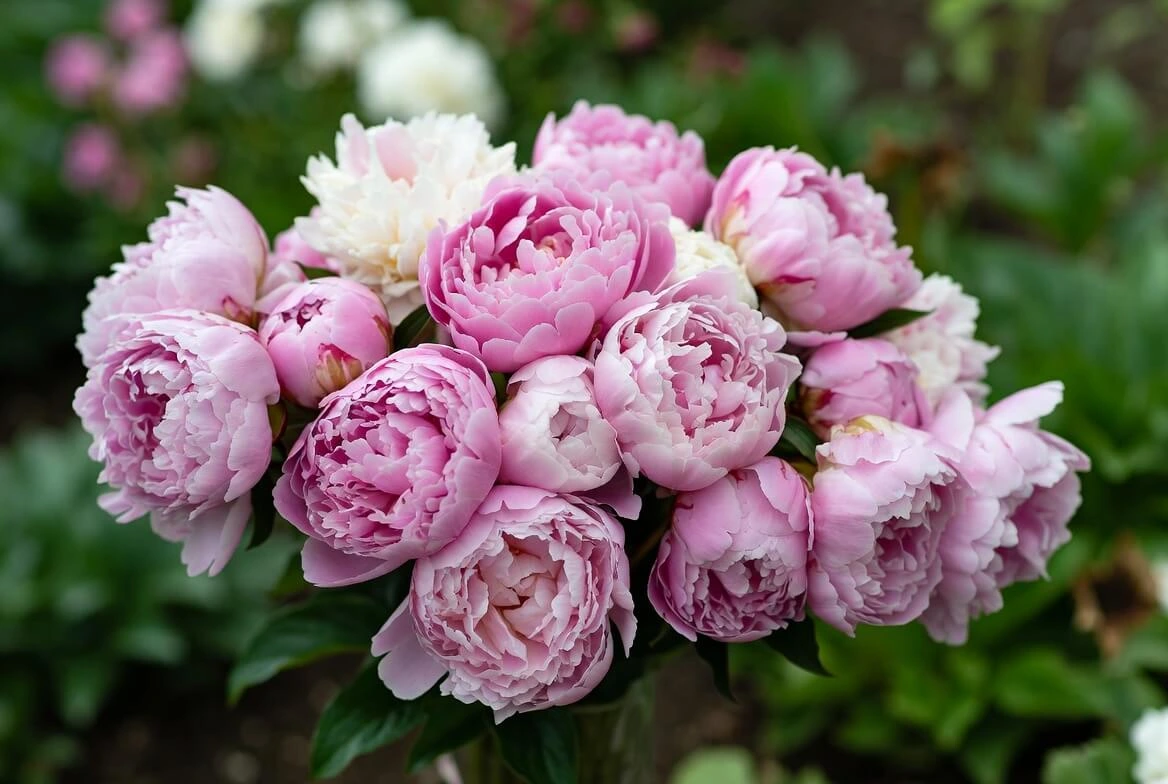
Pink is the undisputed queen of peony colors. If you walk into any garden center in spring, at least half the peony varieties will be pink. There’s a reason for that: pink peonies are what most people picture when they think “peony,” and they’re consistently the best sellers for cut flowers, wedding bouquets, and home gardens.
But “pink” is a massive oversimplification. The pink peony spectrum runs from barely-there blush to hot magenta, with dozens of shades in between.
Soft Pink and Blush Peonies
These are the romantic, delicate shades—the ones that look like they belong in a vintage garden or a bridal bouquet.
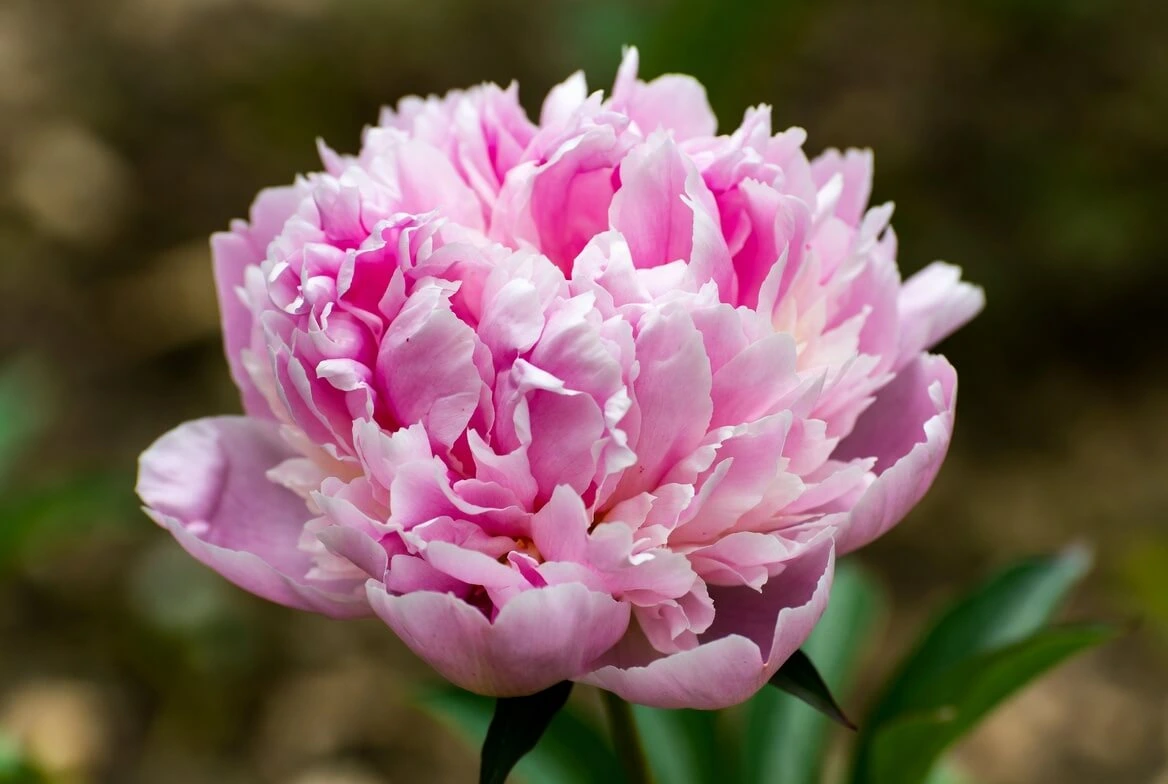
Sarah Bernhardt is the most famous soft pink peony in the world. Introduced in 1906, this herbaceous variety produces massive double blooms in a soft peony color rose-pink shade with slightly ruffled petals. The peonies flowers are fragrant, reliable, and absolutely stunning. If you only plant one pink peony, make it this one. It’s been the top-selling variety for over a century for good reason.
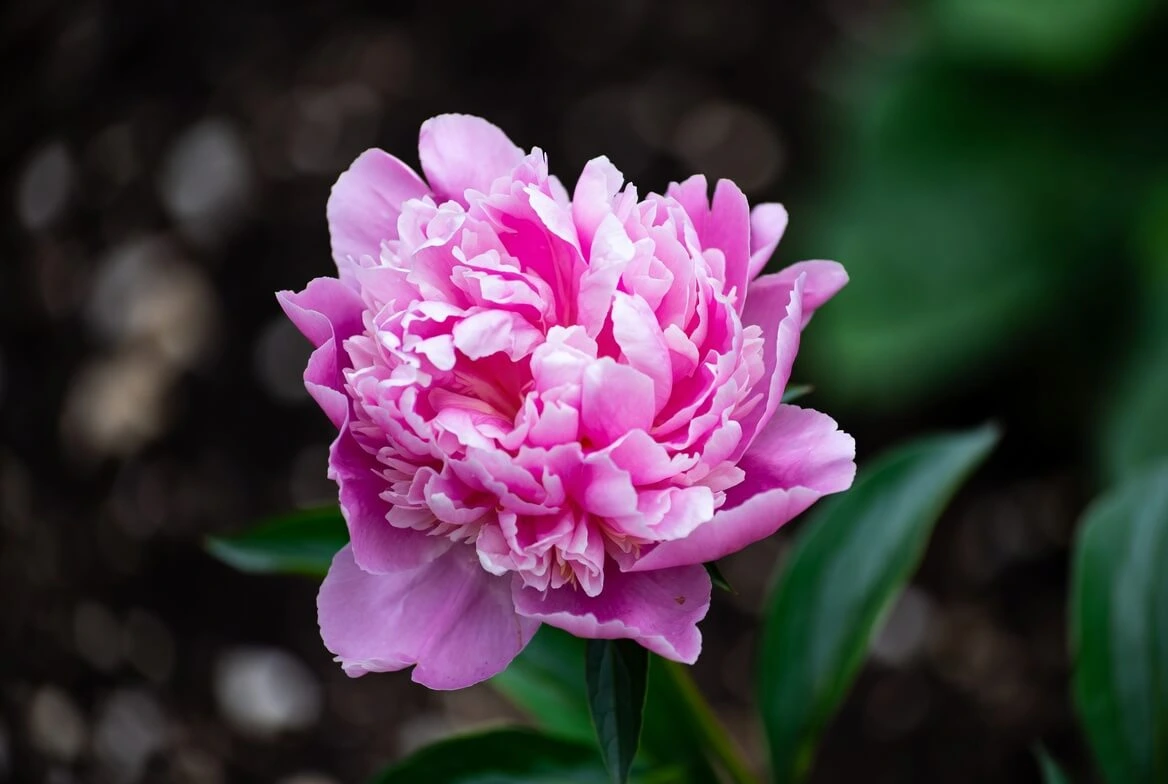
Pillow Talk features large, rounded double blooms that grow 5 to 6 inches across. The color is soft pink with hints of lavender, and the petals have a slight crinkle to them that catches the light beautifully. This mid-season bloomer lasts 7 to 10 days in the garden.
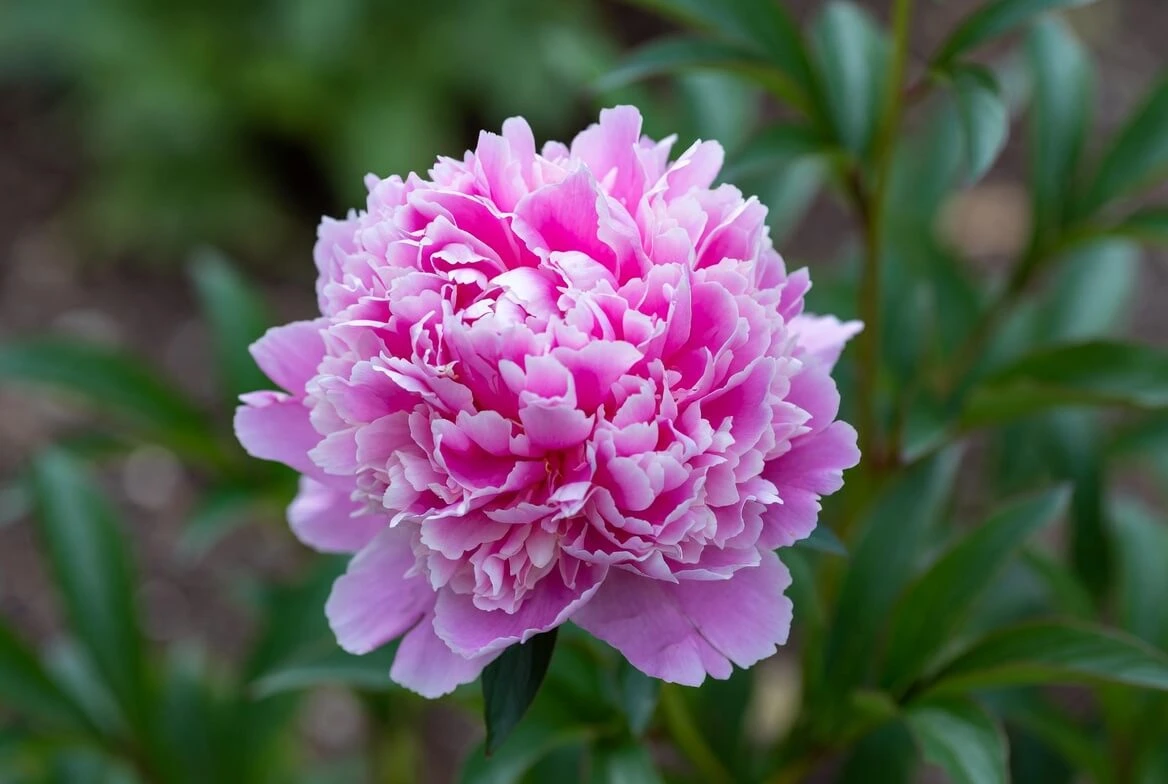
Shirley Temple is a pale pink peony that fades to white as it matures. The double blooms start with hints of pink on the outer petals and age to creamy ivory. It’s a color-changing variety that gives you two looks from one plant.
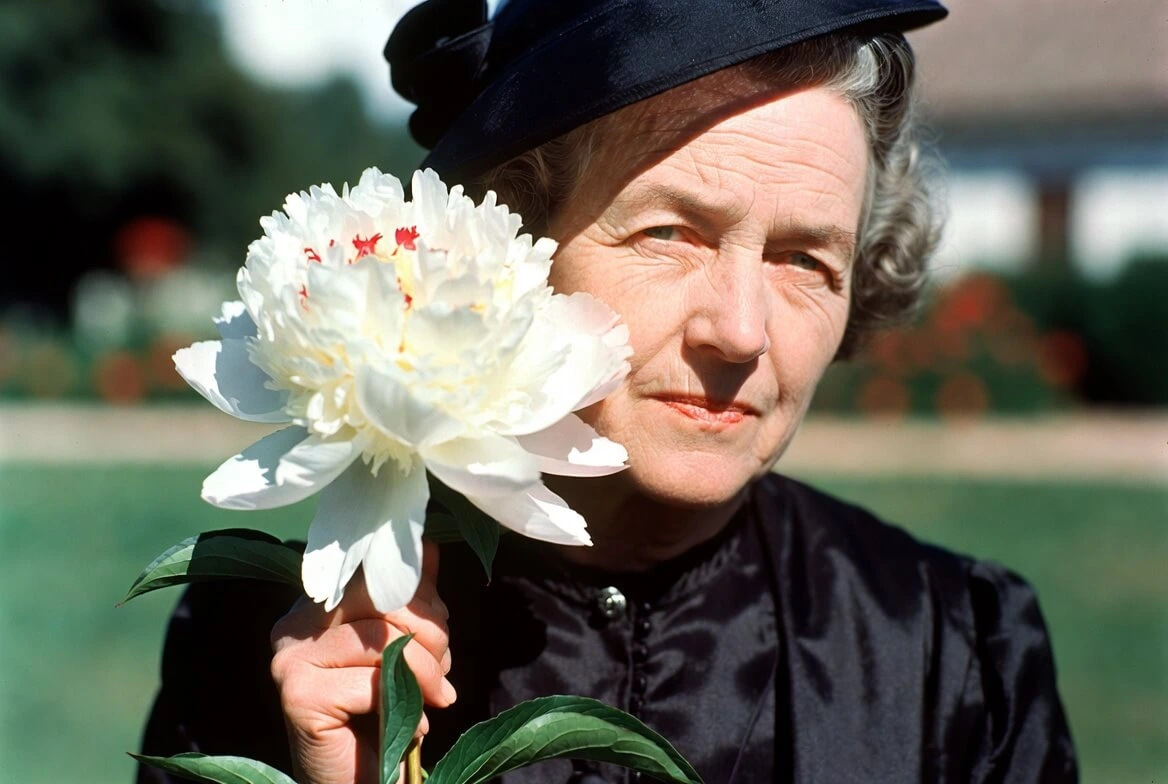
Mrs. Franklin D. Roosevelt produces ball-shaped double flowers in soft pink that fade to nearly white. The blooms are huge—some of the largest in the herbaceous peony world—and the color transformation as they age makes them interesting to watch throughout the bloom period.
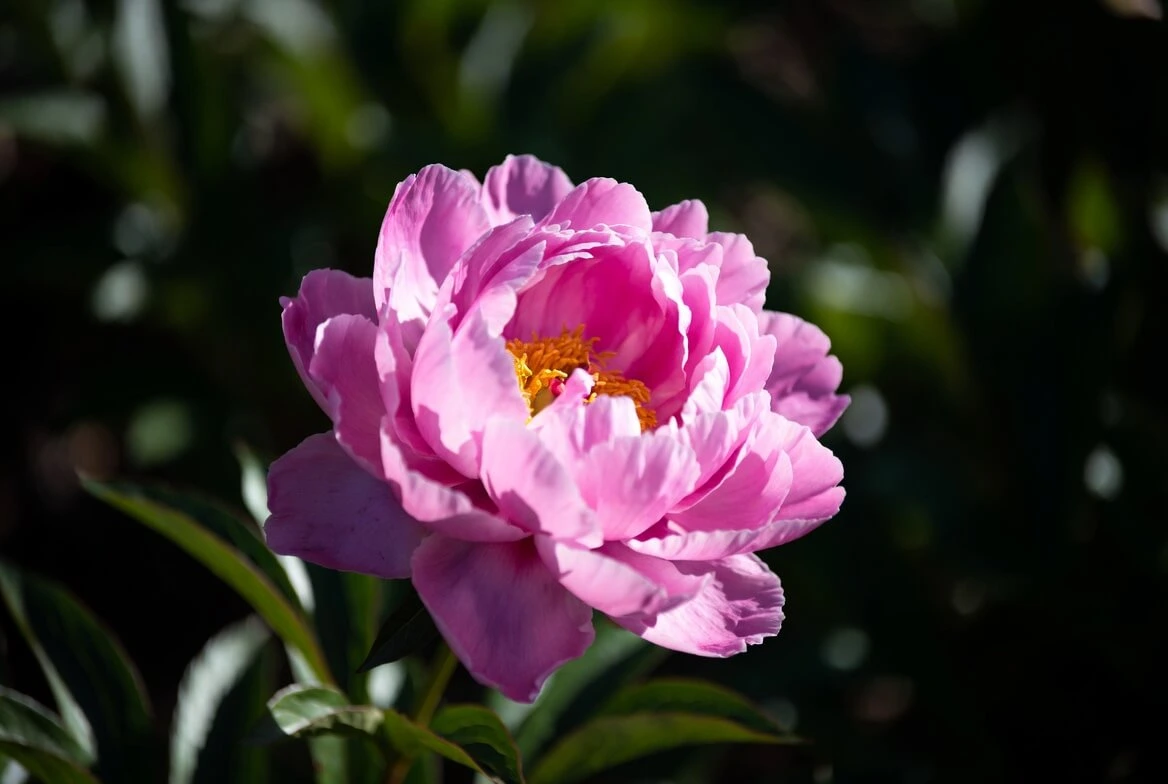
Sea Shell is a single-form peony with lightly fragrant pink peonies flowers that form around bright yellow stamens. It’s a simpler, more delicate look than the big fluffy doubles, perfect if you want something less formal.
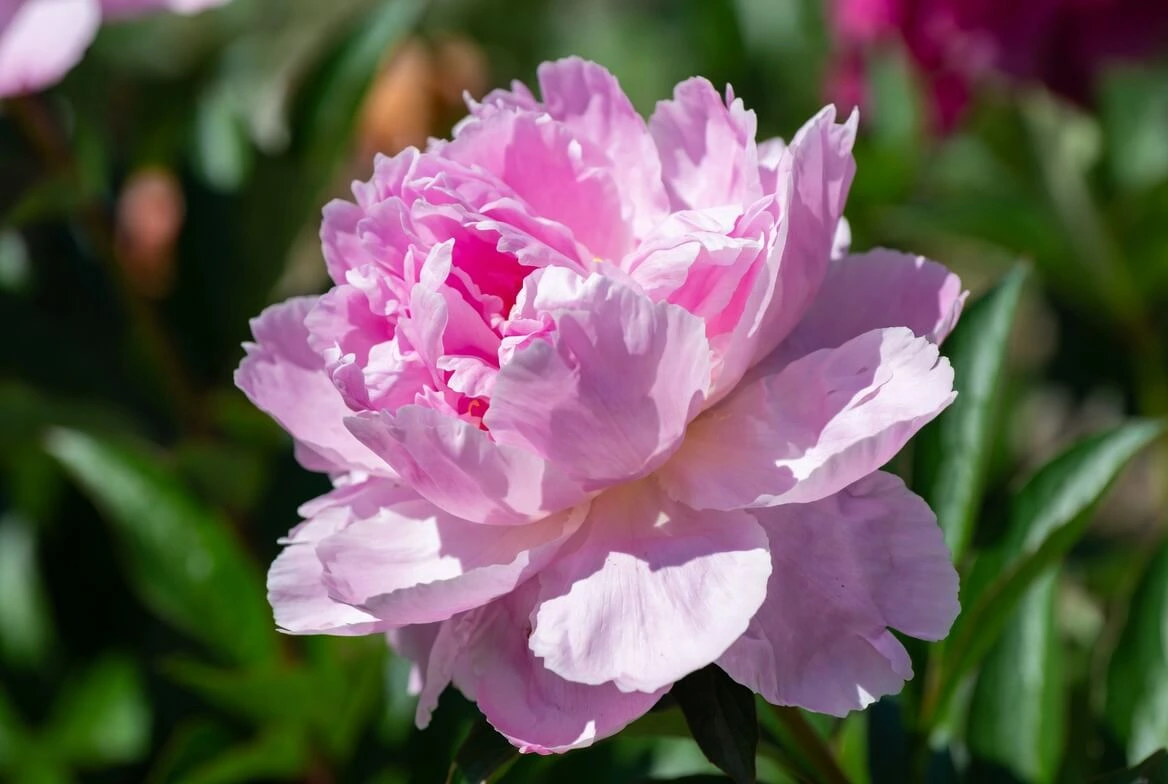
Double Pink is exactly what the name suggests: a common peony with pale shell pink double blooms. The buds open to reveal stunning blossoms with slight hints of lavender in late spring.
Medium Pink and Rose-Pink Peonies
These are the classic “peony pink” shades—bright, cheerful, and unmistakably pink without being too pale or too hot.
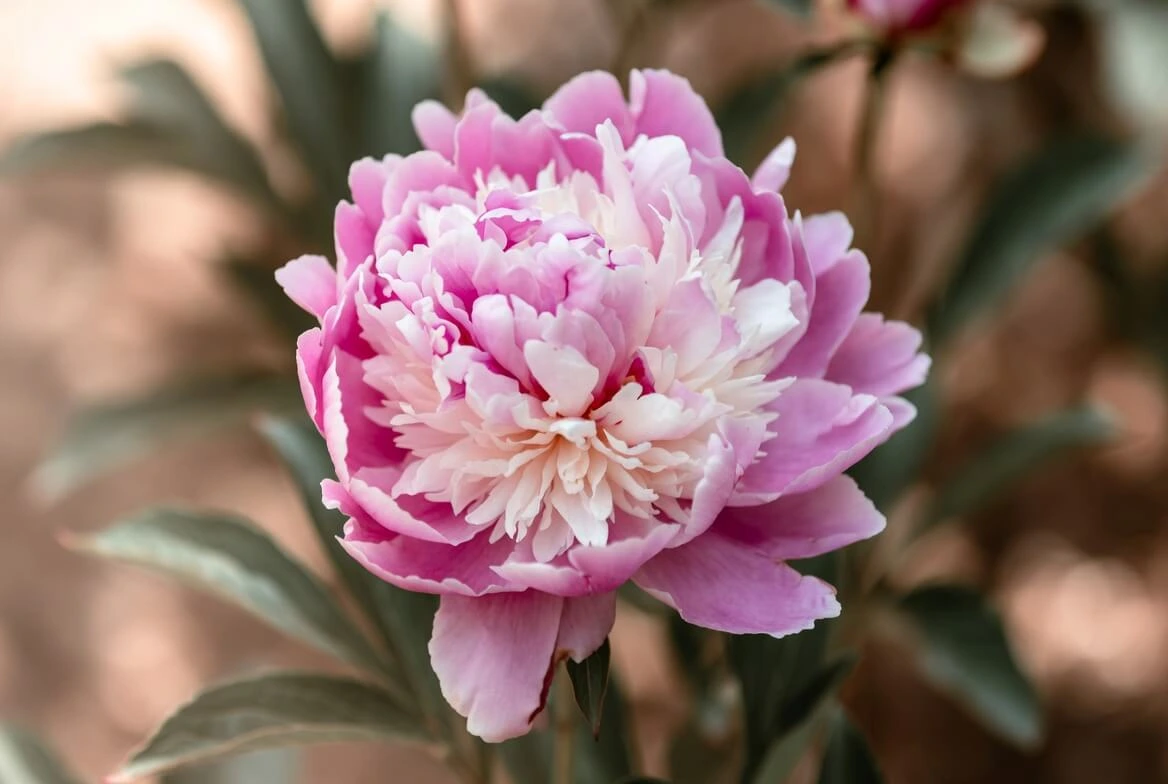
Bowl of Beauty is one of the most distinctive pink peonies you can grow. It’s a Japanese form peony with large bright pink outer petals that encircle a frilly yellow center made up of narrow petaloids. The color contrast is stunning, and the form is architectural rather than just fluffy.
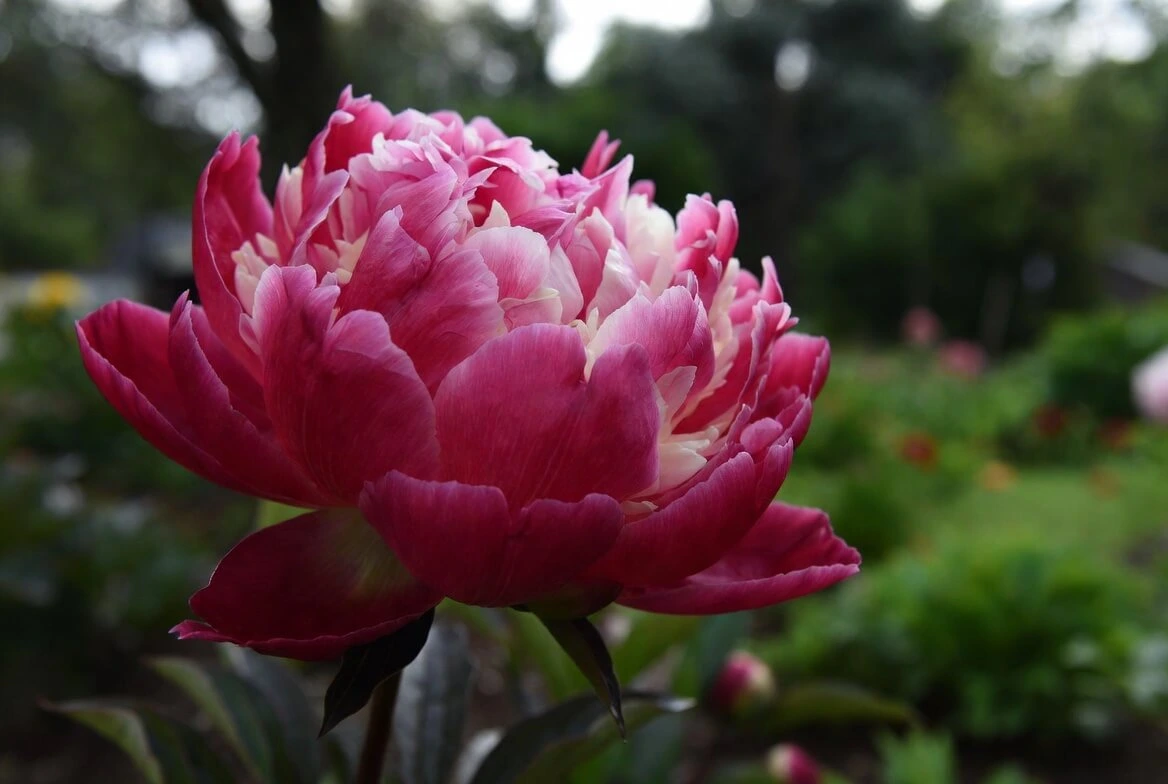
Monsieur Jules Elie has been around since 1888 and it’s still one of the best. The fragrant double blossoms have ruffled rose-pink petals in a bomb-shaped form. The color is a true rose-pink—not too pale, not too bright—and the fragrance is incredible.
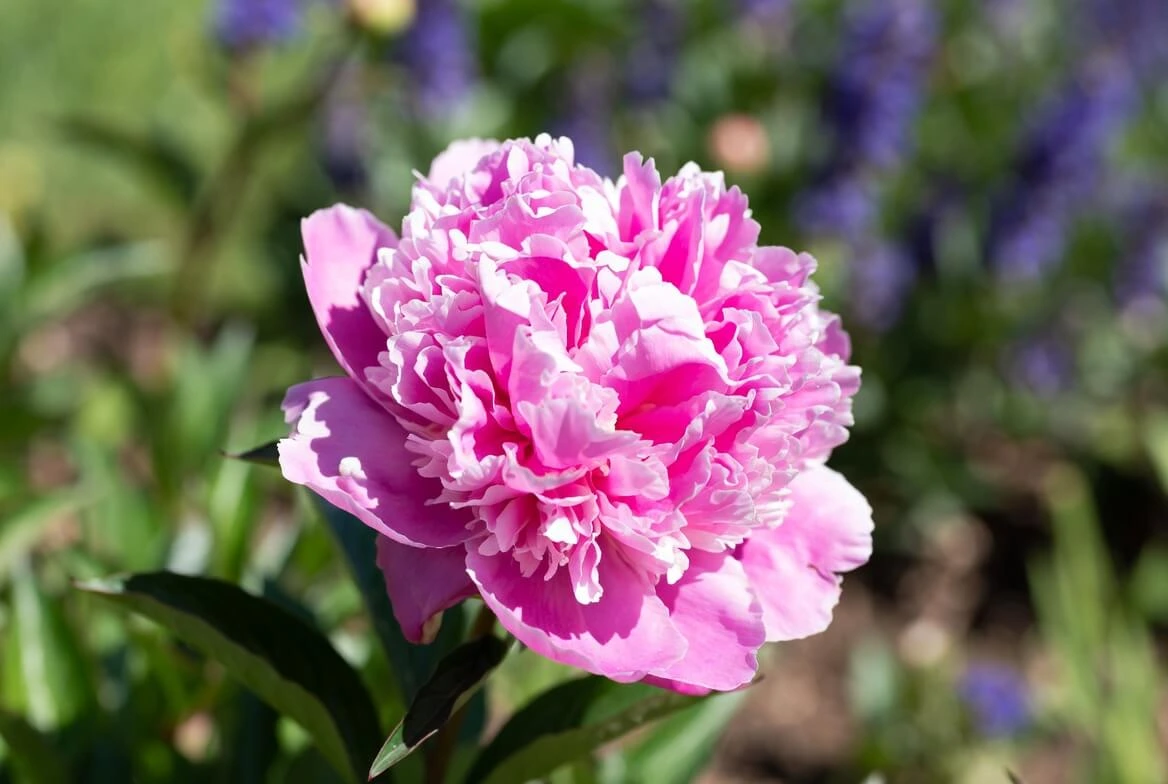
Pink Parfait produces large rounded flowers with layers of pink petals edged in silver. The blooms are excellent for cutting and the color holds well in the vase.
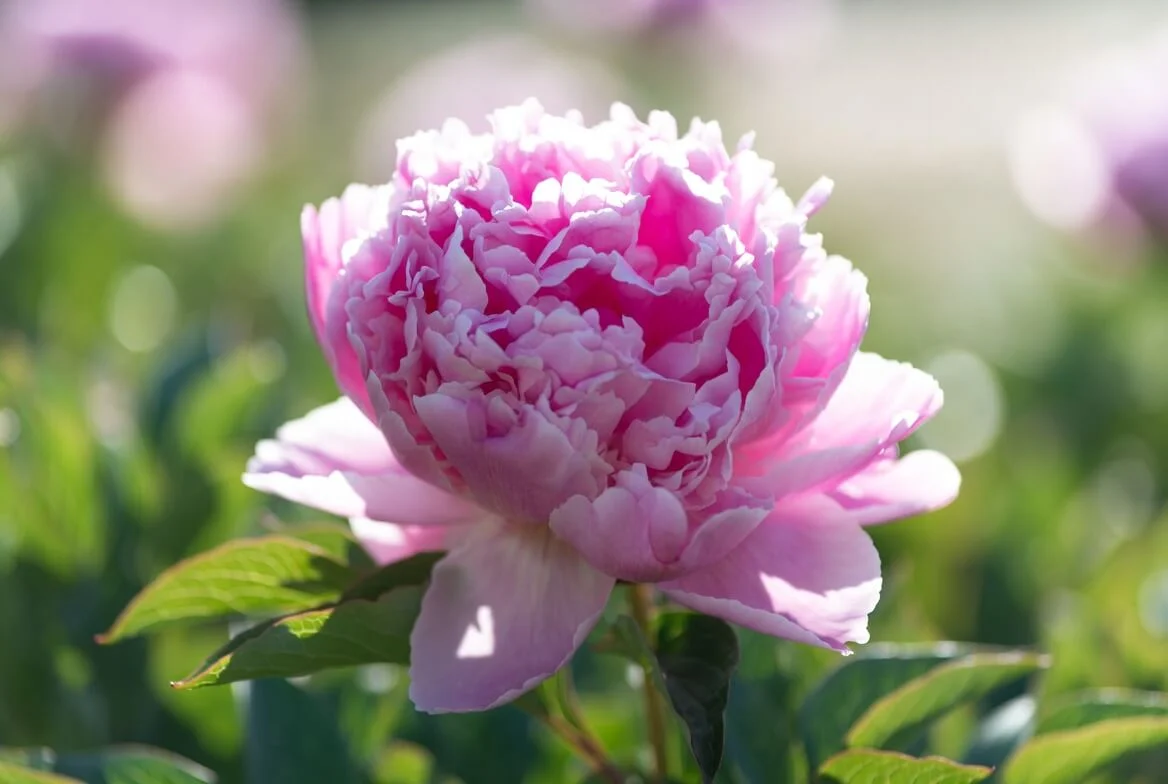
Edulis Superba features bright rose-pink outer petals that form around a center of smaller ivory petals. This herbaceous variety thrives even in heavy soil where other peonies might struggle.
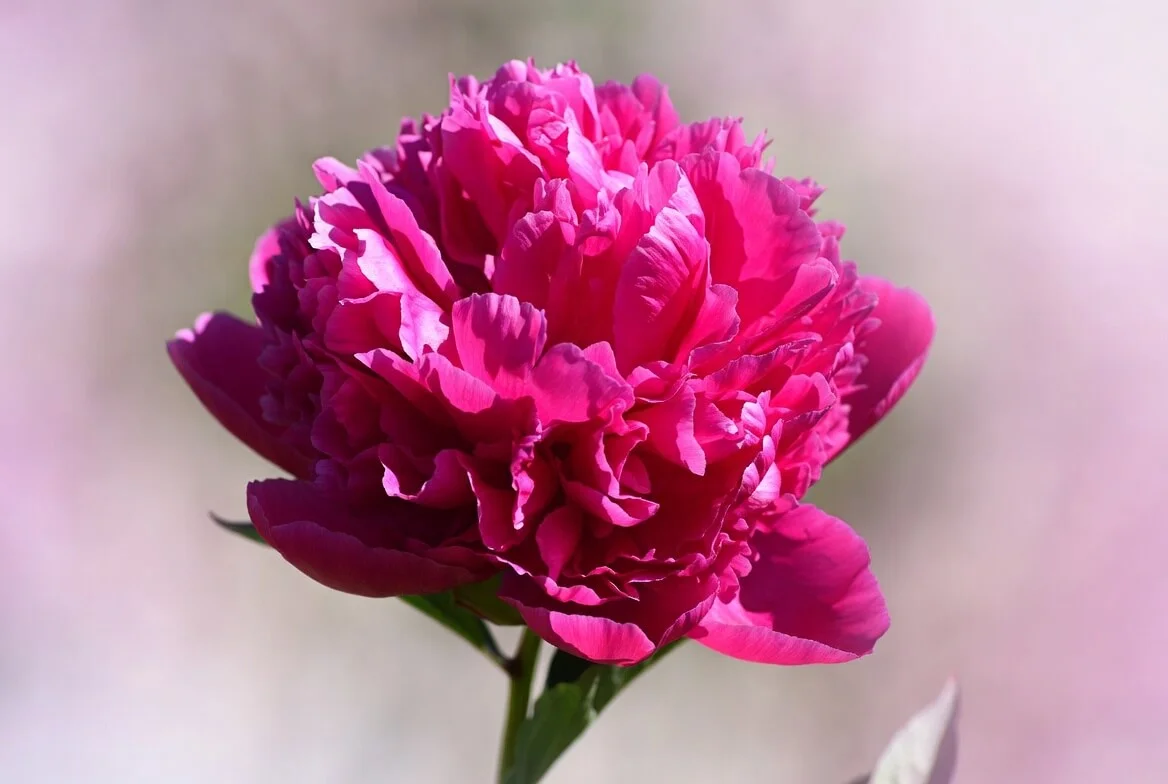
Glory Hallelujah arrives late in the season with medium pink double blooms on sturdy upright stems that don’t need staking.
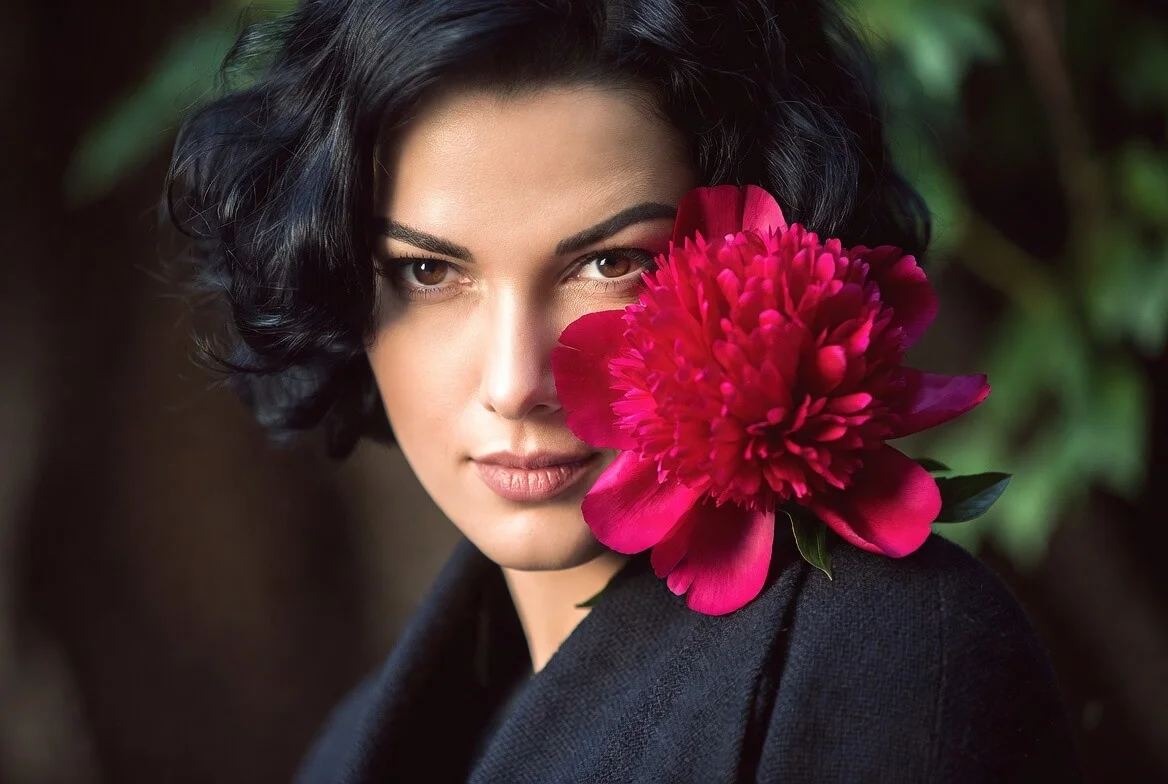
Celebrity is a bomb-shaped double peony that blooms mid-season. Deep rose-pink petals surround a bicolor center of tufted rose-pink and pink-chiffon. The flowers grow 6 to 7 inches in diameter.
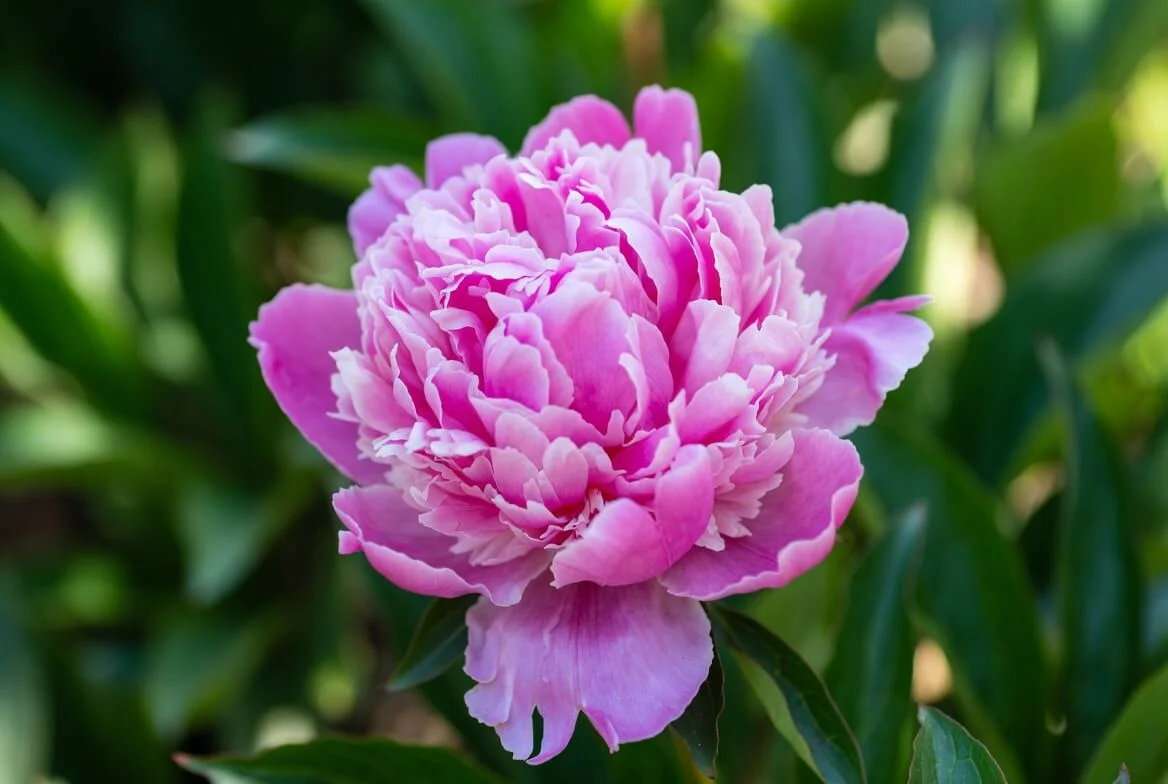
Jacorma Pink is a medium pink double-flowered common peony with five or more outer guard petals and a center where stamens and carpels have transformed into petals, creating a full-bodied flower.
Hot Pink and Magenta Peonies
These are the bold, vibrant pinks—the ones that demand attention from across the garden.
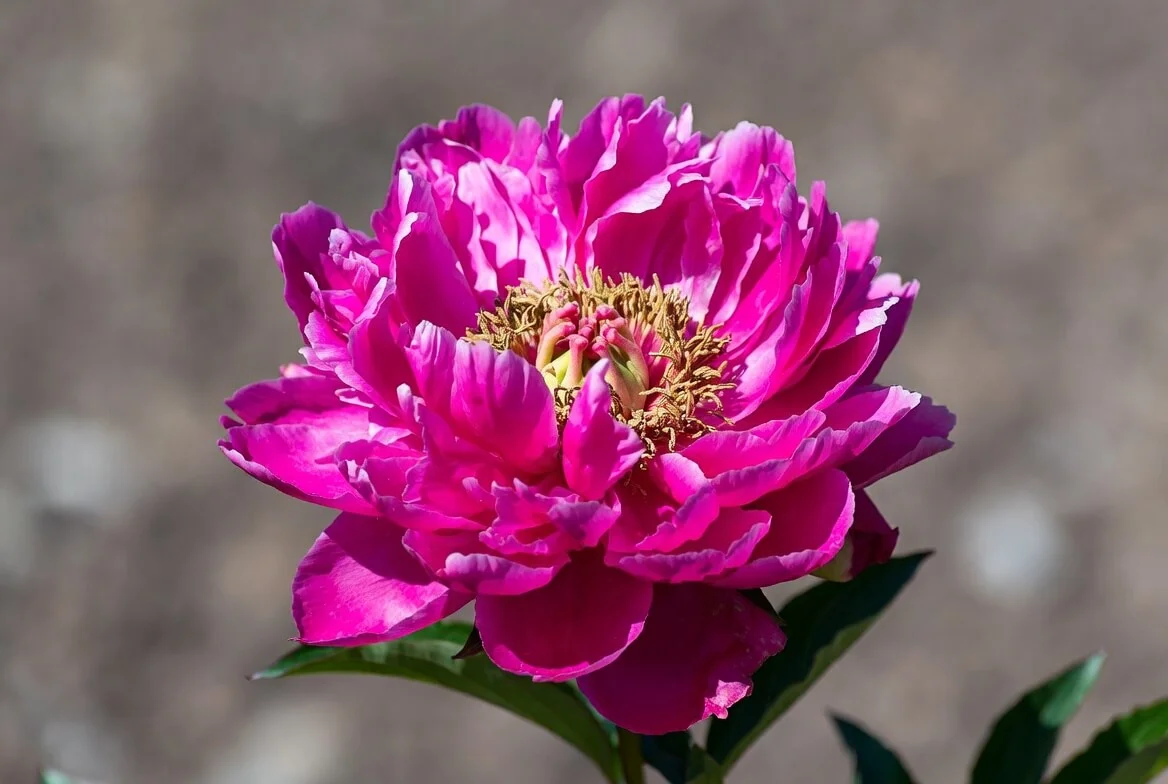
Big Ben produces large dome-shaped blossoms in a true magenta shade. The blooms are very fragrant, have an extended bloom period, and tolerate hot climates better than many other varieties. This is a show-stopper.
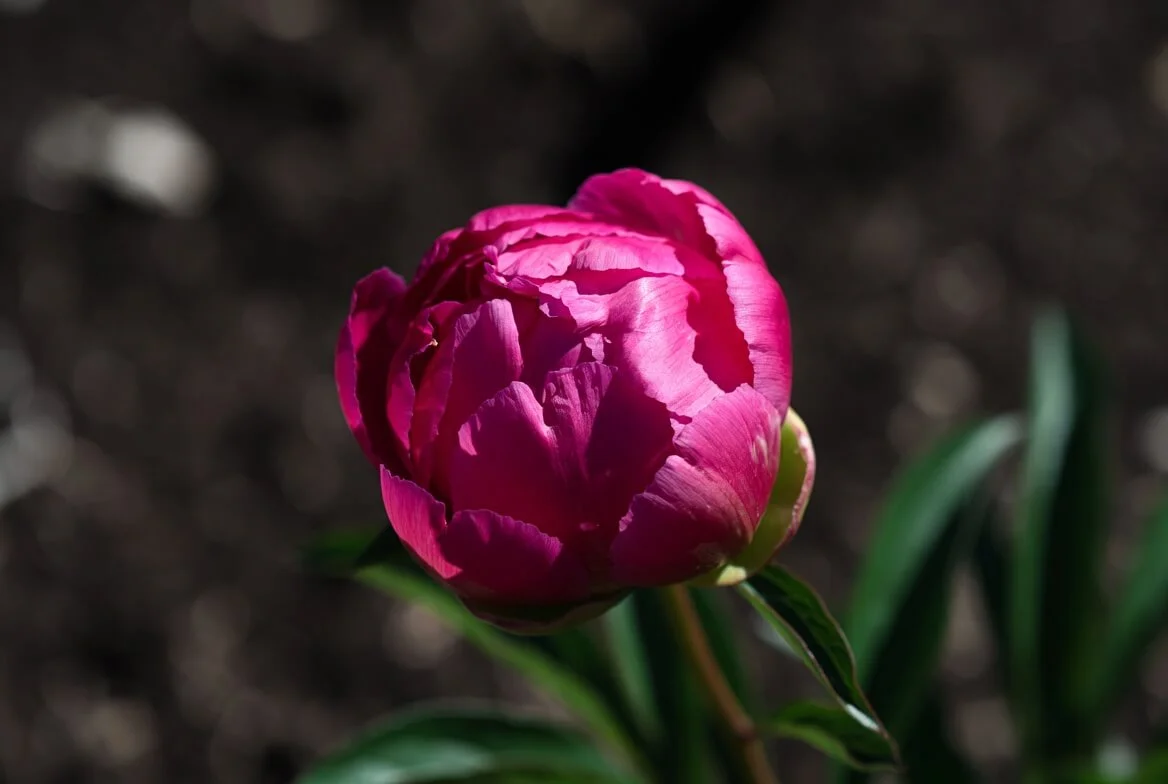
Felix Crousse features double blooms that pop in a bright magenta color. The color is intense and doesn’t fade as the flower ages.
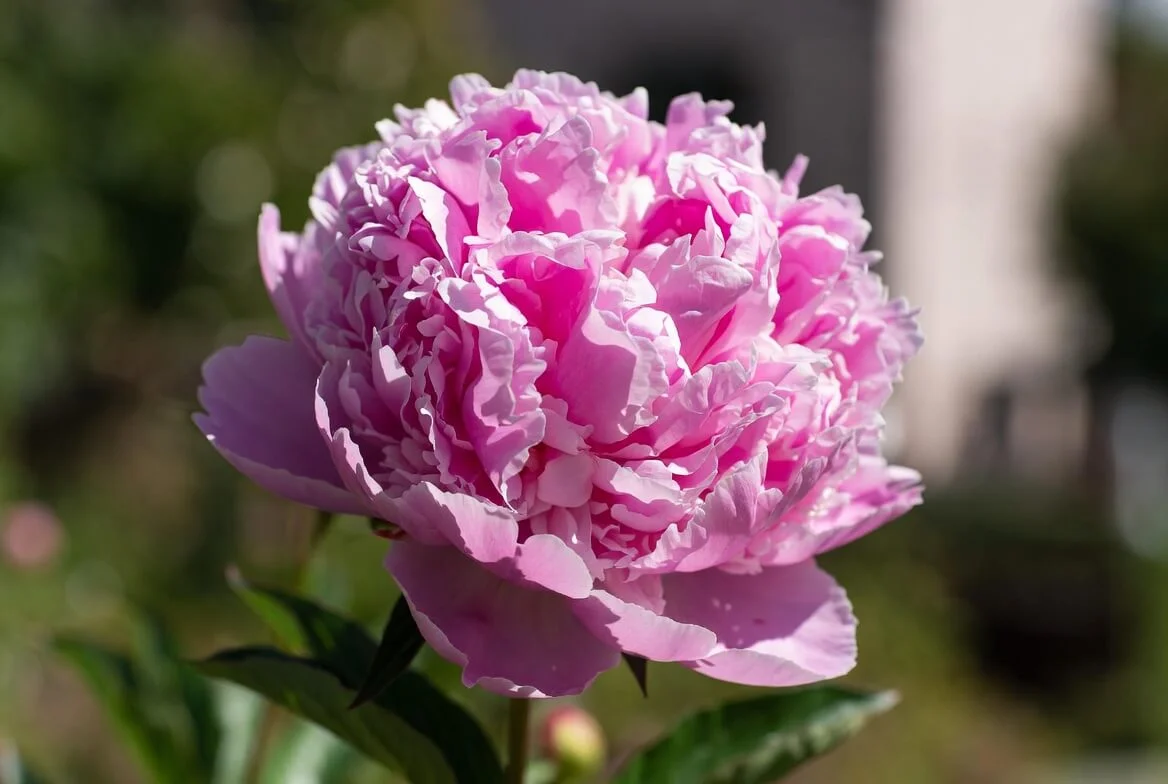
Felix Supreme is similar to Felix Crousse but with slightly softer coloring and a subtle sweet scent. The strong stems hold large pink blooms upright without staking.
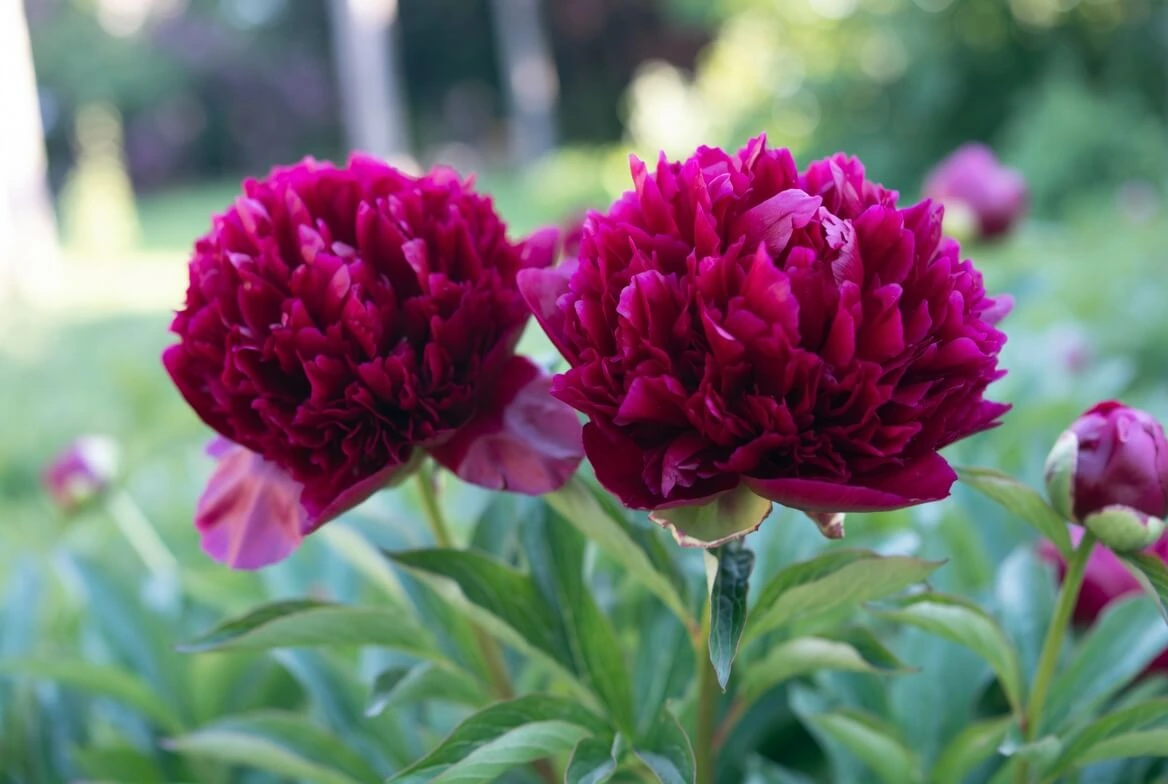
Kansas produces rose-shaped double blooms that maintain their bright color all season without fading. This is a huge advantage if you hate watching your peonies bleach out in the sun.
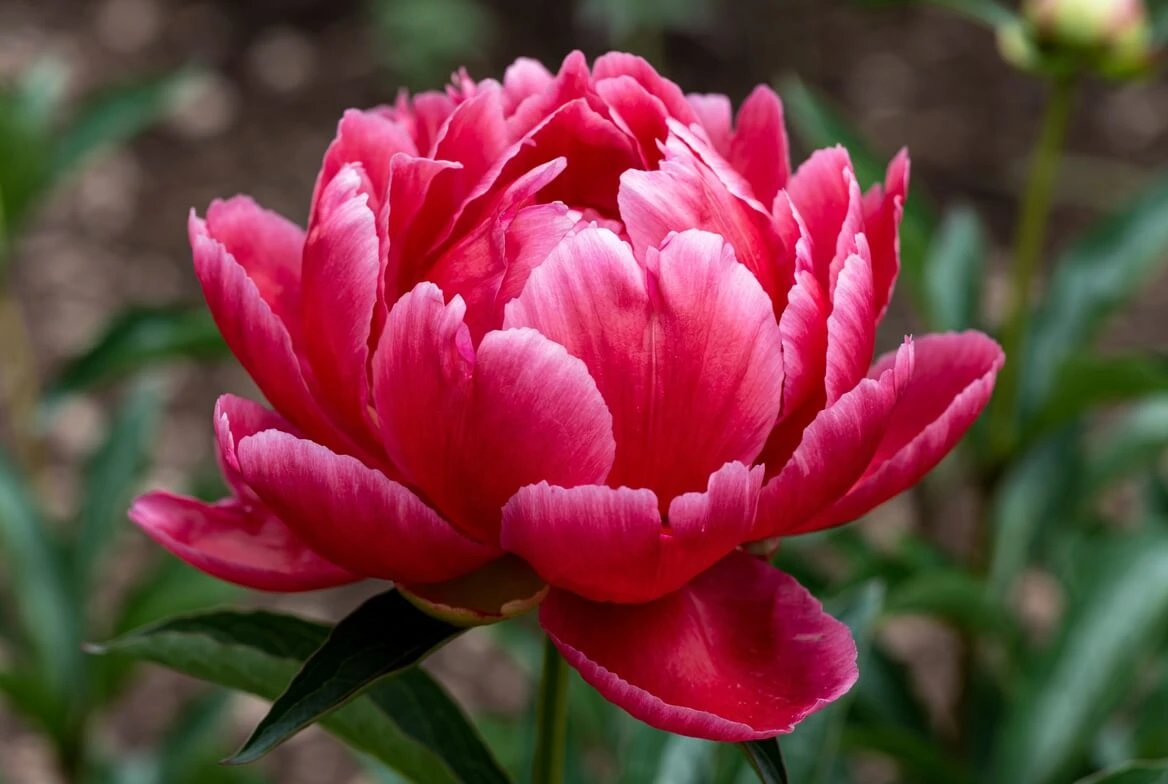
Karl Rosenfield has rounded double blooms in a deep rose-red shade that borders on magenta. The flowers have excellent vase life, making this a favorite for cut flower growers.
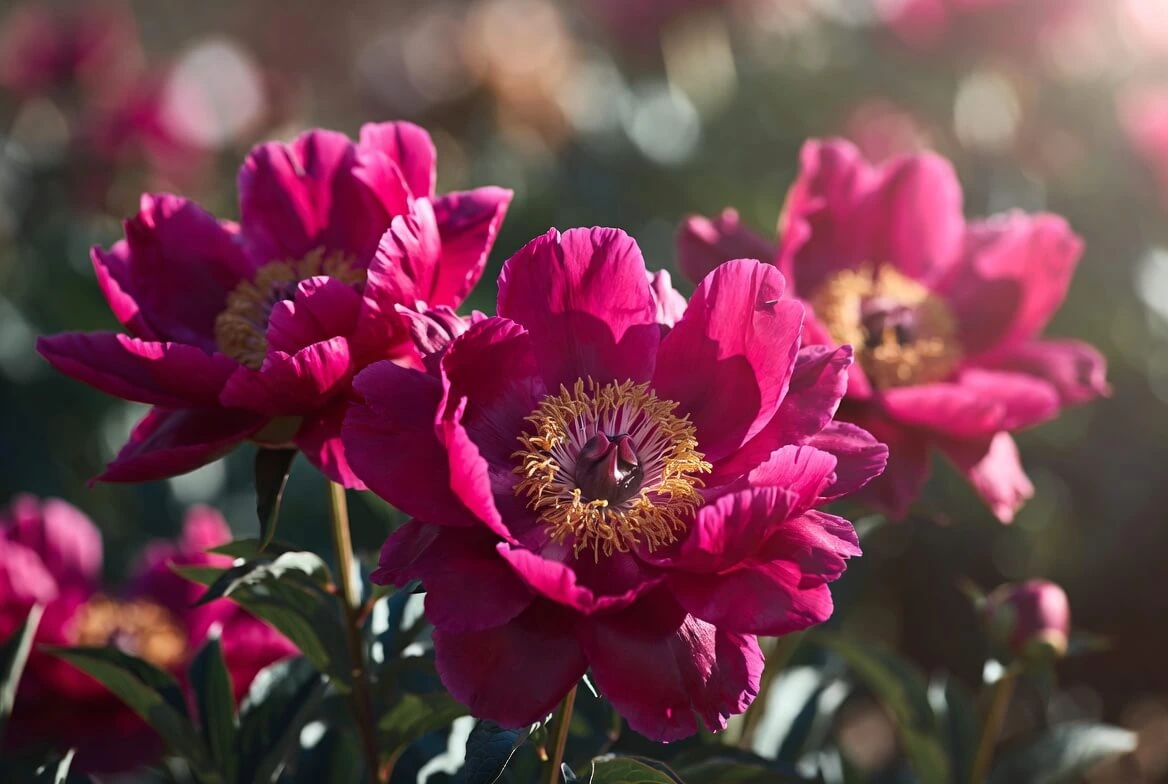
Raspberry Charm features large, deep raspberry-pink blooms with ruffled petals. The color is vibrant and holds well throughout the bloom period.
Pink Itoh Peonies
The Itoh (intersectional) peonies offer some unique pink shades you won’t find in herbaceous types. First Arrival has gently ruffled petals that emerge pink before aging to a pastel shade. The large blossoms reach 6 to 7 inches in diameter and feature dark maroon-pink flares at the center with a tuft of yellow stamens.
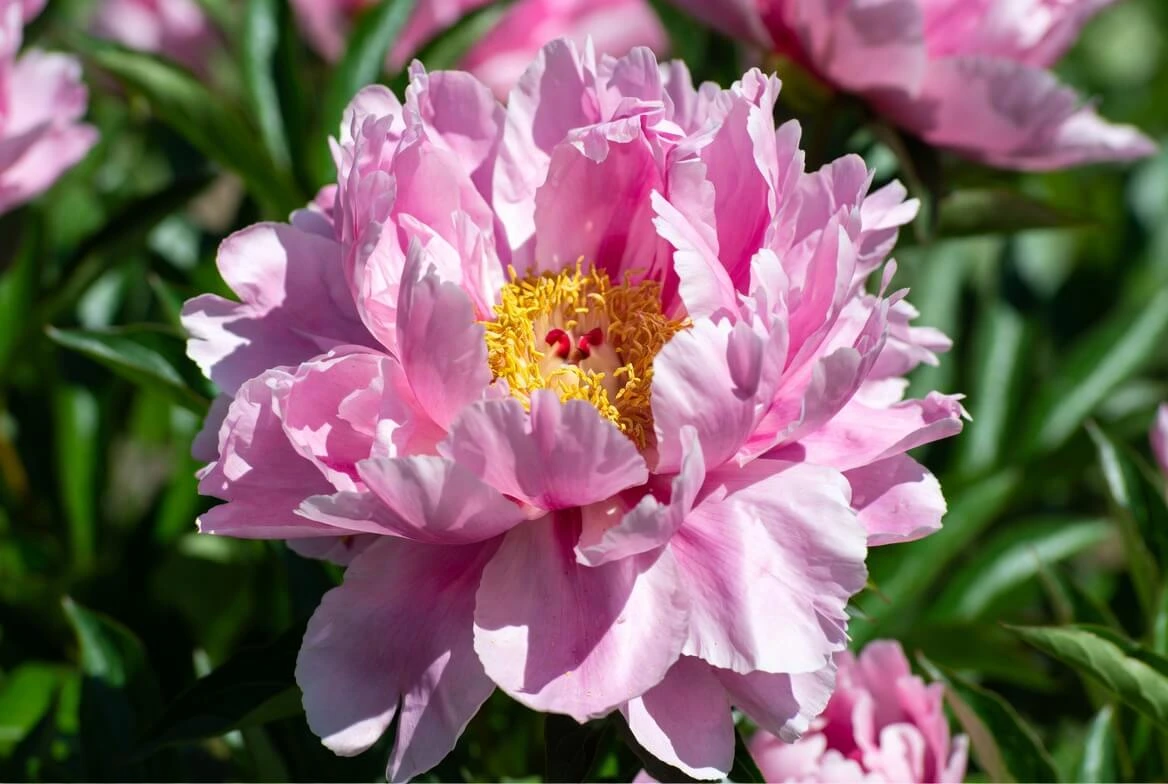
Pink Double Dandy produces double or semi-double flowers that deepen in color toward the center. It’s perfect for small spaces since it grows in a compact mound.
Pink Tree Peonies
Tree peonies offer their own range of pink shades, often with dramatic central flares.
- Leda features semi-double flowers that bloom mid-season with plum-colored flares radiating from the center.
- Oread has light pink petals cast with a blush of red, giving it a watercolor effect.
- Sakura Jishidi produces wavy-edged petals that fade from dark pink centers to pale pink tips as the flower matures.
- Companion of Serenity features ruffled pale pink petals with a dramatic center of red flares.
Pink peonies symbolize love, romance, good luck, and prosperity. They’re the top choice for wedding bouquets and romantic garden designs, and for good reason—the range of pink shades means there’s a perfect pink for every garden style.
White Peonies: Classic Elegance
White peonies bring a sense of purity and elegance to the garden. They’re the second most popular peony color after pink, and they work beautifully in formal gardens, moonlight gardens, and as cut flowers for weddings and special occasions.
White peony blooms often have subtle hints of other colors of peonies—yellow at the base, pink on the edges, or cream in the center—that keep them from looking flat or boring.
Pure White Varieties
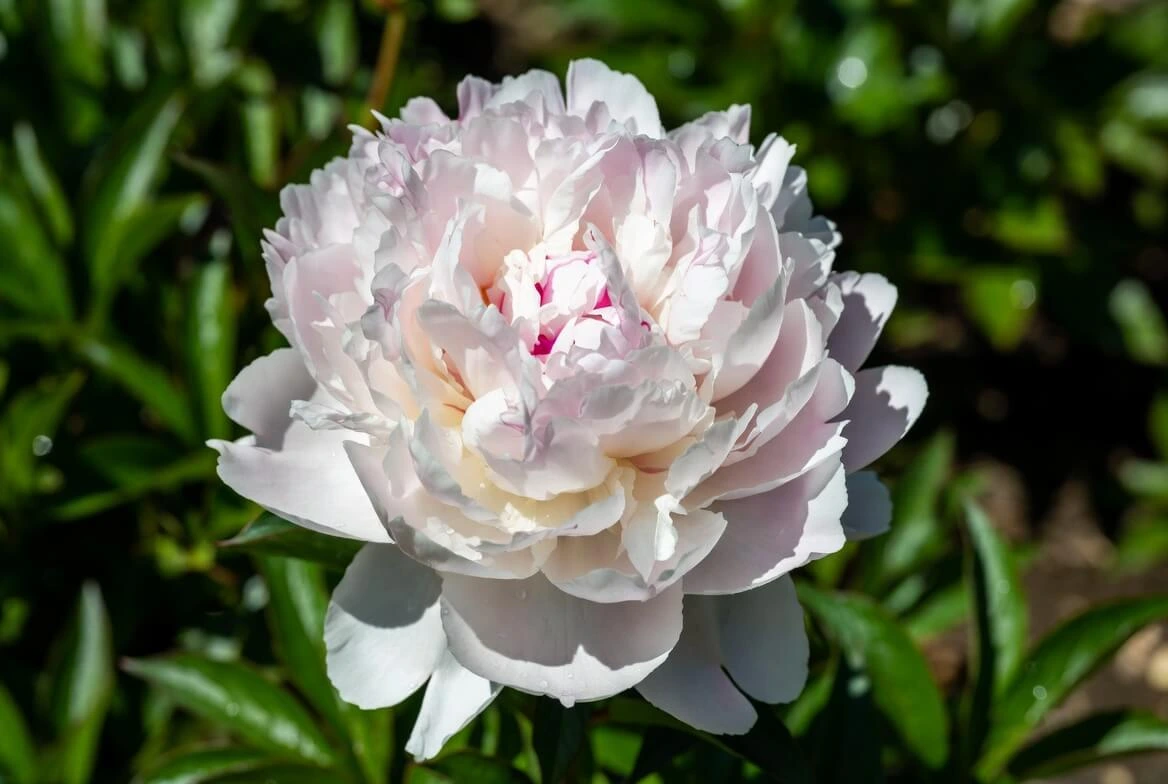
Duchesse de Nemours produces cupped white blossoms that deepen to a yellow base. The inner petals are ruffled, giving the flower texture and depth. This herbaceous variety is fragrant and reliable.
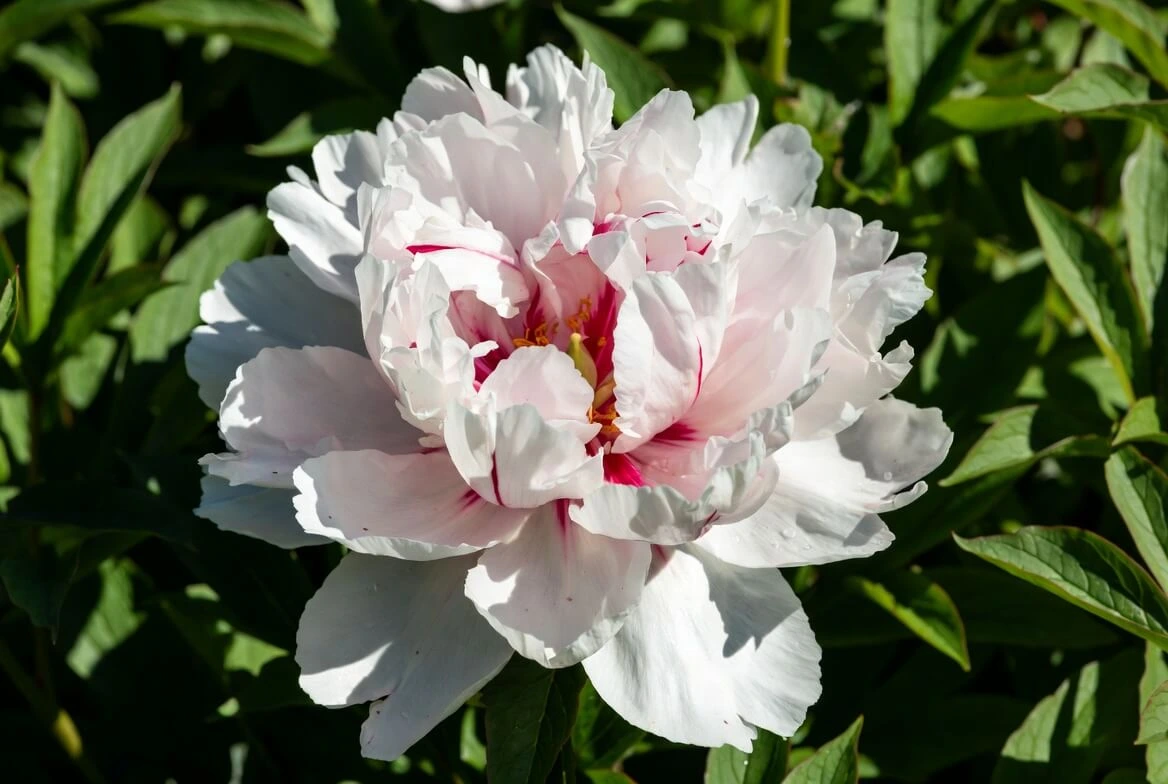
Festiva Maxima is a Southern heirloom that’s been grown since the 1850s. The mostly white double flowers have inner petals flecked with bright red—just enough color to make them interesting without losing the white appearance. It’s one of the most dependable white peonies you can plant.
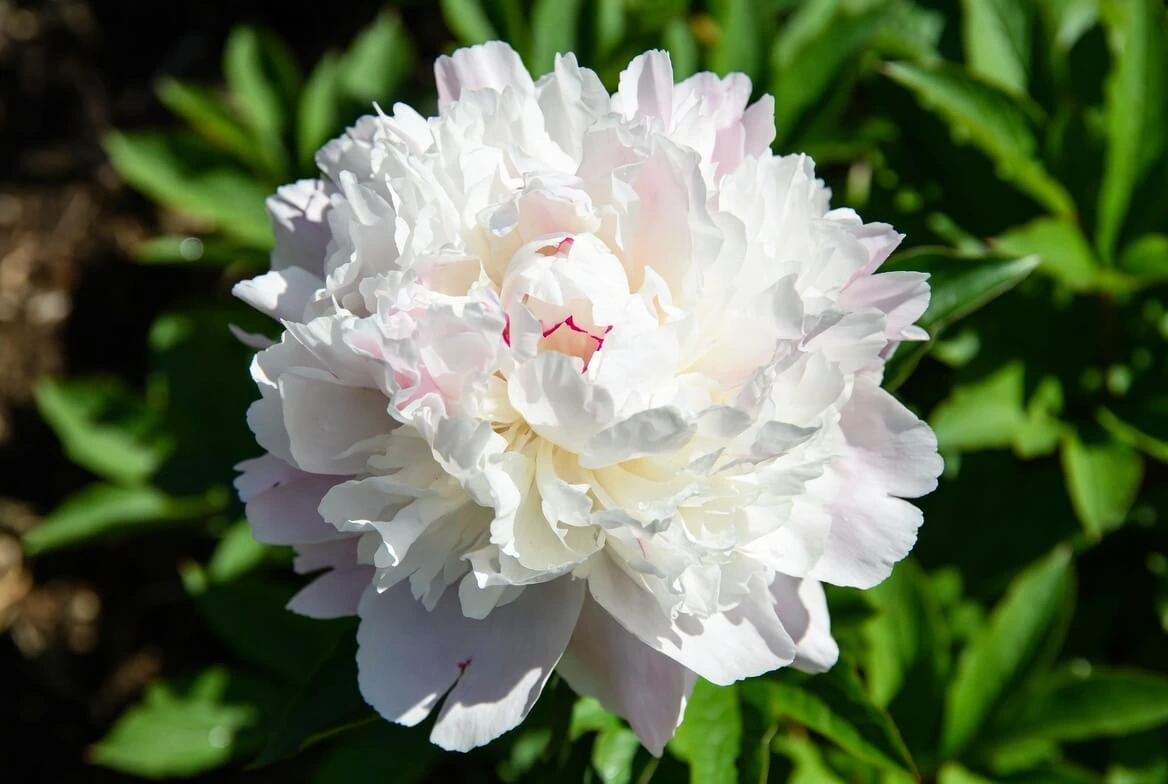
Elsa Sass features rose-like double flowers that are intensely fragrant. The pure white petals are packed tightly, creating a full, fluffy bloom.
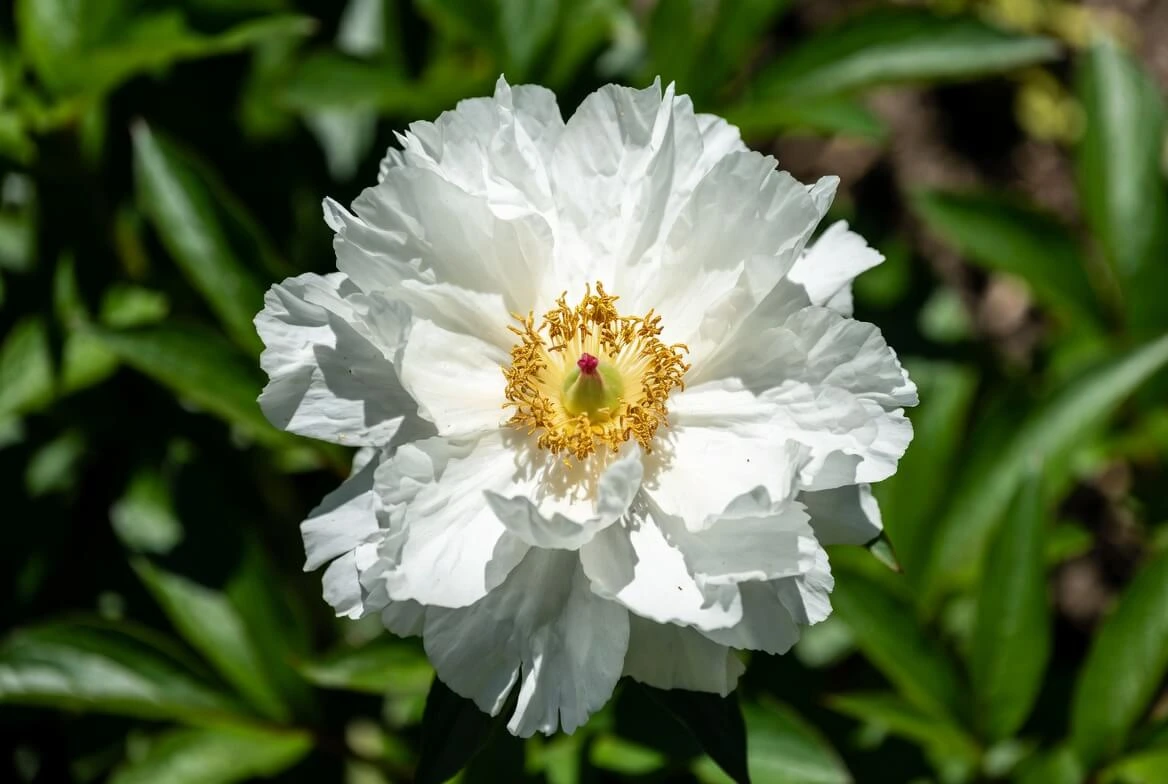
Krinkled White has crinkled petal edges that look like crepe paper. The unique texture makes this variety stand out, and the stems are strong enough that these usually don’t need staking.
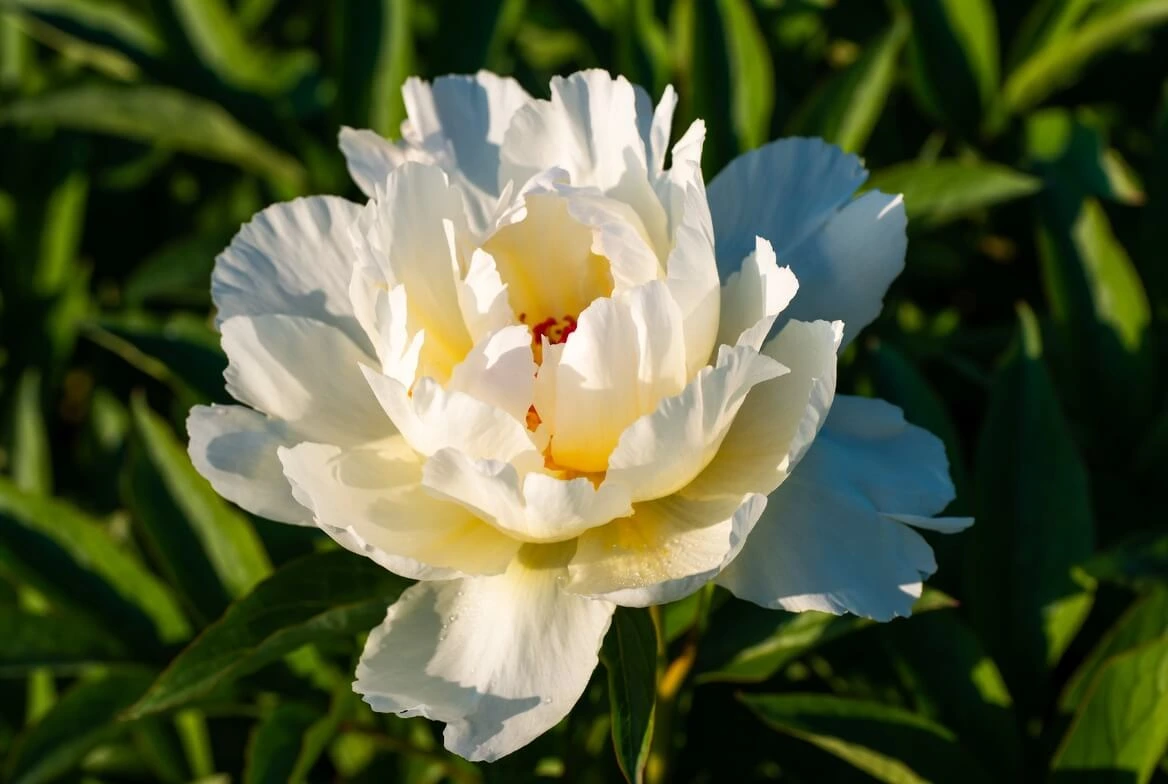
Gessekai is a tree peony with pure white petals encircling golden stamens. The flowers literally glow at dusk, making this a stunning choice for evening gardens.
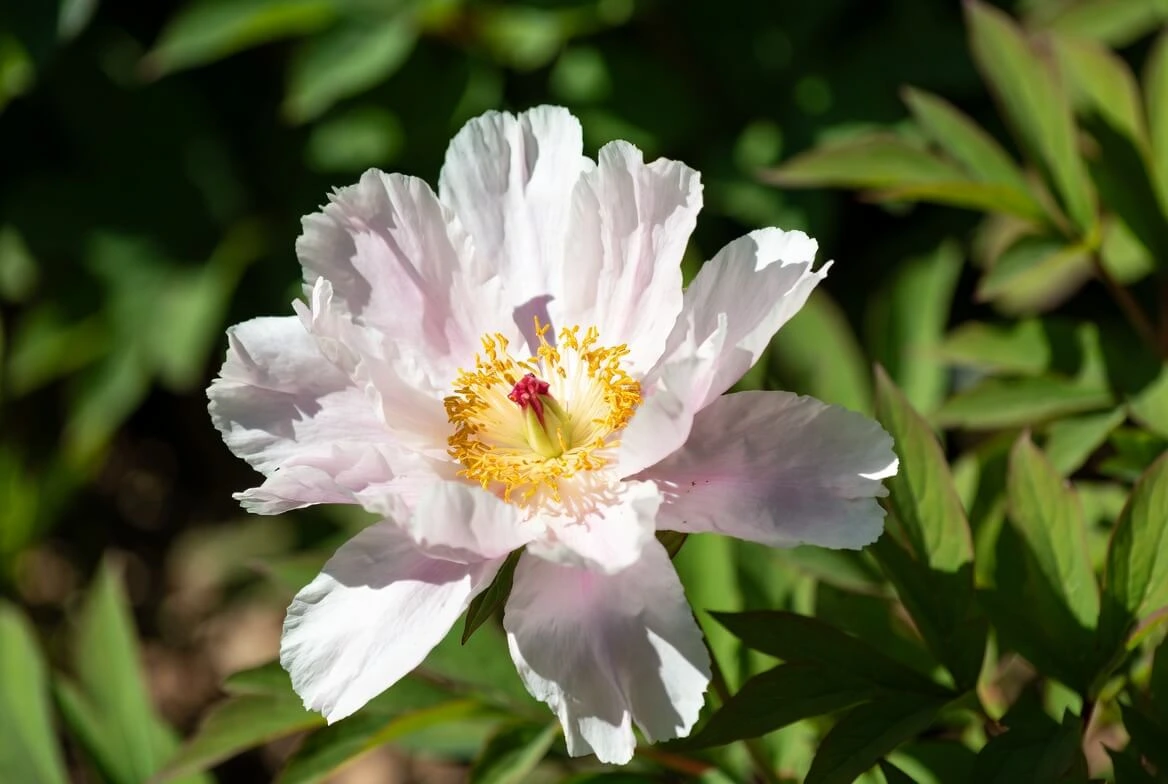
Godaishu is another tree peony with massive blooms that can reach 10 inches across. The petals have jagged edges that add texture and interest.
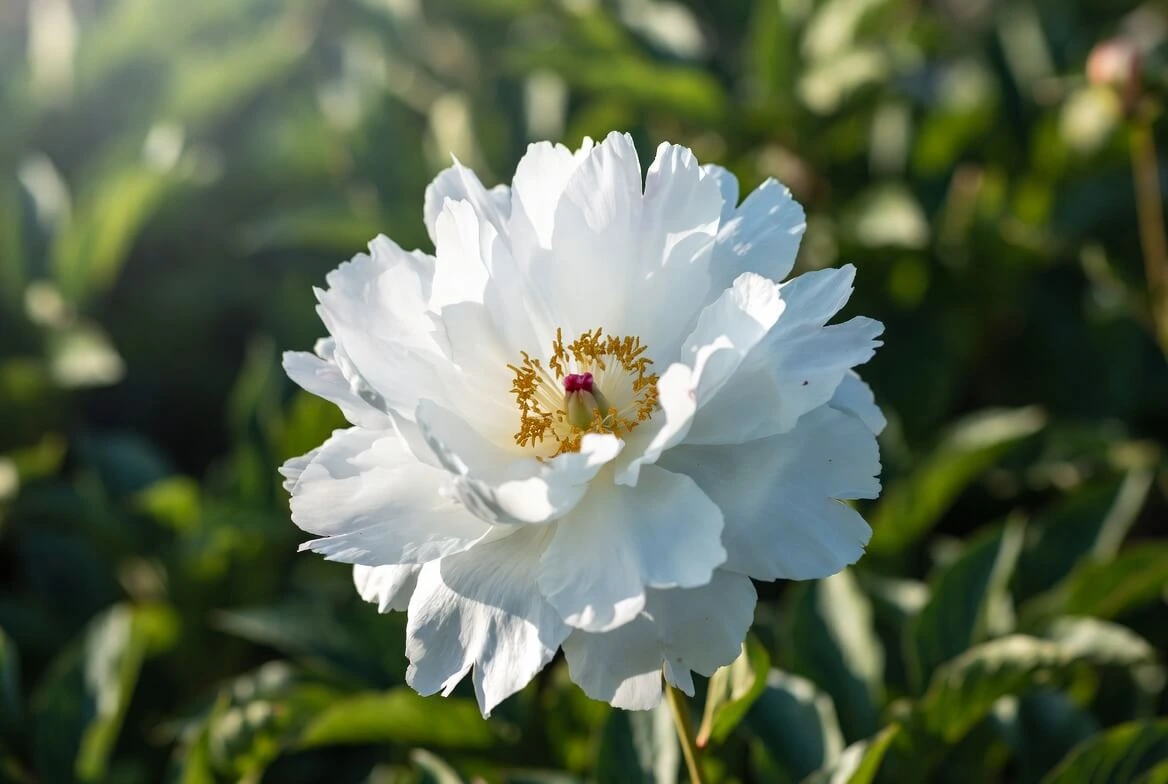
White Emperor is a semi-double white Itoh peony with a cream stamen ring at the center. The blooms are large and the plant has the sturdy stems typical of Itoh varieties.
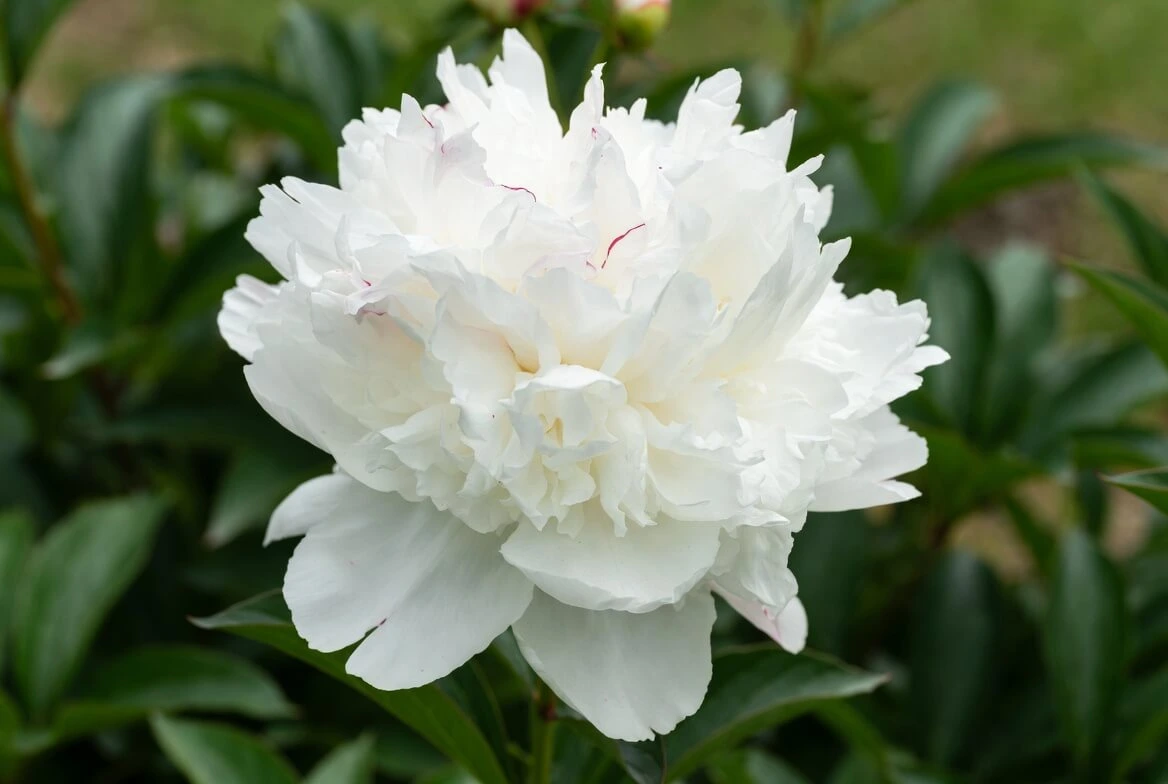
Double White is a common peony that produces large, bold satiny white double blooms from late spring to early summer. Simple, reliable, and beautiful.
White with Color Accents
Some of the most interesting white peonies aren’t pure white—they have splashes of other colors of peonies that create contrast and visual interest.
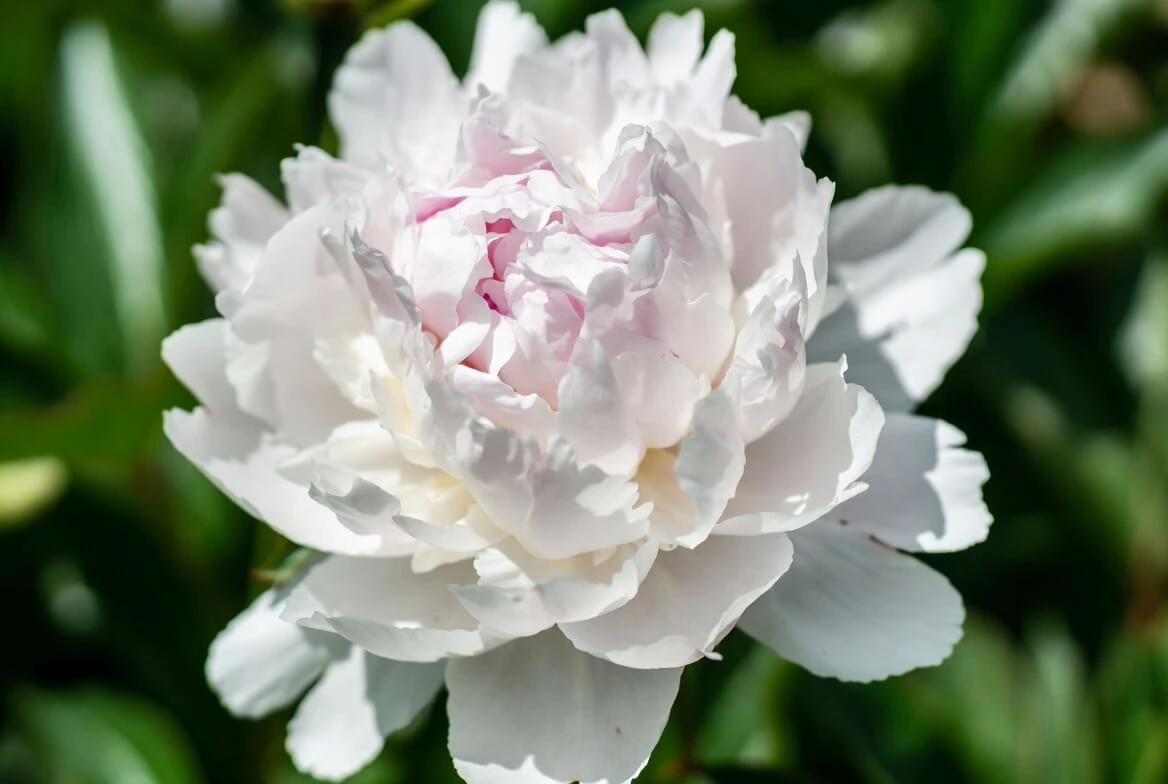
Minnie Shaylor has crinkled, crepe paper-like petals that appear pale pink and fade to white as they mature. It’s a color-changing variety that looks different every day it’s in bloom.
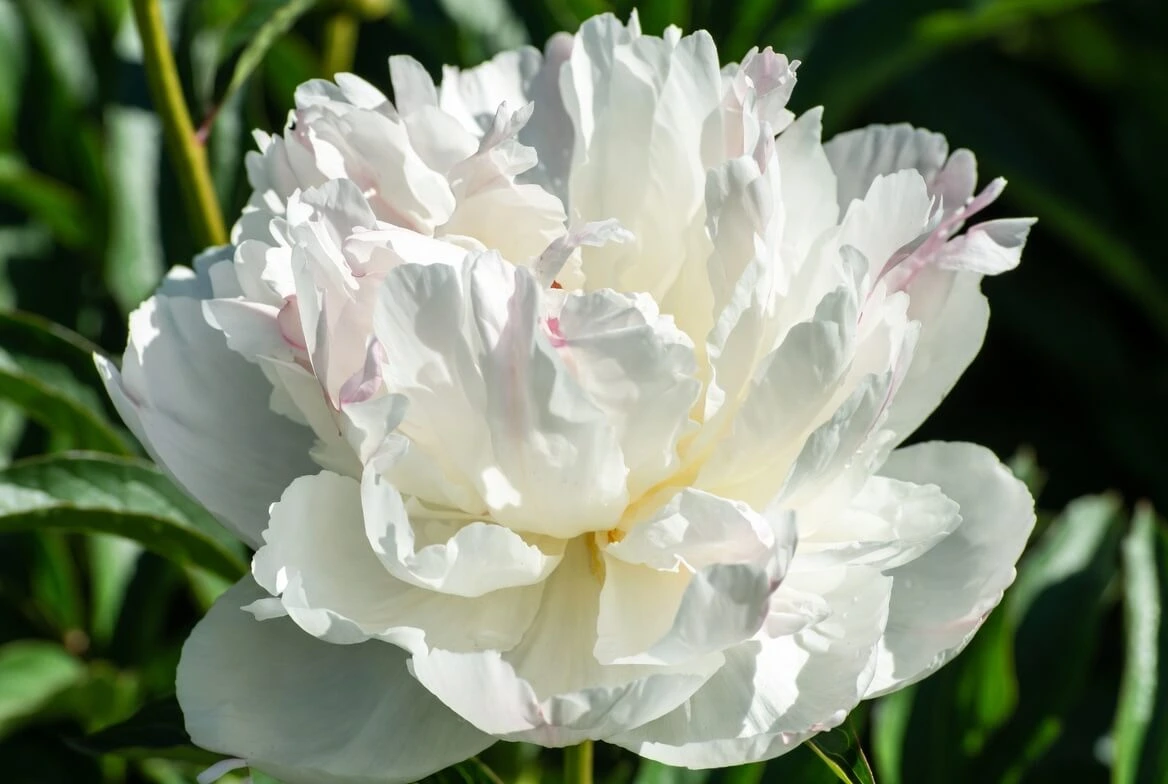
Henry Sass produces ruffled double flowers that can be white or pale pink depending on growing conditions. The strong stems hold the blooms upright.
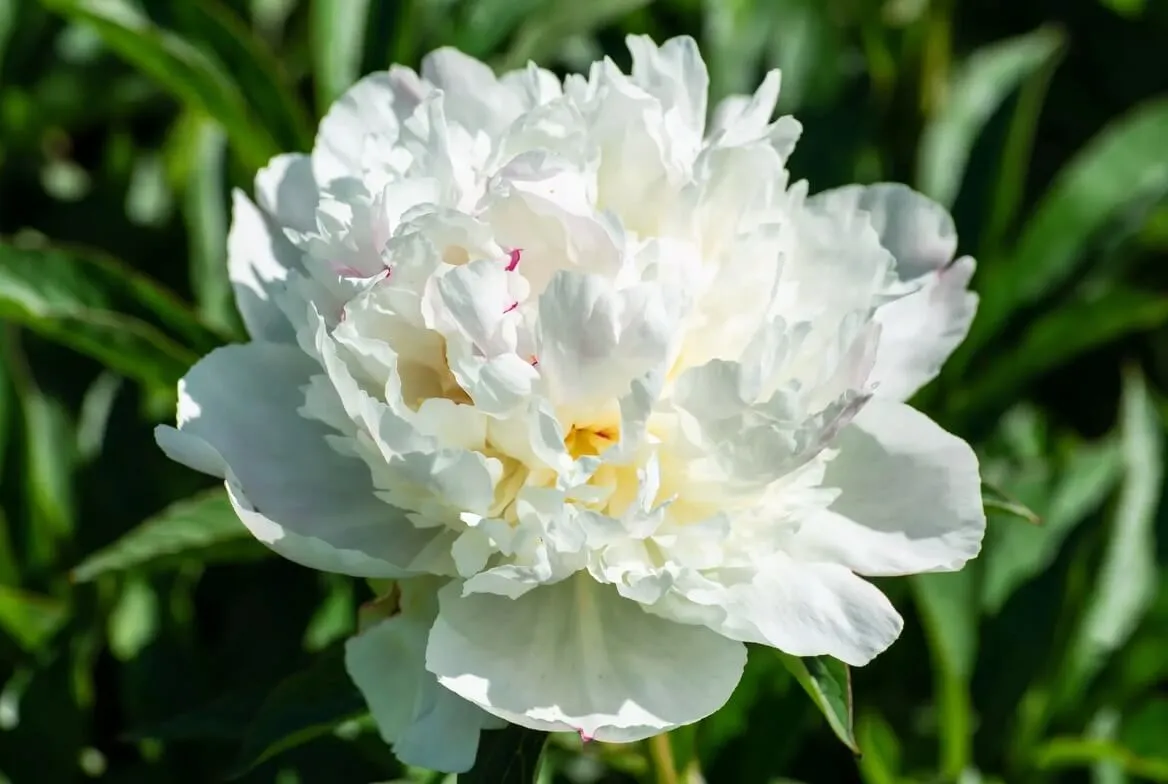
Kelway’s Glorious features large white flowers edged in pink when they first open. The blooms have a distinctive rose and clove scent.
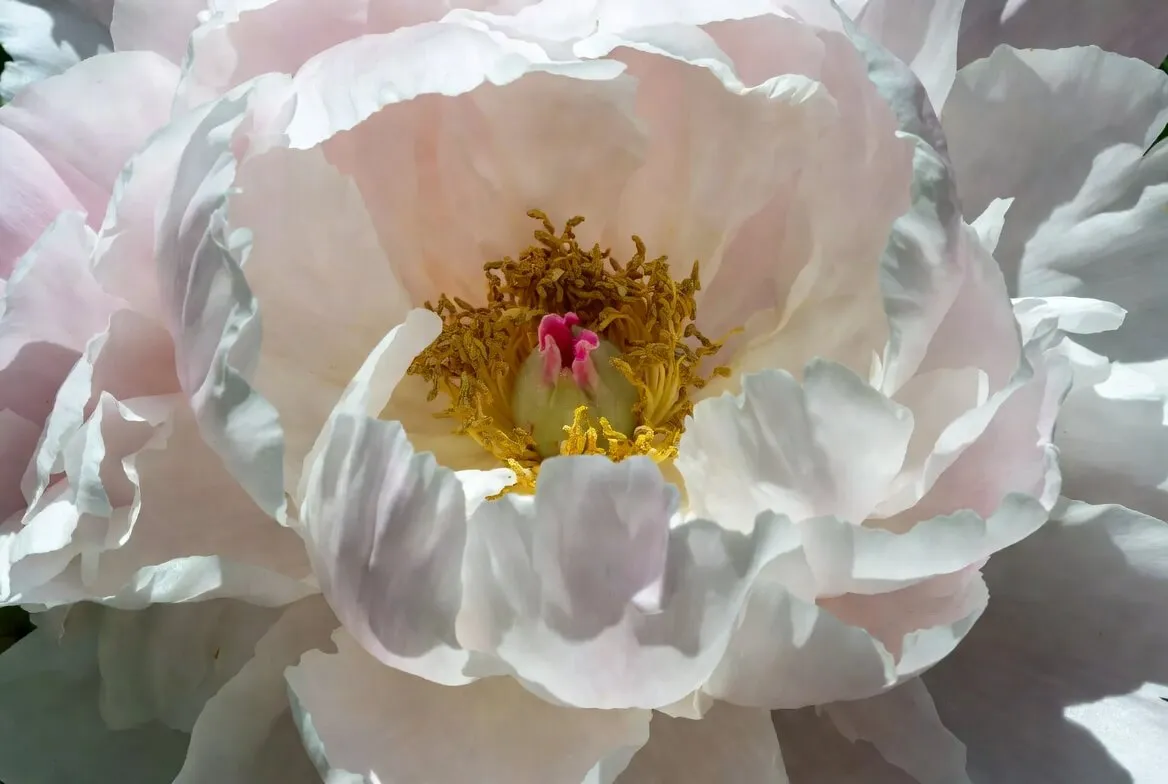
Miss America forms pale pink buds that open as cup-shaped fragrant white blooms. Another color-transformer.
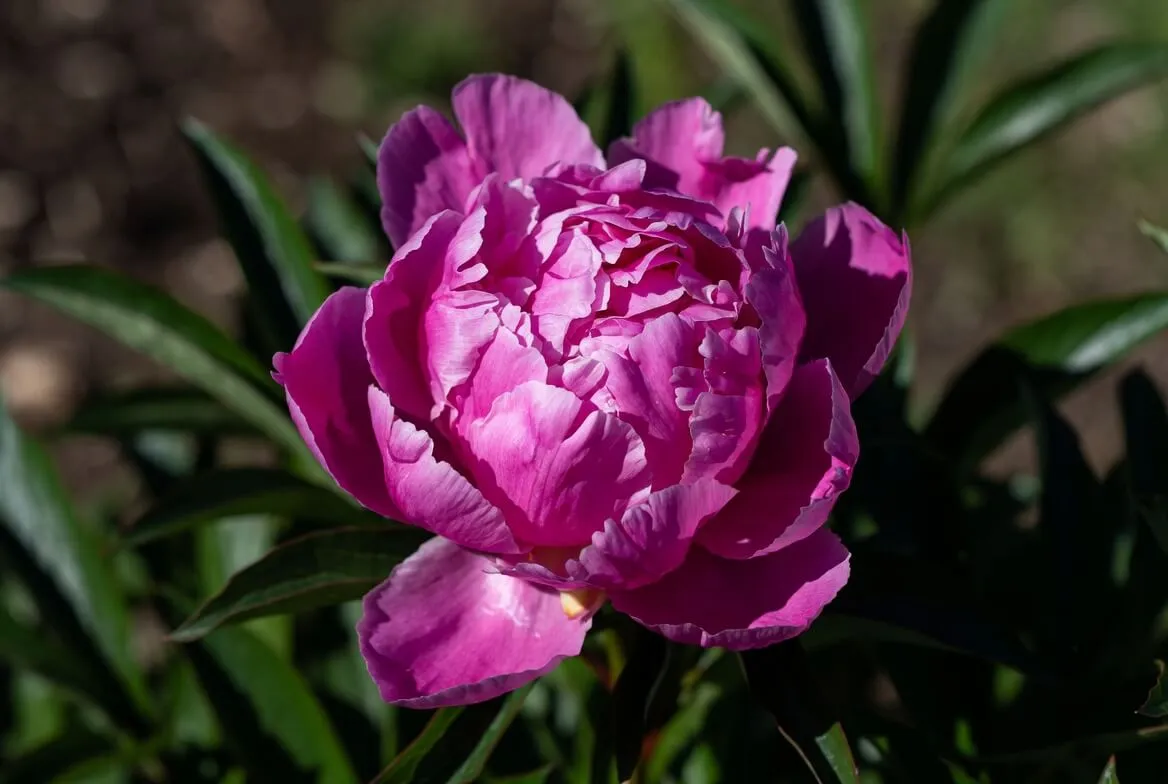
Gay Paree has bright pink outer petals that open to a center of thinner creamy white inner petals. It’s technically a bicolor, but the white center dominates the appearance.
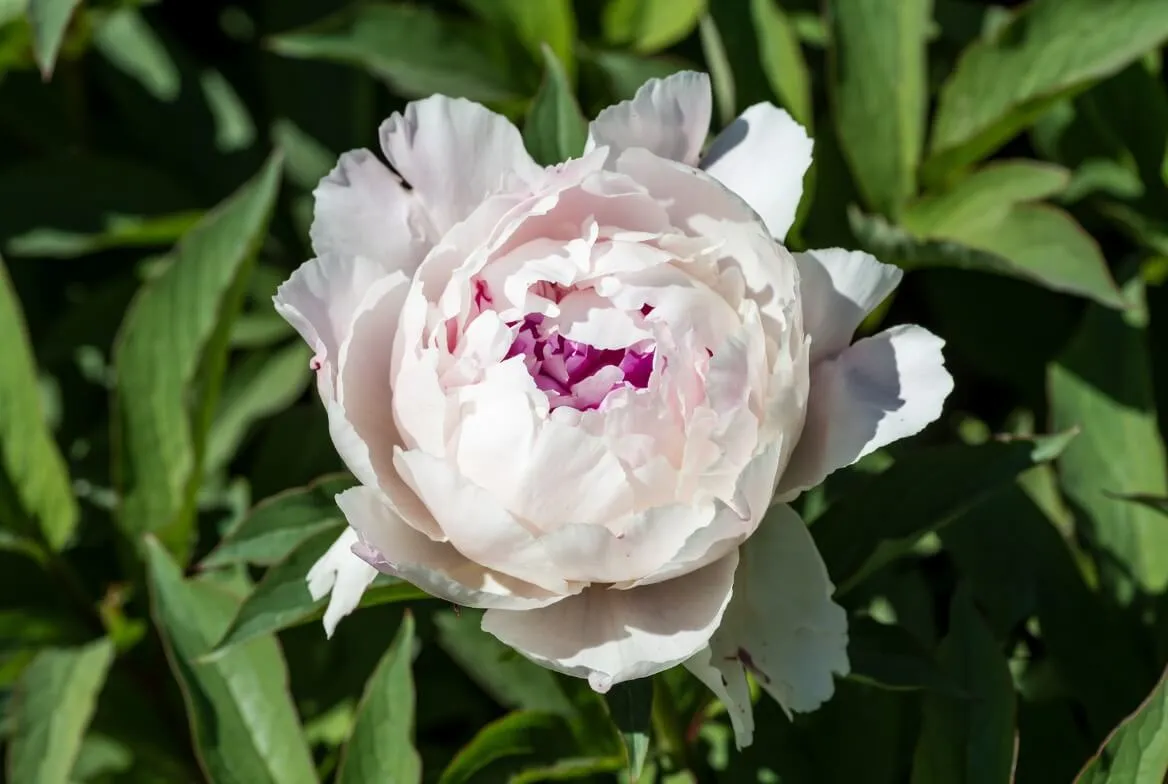
Cora Louise is an Itoh peony with white or lavender semi-double flowers featuring dark lavender central flares. The contrast is striking.
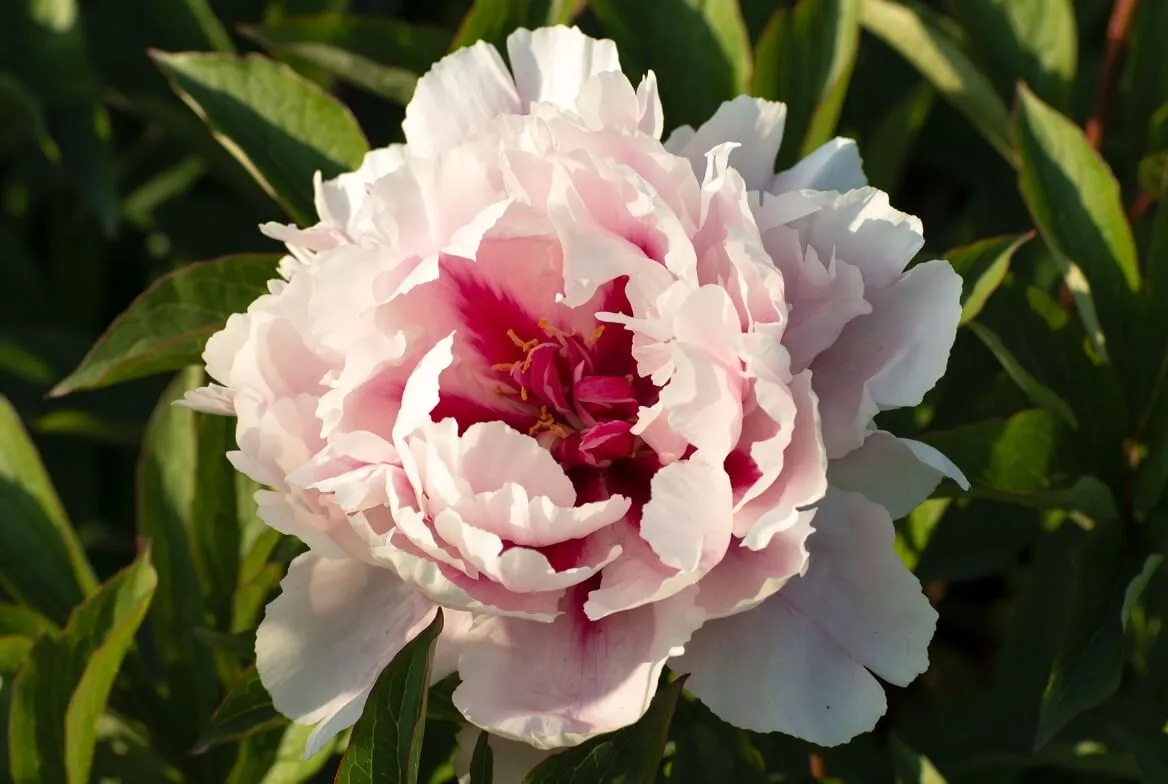
Shima-Nishiki is a tree peony where young blooms can be solid white or red, then become red and white striped as they mature. It’s one of the most unusual color patterns in the peony world.
White peonies symbolize beauty, forgiveness, and bashfulness. They’re perfect for formal gardens, evening gardens (they practically glow at dusk), and anywhere you want a clean, elegant look.
Red and Burgundy Peonies: Bold and Dramatic
Red peonies bring drama and passion to the garden. The red peony spectrum runs from true bright crimson to deep burgundy that’s almost black peony. These are statement flowers—big, bold, and impossible to ignore.
It symbolize passionate love, honor, and respect, making them popular for romantic occasions and memorial gardens.
Bright Red and Crimson Varieties
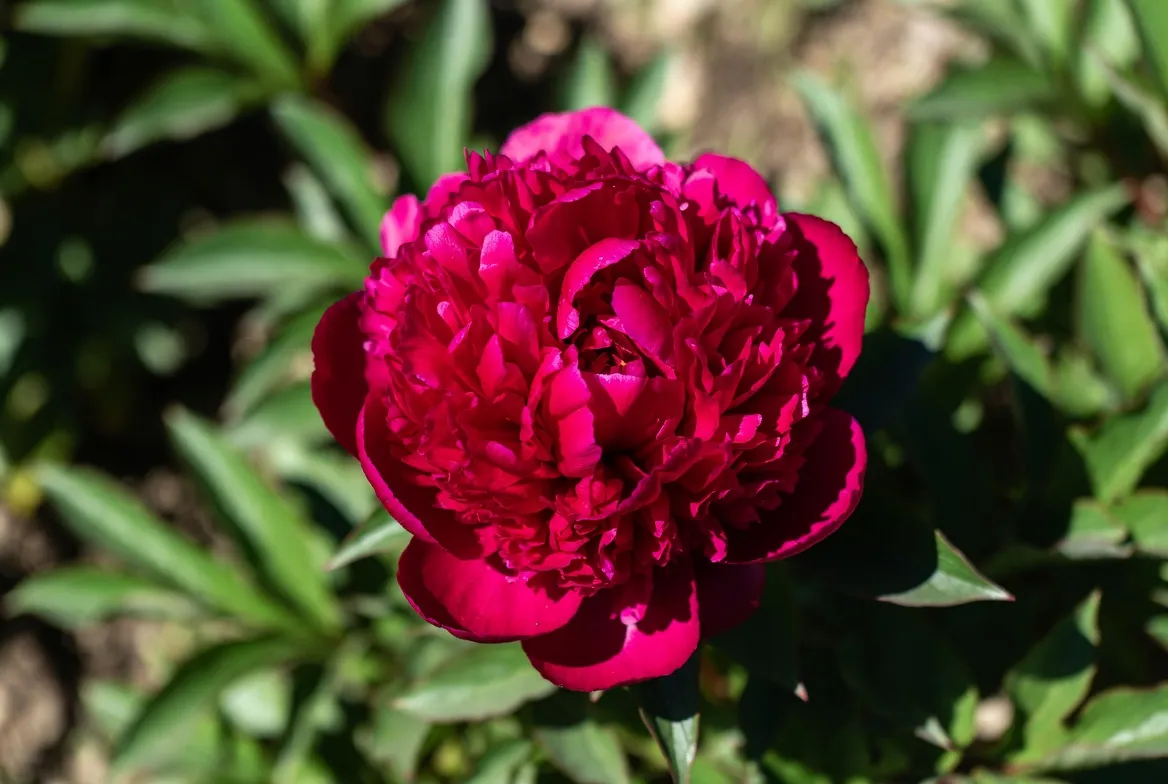
Red Charm is the go-to red peony for most gardeners. It’s a bomb-shaped herbaceous variety with a single row of smooth outer petals surrounding a center filled with ruffled petals. The color is a true, vibrant red that doesn’t fade. Vigorous and prolific.
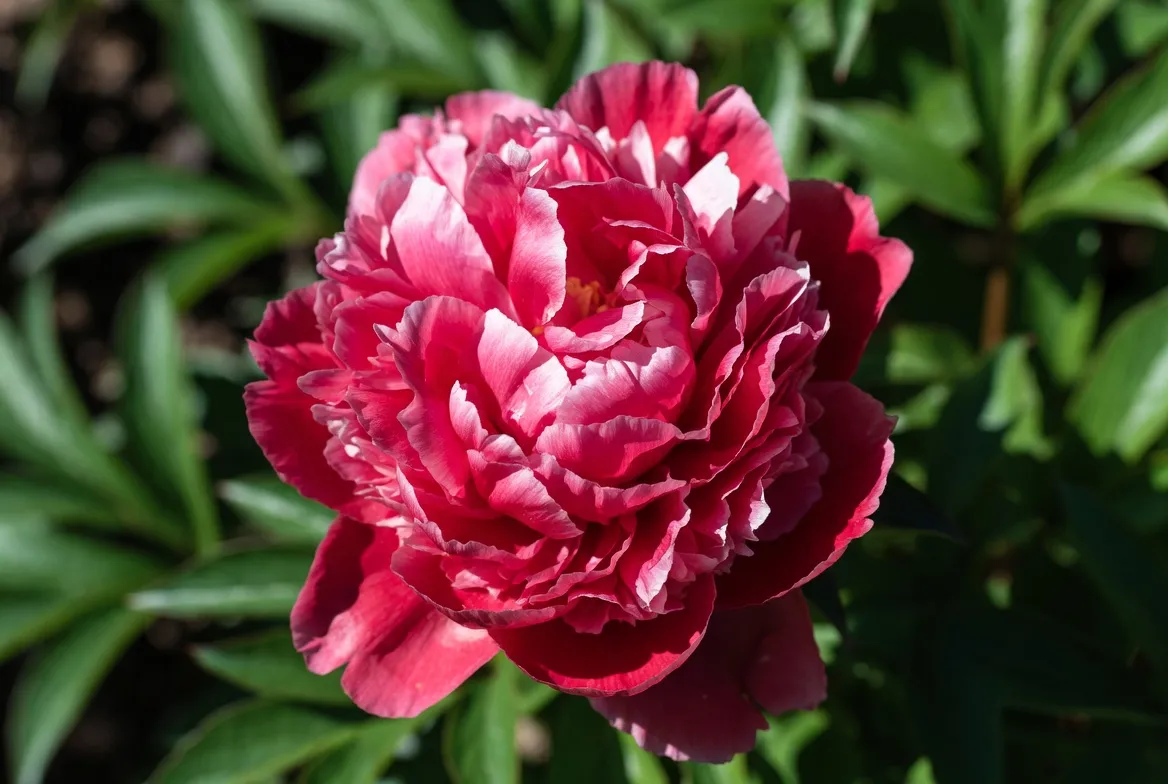
America features large ruffled red petals surrounding a cluster of yellow stamens. The strong flowers don’t require staking and can stand up to rough weather—a huge plus for red peonies, which can sometimes have weak stems.
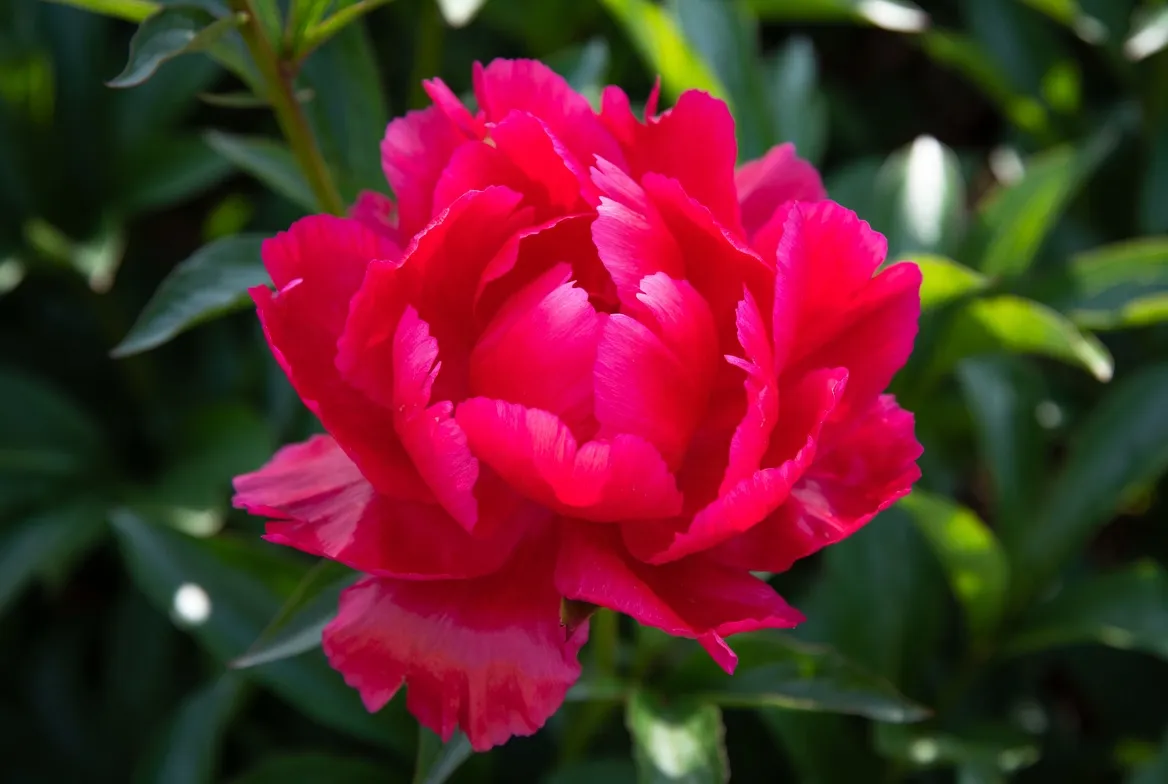
Blaze produces bright red blossoms with wavy petals that stand out against dark green foliage. The color is pure fire-engine red.
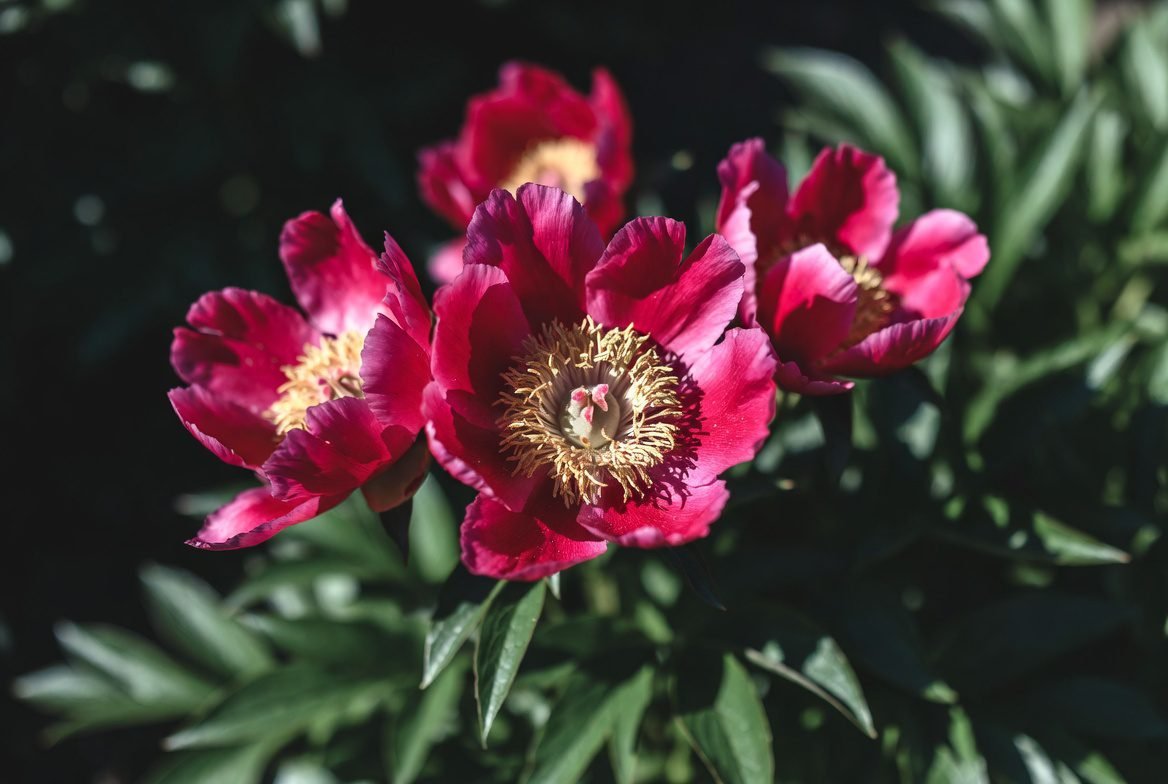
Buckeye Belle has semi-double flowers in deep red dotted with gold stamens. There’s a light fragrance, which is nice since many red peonies lack scent.
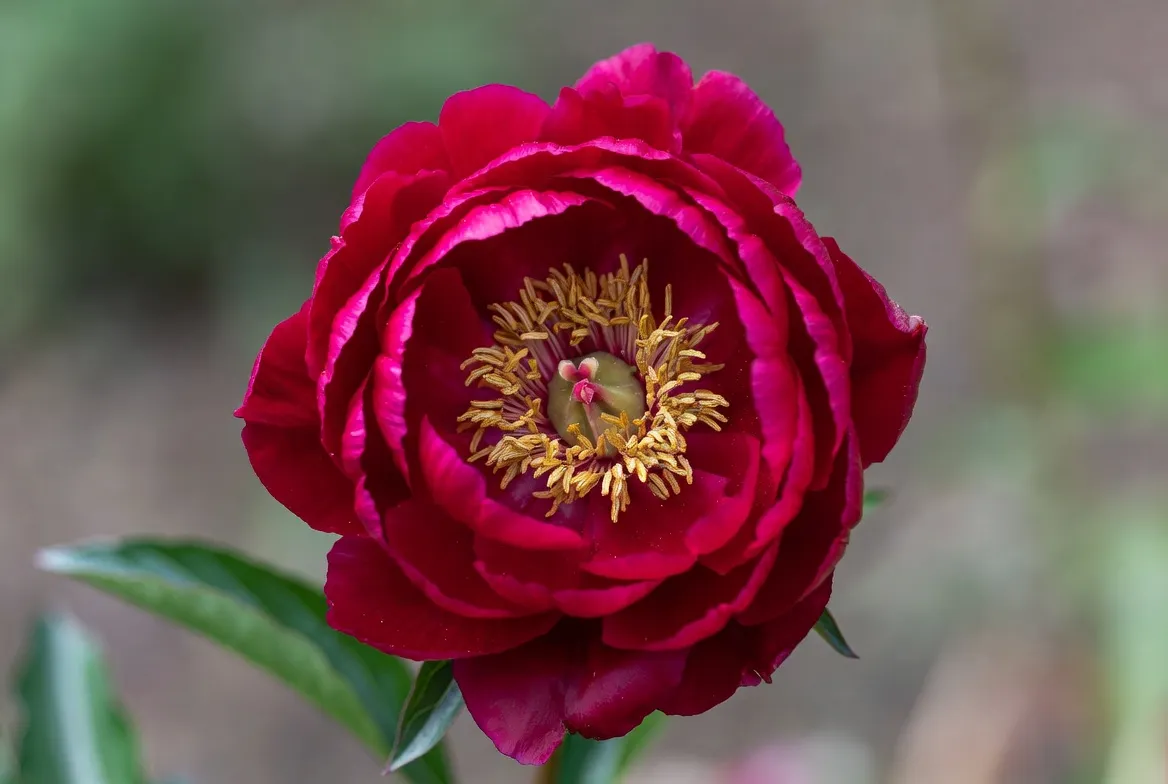
Philippe Rivoire is richly colored with double blooms that are actually rose-scented—unusual for a red peony. The color is deep crimson-red.
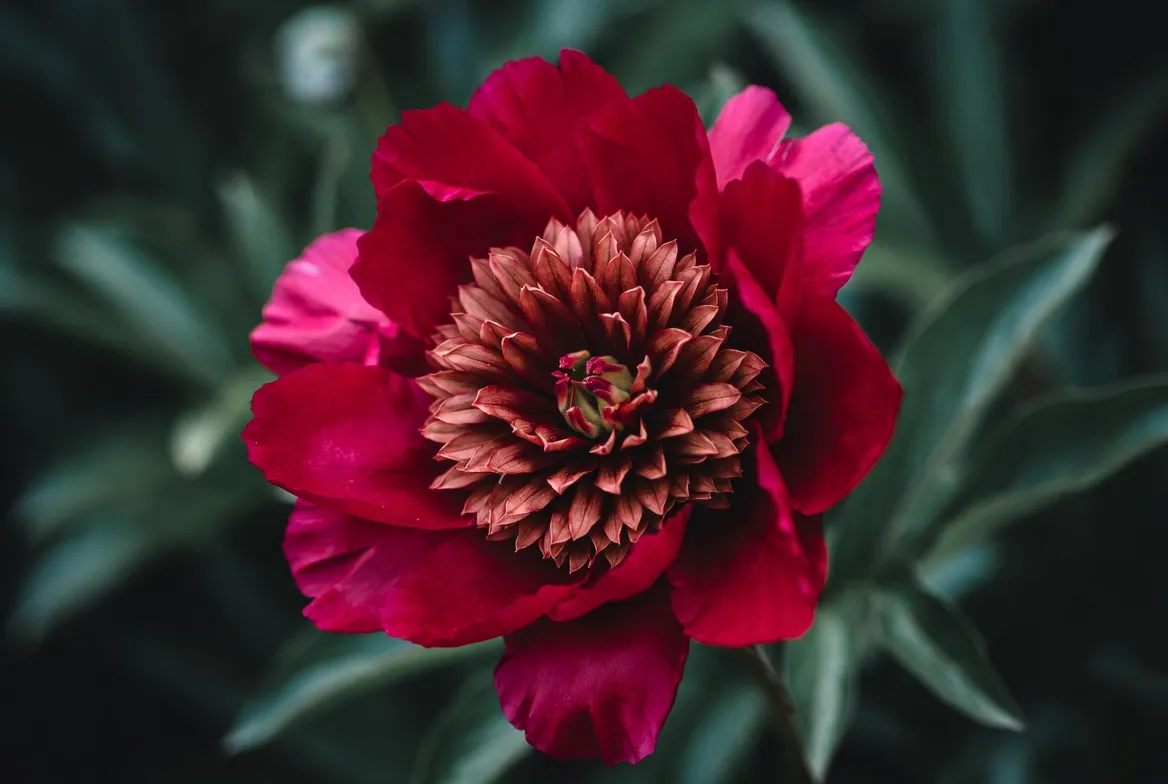
Nippon Beauty is a Japanese-form peony where outer petals surround a clump of petal-like stamens in the center. The color is a deep garnet red.
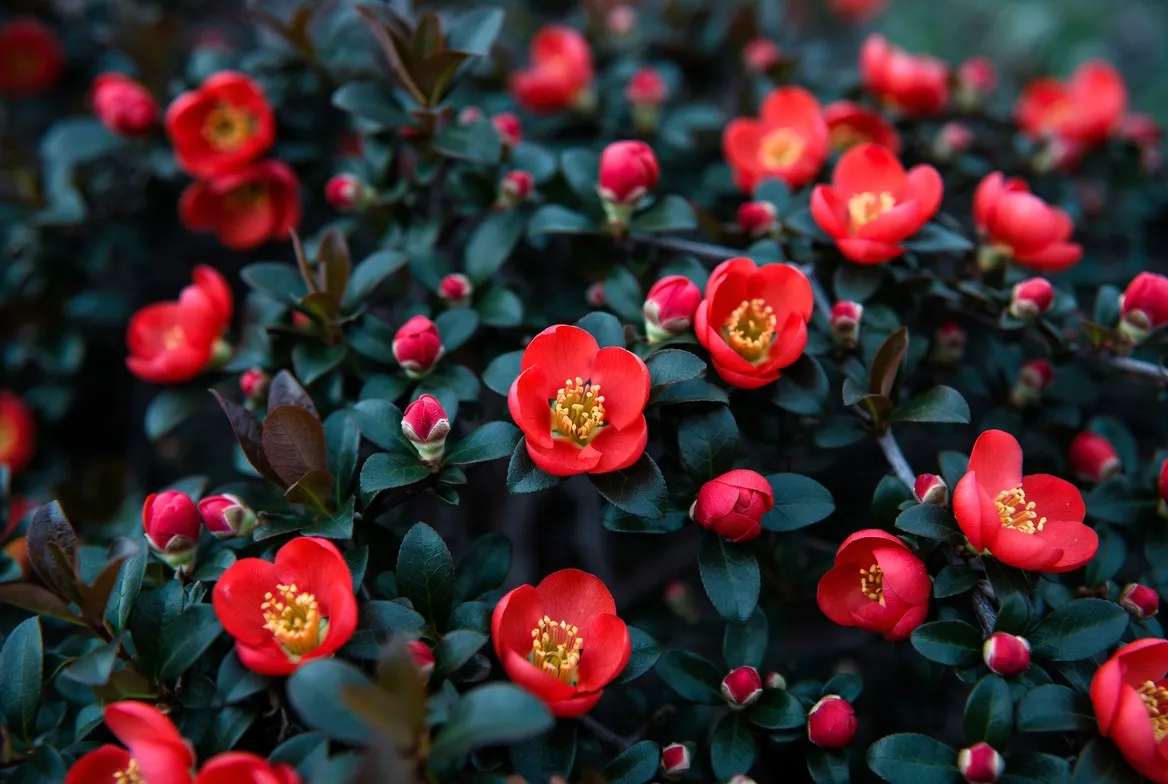
Scarlet O’Hara features single red blossoms that form around golden centers in bushy, mounding foliage. Simple and stunning.
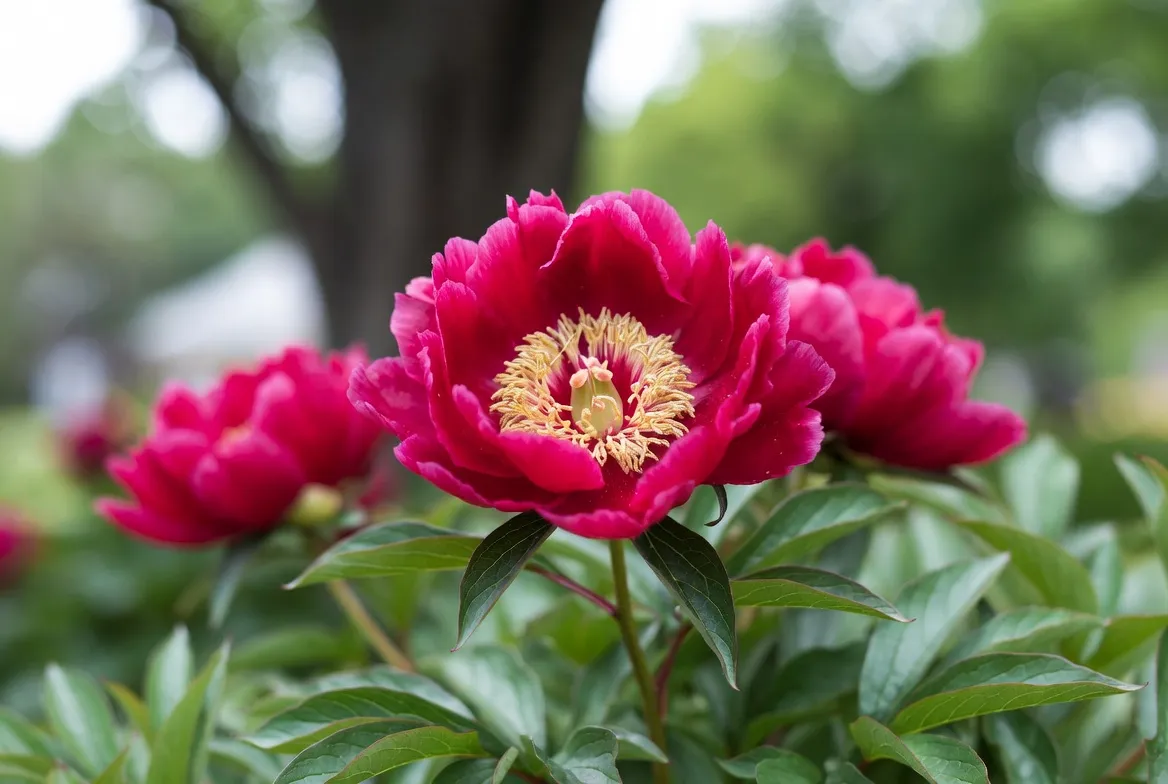
Impumon is a tree peony with flowers in a striking true red. It adds instant drama to the garden.
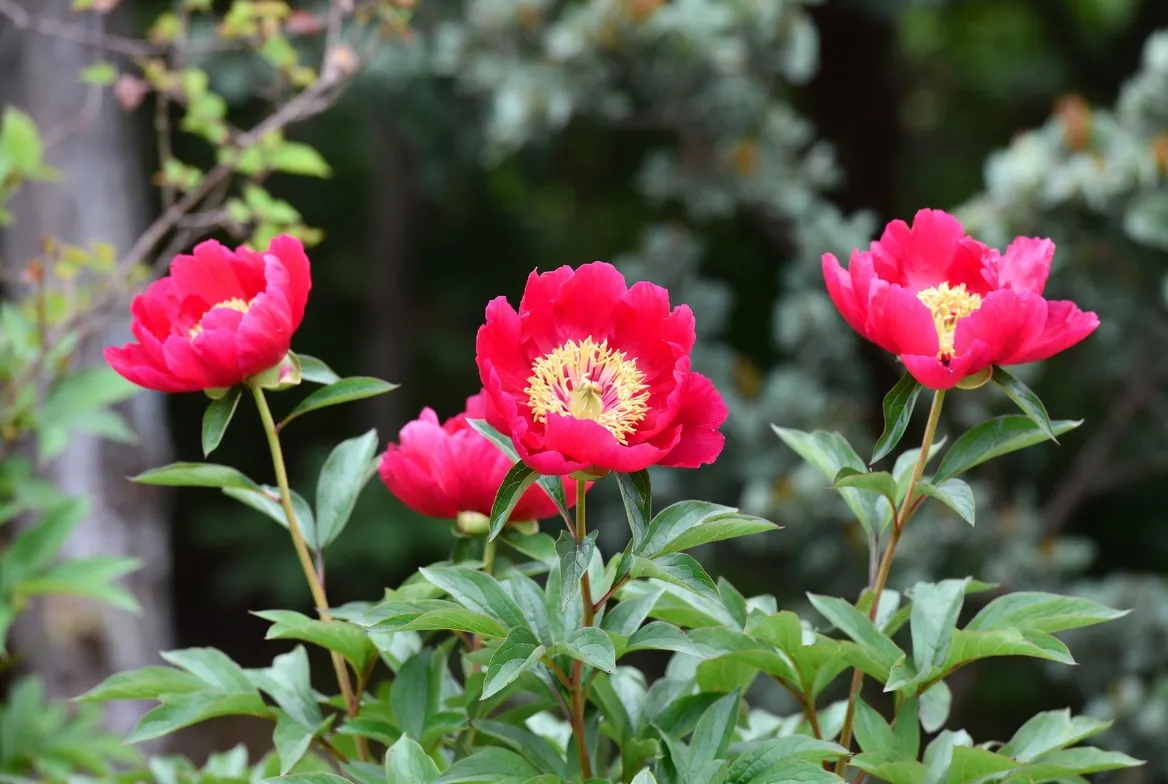
Taiyo is another tree peony with semi-double flowers that sit atop sturdy stems, so no staking is required. The red is bright and clean.
Deep Burgundy and Mahogany Varieties
These are the darkest peonies—so deep they’re almost black in certain light.
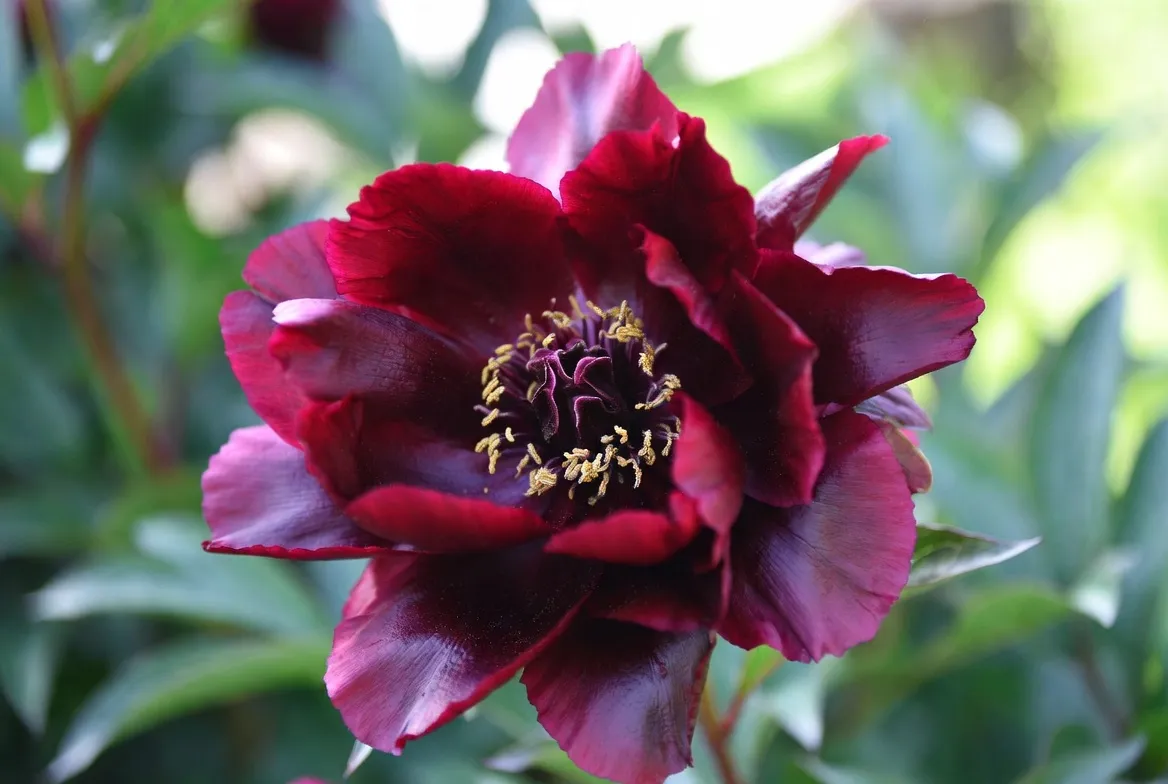
Black Pirate is a tree peony with flared mahogany-red flower petals that grow in three or four rows. The color is incredibly rich and dark.
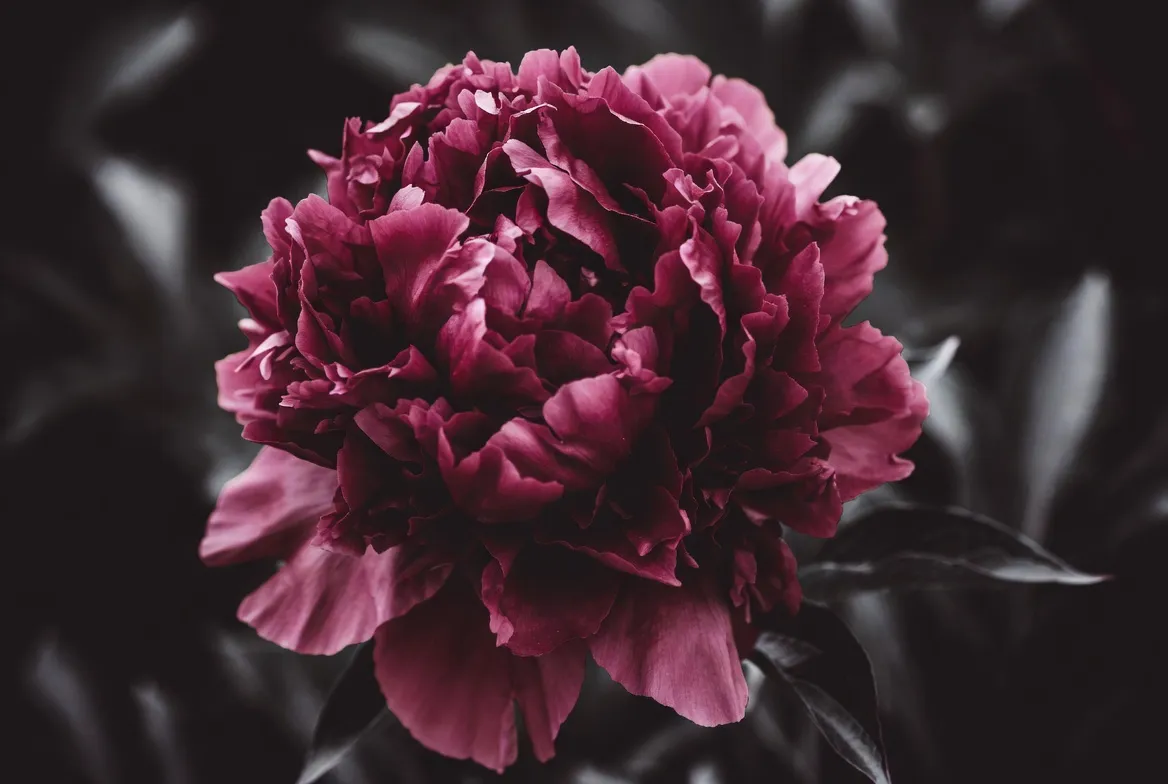
Pluto features semi-double ruffled flowers that are large with almost black peony flares. This tree peony is as dramatic as they come.
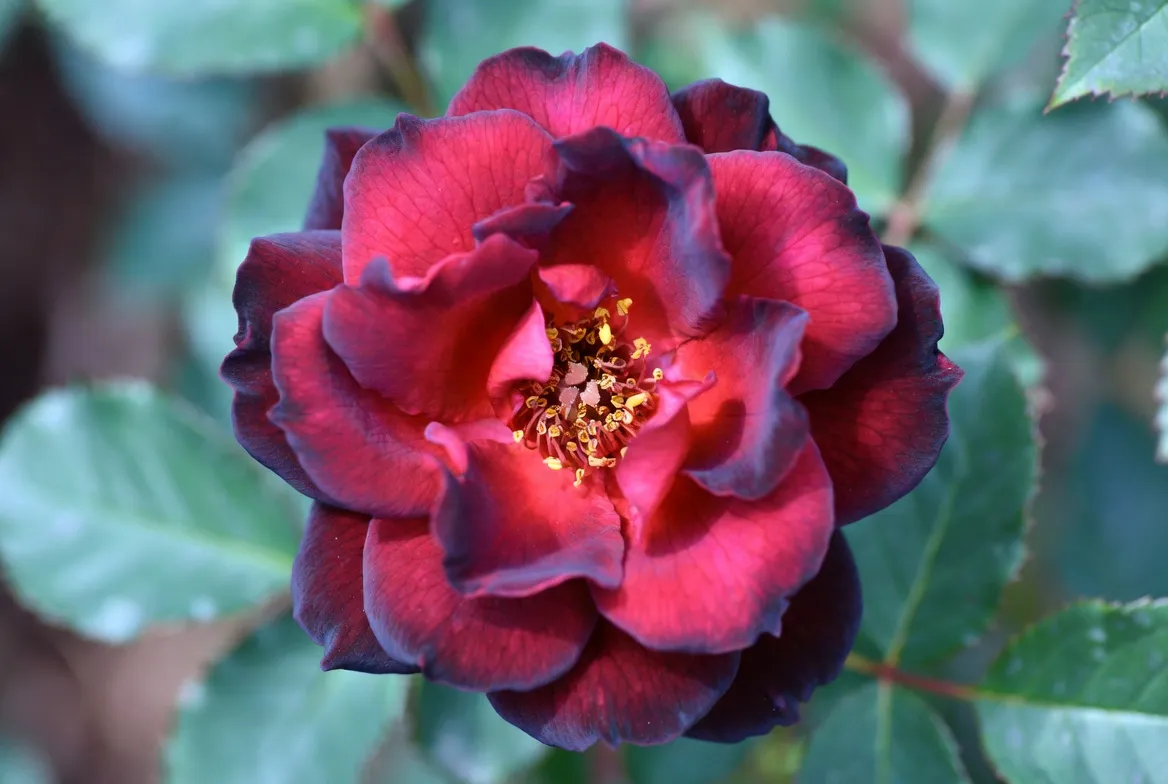
Belle Center produces almost fully double blooms around a cluster of stamens. The distinctive red petals have a blue overtone that gives them a burgundy appearance.
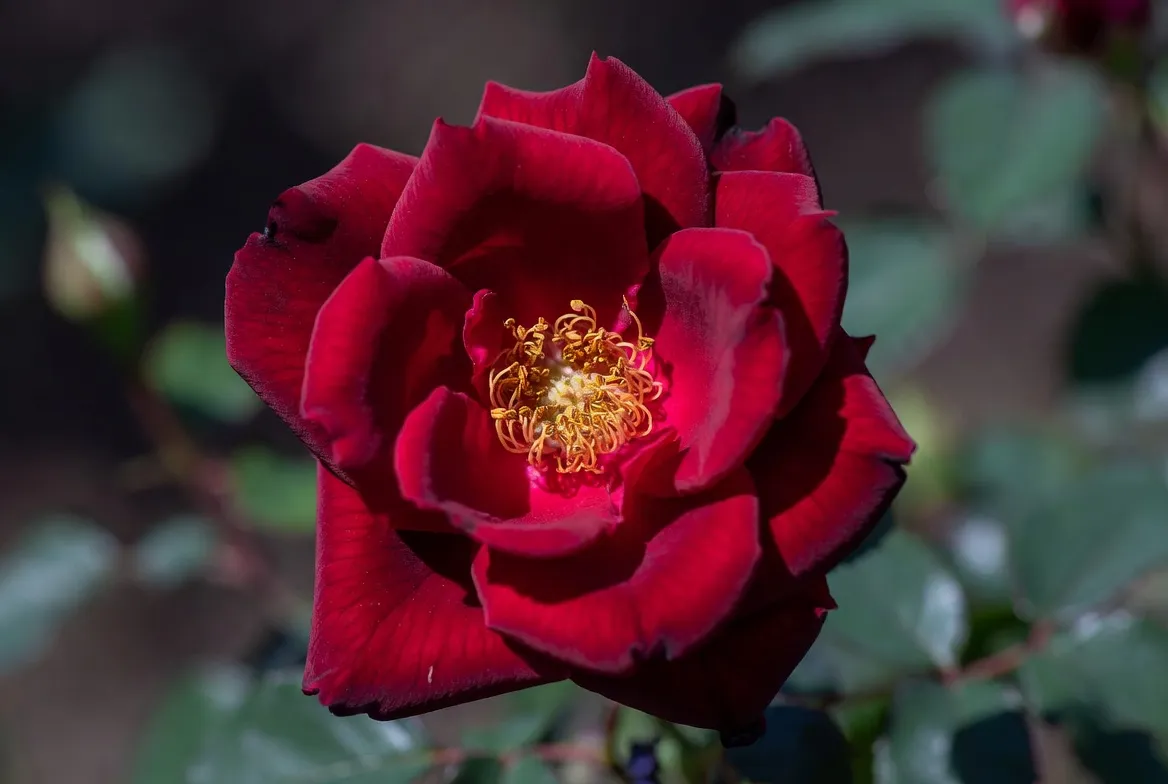
Bordeaux has two rows of deep red petals surrounding a large cluster of yellow stamens. The wine-red color is where this variety gets its name.
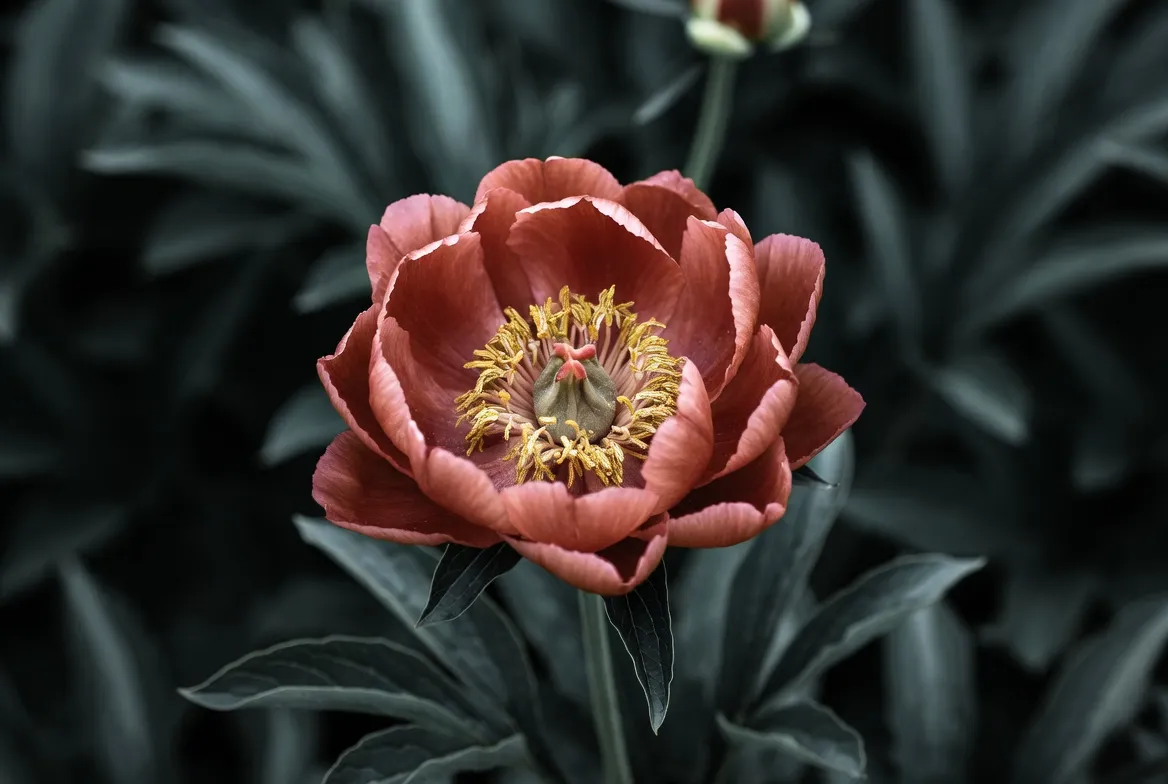
Chocolate Soldier features dark brownish-red single or double petals on erect stems with dark foliage. The color is more brown than red, truly unique.
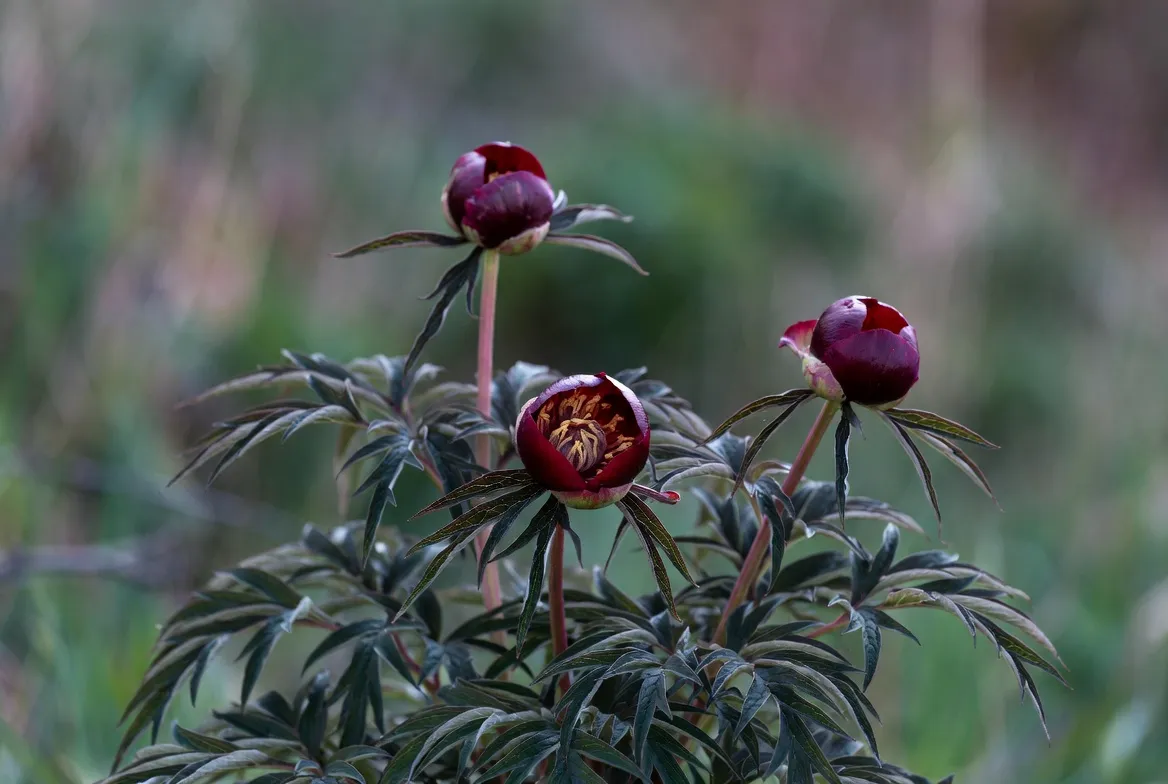
Early Scout produces dark red blooms from dark green fernlike foliage. This is Paeonia tenuifolia, the fern leaf peony—one of the rarest types with delicate, feathery leaves.
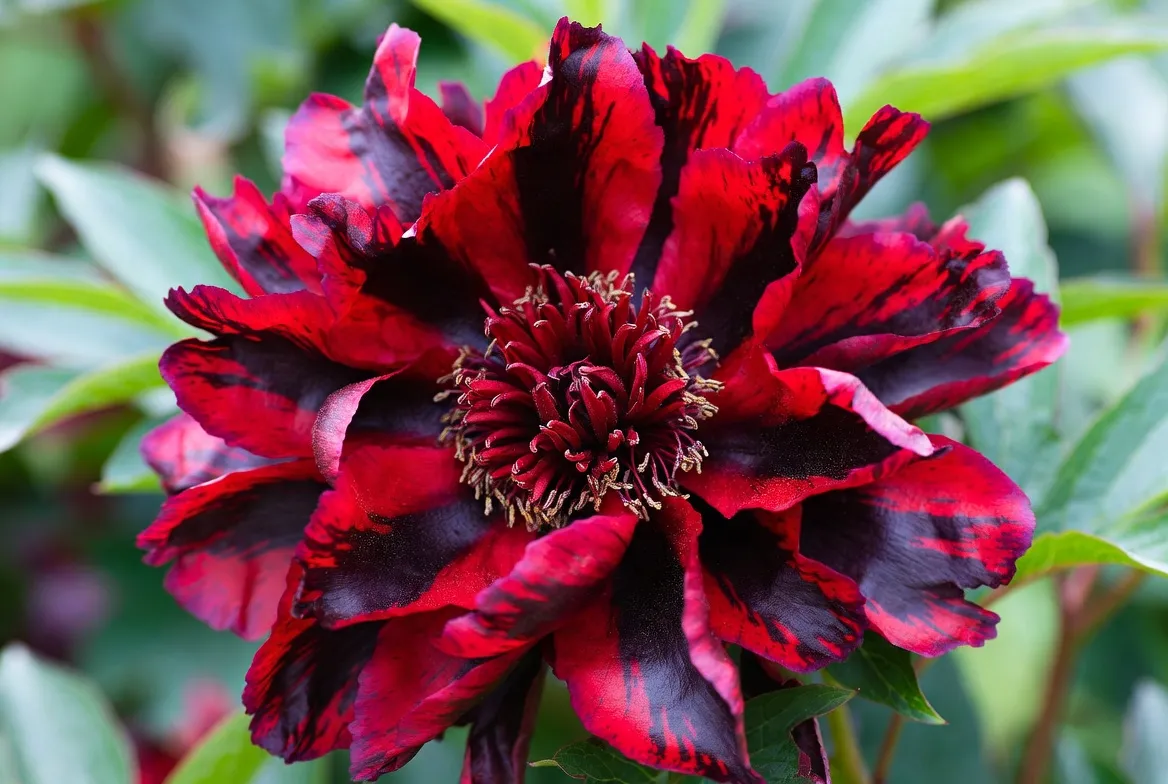
Thunderbolt is a tree peony with rich red flowers featuring black or scarlet streaks. The color variations within each petal create incredible depth.
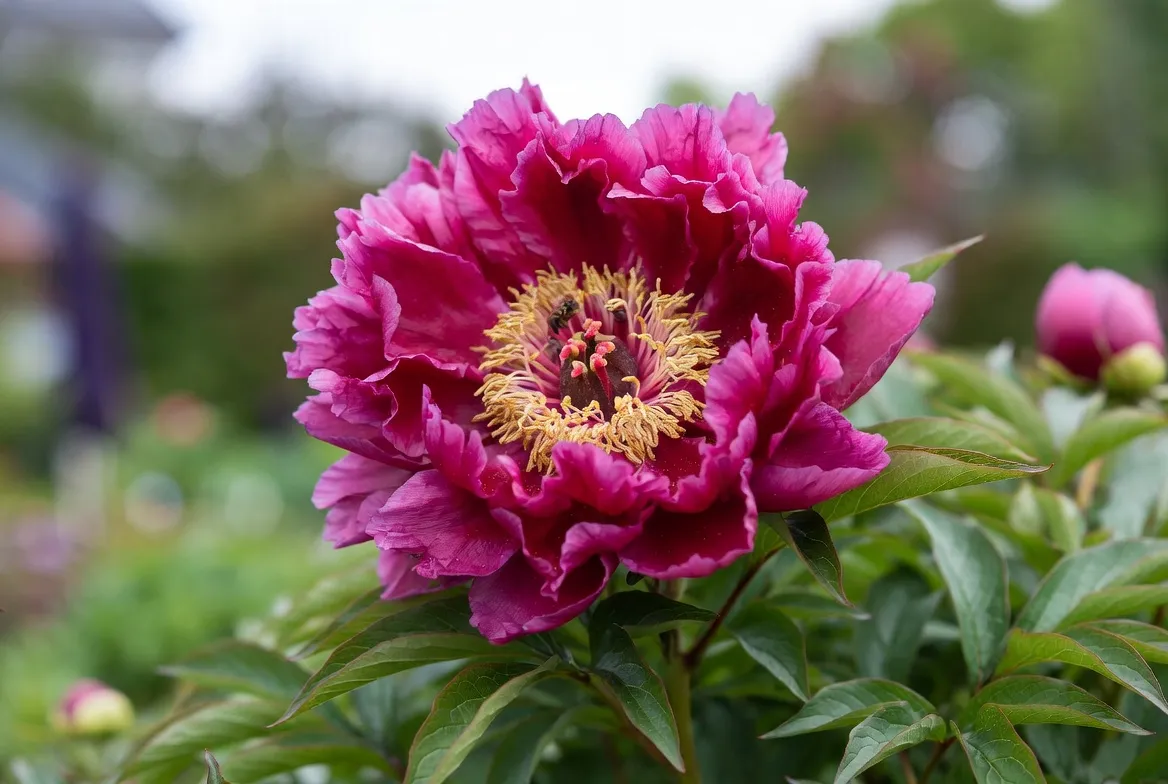
Chinese Dragon features purple-red petals with dark flares in spring. This tree peony grows to 4 feet tall and wide and attracts bees.
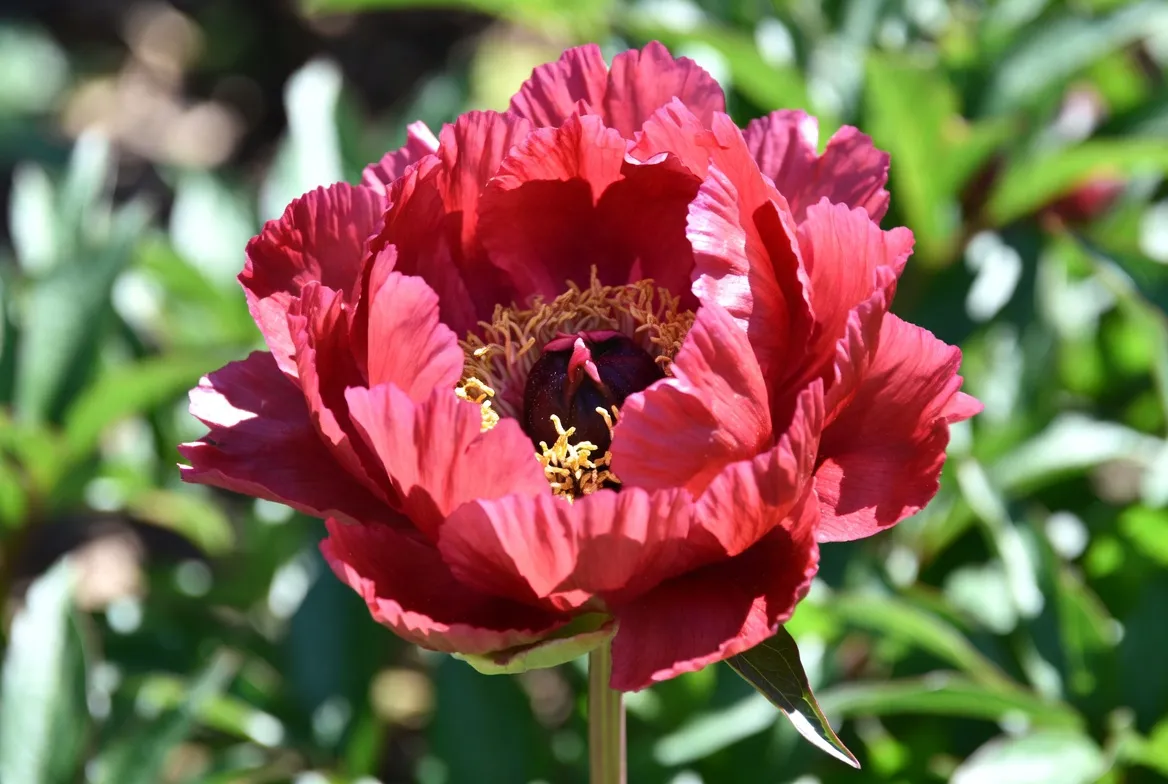
Hephestos is a tree peony with brick-red ruffled and fragrant petals. The color is somewhere between red and rust.
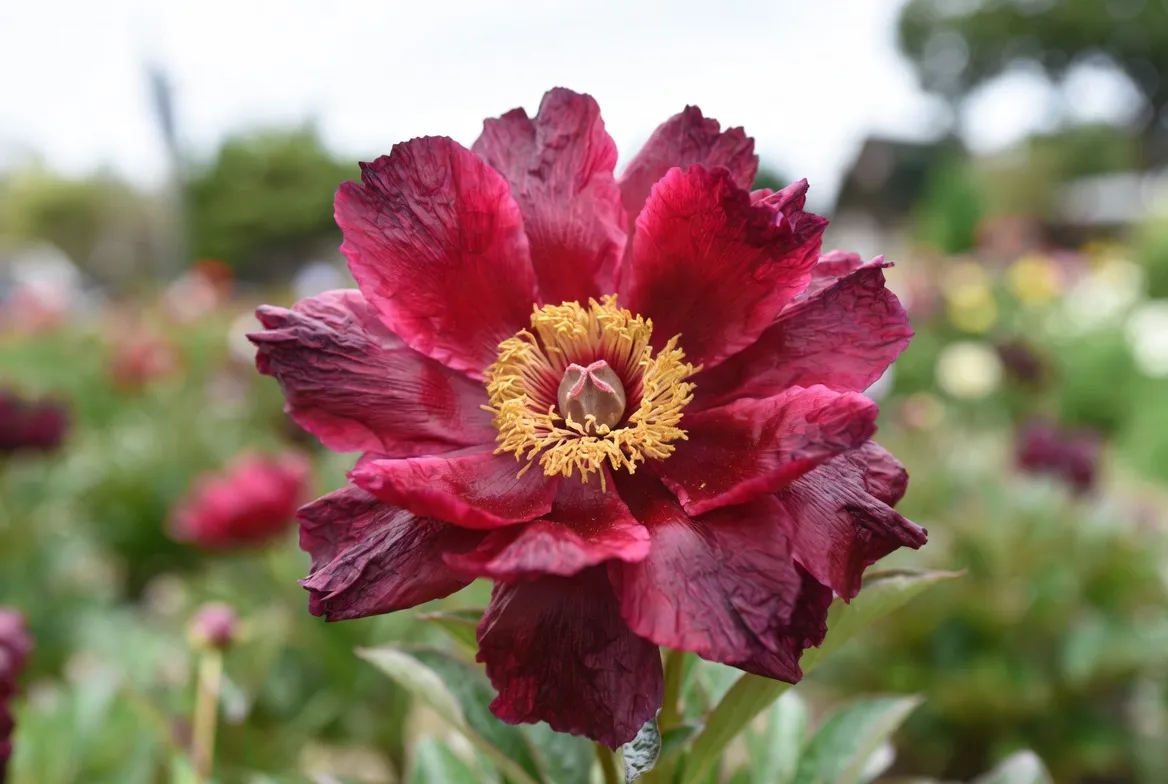
Scarlet Heaven is an Itoh peony with deep scarlet-red petals surrounding a golden yellow center. The 7- to 9-inch wide blooms arrive in late spring and fade to burgundy as they age.
Peter Brand is a common peony with 6-inch wide double blooms that start as deep red before developing into a beautiful purple-burgundy shade.
Red and burgundy peonies make powerful focal points in the garden. Plant them where you want to draw the eye, and be prepared for them to steal the show.
Coral and Peach Peonies: Warm and Inviting
Coral and peach peonies are where things get really interesting. These warm-toned varieties often change color as they mature—opening bright coral and fading to soft peach, or starting salmon-pink and ending up almost cream. The color transformations make them endlessly fascinating to watch.
Coral Varieties
Coral Charm is probably the most famous coral peony plant. It’s a semi-double herbaceous variety with blooms that start as deep coral-pink and change to bright peach as they mature. The color evolution happens over several days, so you get multiple looks from one plant. It’s won multiple awards. The only downside? The fragrance is… not great. But the color makes up for it.
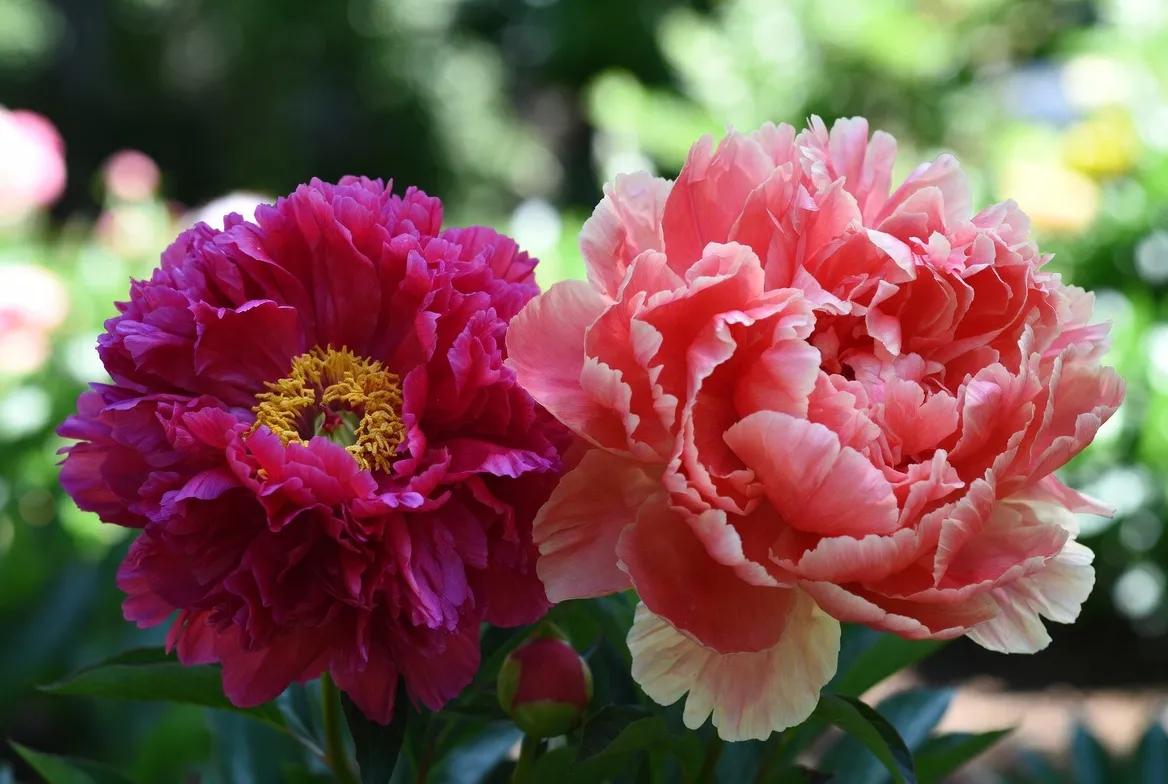
Coral Sunset features large semi-double coral-pink blooms with ruffled petals. The bright coral color has rose overtones before fading to ivory. Another color-changer.
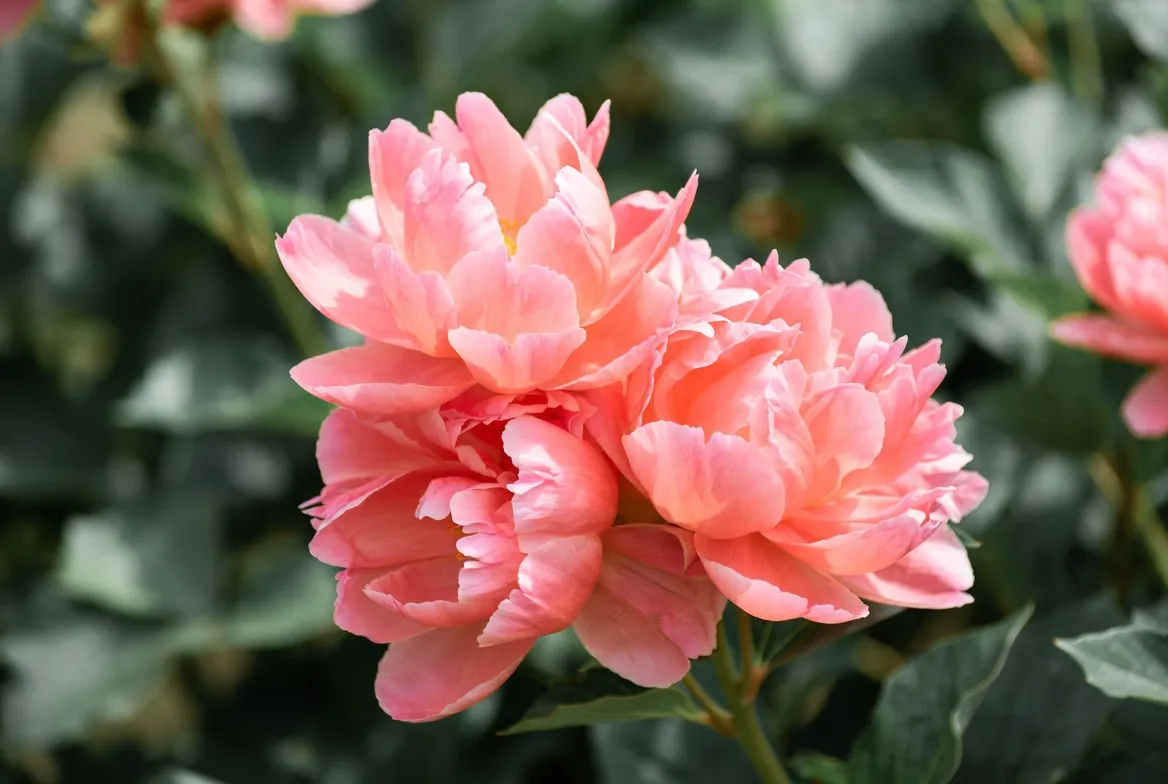
Coral Supreme is similar to Coral Charm but with blooms that lean pinker. The salmon-colored flowers are stunning.
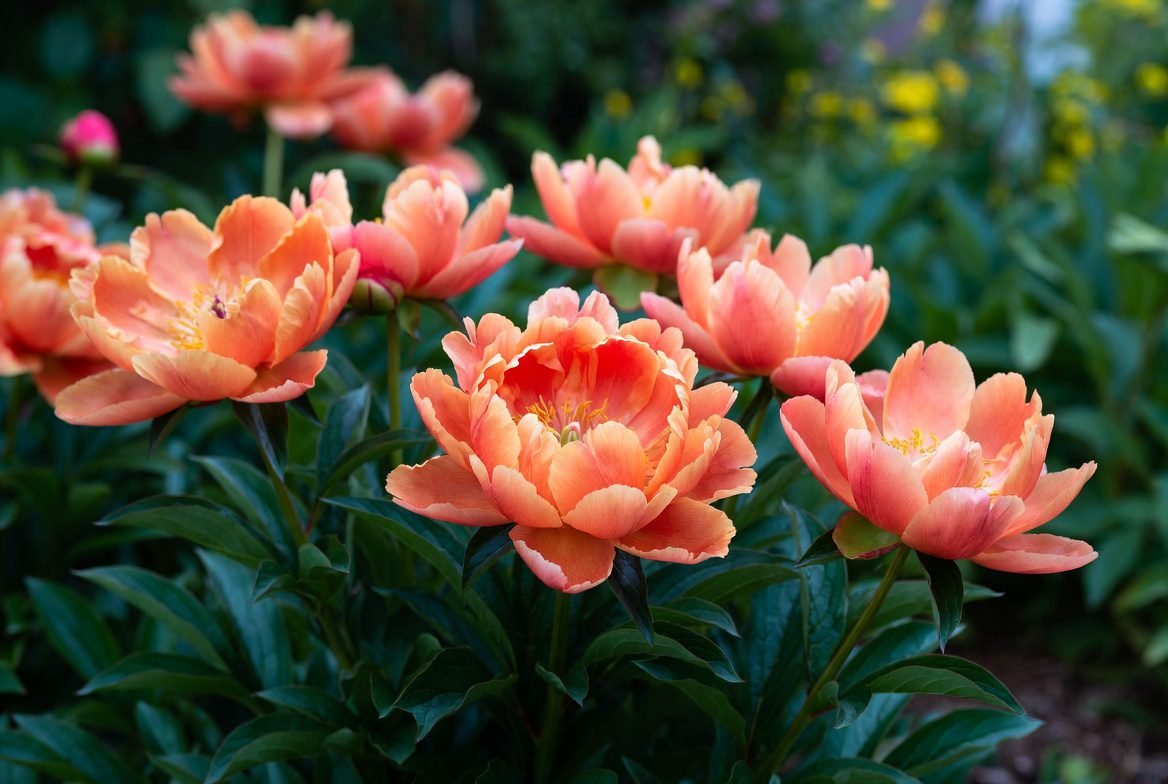
Coral ‘n Gold produces coral-peach cup-shaped flowers that stand out against glossy dark green leaves. The blooms may need staking to keep the arching flowers off the ground after rain.
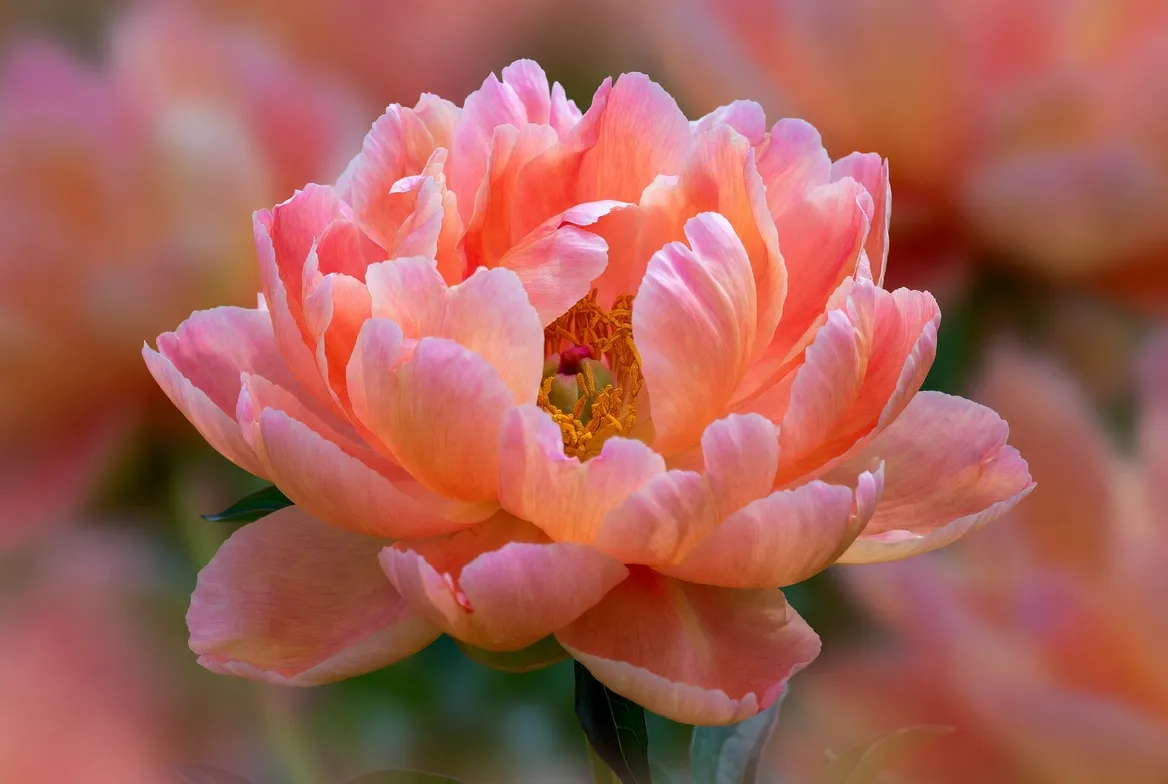
Pink Hawaiian Coral is colored like a sunset—melon, coral, and peach all at once. It’s fragrant, and the coral-pink color fades to a softer pink as it matures.
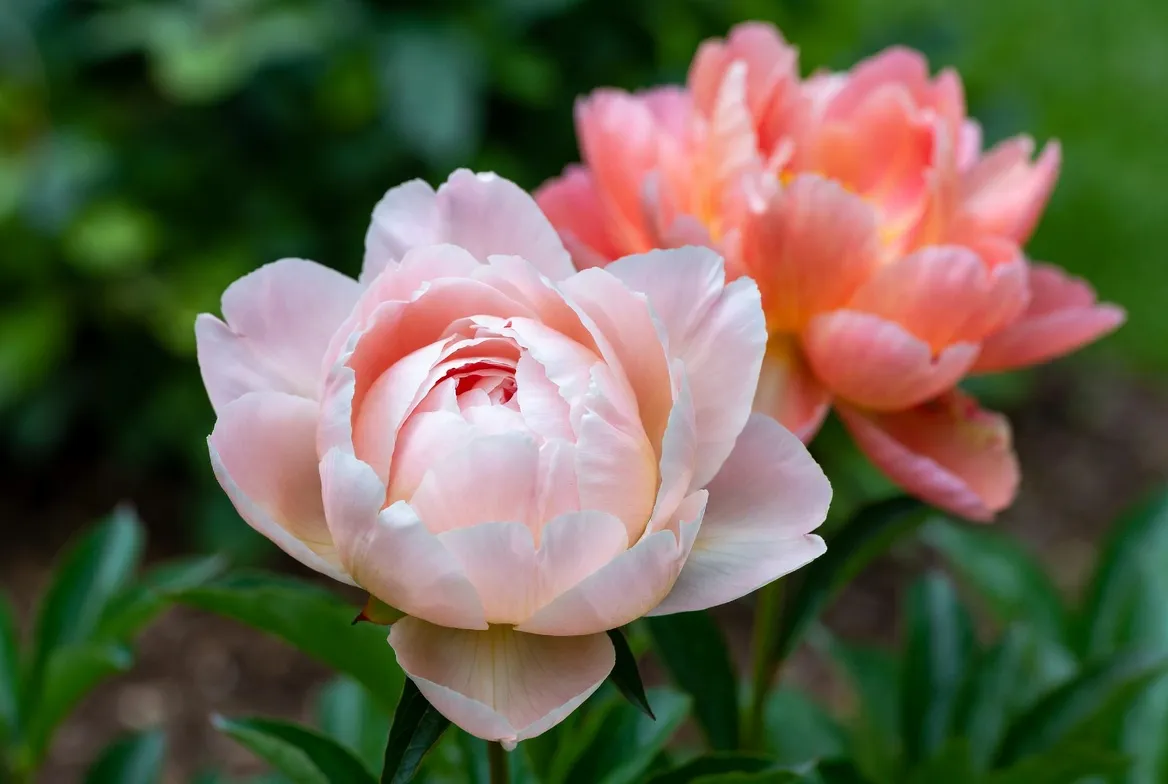
Etched Salmon has cupped, rose-like blooms with silvery salmon-pink petals. The color is softer and more subtle than the bright coral peony plants.
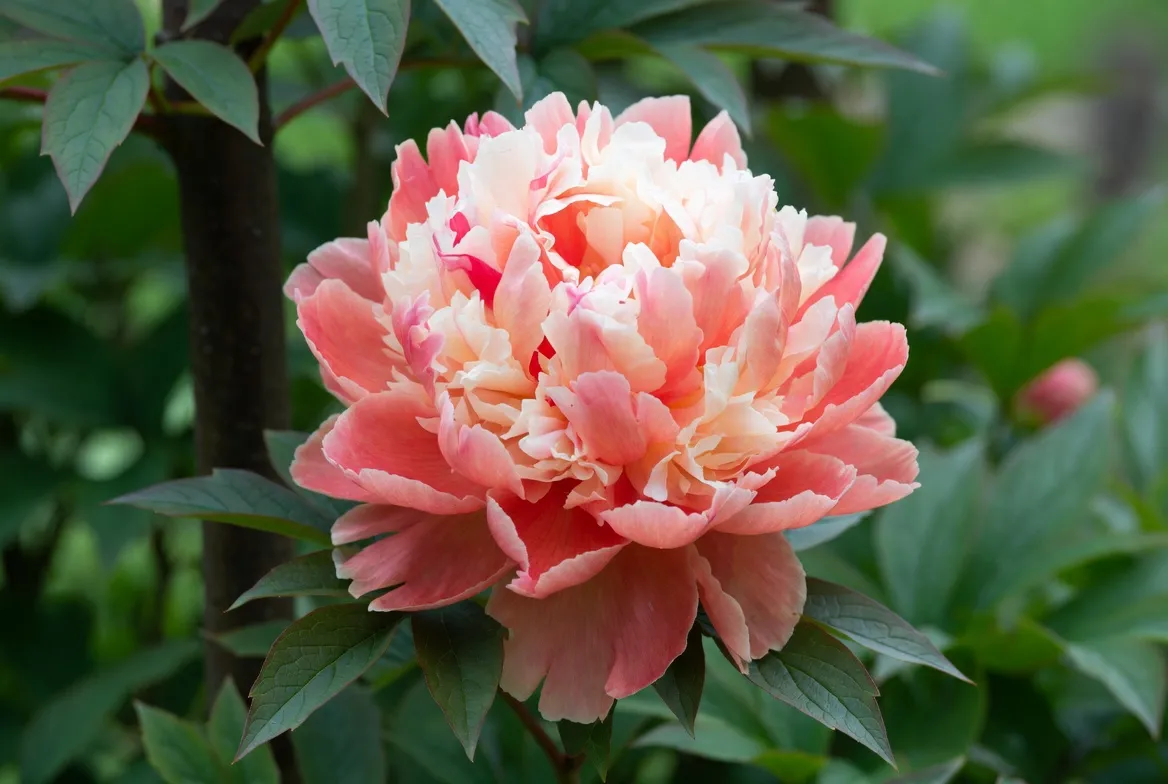
Shan Hu Tai is a tree peony reaching 3 to 5 feet tall with coral-pink blooms. It can be grown as a hedge for a dramatic effect.
Facts About Peonies
Peonies are long-lived plants and can bloom for 50 years or more when planted in the right location.
They are known for their large, fragrant flowers and lush petals.
Peonies bloom mainly in late spring to early summer.
There are three main types of peonies: herbaceous, tree peonies, and intersectional (Itoh) peonies.
Peonies prefer cool winters, which help trigger healthy blooms.
The flowers come in many colors, including pink, white, red, coral, and yellow.
Peonies symbolize romance, prosperity, and good fortune in many cultures.
Ants on peony buds are harmless and do not damage the flowers.
Peonies grow best in well-drained soil and full sun to partial shade.
Once cut, peonies can last up to a week in a vase with proper care.
Peach Varieties
Peach peonies are often Itoh hybrids, and they deliver some of the most complex colors in the peony world.
- Julia Rose is an Itoh peony with late-season blooms that have petals transforming from a bright purple center to peach to yellow tips. It’s like three colors in one flower.
- Kopper Kettle is an Itoh variety where red, yellow, and orange blend to give the blooms a copper finish. It’s slow-growing but worth the wait.
- Misaka produces large blooms 8 inches across. They open orange with dark red flares and fade to peachy yellow over several days.
- Singing in the Rain is an Itoh peony with single flowers in pale peach and long gold stamens. Simple and elegant.
- Apricot Whisper features large double blooms with layers of apricot to yellow petals and bright pink stigmas in the center. The color combination is unusual and beautiful.
- Hana-kisoi is a tree peony whose name translates to “flower competition.” The large cherry-blossom pink blooms are set off by deep rose flares, giving them a peachy overall appearance.
- Gauguin is another tree peony with strawberry petals streaked with yellow. The colors transform each day as the flower matures.
- Canary Brilliants is an Itoh peony that likes a shadier spot in the garden. Blooms open as a creamy yellow color with rose centers—more peach than true yellow.
Coral and peach peonies are perfect for warm-toned garden schemes. They pair beautifully with bronze foliage, warm yellows, and other sunset colors.
Yellow Peonies: Rare but Stunning
Yellow is one of the rarest colors in the peony world. For years, true yellow peonies didn’t exist at all. They only became available through hybridization—specifically, the development of Itoh (intersectional) peonies, which combined herbaceous peonies with yellow tree peony species like Paeonia lutea and Paeonia delavayi.
Now we have yellow peonies, but they’re still relatively uncommon and often more expensive than other colors.
Herbaceous Yellow Varieties
- Prairie Moon produces soft yellow blooms early in the season. This herbaceous peony is one of the few yellow options that isn’t an Itoh hybrid.
- Smith Opus 1 features blooms that stay attractive as they age, fading from orange to a yellow-peach color. Another herbaceous option.
Tree Peony Yellow Varieties
- Age of Gold is a double tree peony with soft yellow petals and a central red flare. The ruffled edges make the blooms look like camellias.
- High Noon produces lemon-yellow flowers that sometimes make another appearance during summer—unusual for peonies, which typically only bloom once per season.
- Tria features ruffled yellow petals that open around a golden center. Pure, clean yellow.
Itoh Yellow Varieties
This is where most of the yellow action is. Bartzella is the most famous yellow peony in the world. It’s an Itoh hybrid with sweetly fragrant blooms growing 6 to 8 inches across. The color is pastel yellow with a small rose-purple flare in the center. The plant grows 3 feet tall with attractive foliage from spring through fall. If you want a yellow peony, this is the one.
- Going Bananas features large yellow petals with a rose-colored flare at the base. The color is brighter and more intense than Bartzella.
- Sequestered Sunshine produces single or double yellow blossoms with attractive dark green foliage. Eye-catching addition to any garden.
- Yellow Doodle Dandy has yellow flowers with a hint of green. The blooms grow to 8 inches in diameter—massive.
Bicolor Yellow Varieties
Some peonies pair yellow with other colors for unique effects.
- Jan Van Leeuwen is a herbaceous peony with large white and yellow blooms that pair well with spring bulbs.
- Isadora is a tree peony with deep red flares that fade out across yellow petals and tinge the petal edges pink. Complex and beautiful.
- Light Demetra features double yellow flowers edged in red. The color combination is striking.
- Raspberry Sundae is technically white and pink, but it’s often grouped with yellows because the creamy white center has yellow tones. The ball-shaped flowers grow to 10 inches across.
- Takara is an Itoh peony with light yellow flowers colored with lavender-pink that fade to white with a burgundy flare. Multiple colors in one flower.
Yellow peonies symbolize happiness, warmth, friendship, new beginnings, and prosperity. They’re perfect for cheerful garden schemes and make excellent cut flowers.
Purple and Lavender Peonies: The Closest to Blue
Here’s where we need to talk about the blue peony myth. There are no true blue peonies. Zero. It doesn’t matter what you see on Pinterest or what some seed seller claims—blue peonies don’t exist in nature.
Here’s why: peonies lack the genetic ability to produce delphinidin, the pigment responsible for true blue colors in flowers. Without delphinidin, you can’t get blue. Period. But purple and lavender peonies? Those are real, and they’re the closest you’ll get to blue.
Some lavender varieties, especially in certain light or at certain stages of bloom, can appear bluish. That’s as close as nature gets with peonies.
Lavender Herbaceous Varieties
- Easy Lavender produces brightly colored blooms 5 to 6 inches in diameter. It tolerates heat well, making it a good choice for warmer zones. The color is true lavender.
- Color Magnet features large cupped semi-double lavender flowers on nearly 4-foot stems. The blooms are substantial.
- Firelight has simple tulip-like blooms with raspberry-colored flares at the base. The overall effect is lavender with warm tones.
- Lavender Whisper produces 6-inch ruffled blooms in the faintest lavender. The flowers are slightly fragrant and the color is soft and subtle.
Lavender Tree Peony Varieties
- Blue Sapphire is probably the “bluest” peony you’ll find. This tree peony matures at nearly 6 feet tall and wide and can withstand warmer temperatures than other varieties. The pale lavender blossoms have powder blue overtones—hence the name. In certain light, it genuinely looks bluish.
- Ann Marie is a hybrid tree peony with lavender coloring and burgundy flares that make it resemble an orchid. Unique form and color.
Purple Varieties
True purple peonies are rare, but they exist.
- Purple Spider is an herbaceous variety with pink-edged spidery petaloids sitting among large bright purple double petals. The form is as unusual as the color.
- Kamata-nishiki is a tree peony with semi-double blooms in dark purple. The plant matures at 3 to 5 feet.
- Sappho is a fragrant tree peony with ruffled and crimped petals in an unusual lavender-purple shade. The texture adds to the appeal.
- Agnes Mary Kelway appears purple and white when you look closely. It’s one of the few herbaceous peonies that reads as purple rather than magenta.
Lavender-Pink Itoh Varieties
- Oochiegas feature apricot-pink double blooms colored with purple flares. The purple accents give it a lavender appearance overall.
- Yankee Doodle Dandy has pink-purple blossoms touched with ivory. The upright blooms fade in color as they mature.
- Luoyang Hong is an Itoh peony named after the Chinese city of Luoyang, where peonies have been cultivated for over 1,000 years. The color leans purple-pink.
Purple peonies are often associated with royalty, nobility, dignity, admiration, respect, and romance. In some cultures, purple symbolizes power, ambition, and luxury.
If someone tells you they have blue peonies, they either have lavender varieties that look bluish in certain light, or they’ve been scammed. True blue peonies don’t exist and won’t exist unless someone genetically engineers delphinidin production into peony DNA—which hasn’t happened yet.
Magenta Peonies: Vibrant and Eye-Catching
Magenta sits between red and purple, and it’s one of the most vibrant, attention-grabbing colors in the peony spectrum. These aren’t subtle flowers. Magenta peonies demand to be noticed.
- Felix Crousse features double blooms that pop in a bright magenta color. The intensity doesn’t fade as the flower ages.
- Felix Supreme is similar but slightly softer, with strong stems that hold large blooms upright without staking.
- Big Ben produces large dome-shaped blossoms with an extended bloom period. Very fragrant and heat-tolerant.
- Kansas has rose-shaped double blooms that maintain their bright color all season. No fading.
- Karl Rosenfield features rounded double blooms excellent for cutting. The color is deep rose-red bordering on magenta.
Magenta peonies bring energy and vibrancy to the garden. They’re perfect for modern garden designs and anywhere you want bold color.
White and Pink Bicolor Peonies
Some peonies combine white and pink in the same bloom, creating beautiful bicolor effects.
- Bowl of Beauty features large bright pink outer petals encircling a frilly yellow center. It’s technically pink and yellow, but the overall effect reads as pink and cream.
- Festiva Maxima is mostly white with red flecks on inner petals. Classic bicolor.
- Gay Paree has bright pink outer petals opening to a center of thinner creamy white inner petals. Clear color separation.
- Kinda Cute is a ruffled double peony with rose-pink petals and hints of red on the stems. The color distribution creates a bicolor effect.
Bicolor peonies add interest and complexity to the garden. They’re conversation starters.
Red and White Striped Peonies
The rarest color pattern in peonies is red and white striping.
- Candy Stripe was registered in 1992 as a double white and red-striped common peony. The stripes are irregular and unique on every flower.
- Shima-Nishiki is a tree peony where young blooms can be solid white or red, then become red and white striped as they mature. The color transformation is dramatic and unpredictable.
Striped peonies are collectors’ items. They’re unusual, expensive, and totally worth it if you love unique flowers.
Understanding Peony Color Changes
Many peonies change color as they mature, and understanding this helps you choose the right varieties.
Color-changing varieties include:
- Coral Charm (coral to peach)
- Shirley Temple (pink to white)
- Coral Sunset (coral to ivory)
- Mrs. Franklin D. Roosevelt (pink to white)
- Julia Rose (purple to peach to yellow)
- Misaka (orange to peachy yellow)
- Peter Brand (red to purple)
- Scarlet Heaven (scarlet to burgundy)
The color you see when the bud first opens isn’t necessarily the color you’ll see three days later. This is normal and actually adds to the appeal—you get multiple looks from one plant.
Factors affecting color intensity:
- Sunlight: More sun generally means brighter colors, but some reds and pinks fade in intense sun.
- Soil pH: Tree peonies prefer slightly alkaline soil, which can affect color intensity.
- Temperature: Cool spring weather helps colors last longer. Hot weather accelerates fading.
- Age of bloom: Most peonies fade as they age, but some (like Kansas) maintain color throughout the bloom period.
Peony Color Symbolism and Meanings
- Different color peonies carry different symbolic meanings, which matters if you’re choosing peonies for weddings, gifts, or memorial gardens.
- White peonies symbolize beauty, forgiveness, and bashfulness. They’re popular for weddings and formal occasions.
- Pink peonies represent love, romance, good luck, and prosperity. They’re the top choice for romantic occasions and wedding bouquets.
- Red peonies symbolize passionate love, honor, respect, and strong emotions. Perfect for romantic gestures and memorial plantings.
- Coral peonies are associated with elegance, good fortune, success, and strong relationships. They also represent happiness and abundance.
- Yellow peonies typically symbolize happiness, warmth, friendship, new beginnings, and prosperity. They’re associated with positive energy and good luck.
- Purple peonies are linked to royalty, nobility, dignity, admiration, respect, and romance. Purple represents power, ambition, and luxury.
The symbolism matters more for cut flowers and special occasions than for garden design, but it’s worth knowing if you’re giving peonies as gifts.
How to Choose Peony Colors for Your Garden
Picking peony colors depends on your garden style, existing plants, and personal preferences.
- For formal gardens: Stick with whites, soft pinks, and classic varieties like Festiva Maxima and Sarah Bernhardt.
- For cottage gardens: Mix colors freely—pink, white, coral, and lavender all work together in relaxed, informal plantings.
- For modern gardens: Choose bold colors like magenta, deep burgundy, and bright coral for contemporary appeal.
- For evening gardens: White and pale yellow peonies glow at dusk. Plant them where you’ll see them in low light.
- For cut flower gardens: Focus on varieties with good vase life and strong stems: Red Charm, Sarah Bernhardt, Festiva Maxima, Coral Charm, and Bartzella.
- For extended bloom: Plant all three types (tree, herbaceous, Itoh) in multiple colors. Tree peonies bloom around Mother’s Day, herbaceous around Memorial Day, and Itoh varieties latest—giving you 6 to 7 weeks of blooms.
Color combinations that work:
- White + soft pink (classic and elegant)
- Coral + yellow (warm and cheerful)
- Deep red + white (dramatic contrast)
- Lavender + pink (romantic and soft)
- Magenta + burgundy (bold and modern)
Avoid planting too many colors in one area unless you’re going for a cottage garden look. Three colors maximum in a formal border keeps things cohesive.
Peony Colors by Type
Different peony types offer different color ranges.
- Herbaceous peonies (Paeonia lactiflora) come in: white, blush, pink, rose-pink, magenta, red, coral, peach, and soft yellow. This is the widest color selection.
- Tree peonies (Paeonia suffruticosa) offer: white, pink, red, burgundy, lavender, purple, coral, peach, yellow, and bicolors with dramatic central flares. Tree peonies often have the most intense colors.
- Itoh peonies (Paeonia cvs.) specialize in: yellow, coral, peach, pink, red, and complex bicolors. These hybrids deliver colors (especially yellows) that herbaceous types can’t produce.
- Fern leaf peonies (Paeonia tenuifolia) are primarily crimson red with feathery foliage. One of the rarest types.
- Woodland peonies (Paeonia japonica, Paeonia obovata) typically feature pink or white blooms and are best suited for shade gardens.
Understanding which types produce which colors helps you choose the right peony for your needs.
The Truth About Blue Peonies
Let me be absolutely clear about this: blue peonies don’t exist. Not in nature. Not in cultivation. Not anywhere.
Here’s the science: True blue flower color requires a pigment called delphinidin combined with specific pH conditions and co-pigments. Peonies lack the genetic machinery to produce delphinidin.
What you might see marketed as “blue peonies”:
- Lavender varieties photographed in specific light – Blue Sapphire is the closest thing to blue, but it’s actually pale lavender with powder blue overtones.
- Photoshopped images – Online seed sellers use heavily edited photos to make lavender peonies look blue.
- Dyed cut flowers – Florists can dye white peonies blue for arrangements, but the plant itself doesn’t produce blue flowers.
- Other blue flowers misidentified as peonies – Sometimes delphiniums or other blue flowers get mislabeled.
If you want something that looks vaguely blue, your best options are:
- Blue Sapphire (tree peony, pale lavender with blue tones)
- Agnes Mary Kelway (herbaceous, purple-white that can read as bluish)
- Easy Lavender (herbaceous, true lavender)
- Sappho (tree peony, lavender-purple)
But don’t buy seeds or bulbs advertised as “blue peonies.” You’re being scammed. The peony color range is incredible—14 distinct color families from pure white to deep burgundy—but blue isn’t on the list and won’t be unless someone genetically engineers it.
Rare Peony Colors
The rarest peony colors are:
- True purple – Most “purple” peonies are actually magenta. Genuine purple varieties like Kamata-nishiki and Sappho are uncommon.
- Fern leaf red – Paeonia tenuifolia varieties like Early Scout and Chocolate Soldier are rare because the species is harder to cultivate.
- Striped patterns – Red and white striped varieties like Candy Stripe and Shima-Nishiki are collectors’ items.
- Deep yellow – While Itoh hybrids have made yellow more available, deep golden yellows are still uncommon.
- True coral – Not pink-coral or salmon, but genuine coral shades are relatively rare outside of Coral Charm and its relatives.
Rare doesn’t always mean better, but if you’re a collector, these are the colors to hunt for.
Most Popular Peony Colors
- Pink is the undisputed winner. More pink peony varieties are sold than any other color, and pink peonies dominate wedding bouquets, cut flower sales, and home gardens.
- White runs a close second. White peonies are classic, versatile, and work in almost any garden style.
- Red comes in third. Bold, dramatic, and symbolically powerful, red peonies are popular for memorial gardens and romantic plantings.
- Coral is rising in popularity thanks to varieties like Coral Charm, which has won multiple awards and is increasingly sought after.
- Yellow remains niche because it’s still relatively new (Itoh hybrids only became widely available in the last few decades) and more expensive than other colors.
- Purple/lavender is rare and mostly appeals to collectors rather than mass market gardeners.
If you’re planting your first peonies, start with pink (Sarah Bernhardt), white (Festiva Maxima), or red (Red Charm). These are proven performers in the most popular colors.
Quick Reference: Peony Colors by Form
- Single peonies (one row of petals): Available in all colors, showcase stamens beautifully.
- Semi-double peonies (multiple rows): All colors, more petals than singles but still show stamens.
- Double peonies (fully packed): All colors, the classic “fluffy” peony look.
- Japanese form (single outer petals, petaloid center): Common in pink, red, white, coral.
- Anemone form (similar to Japanese): Pink, white, red primarily.
- Bomb form (rounded, densely packed): Pink, red, magenta, white.
Color availability doesn’t depend much on form—you can find doubles, singles, and everything in between in most colors.
Key takeaways:
- Pink is the most popular and widely available color
- White is classic and versatile for any garden style
- Red and burgundy bring drama and passion
- Coral and peach offer warm, changing colors
- Yellow is rare but stunning (mostly Itoh hybrids)
- Purple/lavender is the closest to blue—but true blue doesn’t exist
- Many varieties change color as they mature
- Different peony types (herbaceous, tree, Itoh) offer different color ranges
Start with proven varieties in colors you love: Sarah Bernhardt (pink), Festiva Maxima (white), Red Charm (red), Coral Charm (coral), or Bartzella (yellow).
Plant them in fall, get the depth right, and in 2 to 3 years you’ll have massive, vibrant blooms in whatever colors you chose. The peony color spectrum is one of the richest in the perennial world. You don’t need blue when you’ve got everything else.
What’s your favorite peony color? Are you team pink, or do you prefer the drama of deep reds and burgundies? Drop a comment and let me know which colors you’re planting this fall.
For more peony guides, check out our Complete Peony Growing Guide and Best Peony Varieties for Cut Flowersat Zoned Garden.
Conclusion: The Peony Rainbow
Peonies come in 14 distinct color families, from pure white to deep burgundy, with everything in between except true blue. The color range is one of the reasons peonies have been garden favorites for centuries. Whether you want soft romantic blush, vibrant magenta, elegant white, warm coral, or cheerful yellow, there’s a peony variety that delivers.
FAQs About Peony Colors
What colors do peonies come in?
Peonies come in 14 main color families: white, blush pink, soft pink, rose pink, hot pink, magenta, coral, peach, red, crimson, burgundy, yellow, lavender, and purple. They also come in bicolors and striped patterns. The only color peonies don’t come in is true blue.
What does a peony look like?
A peony has large, lush, rounded blooms with many soft, layered petals and rich green foliage, giving it a full and elegant appearance.
Do blue peonies exist?
No. True blue peonies don’t exist in nature. Peonies lack the genetic ability to produce delphinidin, the pigment responsible for blue flower color. The closest you can get is lavender varieties like Blue Sapphire (tree peony) or Easy Lavender (herbaceous), which have bluish tones in certain light. Anyone selling “blue peony seeds” is selling fake products.
What color are peonies?
Peonies come in a wide range of colors including white, pink, red, coral, yellow, and soft shades of peach or lavender, depending on the variety.
What is the most popular peony color?
Pink is by far the most popular peony color, with white running a close second. Pink peonies dominate cut flower sales, wedding bouquets, and home gardens. Sarah Bernhardt (soft pink) is the single best-selling peony variety in the world.
What is a Mackinac Grand peony?
The Mackinac Grand peony is a hardy, fragrant peony variety known for its large, bright pink blooms and strong, upright stems.
What is the rarest peony color?
True purple is the rarest peony color. Most “purple” peonies are actually magenta or deep pink. Genuine purple varieties like Kamata-nishiki and Sappho are uncommon. Red fern leaf peonies (Paeonia tenuifolia) are also extremely rare due to the species being difficult to cultivate.
Do peony colors change as they bloom?
Yes, many peonies change color as they mature. Coral Charm opens deep coral and fades to peach. Shirley Temple starts pale pink and ages to white. Julia Rose transforms from purple to peach to yellow. The color you see when the bud opens isn’t necessarily the final color. This is normal and adds visual interest.
What do different peony colors symbolize?
White peonies symbolize beauty and forgiveness. Pink peonies represent love, romance, and good luck. Red peonies symbolize passionate love and honor. Coral peonies represent good fortune and happiness. Yellow peonies symbolize friendship and new beginnings. Purple peonies represent royalty and dignity.
Can I get yellow peonies?
Yes, but they’re rarer and more expensive than other colors. Most yellow peonies are Itoh (intersectional) hybrids that combine herbaceous peonies with yellow tree peony species. Bartzella is the most famous yellow peony. A few herbaceous varieties like Prairie Moon also produce soft yellow blooms.
What is a mauve peony?
A mauve peony is a peony variety featuring soft purple-pink (mauve) petals, valued for its elegant color and classic, full bloom form.
What colors do tree peonies come in?
Tree peonies (Paeonia suffruticosa) come in white, pink, red, burgundy, coral, peach, lavender, purple, yellow, and dramatic bicolors with central flares. Tree peonies often have more intense colors than herbaceous varieties and feature striking color patterns with dark flares radiating from the center.
Which peony colors are best for weddings?
Pink and white are the top wedding peony colors. Blush pink varieties like Sarah Bernhardt and Pillow Talk are romantic and soft. White varieties like Festiva Maxima and Duchesse de Nemours are classic and elegant. Coral Charm is increasingly popular for modern weddings due to its unique color-changing blooms.
Do peony colors fade in the sun?
Some do, some don’t. Varieties like Kansas (magenta) and Red Charm (red) maintain their color throughout the bloom period. Others like Coral Charm intentionally fade from coral to peach. Most pinks and reds will fade somewhat in intense sun and hot weather. Cool spring weather helps colors last longer.
What peony colors tolerate heat best?
Easy Lavender, Big Ben (magenta), Coral Charm, and most Itoh varieties tolerate heat better than other peonies. Tree peonies generally prefer some afternoon shade in hot climates. If you’re in Zone 7-8, choose heat-tolerant varieties in any color rather than focusing solely on color.
Can you get striped peonies?
Yes, but they’re rare. Candy Stripe is a double white and red-striped herbaceous variety. Shima-Nishiki is a tree peony that produces red and white striped flowers as it matures. Striped peonies are collectors’ items and typically more expensive than solid-colored varieties.