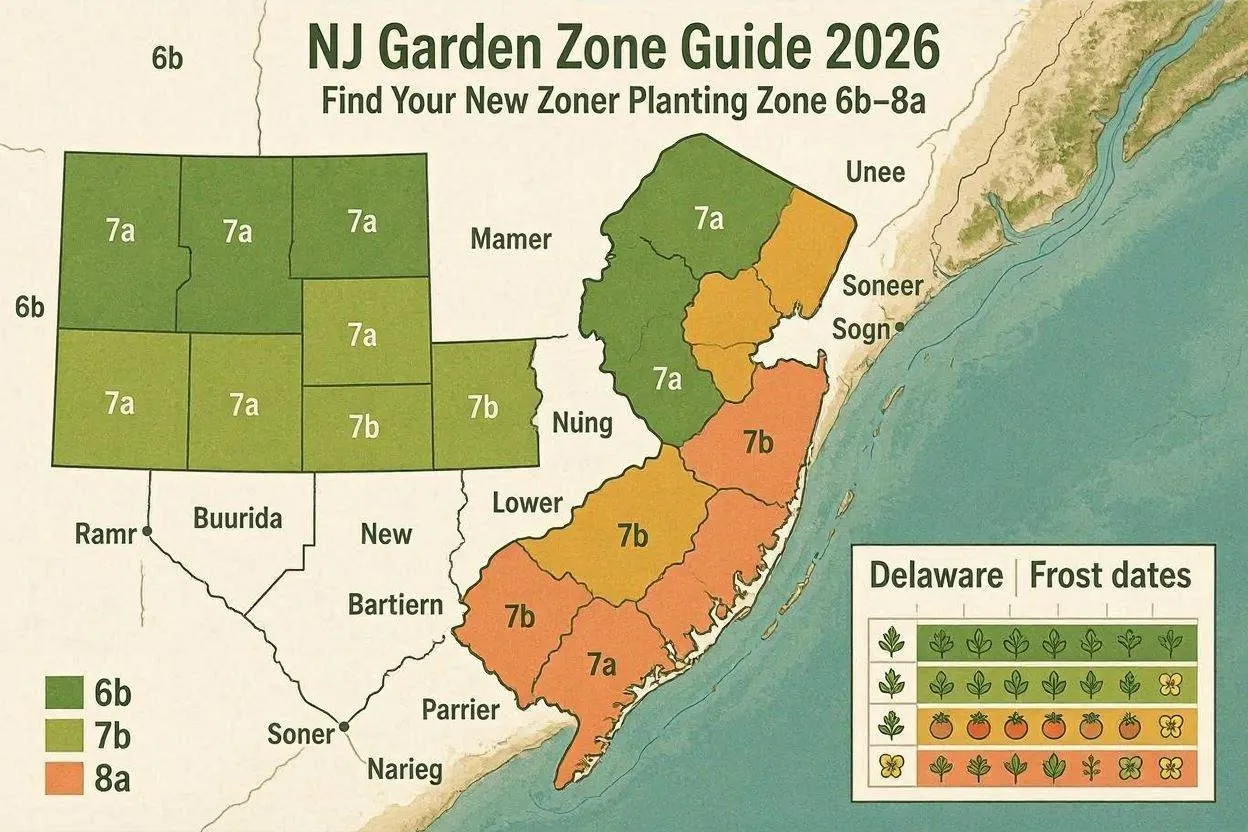
New Jersey sits in United States Department of Agriculture (USDA) hardiness zones 6b to 8a, according to the 2023 USDA Plant Hardiness Zone Map. Most of the state falls in zone 7a or 7b, the cold northwest corner drops to 6b, and the Cape May shoreline now reaches a mild 8a. Your exact NJ garden zone depends on your county, your distance from the Atlantic, and even your neighborhood — and this guide pins it down for you.
Here is everything you need before you sow a single seed in 2026: your zone by county, your frost dates, when to start seedlings indoors, and the vegetables, fruits, perennials, and shrubs that thrive in each part of the Garden State — plus soil prep, mulching, and transplanting tips for every region.
What Does an NJ Garden Zone Actually Mean?
A garden zone (officially a plant hardiness zone) tells you the average coldest winter temperature in your area, measured over a 30-year period. The USDA divides the map into 10°F (5.6°C) bands, then splits each band into “a” and “b” half-zones of 5°F (2.8°C) each.
New Jersey covers 4 half-zones:
- Zone 6b: winter lows of -5 to 0°F (-20.6 to -17.8°C)
- Zone 7a: winter lows of 0 to 5°F (-17.8 to -15°C)
- Zone 7b: winter lows of 5 to 10°F (-15 to -12.2°C)
- Zone 8a: winter lows of 10 to 15°F (-12.2 to -9.4°C)
The zone number answers one question only: will this plant survive winter in your garden? A “hardy to zone 6” hydrangea handles a Sussex County winter. A “zone 8” camellia struggles anywhere north of Cape May. Zones say nothing about summer heat, rainfall, or soil quality — you still amend your soil, water, fertilize, and mulch separately. Think of the zone as the first filter you apply at the nursery before any perennial, shrub, or fruit tree goes into your cart.
Your NJ Garden Zone Probably Changed in 2023
Yes, it likely did. The USDA released a new hardiness map in November 2023, built with PRISM Climate Group data from Oregon State University, and roughly half of New Jersey shifted a half-zone warmer. Trenton moved from 6b to 7a. Much of Monmouth and Ocean County moved from 7a to 7b. Cape May gained zone 8a status — a first for New Jersey.
Why does this matter for your 2026 garden? Three practical reasons:
- Older plant tags mislead you. A shrub labeled “not hardy in your zone” under the 2012 map may now be a safe bet.
- Your planting window stretched. Warmer winter averages usually pair with earlier springs and later first frosts.
- Borderline plants became options. Crape myrtle, hardy figs, and some camellias now overwinter in South Jersey with little protection.
Check your current zone at the official USDA map using your ZIP code before buying perennials, shrubs, or fruit trees this year — plenty of garden websites and nursery catalogs still show the outdated pre-2023 zones.
New Jersey Garden Zones by Region
New Jersey packs surprising climate variety into 8,723 square miles (22,592 km²). The state stretches from the Kittatinny Ridge in the Appalachians down to subtropical-leaning Cape May, and the zones follow that terrain.
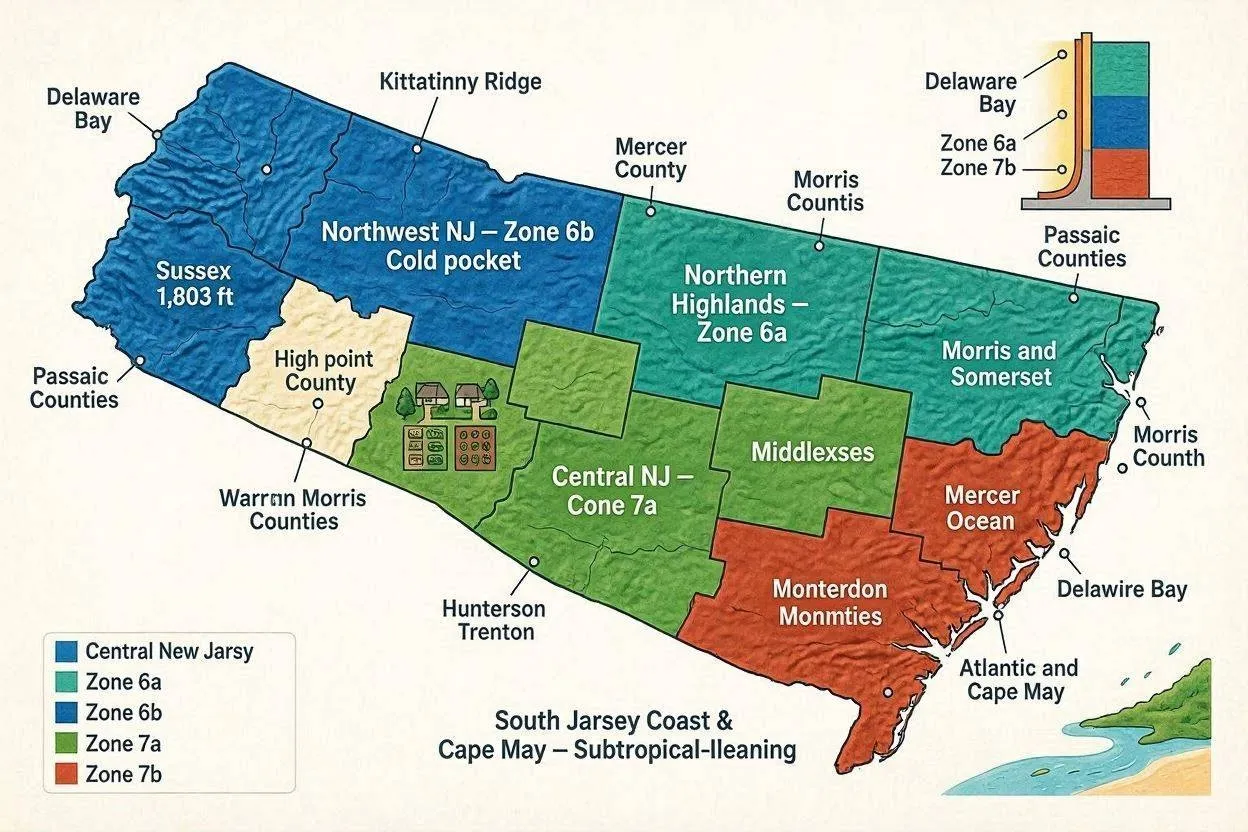
Northwest NJ — Zone 6b (The Cold Pocket)
Sussex County, most of Warren County, and the high ground of Passaic and Morris counties hold the state’s coldest winters. Elevations reach 1,803 feet (550 m) at High Point, and frost lingers here 3 to 4 weeks longer than at the shore. Gardeners in Sparta, Newton, and Hackettstown plan around a short season of roughly 150 frost-free days — so start seeds indoors under grow lights in March, lean on cold frames for early greens, and choose short-season tomato varieties like ‘Early Girl’ that ripen in 60 days.
North & Central Jersey — Zone 7a (The Middle Ground)
Bergen, Essex, Union, Hunterdon, Somerset, and Mercer counties mostly sit in 7a. This zone covers Newark, Morristown, Princeton, and Trenton. Winters bring real cold snaps, yet the growing season runs a comfortable 170 to 190 days — enough for two rounds of lettuce, spinach, and broccoli plus a full tomato season.
South Jersey & the Shore — Zone 7b (The Sweet Spot)
Monmouth, Ocean, Burlington, Camden, Gloucester, and inland Atlantic counties enjoy zone 7b. The Atlantic Ocean moderates winter lows, and the sandy Outer Coastal Plain soil warms early in spring. Toms River, Cherry Hill, and Hammonton (the self-declared “Blueberry Capital of the World”) all garden in 7b.
Cape May & Delaware Bayshore — Zone 8a (New Jersey’s Mildest Corner)
Cape May County and slivers of Cumberland County along the Delaware Bay now sit in zone 8a. Winter lows rarely dip below 10°F (-12.2°C), and gardeners here plant figs in the open ground, overwinter rosemary and artichokes outdoors, sow fall lettuce into December, and harvest cool-season crops nearly year-round from raised beds and low tunnels.
NJ Garden Zone Lookup: County & City Table
| County / City | Garden Zone | Region |
| Sussex County (Newton) | 6b | Northwest |
| Warren County (Phillipsburg) | 6b–7a | Northwest |
| Bergen County (Hackensack) | 7a | North |
| Essex County (Newark) | 7a–7b | North |
| Morris County (Morristown) | 6b–7a | North |
| Hunterdon County (Flemington) | 6b–7a | Central |
| Somerset County (Somerville) | 7a | Central |
| Mercer County (Trenton) | 7a | Central |
| Middlesex County (New Brunswick) | 7a–7b | Central |
| Monmouth County (Freehold) | 7a–7b | Shore |
| Ocean County (Toms River) | 7b | Shore |
| Burlington County (Mount Holly) | 7a–7b | South |
| Camden County (Cherry Hill) | 7b | South |
| Gloucester County (Woodbury) | 7b | South |
| Atlantic County (Atlantic City) | 7b | Shore |
| Cumberland County (Vineland) | 7b | South |
| Cape May County (Cape May) | 7b–8a | South Shore |
Cities like Newark and Jersey City often run a half-zone warmer than their surrounding suburbs because concrete and asphalt trap heat — more on that below.
NJ Frost Dates: When Your Growing Season Starts and Ends
Frost dates decide your planting calendar more than the zone number does. Here are the 2026 averages for 5 key NJ locations:
| Location | Last Spring Frost | First Fall Frost | Frost-Free Days |
| Sussex (6b) | May 10–15 | October 1–5 | ~145 |
| Morristown (6b/7a) | April 25–May 5 | October 10–15 | ~165 |
| Newark (7a/7b) | April 10–15 | November 1–5 | ~200 |
| Trenton (7a) | April 15–20 | October 20–25 | ~185 |
| Cape May (8a) | April 1–5 | November 10–15 | ~220 |
These dates carry a 50% probability, so a late cold snap remains possible. Keep row covers and frost cloth handy through mid-May in North Jersey, harden off seedlings for 7 days before transplanting, and watch the 10-day forecast before setting out tomatoes, peppers, or basil anywhere in the state.
What to Plant in Each NJ Garden Zone
Vegetables That Thrive Statewide

Tomatoes, peppers, cucumbers, zucchini, bush beans, lettuce, kale, spinach, broccoli, and garlic grow well in every NJ zone. The Rutgers tomato — bred at Rutgers University in 1934 and revived as the “Rutgers 250” — remains the state’s signature crop and handles zones 6b through 8a without complaint.
Fruits for New Jersey Zones
- Highbush blueberries: New Jersey is the birthplace of the cultivated blueberry (Whitesbog, 1916), and every NJ zone grows them well in acidic soil.
- Peaches: zone 7a and warmer; Gloucester and Cumberland counties lead the state’s peach production.
- Apples: zones 6b–7b; northwest orchards benefit from the required winter chill hours.
- Figs: ‘Chicago Hardy’ survives 7a with winter wrapping; Cape May 8a gardeners skip the wrapping entirely.
Flowers & Perennials by Zone
- Zone 6b picks: peonies, hostas, daylilies, coneflower, black-eyed Susan
- Zone 7a–7b picks: hydrangeas, roses, salvia, Russian sage, coreopsis
- Zone 8a picks: crape myrtle, camellia, hardy gardenia, agapanthus
Native Plants for 2026 Pollinator Gardens
Butterfly weed, Joe Pye weed, mountain laurel (the state’s iconic native shrub), New England aster, and switchgrass suit every NJ zone, feed native bees and monarchs, and shrug off drought once established. Native gardening is the fastest-growing planting trend in the state for 2026, and these 5 species give beginners the easiest start.
Quick 2026 NJ Planting Calendar
- February: Start onions, leeks, and celery indoors statewide.
- March: Start tomatoes and peppers indoors; direct-sow peas in zones 7b–8a late in the month.
- April: Direct-sow lettuce, spinach, carrots, and beets; transplant broccoli and cabbage; South Jersey sets out early tomatoes under cover.
- May: Transplant tomatoes, peppers, and eggplant after your last frost date; direct-sow beans, squash, and cucumbers.
- June–July: Succession-sow beans and summer lettuce; plant fall brassica seeds indoors in July.
- August: Direct-sow fall spinach, kale, turnips, and radishes.
- September: Plant garlic in North Jersey; sow cover crops in empty beds.
- October: Plant garlic in South Jersey; plant spring bulbs like tulips and daffodils statewide.
- November: Mulch perennials after the ground cools; wrap figs in zones 6b–7a.
NJ Microclimates: Why Your Yard May Not Match the Map
Your official zone is a starting point, not a verdict, because 3 microclimate forces reshape it across New Jersey:

- Urban heat islands warm city gardens. Newark, Jersey City, and Paterson run 5 to 10°F (2.8 to 5.6°C) warmer on winter nights than nearby open suburbs, effectively pushing many city blocks into 7b.
- The Atlantic moderates the shore. Ocean water holds warmth into December, delaying the first frost in Asbury Park and Long Beach Island by 2 to 3 weeks compared with inland towns at the same latitude.
- The Pine Barrens create frost pockets. Sandy, fast-draining soil radiates heat quickly at night, so low spots in the Pinelands frost earlier than their 7b label suggests — sometimes even in late May.
Walk your own yard before planting: a south-facing wall, a wind-sheltered corner, or a low dip can shift growing conditions by a full half-zone in either direction. Site your raised beds, fruit trees, and tender perennials accordingly — the warmest microclimate in your yard is free real estate for borderline plants.
Zone Pushing: Growing “Impossible” Plants in New Jersey
Ambitious NJ gardeners grow plants rated a zone warmer using 3 proven tricks: plant against a south-facing brick wall, mulch roots 4 to 6 inches (10 to 15 cm) deep, and wrap or pot-and-move tender specimens. Hardy figs, pomegranates (‘Russian 26’), camellias (‘April’ series), and even Meyer lemons in wheeled containers all succeed this way in zones 7a and warmer. Cape May’s new 8a status makes that corner of the state a genuine playground for borderline subtropicals.
Frequently Asked Questions
What garden zone is NJ in?
New Jersey spans USDA zones 6b to 8a. The northwest highlands sit in 6b, most of the state falls in 7a or 7b, and Cape May reaches 8a.
Did New Jersey’s garden zones change?
Yes. The 2023 USDA map shifted about half of New Jersey a half-zone warmer, moving Trenton into 7a and giving Cape May the state’s first 8a rating.
When is the last frost in NJ?
The last spring frost falls between April 1 in Cape May and May 15 in Sussex County. Most Central Jersey gardens are frost-safe by April 20.
What zone is Newark, NJ?
Newark sits in zone 7a, though its urban heat island pushes many city blocks into 7b conditions with winter lows of 5 to 10°F (-15 to -12.2°C).
Can you grow figs in New Jersey?
Yes. ‘Chicago Hardy’ figs fruit reliably in zones 7a and 7b with winter wrapping, and Cape May’s zone 8a gardeners grow figs unprotected in open ground.
Conclusion
Your NJ garden zone is the single most useful number you’ll learn as a New Jersey gardener. The state runs from zone 6b in the Sussex County highlands to zone 8a in Cape May, and that spread decides which perennials survive your winter, when your tomato transplants go outside, and how long your harvest season runs. Remember the 4 takeaways from this guide: the 2023 USDA map shifted half the state a half-zone warmer, most NJ gardens now sit in 7a or 7b, frost dates matter more than the zone number for annual vegetables, and your own yard’s microclimate can move you a half-zone in either direction.
Look up your ZIP code on the current USDA map, bookmark your frost dates from the table above, and build your 2026 planting plan around them. With zones 6b through 8a, New Jersey earns its Garden State nickname — there is almost nothing a determined gardener here cannot grow.
Ready to grow? Save this guide, share it with a fellow Garden State gardener, and drop your county in the comments — we’ll tell you exactly what to plant first this season.