Every landscape project, from a residential backyard renovation to a multi-acre commercial development, ultimately depends on one thing going right: getting the correct plant material to the job site, on time, in good condition. That sounds simple until a project calls for a caliper size that’s sold out regionally, a specimen tree that only a handful of growers carry, or a delivery window that has to line up with a tight construction schedule.
This is where a dedicated landscape supplier and wholesale nursery partner earns its keep. Tree Source is a strong example of how this works in practice — the company sources and supplies plant material through a network of more than 50 professional growers, backing that up with direct farm shipping, in-house logistics coordination, wholesale service centres, and dedicated project support like flexible payment lines for large commercial jobs.
Together, these pieces let landscapers, contractors, and commercial projects secure the trees, shrubs, grasses, and speciality plants they need efficiently, with reliable delivery, flexible service options, and streamlined project planning from the first plant list to the final drop-off.
Why Plant Sourcing Has Become Its Own Discipline

There was a time when a landscape contractor could rely on one or two local nurseries for nearly everything a project required. That’s less true today. Design specs increasingly call for specific cultivars, unusual caliper ranges, or drought-tolerant and cold-hardy varieties suited to a particular region’s climate.
At the same time, no single nursery grows everything, and availability can shift fast — a wet spring, a labour shortage, or a spike in regional demand can wipe out inventory that was plentiful a month earlier.
That’s why sourcing has become a speciality of its own, separate from simply “buying plants”. A dedicated sourcing partner maintains relationships across a wide network of growers, so if the material isn’t on their own farms, they know exactly who else might have it.
Instead of a contractor spending hours calling around to nurseries in three states, they submit one list and let a sourcing team run down the options. The result is fewer dead ends, fewer substitutions made under time pressure, and a much better shot at hitting a planting schedule.
The Logistics Problem Hiding Behind Every Plant Order
Sourcing the plant is only half the job. Getting it to the site alive, undamaged, and on schedule is the other half — and it’s often the harder part. Live plant material doesn’t tolerate delay or rough handling the way a pallet of pavers does. A tree that sits too long on a truck, gets loaded improperly, or arrives a week after the crew was ready to plant can throw off an entire project timeline and budget.
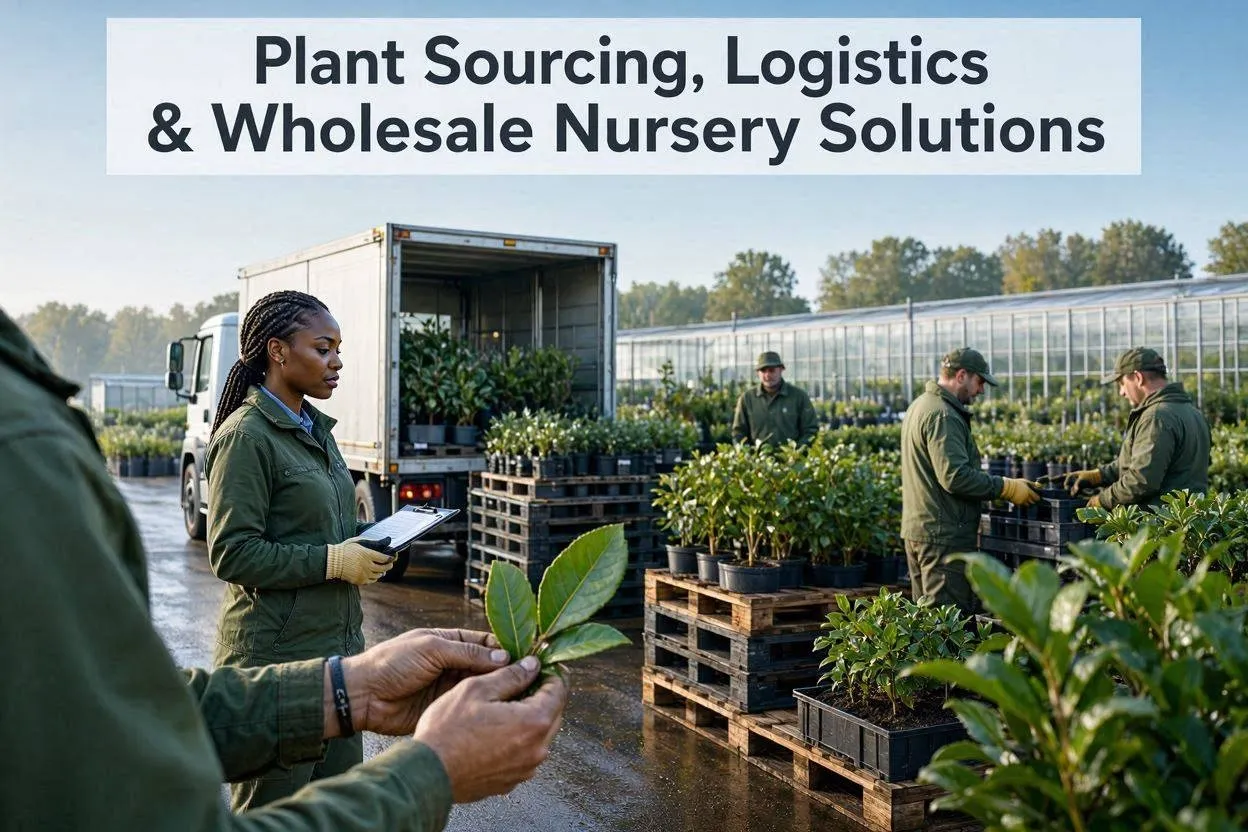
This is why logistics and sourcing really can’t be separated. A grower network is only useful if there’s a reliable way to consolidate orders that may be coming from multiple farms and get them moving as a single, coordinated shipment. Cross-docking — staging plant material from various growers at one central hub before it goes out for final delivery — is a common solution, since it lets a contractor place one order and receive one shipment instead of tracking deliveries from half a dozen separate suppliers.
An in-house logistics team that owns the drop from pickup to job site also removes a lot of the guesswork, giving contractors a realistic delivery window they can actually plan a crew around instead of a vague “sometime next week.”
What a Full-Service Wholesale Nursery Partner Actually Provides
Looking at how a company like Tree Source structures its services is a useful way to understand what “full-service” really means in this industry. Their model combines several distinct pieces that, together, cover most of what a landscaping business needs from a supply partner:
- An extensive grower network. Rather than being limited to what’s growing on their own farms, Tree Source works with more than 50 professional growers, which widens the pool of available trees, shrubs, grasses, perennials, and hard-to-find specialty plants well beyond what any single farm could offer.
- Direct ship service. Material moves straight from the farm to the contractor’s yard or job site, cutting out unnecessary handling and reducing the time plants spend in transit.
- Logistics coordination. An in-house logistics team manages the delivery itself, so contractors aren’t left coordinating separately with multiple trucking arrangements.
- Wholesale service centres. Physical locations stocked for will-call pickup, delivery, and in-person product review give contractors a place to inspect material or grab last-minute additions to an order, and in some cases these centres carry complementary hardscape materials like pavers, bulk soil, and aggregates.
- Project support solutions. For large or complex commercial jobs, flexible options such as payment lines help contractors manage cash flow across multi-phase projects without that friction slowing down procurement.
Individually, none of these are groundbreaking. Combined into one relationship, they add up to something contractors genuinely feel on a project: one phone call or one submitted list instead of a dozen, one delivery instead of several, and one point of contact who’s accountable for the whole process.
How This Plays Out for Different Types of Projects

Residential and small commercial landscapers benefit most from simplicity and speed. Being able to send a plant list and get real-time availability and pricing back, without needing to maintain an account or build a relationship with a dozen separate growers, keeps smaller jobs moving without unnecessary overhead.
General contractors and developers working on larger builds tend to lean harder on the logistics and project support side. A multi-phase commercial development might need plant material staged and delivered in coordination with several stages of construction, and payment flexibility matters more when a single order can represent a significant portion of a project’s budget.
Garden centres and retail nurseries often use wholesale sourcing partners to fill gaps in their own inventory, particularly for specialty or hard-to-find material that isn’t practical to grow in-house.
In each case, the underlying need is the same: predictable timing, plant material that arrives healthy, and fewer points of failure between “we need this plant” and “it’s in the ground”.
What to Look for in a Sourcing and Logistics Partner
For contractors evaluating wholesale nursery partners, a few questions tend to separate the merely adequate from the genuinely useful:
- How wide is the grower network, and how is a multi-grower order consolidated? A single cross-dock point that combines orders into one shipment is far more practical than juggling separate deliveries from each grower.
- Who owns the logistics? A dedicated in-house logistics team, rather than a patchwork of third-party freight arrangements, generally means fewer surprises about timing.
- Is there a physical location for will-call or in-person review? Wholesale centres give contractors flexibility to inspect material or handle smaller, faster orders without waiting on a full delivery cycle.
- What support exists for larger, more complex projects? Flexible payment options and dedicated project coordination matter more as project size and complexity grow.
- Is the plant material suited to the region? Sourcing from growers who cultivate for the actual climate- a project is in cold-hardy or drought-tolerant stock, for example- tends to mean better survival rates once plants are installed.

The Bottom Line
Plant sourcing, logistics, and wholesale nursery support aren’t separate line items so much as one connected system. A wide grower network is only as good as the logistics that get that material where it needs to go, and logistics only matters if there’s dependable inventory behind it in the first place. Companies built around this combined model — Tree Source, a full-service tree nursery and wholesale network, being a clear example — give landscapers, contractors, and commercial projects a way to treat plant procurement as a manageable, predictable part of the job rather than a recurring source of delay. For any business planning a project of real scale, that reliability is often worth as much as the plants themselves.