
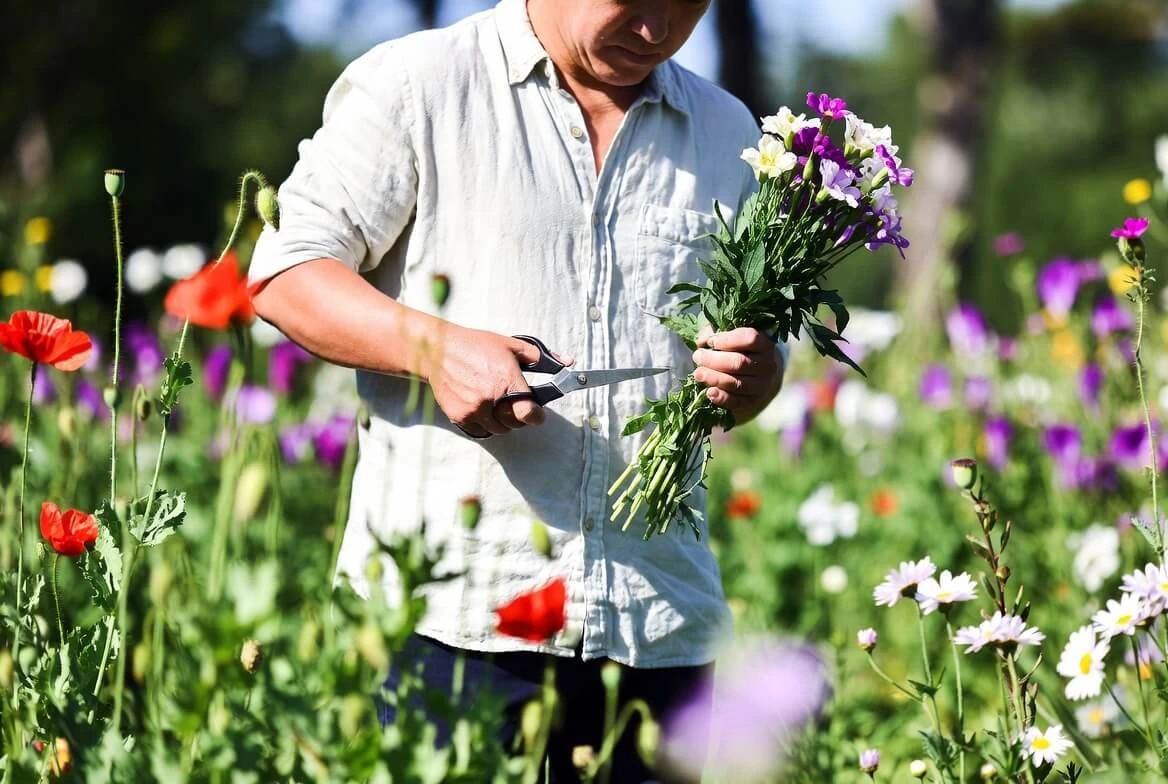
I spent $300 on grocery store flowers my first year of homeownership. Then I did the math and got mad at myself. That $300 could’ve bought seeds, soil amendments, and basic supplies for a cut flower garden that would’ve given me fresh blooms for 6+ months straight.
Here’s what I wish someone had told me: you don’t need acres. A 4×8 bed produces more flowers than most people can use.
Why Your Cut Flower Garden Will Pay For Itself
Grocery store bouquets cost $15-30 each. Buy two per month and you’re spending $360-720 per year.
A basic cut flower garden costs under $100 to start:
- Seeds: $30
- Compost: $25
- Basic tools (if you don’t have them): $40
That first season, I cut 200+ stems from my tiny 4×8 bed. At florist prices ($3-5 per stem), that’s $600-1000 worth of flowers.
Plus you know exactly what chemicals touched them. Zero pesticides. Zero preservatives. Just fresh flowers from your yard to your vase.
At Zoned Garden, we’ve helped hundreds of gardeners start cut flower gardens, and the number one thing we hear is: “I had no idea I could grow this many flowers in such a small space.”
The 5 Flower Types Every Cut Flower Garden Needs
Think of arrangements like recipes. You need different ingredients for complete bouquets.
Focal flowers (the main attraction):
- Zinnias
- Sunflowers
- Dahlias
- Roses
Filler flowers (fill gaps, add texture):
- Celosia
- Amaranth
- Basil (yes, herb flowers work great)
Spike flowers (add height, vertical interest):
- Snapdragons
- Salvia
- Larkspur
Disc flowers (flat round faces):
- Cosmos
- Rudbeckia
- Marigolds
Airy bits (movement and lightness):
- Baby’s breath
- Gomphrena
- Bachelor’s buttons
I ignored this framework my first year. Grew only zinnias and sunflowers. Bouquets looked boring and one-dimensional. In a year or two, I added cosmos and snapdragons. Totally different results. Arrangements actually looked professional.
Starting Your Cut Flower Garden: The 4×8 Bed Method
You need less space than you think. My first bed: 4 feet wide, 8 feet long. That’s 32 square feet. Produced flowers from May through October.
Why 4 feet wide matters: You can reach the center from both sides without stepping on soil. No compaction. Better root growth.
Location requirements:
- Full sun (6-8 hours minimum)
- Access to water
- Somewhat protected from strong winds
- Well-draining soil
I tried growing in partial shade once. Plants stretched thin and leggy. Blooms were half the size. Not worth it.
Best Cut Flowers for Beginners (That Actually Produce)
Zinnias are the cheat code. Plant them first. They germinate in 5-7 days. Bloom in 60 days. Keep producing until frost. Can’t kill them if you try. I grow Benary’s Giant varieties – huge 4-6 inch blooms on strong stems. Salmon Rose and Wine are my go-to colors.
Sunflowers for instant gratification:
- ProCut varieties give you single stems perfect for cutting. Plant every 2-3 weeks for continuous blooms.
- One 4×8 bed section with weekly plantings kept me in sunflowers from July through October.
Cosmos for easy volume:
- Plant once in spring. They bloom for months with zero effort. Delicate looking but tough as nails.
- Double Click varieties have fuller flowers that last longer in the vase than single types.
Snapdragons for spring and fall:
- Cool weather lovers. Plant in early spring or late summer. Spike flowers every arrangement needs.
- Cut them and they branch. More stems, more flowers.
Spacing That Actually Maximizes Production
Forget traditional row spacing. Plant on a grid. I learned this from Floret Farm. Changed everything.
Standard spacing I use:
- Zinnias: 9 inches apart (gets you 5 rows in a 4-foot bed)
- Sunflowers: 6 inches apart for single-stem varieties
- Cosmos: 12 inches apart (they get bulky)
- Snapdragons: 9 inches apart
- Old method: 2 rows of zinnias down a 4×8 bed = 16 plants
- Grid method: 5 rows at 9-inch spacing = 50+ plants
Three times more flowers in the same space. The plants shade out weeds as they grow. Less weeding, more flowers. Win-win.
Succession Planting for Non-Stop Blooms
Plant the same flowers every 2-3 weeks. This is the secret to constant supply.
My zinnia schedule:
- First planting: May 1
- Second planting: May 21
- Third planting: June 11
- Fourth planting: July 2
First batch blooms in early July. As those slow down, the second batch is peaking. Continuous flowers through October. Sunflowers especially need this. They bloom for 7-10 days then finish. Succession planting gives you flowers all season.
I mark my calendar with reminders. Miss a planting window and you’ll have gaps in production.
Soil Prep That Makes Everything Easier
Good soil = 3x more flowers. Not optional.
My bed prep:
- Remove grass/weeds completely
- Add 3-4 inches of compost
- Mix in well
- Rake smooth
That’s it. No fancy amendments needed. I feed with liquid fish fertilizer every 3-4 weeks once plants are growing. Dilute it 50/50 with water.
I skipped this my first year. Plants were okay but not amazing. Added compost properly in year two. Night and day difference in bloom size and stem strength.
Cutting Techniques for More Flowers
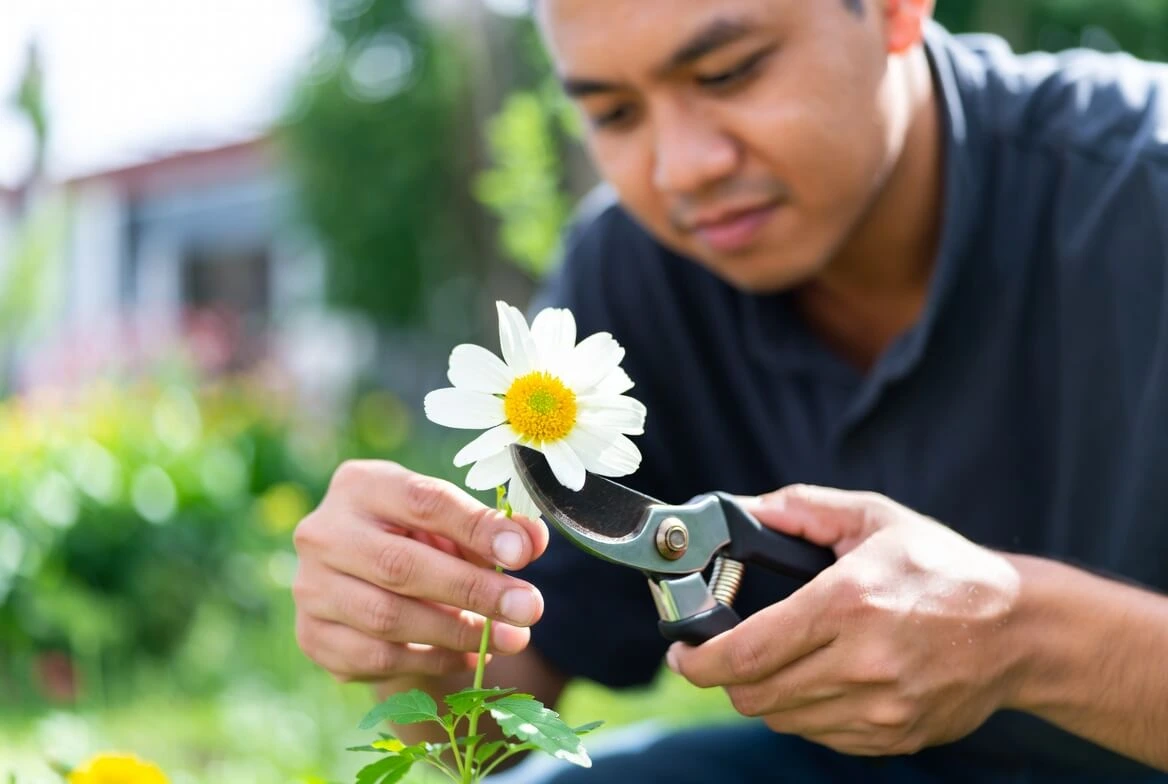
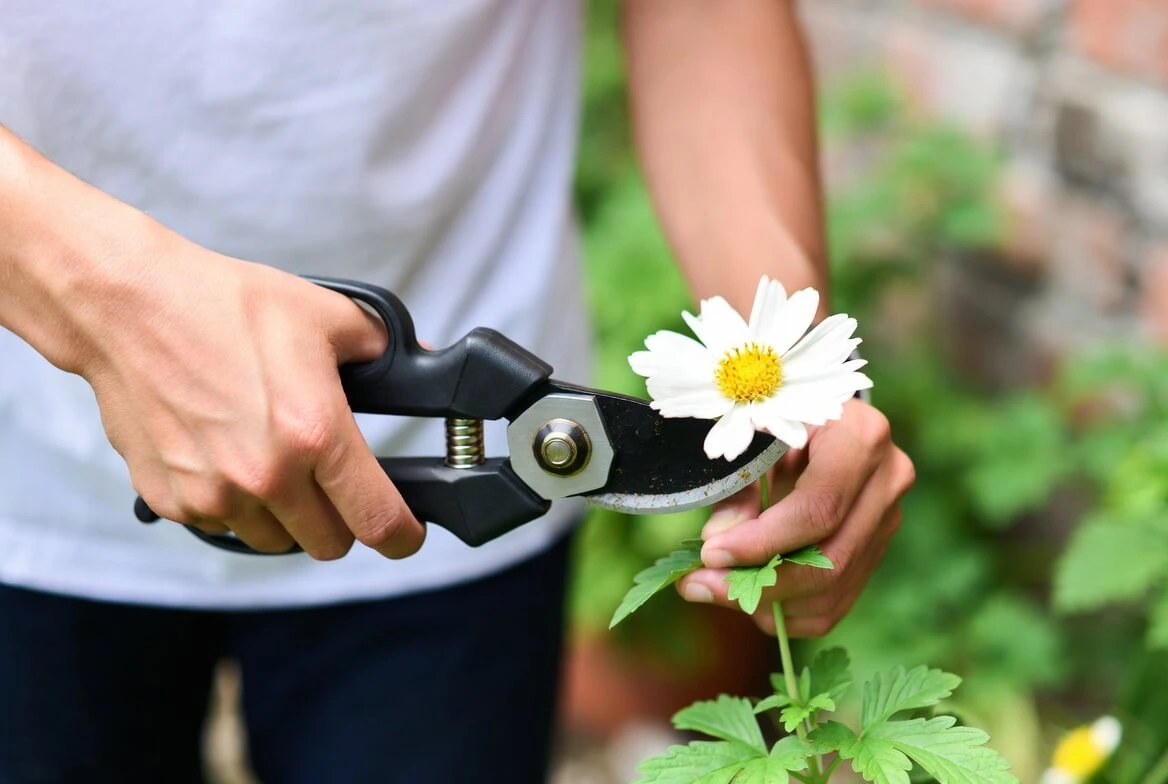
Cut deep: This triggers more branching lower on the plant. I cut 12-18 inches down the stem, even if I only need 8 inches. The plant responds by sending out 2-3 new shoots where I cut.
Harvest timing:
- Early morning or evening (coolest temps)
- Immediately into bucket of cool water
- Let sit 2+ hours before arranging
Cut-and-come-again flowers:
- Zinnias
- Cosmos
- Basil
- Snapdragons
The more you cut, the more they bloom. Not cutting them actually reduces production.
One-hit wonders:
- Single-stem sunflowers
- Tulips
- Daffodils
These bloom once then done. Plant more to get more flowers. For detailed harvesting schedules and techniques, visit our cut flower harvest guide at Zoned Garden.
List of Cut Flowers With Pictures: Season by Season
Spring cut flower garden:
- Tulips (focal)
- Snapdragons (spike)
- Ranunculus (focal)
- Sweet peas (vine)
- Bachelor’s buttons (airy)
Summer cut flower garden:
- Zinnias (focal)
- Sunflowers (focal)
- Cosmos (disc)
- Celosia (filler/spike)
- Basil (filler)
Fall cut flower garden:
- Dahlias (focal)
- Marigolds (disc)
- Amaranth (filler)
- Strawflower (focal, can dry)
- Sunflowers (focal)
I focus on summer annuals. They’re easiest for beginners and most productive. Spring bulbs are beautiful but you plant in fall and wait 6 months for blooms. Summer annuals go seed to flower in 60-90 days.
Mistakes I Made So You Don’t Have To
- Planting too much too soon: First year I planted everything at once. Got overwhelmed fast. Start with one 4×8 bed. Master that before expanding.
- Wrong location: Tried growing in partial shade. Complete waste. Full sun or don’t bother.
- Cheap seeds: Bought bargain bin seeds from a big box store. The germination rate was 30%. Now I order from Johnny’s or Floret. Worth every penny.
- No succession planting: Had tons of flowers in July then nothing in August-September. Succession planting fixes this completely.
- Not cutting enough: Thought I was helping plants by leaving flowers on. Wrong. Cut them constantly. The plant produces more.
Simple Cut Flower Garden Layout for Beginners
4×8 bed broken into sections:
- Section 1 (2×4): Zinnias planted every 3 weeks Section 2 (1×4): Sunflowers planted every 2 weeks
- Section 3 (1×4): Cosmos planted once
This gives you focal flowers (zinnias, sunflowers) and disc flowers (cosmos) in one small bed. Add snapdragons along edges if you have room. They don’t take much space and produce tons of stems.
Cut Flower Garden FAQs
How much space do you need for a cut flower garden?
A 4×8 foot bed (32 square feet) produces 200+ stems per season with proper planning. That’s enough for weekly bouquets from May through October.
What are the easiest cut flowers to grow?
Zinnias, sunflowers, and cosmos are bulletproof for beginners. They tolerate mistakes, grow fast, and produce heavily with minimal care.
When should you start a cut flower garden?
Start seeds indoors 4-6 weeks before last frost, or direct sow after frost danger passes. Succession plant every 2-3 weeks for continuous blooms.
Do cut flowers come back every year?
Most cut flowers are annuals and die after frost. Exceptions: dahlias (dig and store tubers), perennials like coneflowers, and self-seeding varieties like cosmos.
How do you keep a cut flower garden blooming?
Succession plant every 2-3 weeks, cut frequently to encourage more blooms, fertilize every 3-4 weeks, and deadhead spent flowers regularly.
Can you grow a cut flower garden in containers?
Yes. Use 5-gallon or larger containers with drainage holes. Zinnias, cosmos, and snapdragons work great in pots with proper watering.
The Real Secret to Cut Flower Garden Success
Start smaller than you think you need. One well-managed 4×8 bed beats three neglected beds every time. Master zinnias, sunflowers, and cosmos first. Add complexity once those are producing reliably. Succession plant religiously. Mark your calendar. Don’t skip plantings. Cut flowers constantly. The more you cut, the more they produce.
That’s 90% of success right there. I wasted two seasons trying complicated methods before learning these basics. Save yourself the time.
Cut flower gardens aren’t rocket science. Good soil, full sun, succession planting, frequent cutting. Do those four things and you’ll have more flowers than you know what to do with.
At Zoned Garden, we believe beautiful flowers shouldn’t cost hundreds of dollars per year. A small investment in a cut flower garden pays dividends in fresh bouquets, stress relief, and pure joy every time you walk past those blooms.
For complete planting calendars and seasonal guides, explore Zoned Garden’s full resource library.