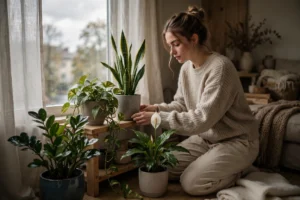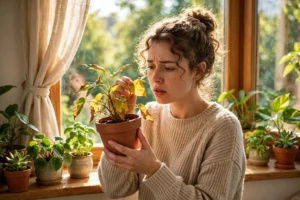
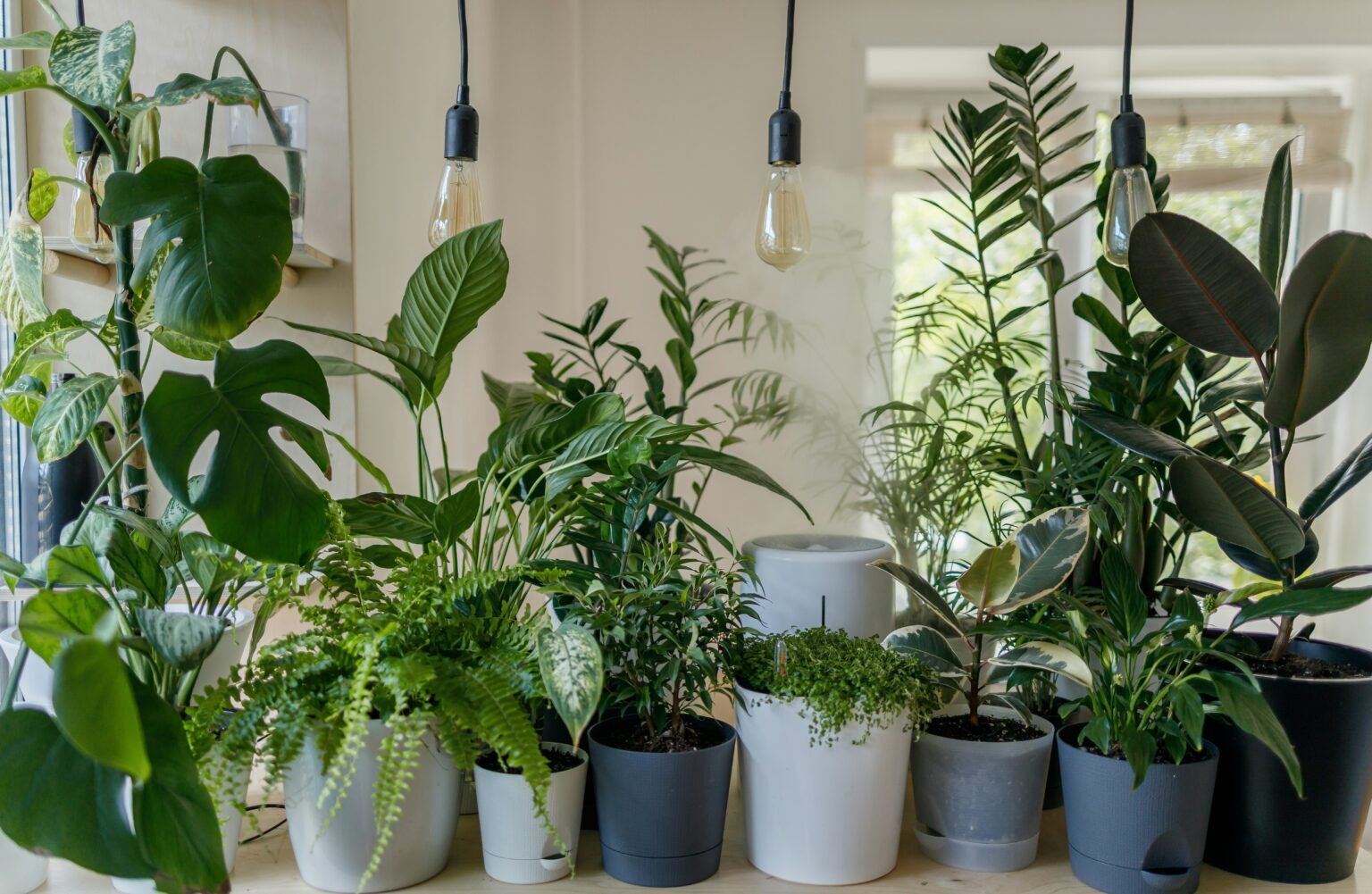
The best indoor plants for your home are: Snake Plant, Pothos, Peace Lily, Spider Plant, Monstera, ZZ Plant, Rubber Plant, Dracaena, Aloe Vera, and Chinese Evergreen.
These 10 plants survive low light, tolerate irregular watering, and bring real benefits — cleaner air, reduced stress, and a greener space. Whether you’re a complete beginner or a seasoned plant parent, each plant on this list fits easily into a home, apartment, or office.
At ZonedGarden, we’ve grown all 10 of these. Below is an honest guide covering care, light needs, watering frequency, and what makes each one worth your shelf space.
Why Indoor Plants Matter in 2026
People in cities now spend over 90% of their time indoors. Indoor air carries volatile organic compounds (VOCs) released from paints, furniture, and cleaning products. These compounds — formaldehyde, benzene, trichloroethylene, xylene — build up in poorly ventilated spaces.
NASA’s 1989 Clean Air Study confirmed that common houseplants absorb airborne toxins through their leaves and root systems. A 2008 study in India showed that workers in plant-filled offices had:
- 24% fewer headaches
- 52% less eye irritation
- 34% fewer respiratory conditions
- 12% higher lung capacity
Beyond air quality, a 2024 University of Exeter study linked houseplants to 15% lower anxiety levels. Plants also reduce mental fatigue and increase focus — especially in home offices.
The plants below give you all these benefits with minimal effort.
1. Snake Plant (Sansevieria / Dracaena trifasciata)
The Snake Plant is the most forgiving indoor plant you can own. It survives weeks without water, thrives in low light, and actively filters formaldehyde, nitrogen oxide, benzene, trichloroethylene, and xylene from indoor air.
Also called: Mother-in-Law’s Tongue, Saint George’s Sword
Care at a Glance
- Light: Low to bright indirect light — tolerates almost any room
- Water: Every 2–6 weeks; let soil dry completely between waterings
- Soil: Well-draining cactus or succulent mix
- Temperature: 60–80°F (15–27°C)
- Toxicity: Mildly toxic to pets and children
Why Choose It
Snake plants release oxygen at night — unlike most plants that only photosynthesize during daylight. This makes them one of the top bedroom plants. They grow upright and compact, fitting narrow shelves, desks, and corners easily.
New to plants? This is plant #1. It’s nearly impossible to kill with neglect.
→ Read our full Snake Plant Care Guide on ZonedGarden.
2. Pothos — Devil’s Ivy (Epipremnum aureum)
Pothos is the number one gateway plant for beginners. Its trailing vines fill empty shelves, hang from baskets, and climb trellises. It grows in almost any light condition and filters formaldehyde, benzene, and toluene from indoor air.
Popular varieties: Golden Pothos, Marble Queen, Neon Pothos, Cebu Blue, N’joy
Care at a Glance
- Light: Low to bright indirect light; darker leaves need less light
- Water: Every 1–2 weeks; allow top 2 inches (5 cm) of soil to dry
- Soil: Standard houseplant mix with drainage
- Growth rate: Fast — vines reach 6–10 feet (1.8–3 m) indoors
- Toxicity: Toxic to pets and children if ingested
Why Choose It
Pothos trails beautifully from high shelves and bookshelves. It signals thirst by wilting slightly — making it easy to track when to water. Propagate cuttings in water and share with friends within weeks.
→ Explore Pothos Varieties and Care Tips at ZonedGarden.
3. Peace Lily (Spathiphyllum)
The Peace Lily is one of the most effective air-purifying houseplants available. NASA ranked it among the top 3 plants for removing benzene, formaldehyde, trichloroethylene, ammonia, and carbon monoxide from indoor air.
Care at a Glance
- Light: Low to medium indirect light; no direct sun
- Water: Once a week; drooping leaves mean it needs water now
- Humidity: Prefers humidity above 50% — ideal for bathrooms
- Blooms: White spadix flowers appear in spring and summer
- Toxicity: Toxic to cats, dogs, and small children
Why Choose It
Peace lilies are 1 of only 3 common houseplants that bloom reliably indoors with low light. The white flowers last 4–6 weeks. They visibly communicate thirst — leaves droop when dry and perk up within hours of watering, making over-watering easy to avoid.
Best placement: bathrooms, bedrooms, and dim office corners.
→ See ZonedGarden’s Peace Lily growing tips and troubleshooting guide.
4. Spider Plant (Chlorophytum comosum)
The Spider Plant is the safest indoor plant for homes with pets and children. It absorbs carbon monoxide, formaldehyde, and xylene, and produces ‘spiderettes’ — baby plants that hang from long runners, making it one of the easiest plants to propagate.
Care at a Glance
- Light: Bright to medium indirect light
- Water: Weekly in summer; every 10 days in winter
- Soil: Well-draining potting mix
- Pet safe: Yes — non-toxic to cats and dogs
- Propagation: Snip spiderettes and root in water or soil
Why Choose It
Spider plants adapt to temperature fluctuations and most humidity levels, making them reliable in kitchens, living rooms, and offices. The green-and-white striped leaves add texture to any hanging basket. One mature plant produces 3–8 spiderettes per season — free plants to fill every room.
→ Learn Spider Plant propagation step-by-step at ZonedGarden.
5. Monstera — Swiss Cheese Plant (Monstera deliciosa)
Monstera deliciosa is the statement plant of modern interiors. Its split, fenestrated leaves — the signature ‘holes’ — grow up to 18 inches (45 cm) wide indoors. Large glossy leaves absorb dust particles and increase humidity through transpiration.
Notable varieties: Monstera deliciosa, Thai Constellation (variegated), Monstera adansonii
Care at a Glance
- Light: Bright indirect light — 4–6 hours daily
- Water: Every 1–2 weeks; top 2–3 inches (5–7 cm) should dry first
- Humidity: Prefers 60%+; mist leaves or use a pebble tray
- Growth: Fast in summer; can reach 6–8 feet (1.8–2.4 m) indoors
- Support: Needs a moss pole or trellis as it matures
Why Choose It
No plant transforms a living room or home office quite like a Monstera. The fenestrated leaves are a product of biophilic design — plants that look architectural and alive. New leaves unfurl as solid green, then develop splits as they mature. Each leaf is unique.
→ Full Monstera care, repotting, and support guide on ZonedGarden.
6. ZZ Plant (Zamioculcas zamiifolia)
The ZZ Plant survives where other plants fail. Its underground rhizomes store water for weeks, letting it tolerate drought, low light, and neglect. It’s the top choice for offices, hallways, and rooms with minimal natural light.
Care at a Glance
- Light: Low to bright indirect; handles fluorescent office lighting
- Water: Every 2–4 weeks; rhizomes store water — overwatering kills it
- Soil: Well-draining potting mix or cactus blend
- Growth rate: Slow to moderate; very long-lived
- Toxicity: Mildly toxic; wash hands after handling
Why Choose It
ZZ plants have deep green, waxy leaves that reflect light and look perpetually polished. They’re drought-tolerant enough to survive holidays and travel. New cultivars include ‘Raven ZZ’ — a near-black variety that pairs with modern and industrial interiors.
NASA studies list ZZ plants as effective at removing xylene, toluene, and benzene from indoor spaces.
→ ZZ Plant varieties and repotting guide at ZonedGarden.
7. Rubber Plant (Ficus elastica)
The Rubber Plant is a large-format indoor tree with thick, glossy leaves in deep green, burgundy, or variegated cream. It removes formaldehyde efficiently and grows tall enough to anchor a corner or replace furniture as a focal point.
Popular varieties: Ficus elastica ‘Burgundy’, ‘Ruby’, ‘Tineke’ (variegated), ‘Decora’
Care at a Glance
- Light: Bright indirect light; avoids direct afternoon sun
- Water: Every 1–2 weeks; let top soil dry between waterings
- Soil: Rich, well-draining potting mix
- Height: Up to 6–10 feet (1.8–3 m) indoors
- Toxicity: Toxic to pets; sap irritates skin
Why Choose It
Rubber plants grow vertically, making them space-efficient despite their dramatic size. Prune the top stem to encourage branching and a bushier shape. Wipe dusty leaves with a damp cloth monthly — clean leaves improve both appearance and air-filtering capacity.
→ Rubber Plant care and pruning tips on ZonedGarden.
8. Dracaena (Dracaena fragrans / marginata)
Dracaena is a tall, architectural indoor plant with strap-like or sword-shaped leaves in green, red-edged, or variegated patterns. It’s one of the top plants for removing trichloroethylene from indoor air and tolerates low light and neglect exceptionally well.
Common types: Dracaena fragrans (Corn Plant), D. marginata (Dragon Tree), D. Janet Craig, D. Song of India
Care at a Glance
- Light: Low to medium indirect light
- Water: Every 2–3 weeks; sensitive to fluoride in tap water — use filtered or rainwater
- Soil: Loamy, well-draining mix
- Height: 3–8 feet (0.9–2.4 m) depending on variety
- Toxicity: Toxic to cats and dogs
Why Choose It
Dracaena’s upright form fills vertical space without sprawling. The tall stems and rosette leaves add a tropical, sculptural quality to any room. D. marginata’s slender red-edged leaves suit modern and minimalist interiors. Plants live 10–15 years with basic care.
→ Dracaena types, care and troubleshooting at ZonedGarden.
9. Aloe Vera (Aloe barbadensis miller)
Aloe Vera is the most useful plant you can keep indoors. The clear gel inside its thick, fleshy leaves soothes minor burns, cuts, sunburns, and dry skin on contact. Beyond medicinal value, it filters formaldehyde and benzene — chemicals released by paints and cleaning products.
Care at a Glance
- Light: Bright indirect to direct morning sun — needs 6+ hours
- Water: Every 2–3 weeks; water deeply, then let soil dry completely
- Soil: Cactus or succulent mix with coarse sand
- Container: Terracotta pots — allow excess moisture to evaporate
- Toxicity: Toxic to cats and dogs if consumed
Why Choose It
Aloe vera works best on a sunny kitchen windowsill — close for quick first aid. A mature plant produces ‘pups’ (offshoots) that can be repotted into new plants. It’s both a functional and decorative succulent that thrives with minimal attention.
→ How to harvest Aloe vera gel safely — ZonedGarden guide.
10. Chinese Evergreen (Aglaonema)
Chinese Evergreen is the most forgiving tropical plant for low-light conditions. Available in over 100 cultivars — from deep green to pink, red, silver, and variegated — it adds color to dim rooms and improves indoor air quality over time.
Popular varieties: Aglaonema ‘Silver Bay’, ‘Red Siam’, ‘Maria’, ‘Pink Dalmatian’, ‘Emerald Beauty’
Care at a Glance
- Light: Low to medium indirect; avoid direct sun which burns leaves
- Water: Every 1–2 weeks; prefers slightly moist but not soggy soil
- Temperature: Keep above 60°F (15°C); avoid cold drafts
- Humidity: Average home humidity is fine
- Toxicity: Toxic to pets
Why Choose It
Chinese Evergreens become more effective at purifying air as they grow larger. Pink and red varieties brighten dark corners better than most flowering plants. They rarely need repotting — content to grow slowly in the same pot for 2–3 years.
→ Chinese Evergreen color varieties and care at ZonedGarden.
Quick Comparison: Top 10 Indoor Plants at a Glance
| Plant | Light Need | Water Freq. | Air Purifying | Pet Safe | Difficulty |
|---|---|---|---|---|---|
| Snake Plant | Low–High | 2–6 wks | Yes | No | Easy |
| Pothos | Low–High | 1–2 wks | Yes | No | Easy |
| Peace Lily | Low–Med | Weekly | Yes (Top) | No | Easy |
| Spider Plant | Med–High | Weekly | Yes | Yes ✓ | Easy |
| Monstera | Bright Ind. | 1–2 wks | Moderate | No | Moderate |
| ZZ Plant | Low–High | 2–4 wks | Yes | No | Easy |
| Rubber Plant | Bright Ind. | 1–2 wks | Yes | No | Easy |
| Dracaena | Low–Med | 2–3 wks | Yes | No | Easy |
| Aloe Vera | Bright/Sun | 2–3 wks | Yes | No | Easy |
| Chinese Evergreen | Low–Med | 1–2 wks | Yes | No | Easy |
5 Universal Care Tips for All Indoor Plants
1. Match Light to Plant — Not Room Aesthetics
Most houseplant problems start with wrong light placement. ‘Indirect light’ means bright ambient light without direct sun rays hitting leaves. North-facing windows suit low-light plants. South and west-facing windows work for most others.
2. Water by Soil Feel, Not Schedule
Push a finger 2 inches (5 cm) into the soil. Water if dry; wait if moist. More indoor plants die from overwatering than drought. Pot drainage holes are non-negotiable — standing water causes root rot within days.
3. Use the Right Soil Mix
Generic potting soil holds too much moisture for succulents and ZZ plants. Mix cactus blend with perlite for drought-tolerant plants. Use standard potting mix for tropical plants like Monstera, Pothos, and Peace Lily.
4. Dust Leaves Monthly
Dusty leaves block light absorption and slow photosynthesis. Wipe large leaves with a damp cloth. Use a soft brush on textured or fuzzy leaves. Clean leaves also look dramatically healthier.
5. Feed During Growing Season Only
Plants need fertiliser from March to September. Use a balanced liquid fertiliser (NPK 10-10-10) diluted to half strength every 4 weeks. Stop completely in autumn and winter — overfeeding dormant plants burns roots.
Frequently Asked Questions
What are the best indoor plants for low light?
The 5 best low-light indoor plants are: Snake Plant, ZZ Plant, Pothos, Peace Lily, and Chinese Evergreen. All survive in rooms with north-facing windows or fluorescent office lighting.
Which indoor plants are safe for cats and dogs?
Spider Plant is the safest. It’s non-toxic to cats and dogs. Avoid Peace Lily, Monstera, Pothos, Dracaena, and Aloe Vera in pet-accessible rooms — all are toxic when ingested.
Which indoor plants purify air the best?
Based on the NASA Clean Air Study, the 3 top air-purifying houseplants are: Peace Lily, Snake Plant, and Dracaena. All remove formaldehyde, benzene, and trichloroethylene from indoor air.
How often should I water indoor plants?
Most tropical houseplants need water every 7–14 days. Succulents and drought-tolerant plants (ZZ Plant, Aloe, Snake Plant) need water every 2–6 weeks. Always check soil moisture before watering — never water on a fixed schedule without soil check.
Are indoor plants good for mental health?
Yes. A 2024 University of Exeter study found that households with indoor plants reported 15% lower anxiety. A 2011 study confirmed that office plants improve attention capacity and task focus. Even 1–3 plants in a room produce measurable psychological benefits.
Can indoor plants grow in offices with no windows?
Yes, with limitations. ZZ Plant, Snake Plant, and Pothos tolerate fluorescent lighting. For windowless rooms, use full-spectrum grow lights (at least 2,000 lux) for 12–14 hours daily to substitute natural light.