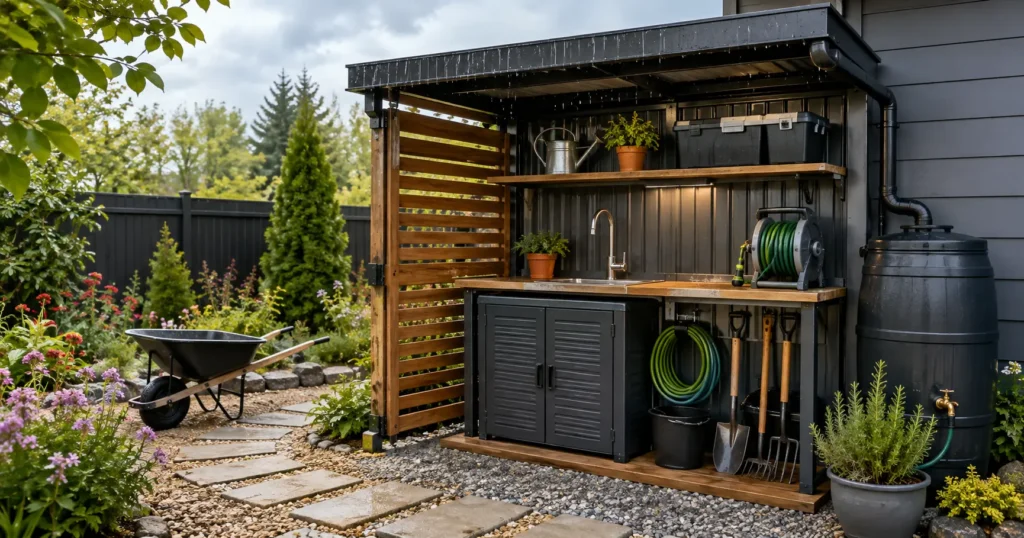
Creating a methodical, climate-smart garden requires more than just a deep understanding of plant care. It also demands a dedicated physical workspace to manage tools, soils, and equipment. A utility zone serves as the operational heart of your backyard. Whether you are a casual weekend planter or a dedicated urban farmer, having a central hub reduces the friction of daily chores. A designated zone means you no longer have to hunt through chaotic garages for a missing trowel or haul heavy bags of compost across the yard.
As the seasons transition, gardeners face the challenge of rotating equipment, preparing soils, and safeguarding delicate tools against driving rain or blistering heat. Without a proper setup, the harsh Australian climate can quickly degrade expensive equipment. Research from Curtin University highlights that rust and corrosion cost Australia approximately 32 billion dollars annually. By designing a weatherproof utility zone, you can protect your investments and streamline your seasonal garden maintenance.
Selecting the Ultimate Structural Anchor
The foundation of any effective utility area is a robust physical structure that shields your gear from sun, rain, and extreme weather. Traditional wooden structures are popular, but they often struggle in the local climate, where termites cause over one billion dollars in property damage each year. This reality has driven many property owners toward termite-proof metal alternatives that require significantly less maintenance over their expected lifespan of thirty years or more.
When sourcing infrastructure for this space, choosing high-quality storage sheds for outside is a practical first step to ensure your valuable machinery and sensitive soil amendments remain dry. Modern construction heavily favours premium materials like BlueScope Steel, which uses specialised zinc-aluminium coatings to resist intense ultraviolet degradation and salt-laden coastal winds. When evaluating options, checking for industry compliance is highly recommended. Programs managed by the Australian Steel Institute verify that structural designs meet the National Construction Code, ensuring your chosen building can withstand extreme uplift forces during severe weather events.
Safe Handling and Chemical Management
A major component of any garden utility zone involves the responsible management of supplies like concentrated fertilisers, pesticides, and machinery fuels. These substances often fall under hazardous chemical classifications and legally require secure, segregated storage away from main living areas. Ensuring these products are shielded from moisture and extreme temperature fluctuations is critical to maintaining their efficacy and preventing dangerous leaks that could harm your soil biology.
Proper ventilation and spill management must be built into your space from the very beginning. Strict guidelines from Primary Industries and Regions South Australia mandate that garden chemicals be kept in weather-protected, well-ventilated, and isolated structures equipped with spill containment mechanisms to prevent environmental contamination. To meet these important safety standards, industry experts strongly recommend installing impervious concrete floors featuring physical spill containment barriers, commonly known as bunding. This setup ensures that accidental spills are easily managed and never leach into local waterways or your vegetable beds.
Organising the Interior Layout
Once the structural and safety requirements are handled, the final step is setting up the interior for maximum efficiency. A well-designed workspace reduces physical strain and makes routine maintenance tasks far more enjoyable. Before installing shelves or workbenches, it is wise to audit your existing tools, properly sanitise them to prevent the spread of plant diseases, and decide what to keep, repair, or discard.
If you are looking for more ways to streamline your property, integrating this new space into your broader home organisation and garden planning will yield the best long-term results. A methodical approach to the interior layout directly impacts how well your equipment survives the off-season. When designing accessible workspaces, pay attention to the height of your potting benches to prevent unnecessary back strain.
Another critical factor is lighting. Installing energy-efficient solar lights ensures that you can continue your tasks safely even during shorter winter days, extending your productivity while keeping energy consumption low.
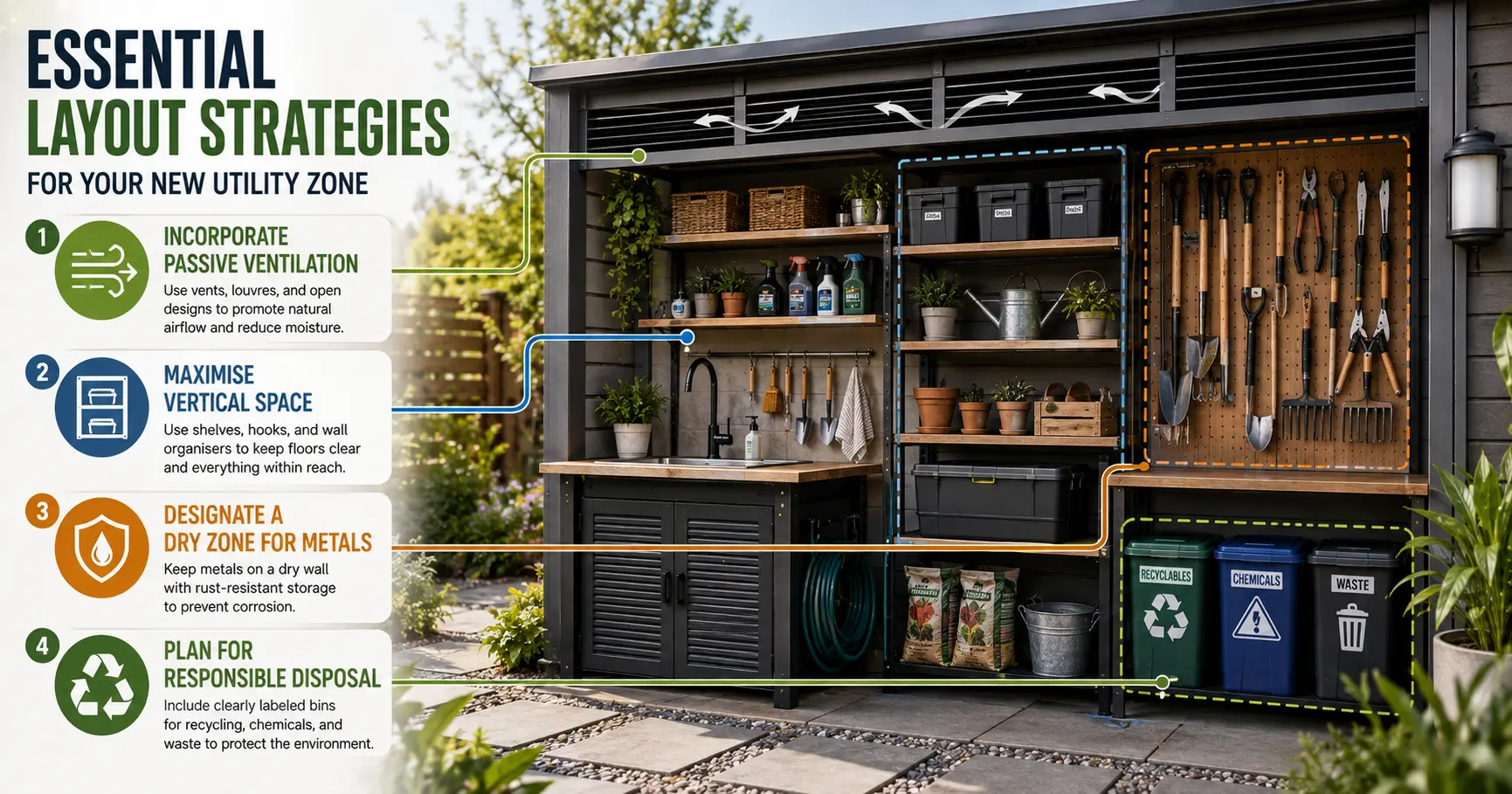
Consider these essential layout strategies for your new utility zone:
- Incorporate passive ventilation: Managing interior condensation is critical. Proper airflow prevents trapped humidity from rusting metal hand tools and clumping sensitive soil additives.
- Maximise vertical space: Hang long-handled tools on wall-mounted racks to keep them off the floor and easily accessible. This also protects their sharp edges from blunting.
- Designate a dry zone for metals: Even high-quality stainless steel tools require dry, enclosed storage to maintain their protective chromium layer and prevent oxidation during extended wet seasons.
- Plan for responsible disposal: Set up a dedicated bin for empty chemical containers, making it easier to utilise nationwide recycling initiatives like drumMUSTER and ChemClear when the time comes.
Building a weatherproof utility zone elevates your gardening practice from a casual hobby to a highly organised, sustainable operation. By combining durable construction materials with smart layout strategies and safe chemical management, you will create an enduring workspace that supports your garden year after year.