Prune shrubs by removing dead, damaged, or crossing branches and cutting back no more than one-third of the plant’s total growth in a single season. This keeps shrubs healthy, promotes vigorous new growth, and maintains a clean garden shape. Below is everything you need to do it right — from tools to timing to exact cuts.
Most homeowners either skip pruning entirely or prune at the wrong time and wonder why their shrubs look worse afterward. This guide fixes both problems.
Why Prune Shrubs at All
Pruning is not just cosmetic. It directly affects the long-term health of your shrub. Here are 5 clear reasons to prune:
- Remove dead, diseased, or damaged wood before it spreads
- Improve air circulation inside the canopy, reducing fungal disease
- Let sunlight reach lower and inner branches
- Stimulate new flowering wood on blooming shrubs
- Control size and shape before a shrub becomes unmanageable
Skipping pruning for years forces you into harder renovation cuts later. Annual light pruning takes 15 minutes. Renovation pruning of a neglected shrub can take hours and stress the plant.
Pruning Tools You Actually Need
The right tool depends on the branch diameter. Using the wrong one tears stems instead of cutting cleanly, and torn tissue invites disease.
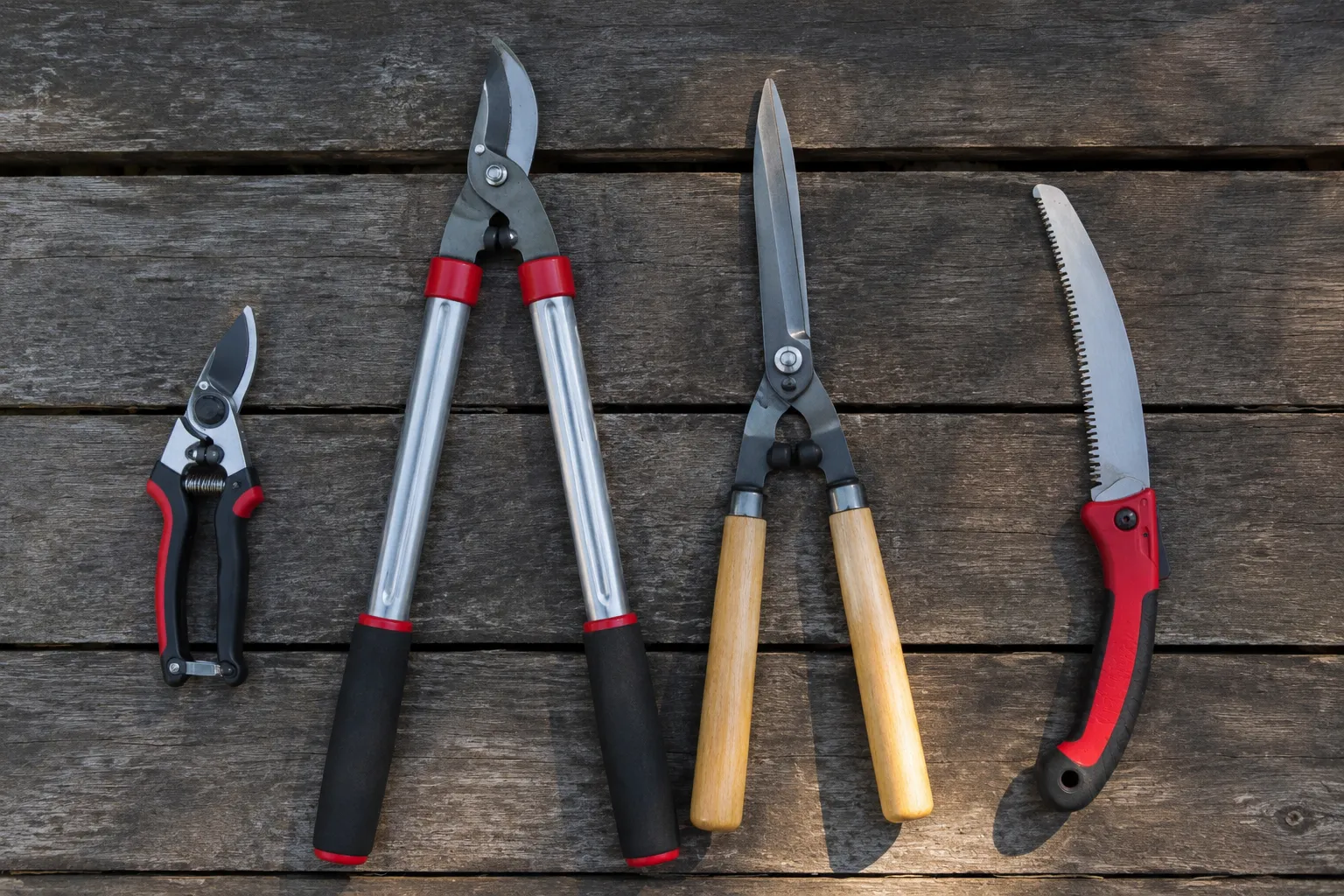
Hand Pruners (Bypass Pruners)
Use for branches up to ¾ inch (19 mm) in diameter. Bypass pruners work like scissors — 2 blades slide past each other for a clean cut. Always choose bypass over anvil-style pruners for live wood. Anvil pruners crush soft green stems.
Loppers
Use for branches ¾ inch to 1.5 inches (19–38 mm) in diameter. Long handles give leverage on thicker wood. Bypass loppers still cut cleaner than anvil loppers on living branches.
Hedge Shears
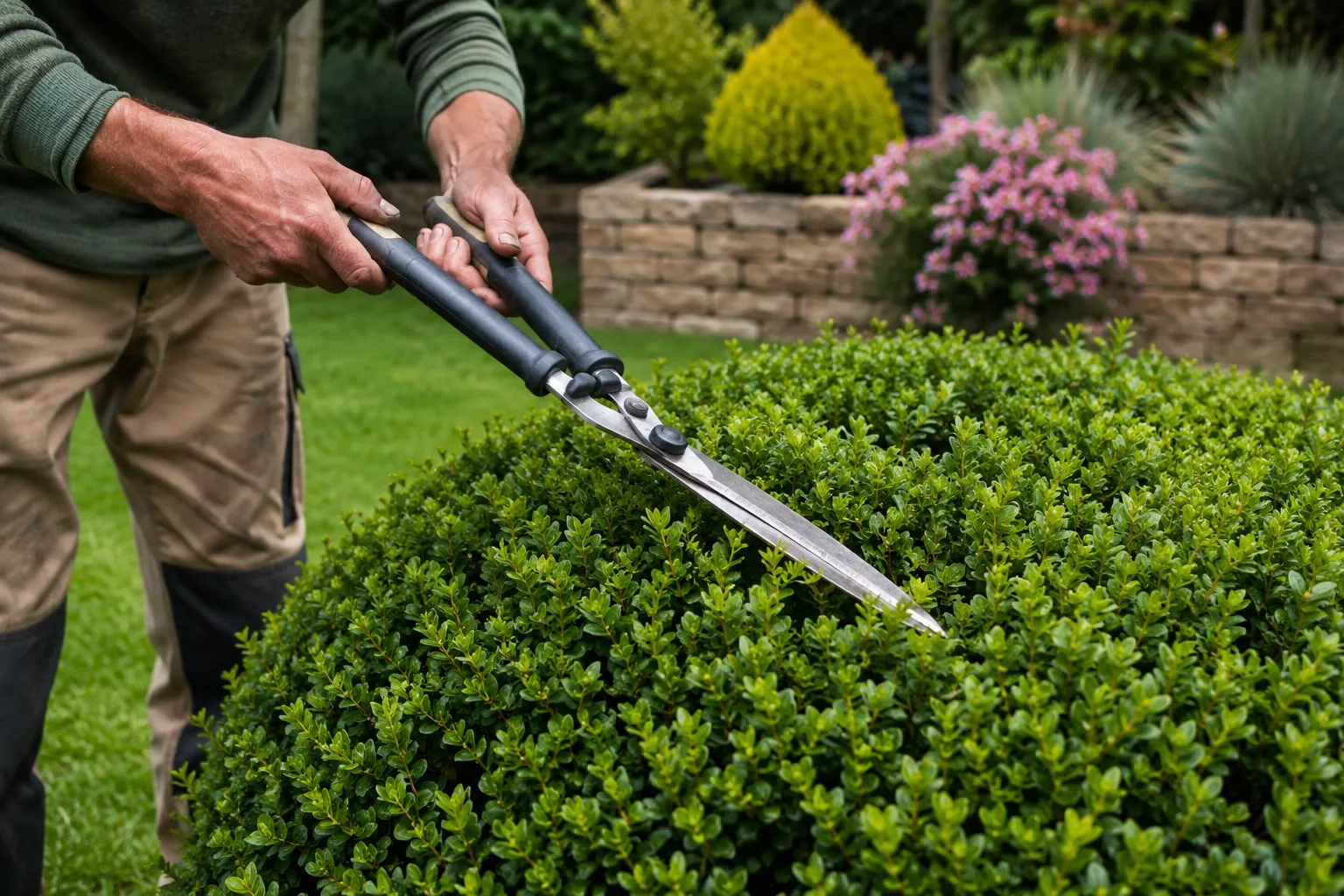
Use for shaping formal hedges and fast-growing shrubs like boxwood or privet. Not suited for individual branch cuts — hedge shears trim surface growth uniformly.
Pruning Saw
Use for branches over 1.5 inches (38 mm) thick. A folding pruning saw handles most home garden jobs. Never use a standard wood saw on shrubs — the teeth are wrong.
Disinfect all pruning tools with 70% isopropyl alcohol or 10% bleach solution before starting, between shrubs, and after every cut on diseased wood. This prevents spreading bacteria and fungal spores.
When to Prune Shrubs — Timing Is Everything
Pruning at the wrong time is the most common mistake. It removes next year’s flower buds or forces tender new growth into a frost.
Old Wood vs. New Wood: The Key Distinction
Old wood is growth from previous seasons. New wood is the current season’s growth. Which one your shrub flowers on determines when to prune.
Shrubs That Bloom on Old Wood — Prune Right After Flowering
These shrubs set next year’s buds on this year’s growth. Pruning in late summer, fall, or winter removes those buds and eliminates next spring’s blooms.
Prune them within 4–6 weeks after the blooms fade. Examples include:
- Forsythia
- Lilac
- Azalea and Rhododendron
- Mock orange (Philadelphus)
- Viburnum
- Spring-blooming Spirea
Shrubs That Bloom on New Wood — Prune in Late Winter or Early Spring
These shrubs bloom on the current season’s new growth. Pruning in late February or early March, just before growth begins, encourages strong new stems and more flowers.
- Butterfly bush (Buddleia)
- Hydrangea arborescens (Smooth hydrangea — ‘Annabelle’)
- Hydrangea paniculata (Panicle hydrangea — ‘Limelight’)
- Summersweet (Clethra)
- Rose-of-Sharon
- Summer-blooming Spirea
Evergreen Shrubs — Prune in Late Spring
Prune boxwood, arborvitae, juniper, and yew after new spring growth has flushed out. Never cut into old brown wood on evergreens — it will not regrow.
Dead Wood: Remove Anytime
Dead, diseased, damaged, or crossing branches (the 4 D’s) can be removed in any season. Do not wait for the ideal pruning window.
Do not prune spring- or summer-flowering shrubs after mid-August. New growth stimulated by pruning won’t harden before winter and will suffer frost damage.
How to Prune Shrubs: Step-by-Step
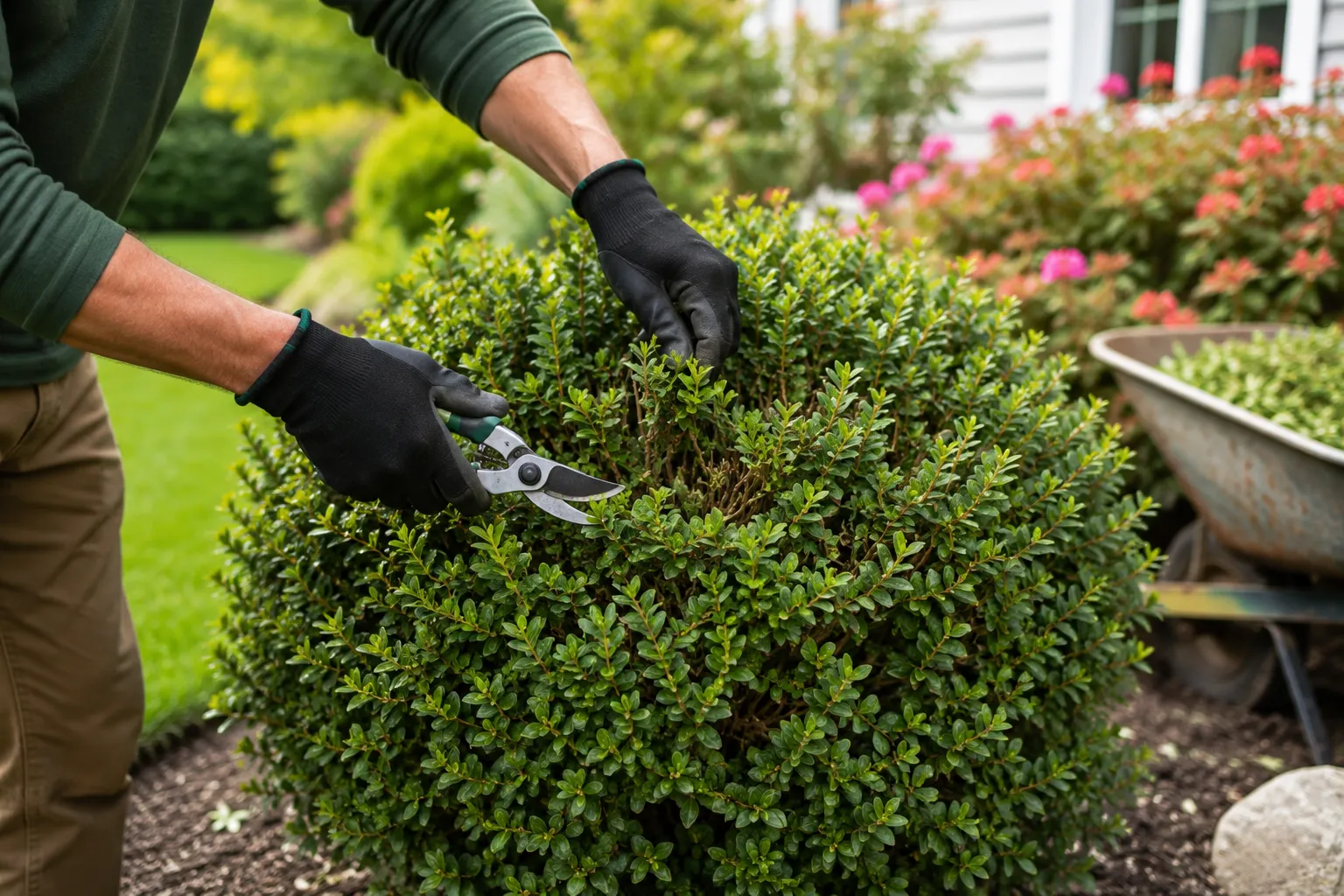
Step 1 — Inspect Before You Cut
Walk around the shrub and identify: dead branches (no leaves, brittle, brown), diseased wood (spots, cankers, wilting on one side), crossing branches that rub against each other, and branches that grow inward rather than outward.
Remove these 4 problem types first before any shaping cuts.
Step 2 — Make the Right Cut
Where you cut determines where new growth emerges. Cut to the wrong spot and you get stubs, die-back, or weak water sprouts.
- Thinning cut: Remove an entire branch back to where it meets the main stem or another healthy branch. Use this most often. Keeps the natural shape and opens the canopy.
- Heading cut: Shorten a branch to just above a healthy bud or side branch. Cut at a 45-degree angle, with the lowest point away from the bud. Stimulates bushy growth below the cut.
- Pinching: Remove soft growing tips with fingers or pruners on small-leaved shrubs. Encourages branching.
Cut at a 45-degree angle, ¼ inch (6 mm) above the bud. The angle drains water away from the bud. Cutting too close kills the bud; leaving too long a stub causes die-back.
Step 3 — Follow the One-Third Rule
Never remove more than one-third of the shrub’s live growth in one season. This ensures enough foliage remains to produce energy for recovery. Over-pruning causes weak regrowth, fewer flowers, and long-term decline.
For badly overgrown shrubs, spread the work over 3 seasons. Remove the oldest, thickest stems first each year.
Step 4 — Shape From the Bottom Up
For formal hedges and foundation shrubs, work from bottom to top. A properly shaped hedge is slightly wider at the base than at the top — this tapered shape (called a batter) lets sunlight reach the lower leaves and prevents bare patches at the base.
Step 5 — Clean Up and Dispose
Remove all cut material from around the base of the shrub. Diseased prunings should go in the trash, not the compost pile. Bag and bin them to prevent spore spread.
Pruning by Shrub Type: Specific Instructions
How to Prune Hydrangeas
Prune Smooth hydrangeas (Hydrangea arborescens) and Panicle hydrangeas (Hydrangea paniculata) in late winter or early spring — they bloom on new wood. Cut smooth hydrangeas to 12–18 inches (30–45 cm) from the ground. Prune panicle hydrangeas by one-third.
Bigleaf hydrangeas (Hydrangea macrophylla) bloom on old wood. Prune only dead wood in spring, and shape lightly right after summer flowers fade.
How to Prune Roses
Most roses bloom on new wood. Prune in early spring when forsythia blooms — a reliable seasonal indicator. Remove all dead canes, thin the bush to 5–7 healthy canes, and cut remaining canes back by one-third to an outward-facing bud.
How to Prune Boxwood
Prune boxwood in late spring after new growth appears. Use hedge shears for formal shapes. Avoid cutting deeper than the current season’s growth on old boxwood — inner brown wood will not resprout. Light trimming 2–3 times per season maintains tight shapes.
How to Prune Forsythia
Prune forsythia immediately after the yellow spring blooms fade — typically late March to April. Remove the oldest, thickest stems at the base each year to rejuvenate. Forsythia responds well to heavy pruning and resprouts vigorously.
How to Prune Lilac
Prune lilac right after blooming in late spring. Remove spent flower clusters and thin out 2–3 of the oldest stems at the base. Lilac produces flowers on old wood — pruning in summer or fall eliminates next year’s blooms.
Rejuvenation Pruning: How to Fix Overgrown Shrubs
Rejuvenation pruning is a hard reset for shrubs that have become leggy, hollow in the center, or completely out of shape. This involves cutting most or all stems down to 6–12 inches (15–30 cm) from the ground.
Not all shrubs tolerate this. It works well on:
- Forsythia
- Spirea
- Red-twig dogwood
- Weigela
- Buddleia (butterfly bush)
- Hydrangea arborescens
Never attempt rejuvenation pruning on evergreens — they will not regrow from bare wood.
Timing: Late winter or very early spring before growth starts. The shrub will look stripped for one full season. By the second year, it grows back fuller and healthier than before.
Spread rejuvenation over 3 years if you prefer a gradual approach. Remove one-third of the oldest stems each year. Less shock, slower but safer recovery.
7 Pruning Mistakes to Avoid
- Pruning at the wrong time of year and removing next season’s flower buds
- Cutting with dull, dirty tools that tear stems and spread disease
- Leaving stubs — cut back to the node or main branch, never leave stubs
- Topping shrubs by shearing all branches to the same flat height — this creates weak, crowded water sprouts
- Removing more than one-third of growth in one season
- Using wound sealant or tree paint on cut ends — research shows it promotes decay, not healing
- Pruning newly planted shrubs — they need all leaves to support root development
Shrub Pruning Calendar: Season by Season
Winter (December – February)
- Prune roses in late February when forsythia blooms
- Cut back hydrangeas that bloom on new wood (arborescens, paniculata)
- Remove any dead or storm-damaged wood on all shrubs
Spring (March – May)
- Prune spring-blooming shrubs immediately after flowers fade (lilac, forsythia, azalea)
- Shape evergreens after new growth has flushed (boxwood, arborvitae, juniper)
- Begin light shaping on fast-growing hedges
Summer (June – August)
- Light shaping of formal hedges as needed (before mid-August)
- Deadhead spent flowers on roses and repeat-blooming shrubs
- Stop all heavy pruning by mid-August to allow new growth to harden before frost
Fall (September – November)
- No pruning of live wood — new growth won’t harden in time
- Remove dead, diseased, or damaged branches (4 D’s) at any time
- Clean and oil all pruning tools before storage
Quick Answers to Common Pruning Questions
How much can I cut off a shrub?
Remove a maximum of one-third of live growth per season. More than that stresses the plant and delays recovery.
Can I prune shrubs in fall?
No — not live, healthy growth. Pruning in fall stimulates new growth that won’t harden before frost. Only remove dead, diseased, or damaged wood in fall.
Should I fertilize after pruning?
Light fertilization with a balanced slow-release fertilizer supports recovery after heavy pruning. Skip fertilizer after light maintenance trims — well-established shrubs do not need it.
What is the best tool for pruning shrubs?
Sharp bypass hand pruners handle most shrub pruning. Add loppers for thick stems and hedge shears only if you maintain formal shapes.
Do I need to paint pruning cuts?
No. Wound sealants and pruning paint do not speed healing and can trap moisture that promotes decay. Leave cuts open.
Final Takeaway
Pruning shrubs is straightforward once you know 3 things: what type of shrub you have, whether it blooms on old or new wood, and how much you can safely remove. Sharp tools, correct timing, and the one-third rule handle almost every situation.
Start with the dead and damaged wood, then move to shaping. Prune regularly rather than aggressively, and your shrubs will stay healthy and look good year after year.