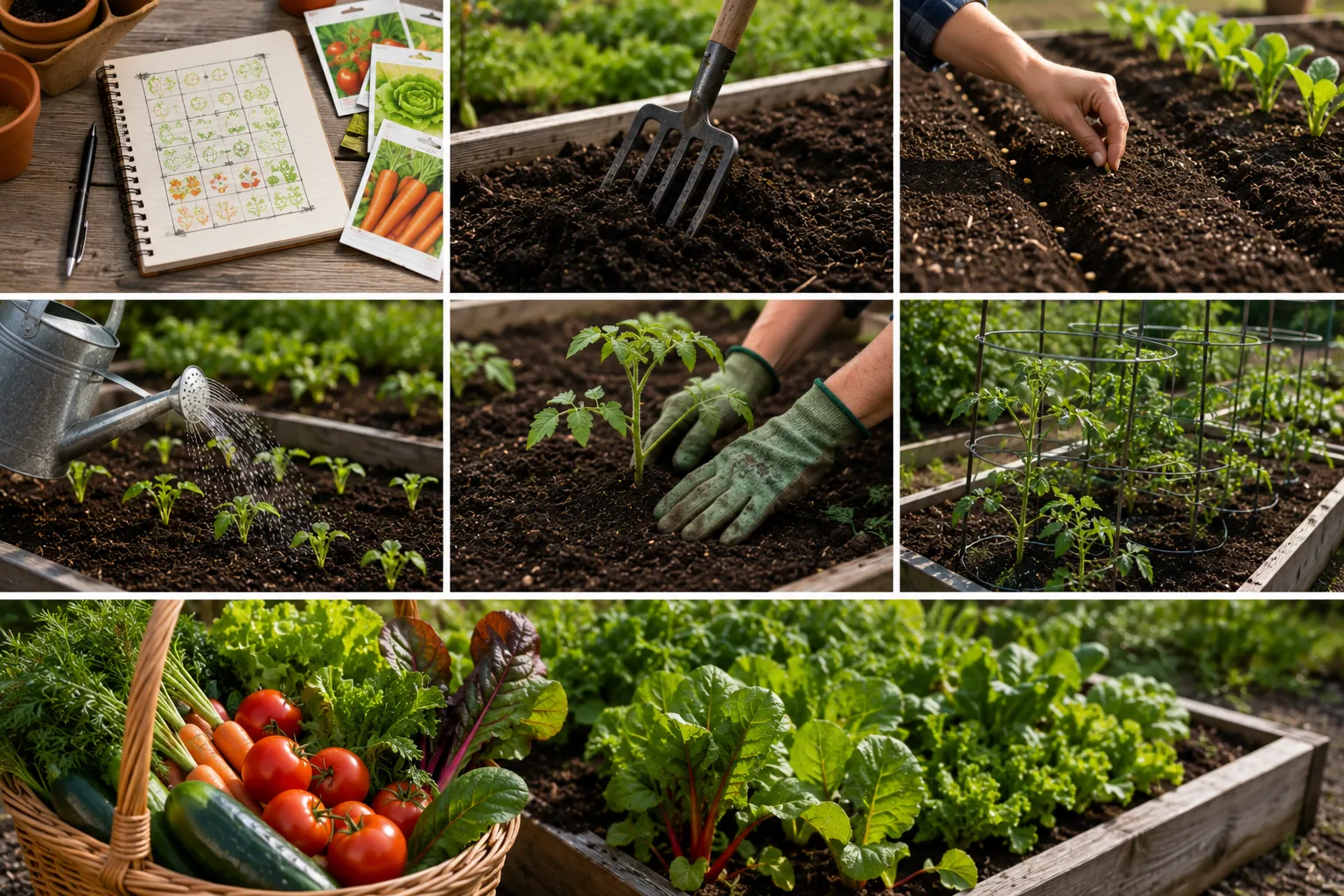
You start a vegetable garden by choosing a sunny site, preparing the soil, and planting easy crops at the right time. Follow the 7 steps below to grow a productive garden in your first season.
This guide covers site selection, soil preparation, bed types, crop choices, spacing, timing, and ongoing care. Each step gives you exact numbers, not guesswork, so you avoid the most common beginner mistakes.
How to Choose the Right Location for Your Vegetable Garden
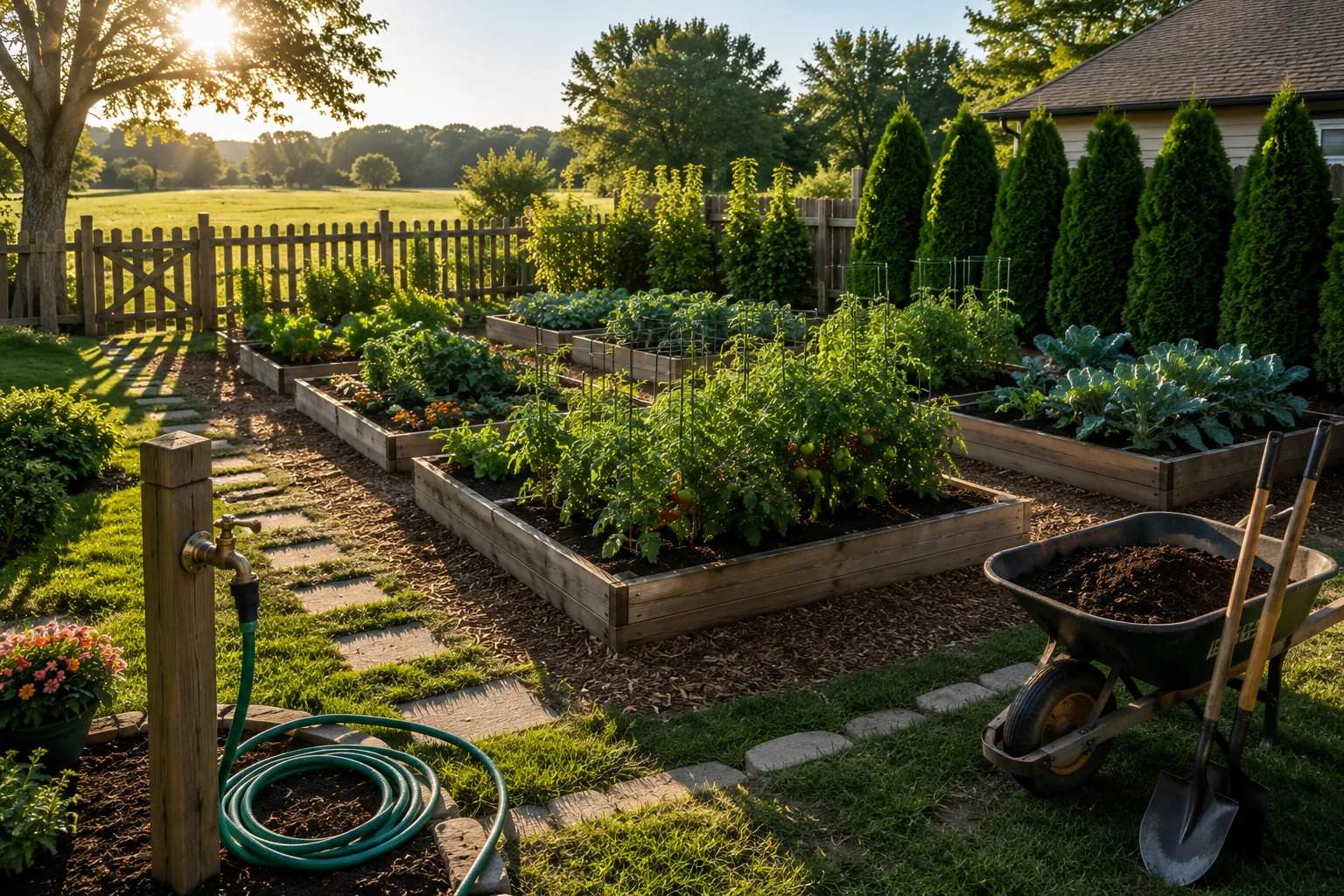
To choose the right location for your vegetable garden, pick a flat spot that receives 6 to 8 hours (preferably more) of direct sunlight daily. Sunlight drives photosynthesis, and most fruiting vegetables such as tomatoes, peppers, and cucumbers need that full exposure to produce well.
Place your garden close to a water source. A site 25 feet (7.6m) or less from your hose connection saves you time on watering days and increases the odds you will keep up with care through the season.
Avoid low areas where water pools after rain. Standing water suffocates roots and invites fungal disease within 2 to 3 days of saturation.
Check for wind exposure before finalizing your site. Strong, consistent wind above 15 miles per hour (24 km/h) can topple young tomato and pepper plants and disrupt pollinators like bees that vegetables depend on for fruit set.
A windbreak made from a fence, hedge, or wall blocks gusts without blocking sunlight. Position taller barriers on the prevailing wind side, typically north or west in most US regions.
How to Test Your Sunlight Hours
To test your sunlight hours, track the spot at 3 separate times during one clear day: morning, midday, and late afternoon. Mark each hour the location stays in direct, unobstructed sun and add the totals together.
Leafy crops like lettuce, spinach, and kale tolerate as little as 4 hours of sun. Fruiting crops like tomatoes and peppers need a minimum of 6 hours, and 8 hours produces noticeably higher yields.
How to Check Soil Drainage Before Planting
To check soil drainage, dig a hole 12 inches (30cm) deep and 12 inches (30cm) wide, then fill it with water. Healthy, well-drained soil absorbs that water within 1 to 2 hours.
Water that sits for more than 4 hours signals compacted or clay-heavy soil. Build a raised bed on that site instead of planting directly in the ground.
How to Decide Between Raised Beds, Containers, and In-Ground Plots
You decide between raised beds, containers, and in-ground plots by matching the method to your soil quality, available space, and budget. Each option carries distinct costs and maintenance needs.
Raised beds cost $50 to $200 (£40 to £160) to build and warm up 2 to 3 weeks faster in spring than ground soil. Containers cost $10 to $40 (£8 to £32) per pot and work well on patios and balconies with no yard access. In-ground plots cost the least to start but require deeper soil preparation and produce lower yields in compacted clay.
Raised Bed Dimensions That Work Best
The best raised bed dimensions for beginners measure 4 feet by 8 feet (1.2m by 2.4m) and stand 6 to 12 inches (15 to 30cm) tall. A 4-foot (1.2m) width lets you reach the center from either side without stepping on the soil.
Untreated cedar, pine, and composite lumber work as safe, long-lasting frame materials. Avoid railroad ties and chemically treated wood, since these can leach chemicals into your soil.
Fill a new raised bed with a 3-way mix: 40 percent topsoil, 40 percent compost, and 20 percent aeration material such as perlite or coarse sand. This combination drains well while holding enough moisture for root growth between waterings.
Container gardening suits balconies, patios, and rented properties without yard access. Choose containers at least 12 inches (30cm) deep for shallow-rooted crops like lettuce and 18 to 24 inches (45 to 60cm) deep for tomatoes and peppers.
How to Prepare Garden Soil for Planting
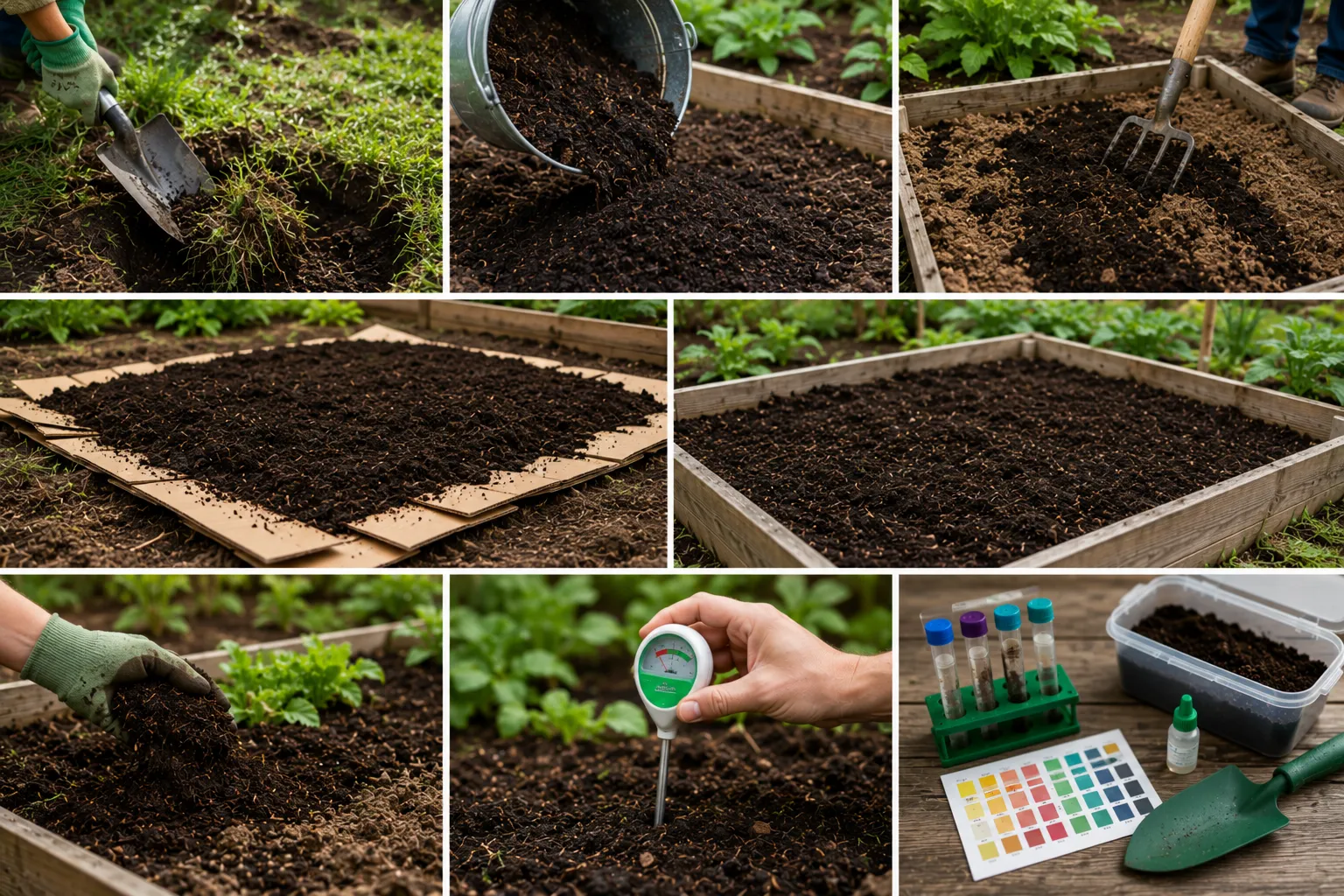
To prepare garden soil for planting, remove grass and weeds, then mix 2 to 4 inches (5 to 10cm) of compost into the top 6 to 8 inches (15 to 20cm) of soil. Healthy vegetable soil drains well and contains 5 percent or more organic matter.
Turn under sod with a shovel or spade, or smother it under cardboard topped with 3 inches (7.5cm) of compost for 8 to 10 weeks before planting. This method kills grass without herbicides and adds organic matter at the same time.
For an existing bed, add a thin 1-inch (2.5cm) layer of fresh compost before each new planting. This single habit maintains nutrient levels across multiple growing seasons.
How to Test Soil pH and Nutrients
To test soil pH and nutrients, send a sample to your local extension office or use a home test kit that costs $10 to $25 (£8 to £20). Most vegetables grow best in soil with a pH between 6.0 and 6.8.
Soil testing also reveals nitrogen, phosphorus, and potassium (NPK) levels. Add the specific amendment your results recommend rather than applying generic fertilizer, which wastes money and can burn plant roots.
Which Vegetables Should Beginners Plant First
Beginners should plant 6 reliable vegetables first: bush beans, cherry tomatoes, zucchini, lettuce, radishes, and bell peppers. These varieties tolerate minor care mistakes and produce a harvest within 1 growing season.
Radishes mature in 25 to 30 days, making them the fastest crop for new gardeners who want quick results. Bush beans follow at 50 to 60 days, while cherry tomatoes take 60 to 80 days from transplant to first harvest.
Choose vegetables your household already eats regularly. The National Gardening Association’s 2026 home gardener survey ranks tomatoes as the single most-grown crop in American backyard gardens.
Skip crops that demand specialized conditions in your first season, including artichokes, asparagus, and Brussels sprouts. These plants need 2 or more years to establish or require precise temperature windows that frustrate new growers.
Named varieties bred for reliability help beginners further. Try Cherokee Purple or Better Boy tomatoes, Black Beauty zucchini, Buttercrunch lettuce, and Cherry Belle radishes for consistent, well-documented results across most US growing zones.
Buy certified disease-resistant seed packets when available, marked with codes like VFN for tomatoes (resistant to verticillium wilt, fusarium wilt, and nematodes). These codes appear directly on seed packets and reduce crop loss from common soil-borne diseases.
How to Plan Vegetable Garden Layout and Spacing
To plan your vegetable garden layout, place tall crops like pole beans and corn on the north or west side of the bed. This positioning prevents tall plants from shading shorter crops such as lettuce and carrots.
Space plants based on their mature size, not their seedling size. Tomatoes need 24 to 36 inches (60 to 90cm) between plants, bush beans need 4 to 6 inches (10 to 15cm), and lettuce needs 8 to 12 inches (20 to 30cm).
Leave a 16 to 18 inch (40 to 45cm) path between rows or beds. This width gives you room to kneel, weed, and harvest without compacting the growing soil.
How to Group Crops by Season
Group crops by season into 2 categories: cool-season vegetables and warm-season vegetables. Cool-season crops including spinach, peas, and broccoli grow best at 60 to 70°F (15 to 21°C) and tolerate light frost.
Warm-season crops including tomatoes, peppers, and cucumbers need soil temperatures above 60°F (15°C) to germinate and grow. Plant these only after your last frost date passes for your specific zone.
When to Plant Your Vegetable Garden by Season
You plant cool-season crops 2 to 4 weeks before your last frost date and warm-season crops 1 to 2 weeks after that date passes. Your local last frost date determines every planting decision that follows.
Start seeds indoors for tomatoes, peppers, and eggplant 6 to 8 weeks before your last frost date. Direct-seed fast-growing crops like radishes, beans, and squash straight into garden soil once outdoor temperatures stay reliably warm.
Use succession planting to extend your harvest window. Sow a new round of lettuce or radish seeds every 14 days across a 6-week period instead of planting your entire seed packet on a single day.
Harden off indoor seedlings over 7 to 10 days before transplanting them outside. Move trays outdoors for 1 hour on day 1, then add 1 to 2 extra hours daily until seedlings tolerate a full day outside.
How to Water and Maintain a Vegetable Garden After Planting
To water a vegetable garden correctly, apply 1 to 1.5 inches (2.5 to 3.8cm) of water per week, delivered in 2 to 3 deep sessions rather than daily light sprinkling. Deep watering encourages roots to grow downward, which builds drought tolerance.
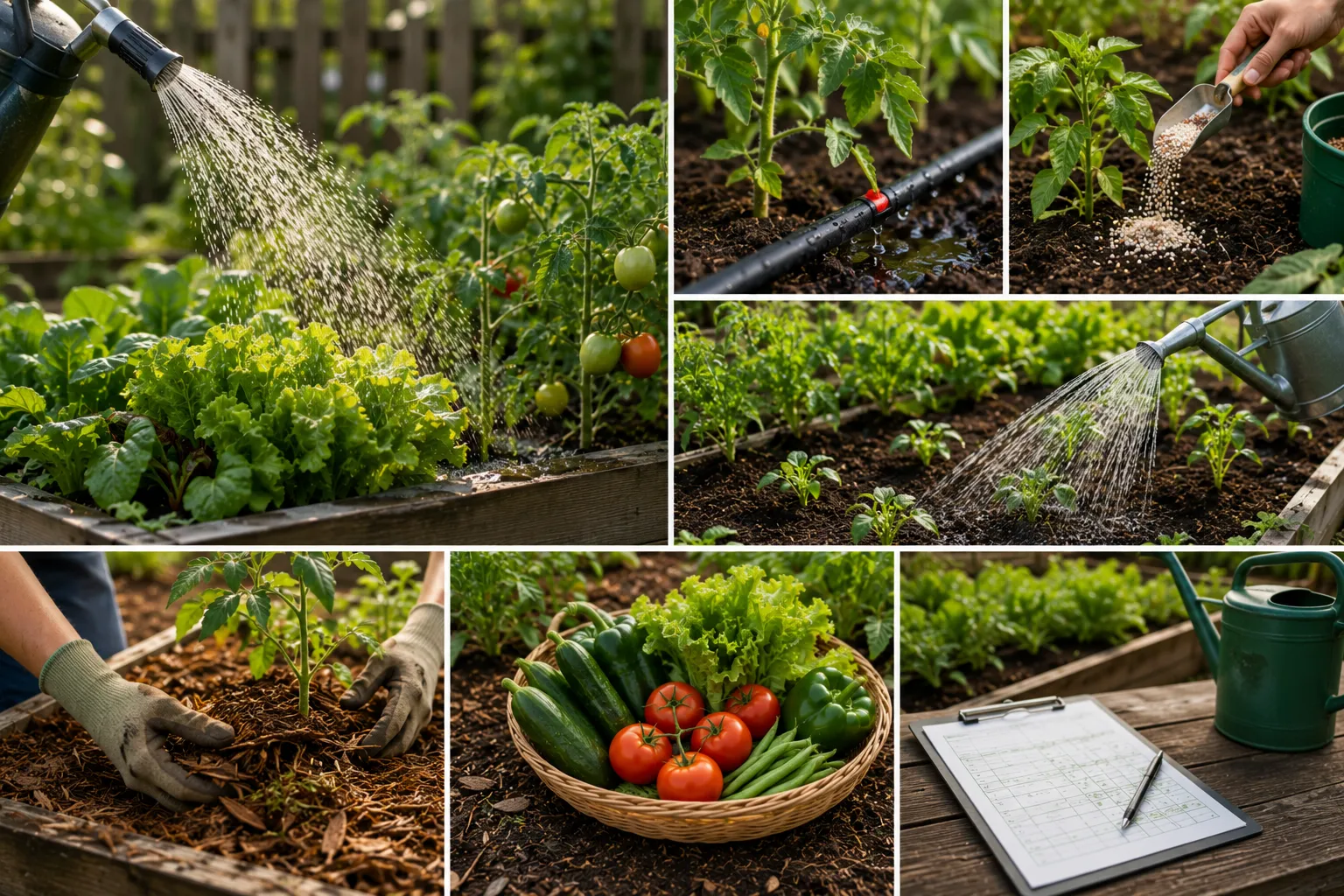
Water in the morning between 6 and 9 a.m. Morning watering reduces evaporation loss and gives leaves time to dry before evening, which lowers fungal disease risk.
A soaker hose or drip irrigation line cuts water waste by 30 to 50 percent compared to overhead sprinklers. Place the line at the base of each plant rather than across the foliage.
Feed your plants every 3 to 4 weeks during the growing season with a balanced fertilizer or fresh compost top-dressing. Heavy feeders like tomatoes, corn, and squash respond best to nitrogen-rich feeding in early growth and phosphorus-rich feeding once flowering starts.
Apply mulch within 1 week of transplanting to lock in soil moisture and block weed growth; you can browse mulch type guide to pick the right material for your climate and crop mix.
Build a watering routine around your specific climate zone rather than a fixed weekly number, since rainfall and heat vary widely; a custom watering schedule tool adjusts the amount and frequency to your zone automatically.
How to Control Weeds and Pests Without Chemicals
To control weeds without chemicals, hand-pull or hoe new growth within 3 days of sprouting, before root systems establish. A 2 to 3 inch (5 to 7.5cm) mulch layer blocks roughly 90 percent of weed seeds from germinating.
Inspect leaves and stems every 3 to 4 days for aphids, hornworms, and squash bugs. Remove pests by hand, introduce beneficial insects like ladybugs, or apply insecticidal soap for infestations that hand removal cannot control.
Rotate crop families to different bed sections each year to break pest and disease cycles. Avoid planting tomatoes, peppers, or eggplant in the same soil 2 years in a row.
Quick-Reference Vegetable Garden Task Table
This table lists 8 core vegetable garden tasks with exact timing, method, and difficulty level so you can plan your season at a glance.
| Task | Best Timing | Method | Difficulty |
| Test soil pH | 2 weeks before planting | Home test kit or lab sample | Easy |
| Add compost | 1 to 2 weeks before planting | Mix 2 to 4 inches (5 to 10cm) into top 6 inches (15cm) | Easy |
| Start seeds indoors | 6 to 8 weeks before last frost | Seed trays under grow lights | Moderate |
| Harden off transplants | 7 to 10 days before transplanting | Increase outdoor exposure daily | Moderate |
| Transplant seedlings | After last frost date | Plant on a cloudy afternoon | Easy |
| Apply mulch | Right after transplanting | Spread 2 to 3 inches (5 to 7.5cm) of straw or leaves | Easy |
| Water deeply | 2 to 3 times weekly | Soaker hose at the base of plants | Easy |
| Check for pests | Every 3 to 4 days | Visual inspection of leaves and stems | Easy |
If you need to confirm how much growing space you actually have before buying soil or seedlings, the measure my lawn tool calculates exact square footage so you order the right quantity.
Frequently Asked Questions About Starting a Vegetable Garden
How much space do I need to start a vegetable garden?
A 50 to 75 square foot (4.6 to 7 square meter) plot grows enough food for 1 to 2 people. A 4×8 foot (1.2 x 2.4m) raised bed fits comfortably within that range.
Can I start a vegetable garden without buying soil?
Yes, you can use existing ground soil after testing pH and adding 2 to 4 inches (5 to 10cm) of compost. Heavy clay or sandy soil still benefits from a raised bed filled with purchased topsoil and compost.
What is the cheapest way to start a vegetable garden?
An in-ground plot with hand tools and seed packets costs $20 to $50 (£16 to £40) total. Seeds cost less than transplants, and a basic in-ground bed avoids lumber and soil-fill expenses entirely.
Do I need full sun to grow vegetables?
No, leafy greens like lettuce, spinach, and kale grow well in 4 hours of partial sun. Fruiting vegetables such as tomatoes and peppers need 6 to 8 hours of direct sun to produce a full harvest.
How long does it take to grow a vegetable garden from scratch?
Fast crops like radishes mature in 25 to 30 days, while tomatoes take 60 to 80 days from transplant. Most beginner gardens reach their first harvest within 6 to 10 weeks of planting.
Start Growing Your Own Vegetables This Season
You now have 7 clear steps covering location, soil, bed type, crop choice, spacing, timing, and care. Apply each step in order, track your results in a simple notebook, and adjust quantities next season based on what your household actually eats.
Match every crop you plant to your exact climate zone for stronger results from week one. Visit the custom watering schedule tool to build a zone-specific care plan before you put a single seed in the ground.