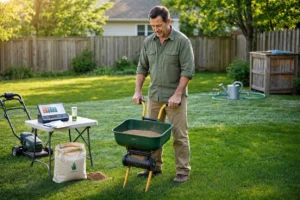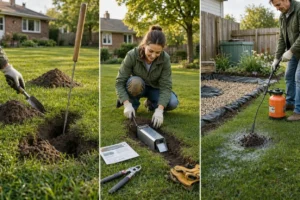
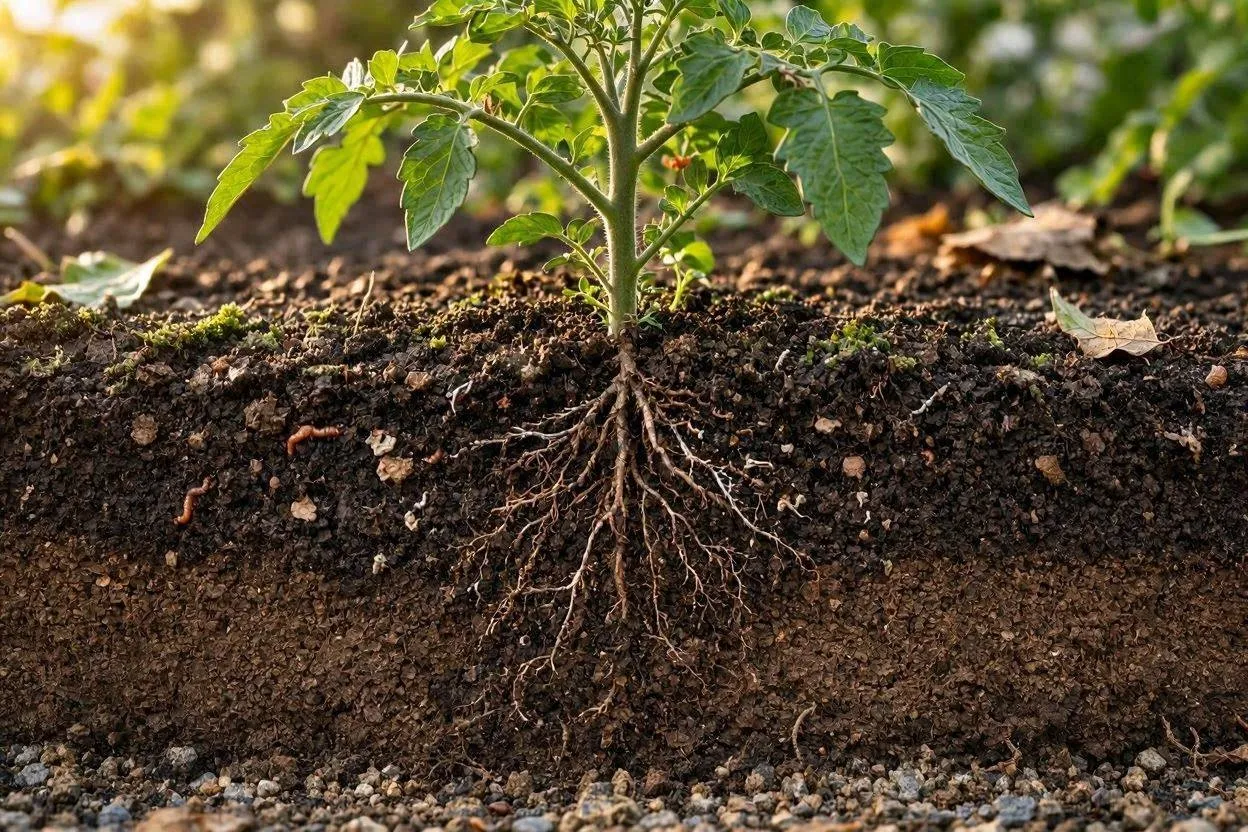
Loamy soil is the best soil for plant growth. It holds the right balance of sand, silt, and clay, drains well, and holds enough moisture and nutrients to feed healthy roots. Most vegetables, flowers, and fruit trees thrive in it.
But “best” changes with what you plant. A cactus rots in loam. A blueberry bush needs acidic peat. This guide breaks down each soil type, tells you which plants need which soil, and gives you a 3-step test to check your own dirt today.
What Makes Soil Good for Plant Growth
Four factors decide whether soil supports strong growth: texture, pH, drainage, and nutrient content.
- Texture determines how tightly soil particles pack together. Loose soil lets roots spread; compacted soil blocks them.
- pH controls nutrient uptake. Most plants absorb nutrients best between 6.0 and 7.0 pH.
- Drainage keeps roots from sitting in water, which causes rot.
- Nutrient content — mainly nitrogen (N), phosphorus (P), and potassium (K) — fuels leaf growth, root strength, and flowering.
Organic matter ties all four together. Compost, aged manure, and leaf mold feed soil microbes, which break nutrients into forms roots can absorb.
6 Types of Soil and What Grows Best in Each
Soil scientists classify soil into six main types based on particle size and composition.
| Soil Type | Texture | Drainage | Best For |
| Loamy | Crumbly, soft | Balanced | Vegetables, most flowers, fruit trees |
| Sandy | Gritty, loose | Fast | Carrots, herbs, drought-tolerant plants |
| Clay | Dense, sticky when wet | Slow | Summer crops, moisture-loving shrubs |
| Silty | Smooth, powdery | Moderate | Lettuce, onions, moisture-loving trees |
| Peaty | Spongy, dark | Slow, holds water | Blueberries, azaleas, acid-loving shrubs |
| Chalky | Stony, pale | Fast | Cabbage, spinach, lilac |
Loamy Soil
Loam mixes sand, silt, and clay in near-equal parts. It holds moisture without waterlogging, drains excess water, and stays loose enough for roots and oxygen to move freely. Gardeners rank it highest for one reason: it needs the least correction.
Sandy Soil
Sandy soil warms fast in spring and drains within minutes of watering. That speed helps deep-rooted vegetables like carrots and radishes but starves shallow-rooted plants of moisture. Mix in compost twice a year to slow drainage and add nutrients.
Clay Soil
Clay particles pack tightly, so water and air move through slowly. Clay holds nutrients well but suffocates roots when wet and cracks when dry. Add gypsum or coarse sand to break up density, and plant in raised beds if drainage stays poor after amending.
Silty Soil
Silt sits between sand and clay in particle size. It holds moisture better than sand and drains better than clay, making it fertile but prone to compacting underfoot. Avoid walking on silty beds after rain.
Peaty Soil
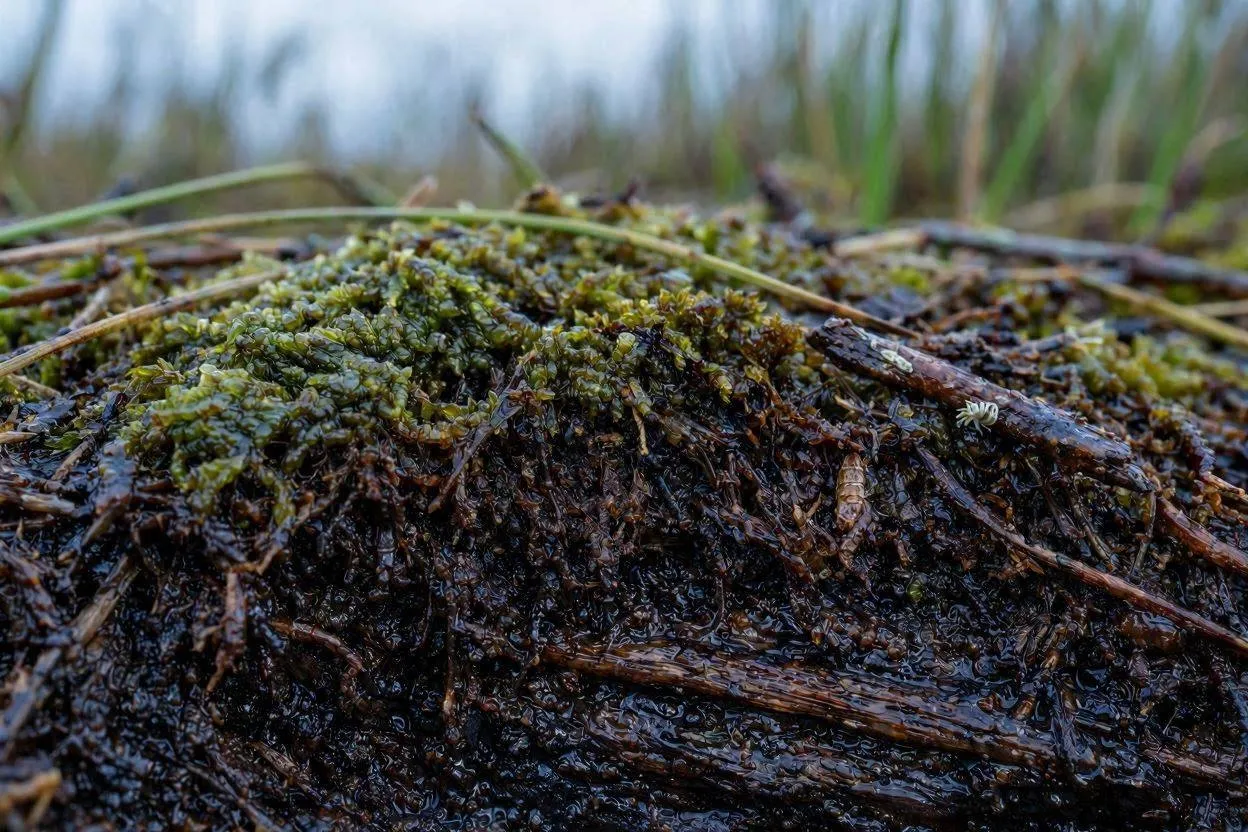
Peat forms from decomposed plant matter and holds water like a sponge. Its natural acidity (often below 5.5 pH) suits blueberries, azaleas, and other acid-loving plants but stunts vegetables that need neutral pH. Add lime to raise pH for non-acid-loving crops.
Chalky Soil
Chalky soil sits over limestone bedrock and drains fast. Its alkaline pH (above 7.5) locks out iron and manganese, causing yellow leaves on plants that need acidic conditions. Add well-rotted manure and iron chelates to correct deficiencies.
Best Soil by What You’re Growing
Vegetable Gardens
Use a 50/50 mix of compost and topsoil for raised beds. For in-ground plots, amend clay or sandy soil with 2-3 inches of compost worked into the top 8 inches before planting.
Flowers
Flower bulbs need sandy loam for fast drainage that prevents rot. For flower beds, mix compost, peat, and topsoil in equal parts (1:1:1).
Fruit Trees and Berries
Fruit trees need loose, well-draining loam with steady moisture. Blueberries break this rule — they need peat-based, acidic soil below 5.5 pH.
Indoor Plants
Never use outdoor garden soil for houseplants; it carries bacteria, insects, and weed seeds that harm container plants. Use a commercial potting mix with peat moss, perlite, and slow-release fertilizer, or bake garden soil at 180°F for 30 minutes to sterilize it first.
Raised Beds and Containers
Raised beds drain faster than ground soil, so use a moisture-retentive blend: equal parts compost, peat moss, and vermiculite holds water without waterlogging roots.
How to Test Your Soil in 3 Steps

Yes, you can test soil accuracy at home without a lab. Follow these steps:
- Fill a clear jar one-third with soil, add water to the top, and shake for 60 seconds.
- Let it settle for 24 hours. Sand sinks first, silt settles next, clay forms the top layer.
- Measure each layer’s thickness. Roughly equal layers mean loam; a thick bottom layer means sandy soil; a thick top layer means clay soil.
For pH, use a $10-15 home test kit or send a sample to your local extension office for a full nutrient report (usually $15-30 in the US).
5 Ways to Fix Poor Soil
- Add compost to improve nutrient content and structure in any soil type.
- Mix in perlite or coarse sand to loosen dense clay and improve drainage.
- Add peat moss or coconut coir to increase moisture retention in sandy soil.
- Apply lime to raise pH in acidic soil, or sulfur to lower pH in alkaline soil.
- Rotate cover crops like clover or vetch to rebuild nutrients between growing seasons.
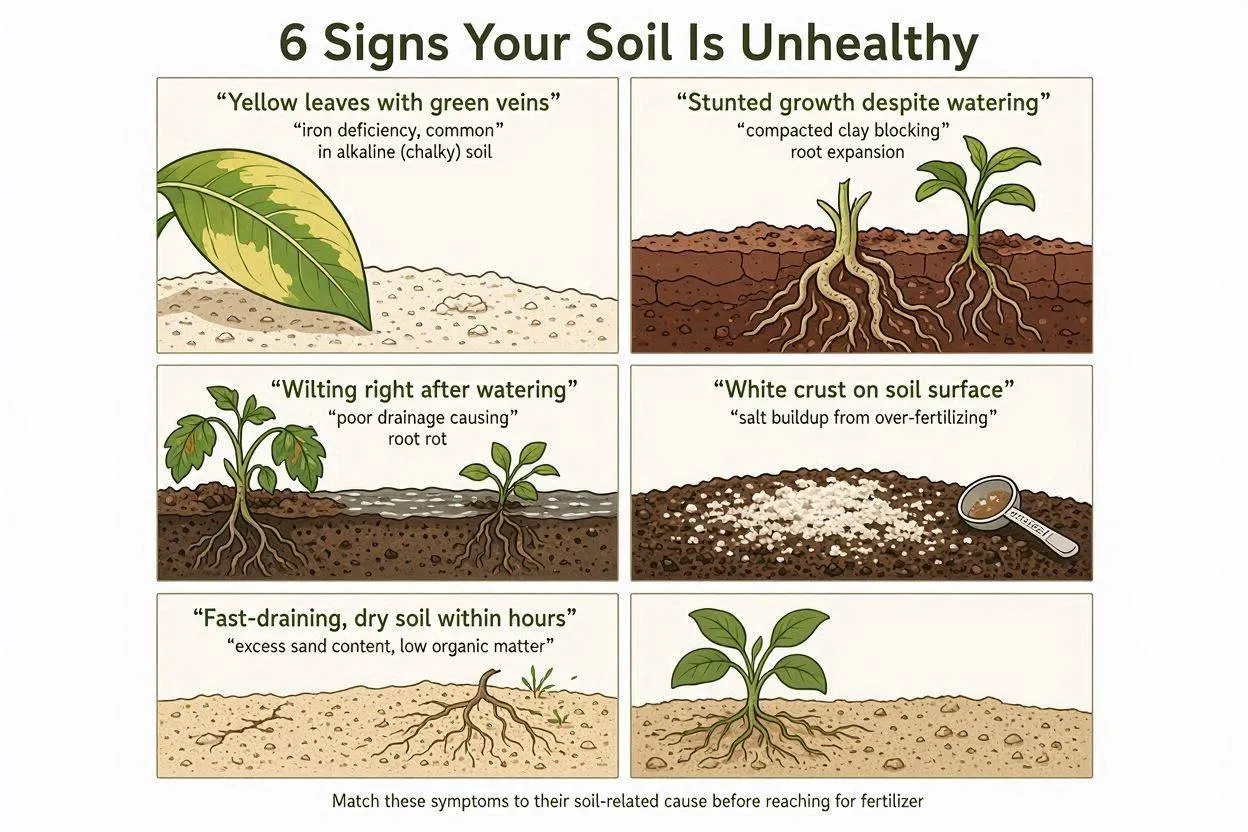
6 Signs Your Soil Is Unhealthy
Match these symptoms to their soil-related cause before reaching for fertilizer:
- Yellow leaves with green veins — iron deficiency, common in alkaline (chalky) soil.
- Stunted growth despite watering — compacted clay blocking root expansion.
- Wilting right after watering — poor drainage causing root rot.
- White crust on soil surface — salt buildup from over-fertilizing.
- Fast-draining, dry soil within hours — excess sand content, low organic matter.
- Moss or algae growth — waterlogged, compacted, or acidic soil.
Best Soil by US Region
Soil composition varies widely across the United States, so regional amendment strategies differ:
- Midwest: Clay-heavy soil dominates. Add gypsum and compost annually to improve drainage.
- Southeast: Sandy, acidic soil is common. Add lime and organic matter to raise pH and retain moisture.
- Northeast: Rocky, silty soil needs stone removal and compost to improve texture.
- Southwest: Arid, alkaline, and often sandy or chalky. Add sulfur and organic mulch to lower pH and hold moisture.
2026 Soil Trends Worth Knowing
Two shifts are reshaping home gardening soil practices this year:
- Biochar adoption — charcoal-based soil amendment that improves water retention and microbial activity for years, unlike compost, which breaks down in months.
- No-till gardening — leaving soil structure undisturbed between seasons preserves fungal networks and reduces erosion, a practice increasingly recommended by university extension programs.
Ready to Build Healthier Soil?
Test your soil this week using the jar method above, then amend based on what you find. The right soil mix turns a struggling garden into a thriving one within a single growing season. [Shop soil amendments and organic compost blends] to get started today.
FAQs
What is the single best soil for plant growth?
Loamy soil ranks best overall because it balances drainage, moisture retention, and nutrients better than sandy, clay, silty, peaty, or chalky soil.
Can I mix garden soil with potting soil for containers?
No. Garden soil compacts in containers and blocks drainage; use a dedicated potting mix instead, which stays light and aerated.
How often should I test my soil’s pH?
Test once a year in early spring, or every 2-3 years if your plants show no deficiency symptoms.
Does clay soil ever become good for gardening?
Yes. Clay becomes fertile, moisture-retentive soil once amended with gypsum, compost, and coarse sand over 1-2 growing seasons.
What’s the fastest way to improve poor soil before planting?
Work 2-3 inches of finished compost into the top 8 inches of soil; this improves structure, drainage, and nutrients within weeks.
Conclusion
Good soil comes down to four things: texture, pH, drainage, and nutrients. Loam beats every other soil type for general plant growth, but sandy, clay, silty, peaty, and chalky soils all support specific plants once amended correctly. Test your soil, match the fix to the problem, and add organic matter every season. That routine builds soil that keeps producing healthy plants year after year.