Soil rarely disappears all at once. There’s no single flood or storm that takes it away in front of your eyes. It leaves in small amounts, a little with every heavy rain, a little more with every dry, windy afternoon, until a field that used to produce well starts underperforming and nobody can quite say why. By the time the loss is visible, the topsoil that took decades to build is already gone.
That’s the part nobody mentions when they talk about how to conserve soil. It has less to do with preventing a disaster and more to do with catching a slow leak before it drains the tank. This guide covers what genuinely works right now, starting with a step almost every other article on the topic leaves out entirely.
What Conserve Soil Really Means
Soil conservation means protecting topsoil from erosion, compaction, and nutrient loss while keeping it active enough to support strong roots. It isn’t one technique you adopt and forget about. It’s a combination of physical changes to the land itself, biological decisions about what gets planted and when, and day-to-day management choices about how the ground gets worked.
Get it right, and three things happen together. The soil stays where it’s supposed to be. It holds onto organic matter and the microbial life that makes it productive. And your input costs stop climbing every single year just to keep pace with declining fertility.
Start Here: Test Your Soil Before You Do Anything Else

Almost none of the popular guides on how to conserve soil mention this first step, which is odd, because it’s the one that shapes every decision after it. A basic soil test tells you your organic matter percentage, your pH, your compaction level, and which nutrients you’re actually short on versus which ones you’ve been over-applying out of habit.
A standard sample through a university extension office or a private lab usually runs somewhere between $10 and $25. That’s a small price for the amount it can save in fertilizer you didn’t need. Skip this step and you’re choosing conservation methods based on guesswork, not on what your ground is telling you. Farmers who test first tend to spend less overall, because they stop treating symptoms and start treating the actual deficiency.
Why 2026 Changes the Math
A few things have shifted since this conversation looked the same five years ago.
Cost-share funding for cover crops, no-till transitions, and buffer strips has grown through federal and state conservation programs, which lowers the upfront cost for small and mid-size operations that couldn’t previously justify the investment. Fertilizer and fuel prices haven’t settled down either, so soil that holds its own moisture and nutrients now translates straight into lower spending rather than just looking good on paper.
Rainfall has also gotten more extreme in a lot of regions: heavier totals on the days it does rain, longer dry stretches in between. That kind of pattern punishes bare or compacted soil far harder than steady, moderate rainfall ever did. And buyers and processors are increasingly asking about soil-health practices as part of how they decide who to source from, which means conservation now shows up in contract language, not just in someone’s conscience.
Physical Methods: Reshaping the Land Itself
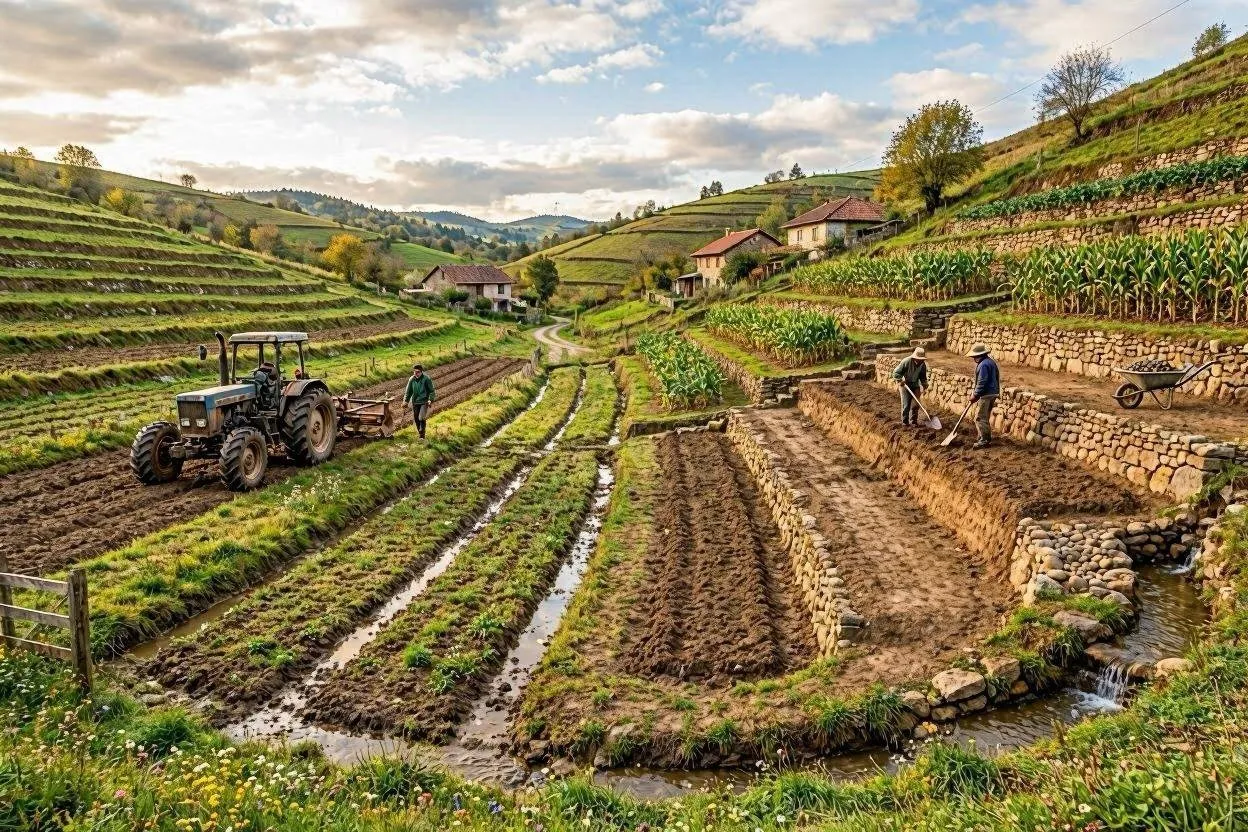
These methods change the shape or structure of the land so water and wind have less opportunity to carry soil away.
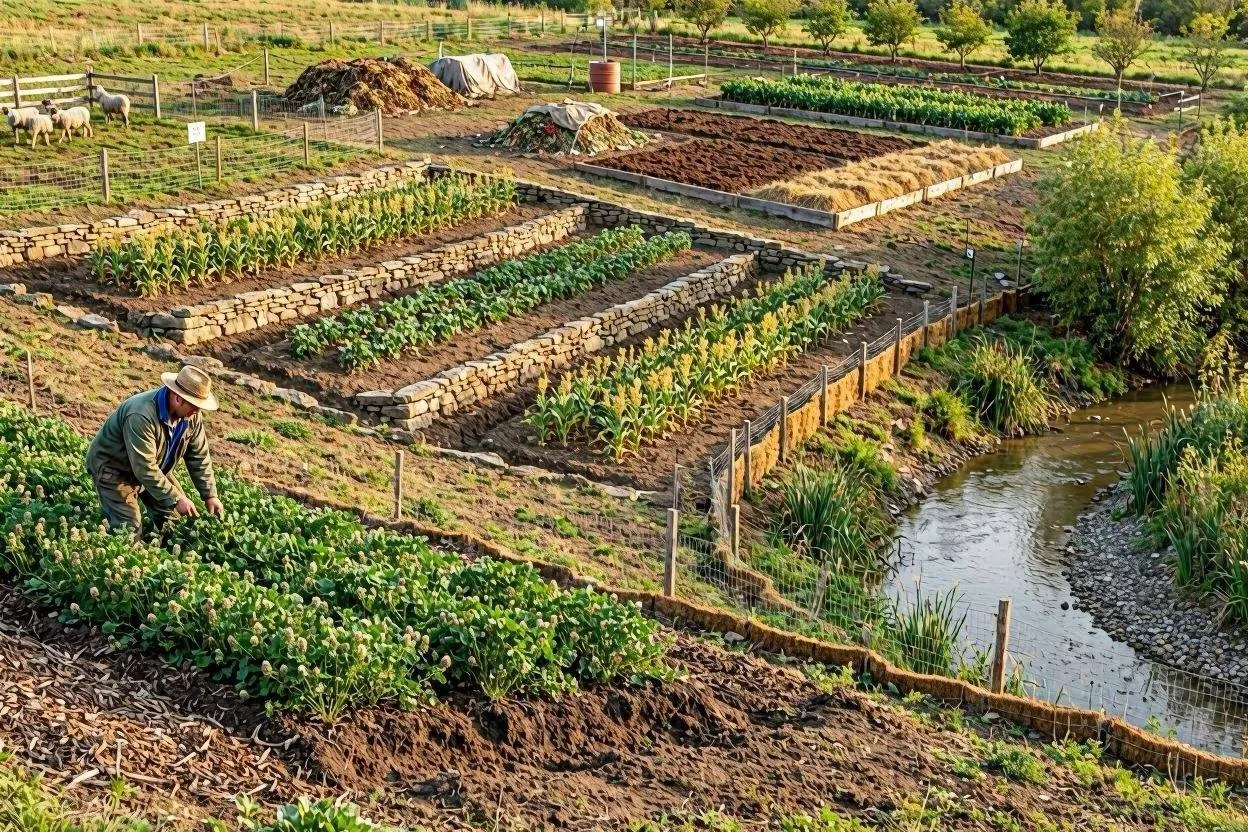
Contour farming means plowing and planting across a slope instead of straight up and down it. Water moves slower across contour lines, so it picks up less soil on its way downhill. It costs nothing beyond adjusting how you already work the field, which makes it one of the highest-return, lowest-cost changes on this whole list.
Terracing turns a steep hillside into a series of level steps, each one catching water before it reaches the next. Building terraces takes real investment in equipment time and planning. On land with serious slope, though, it’s often the only method strong enough to hold soil through a genuinely hard rain.
Windbreaks are rows of trees or dense shrubs planted along field edges to cut wind speed at ground level. They matter most in open, flat country where wind, not water, does most of the damage. A mature windbreak takes years before it’s doing real work, so this is a method for someone planning a decade out, not for next season’s problem.
Grassed waterways are shaped, grass-lined channels that carry runoff without letting it cut a gully through the field. They pair well with contour farming or terracing, catching whatever water those methods send downhill.
Bank stabilization uses rock, vegetation, or engineered structures along streambanks to stop the kind of erosion that eats land from the water’s edge inward. Anyone farming near a creek, river, or drainage channel should have this on the radar.
Biological Methods: Letting Plants Do the Work
Some of the most effective ways to conserve soil don’t involve machinery at all. They involve choosing what grows and when.
Cover crops, things like clover, cereal rye, and radishes planted between main growing seasons, keep living roots in the ground year-round. Those roots hold soil structure together, feed the microbes underground, and, if you’re planting legumes, add nitrogen the next cash crop can use. Cover crops have grown faster than any other method among U.S. row-crop farmers over the last several years, mostly because the results show up within a single season instead of requiring years of patience.
Crop rotation breaks up the pattern of planting the same crop in the same ground year after year, which drains specific nutrients and lets pests and diseases build up a foothold. A corn-soybean rotation balances nitrogen use in a way continuous corn simply can’t.
Buffer strips, bands of grass or shrubs along waterways or field edges, filter runoff before it reaches a stream. They trap sediment and excess nutrients on the way through, protecting water quality about as much as they protect the soil itself.
Mulching, spreading straw, wood chips, or leaf litter over bare ground, shields soil from the direct impact of rain, slows moisture loss, and breaks down over time into more organic matter. Of everything on this list, it’s the easiest entry point for anyone working a garden or a small plot rather than hundreds of acres.
Management Methods: Changing How You Work the Land
These aren’t things you build or plant. They’re changes to habits and scheduling that add up over time.
No-till and reduced-till farming leave crop residue on the surface and disturb the soil as little as possible during planting. Over a few seasons, this builds organic matter and improves how well the ground absorbs water, cutting erosion well below what conventional tillage produces.
Rotational grazing moves livestock between paddocks on a set schedule instead of letting them work over one area continuously. Vegetation and roots get a chance to recover between grazing periods, which heads off the bare, compacted patches that erode the fastest.
Controlled traffic farming keeps heavy equipment confined to the same fixed lanes across a field every pass, so compaction stays limited to those lanes instead of spreading through the whole growing area.
Integrated pest management (IPM) cuts reliance on chemical inputs by combining biological controls, careful crop timing, and treatment only where it’s actually needed. Healthier soil biology is both a cause and an effect of lower chemical use, so this method reinforces everything else on the list rather than sitting off to the side.
Cost Versus Payback: Where the Fastest Returns Are
Not every method pays back on the same timeline, and that’s usually the part left out of soil-conservation content altogether.
Cover crops, mulching, and contour farming tend to show results within a single growing season, and they cost the least to start. No-till transitions, buffer strips, and crop rotation take somewhere between two and four years to fully pay off, with some upfront adjustment along the way but steady savings once established. Terracing, windbreaks, and bank stabilization sit at the other end. They ask for a bigger investment up front and can take five years or more to show their full value, but on land with serious erosion risk, they’re often the only durable answer.
A lot of these costs can be offset through USDA Natural Resources Conservation Service (NRCS) cost-share programs, so it’s worth checking eligibility before ruling out a method as too expensive.
Regional Notes: One Plan Doesn’t Fit Every State
Land in the Midwest, with its rolling row-crop fields, tends to do best with no-till, cover crops, and grassed waterways working together. The Great Plains, flatter and far more exposed to wind, leans harder on windbreaks and residue management to deal with wind erosion specifically. The Southeast, with heavier rainfall and clay-heavy soils, usually needs buffer strips and terracing more than anything else, since water volume is the bigger threat there than wind. Drier Western regions face an almost opposite problem: moisture retention matters as much as erosion control, which pushes mulching and reduced tillage to the top of the priority list.
None of this means a farmer in Nebraska should ignore cover crops, or that someone in Georgia has no use for windbreaks. It just means the order of priority shifts depending on what the land is actually fighting against.
How to Choose a Plan for Your Land
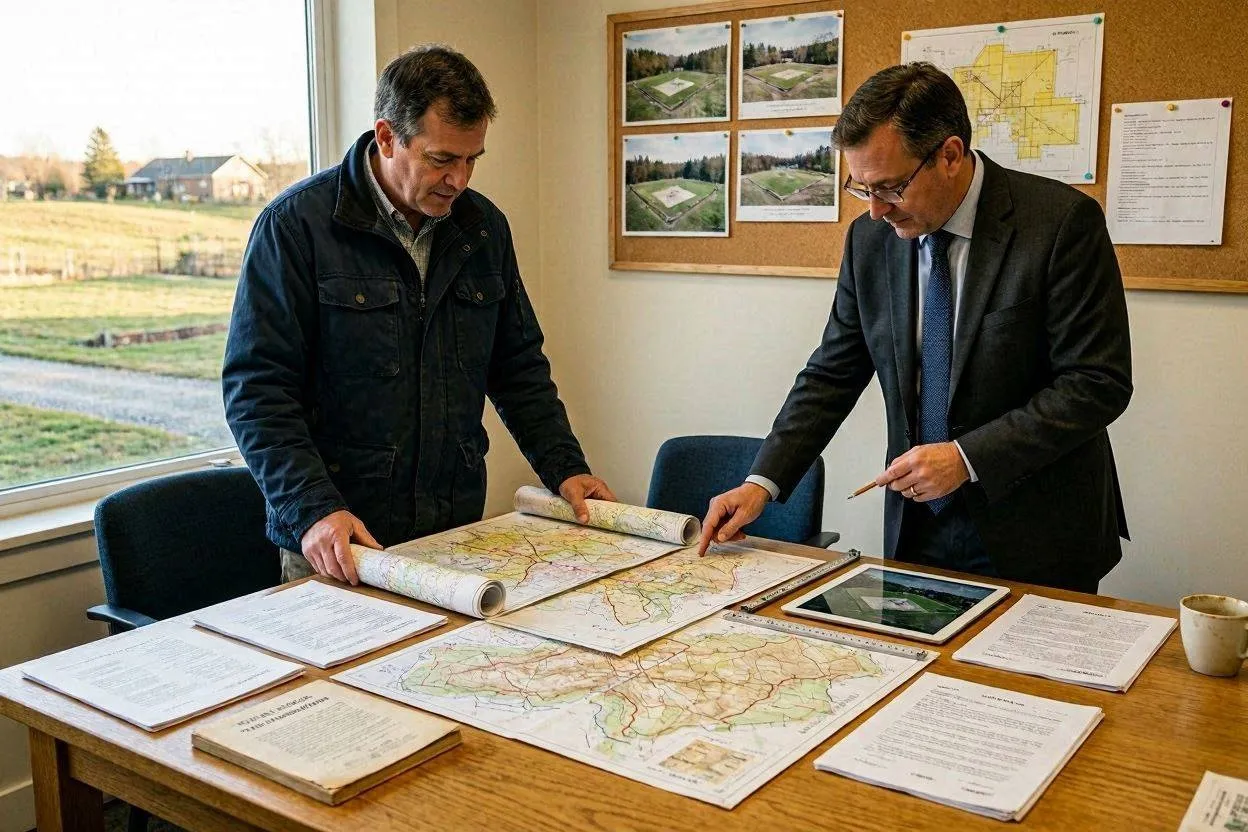
Start with a soil test, then match methods to your actual slope, climate, and scale instead of copying whatever the neighboring farm is doing. A steep hillside calls for terracing and contour farming first. Flat, wind-exposed acreage calls for windbreaks and cover crops first. A backyard garden doesn’t need any of the heavy infrastructure at all. Mulch the beds, rotate what’s planted where, and skip the tiller as often as you reasonably can.
The most durable results tend to come from layering two or three methods rather than betting everything on one. No-till alone helps. No-till paired with cover crops and a buffer strip along the low edge of the property does noticeably more, and the combination tends to be more forgiving in a bad year than any single method on its own.
If you’re wondering how to conserve soil on a tight budget, the honest answer is that the cheapest methods and the fastest-paying methods are largely the same list: a soil test, contour adjustments, and cover crops. Add the bigger infrastructure once those are in place and paying for themselves.
Ready to Protect Your Soil?
Pull a soil sample this month, before planting season gets underway. It’s the cheapest, fastest way to find out exactly which of these methods will do the most for your particular piece of land, and it turns this guide from general advice into an actual plan with your name on it.
FAQs
Does soil conservation really increase crop yield?
Yes. Better soil structure holds more water and nutrients near the roots, which reduces stress during dry spells and keeps yields steadier season to season.
What’s the cheapest way to start conserving soil?
Contour farming costs nothing beyond adjusting your planting direction, making it the lowest-cost starting point on sloped ground.
Can these methods work on a small backyard garden?
Yes. Mulching, rotating beds, and cutting back on unnecessary digging apply the same logic at a much smaller scale.
How often should a soil test be repeated?
Every two to three years for most farmland works fine, though gardens under heavy, continuous use benefit from yearly testing.
Do cover crops get in the way of the main harvest?
No. They’re planted and terminated between main crop cycles, so they never compete with the primary growing season.
Conclusion
Soil conservation isn’t a fix you apply once and move on from. It’s a string of small, ongoing decisions: what gets planted between seasons, how often the ground gets disturbed, whether you test before spending on fertilizer you might not need. Add those decisions up over a few years and you get land that keeps producing instead of quietly wearing itself down.
The methods here range from free, like changing which direction you plow, to a genuine investment, like terracing a hillside. That spread means there’s an entry point regardless of budget or farm size. Start with the soil test. Let the results point toward two or three methods that fit your slope, climate, and scale, then layer them together instead of leaning on just one. That combination, built up over a few seasons, is what separates land that holds its value from land that slowly stops paying you back.