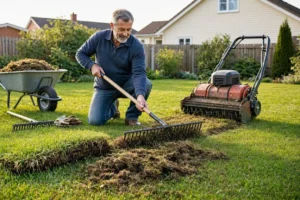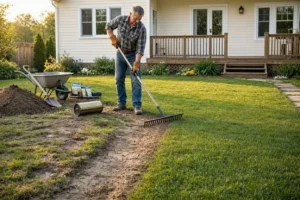
To edge a lawn, cut a clean line where grass meets a hard surface or garden bed, using a manual edger, powered edger, or string trimmer, then lift out the loose turf and sweep away the debris. A typical yard takes under two hours. Depth matters more than most people think: aim for about 3 inches, or 7.5 cm, and the line holds through several mowing cycles. Skip the depth and the edge blurs back within a week.
What Lawn Edging Actually Means
Lawn edging is the act of cutting a defined boundary between grass and everything next to it, driveways, sidewalks, flower beds, or mulch. It’s not the same as trimming, which just cuts overgrown grass a mower missed. Edging carves an actual line into the soil. Homeowners often confuse the two, and that confusion is why so many yards look “almost” neat instead of genuinely sharp.
Three things happen once a lawn gets properly edged. Grass stops creeping into beds and pavement cracks. Mulch stays where it’s supposed to stay instead of scattering across the walkway. Air and water reach the root zone more evenly along that cut line, which cuts down on disease pressure near borders. None of that happens with trimming alone.
Tools You Need Before You Edge a Lawn
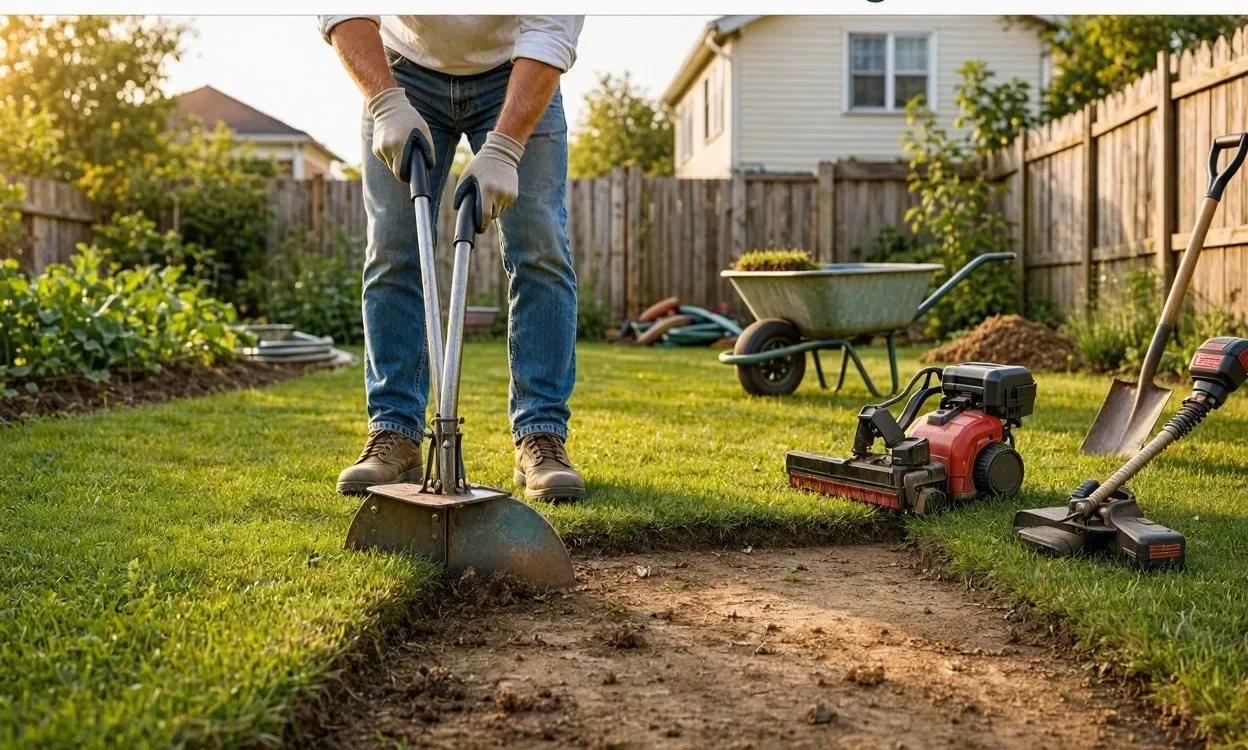
The right tool depends on yard size, soil type, and how much physical effort you want to put in. Small yards with soft soil do fine with a manual tool. Larger properties or compacted clay call for something powered.
Manual Edgers
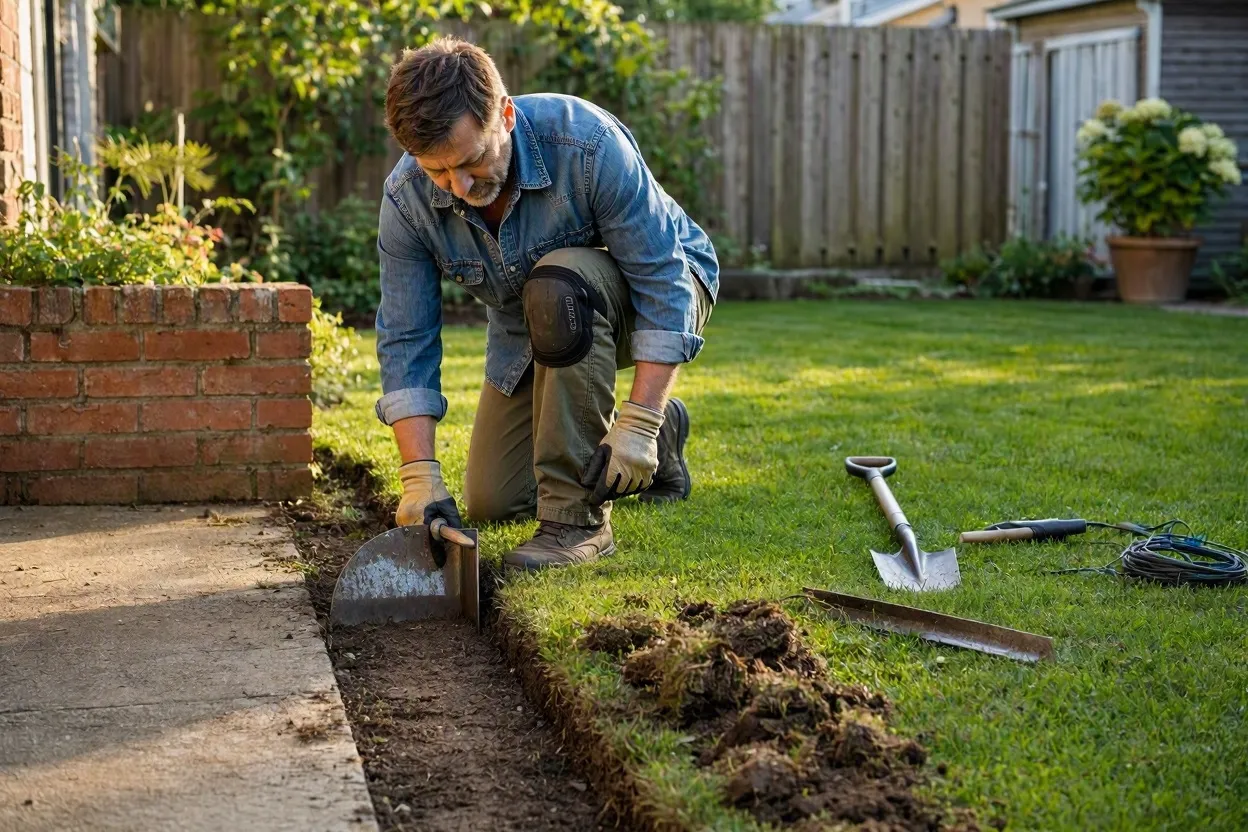
A manual edger looks like a half-moon blade on a long handle. Step on the flat top, drive it straight down, and pivot along the line. It gives more control than any powered option, which matters on curves. The tradeoff is muscle. Cutting 50 feet of border by hand takes real effort, and tough roots slow the process further.
Electric and Cordless Edgers
Electric models plug in and run lighter than gas tools, which makes them a fit for small to mid-sized yards. Cordless versions swap the cord for a lithium-ion battery, so there’s no tangling around shrubs or fences. Battery life caps the job size, though. A half-acre yard might need a spare battery on hand.
Gas-Powered Edgers
Gas edgers handle thick grass, compacted soil, and long driveways without slowing down. They run continuously, no battery to recharge and no cord to drag. Noise and fumes are the cost. Anyone edging weekly in a tight urban lot will probably hear complaints from neighbors before long.
String Trimmers and Edging Shears
A string trimmer, turned on its side, can maintain an edge that’s already been cut, though it won’t create one from scratch on undisturbed turf. Edging shears work best in tight spots, like around stepping stones or narrow paths where a full-size tool can’t fit. Keep a pair on hand for those small jobs a big edger skips.
How to Edge a Lawn in 7 Steps
Follow these steps in order, and the result holds its shape for weeks instead of days:
- Mow first. Cut the grass to around 2.5 inches (6.4 cm) before edging. Never remove more than the top third of the blade in one pass; doing so stresses the roots.
- Mark the line. Use marking paint or a string line for straight runs. A garden hose or rope works better for curves, since it bends without kinking.
- Check the shape from a distance. Walk to the far end of the yard, or look from an upstairs window if there is one, and adjust before cutting anything.
- Cut the trench. Drive a half-moon edger or flat-backed spade straight down to about 3 inches (7.5 cm), then angle the blade slightly toward the bed side to create a shallow taper.
- Work the full line in small steps. Overlap each cut slightly so there’s no ragged section left between passes.
- Lift and remove the loose turf. Pull narrow strips by hand; slide a spade under larger sections. Compost what comes up, or bag it if the grass carries weed seed.
- Clean the debris. Sweep or blow clippings off pavement. Left alone, they turn into a seedbed for weeds within days.
That sequence covers how to edge a lawn against any hard surface, driveways, sidewalks, patios. Beds without a hard boundary need one extra decision: shape.
How to Edge Curved Beds and Borders
Curved edges need a flexible guide, not a straight tool. A garden hose laid on the ground traces a natural line far better than a taut string. Sharp, tight curves are harder to maintain long-term than broad, sweeping ones, so widen any curve that looks too tight before cutting it permanently into the soil.
Cut along the hose line using the same angled technique from Step 4. Small steps matter even more here, since a curve punishes long, sweeping cuts with an uneven result. Once the shape looks right from multiple angles, not just from directly above, commit to the cut.
Edging vs. Trimming: Why the Difference Matters
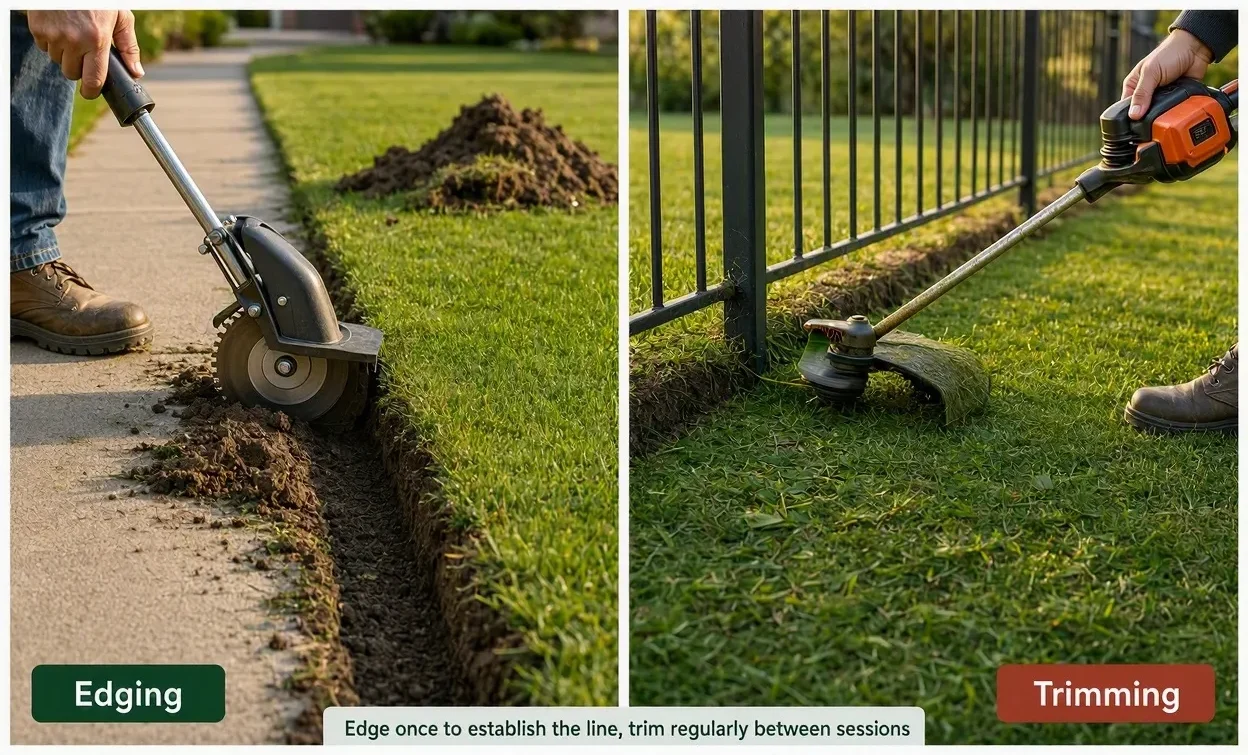
Edging cuts a physical line into the soil; trimming just clips grass a mower missed. Mixing up the two terms leads to buying the wrong tool. A string trimmer will neaten grass around a fence post, but it can’t create a defined border against a walkway the way a blade-based edger does.
Most yards need both. Edge once to establish the line, then trim regularly between full edging sessions to keep growth from spilling back over. Skipping the edging step and relying only on a trimmer is the single biggest reason borders look fuzzy instead of crisp.
Best Time of Year and How Often to Edge a Lawn
Spring is the best time for the first edge of the season, since it sets the shape before growth accelerates. A second pass in mid-summer keeps up with faster growth from rain and irrigation. One more in late summer or early fall carries the clean look through the colder months when growth slows.
Frequency depends on grass type more than habit. Fast-growing varieties, Bermuda and St. Augustine among them, may need edging every two weeks during peak season. Slower, cool-season grasses common across the UK and northern US can stretch to every 6 to 8 weeks. A simple rule works for most lawns: edge every second or third mow, then stretch that out once winter growth slows down.
Materials for a Permanent Edge
Hard edging materials hold a border’s shape without repeated cutting, though each option comes with a tradeoff. Steel edging bends cleanly around curves and lasts for years, but installation takes more effort than plastic. Vinyl or plastic edging installs fast and costs less, yet thin versions under 4 inches tend to heave out of the ground after a couple of frost cycles.
Limestone screenings packed into a shallow U-shaped trench create a smooth surface a mower wheel can ride along, and they resist most root intrusion. Concrete blocks or poured curbs go further still. Nothing grows through poured concrete, though moving that border later means real demolition work, not a quick dig.
Bricks and pavers split the difference: a clean look, moderate cost, and a border that can be repositioned with a shovel if the bed ever expands.
Common Mistakes That Ruin a Clean Edge
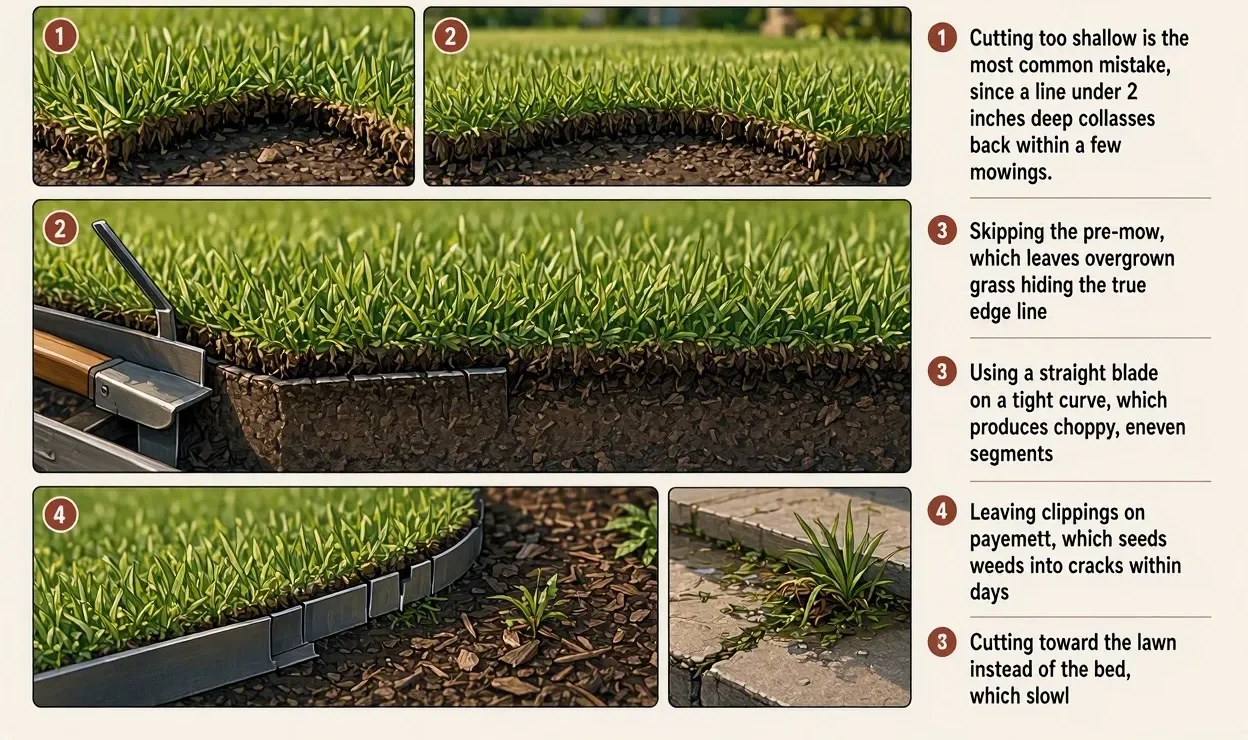
Cutting too shallow is the most common mistake, since a line under 2 inches deep collapses back within a few mowings. A few others show up just as often:
- Skipping the pre-mow, which leaves overgrown grass hiding the true edge line
- Using a straight blade on a tight curve, which produces choppy, uneven segments
- Leaving clippings on pavement, which seeds weeds into cracks within days
- Cutting toward the lawn instead of the bed, which slowly shrinks the grass area over each season
Fixing these takes no extra tools, only a slower, more deliberate pass along the line.
Safety Basics Before You Start
Wear gloves and safety glasses any time a blade or powered tool is running. Ear protection matters with gas edgers specifically, since sustained exposure at that noise level adds up over a full afternoon. Anyone sensitive to pollen or grass dust should add a mask, particularly during peak pollen weeks in late spring.
Watch for obstacles hidden at grade, sprinkler heads, buried cable, tree roots. A blade that catches on any of them can kick back hard enough to cause a real injury, not just a dulled edge.
FAQs
Is edging the same as trimming a lawn?
No. Edging cuts a physical line into soil between grass and a border, while trimming only clips overgrown grass a mower missed near obstacles.
How deep should a lawn edge be cut?
About 3 inches, or 7.5 cm, holds its shape best. Shallower cuts collapse back within a few mowing cycles and need constant re-cutting.
Can a string trimmer create a new lawn edge?
No. A string trimmer maintains an edge that already exists but can’t cut a fresh trench into undisturbed turf the way a blade edger does.
What’s the best season to edge a lawn?
Spring works best for the first cut, with a follow-up in mid-summer and a final pass in early fall for most climates.
Does hard edging material stop grass from spreading?
Mostly. Steel, concrete, and limestone screenings block root spread well. Thin plastic under 4 inches often heaves loose within a couple of years.
Conclusion
Edging turns an ordinary yard into one that reads as deliberate and cared for. The technique itself is simple: mow first, mark the line, cut to the correct depth, then clean up. What separates a border that holds for weeks from one that blurs back in days comes down to depth, tool choice, and timing, not luck. Once the first proper edge is cut, keeping it sharp takes minutes per session instead of hours. Anyone still relying on a string trimmer alone to fake a clean line is doing more work for a worse result. Cut it once, cut it right, and the maintenance from there is genuinely easy.