To put sod lawn down, clear the old turf from the yard, test and grade the lawn soil, lay the sod in staggered rows starting from the straightest edge, then water the new lawn daily for the first one to two weeks. Skip any of those lawn care steps and the turfgrass roots struggle to bond, even if the sod looks green on delivery day. Full sod installation, from bare yard soil to a walkable lawn, usually takes one weekend of yard work plus two to six weeks for turf roots to knit into the ground beneath.
Sod is the fastest lawn installation method available to homeowners, faster than grass seed by roughly five weeks. This lawn care guide walks through every stage of how to put sod lawn down, covering yard soil prep, turf costs, irrigation schedules, mowing timing, and the yard maintenance mistakes that kill new lawns fastest.
What Is Sod, and Why Choose It Over Grass Seed?
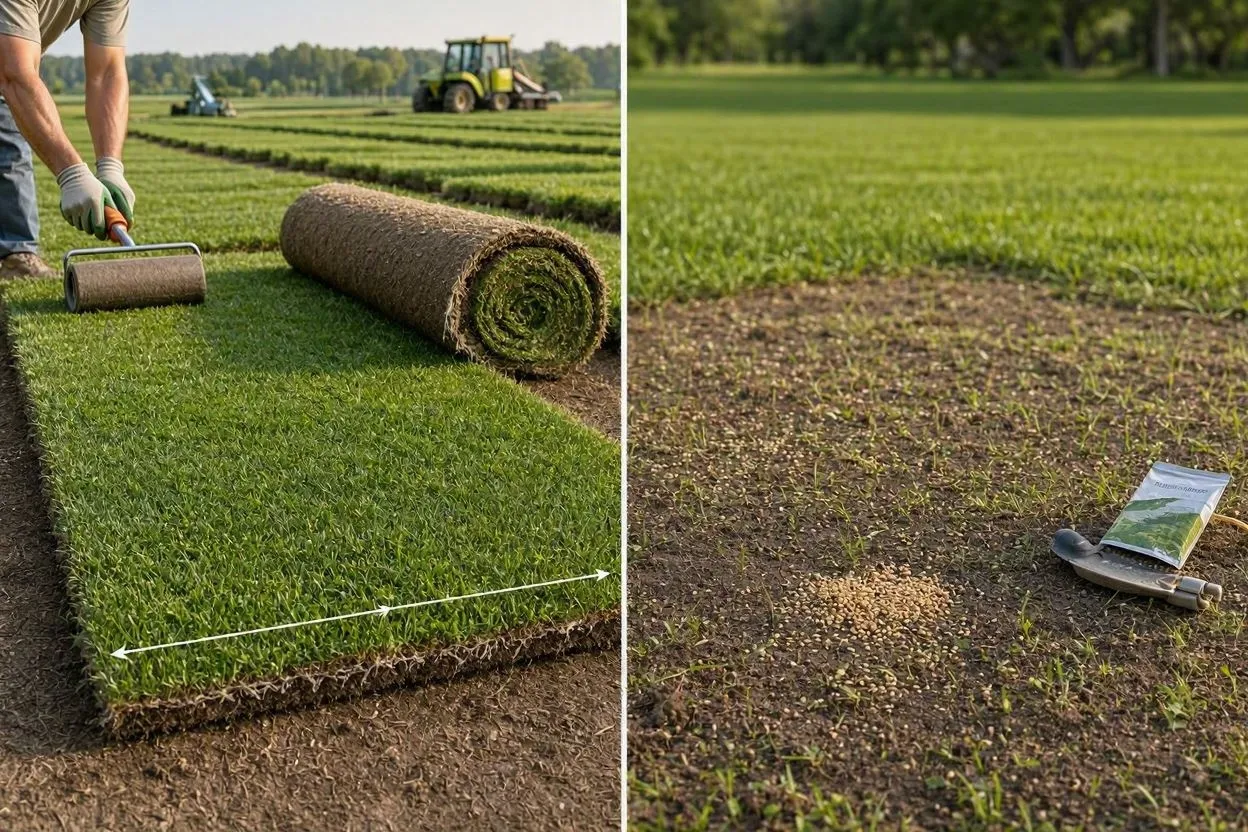
Sod is a section of mature lawn turf harvested with its root system and a thin layer of soil attached, cut into rolls or slabs, then transplanted onto bare yard ground. Sod farms grow turfgrass for twelve to eighteen months before cutting it for sale, which is why a sod lawn looks finished the moment it’s unrolled across the yard. Growers harvest turf in strips roughly 16 in x 24 in (41 cm x 61 cm) for residential lawns, or in larger rolls covering big yards faster.
Homeowners choose between three lawn establishment methods, each trading cost against speed:
- Sod: costs $0.30 to $0.90 per sq ft ($3.20 to $9.70 per m²), delivers a finished lawn the same day, roots in 2 to 6 weeks.
- Grass seed: costs $0.05 to $0.20 per sq ft ($0.55 to $2.15 per m²), germinates in 7 to 21 days, needs 8 to 12 weeks for a usable yard.
- Hydroseeding: costs $0.10 to $0.25 per sq ft ($1.10 to $2.70 per m²), sprays seed slurry across large lawns, fills in within 4 to 6 weeks.
Grass seed works fine for patient homeowners. Sod wins when lawn speed matters, because seed takes six weeks or longer to fill a yard, while sod delivers green turf the same afternoon. The tradeoff shows up in price: sod runs three to six times more per square foot than grass seed, but there’s no muddy yard transition, no erosion on slopes, and no risk of birds eating seed before it sprouts.
Two turfgrass categories decide which sod fits a given lawn, and USDA Hardiness Zone maps the boundary between them:
- Cool-season turf (Zones 3 to 7): Kentucky bluegrass, tall fescue, fine fescue, and perennial ryegrass stay green through northern winters, tolerate shade better, and go dormant during summer heat above 90°F (32°C).
- Warm-season turf (Zones 7 to 11): Bermudagrass, St. Augustine, Zoysia, centipede, and Bahiagrass thrive across southern lawns, resist drought well, and brown out once soil drops below 55°F (13°C).
Transition-zone states, including Kentucky, Tennessee, Virginia, Missouri, and Oklahoma, sit between the two bands, where tall fescue and Zoysia both perform acceptably. Sod farms grow turf under full sun, so lawns with shaded sections need overseeding with a shade-tolerant grass mix after installation. Buying the wrong turf type for a region’s climate wastes money faster than any other lawn installation mistake.
When Is the Best Time to Put Sod Lawn Down?
The best time to put sod lawn down is early fall or spring, when lawn soil temperatures sit between 55°F and 75°F (13°C and 24°C) measured 4 inches (10 cm) below the surface. Cooler air reduces water loss through the grass blades while turf roots are still establishing, which gives cool-season lawns a head start before summer heat arrives. Air temperature matters less than soil temperature, so check the ground with a soil thermometer rather than reading the forecast.
Each turf category has its own installation window:
| Turf Type | Best Installation Window | Target Soil Temp | Avoid |
| Cool-season (Kentucky bluegrass, tall fescue, fine fescue) | Early September to mid-October, or April to May | 55°F to 65°F (13°C to 18°C) | July and August heat above 85°F (29°C) |
| Warm-season (Bermudagrass, Zoysia, St. Augustine) | Late April to July | 65°F to 75°F (18°C to 24°C) | Late fall, once soil drops below 55°F (13°C) |
Fall installation beats spring for most cool-season yards because weed pressure drops sharply after August, so crabgrass and broadleaf weeds compete less while new turf roots establish. Warm-season lawns follow the opposite pattern, rooting fastest in late spring through early summer once soil has warmed enough to trigger active growth. Sod installation works year-round across mild climates, including winter in parts of the Gulf Coast, Florida, Arizona, and Southern California, though summer lawn installation in hot, dry regions demands two to four daily irrigation cycles instead of one.
Four conditions make any season a bad time to lay sod:
- Drought restrictions: local watering bans prevent the daily irrigation new turf requires.
- Frozen ground: sod roots cannot penetrate soil below 40°F (4°C).
- Heavy rain forecasts: saturated yard soil ruins grading and makes rolling ineffective.
- Extended heat waves: sustained temperatures above 90°F (32°C) dry sod faster than watering replaces moisture.
Timing the sod delivery matters as much as picking the season. Order turf to arrive within 24 hours of harvest, and plan the lawn installation for the same day it shows up. Many sod farms cut turf overnight or before dawn specifically so it reaches yards cool and moist. Sod that sits rolled up longer than a day generates internal heat from decomposing grass clippings, and that heat damages turf roots before the lawn ever touches soil. Fresh sod smells like cut grass and damp earth; a sour or musty pallet signals decomposition, and that turf should be refused on delivery.
How Much Does It Cost to Put Sod Lawn Down?
A 1,000 sq ft (93 m²) DIY sod lawn installation costs $300 to $900 in turf materials alone, while hiring a lawn care service for the same yard typically runs $600 to $1,800. Larger lawn projects scale up fast. A 0.2-acre (870 m²) yard, for example, runs $2,700 to $7,145 for professional sod installation once lawn labor, turf soil amendments, and sod delivery are added in.
Sod prices vary by turf species, since slower-growing grasses spend longer on the farm before harvest:
| Turf Type | Price per sq ft | Price per Pallet (500 sq ft / 46 m²) | 1,000 sq ft Lawn |
| Bermudagrass | $0.30 to $0.50 | $150 to $250 | $300 to $500 |
| Tall fescue | $0.35 to $0.55 | $175 to $275 | $350 to $550 |
| Kentucky bluegrass | $0.40 to $0.65 | $200 to $325 | $400 to $650 |
| St. Augustine | $0.45 to $0.75 | $225 to $375 | $450 to $750 |
| Zoysia | $0.50 to $0.90 | $250 to $450 | $500 to $900 |
Professional lawn installation adds $0.40 to $0.90 per sq ft on top of turf costs, covering soil prep, grading, delivery, and labor. Crews typically charge a minimum of $500 to $700 regardless of yard size, so small lawn patches under 500 sq ft (46 m²) rarely justify hiring out.
Budget for lawn care supplies beyond the sod itself:
- Soil test kit: $15 to $50, or $10 to $30 through a county extension service lab.
- Starter lawn fertilizer: $20 to $40 per 1,000 sq ft (93 m²).
- Topsoil or compost: $25 to $45 per cubic yard (0.76 m³), with 3 to 4 yards covering 1,000 sq ft at a 2-inch (5 cm) depth.
- Sod cutter rental: $75 to $110 per day.
- Rototiller rental: $60 to $95 per day.
- Lawn roller rental: $25 to $40 per day.
- Sod delivery fee: $50 to $150, waived by some farms on orders above five pallets.
Buying direct from a sod farm instead of a garden center or big-box retailer trims 10% to 20% off the total lawn budget, though it requires planning around turf pickup timing. Ordering during shoulder seasons, in late September or early April, often unlocks lower pallet pricing than peak summer demand. None of those yard maintenance line items are optional if the goal is a lawn that survives its first summer.
How Much Sod Do You Need?
Multiply the length and width of the yard in feet to get total lawn square footage, then add 5% to 10% extra turf to cover trimming around curves and landscaping obstacles. For a rectangular 1,000 sq ft (93 m²) lawn, that means ordering 1,050 to 1,100 sq ft of sod to leave enough material for waste.
Irregular yards need a slightly different lawn measurement approach. Break the yard into smaller rectangles, triangles, and circles, calculate each lawn section separately, then add the totals together. A triangle’s area is half its base multiplied by its height, while a circle’s area equals 3.14 times the radius squared. Subtract driveways, patios, and landscaping beds from the lawn total before ordering turf, since sod isn’t needed there.
Sod ships on pallets covering 450 to 500 sq ft (42 to 46 m²) each, so a 2,000 sq ft (186 m²) yard needs roughly four to five turf pallets. Ordering short means a second sod delivery mid-project, and a second delivery rarely matches the color or maturity of the first turf batch.
How to Prepare Soil Before You Put Sod Lawn Down
To prepare soil before you put sod lawn down, clear the old turf from the yard, test and amend the lawn soil pH, then grade the ground so it slopes slightly away from the house. Poor yard soil prep is the single biggest reason new sod lawns fail within the first month, according to turfgrass researchers at university extension programs across the country.
Remove Old Grass and Debris
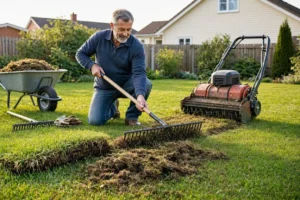
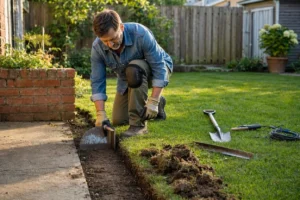
Strip away the existing lawn and its root mat before any other yard work, since sod laid over old turf traps water and blocks new grass roots from reaching soil. A sod cutter handles large yards efficiently, slicing under the old lawn in long turf strips. Smaller lawn patches come out by hand with a flat shovel, and stubborn yard weeds sometimes need a non-selective herbicide applied a week or two before tilling.
Clear rocks, roots, and construction debris from the yard while the soil is still exposed. Buried debris causes uneven lawn settling later, and uneven settling under sod creates dips that collect standing water across the turf.
Test and Amend the Soil
Test the lawn soil pH before ordering sod, aiming for 6.0 to 7.5, since nutrients become far less available to grass roots outside that window. A basic home soil test kit costs under $20, though a county extension service or state university lab gives more detailed lawn results, including nitrogen, phosphorus, and potassium levels alongside pH.
If results come back low or high, apply lime to raise lawn soil pH or sulfur to lower it, following the product’s recommended rate. Spread a 2-inch (5 cm) layer of finished compost across the yard afterward, then till it into the top 6 to 8 inches (15 to 20 cm) of soil. That depth gives new turf roots room to spread before hitting compacted native ground.
Grade and Level the Ground
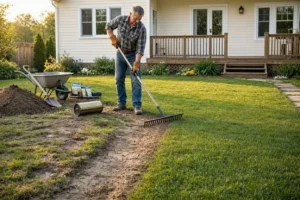
Grade the lawn soil so it sits 1 inch (2.5 cm) below nearby sidewalks, patios, and driveways, with a gentle 1% to 2% slope carrying water away from the house. Use an iron rake to knock down high spots and fill low ones, working the rake at a steep angle for large soil piles and a flatter angle for fine yard adjustments near edges.
Check the lawn grade with a hose before laying turf. Run water across the prepared soil, and if it pools anywhere instead of draining, add topsoil to that spot and rake it smooth again. A yard that floods after every rainstorm almost always traces back to a lawn grading mistake made before the sod ever arrived.
How to Put Sod Lawn Down, Step by Step
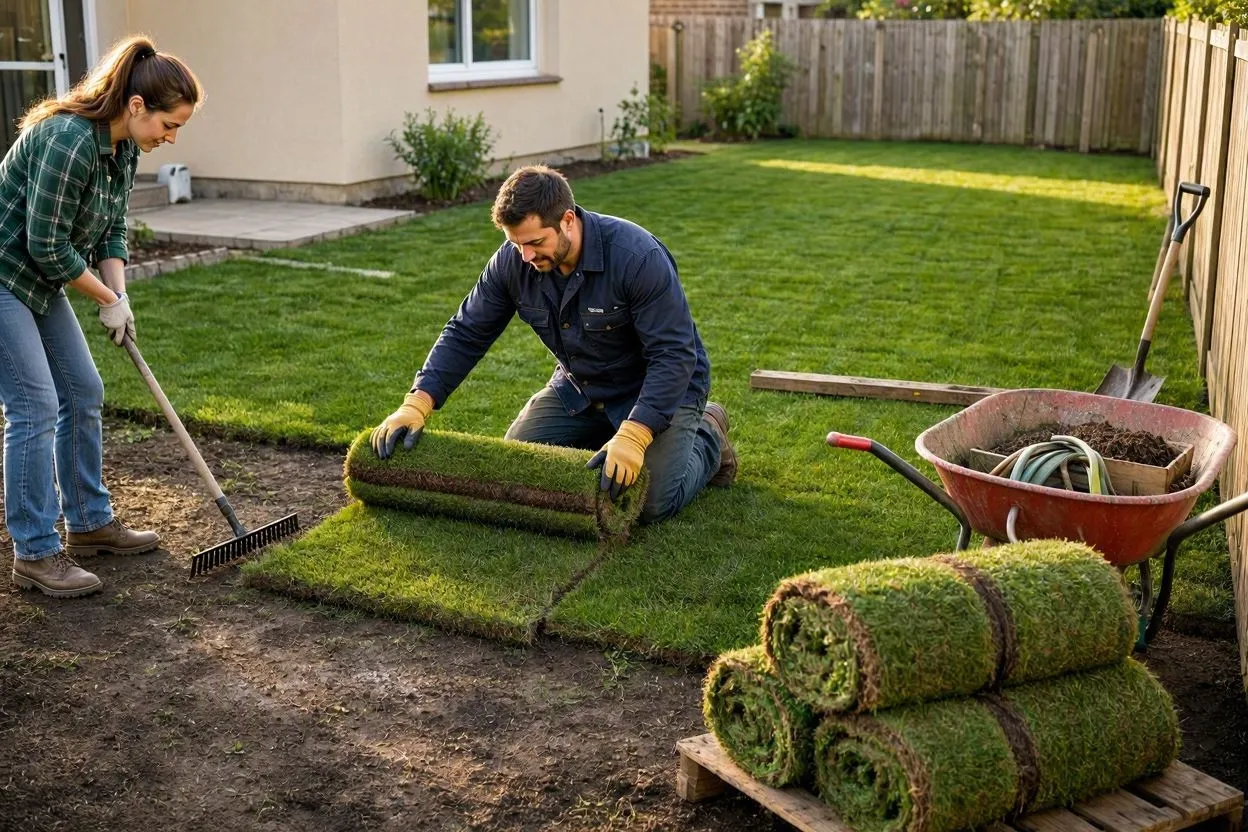
To put sod lawn down correctly, water the yard soil first, start the first turf row along the straightest edge, stagger each following row like bricks, then cut curves with a sharp knife and roll the finished lawn to remove trapped air. Two people working together cover roughly 1,000 sq ft (93 m²) of lawn in a single day, so plan the yard work around one uninterrupted afternoon rather than spreading it across several days.
Step 1: Water the Soil First
Dampen the prepared lawn soil with a hose or sprinkler before unrolling any turf, aiming for moist but not soggy yard ground. Dry soil pulls water away from sod roots on contact, slowing lawn establishment from the start. Test yard moisture with a soil probe if one’s available; damp lawn soil feels wet 3 to 4 inches (7.5 to 10 cm) below the surface.
Step 2: Start Along the Straightest Edge
Begin the first sod row against the yard’s longest straight line, whether that’s a driveway, sidewalk, or fence. A straight starting edge keeps every following turf row square, while starting on a curve compounds small errors into a crooked lawn by the final row. Unroll each sod piece so the entire length touches soil, then rake out footprints as the lawn work continues across the yard.
Step 3: Stagger the Rows in a Brick Pattern
Cut the first sod piece in the second row in half lengthwise, then stagger every subsequent turf seam so lawn joints never line up in a straight column. This brick-style layout keeps irrigation water from channeling through matched seams and helps the whole lawn knit together as one connected turf surface. Push each sod piece snugly against its neighbor without stretching or overlapping, since gaps widen as turf dries and shrinks over its first few days.
Step 4: Cut and Fit Curves and Edges
Trim sod around lawn curves, landscaping beds, and sprinkler heads with a sharp utility knife, cutting from the soil side through to the grass side. Overlap the turf piece slightly before cutting, then use the top layer as a guide to slice through both at once. Ragged or torn sod edges dry out faster than clean cuts and die back within a week if left untreated.
Step 5: Roll Out the Air Pockets
Press the finished lawn with a lawn roller in two perpendicular directions, north to south and then east to west, forcing out trapped air between sod and soil. Air pockets block turf roots from reaching the ground underneath, and sod sitting on trapped air turns brown within days even though surrounding lawn stays green. No roller on hand? Lay plywood across the turf and walk it carefully, though a rented lawn roller does a faster, more even job.
How to Water New Sod
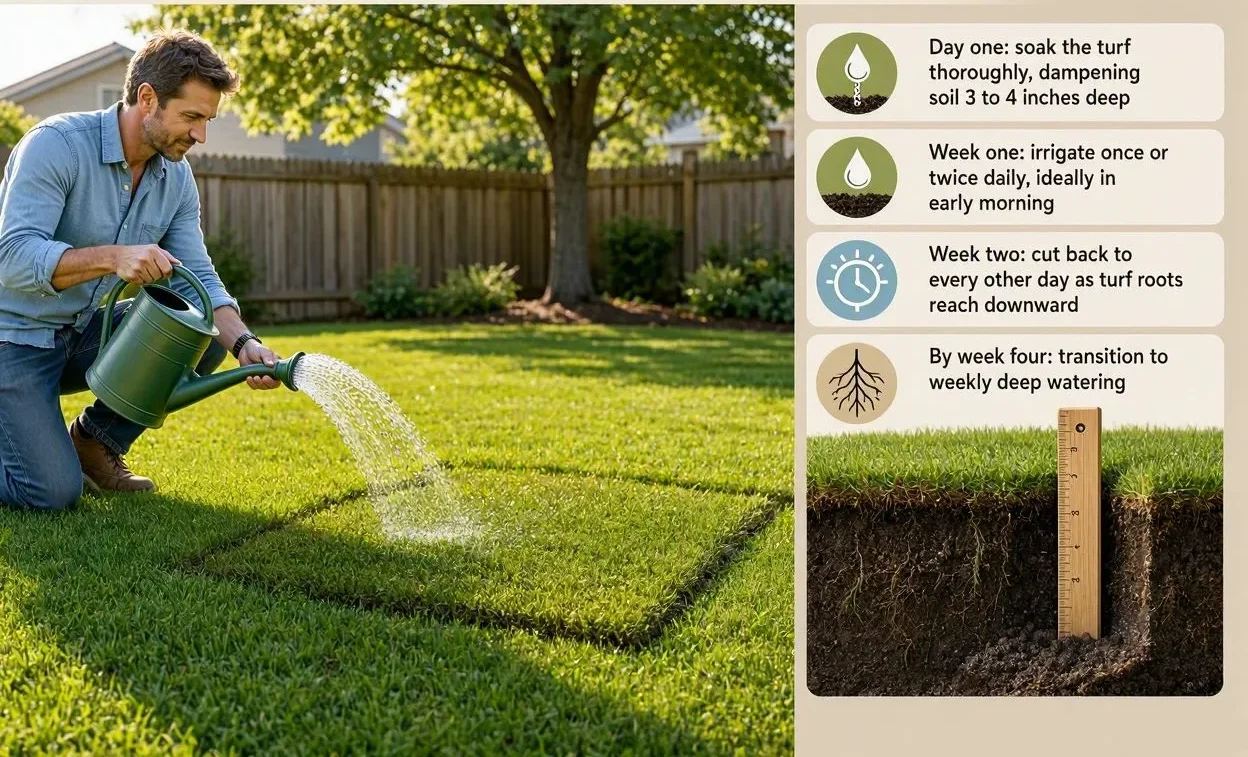
Water the new sod lawn immediately after installation, then follow a tapering irrigation schedule moving from daily watering in week one down to weekly watering by week four. The lawn watering breakdown looks like this:
- Day one: soak the turf thoroughly, enough to dampen lawn soil 3 to 4 inches (7.5 to 10 cm) deep.
- Week one: irrigate once or twice daily, ideally in early morning.
- Week two: cut back to every other day as turf roots reach downward.
- Week three: taper lawn watering to twice weekly.
- Week four and beyond: switch to 1 inch (2.5 cm) of water weekly, matching established lawn care practice.
Check turf root progress by gently lifting a sod corner around the two-week mark. Resistance means lawn roots have gripped the soil; easy lifting means the irrigation schedule needs another week or two before backing off.
When Can You Walk on New Sod?
Stay off the new sod lawn for one to two weeks, since yard foot traffic during that window shifts turf pieces and tears roots that haven’t anchored yet. Light lawn care tasks, like adjusting a sprinkler head, are fine if kept brief and limited to small turf sections rather than a full walk across the yard.
A simple check works better than counting days: grab a sod corner and tug gently. If the turf lifts without resistance, lawn roots haven’t taken hold, no matter how green the grass looks. Once it resists pulling, mowing and light yard use can start.
How to Care for Sod After the First Mow
Wait until new lawn grass reaches 3 inches (7.5 cm) tall before mowing, then cut the turf down to 2 inches (5 cm) using a sharp blade on a walk-behind mower. A higher first cut protects shallow lawn roots from stress, and a dull mower blade tears grass instead of slicing it cleanly, which invites lawn disease into freshly cut edges.
Apply starter lawn fertilizer higher in phosphorus three to four weeks after sod installation, once heavy irrigation has tapered off. Rushing fertilizer earlier burns tender turf roots instead of feeding them. From that point forward, follow the standard lawn mowing rule of never removing more than one-third of the grass blade height in a single cut, and keep mower blades sharp to avoid ragged cuts that stress young turf.
Year-Round Lawn Maintenance After Sod Installation
Established sod lawns need five recurring yard maintenance tasks: regular mowing, seasonal fertilization, core aeration, overseeding, and weed control. A new sod lawn transitions to standard turf care roughly eight weeks after installation, once grass roots have fully bonded with native yard soil.
Cut the lawn once a week in the peak growing season, then cut back to every other week when turf growth slows in the fall. Edge driveways and landscape beds monthly to maintain a tidy appearance in the yard. Aerate once a year (fall is best for cool-season lawns; late spring for warm-season turf) to relieve compaction from foot traffic and allow irrigation water to reach grass roots. Dethatching is necessary when thatch accumulates to more than 1/2 inch (1.3 cm) thick between the grass blades and the soil.
Fertilize the lawn three to four times annually on a seasonal schedule, altering nitrogen levels to align with the turf type and local climate. Overseed thin lawn patches each fall to keep turf density high, since dense grass crowds out yard weeds better than any herbicide. Rake fallen leaves off the lawn before winter, because leaf mats smother turf and create dead patches that need resodding come spring.
Common Mistakes That Kill New Sod
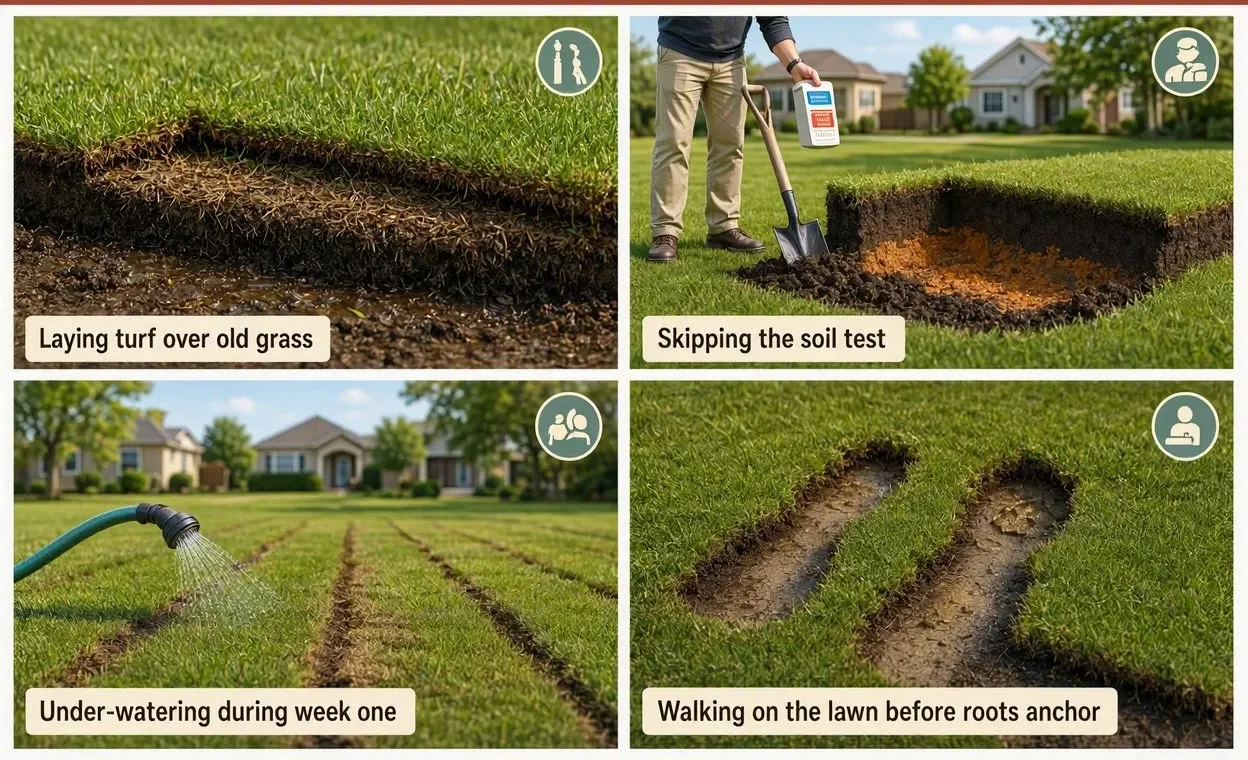
Four yard mistakes cause most new sod lawn failures: laying turf over old grass, skipping the soil test, under-watering during week one, and walking on the lawn before roots anchor. Fresh sod placed directly over dead turf traps moisture underneath, creating a barrier new lawn roots can’t push through regardless of irrigation.
Skipping a lawn soil test means flying blind on pH and nutrients, and turf planted in yard soil that’s too acidic or alkaline struggles to absorb fertilizer even when applied correctly. Under-watering shows up fastest in hot climates, where sod dries out and dies within 48 hours if lawn irrigation lapses for even one day during that first critical week. Yard foot traffic rounds out the list. Every footprint pressed into unrooted turf creates a lawn low spot, and low spots collect water that drowns the grass sitting in them.
DIY vs. Hiring a Lawn Care Service
DIY sod installation can save you about 40% to 60% of the total cost of the lawn, but requires a full day or two of work in your yard. If you hire a lawn care service, the job will cost you more upfront, but will be completed faster with less chance of errors in grading or irrigation. A homeowner working alone lays 1,000 to 2,000 sq ft (93 to 186 m²) of turf per day, depending on fitness level and yard complexity.
Lawn care crews bring turf equipment that speeds up soil prep dramatically, including commercial-grade tillers and multi-person rolling teams that finish lawn grading in a fraction of the time a rented tiller takes. Hiring a lawn service makes the most sense for large yards, steep slopes, or anyone without a free weekend for yard work. Small, flat lawns less than 2,000 sq ft (186 m2) are generally a one-person job, especially if you have a friend to help you carry and unroll turf.
FAQs
Can you put sod lawn down over existing grass?
No. Old turf traps moisture underneath and blocks new lawn roots from reaching soil. Remove existing grass completely before laying new sod for the best results.
How long does sod take to root?
Sod typically roots within 2 to 6 weeks, depending on turf type, lawn soil quality, and irrigation consistency. Warmer yard soil generally speeds up root establishment.
Does sod need fertilizer right after installation?
No. Wait 3 to 4 weeks before applying starter lawn fertilizer. Early feeding burns fragile turf roots instead of helping them establish properly.
Can you lay sod in the rain?
Yes, light rain won’t harm freshly laid turf. Avoid lawn installation during heavy storms, since saturated yard soil makes grading and rolling far less effective.
What’s the cheapest way to buy sod?
Buying direct from a local sod farm instead of a garden center usually saves 10% to 20%. Ordering bulk turf pallets also reduces the per-square-foot lawn price.
Conclusion
Putting sod down isn’t complicated, but it punishes shortcuts. Yard soil prep decides most of the lawn outcome before a single turf roll touches the ground, and irrigation discipline in the first two weeks decides the rest. Follow the lawn grading numbers, respect the soil pH range, and stick to the watering taper, and the sod lawn that results should look established well before the season’s out.
Anyone still weighing lawn options should remember that speed is sod’s entire value proposition. Now that the full process of how to put sod lawn down has been covered, from soil testing through the first mow and into year-round yard maintenance, the only step left is picking a turf delivery date and clearing a free day for the lawn work.