Your garage door is the largest moving part of your home, and it is usually the one you think about least until it refuses to open on a January morning with six inches of fresh snow in the driveway.
Central New York is hard on garage doors. Syracuse sits in the path of lake-effect snow, the Southern Tier around Binghamton swings between freezing and thawing through the winter, and Cortland County’s hills and open stretches add wind and drifting to the mix. Cold stiffens rubber, thickens lubricant, and makes metal contract, so small problems that a door tolerates in September can become a stuck door or a broken spring by December.
The good news is that most winter garage door failures give warning signs first. An hour of attention this fall can catch them. Here is what to check, in a sensible order.
Start with a Look and a Listen
Stand inside the garage with the door closed, then run it through a full open and close cycle while you watch and listen. You are looking for anything that has changed since last spring.
- Jerky or uneven movement. One side rising faster than the other often points to a cable or track problem.
- New noises. Grinding, popping, and squealing usually mean worn rollers, dry hinges, or a spring that is losing its tension.
- Visible wear. Look for frayed cable strands, cracked or chipped rollers, loose hinge screws, and any gap in a spring’s coils.
- Sagging or dented panels. Panels that flex or bow can pull the door out of alignment as the cold sets in.
Safety first. Look, but do not touch the springs, the cables, or the brackets at the bottom corners of the door. These parts are under extreme tension, and they cause serious injuries every year. Anything involving them is a job for a trained technician.
Check the Balance
A properly balanced door is easy to lift by hand because the springs carry most of its weight. Close the door, then pull the red emergency release cord to disconnect it from the opener. Lift the door manually to about the halfway point and let go.
A balanced door stays put or drifts only slightly. If it slams down or shoots upward, the springs are out of adjustment or worn, and the opener has been compensating. Stop there, reconnect the opener, and call for service. A locally owned company like Overhead Door Binghamton, which has sister locations in Cortland and Greater Syracuse, can adjust or replace worn springs safely. Running an unbalanced door through the winter puts extra strain on the opener motor and speeds up wear on everything else.
It is worth knowing how many trips your springs have made, too. Many standard springs are rated for roughly 10,000 open-and-close cycles. A busy household that uses the door four or five times a day can reach that number in fewer years than you might expect.
Test the Safety Reversal and Photo Eyes
Two safety features protect people, pets, and vehicles, and both are worth testing before the snow arrives.
For the reversal test, lay a 2×4 flat on the floor in the door’s path and close the door. It should reverse as soon as it touches the board. For the photo eyes, wave an object through the beam near the floor while the door is closing. The door should stop and reverse. While you are there, wipe both sensor lenses clean, and make sure they still point at each other. Winter road spray and low sun angles cause a surprising number of “my door won’t close” calls.
If either test fails, do not put it off. Stop using the door’s automatic close and have a professional look at it.
Lubricate the Moving Parts, and Clean the Tracks
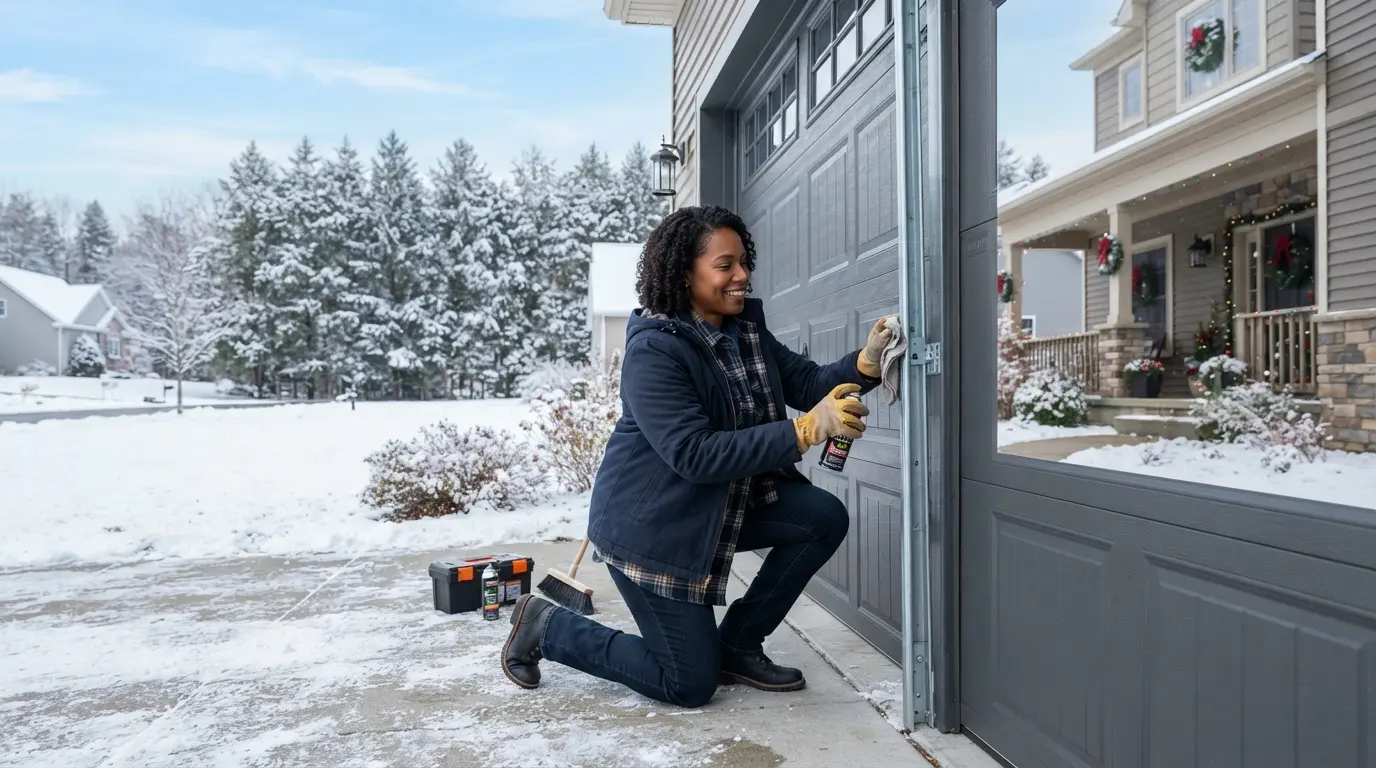
Cold weather thickens old lubricant, and dried-out hinges get noisy and stiff. Use a lubricant made for garage doors, typically silicone-based or lithium-based, and apply a light coat to the hinges, the roller stems, the springs, and the bearing plates. Wipe away the excess so it does not drip onto your car.
Do not grease the tracks themselves. Grease attracts dirt and grit and can turn into a paste. Instead, wipe the inside of each track with a clean rag to remove dust and debris. Rollers glide best on a clean surface.
Inspect the Bottom Seal and Weatherstripping
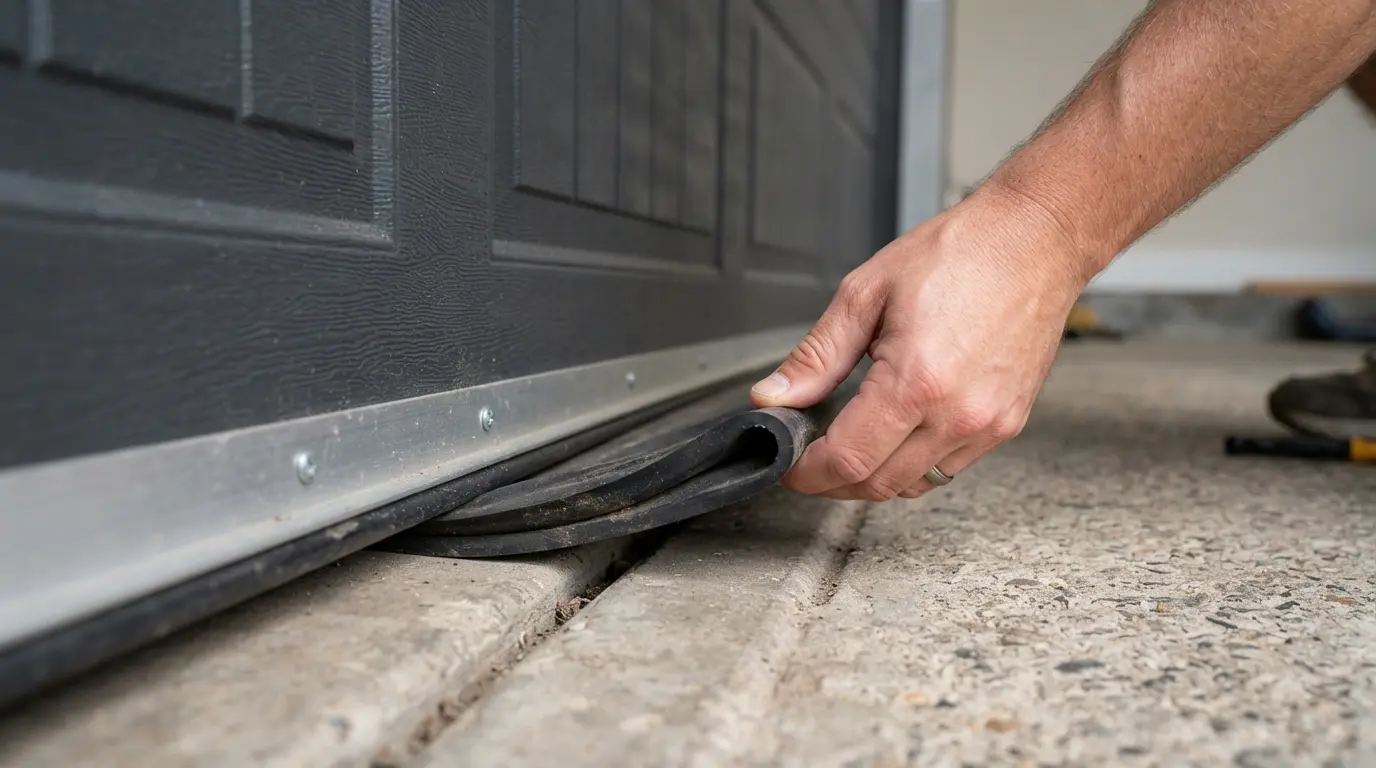
The rubber or vinyl seal along the bottom of the door does two jobs. It keeps snowmelt, cold air, and drifting flurries out of the garage, and it cushions the door as it closes. Over time it hardens, cracks, and flattens, and in cold weather it becomes even less flexible.
Close the door on a bright day and look for daylight along the bottom edge. Any visible gap is a gap for cold air, moisture, and pests. Replacing a worn seal is one of the least expensive things you can do to make a garage more comfortable, and the side and top weatherstripping deserves the same look.
Bottom seals can also freeze to the concrete after a thaw and freeze. If your door sticks, do not keep pressing the button, because the opener can strain or the seal can tear. Clear the ice gently, and consider clearing the threshold after storms to help prevent it in the first place.
Rinse Off Road Salt
Road salt and de-icing products find their way onto the bottom panel and hardware of every garage door in the region. Salt speeds up corrosion on steel and can damage finishes. A rinse with a hose and mild soap this fall, and again in early spring, keeps the bottom of the door in better shape. Dry the door and hardware afterward so nothing freezes wet.
Look After the Opener and Your Remotes
Cold drains remote batteries faster than warm weather does, so replace them now rather than in the middle of a storm. If your opener has a battery backup, check that it is charged and holding. If it does not, make sure everyone in the household knows where the emergency release cord is and how to use it. Ice storms and high winds cause outages across Central New York, and you do not want to discover during one that you cannot get the car out.
Listen to the opener when it runs. A motor that strains at the start of a cycle, or a chain that sags or rattles, is telling you something. On a very cold morning, a slow start is normal for a moment. A struggling opener that does not improve as it runs is not.
Consider Insulation, Especially for Attached Garages
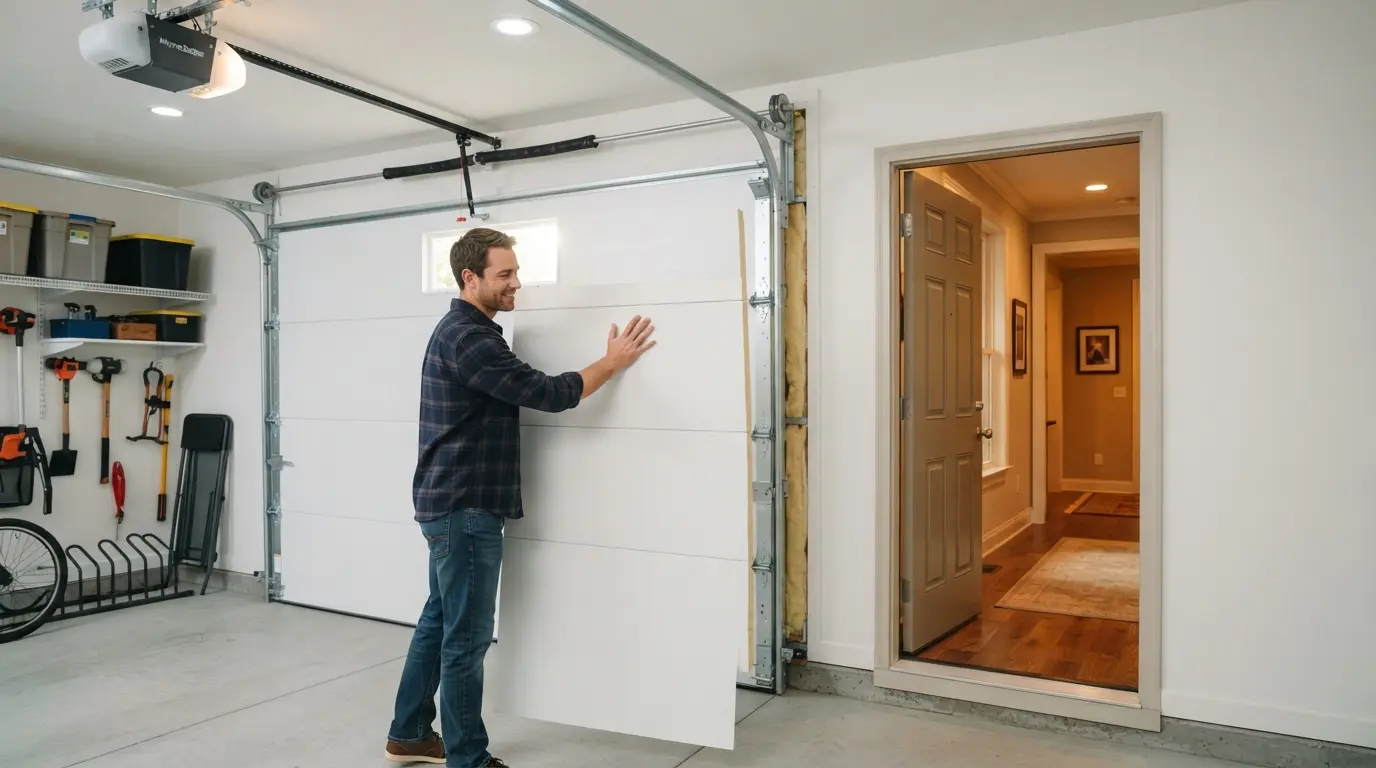
If your garage is attached to the house, or you have living space above or beside it, the door is a large thermal weak point. Insulated garage doors are built with a layer of insulation between steel skins, and they can help keep the garage warmer in winter and cooler in summer. They are also generally sturdier than a single-layer steel door. Insulation is rated by R-value, which varies from one door model to another, so ask for the figure when you compare options. If you are replacing an older door anyway, it is one of the better upgrades for the weather we get here.
What to Do Yourself and What to Leave to a Professional
Most of the checklist above takes under an hour and needs nothing more than a rag, lubricant, a hose, and a ladder you already own. The line between homeowner work and technician work is fairly clear.
| Reasonable to Do Yourself | Call a Technician |
| Visual inspection and listening for new noises | Any spring replacement or adjustment |
| Cleaning tracks and photo-eye lenses | Frayed, loose, or snapped cables |
| Lubricating hinges, rollers, and springs | A door that is off its track or out of balance |
| Replacing remote and keypad batteries | Failed safety reversal or sensor tests |
| Rinsing off salt and clearing the threshold | Opener motor, gear, or circuit-board problems |
When the checklist turns up something in the right-hand column, a local company that services every major brand is a sensible call. Many also offer planned maintenance programs if you would rather have a technician handle the annual inspection. Booking before winter is smart, too, because broken springs and failing openers tend to show up in clusters after the first hard freeze.
Notes for Each Part of the Region
Syracuse and Onondaga County
Lake-effect snow means heavy, wet accumulation and a lot of shoveling and plowing. Keep the threshold and the area in front of the door clear, and be careful with piles left by the plow, since a frozen bank against the door can jam the seal and strain the opener.
Binghamton and the Southern Tier
Repeated freezing and thawing is the bigger issue here. Water gets into hinges, rollers, and seals, then freezes, so lubrication and a healthy bottom seal matter. Valley locations near rivers and creeks should also watch for moisture in the garage, which speeds up rust on hardware.
Cortland and Cortland County
Older homes and detached garages are common, and many still have doors that are decades old. If yours is one of them, the fall inspection is a good moment to decide whether it is time to repair or replace, and to look for an insulated model if the garage is used as a workshop or attached to the house.
Repair or Replace?
A single worn part is normally worth repairing. Replacement starts to make sense when the door is more than a couple of decades old, when panels are dented, rotted, or delaminating, when repairs keep repeating, or when the door is uninsulated and the garage is part of how you live in the house. A technician can give you a straight opinion, and many companies now let you preview new door styles on a photo of your own home before you commit.
Your Fall Garage Door Checklist
- Run the door through a full cycle and note any new noises or jerky movement
- Inspect cables, rollers, and hinges for visible wear, without touching the springs or bottom brackets
- Test the balance with the opener disconnected
- Test the safety reversal with a 2×4 and clean the photo-eye lenses
- Lubricate hinges, roller stems, springs, and bearing plates, then wipe the tracks clean
- Check the bottom seal and side weatherstripping for cracks and gaps
- Rinse road salt off the door and dry the hardware
- Replace remote and keypad batteries and confirm the emergency release works
- Book a professional inspection for anything you would rather not guess about
A garage door that works quietly all winter is a small thing, but it is one you will notice if it does not. Spend an hour on it now, while the weather is still kind, and you are far less likely to be standing in the snow trying to pull the release cord.