The fastest growing plants are bamboo for raw speed, hybrid poplar and weeping willow for shade, Thuja Green Giant and Leyland cypress for privacy, radishes and microgreens for food, and pothos indoors. Start with your goal. Your USDA Hardiness Zone has to fit the plant, and invasive species such as kudzu and Paulownia have no place in a home yard at all.
Key Takeaways
- Bamboo holds the Guinness World Records title for the fastest growing plant in the world.
- Hybrid poplar, weeping willow and silver maple are fast growing trees that deliver quick shade in full sun.
- Thuja Green Giant is the top pick among fast growing privacy trees for most US yards.
- Radishes and microgreens are the fastest vegetables, and many varieties are ready to harvest within a month.
- Plants grow fastest in late spring and summer, when warmth, daylight and water all peak.
- Fast growth often brings weak wood, short lifespans or invasive spread, so check your state’s invasive species list before planting.
What Are the Fastest Growing Plants?
The fastest growing plants are species that add height, spread or harvestable mass in a short time, led by bamboo, tiny aquatic plants such as Wolffia, pioneer trees such as poplar and willow, quick crops such as radish, and vining houseplants such as pothos. Your goal decides the right pick.
Fastest growing plants are grasses, trees, vegetables and houseplants that reach usable size within one or a few growing seasons. The reasons vary. Gardeners reach for them to close a privacy gap, cool off a hot patio, get food on the table fast or green up a room.
Speed is only half the decision. A fast plant that dies in the wrong hardiness zone or creeps into a neighbor’s yard wastes more time than a slower one that fits. Outgrowing the lot does the same damage.
The Arbor Day Foundation tree guide rates each tree on a three-level growth scale that runs from slow to fast. Check that rating before you buy. Read it alongside the mature height and hardiness zone printed on the nursery tag, since speed alone won’t tell you whether a tree fits.
This table compares the top fast growing plants by gardening goal.
| Goal | Top Pick | Runner-Up | Main Caution |
|---|---|---|---|
| Privacy | Thuja Green Giant | Leyland cypress | Leyland cypress gets canker in humid regions |
| Shade | Hybrid poplar | Weeping willow | Short lifespan, aggressive roots |
| Food | Radish | Microgreens | Needs steady moisture |
| Indoors | Pothos | Heartleaf philodendron | Toxic to pets if chewed |
| Groundcover or screen | Clumping bamboo | Running bamboo (contained) | Running types spread by rhizomes |
What Is the Fastest Growing Plant in the World?
Bamboo is the fastest growing plant in the world, and certain bamboo species hold the Guinness World Records title for the fastest growth of any plant. Botanically, bamboo is a giant grass. Each new shoot, called a culm, reaches its full height in a single growing season before it branches and leafs out.
Bamboo Holds the Record
Bamboo outpaces other plants because every culm pushes out of the ground with all of its segments already formed inside it. Nothing gets built from scratch. Instead, the shoot stretches those existing segments upward, drawing on energy stored in the underground rhizomes.
Each culm stops at its first-season height. The grove still gets taller, because every year’s new culms come up taller and thicker than the last until the clump reaches its mature height.
This guide has no verified daily figure. Before quoting any number, check the current entry on the Guinness World Records “fastest growing plant” listing and cite that page directly.
Wolffia, the Tiny Flowering Contender
Wolffia, commonly called watermeal, is the smallest flowering plant on Earth and one of the quickest of all plants to multiply. Each one is a green speck. It floats on still water and produces new plants by budding.
Wolffia doesn’t grow tall. Its speed shows up in mass instead, as the population doubles quickly enough to blanket the whole surface of a still pond. That rapid output is why researchers study it as a possible high-protein food crop.
Several Wolffia species are native to US ponds and slow streams. Most gardeners never plant it. Owners of water features usually meet it as an uninvited green film on the surface, not as something they picked out at a nursery.
Growing Bamboo Safely in the USA
Bamboo comes in two forms. Running types such as Phyllostachys send rhizomes far from the parent plant. Clumping bamboo expands slowly in a tight circle, and the common picks are Fargesia for colder regions and Bambusa for warm ones.
Some states and towns regulate running bamboo. Connecticut, for example, has rules covering running bamboo planted near property lines, so look up your local ordinances before you dig a single hole.
Follow these steps to grow bamboo without losing control of it.
- Choose a clumping bamboo unless you can fully contain a running type.
- Confirm the species is hardy in your USDA Hardiness Zone.
- Install a commercial rhizome barrier around running bamboo before planting.
- Leave the top edge of the barrier above soil level so you can spot escaping rhizomes.
- Walk the barrier line each growing season and cut any rhizomes that jump it.
- Grow running bamboo in a large container if you cannot install a barrier.
What Type of Plant Grows the Fastest?
Grasses grow the fastest of any plant type, because bamboo, a giant grass, holds the world record and lawn and forage grasses regrow within days of cutting. Floating aquatic plants such as Wolffia and duckweed rank second, measured by mass. Vines like kudzu follow. Pioneer trees like poplar and willow come after them.
Grasses win on speed. They lose on long-term size. A tree keeps adding wood year after year, while most grasses hit full size in a single season and then simply stop growing.
This table compares fast-growing plant types and their best home uses.
| Plant Type | Example | Why It Grows Fast | Home Use |
|---|---|---|---|
| Grasses | Bamboo | Stretches pre-formed shoot segments | Screens, containers |
| Aquatic plants | Wolffia, duckweed | Buds off new plants constantly | Ponds, aquariums |
| Vines | Pothos, kudzu | Puts energy into length, not trunks | Indoor trailing plants (never kudzu) |
| Pioneer trees | Hybrid poplar, willow | Built to claim open, sunny ground | Shade, windbreaks |
| Annual vegetables | Radish, arugula | Finishes its life cycle in one season | Quick harvests |
What Are the Fastest Growing Trees?
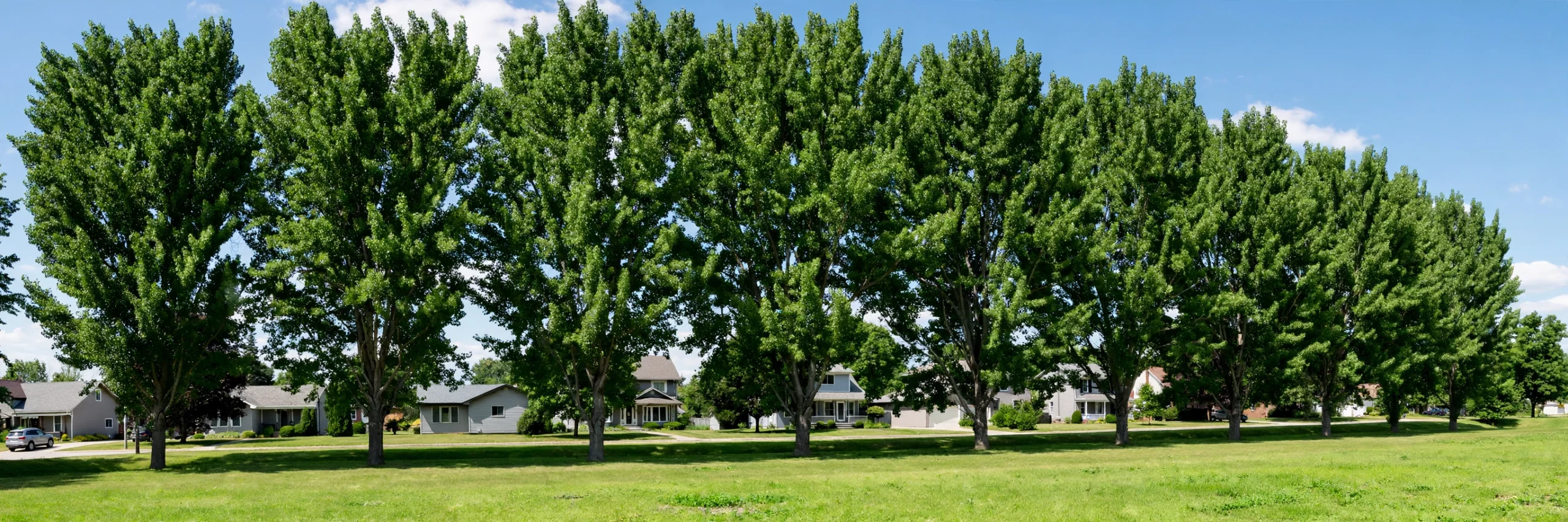
The fastest growing trees for US yards are hybrid poplar, weeping willow, silver maple, river birch, tulip poplar and red maple, all vigorous species that put on height quickly in full sun with moist, well-drained soil. Thuja Green Giant leads the fast evergreens. Every one of these trees trades some lifespan or wood strength for its speed.
Check each tree against the USDA Plant Hardiness Zone Map before buying, and make sure the zone range printed on the nursery tag includes yours. Skip any tree that doesn’t match.
This table compares popular fast growing trees by use, climate fit and drawback.
| Tree | Best Use | Climate Fit | Main Drawback |
|---|---|---|---|
| Hybrid poplar | Fast shade, windbreak | Wide range, including cold North | Short-lived, weak wood |
| Weeping willow | Shade near water | Moderate climates, moist sites | Roots invade pipes and drains |
| Silver maple | Quick shade | Wide range | Brittle limbs, surface roots |
| River birch | Shade in wet spots | Wide range, heat tolerant | Drops twigs and peeling bark |
| Tulip poplar | Tall shade | Eastern US | Too large for small lots |
| Red maple | Shade, fall color | Wide range | Surface roots in lawns |
Fast Growing Shade Trees
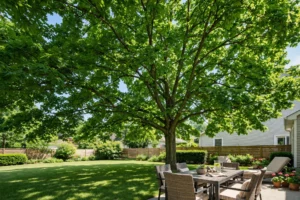
Hybrid poplar is the fastest shade tree for open, sunny ground. Think of it as temporary. It buys you shade and time while slower, longer-lived trees planted nearby grow up and eventually take its place in the yard.
Weeping willow needs constant moisture and lots of room. Its roots go hunting for water. Keep the tree well clear of septic systems and sewer lines, and give your home’s foundation an equally wide berth when you pick a spot.
Tulip poplar and red maple make better long-term fast growing shade trees. Both shoot up quickly when young, then go on to live far longer than either hybrid poplar or silver maple ever will. That’s the better trade.
Fast Growing Trees for Small Yards
A small yard needs a fast tree with modest mature height and canopy spread. Eastern redbud fits that brief. This native spring bloomer fills in quickly and stays compact enough to sit comfortably on most suburban lots without crowding the house.
In the South, crape myrtle grows fast and slips easily into narrow side yards where a broad shade tree would never fit. Multi-stem river birch is another option. It gives quick, airy shade without a maple’s bulk.
Read the mature height and width on every tag. Spacing matters. Plant a fast tree too close to the house, and within a few years it turns into a pruning chore and a storm risk.
What Is the Fastest Growing Privacy Tree?
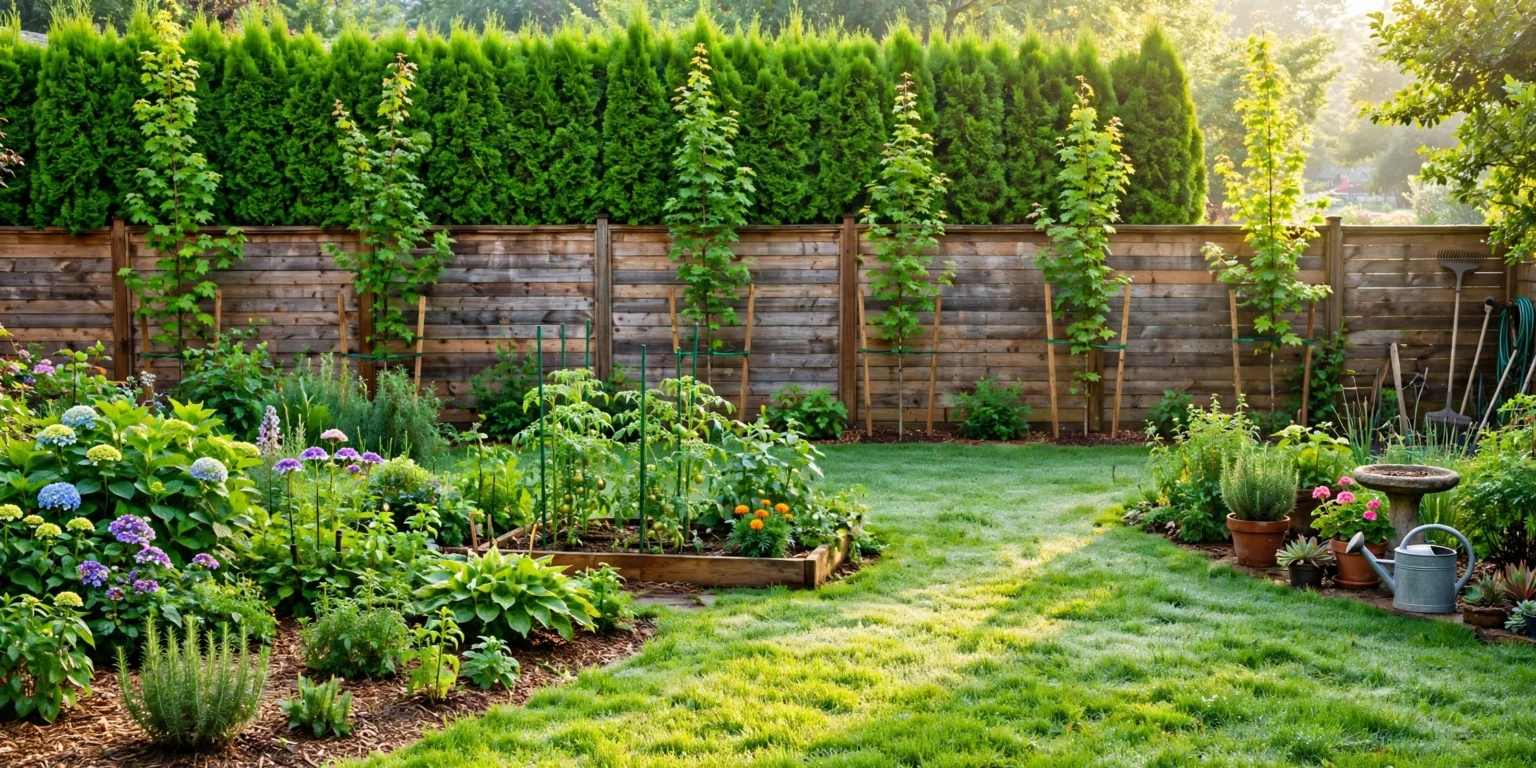
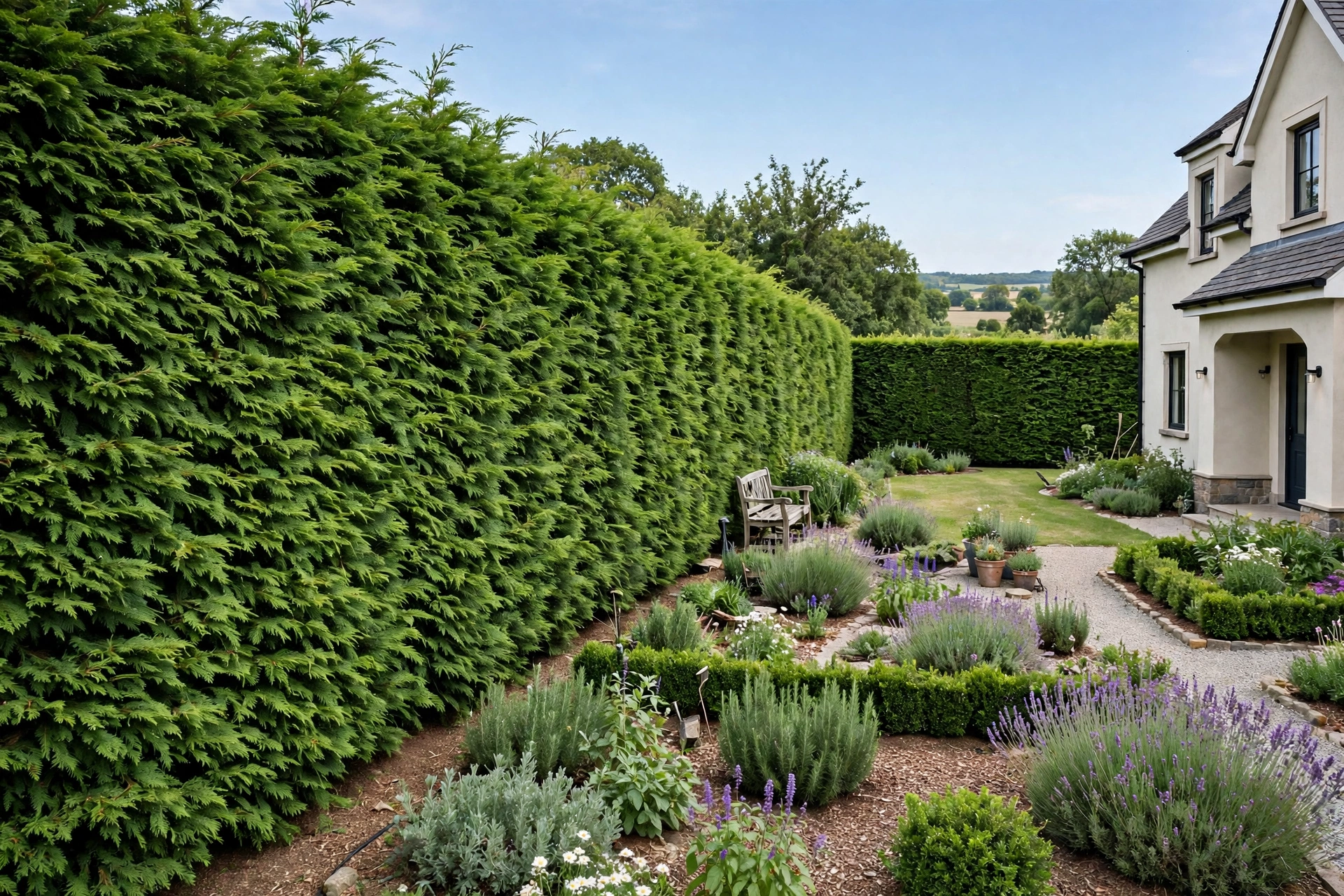
Thuja Green Giant is the fastest growing privacy tree for most US yards, because this hybrid arborvitae forms a dense evergreen screen quickly, resists deer browsing better than most arborvitae and avoids the canker diseases that damage Leyland cypress in humid regions. Leyland cypress is a close rival. In mild climates, it grows every bit as fast as Thuja Green Giant.
The U.S. National Arboretum introduced Thuja Green Giant. Since its release to American gardeners, it’s become a standard fast privacy hedge across much of the East and South, and Midwest yards rely on it as well.
Fast Growing Evergreen Trees for Privacy
Pick Thuja Green Giant for most yards. Leyland cypress belongs in mild-winter areas with good air flow, while cold northern windbreaks call for Norway spruce or eastern white pine instead. Fast growing evergreen trees like these screen year-round, while deciduous trees leave gaps every winter.
This table compares fast growing privacy trees by screen speed, region and risk.
| Evergreen | Screen Speed | Best Region | Watch For |
|---|---|---|---|
| Thuja Green Giant | Very fast | East, South, Midwest | Needs room to widen |
| Leyland cypress tree | Very fast | Mild-winter regions | Canker diseases, bagworms |
| Eastern white pine | Fast | Northern US | Lower limbs thin with age |
| Norway spruce | Fast for a spruce | Northern US | Large mature footprint |
| Emerald Green arborvitae | Moderate | Northern US, narrow lots | Slower, deer browse it |
Leyland cypress suffers in hard freezes, so it’s a poor fit for northern windbreaks. Cold zones need tougher trees. Norway spruce and eastern white pine both handle the cold well, and Emerald Green arborvitae is the narrower choice for tight northern lots.
How to Plant a Fast Privacy Hedge
Plant a privacy hedge in early spring or early fall, when cool air and moist soil help roots settle in. Follow these steps for the fastest screen.
- Check that your USDA Hardiness Zone falls within the tree’s listed range.
- Read the mature width on the nursery tag and use it to set spacing.
- Stagger trees in a zigzag double row for a faster, denser screen.
- Dig each hole two to three times as wide as the root ball and no deeper.
- Set the root flare level with the surrounding soil, never below it.
- Backfill with the native soil you removed, firming it gently.
- Water deeply right after planting to settle soil around the roots.
- Spread mulch around each tree, keeping it a few inches away from the trunk.
- Water deeply whenever the soil dries during the first growing season.
When to Plant Hybrid Poplar Trees
Plant hybrid poplar trees in early spring, as soon as the ground thaws and can be worked, while bare-root trees and cuttings are still dormant. Early planting gives new roots several cool, moist weeks before summer heat arrives. The South has more leeway. Gardeners in mild-winter southern regions can also plant during the dormant season, anytime from late fall through the winter months.
Hybrid poplar comes in several forms. Bare-root trees and unrooted cuttings cost less than container-grown trees, and both cheaper options establish fastest when they go in the ground dormant.
Container-grown poplars are more forgiving. Their planting window is wider, so you can set them out anytime from spring through early fall as long as you’re able to water consistently.
How to Plant Bare-Root Poplar Cuttings
Weed competition is the main reason poplar cuttings fail, so get the site cleared and ready before the cuttings ever show up. These steps set up strong first-year growth.
- Store cuttings cool, moist and dormant until planting day.
- Soak bare-root trees or cuttings in clean water overnight before planting.
- Clear all grass and weeds from each planting spot.
- Choose a site in full sun, far from septic systems, sewer lines and foundations.
- Push each cutting into loose soil with the buds pointing up.
- Leave only the top bud or two above the soil line.
- Firm the soil around the cutting to remove air pockets.
- Water thoroughly, then keep the soil moist through the first growing season.
- Keep the area weed-free for the entire first year.
How Long Do Vegetables Take to Grow?
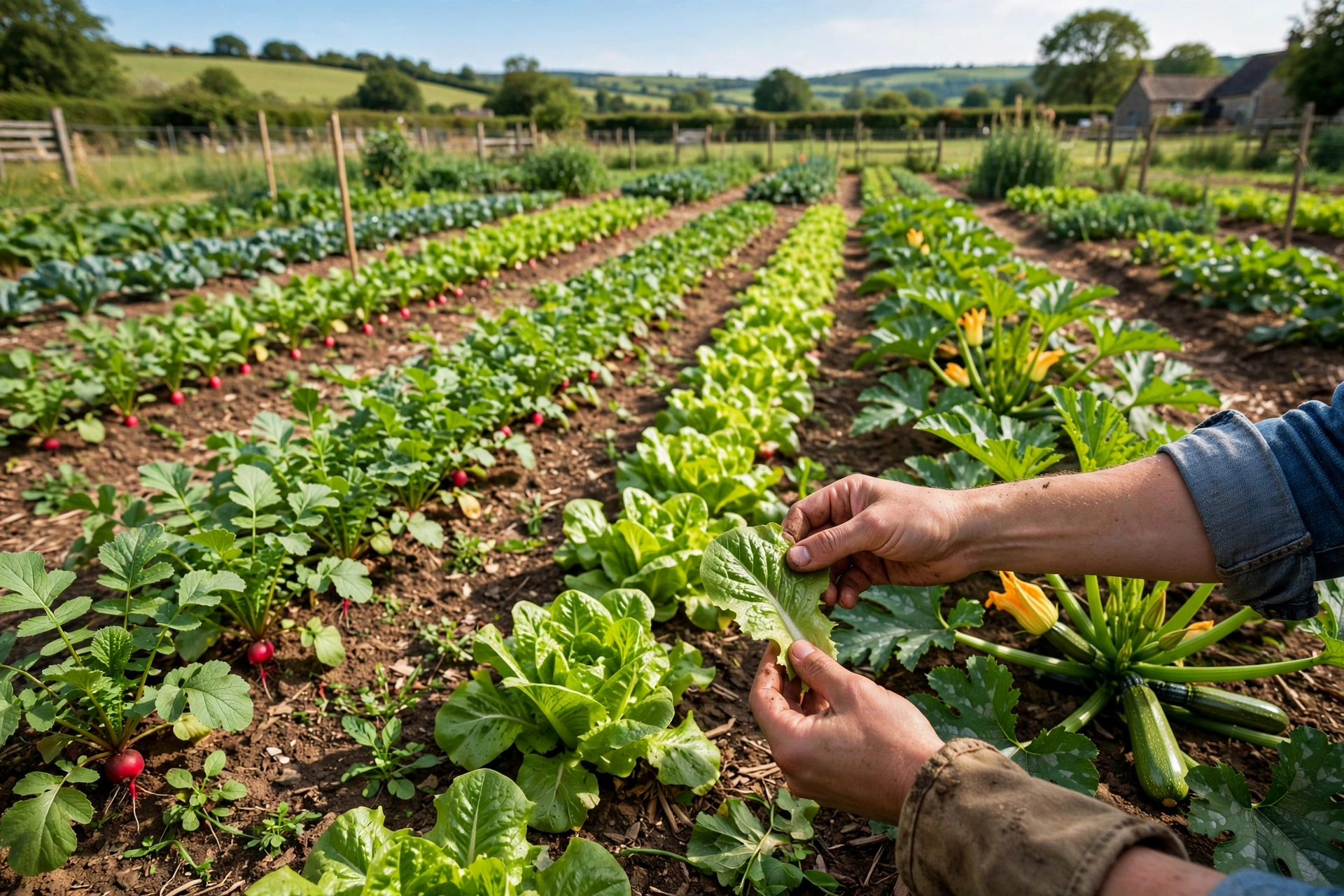
Most vegetables take anywhere from a few weeks to several months to grow, and the days to maturity figure on each seed packet states the expected time to first harvest. Radishes and microgreens are the fastest, with baby greens close behind. Slow crops need a full summer. Pumpkins and winter squash belong in that slow group, along with most tomatoes.
Days to maturity counts from direct sowing for crops grown from seed in the ground. Transplants work differently. With crops started indoors, such as tomatoes and peppers, the count usually begins on the day the seedlings move into the garden.
Weather shifts the real timeline. Cool spells slow warm-season crops, while a stretch of heat pushes lettuce and spinach to bolt before you get a harvest, and radishes react the same way.
This table compares the fastest vegetables to grow by speed, season and harvest method.
| Vegetable | Speed Class | Season | Harvest Tip |
|---|---|---|---|
| Microgreens | Fastest | Year-round indoors | Cut at the first true leaves |
| Radish | Fastest outdoor crop | Cool spring and fall | Pull before roots turn pithy |
| Arugula | Very fast | Cool season | Pick young, tender leaves |
| Leaf lettuce | Very fast as baby greens | Cool season | Cut and let it regrow |
| Spinach | Fast | Cool season | Harvest before it bolts |
| Green onions | Fast | Spring to fall | Harvest at pencil thickness |
| Bush beans | Fast | Warm season | Pick often to keep pods coming |
| Zucchini | Fast | Warm season | Pick fruit while young |
Fastest Vegetables to Harvest in Under 30 Days
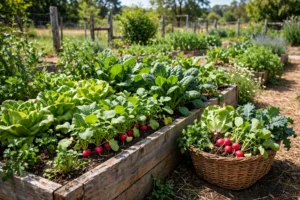
Microgreens, radishes, baby arugula, baby lettuce and turnip greens are the vegetables most likely to reach harvest within 30 days. Varieties differ, though. Check the days to maturity on each packet before you sow.
Follow these steps to harvest as quickly as possible.
- Choose varieties with the shortest days to maturity on the packet.
- Sow cool-season crops in early spring or late summer for fall harvests.
- Plant in full sun and loose, well-drained soil.
- Keep the soil evenly moist to speed germination and growth.
- Thin seedlings early so each plant has room to size up.
- Harvest baby greens young instead of waiting for full heads.
- Sow a new short row every week or two for a steady supply.
Apartment growers get the fastest edible yield from microgreens. The setup is simple. Start with a shallow tray and seed sold for sprouting. For light, a sunny windowsill works fine, and an inexpensive grow light does the job just as well in a dim apartment.
What Is the Fastest Growing Houseplant?
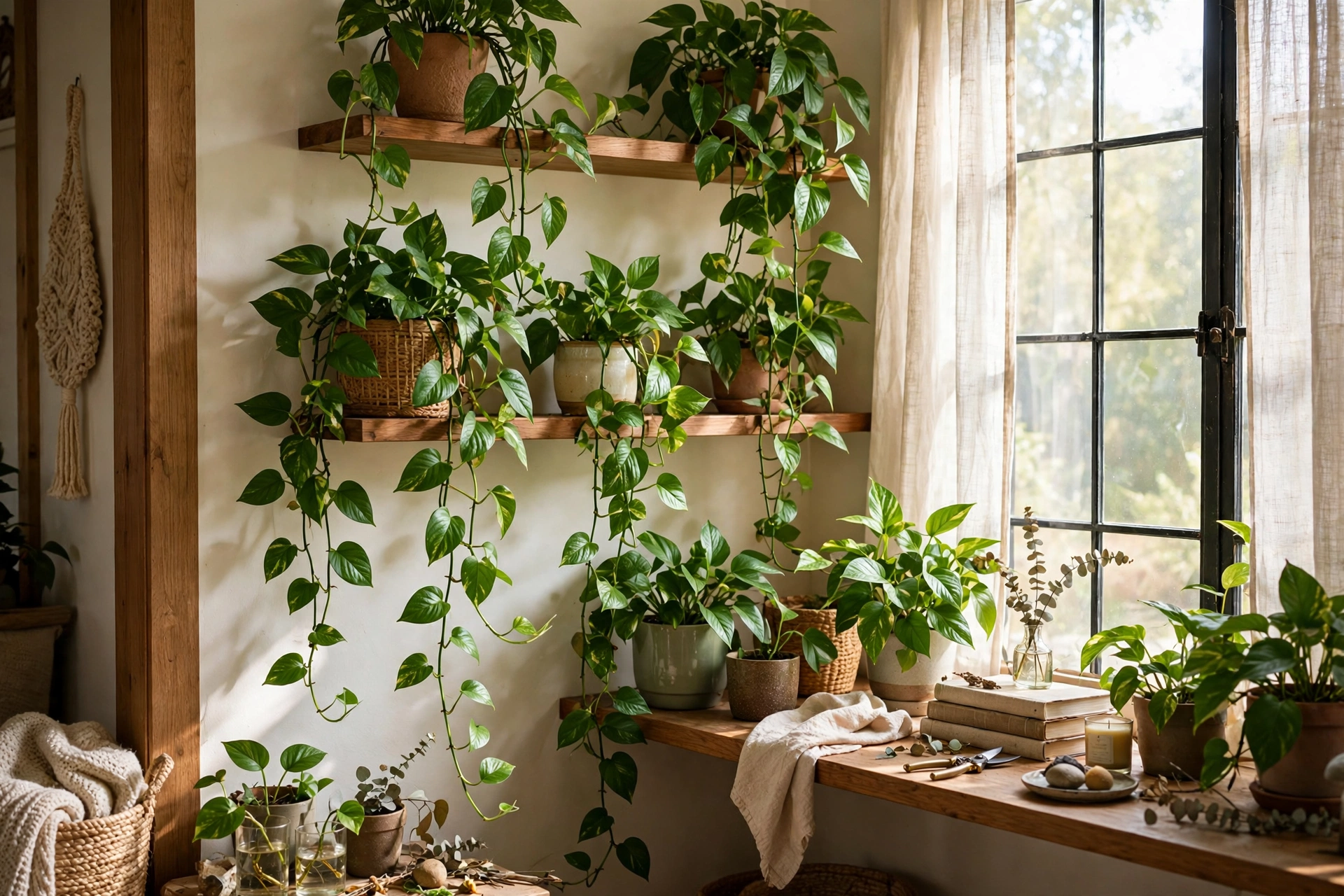
Pothos is the fastest growing houseplant for most US homes, because its trailing vines lengthen quickly in bright, indirect light and the plant tolerates dry indoor air, irregular watering and average room temperatures. Close runners-up among fast growing houseplants include heartleaf philodendron and arrowhead plant. Spider plant belongs on that list too.
This table compares fast growing indoor plants by light need, growth habit and pet safety.
| Houseplant | Light Need | Growth Habit | Pet Safety |
|---|---|---|---|
| Pothos | Bright, indirect | Trailing vine | Toxic to cats and dogs |
| Heartleaf philodendron | Medium to bright, indirect | Trailing vine | Toxic to cats and dogs |
| Arrowhead plant | Bright, indirect | Climbing vine | Toxic to cats and dogs |
| Spider plant | Bright, indirect | Arching leaves, plantlets | Nontoxic per ASPCA |
| Monstera | Bright, indirect | Large climbing vine | Toxic to cats and dogs |
Own a cat or dog? Check every new plant against the ASPCA toxic and nontoxic plant lists before it ever comes through your front door.
Fast Growing Indoor Vines
Pothos and heartleaf philodendron are the easiest indoor vines for beginners. Both root readily. Set a stem cutting in a glass of water, and a single plant quickly turns into several new ones for other rooms.
Arrowhead plant and monstera both grow faster and fill out more fully once they have a moss pole or trellis to climb. Support matters. Climbing cues these plants to produce larger leaves.
How to Speed up Houseplant Growth
Houseplants grow fastest in spring and summer, when longer daylight gives them more energy to put into new leaves and stems. These steps push growth further.
- Move plants to the brightest spot that avoids harsh direct afternoon sun.
- Add a full-spectrum grow light in dim rooms or during winter.
- Water when the top layer of soil feels dry.
- Feed with a balanced houseplant fertilizer during spring and summer only.
- Repot into a container one size larger when roots circle the pot.
- Give climbing plants a pole or trellis.
- Pinch or trim leggy stems to encourage branching.
When Do Plants Grow the Fastest?
Plants grow the fastest during late spring and summer, when long days, warm temperatures and steady moisture let photosynthesis run at full speed and supply the sugars that build new leaves, stems and roots. Fall slows things down as days shorten. Most outdoor plants then largely stop growing during the winter dormant season.
Trees put on much of their yearly shoot growth in a spring flush, then shift energy to thickening trunks and storing reserves. Annual vegetables behave differently. They keep growing for as long as warmth and water hold steady and the light holds up too.
This table compares plant growth activity and gardener tasks by season.
| Season | Growth Activity | Gardener Task |
|---|---|---|
| Early spring | Roots wake, buds swell | Plant bare-root trees and cool crops |
| Late spring | Peak shoot growth | Water, mulch and control weeds |
| Summer | Fast growth if watered | Water deeply during dry spells |
| Fall | Root growth, shoots slow | Plant trees and shrubs |
| Winter | Dormant season | Prune dormant trees, plan beds |
Do Plants Grow More at Night?
Yes, many plants do much of their stem elongation in darkness, using sugars produced by photosynthesis earlier in the day. Light makes the food. Darkness gives the plant time to spend that stored energy on stretching its cells.
Nighttime growth explains why houseplants kept under round-the-clock lighting don’t always grow any better than ones that get a normal night. Most plants want a regular light-dark cycle.
Are Fast Growing Trees Invasive?
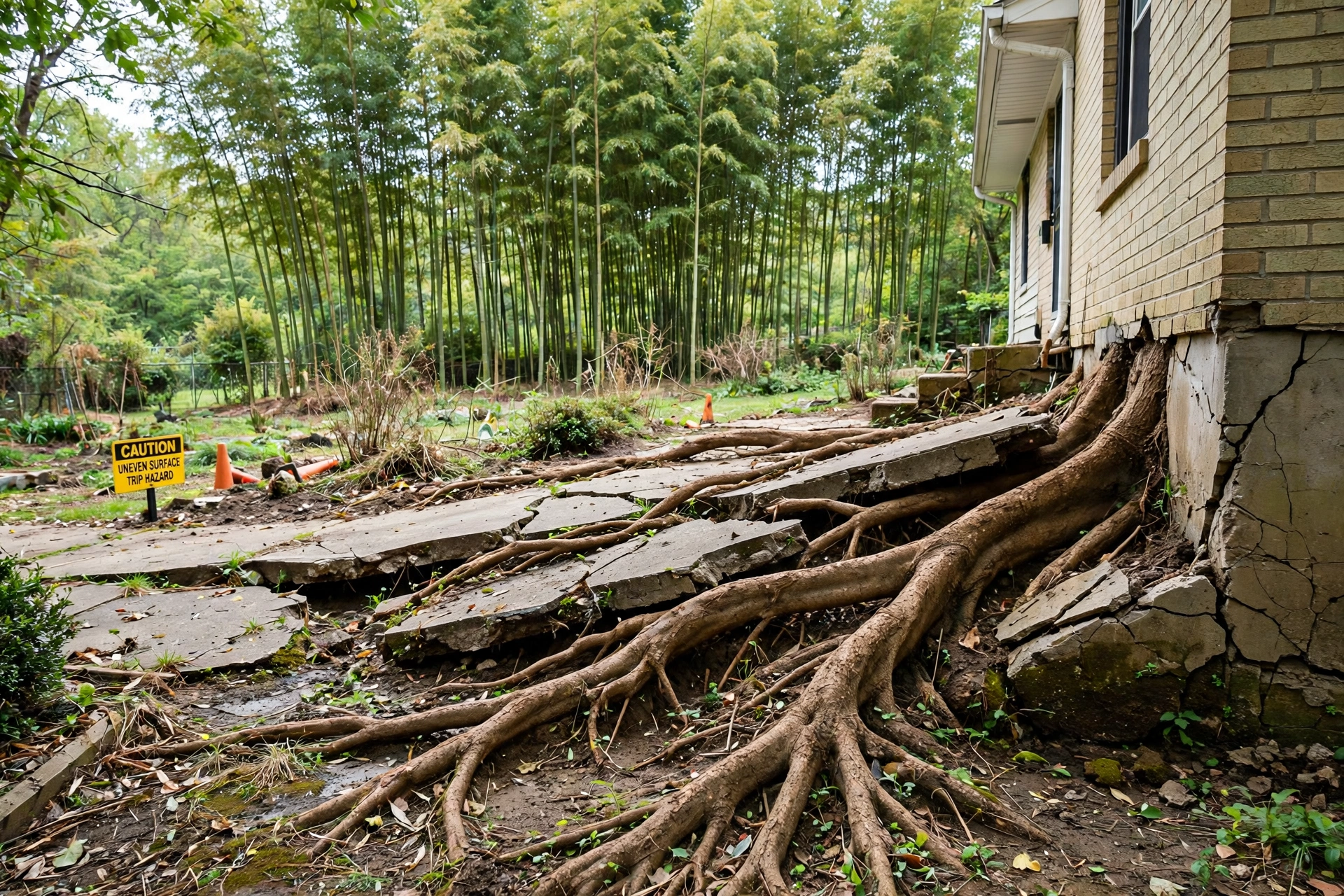
Yes, some fast growing trees and plants are invasive, because the same vigor that makes them grow quickly lets them spread into yards, woodlands and waterways. Empress tree (Paulownia), tree of heaven, Callery pear, kudzu and running bamboo top the list. Avoid them or contain them tightly.
Kudzu is listed as a federal noxious weed. Ohio has banned the sale of Callery pear. Other states restrict certain fast growers too. Before planting, check with your state department of agriculture and your local Cooperative Extension Service to see what’s restricted where you live.
This table compares invasive fast growers with safer alternatives.
| Plant | Problem | Safer Alternative |
|---|---|---|
| Empress tree (Paulownia) | Seeds into disturbed ground | Tulip poplar |
| Tree of heaven | Root suckers, spotted lanternfly host | Red maple |
| Callery pear | Forms thorny thickets | Serviceberry |
| Kudzu | Smothers trees and structures | Native coral honeysuckle |
| Running bamboo | Rhizomes cross property lines | Clumping bamboo |
| Norway maple | Crowds out native forest seedlings | Red maple |
Native fast growers support local wildlife and rarely become problems. Go native when you can. Your extension office can supply a list of native trees suited to your specific county if you call or email and ask.
Frequently Asked Questions
How Far Apart Should Privacy Trees Be Planted?
Space privacy trees using the mature width listed on the nursery tag. Closer spacing is tempting. Tighter rows give a quicker screen, but they force neighboring trees to compete for light and water, and that competition raises disease risk. Patience pays off here.
Which Fast Growing Trees Live the Longest?
Tulip poplar and northern red oak pair quick early growth with long lives, and Norway spruce does the same among evergreens. Short-lived speed is different. Hybrid poplar and silver maple grow faster but decline sooner, as does willow, so treat those trees as temporary shade.
What Is the Best Time to Plant Trees?
Early spring and early fall are the best tree planting windows across most of the USA. Both seasons work. Mild air and moist soil let roots establish before summer heat or winter freezes arrive to stress the young tree.
Which Fast Evergreens Tolerate Cold Winters?
Norway spruce and eastern white pine handle harsh northern winters well, and Emerald Green arborvitae holds up in the same conditions. Leyland cypress doesn’t. It suffers in hard freezes, so northern gardeners should pick the hardier conifers for screens and windbreaks.
Can Fast Growing Plants Grow in Containers?
Yes. Clumping bamboo, dwarf arborvitae, pothos, lettuce and radishes all thrive in pots. Drainage comes first, so every container needs holes in the bottom and a fill of fresh potting mix. Potted plants also dry out quickly, which means watering more often than you would a garden bed.
Conclusion
The fastest growing plants reward gardeners who match speed with the right site, zone and purpose. Start small. A radish row makes an easy first win this season, and a pothos cutting on the windowsill works just as well indoors. For bigger projects, plant a staggered line of Thuja Green Giant, and set slower, longer-lived trees alongside fast growers like hybrid poplar so today’s quick shade hands off to lasting canopy. Lists change, though. Native plant programs and state invasive lists keep expanding, so check with your local Cooperative Extension Service each spring before you buy.