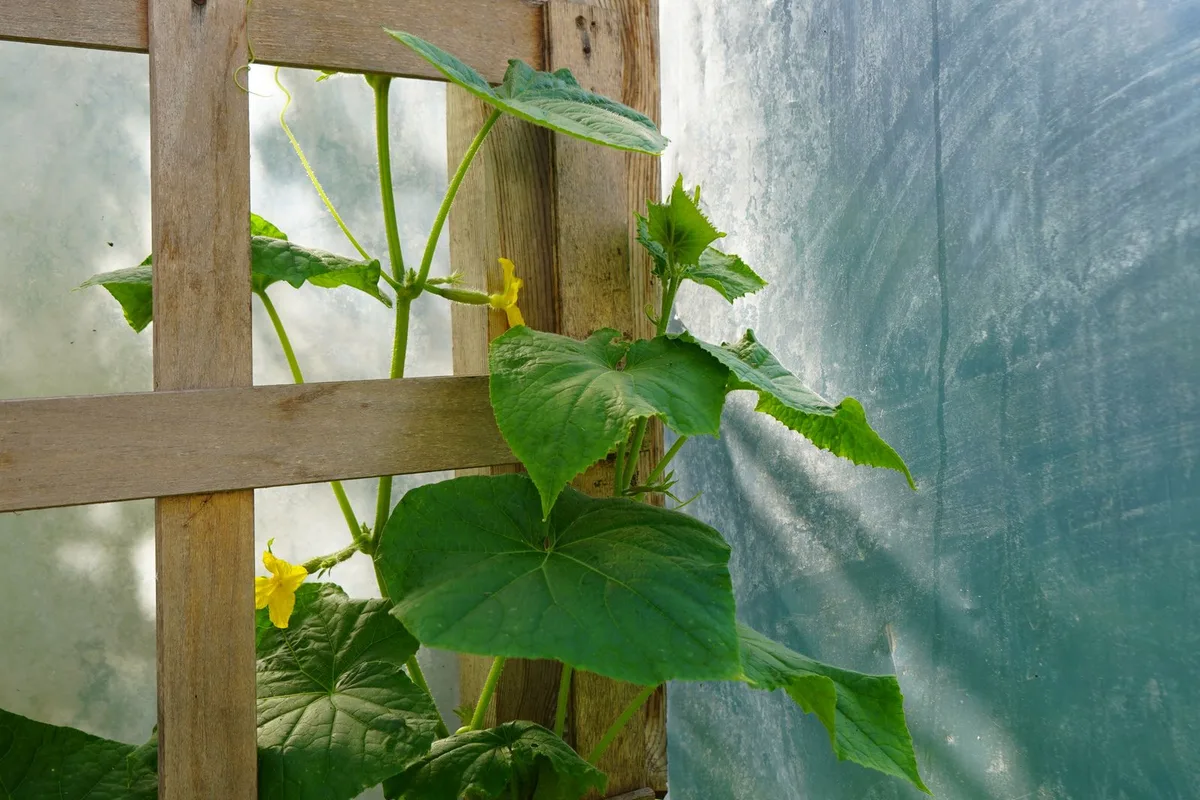
To grow cucumbers, plant seeds 1 to 2 weeks after your last spring frost, once soil reaches 60°F (16°C), in a spot with 6 to 8 hours of direct sun. Rich soil and 1 to 2 inches (2.5 to 5 cm) of water every week keep the vines productive once they’re in the ground. A trellis helps too. Expect the first harvest in 50 to 70 days.
Key Takeaways
- Cucumbers are warm-season crops, so plant them after the last spring frost when soil reaches at least 60°F (16°C), ideally 70°F (21°C).
- Cucumber plants need at least 6 to 8 hours of direct sun daily, and 8 or more hours produces the heaviest harvests.
- Cucumbers need 1 to 2 inches (2.5 to 5 cm) of water per week at soil level, because uneven moisture causes bitter, misshapen fruit.
- Bush cucumber varieties grow well in containers that hold at least 5 gallons (19 liters) of potting mix per plant.
- Most cucumbers reach harvest 50 to 70 days after sowing, and picking every 1 to 2 days keeps vines producing.
- Striped and spotted cucumber beetles spread bacterial wilt, so control the beetles early to protect young vines.
What Cucumbers Are and Why They Grow Well at Home
Cucumbers (Cucumis sativus) are warm-season vegetables in the gourd family, Cucurbitaceae, that produce crisp fruit on fast-growing vines or compact bushes. Home gardeners like them for speed. A single planting yields fruit within about two months, and space rarely limits you, because vining types climb trellises while bush types fit patio containers.
Growing cucumbers is a warm-season project that rewards good timing and full sun more than special skill, and steady water matters just as much. Learning how to grow cucumbers takes a single season, since the crop races from seed to harvest. That makes mistakes cheap.
Cucumbers share a plant family with squash, pumpkins, watermelons and cantaloupes. Rotate the whole group. Moving all of these crops to a new bed each year reduces the buildup of soil-borne diseases and overwintering pests.
Home gardeners grow two main groups. Slicing cucumbers grow longer with thicker skin, and they’re meant for fresh eating. Pickling cucumbers, the other group, stay shorter and blockier, and their thin, bumpy skin soaks up brine well in a jar.
When to Plant Cucumbers
Plant cucumbers outdoors 1 to 2 weeks after the average last spring frost, when soil 2 to 4 inches (5 to 10 cm) deep reaches at least 60°F (16°C) and nights stay above 50°F (10°C). Cold soil rots cucumber seeds or slows sprouting. One frost kills cucumber seedlings.
Soil temperature, not the calendar, answers when to plant cucumbers. Push a soil thermometer into the bed in the morning, when the ground is coolest, and plant once readings hold at 60°F (16°C) or higher for several days. Germination speeds up near 70°F (21°C).
Warm Southern and Southwestern regions get a bonus: a second crop sown in mid to late summer for fall picking. Timing it is simple. Count back from the first fall frost date by the variety’s days to maturity, then add about 2 weeks of buffer.
Planting Dates by USDA Zone
USDA Plant Hardiness Zones are based on average extreme winter low temperatures, not frost dates, so zone-based timing is only a starting point. Your local frost date matters more. Confirm the average last frost date through your state’s Cooperative Extension office before planting.
Approximate last frost windows and outdoor cucumber planting windows by USDA zone appear in the table below.
| USDA Zone | Approx. Last Frost | Outdoor Planting Window |
|---|---|---|
| Zones 3 to 4 | Mid May to mid June | Early to late June |
| Zones 5 to 6 | Late April to mid May | Mid May to early June |
| Zone 7 | Early to mid April | Late April to mid May |
| Zone 8 | Mid March to early April | April to May, again midsummer |
| Zones 9 to 10 | February or earlier, or none | March to April, again late summer |
How Much Sun Do Cucumber Plants Need?
Cucumber plants need at least 6 to 8 hours of direct sunlight per day, and sites with 8 or more hours of full sun produce the most flowers and fruit. Shaded cucumber vines stretch and flower poorly. They also develop more powdery mildew, because leaves on cucumber plants in low light stay damp longer.
Pick the sunniest spot you have. South-facing beds get the most light, and a south-facing patio or balcony does the same job for pots. Stay clear of large trees too, because their canopies steal light while their roots compete with cucumber roots for water.
Extreme heat changes the rule. In the Deep South and the hottest parts of Texas and Arizona, light afternoon shade in July and August actually helps cucumber plants. Shade cloth rated around 30% reduces leaf scorch and heat stress during extreme heat waves.
In many regions, raised bed cucumbers get an earlier start than in-ground plants. The reason is simple. Their soil warms faster in spring and drains better than heavy clay, which gives cucumber seeds and transplants a quicker, healthier start.
How to Prepare Soil for Cucumbers
Cucumbers grow best in loose, well-drained soil rich in organic matter, with a soil pH between 6.0 and 6.8. Work finished compost into the top 6 to 8 inches (15 to 20 cm) of soil before planting. Compost feeds the roots. That same compost also loosens heavy clay so it drains, and it helps sandy soil hold the steady moisture cucumber roots need.
Follow these steps to prepare a cucumber bed:
- Test soil pH and nutrients with a home kit or through your state Cooperative Extension soil testing lab.
- Add garden lime to raise pH or elemental sulfur to lower it, following the soil test recommendation.
- Remove weeds, rocks and old roots from the planting area.
- Spread 2 to 3 inches (5 to 8 cm) of compost and dig it into the soil.
- Mix in a balanced fertilizer, such as 10-10-10, at the rate on the label or soil test report.
- Rake the surface smooth and water the bed the day before planting.
In short-season northern zones, lay black plastic mulch over the bed 1 to 2 weeks before planting. It’s worth the effort. The dark plastic warms soil faster than bare ground, and it smothers the weeds that would otherwise crowd young vines.
Choose the Right Cucumber Variety
Choose vining slicing cucumbers for trellised beds, pickling cucumbers for canning, and bush varieties for containers and small spaces. Parthenocarpic cucumbers set fruit without pollination. That trait suits them to greenhouses and screened porches, and it also rescues harvests in gardens that see few bees. Days to maturity vary, so check each seed packet before buying.
The table below compares common cucumber varieties sold by US seed companies.
| Variety | Type | Growth Habit | Best Use |
|---|---|---|---|
| Marketmore 76 | Slicing | Vining | Trellised beds, fresh salads |
| Straight Eight | Slicing heirloom | Vining | Classic garden slicer |
| Boston Pickling | Pickling heirloom | Vining | Pickles and relish |
| Spacemaster | Slicing | Bush | Containers and small beds |
| Salad Bush | Slicing hybrid | Bush | Patio pots |
| Diva | Parthenocarpic slicing | Vining | Greenhouses, low-pollinator gardens |
| Lemon | Round heirloom | Vining | Fresh eating |
| Suyo Long | Asian slicing | Vining | Tall trellis, burpless fruit |
Humidity breeds mildew. Gardeners in humid Eastern and Southern states benefit from varieties with listed resistance to powdery mildew or downy mildew, which seed packets and catalogs note in the variety description.
How to Grow Cucumbers from Seed
Grow cucumbers from seed by sowing seeds 1/2 to 1 inch (1.3 to 2.5 cm) deep in warm soil outdoors after the last frost, or indoors 3 to 4 weeks before transplanting. Cucumber seeds typically sprout in about 3 to 10 days. Direct sowing has an edge. It avoids the root disturbance that slows transplanted cucumbers.
Start Seeds Indoors
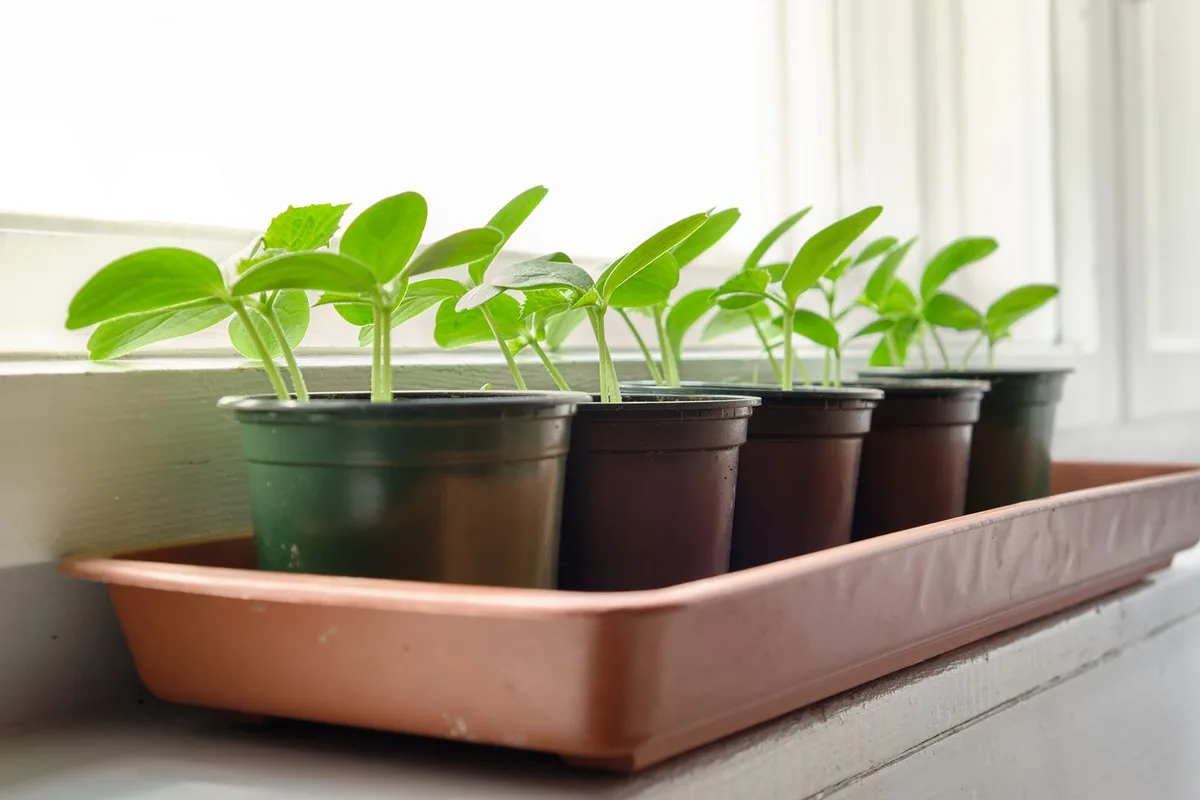
Starting seeds indoors gives gardeners in short-season northern zones a head start of about 3 to 4 weeks on the season. Here’s the method.
- Fill 3 to 4 inch (7.5 to 10 cm) biodegradable pots with moist seed-starting mix.
- Plant 2 seeds per pot, 1/2 inch (1.3 cm) deep.
- Keep pots at 70 to 85°F (21 to 29°C) on a seedling heat mat until sprouts appear.
- Hang grow lights 2 to 4 inches (5 to 10 cm) above seedlings and run them 14 to 16 hours daily.
- Snip the weaker seedling at soil level once the first true leaves open.
- Harden off seedlings outdoors for 7 to 10 days, starting with 1 to 2 hours in shade.
Earlier isn’t better here. Never start seeds more than 4 weeks early, because older, root-bound cucumber seedlings transplant poorly and often stall for weeks.
Direct Sow Seeds Outdoors
Direct sowing is the simplest method. It works in most US zones, because the frost-free season easily covers the 50 to 70 days most cucumbers need.
- Wait until soil holds at 60°F (16°C) or warmer.
- Plant cucumber seeds 1/2 to 1 inch (1.3 to 2.5 cm) deep, sowing 2 to 3 seeds every 12 inches (30 cm) along a trellis.
- Sow 4 to 6 seeds per hill instead for sprawling vines, spacing hills 3 to 5 feet (0.9 to 1.5 m) apart.
- Water gently and keep the top inch (2.5 cm) of soil evenly moist until seedlings emerge.
- Thin to 1 plant every 12 inches (30 cm) on a trellis, or 2 to 3 plants per hill, once seedlings show 2 true leaves.
How to Plant Cucumbers in the Garden
Plant cucumbers by setting hardened-off transplants into warm, compost-rich soil at the same depth they grew in their pots, spaced 12 inches (30 cm) apart along a trellis or 3 to 5 feet (0.9 to 1.5 m) apart for sprawling vines. Cucumber roots resent disturbance. Always handle transplants by the root ball.
Cucumber transplants show up each spring at garden centers and local nurseries, and home improvement retailers such as The Home Depot and Lowe’s stock them too. Shop carefully. Look for compact, dark green plants with no yellow leaves and no open flowers.
- Install the trellis before planting so posts never damage roots later.
- Water transplants about an hour before moving them.
- Dig a hole slightly wider than the pot.
- Set each plant at its original soil level, and tear off the rim of biodegradable pots so no edge sits above the soil.
- Firm soil gently and water each plant with 1 to 2 quarts (about 1 to 2 liters).
- Cover young plants with floating row cover to block cucumber beetles and cold wind.
- Remove the row cover when female flowers open so bees can pollinate them.
How to Grow Cucumbers in Containers
Grow cucumbers in containers by planting one bush or compact variety per pot that holds at least 5 gallons (19 liters) of quality potting mix, placing it in 6 to 8 hours of sun, and watering whenever the top inch of mix feels dry. Size matters here. Larger pots hold moisture longer and support bigger plants.
Anyone figuring out how to grow cucumber plants in pots on a balcony or deck should start with drainage, and the same goes for patio growers. Every container needs drainage holes. Fill it with bagged potting mix, too, because garden soil compacts and drains poorly in containers.
Fabric grow bags and plastic pots both work, as does glazed ceramic. Color matters more. Light-colored containers stay cooler than black pots in hot Southern and Southwestern summers, and cooler pots mean less heat stress on cucumber roots.
- Fill the pot with moist potting mix to 1 inch (2.5 cm) below the rim.
- Mix in a slow-release vegetable fertilizer at the label rate.
- Sow 2 to 3 seeds 1/2to 1 inch (1.3 to 2.5 cm) deep in the center, or set 1 transplant.
- Thin seedlings to the single strongest plant.
- Add a cage or trellis at planting time.
- Spread 1 inch (2.5 cm) of straw or shredded bark over the mix to slow drying.
Potted cucumbers dry out far faster than garden cucumbers. Check them every morning. During hot, windy July weather, expect to water twice a day, since a small volume of potting mix can’t hold enough moisture to carry a vine through the afternoon.
Container Size and Variety Matrix
Pot volume decides how many cucumber plants a container supports and which varieties thrive in it. Bigger is safer.
The table below shows what each container size supports, from plant count to trellis choice.
| Container Size (Gal / L) | Plants per Pot | Best Variety Type | Support Method |
|---|---|---|---|
| 3 gal / 11 L | Not recommended | Dries out too fast | N/A |
| 5 gal / 19 L | 1 | Bush | Short cage or none |
| 10 gal / 38 L | 1 to 2 | Bush or compact vining | Tomato cage or obelisk |
| 15 to 20 gal / 57 to 76 L | 2 to 3 | Vining slicer or pickler | 5 to 6 ft (1.5 to 1.8 m) trellis |
How Often Should You Water Cucumber Plants?
Water cucumber plants deeply 1 to 3 times per week to deliver 1 to 2 inches (2.5 to 5 cm) of water weekly, including rain, keeping soil evenly moist but never soggy. Cucumber fruit is mostly water, so dry spells cause bitter, curled or hollow fruit and stop vines from setting new cucumbers.
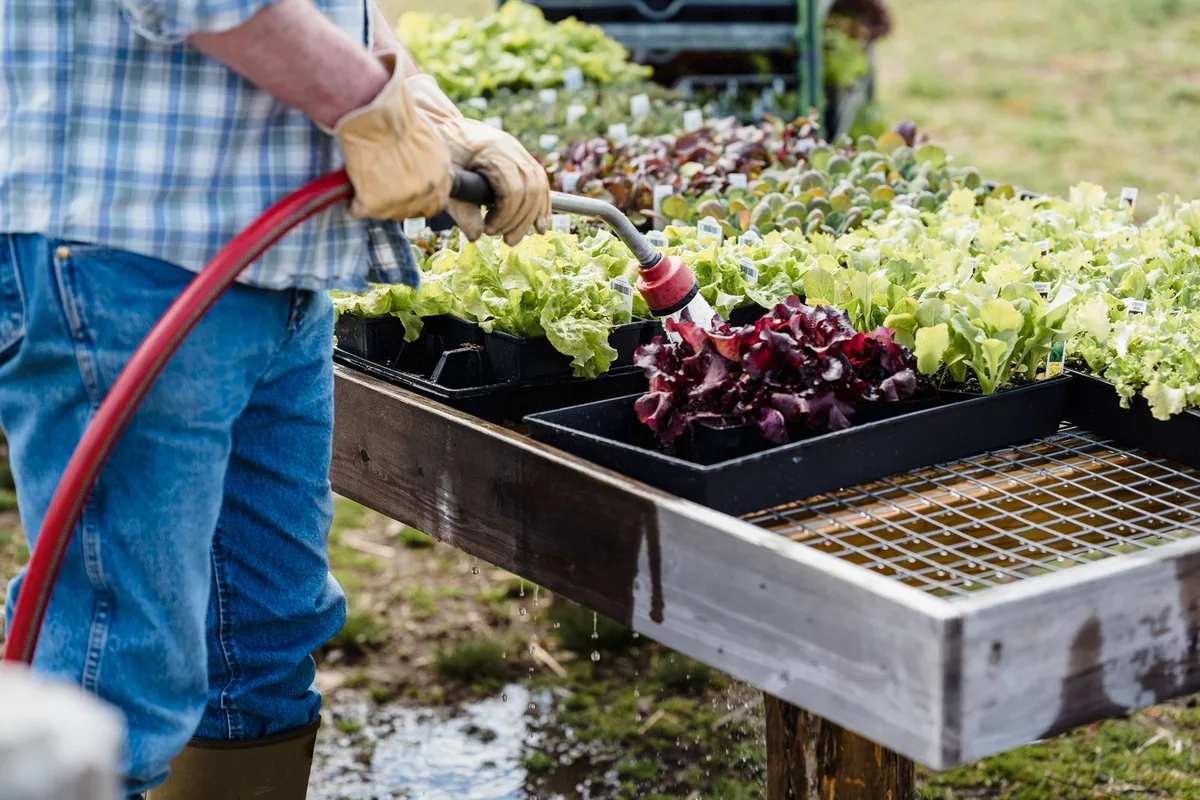
Deliver water at the soil line through drip irrigation or a soaker hose. Wet leaves invite trouble. Powdery mildew and downy mildew both spread on damp foliage, while drip lines keep cucumber leaves dry from morning to night.
Push a finger 2 inches (5 cm) into the soil before you reach for the hose, because that depth tells you what the roots actually feel. Dry there? Water. If the soil still feels damp, skip watering and test again later.
Typical watering frequency for cucumbers varies by growing setting, as the table below shows.
| Growing Setting | Watering Frequency | Check Method |
|---|---|---|
| In-ground bed | 1 to 2 times weekly | Finger test at 2 in (5 cm) |
| Raised bed | 2 to 3 times weekly | Finger test at 2 in (5 cm) |
| Container | Daily in summer | Top 1 in (2.5 cm) dry |
| Hot, windy spells | Increase as needed | Check morning and evening |
Once soil warms, spread 2 to 3 inches (5 to 8 cm) of straw or shredded leaves around plants. Mulch holds moisture and cools roots. It also keeps developing fruit off damp soil, which cuts down on rot during long stretches of humid summer weather.
Afternoon wilting is normal. Cucumber leaves often droop in the heat of the day and recover by evening without any help from you. Leaves that stay limp at sunrise point to a root-zone problem, either dry soil or waterlogged roots. Bacterial wilt causes the same symptom.
How to Fertilize Cucumber Plants
Fertilize cucumbers by mixing a balanced fertilizer into the soil at planting, then side-dressing with a nitrogen fertilizer when vines begin to run and again when the first flowers appear. Excess nitrogen produces lush leaves with few flowers, so follow label rates or soil test recommendations instead of adding extra.
- Scatter the side-dress fertilizer in a band 4 to 6 inches (10 to 15 cm) from each stem.
- Scratch the fertilizer lightly into the top inch (2.5 cm) of soil.
- Water the band thoroughly so nutrients reach the roots.
Potted cucumbers lose nutrients quickly through drainage holes. Feed them often. Once flowering begins, give potted plants a liquid vegetable fertilizer every 2 weeks, mixed and applied according to the label directions.
Organic gardeners have options too. Compost and aged manure both work well as side-dressings, and fish emulsion does the same job, provided every organic product goes on at its label rate to avoid burning roots.
Do Cucumbers Need a Trellis?
No, cucumbers do not require a trellis, but vining varieties grown on a 5 to 6 foot (1.5 to 1.8 m) support produce straighter, cleaner fruit, use less ground space and suffer fewer leaf diseases thanks to better airflow. Bush cucumber varieties stay compact and grow well without support.
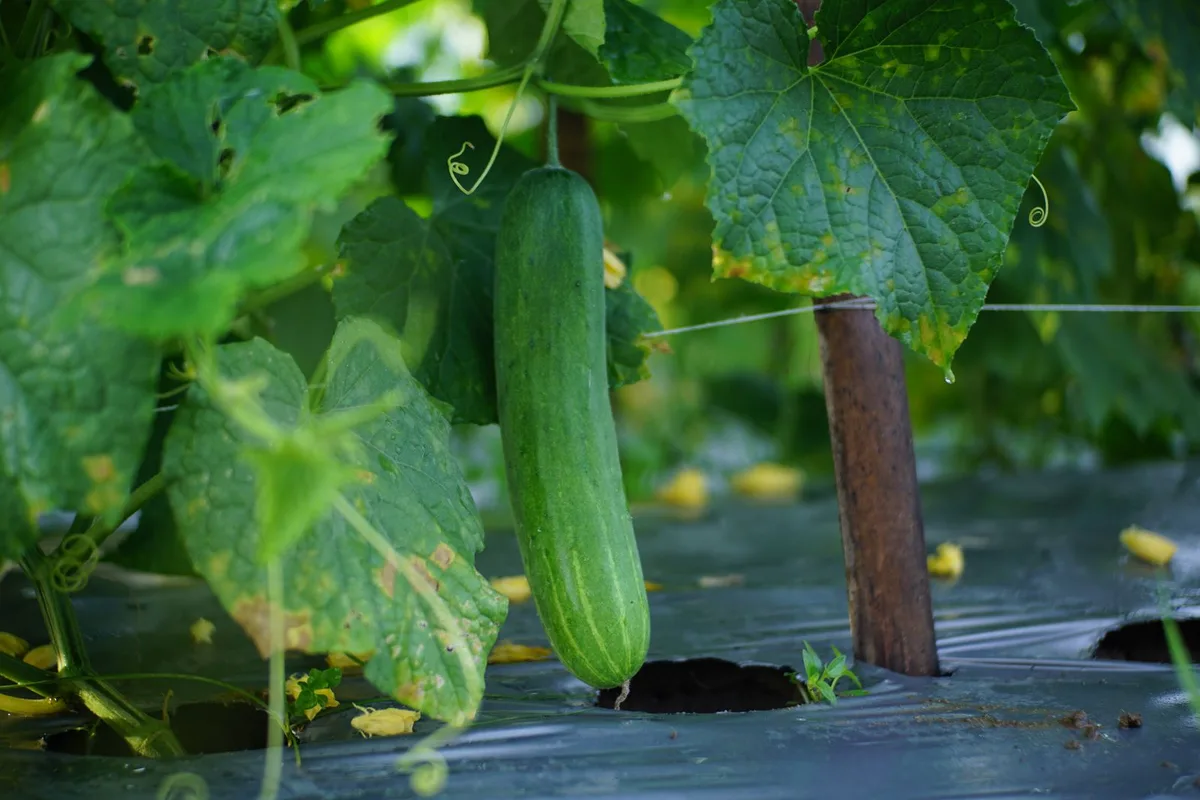
Trellising also makes harvesting easier, because hanging fruit stays visible and never rests on the soil where it can rot or get missed. There’s a tradeoff. Trellised cucumbers need closer spacing and slightly more frequent watering than sprawling vines do.
The table below compares common cucumber trellis types for home gardens.
| Trellis Type | Best For | Height (ft / m) | Main Advantage |
|---|---|---|---|
| Cattle panel arch | Raised beds, heavy vines | 5 to 7 / 1.5 to 2.1 | Very strong, reusable for years |
| A-frame trellis | In-ground rows | 4 to 6 / 1.2 to 1.8 | Grows plants on both sides |
| Netting on posts | Long rows | 5 to 6 / 1.5 to 1.8 | Low cost, easy to store |
| Tomato cage | Containers, bush types | 3 to 4 / 0.9 to 1.2 | Fits inside pots |
| Fence or wall | Small yards | Varies | Uses an existing structure |
A cattle panel arch is the sturdiest choice for most home gardeners. Plastic netting costs the least. Cucumber tendrils grab supports on their own, though young vines still need a weekly nudge onto the trellis, and wandering stems should be tied loosely with soft garden twine.
Why Are My Cucumber Flowers Not Producing Fruit?
Cucumber flowers fail to produce fruit mainly because the plant opens only male flowers early in the season, or because bees are not carrying pollen from male flowers to female flowers. Cucumber plants usually bloom with male flowers first, often a week or two before female flowers appear, so early fruitless blooms are normal.
Spot female flowers by the tiny cucumber at the base of each bloom. Males look different. They sit on thin stems with no swelling behind the petals, which makes the two types easy to tell apart after a quick look.
Poor fruit set has five common causes:
- Male flowers blooming before female flowers appear.
- Low bee activity during cool, cloudy or rainy weather.
- Insecticide sprays applied while flowers are open.
- Extreme heat above 90°F (32°C), which reduces pollen quality.
- Excess nitrogen fertilizer, which favors leaves over flowers.
Planting zinnias, sunflowers, borage or marigolds near the cucumber bed draws in more pollinators. Spray timing matters too. If an insecticide is truly needed, apply it in the evening after bees stop foraging, and follow the product label exactly.
How to Hand-Pollinate Cucumbers
Hand pollination replaces missing bees, and the whole job takes just a few minutes per day once you know which flowers to look for. It’s easy.
- Check plants in the morning, when flowers are freshly open.
- Pick an open male flower and peel back its petals.
- Rub the pollen-covered center onto the center of an open female flower.
- Pollinate 2 to 3 female flowers with each male flower, or transfer pollen with a small paintbrush.
- Watch the tiny fruit, which swells within a few days when pollination succeeds.
Parthenocarpic varieties such as Diva skip this step. Their fruit develops without any pollination at all, which spares gardeners with few bees the daily chore of moving pollen by hand.
Cucumber Pests and Diseases
The most damaging cucumber problems in US gardens are cucumber beetles, bacterial wilt, powdery mildew and downy mildew, along with stress problems such as yellow leaves and bitter fruit. Catch these cucumber problems early by checking the tops and undersides of leaves at least twice a week.
Cucumber Beetles and Bacterial Wilt
Striped and spotted cucumber beetles chew on leaves and stems, and they feed on flowers as well. Worse, these beetles also carry and spread bacterial wilt, a disease caused by the bacterium Erwinia tracheiphila, from one cucumber vine to the next. Infected plants can’t be cured.
To test a suddenly wilting vine, cut through the stem and press the cut ends together before pulling them slowly apart again. Sticky, stringy threads suggest bacterial wilt. Pull and discard infected plants in the trash, not the compost pile.
- Cover seedlings with floating row cover from planting until female flowers open.
- Hang yellow sticky traps near young plants to monitor beetle numbers.
- Hand-pick beetles into a bucket of soapy water in the cool morning.
- Apply kaolin clay or an insecticide labeled for cucumbers when beetle numbers climb, following label directions.
Mildew and Other Leaf Diseases
Powdery mildew forms white, powdery spots on upper leaf surfaces, usually in mid to late summer. Downy mildew looks different. It creates angular yellow patches bounded by leaf veins, with gray or purple fuzz on leaf undersides, and it spreads fast in humid weather.
Four habits prevent both mildews in most home gardens: planting resistant varieties, running drip irrigation, trellising vines and leaving wide spacing between plants. Remove infected leaves promptly. For fungicide recommendations registered in your state, contact your local Cooperative Extension office.
Symptom-To-Fix Troubleshooting Table
Matching each visible symptom to its cause speeds up diagnosis right there in the garden, before a small problem spreads down the row. Start with the leaves.
The table below matches common cucumber symptoms to their likely cause and fix.
| Symptom | Likely Cause | Fix |
|---|---|---|
| Yellow lower leaves | Low nitrogen or overwatering | Side-dress nitrogen, water only when soil dries |
| Whole vine wilts suddenly | Bacterial wilt | Remove plant, control beetles |
| White powder on leaves | Powdery mildew | Remove leaves, improve airflow |
| Angular yellow leaf patches | Downy mildew | Remove leaves, use labeled fungicide |
| Flowers but no fruit | Male flowers only or poor pollination | Wait, then hand-pollinate |
| Bitter fruit | Heat or drought stress | Water evenly, mulch soil |
| Curved or pinched fruit | Uneven water or poor pollination | Water consistently, attract bees |
| Holes in leaves | Cucumber beetles | Row cover, hand-pick beetles |
| Yellow, swollen fruit | Overripe cucumbers | Pick at proper size |
How Long Do Cucumbers Take to Grow?
Most cucumbers take 50 to 70 days from seed to first harvest, and each fruit reaches picking size roughly 1 to 2 weeks after its female flower opens. Pickling and bush varieties often finish at the shorter end of that range, while long Asian types can take longer, so check days to maturity on each seed packet.
The table below shows an approximate cucumber growth timeline from sowing to harvest.
| Growth Stage | Approx. Days After Sowing |
|---|---|
| Seeds sprout | 3 to 10 |
| Vines begin to run | 21 to 28 |
| First flowers open | 28 to 42 |
| First harvest | 50 to 70 |
Cool weather slows every stage. Warm days and warm nights speed growth instead, so the same variety can finish noticeably sooner in a hot summer than in a cool one. Transplants started indoors reach harvest about 3 to 4 weeks sooner than seeds sown outdoors on the same day.
When and How to Harvest Cucumbers
Harvest cucumbers by size and firmness, not by calendar date, because fruit grows quickly in summer heat and can pass its prime overnight. Check often.
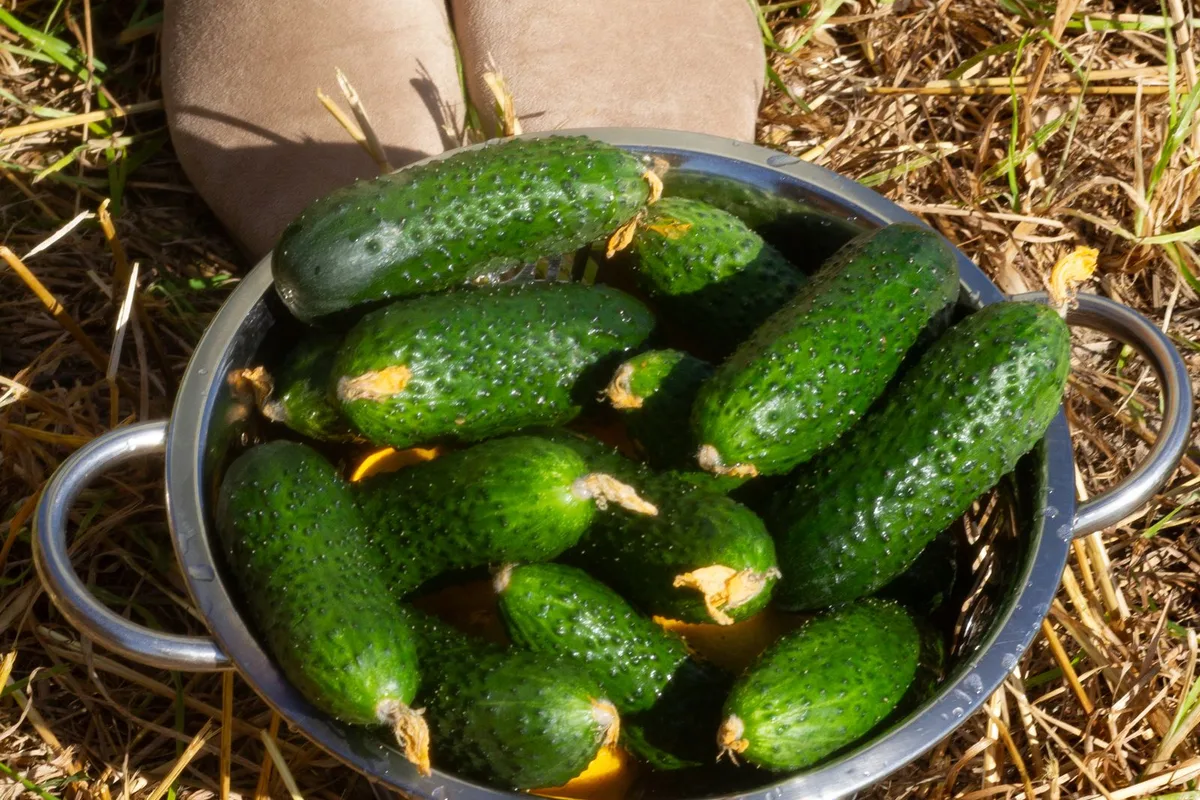
The table below compares harvest sizes and readiness signs by cucumber type.
| Cucumber Type | Harvest Length (in / cm) | Signs of Readiness |
|---|---|---|
| Pickling | 2 to 6 / 5 to 15 | Firm, bumpy, deep green |
| Slicing | 6 to 8 / 15 to 20 | Firm, uniform dark green |
| Asian or English | 10 to 14 / 25 to 36 | Slender, firm, glossy |
| Lemon | 2 to 3 / 5 to 7.5 wide | Pale yellow, not deep gold |
- Check plants every 1 to 2 days once fruit appears.
- Cut the stem 1/4 inch (6 mm) above the fruit with clean pruners, because pulling damages vines.
- Remove oversized or yellowing fruit, because maturing seeds signal the plant to slow production.
- Store unwashed cucumbers in the refrigerator crisper drawer and use them within about a week.
Frequently Asked Questions
How Many Cucumbers Does One Plant Produce?
No verified figure applies to every variety. Yield depends on variety and sunlight, plus water and pollination. Picking every 1 to 2 days raises the count, and steady moisture combined with full sun pushes each plant to produce even more cucumbers over the season.
Why Are My Cucumber Leaves Turning Yellow?
Yellow cucumber leaves usually signal nitrogen deficiency, overwatering, poor drainage, natural aging of lower leaves or downy mildew. Check soil moisture first. If the soil drains well but the leaves keep fading, side-dress the plants with nitrogen.
Why Do Cucumbers Taste Bitter?
Heat and drought raise bitter compounds called cucurbitacins in cucumber fruit, and uneven watering has the same effect. Peeling helps. Trimming the stem end along with the skin removes most bitterness, and steady watering under mulch or a switch to burpless varieties prevents it.
Can Cucumbers Grow in Partial Shade?
Yes, cucumbers survive on 4 to 6 hours of direct sun, but expect fewer flowers and a smaller harvest from each vine. Shade isn’t all bad. Light afternoon shade helps plants in scorching Southern summers.
Should I Water Cucumbers in the Morning?
Yes, morning is the best time. Foliage dries quickly in morning sun, which lowers mildew risk, and the plants then face afternoon heat fully hydrated. Evening watering leaves foliage damp overnight.
Conclusion
Cucumbers reward gardeners who get three things right: warm soil at planting, full sun and steady water. Start planning now. Look up your local last frost date before the next growing season, and order seeds for one vining slicer plus one bush variety. Then set up a sturdy trellis or a 5-gallon (19-liter) container.
Keep simple notes this year. Record planting dates and pest arrivals, and tally harvest totals as the cucumbers come in. Those records help you time beetle covers and choose a disease-resistant variety to try, and they make it easy to plan a second summer sowing or a fall crop in warm zones. Every season of notes makes the next cucumber harvest more predictable.