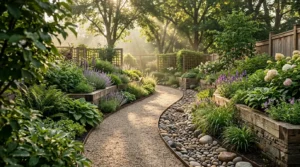
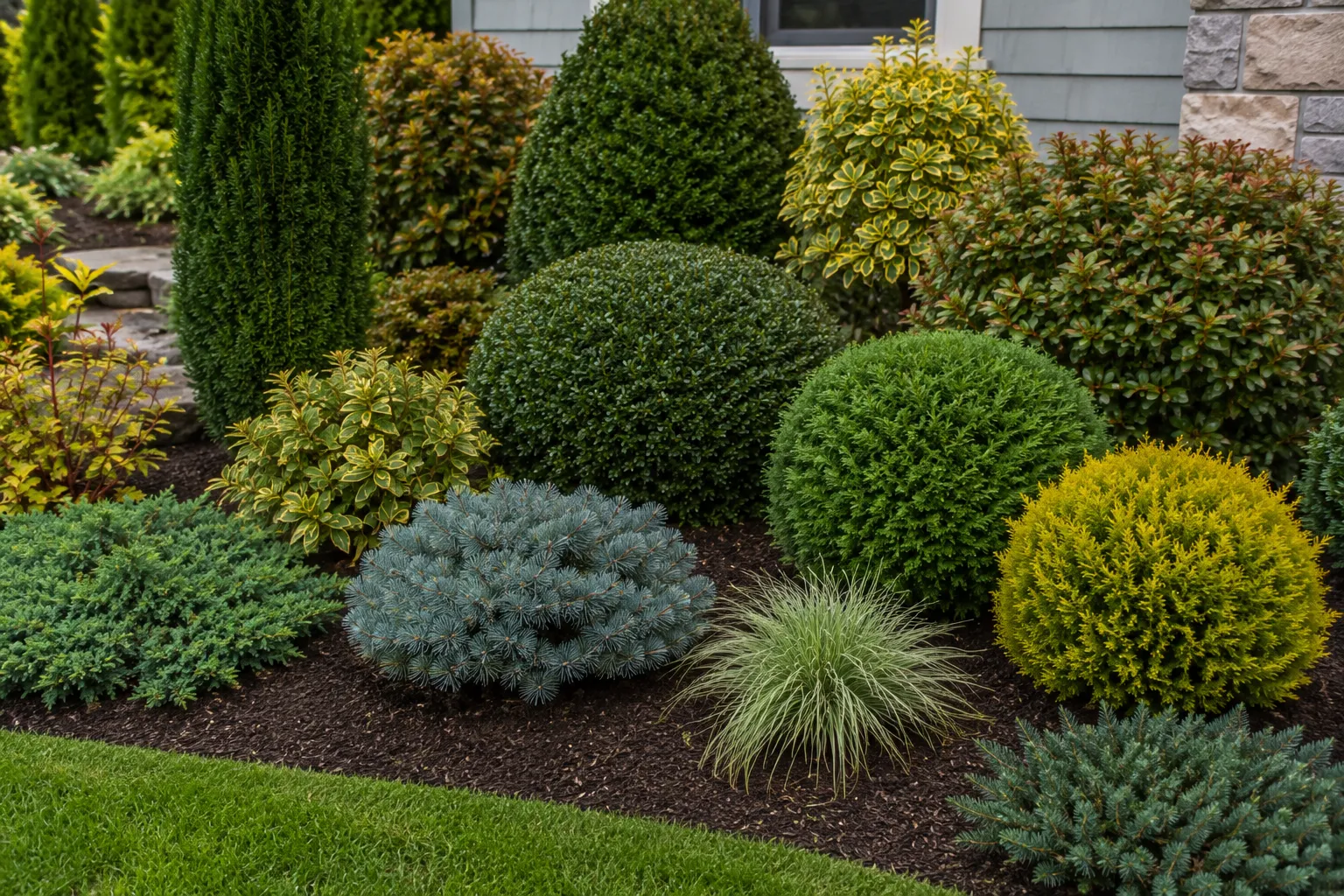
Evergreen shrubs do one thing deciduous plants cannot: they keep your yard looking structured and alive through every season. When perennials die back in October and deciduous trees drop their leaves, evergreens hold the entire composition together. That’s why landscape designers call them the backbone of a garden.
Choosing the right one matters. Plant a boxwood in heavy clay with no drainage and it dies in year two. Put a sun-loving juniper in full shade and it opens up within three seasons. This guide cuts through the noise — 12 proven picks with exact USDA zones, sizes, and use cases. No filler.
What Makes an Evergreen Shrub Different
Evergreen shrubs keep their foliage all 12 months. The 2 main categories are conifers (needle-leaf plants like arborvitae and yew) and broadleaf evergreens (plants with true leaves like boxwood and holly). Both give year-round color but behave differently in cold climates.
Conifers are generally cold-hardier — most arborvitae and junipers grow in USDA Zones 3 through 9. Broadleaf evergreens vary more — some like boxwood handle Zone 4, while others like red tip photinia prefer Zone 6 and warmer. Before you buy, confirm your USDA hardiness zone. It’s the single most important factor in shrub selection.
The 4 reasons to prioritize evergreen shrubs in any landscape plan:
- Year-round privacy without seasonal gaps
- Structural anchor for perennial beds and borders
- Winter shelter for birds and beneficial insects
- Low maintenance once established — no annual replanting
12 Best Evergreen Shrubs: Full Breakdown
1. Boxwood (Buxus sempervirens / Buxus microphylla)
Boxwood is the most versatile evergreen shrub for formal gardens, low hedges, and topiary. Dense, small-leaf foliage takes shearing better than any other broadleaf evergreen. The classic choice for knot gardens, parterres, and foundation edges.
| USDA Zones | Sun | Mature Size | Best Use |
| 4–9 (Buxus microphylla) | Full sun to full shade | 2–4 ft tall & wide | Low hedge, topiary, edging |
Water boxwood deeply once a week the first season. After establishment, it tolerates moderate drought. Avoid waterlogged soil — root rot kills more boxwoods than winter cold. Choose ‘Winter Gem’ or ‘Sprinter’ for Zone 4–5 reliability. ‘Green Velvet’ stays compact to 2 ft (0.6 m) in Zones 4–9.
Pro tip: Apply 3 inches (7.5 cm) of mulch around boxwood to stabilize soil temperature. Keep mulch 4 inches (10 cm) from the stem to prevent crown rot.
2. Japanese Holly (Ilex crenata)
Japanese Holly is the best boxwood alternative in landscapes where boxwood blight is a concern. Tiny, rounded leaves, dense branching from the ground up, and strong tolerance for shearing make it visually indistinguishable from boxwood at a distance — without the disease vulnerability.
| USDA Zones | Sun | Mature Size | Best Use |
| 5–9 | Full sun to part shade | 2–10 ft (variety dependent) | Hedges, foundation planting, containers |
‘Sky Pencil’ grows to 8–10 ft (2.4–3 m) tall but only 2 ft (0.6 m) wide — perfect for narrow entry plantings. ‘Gem Box’ inkberry (Ilex glabra) extends cold hardiness to Zone 3 and is a native North American species, which supports local pollinators and requires less care than non-native hollies.
3. Arborvitae — Thuja occidentalis (American Arborvitae)
Arborvitae is the most widely planted evergreen shrub for privacy hedges in North America. ‘Emerald Green’ grows 12–15 ft (3.6–4.5 m) tall and only 3–4 ft (0.9–1.2 m) wide, creating a natural privacy screen without constant trimming.
| USDA Zones | Sun | Mature Size | Best Use |
| 3–7 | Full sun to part shade | 3–15 ft tall (variety dependent) | Privacy screen, windbreak, foundation row |
‘American Pillar’ grows 2 ft (0.6 m) per year under ideal conditions — the fastest arborvitae for an established privacy hedge. Dwarf forms like ‘Tater Tot’ stay under 3 ft (0.9 m) for front-of-border use. Plant arborvitae 3–4 ft (0.9–1.2 m) on center for a dense screen that closes in within 2 growing seasons.
Zone note: In Zones 3 and 4, plant arborvitae in a location sheltered from prevailing winter wind. Wind desiccation — not cold — kills arborvitae in harsh northern winters.
4. Skip Laurel / Cherry Laurel (Prunus laurocerasus ‘Schipkaensis’)
Skip Laurel is the best evergreen shrub for fast privacy in Zones 5–8. Large, glossy, dark green leaves to 5 inches (12.7 cm) long, fragrant white flower spikes in spring, and a growth rate of 2–3 ft (0.6–0.9 m) per year make it the workhorse of mid-Atlantic and Southeast landscapes.
| USDA Zones | Sun | Mature Size | Best Use |
| 5–9 | Full sun to full shade | 10–18 ft tall, 5–7 ft wide | Tall privacy hedge, back-of-border screen |
Skip Laurel tolerates heavy shade better than almost any other large evergreen — including north-facing foundations where most shrubs fail. It also handles road salt exposure, making it reliable along driveways and sidewalks in cold climates. Prune in late spring after flowering to maintain height.
5. Hicks Yew (Taxus × media ‘Hicksii’)
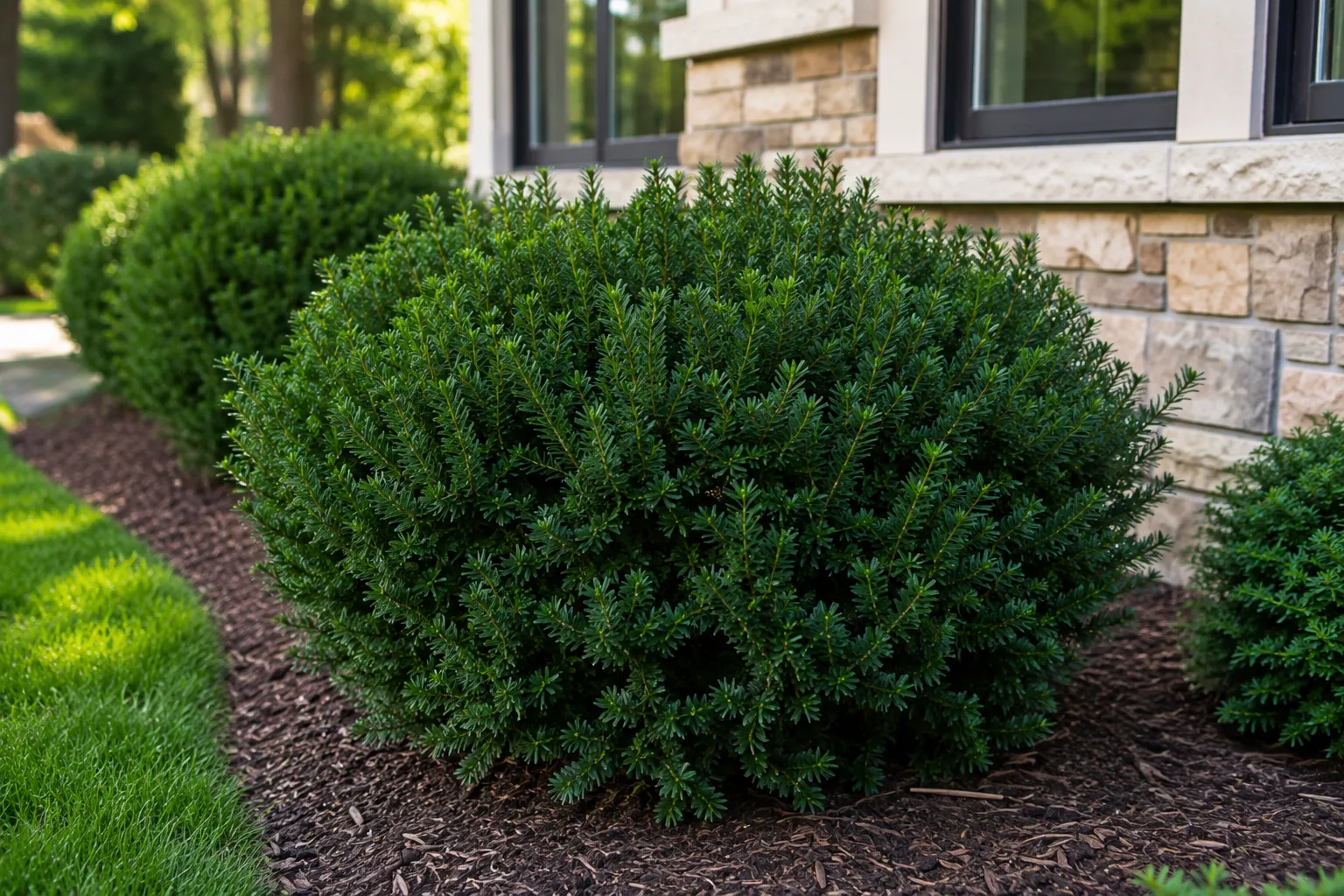
Hicks Yew is the best evergreen shrub for shade tolerance and formal shearing. Dark, fine-textured needles hold a sharp sheared edge for months. Grows as a narrow column to 12 ft (3.6 m) tall and 4 ft (1.2 m) wide — ideal for formal hedges, entryway pillars, or foundation anchors.
| USDA Zones | Sun | Mature Size | Best Use |
| 4–7 | Full sun to deep shade | 12 ft tall, 4 ft wide | Formal hedge, foundation column, shade planting |
All parts of yew are toxic to humans and pets. Place away from play areas and confirm with your local municipality if children’s play spaces are nearby. Yew is the only needled evergreen that does not tolerate standing water — drainage is non-negotiable.
6. Japanese Pieris / Andromeda (Pieris japonica)
Japanese Pieris is the best evergreen flowering shrub for acidic-soil gardens and part-shade conditions. New growth emerges in vivid bronze-red in early spring before maturing to deep green, giving a 2-season color show without relying on flowers.
| USDA Zones | Sun | Mature Size | Best Use |
| 4–8 | Part shade to full shade | 6–8 ft tall, 6 ft wide | Acidic woodland gardens, foundation shade beds |
Pieris requires soil pH of 4.5–6.0. If your soil tests above 6.5, amend with sulfur or plant in raised beds with acidic mix before purchasing. Deer browse pieris heavily in Zones 4–5; deer-resistant alternatives include inkberry (Ilex glabra) or mountain laurel (Kalmia latifolia).
7. Red Tip Photinia (Photinia × fraseri)
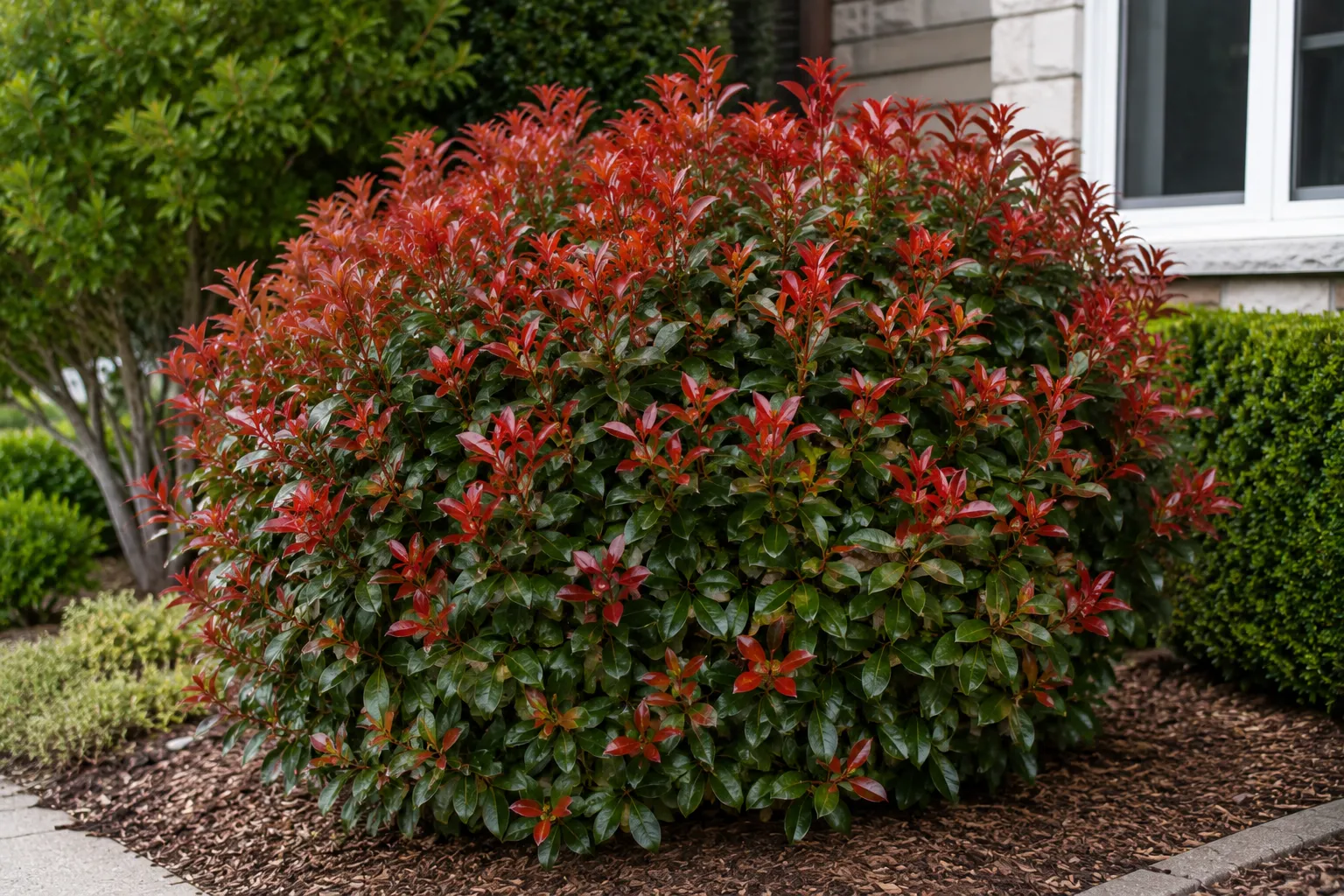
Red Tip Photinia delivers bold red new growth in spring and fall, making it the most visually dramatic broadleaf evergreen for warm-climate landscapes. New leaves flush vivid red 2–3 times per year before maturing to glossy deep green. Grows 10–15 ft (3–4.5 m) tall with regular pruning.
| USDA Zones | Sun | Mature Size | Best Use |
| 6–9 | Full sun | 10–15 ft tall, 5–10 ft wide | Privacy screen, specimen shrub, colorful hedge |
Photinia is susceptible to Entomosporium leaf spot in humid climates — plant with 6 ft (1.8 m) spacing to ensure air circulation. Prune only in dry weather to reduce disease spread. ‘Red Robin’ is a compact cultivar that stays under 6 ft (1.8 m) for mid-height screens in Zones 7–9.
8. Inkberry Holly (Ilex glabra)
Inkberry is the best native evergreen shrub for wet, poorly drained sites in Zones 3–9. A North American native, inkberry tolerates standing water that would kill boxwood, yew, or juniper. Dense ball-shaped growth to 6 ft (1.8 m) — no bare legs at the base, unlike many larger hollies.
| USDA Zones | Sun | Mature Size | Best Use |
| 3–9 | Full sun to part shade | 5–8 ft tall & wide | Rain gardens, wet sites, native hedges, bird habitat |
‘Gem Box’ is the most compact selection, staying 2–3 ft (0.6–0.9 m) tall and wide — a direct boxwood substitute for wet or acidic sites. Black berries ripen in fall and persist through winter, attracting over 10 species of native birds.
9. Juniper (Juniperus spp.)
Juniper is the most drought-tolerant evergreen shrub group available for dry, hot landscapes in Zones 3–9. With forms ranging from ground-hugging spreaders (‘Blue Chip,’ 8 in / 20 cm tall) to upright columnar trees (‘Sky Rocket,’ 15 ft / 4.5 m), no genus offers more form diversity.
| Form | Best Cultivar | Mature Size | USDA Zones |
| Ground cover | ‘Blue Chip’ | 8–12 in tall, 8 ft wide | 3–9 |
| Mounding | ‘Sea Green’ | 4–6 ft tall, 6–8 ft wide | 3–9 |
| Columnar | ‘Skyrocket’ | 15 ft tall, 2 ft wide | 3–7 |
Junipers need full sun — 6 or more hours of direct sunlight daily. In part shade, the interior opens up and foliage density drops within 2 seasons. Once established after the first growing season, most junipers need zero supplemental irrigation in USDA Zones 6 and below.
10. False Cypress (Chamaecyparis spp.)
False Cypress delivers the most textural variety of any conifer group — soft, feathery, fern-like foliage in blue, gold, or deep green forms. ‘Soft Serve’ (Chamaecyparis thyoides) grows in a naturally neat column to 8 ft (2.4 m) with zero shearing. Deer-resistant in most zones.
| USDA Zones | Sun | Mature Size | Best Use |
| 4–8 | Full sun to part shade | 4–15 ft (variety dependent) | Specimen, borders, privacy hedge |
‘Gold Thread’ false cypress grows a compact 4 ft (1.2 m) tall in Zone 4–8 with vivid gold threadlike foliage — one of the best year-round color plants in cold climates. Plant in well-drained soil; false cypress does not tolerate wet feet.
11. Viburnum tinus (Laurustinus Viburnum)
Viburnum tinus is the best flowering evergreen shrub for Zones 7–9 mild climates. White to pale pink flower clusters open from pink buds in late winter through spring — January through April in most Zone 7–8 gardens — before other shrubs even wake up.
| USDA Zones | Sun | Mature Size | Best Use |
| 7–9 | Full sun to part shade | 8–12 ft tall, 6–8 ft wide | Privacy screen, flowering hedge, wildlife garden |
Metallic-blue berries follow the flowers in summer, attracting birds through fall. Prune immediately after flowering in late spring to avoid removing next season’s buds. ‘Spring Bouquet’ is a compact cultivar reaching only 4–6 ft (1.2–1.8 m) for smaller spaces.
12. Wintercreeper Euonymus (Euonymus fortunei)
Wintercreeper Euonymus is the best variegated evergreen shrub for low-maintenance ground cover and foundation banks. ‘Emerald ‘n’ Gold’ stays under 2 ft (0.6 m) tall with gold-edged green leaves. ‘Emerald Gaiety’ produces white-edged green foliage that blushes pink in winter cold.
| USDA Zones | Sun | Mature Size | Best Use |
| 4–9 | Full sun to full shade | 1–3 ft tall as shrub | Ground cover, slopes, low border, shaded foundation |
Euonymus scale is the most common pest — inspect new plants before bringing them home from the nursery. Treat with horticultural oil in early spring before scale hardens. Avoid planting in dense masses against walls where air circulation drops, as this accelerates scale population growth.
Quick Comparison: All 12 Best Evergreen Shrubs
| Shrub | Zones | Best For | Key Strength |
| Boxwood | 4–9 | Hedges, topiary | Most cuttable / formal |
| Japanese Holly | 5–9 | Foundation planting | Boxwood blight-free |
| Arborvitae | 3–7 | Tall privacy screen | Fastest privacy hedge |
| Skip Laurel | 5–9 | Fast screen, shade | Best shade tolerance |
| Hicks Yew | 4–7 | Formal hedge, shade | Shears best of all |
| Pieris japonica | 4–8 | Acidic shade gardens | 2-season color show |
| Red Tip Photinia | 6–9 | Colorful screen | Most visual impact |
| Inkberry Holly | 3–9 | Wet sites, native | Widest zone range |
| Juniper | 3–9 | Drought landscapes | Most drought tolerant |
| False Cypress | 4–8 | Textural specimen | Most foliage variety |
| Viburnum tinus | 7–9 | Winter bloom | Flowers in winter |
| Euonymus | 4–9 | Ground cover, shade | Best for slopes |
How to Choose the Right Evergreen Shrub for Your Yard
Answer these 4 questions before visiting the nursery:
- What is your USDA hardiness zone? (Critical — cold kills the wrong plant every time)
- How many hours of direct sun does the planting spot receive? (Full sun = 6+ hours; part shade = 2–4 hours)
- What is the soil drainage like? (Standing water after rain eliminates yew, boxwood, and juniper)
- What function does the shrub need to perform? (Privacy screen, foundation structure, ground cover, specimen)
Once you’ve answered those 4 questions, narrow by mature size. The most common evergreen shrub mistake is planting a 10 ft (3 m) shrub 18 inches (45 cm) from a foundation wall — it looks fine in year 1 and becomes a problem by year 5. Check the mature width on the plant tag and plant with that spacing from walls, walks, and windows.
Size rule: Plant foundation shrubs at least 1/2 their mature width away from the house. A shrub that reaches 4 ft (1.2 m) wide belongs at minimum 2 ft (0.6 m) from the foundation wall.
Planting and Care: 5 Rules That Decide Long-Term Success
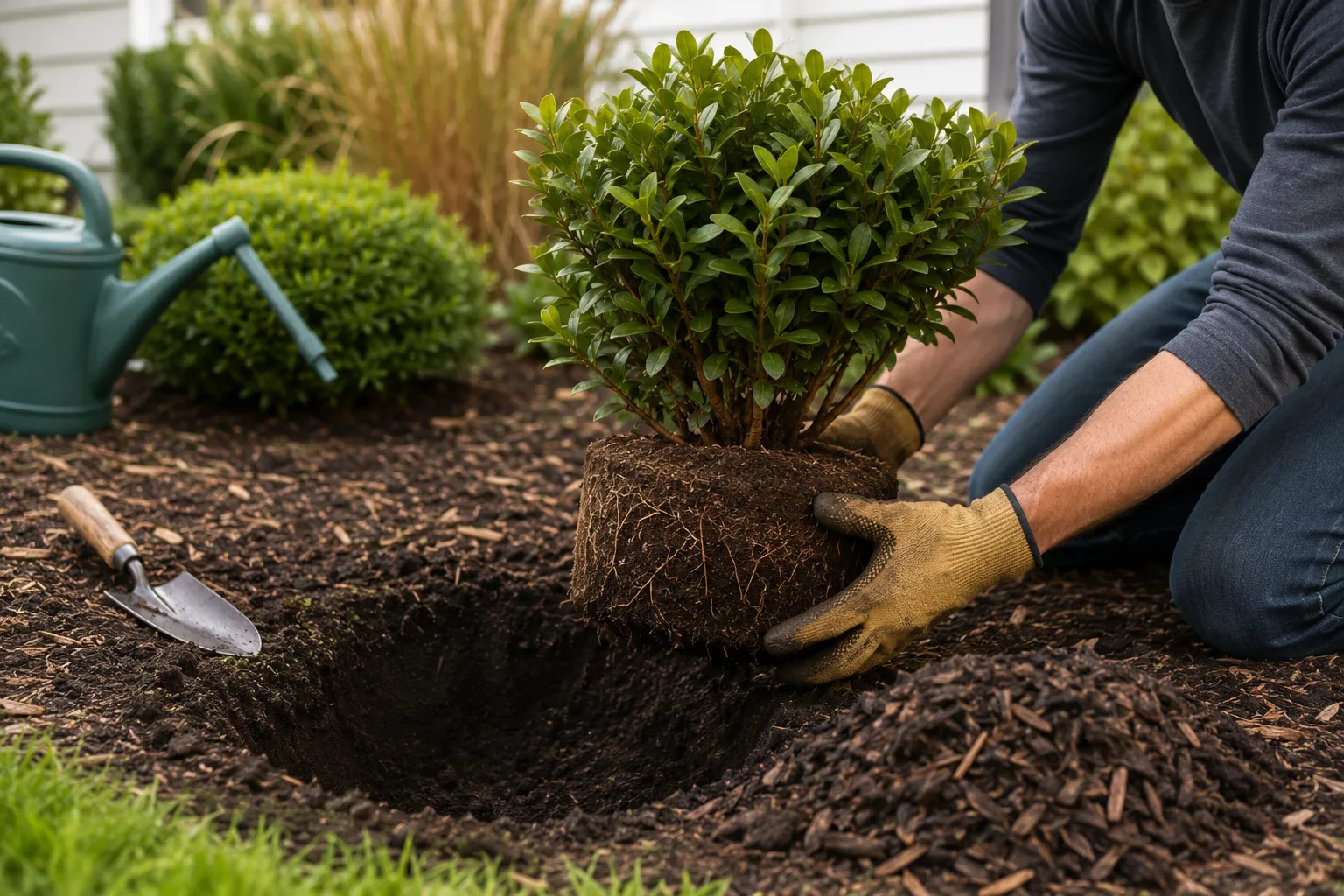
1. Dig wide, not deep
Dig the planting hole 2–3 times as wide as the root ball but no deeper than the container. Planting too deep — even by 1 inch (2.5 cm) — causes trunk flare rot, which kills slow enough that most gardeners blame the wrong cause 2 years later.
2. Amend backfill only if soil is extreme
For most shrubs, backfill with native soil, not amended mix. Amended backfill creates a “container effect” — roots circle the rich zone and never colonize the native soil beyond. Exception: acid-loving plants like pieris and inkberry benefit from sulfur-amended backfill in alkaline soils.
3. Water deeply the first growing season
Deep watering 1–2 times per week in summer heat > 85°F (29°C) establishes root systems faster than frequent shallow watering. After the first full growing season, most evergreen shrubs drop to once-weekly or rain-dependent irrigation.
4. Mulch to the drip line, not the trunk
Apply 3 inches (7.5 cm) of organic mulch across the entire root zone. Keep mulch 4–6 inches (10–15 cm) clear of all stems. Mulch against bark traps moisture, promotes fungal crown rot, and provides entry points for borers in stressed shrubs.
5. Prune at the right time
| Shrub Type | Prune When | Why |
| Flowering evergreens (Pieris, Viburnum) | Immediately after bloom | Avoids removing next season’s flower buds |
| Formal hedges (Boxwood, Yew, Holly) | Late spring or early summer | New growth hardens before first frost |
| Conifers (Arborvitae, Juniper) | Early spring before new growth | Promotes dense branching on new tips |
| Photinia | After each red flush | Stimulates next color flush; avoid wet weather |
Frequently Asked Questions
What is the fastest growing evergreen shrub for privacy?
Arborvitae ‘American Pillar’ grows up to 2 ft (0.6 m) per year under ideal conditions and reaches 20 ft (6 m) tall with a 4 ft (1.2 m) spread. Skip Laurel is second-fastest at 2–3 ft (0.6–0.9 m) per year in Zones 5–9 and handles shade that kills arborvitae.
What are the best evergreen shrubs for full shade?
Skip Laurel, Hicks Yew, and Pieris japonica are the top 3 choices for full to deep shade. All 3 maintain dense foliage in less than 2 hours of direct sun daily. Inkberry (Ilex glabra) also works in part shade down to Zone 3.
What evergreen shrubs stay small under 3 feet?
Dwarf boxwood varieties like ‘Morris Midget’ (18 in / 45 cm), ‘Gem Box’ inkberry (2–3 ft / 0.6–0.9 m), and ‘Gold Thread’ false cypress (3–4 ft / 0.9–1.2 m) are the 3 best evergreen shrubs for low borders and tight foundation beds.
Which evergreen shrubs are deer resistant?
Hicks Yew, Boxwood, and False Cypress (Chamaecyparis) are the most reliably deer-resistant evergreen shrubs. Junipers rate moderate resistance. Arborvitae is browsed heavily in Zones 3–5 where deer populations peak in winter. Install wire cages for the first 2 years in high-deer areas.
Can I plant evergreen shrubs in fall?
Yes. Fall planting in Zones 5–9 is ideal — soil is warm enough for root establishment and cooler air reduces transplant stress. Plant by 6 weeks before your average first hard frost. In Zones 3–4, spring planting is safer to give a full season of root growth before the first hard winter.
Final Recommendation
For most homeowners, the single most useful evergreen shrub purchase is an arborvitae for privacy or a boxwood for a formal foundation edge — both perform across the widest range of conditions with the least ongoing care. From there, add flowering options (Pieris or Viburnum tinus) and native species (Inkberry) for ecological value and seasonal interest.
Check your zone, measure your space, test your drainage. Buy accordingly. An evergreen shrub planted right in the right spot in year one will still be performing perfectly in year 25.