Ask anyone who’s worked cattle through a bad set of pens and they’ll tell you: the equipment decides the day. Vaccinating calves, preg-checking cows, sorting pairs, loading a trailer. Every one of those jobs goes smoother (and ends with fewer bruises, for people and cattle) when the setup is right. 4 Rivers Ranch is a good example of what that looks like. The family-owned company builds and supplies galvanized steel cattle handling systems and ranch equipment made for one-person operation, and it’s been doing it for more than 20 years. Ranchers across the country use its heavy-duty chutes, sweep tubs, and corral systems to work cattle safely with less labor, often with nobody else on hand.
Why Good Equipment Matters
Cattle are big, strong, and not especially interested in your plans. Weak panels and poorly laid-out pens get people hurt. They cost money too, because bruising, hide damage, and stress show up later as carcass downgrades. And a stressed animal is harder to move than a calm one, so a bad setup keeps making the job worse the longer you work.
A well-built system does the opposite. It works with the way cattle naturally move, so they flow toward the chute instead of fighting you at every corner. You need fewer hands. You finish sooner. Nobody has to climb into a crowded pen to push a cow that won’t budge.
The Main Parts of a Cattle Handling System
Corrals and Yard Layouts
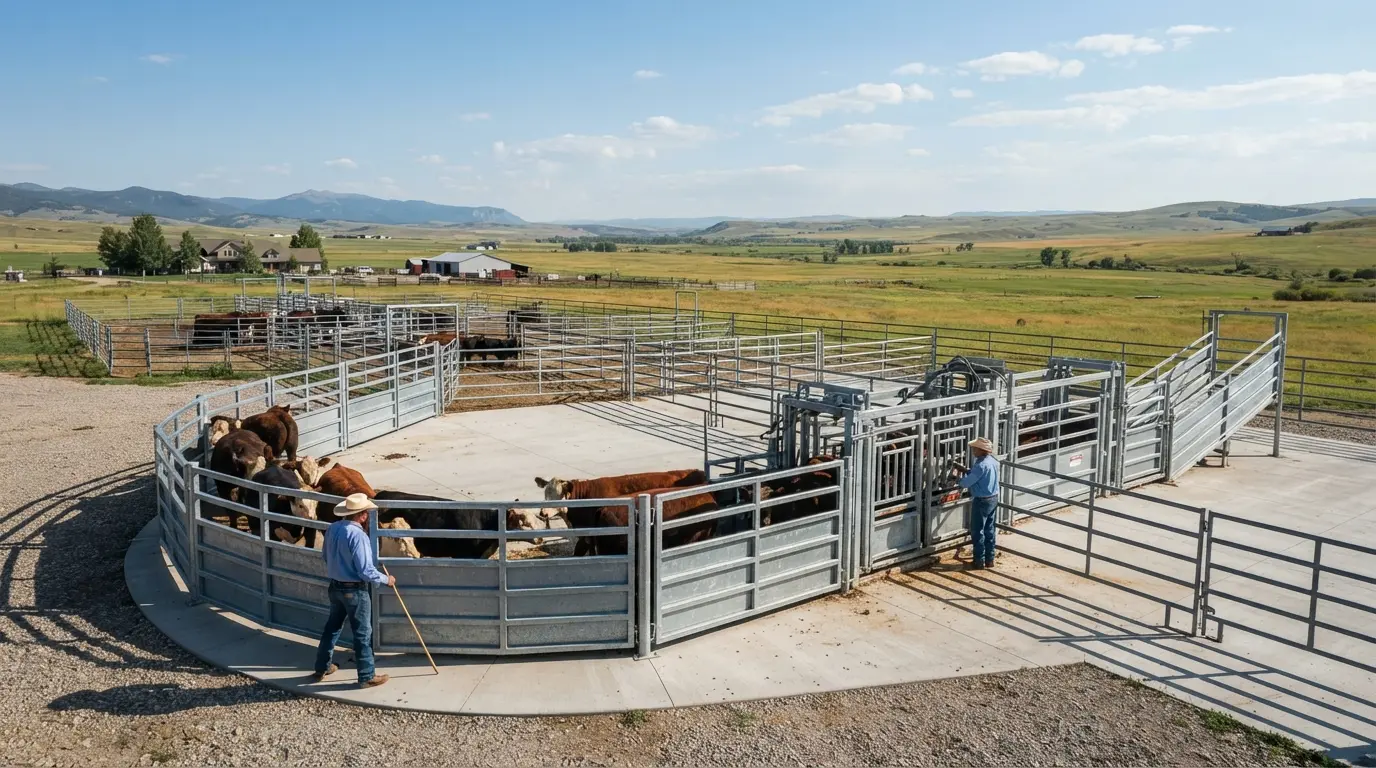
Everything starts with the layout. A typical system has receiving and holding pens, a sorting area, an alley, a crowding tub, and a squeeze chute, usually with a loading ramp at the end. Cattle like to circle back toward where they came from. Good designs use that habit, skip the dead ends and sharp corners, and keep animals moving in one direction.
4 Rivers Ranch has a wide selection of cattle corral designs for small, medium, and large operations. The small layouts give a limited herd defined holding pens and clear walk paths without eating up much ground. Medium designs add more pens and sorting space, and the large yards are built for high-volume working days. Every one is laid out for a single operator. You can download the plans and package catalogs to see the setup, price it, and plan installation before you buy a single panel, and the designs can be adjusted to fit your ground.
Panels and Gates
Panels take the most abuse in alleys and crowding pens, so that’s where construction details matter. Look at how the rails are joined, whether the ends are capped, and what’s protecting the steel from rust.
4 Rivers panels have welded caps and feet, and the rails are coped rather than squashed, which makes for stronger joints. They’re galvanized, so they don’t need paint or any other coating. There are a few grades to choose from. The super heavy-duty panels are meant for alleys, crowding areas, and bigger herds. The PHD range costs less but still handles large stock, and the Rancher Panels cover everyday jobs like sorting and holding pens. Many come in 7-foot lengths, which keeps them stiff and easy to carry and lets you lay out a corral more precisely.
Gates matter just as much. A 10 ft cattle gate is a handy size for pens, alleys, and smaller openings, where you need to walk through or move a few head from one pen to the next. Since 4 Rivers panels and gates connect to its chutes, tubs, and round pens, you can start small and add on as the herd grows.
Crowding Tubs and Sweeps
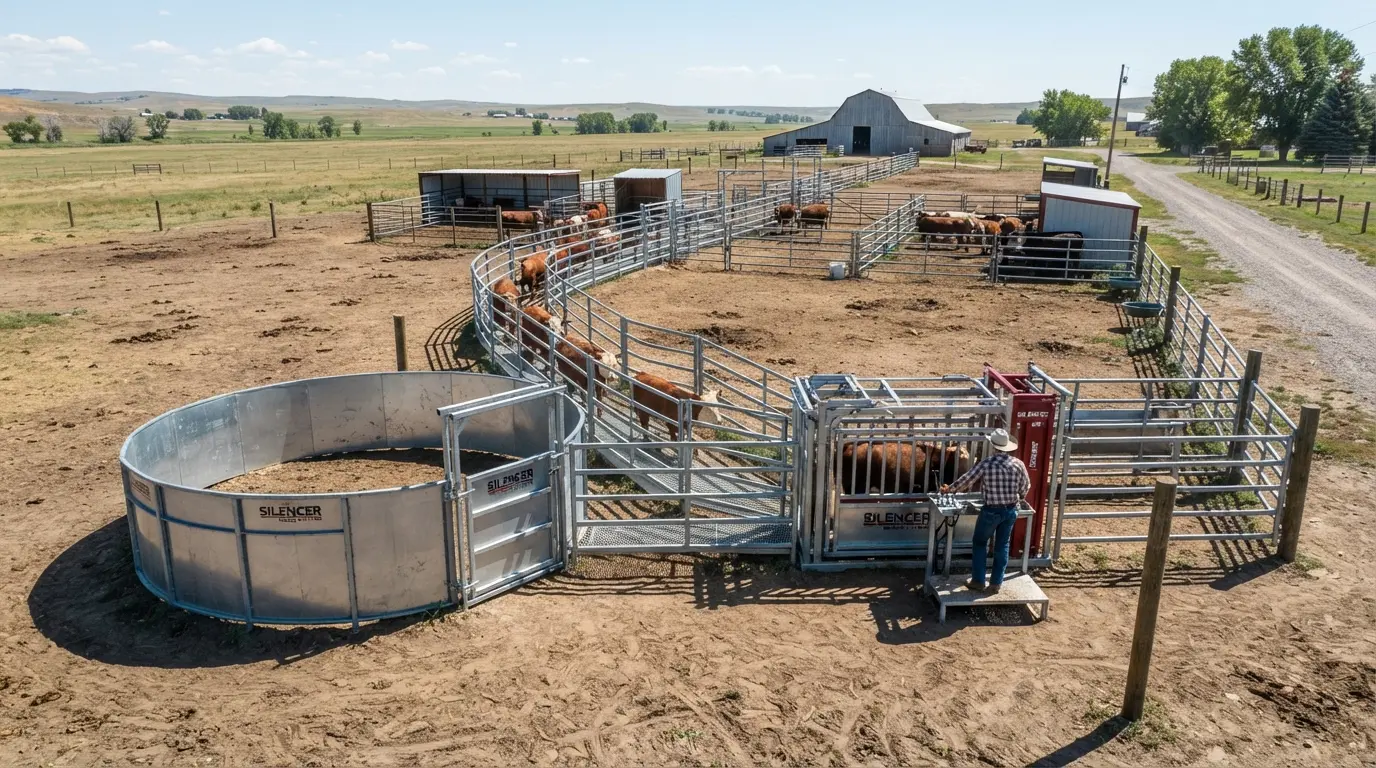
The crowding tub moves cattle from the holding pen into the alley. This is where a lot of systems bog down. A sweep tub solves that with a swinging gate that pushes cattle forward while you stay outside the pen.
4 Rivers builds 90-degree sweeps for tight spaces and 180-degree sweeps for larger herds, since the bigger tub holds more cattle and feeds the alley more smoothly. Both come in 8 and 10 ft sizes. The gate locks about every foot, so a cow can’t shove it back on you. Sheeted sides are an option too. They block the view outside the tub, which keeps cattle focused on moving forward.
Squeeze Chutes and Head Gates
The chute is where the real work gets done: shots, tags, AI, preg checks, doctoring. A good one holds the animal firmly without squeezing harder than it needs to, and it lets you get to the animal from the side without putting yourself at risk.
All 4 Rivers chutes are galvanized, with parallel squeeze systems, side gates, and optional palpation cages for breeding and vet work. The top model is the River King. The company calls it the tallest, widest, and longest manual squeeze chute on the market, and it’s aimed at big bulls and horned cattle. The 4 Diamond handles a wide range of sizes, and the 4 Star keeps things simple. Wheel kits can make a chute portable. Every model is built so one person can run it.
Loading Ramps
Plenty of injuries happen at the trailer. A solid ramp with good footing and proper sides cuts down on balking and keeps everyone safer. 4 Rivers makes galvanized loading ramps that can be customized for your operation.
Picking the Right Setup
There’s no single best system. It depends on your herd and how you work.
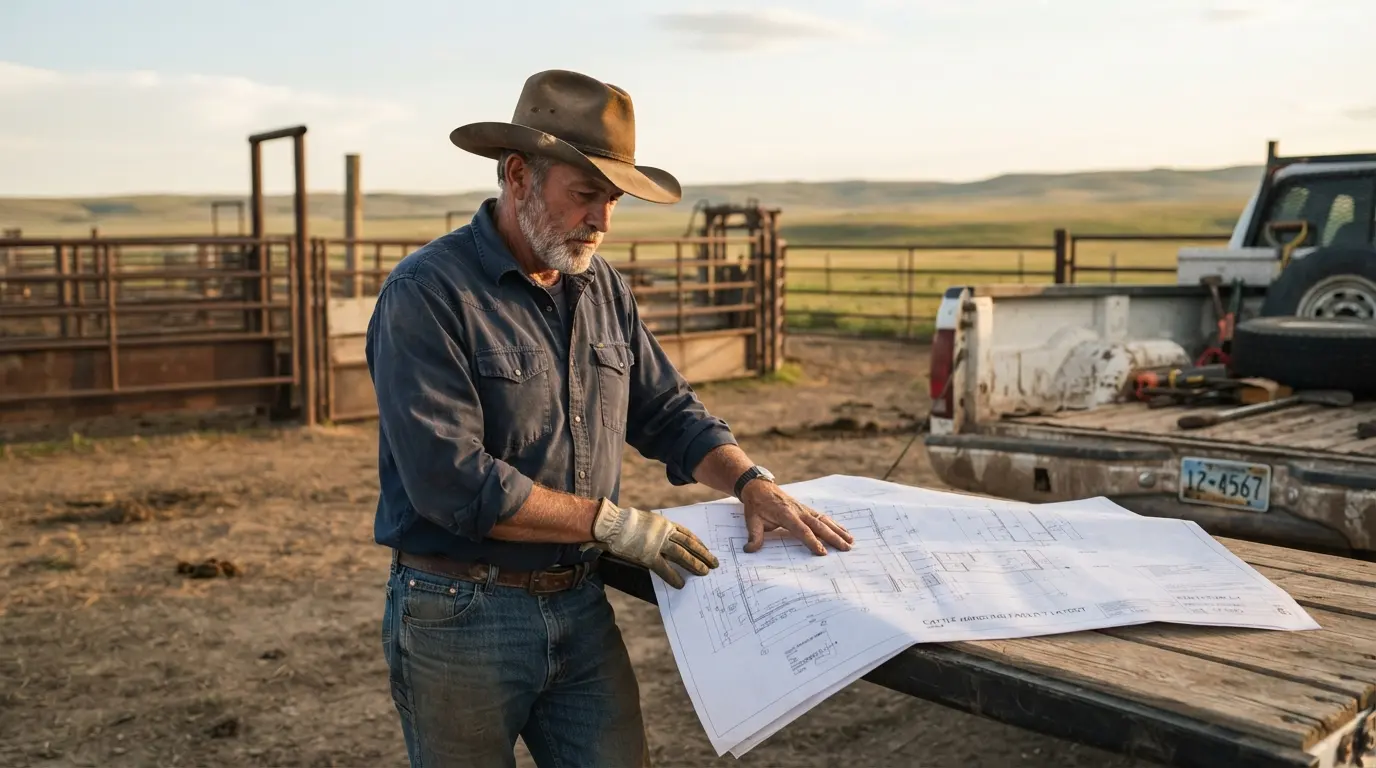
Start with herd size, and plan for where you’ll be in five years, not just this spring. Then be honest about labor. If you usually work cattle alone or with family, equipment built for one person isn’t a luxury; it’s the whole point. Think about the jobs you’ll do most. Lots of AI or preg-checking means you’ll want a palpation cage. If you haul cattle often, don’t skimp on the ramp.
Galvanized steel is worth paying for. It lasts far longer than painted steel and you won’t spend weekends touching up rust. Modular panels let you add pens later without starting over. And pick a supplier who’ll help you design the layout, not one who just ships parts.
Working Cattle Alone
Most traditional corrals take several people to run. That’s a problem when the kids have moved to town and the neighbors are busy with their own herds.
4 Rivers designs its systems so one person can receive, hold, sort, restrain, load, and unload cattle. Its customers seem to agree it works. One reviewer, a disabled veteran nearing 70, wrote that she can easily handle her small herd by herself.
That’s the real test of cattle handling equipment. Not how it looks in a catalog, but whether you can get the work done safely on a Tuesday morning with nobody else around. Good galvanized steel and a smart layout from a company like 4 Rivers Ranch make that possible, whether you’re running a handful of cows or a full working facility.