Standing in a backyard with a level in one hand and a bag of sand in the other feels less like home improvement and more like guesswork, especially when the dip you’re staring at wasn’t there last spring. Minor bumps can be fixed in an afternoon. A full slope correction might eat up several weekends. It depends on how deep the problem actually runs.
Some yards just need a sand-and-compost mix worked into the turf. Others need soil moved by the shovelful from one end of the property to the other. This guide covers both situations, along with the tools, timing, and material amounts that separate a fix that lasts from one that reappears by fall.
What It Means to Level a Lawn
Leveling a lawn means filling low spots and smoothing high spots so the surface sits at one consistent grade, using a sand, topsoil, or compost blend spread evenly over the turf. Most people start searching for this after twisting an ankle in a dip near the yard’s center, or after noticing ridges left behind by a mower deck. And a lawn doesn’t need to be perfectly flat to count as level. It just needs to be free of sudden drops or bumps deeper than half an inch (1.3 centimeters), since anything beyond that starts affecting mowing quality and safety.
Two different problems get lumped under this term, though. An established lawn with scattered dips and humps needs light topdressing. A yard with a genuine slope, one that pitches toward a foundation or collects standing water, needs regrading, which means moving soil rather than adding a thin layer on top. Mix up the two and you’ll waste material on a lawn that looks fine for one season, then watch the same low spots come right back.
Why Lawns Become Uneven
Soil settling, compaction, poor drainage, or activity underneath the surface you’ll never see, that’s usually what’s behind an uneven lawn. A newly seeded or sodded lawn often develops dips within the first year because the loosened soil beneath keeps settling after installation. Older lawns have different culprits.
Take a 15-year-old lawn with heavy foot traffic along a path to the shed: repeated pressure compacts the soil in that strip, while the grass around it stays loose and slightly higher. Throw in a mole or vole problem, and raised tunnels create bumps that seem to show up overnight. Freeze-thaw cycles in northern states push soil upward in winter, then settle it unevenly come spring. Buried tree roots decay over the years and leave sunken pockets right where they used to be. None of these causes fix themselves. Figure out the source before you touch a shovel of topdressing.
Tools and Materials You Need
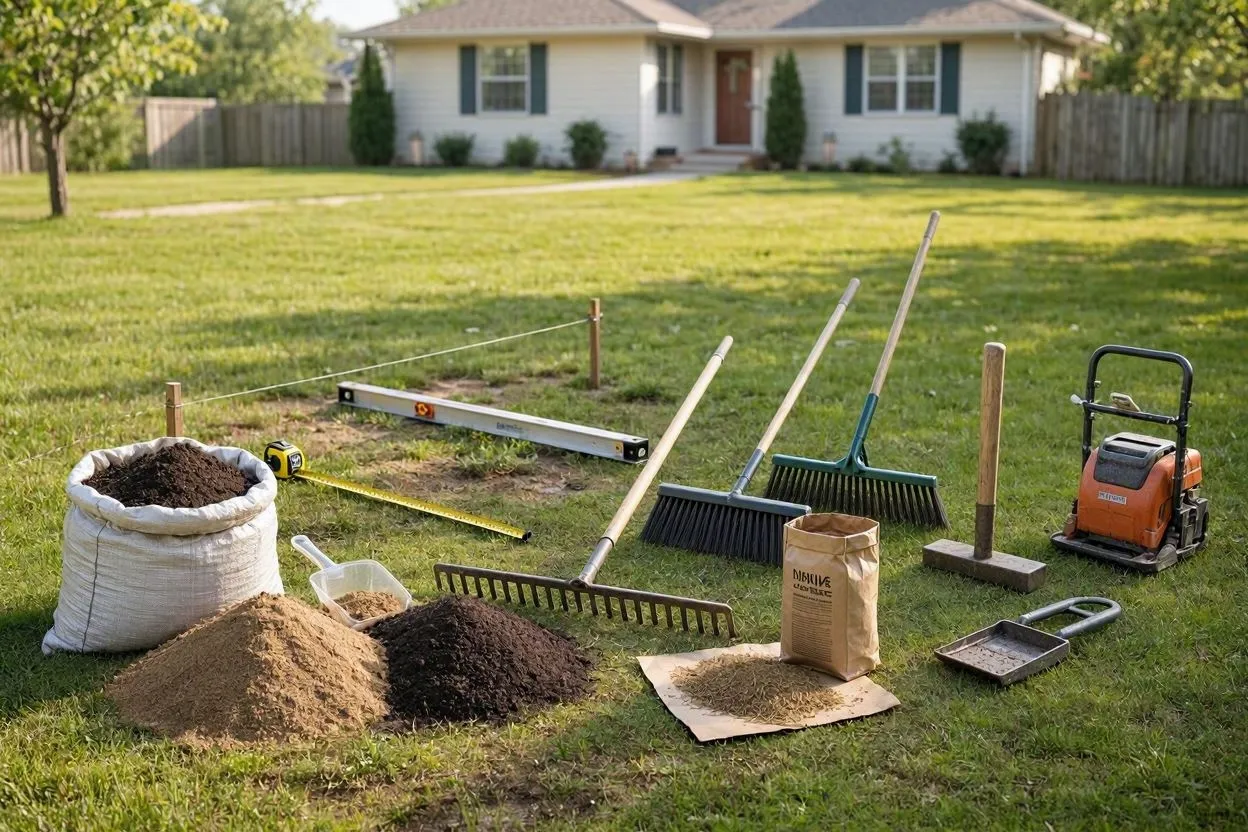
A basic lawn-leveling project needs five things: a leveling mix, a spreading tool, a compaction tool, a way to measure the ground, and grass seed for bare patches. Skip any one of these and a weekend project turns into a multi-weekend one.
| What You Need | Options |
| Leveling mix | sand, screened topsoil, compost, or a blended combination |
| Spreading tool | a wide-headed leveling rake, a push broom, or the back of a garden rake |
| Compaction tool | a hand tamper for small areas, a water-filled lawn roller for larger yards |
| Measuring tool | a string line with a line level, or a 4-foot carpenter’s level laid across a board |
| Grass seed | matched to the existing turf type, for overseeding any spot where the mix covers more than a light dusting |
A wheelbarrow and a stiff push broom handle most residential jobs under 2,000 square feet (186 square meters). If your property’s bigger than that, renting a tow-behind leveling drag cuts spreading time by roughly half compared to hand-raking.
How to Find High and Low Spots
Stretch a string line across the lawn at ground-stake height, then check the gap between the string and the grass with a tape measure. Drive two stakes into the ground at opposite ends of the problem area, tie a mason’s string between them, and clip a line level to the center of the string to confirm it’s sitting perfectly horizontal.
Walk the length of the string and measure down to the turf every 3 feet (0.9 meters). If the gap grows from 1 inch to 3 inches (2.5 to 7.6 centimeters) over a 10-foot span, that’s a slope, not a random dip, and that distinction changes which method you use next. For smaller, scattered depressions, skip the string line altogether. Just walk the lawn in work boots. Feet catch dips that the eye misses, especially on grass mowed short.
Grass Type and Timing: When to Level
Level a lawn during the grass’s active growing season, since new growth is what covers the topdressing material and keeps it from smothering the turf. Timing comes down entirely to which grass type you’ve got, and applying the wrong season’s rule to the wrong grass leaves you with bare patches instead of a smooth lawn.
| Grass Type | Category | Best Leveling Window |
| Bermudagrass, Zoysiagrass, St. Augustinegrass | Warm-season | Late spring through midsummer |
| Kentucky Bluegrass, Tall Fescue, Perennial Ryegrass | Cool-season | Late summer through early fall |
| Centipedegrass, Bahiagrass | Warm-season | Early summer, after full green-up |
A Kentucky Bluegrass lawn leveled in July, during peak heat stress, recovers far slower than the same lawn treated in September, since cooler air eases stress on the plant while the soil stays warm enough to support root growth. Warm-season grasses work the opposite way. Level Bermudagrass too early in spring, before consistent green-up, and you’re burying a lawn that hasn’t started spreading yet. The material just sits there instead of getting worked in by new blades.
How to Level a Lawn: Step-by-Step
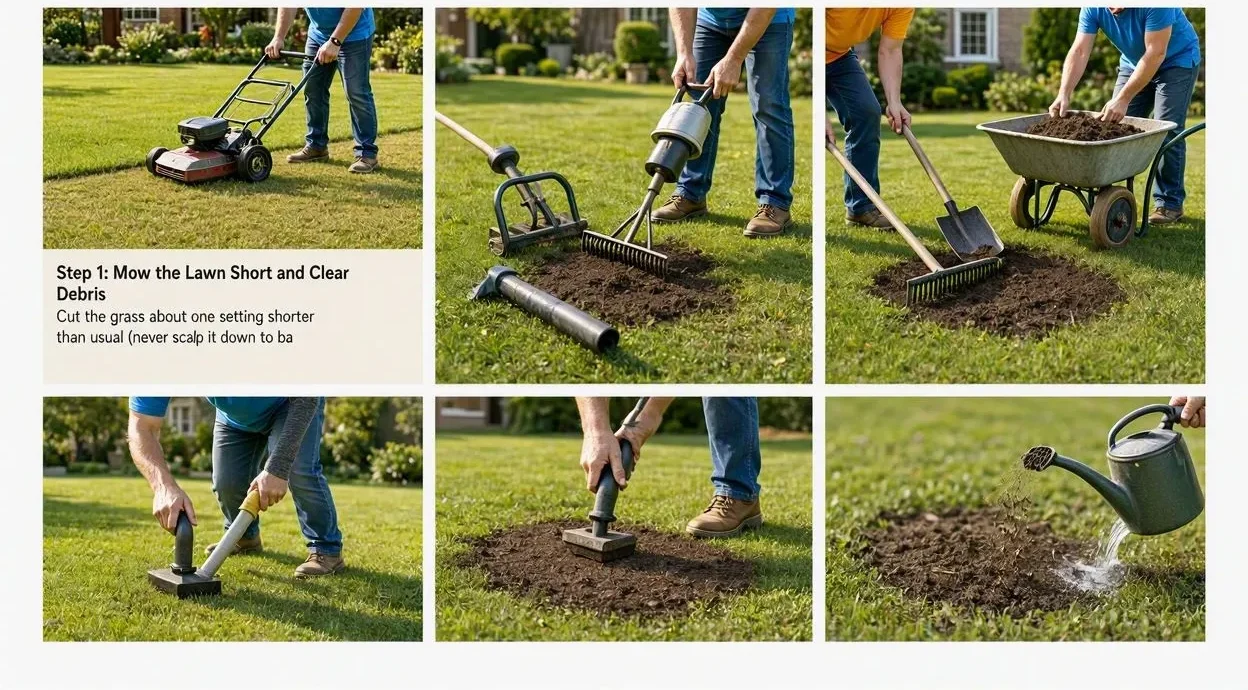
Leveling a lawn takes seven steps: mow low, aerate if compacted, mix the topdressing material, fill the low spots, compact the surface, overseed bare patches, and water thoroughly. Each step builds on the last, so skip aeration on a compacted lawn and the topdressing just sits on top of the problem instead of fixing it.
Step 1: Mow the Lawn Short and Clear Debris
Cut the grass about one setting shorter than usual (never scalp it down to bare soil), then rake up clippings, sticks, and leaves. A shorter cut makes low spots easier to spot and lets the topdressing mix reach the soil surface instead of resting on top of long blades.
Step 2: Aerate Compacted Soil
Run a core aerator over the lawn if a screwdriver won’t push easily into moist soil, or if water pools on the surface after rain instead of soaking in. Core aeration pulls small plugs of soil out of the ground, opening channels for the topdressing mix, air, and water to reach the root zone. Leave the extracted plugs on the surface. They break down naturally within two to three weeks.
Step 3: Mix the Leveling Material
Combine the topdressing blend in a wheelbarrow before spreading it, using a ratio suited to the depth of the problem. A 70/30 blend of sand to screened topsoil works well for shallow dips under an inch deep, while straight sand suits very minor surface irregularities on lawns mowed short. Deeper depressions need more topsoil or compost in the mix, because sand alone doesn’t hold enough organic matter to support fast root recovery in a thick layer.
Step 4: Fill the Low Spots
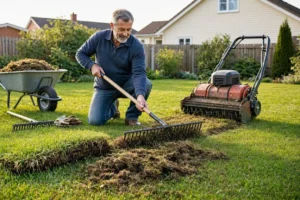
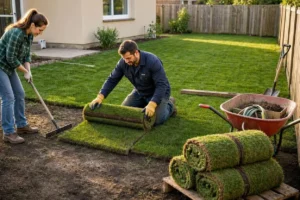
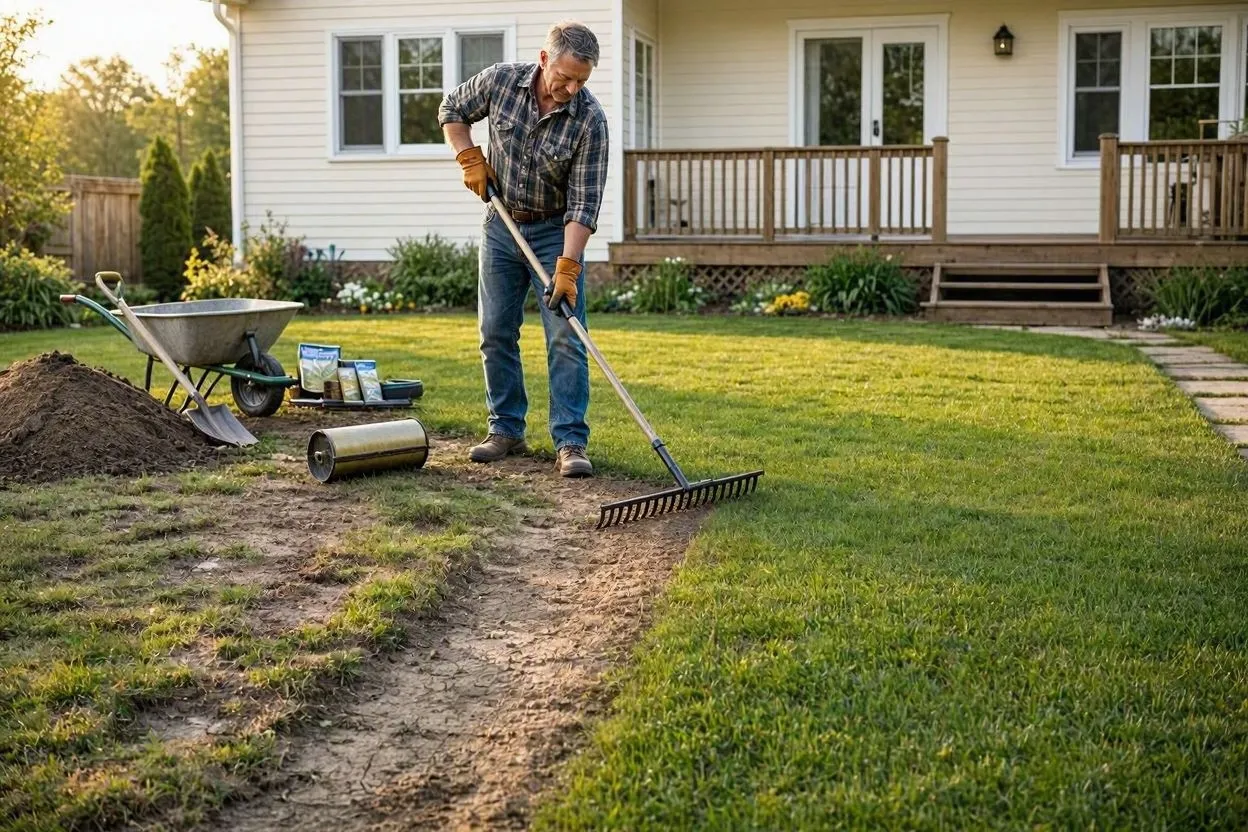
Shovel small piles of the mix directly onto the low areas, then drag a leveling rake across the surface to work material down between the grass blades. Keep the grass tips visible after each pass. Bury turf under more than half an inch (1.3 centimeters) of material and you block sunlight, which can kill the plant within a week. For depressions deeper than 2 inches (5 centimeters), cut and peel back a section of sod, add the mix underneath, tamp it down, then lay the sod back in place.
Step 5: Compact and Smooth the Surface
Roll a water-filled lawn roller over the treated areas, or just walk over them firmly if the job covers less than 500 square feet (46 square meters). Compaction keeps the fresh material from settling unevenly after the first heavy rain, which would otherwise recreate the same dip within a month. Don’t roll the entire lawn if you aerated in Step 2, though. Heavy compaction right after opening the soil defeats the whole purpose of aerating.
Step 6: Overseed Thin or Bare Patches
Spread grass seed by hand or with a broadcast spreader over any spot where the topdressing layer measures a quarter inch (0.6 centimeters) or thicker. Rake the seed lightly into the top layer of material to improve seed-to-soil contact, then stay off those patches until germination starts, typically 7 to 21 days depending on the grass species.
Step 7: Water Immediately and Monitor for Three Weeks
Water the treated areas with a gentle sprinkler setting right after you finish. This settles the mix around the grass blades without washing it back out of the low spots. Keep the soil consistently moist, not soaked, for the first two weeks if you applied seed, then shift to deeper, less frequent watering once the new grass reaches mowing height. Check back in three weeks. Some depressions need a second, lighter application once the first layer settles.
How to Level a Sloped Yard (Different From a Bumpy One)
A sloped yard needs soil moved from the high end to the low end, or the low end built up with fill material inside a temporary or permanent border. That’s a different job from the light topdressing used on a bumpy but otherwise flat lawn. A lot of DIYers get this wrong, applying Step 3 through Step 7 above to a yard that actually needs regrading.
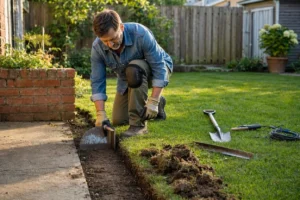
Two methods handle a sloping lawn. The first involves installing edging (wood, metal, or rigid plastic) around the low section, then filling it in layers with topsoil and compost until the surface matches the height of the surrounding grade. The second method skips new material entirely: strip the sod from the high point, shovel soil from the high end to the low end, tamp it down, then replace the sod once the grade evens out. It costs less in materials but takes a lot more physical labor, often a full weekend for a 500-square-foot (46-square-meter) slope.
A common landscaping guideline calls for a drainage slope that carries water away from a house foundation at a rate of at least a quarter inch of drop per foot of distance (about 6 millimeters per 30 centimeters); check local building code for the exact figure in your area. Grade a yard toward the house instead of away from it, and you’ve created a moisture problem that will outlast any leveling work. Before regrading near a foundation, call 811 (the national Call Before You Dig number) to have utility lines marked. Buried cable, gas, and irrigation lines sit closer to the surface than most homeowners expect.
How Much Sand or Topsoil You Actually Need
One cubic yard of topdressing material covers 1,000 square feet (93 square meters) at a depth of roughly one-third of an inch (0.85 centimeters). Working this out before you order saves you both a wasted trip back to the supplier and a pile of leftover sand sitting in the driveway for a month.
Use this formula: multiply the square footage of the area by the desired depth in inches, then divide by 324 to get the number of cubic yards needed. A 2,000-square-foot (186-square-meter) lawn needing a half-inch (1.3-centimeter) layer requires roughly 3 cubic yards of material, enough to fill a standard pickup truck bed about twice. Order 10 percent more than the calculation suggests. Spreading always leaves some material in the low corners of the wheelbarrow that never makes it onto the lawn.
Cost: DIY vs. Hiring a Pro
DIY lawn leveling for a 2,000-square-foot yard typically runs $150 to $400 in materials and rented equipment. A professionally regraded yard of the same size runs $1,500 to $4,000. That gap widens even further for yards that need drainage correction or heavy machinery, where labor accounts for most of the professional quote.
As a rough example: leveling an 1,800-square-foot backyard with scattered dips might run $80 for 2 cubic yards of sand-compost blend, $40 to rent a core aerator for a day, and $30 for grass seed, around $150 total. That same yard, if it needed a mini-excavator for a sloped section draining toward the house, could run past $2,000 once grading equipment, hauling fees, and labor get factored in. The size of that gap comes down almost entirely to whether the project needs surface topdressing or full regrading.
Mistakes That Ruin a Leveling Job
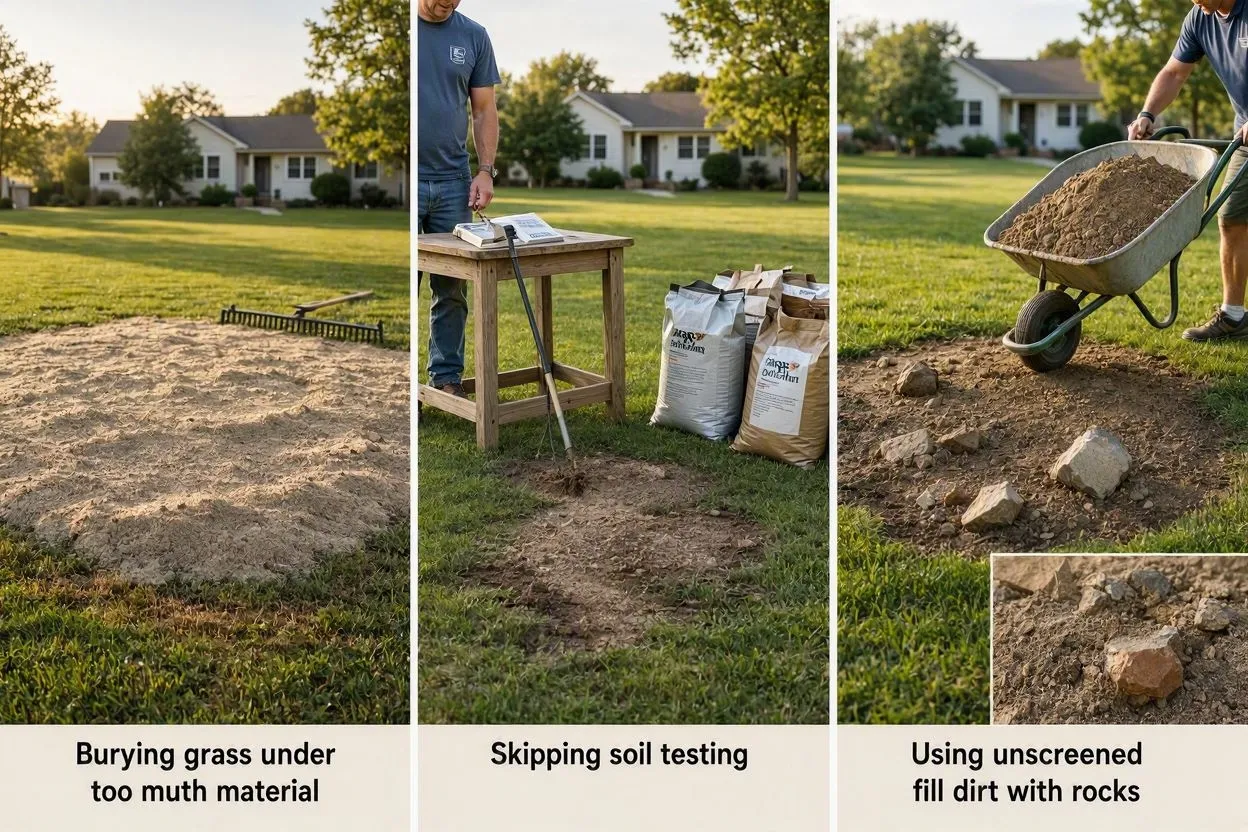
The most common mistake, by far, is burying the grass under too thick a layer of material in one pass, which cuts off sunlight and kills the turf within days. A handful of other errors show up just as often on lawns that don’t hold their level past one season:
- Skipping soil testing before choosing a material, resulting in a mix that doesn’t match the lawn’s existing pH or drainage profile
- Using unscreened fill dirt, which introduces rocks, weed seeds, and debris into an otherwise clean lawn
- Leveling dormant grass in early spring or late fall, when the plant lacks the energy to grow through the new material
- Compacting the entire lawn with a heavy roller immediately after aeration, which collapses the air channels you just created
- Ignoring a recurring low spot instead of investigating the underlying cause, such as a leaking irrigation line or a decaying tree root
Each of these shares a common thread: treating leveling as a one-time cosmetic fix instead of a process tied to the grass’s biology and the soil condition underneath it.
When to Call a Professional
Call a professional when a depression exceeds 4 inches (10 centimeters) in depth, when water pools against a foundation, or when the project requires moving more than 5 cubic yards of soil. A licensed landscaping contractor or grading company brings equipment (skid steers, laser levels, drainage tile) that makes quick, accurate work of a job that would otherwise take a homeowner several weekends by hand.
Worth knowing: a local Cooperative Extension Office, part of the United States Department of Agriculture’s land-grant university network, offers free or low-cost soil testing in most counties and can tell you whether a drainage problem stems from soil composition rather than surface grade. That test result often determines whether a yard needs a professional grading crew or just a bag of topsoil from the local garden center.
FAQs
How long does grass take to recover after leveling?
Recovery ranges from 7 to 21 days for shallow topdressing on actively growing turf, and up to six weeks for deeper repairs involving lifted sod or bare-spot reseeding.
Can a lawn be leveled without removing the grass?
Yes. Minor bumps and shallow dips under 2 inches (5 centimeters) get corrected by topdressing over existing turf, leaving the grass tips exposed above the material.
Will topsoil alone fix an uneven lawn?
No. Topsoil breaks down and settles over time, so pairing it with sand adds the structural stability a lawn needs to hold its level for more than one season.
How often does a lawn need leveling?
Most residential lawns need light topdressing once a year during active growth. Severe unevenness usually calls for two or three lighter applications spread across a single season.
Is DIY leveling cheaper than hiring a lawn care company?
Yes. DIY topdressing typically costs $150 to $400 for a mid-sized yard, while professional regrading for the same area often runs ten times higher once equipment and labor get added.
Conclusion
A level lawn doesn’t require a single weekend of effort, or a perfect outcome on the first try. Grass responds to consistency: mowing shorter before topdressing, matching the material to the depth of the problem, and watering on a schedule that supports recovery instead of rushing it. The difference between a lawn that stays flat for years and one that develops the same dip every spring usually comes down to whether the underlying cause, not just the surface symptom, got addressed the first time around.