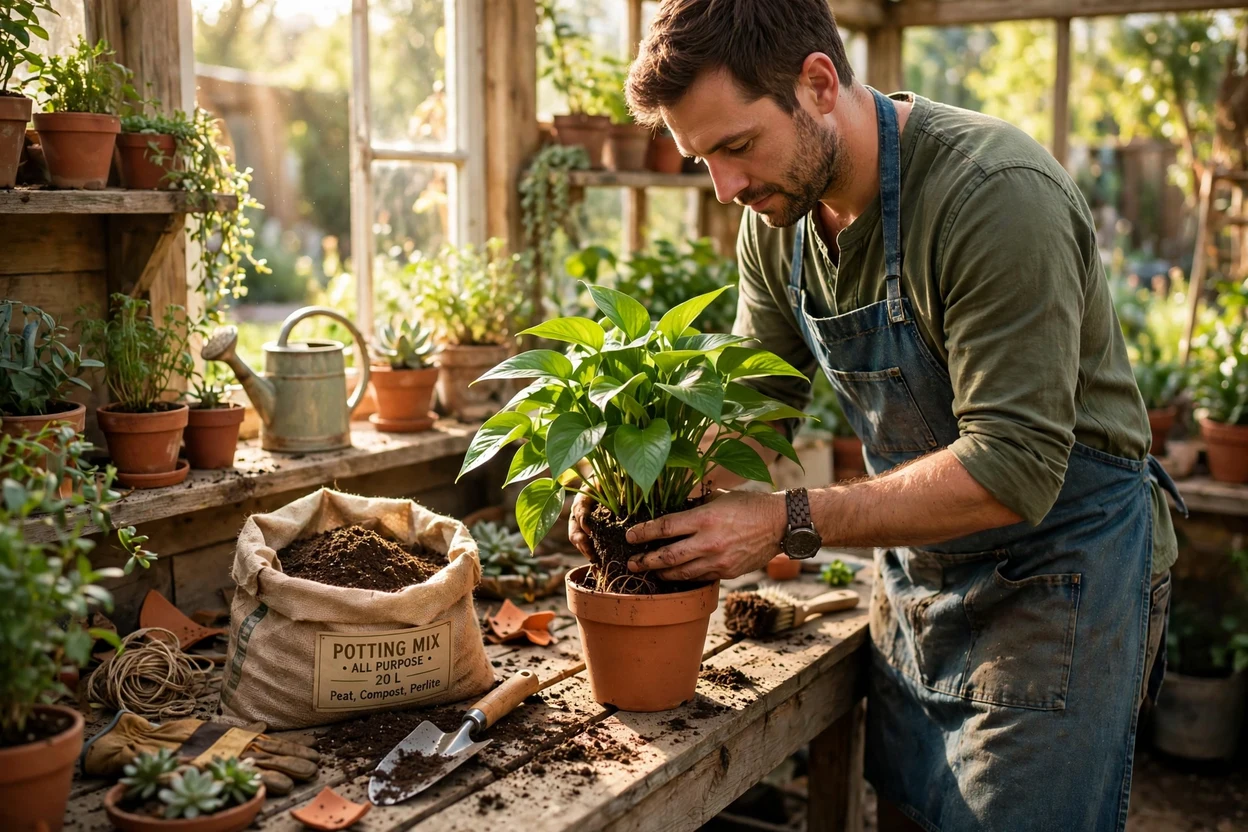
Repotting is routine care that moves a plant into fresh potting mix and, usually, a pot 1 to 2 inches (2.5 to 5 cm) wider. The job is simple. Here’s how to repot a plant: water it a day ahead, ease out the root ball, loosen circling roots, set it at the same depth and backfill with fresh mix.
Key Takeaways
- Repot most houseplants in spring or early summer, when active growth helps roots settle into fresh potting mix.
- Choose a new pot 1 to 2 inches (2.5 to 5 cm) wider than the old one, and always pick one with a drainage hole.
- Use bagged indoor potting mix for tropical plants and cactus and succulent mix for snake, jade and ZZ plants.
- Water spider plants and other tropicals right after repotting, but wait about a week before watering jade, snake and ZZ plants.
- Mild drooping after repotting is normal transplant shock, and most healthy plants recover within one to three weeks.
What Is Repotting and Why Do Houseplants Need It?
Repotting is the process of moving a plant into fresh potting mix, often in a slightly larger container, to give its roots room and restore drainage and nutrients. Time works against a potted plant. Repotting houseplants matters because aging potting mix breaks down and compacts while collecting salts, and that starves roots of air and water.
Roots grow until they fill the container. Once that happens, there’s little soil left to hold water, so the plant dries out fast and its new growth stalls.
Potting mix also wears out. Peat and bark break down into fine particles that pack tight, and fertilizer salts build up as a white crust on the soil surface or the pot rim.
The table below compares three related tasks that people often lump together as repotting.
| Task | What It Means | When to Use |
|---|---|---|
| Potting up | Moving to a larger pot | Roots fill the current pot |
| Refreshing | Same pot, new mix, trimmed roots | Plant is at its ideal size |
| Dividing | Splitting one plant into several | Plant has multiple crowns or rhizomes |
Refreshing suits a large floor plant that you’d like to keep at its current size instead of moving it into an even bigger container. The process is simple. Trim up to a quarter of the outer roots, then return the plant to its scrubbed pot with fresh mix.
Don’t wait too long. Repotting plants on time prevents most of the slow decline that owners tend to blame on poor light or bad watering habits.
How Do You Know a Plant Needs Repotting?
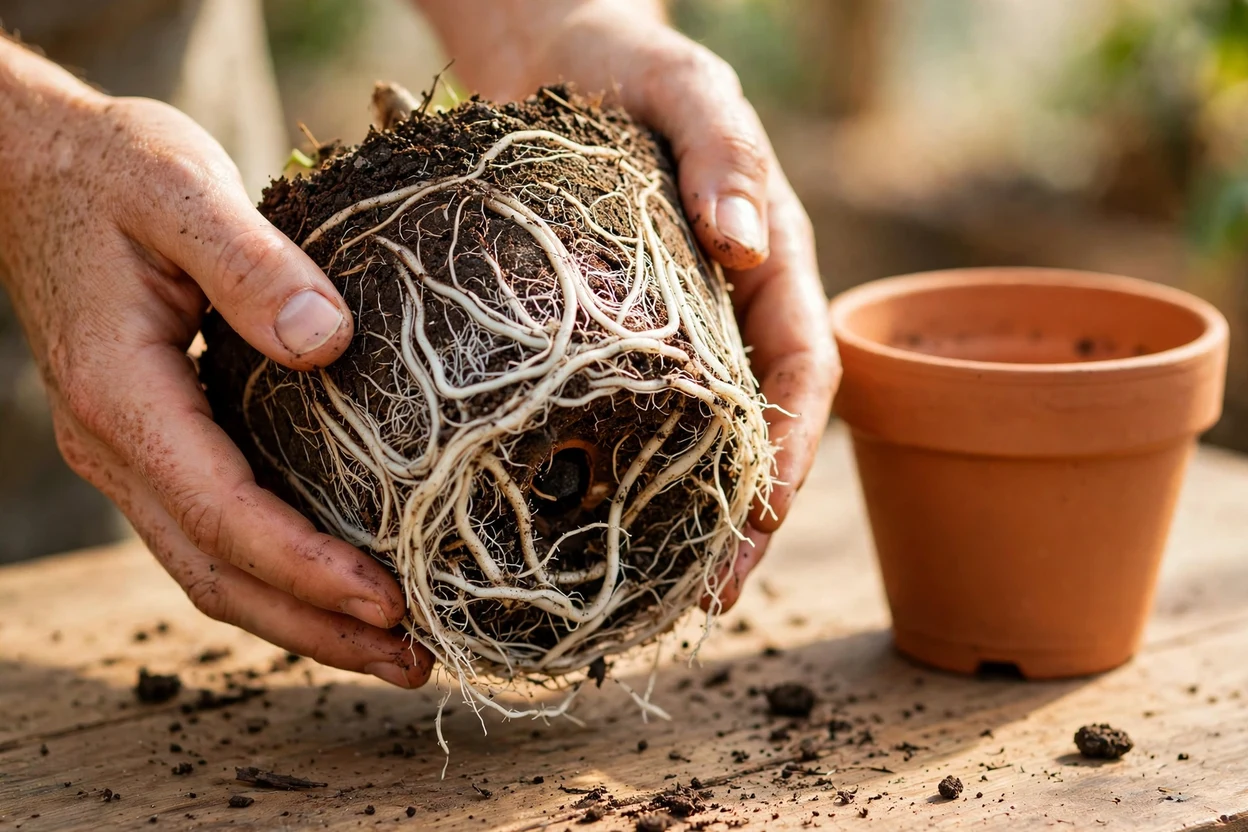
A plant needs repotting when roots grow out of the drainage holes, circle the inside of the pot, or let water run straight through without soaking in. Watch for other clues. Growth that stalls in spring and summer is a reliable sign, and so is soil that dries out within a day or two. A top-heavy plant that keeps tipping over counts too.
The surest test is to look. Slide the plant out of its pot, and if you see more roots than soil, it’s ready for a bigger pot.
Repot Now or Wait Diagnostic
The table below matches common symptoms with a repot-now or wait decision.
| Sign | What It Means | Action |
|---|---|---|
| Roots out of drainage holes | Roots have filled the pot | Repot in spring |
| Roots circling the root ball | Plant is root-bound | Repot and loosen roots |
| Water runs straight through | Too little soil to absorb water | Repot in spring |
| Soil dries in 1 to 2 days | Root mass outweighs soil | Repot in spring |
| Pot cracked or bulging | Roots or rhizomes are pushing out | Repot now |
| Mushy roots, sour smell | Root rot | Repot now and trim rot |
| White crust on soil | Fertilizer salt buildup | Refresh the mix |
| New plant from a store | Plant is adjusting to your home | Wait 1 to 2 weeks |
Growth rate sets the schedule. Fast growers such as pothos and spider plants usually need a larger pot every 12 to 18 months, since their roots fill the old one quickly.
Slow growers are different. Snake plants, jade plants and ZZ plants stay healthy in the same pot for 2 to 3 years or longer without any trouble.
When Is the Best Time to Repot a Plant?
The best time to repot a plant is spring through early summer, during the active growing season, when new roots grow quickly into fresh potting mix. Timing matters. In most of the USA, that window runs from March through June for indoor plants, because longer days and warmer homes drive root growth.
Active growth gives a plant enough energy to replace roots lost in handling. The off-season is another story. Most houseplants slow down in fall and winter, so damaged roots heal at a crawl while wet fresh mix stays soggy longer.
Two problems override the calendar: root rot and a broken pot. Don’t wait on either one. Fix both right away in any season, since neither problem improves while the plant sits in its damaged pot or rotting mix.
Leave blooming plants alone. Repotting a plant in full bloom adds stress that can make it drop its flowers, so wait until the last blossoms fade before you start.
New arrivals need a pause. Give plants from a garden center or a big-box store such as The Home Depot or Lowe’s 1 to 2 weeks to adjust to your home’s light before repotting, unless the roots show rot.
What Size Pot Should I Use When Repotting?
Choose a new pot 1 to 2 inches (2.5 to 5 cm) wider than the current one for plants in pots under 10 inches (25 cm), and 2 to 4 inches (5 to 10 cm) wider for larger plants. Bigger isn’t better. A pot that’s too big holds extra wet soil, and that soggy soil causes root rot.
Oversizing is the most common pot mistake. Roots can’t reach the soil near the walls of a huge pot, so that soil stays wet for days and rots any roots it touches.
Every pot needs at least one drainage hole. If a decorative pot has none, use it as a cachepot by keeping the plant in a plastic nursery pot with holes and setting that inside. Pour off any water that collects.
Pot Materials Compared
The table below compares common pot materials by how they handle moisture.
| Material | Moisture | Best For | Watch Out For |
|---|---|---|---|
| Terracotta | Breathes and dries fast | Snake, jade and ZZ plants | Dries out tropicals quickly |
| Plastic nursery pot | Holds moisture | Spider plants, ferns, tropicals | Light pots tip over |
| Glazed ceramic | Holds moisture | Most houseplants | Check for a drainage hole |
| Fabric grow bag | Breathes and drains well | Patio and outdoor plants | Dries out fast indoors |
Match pot depth to root type. Shallow-rooted jade plants do well in wide, low pots, while spider plants with thick tuberous roots need extra depth to spread out.
What Soil Should I Use to Repot a Plant?
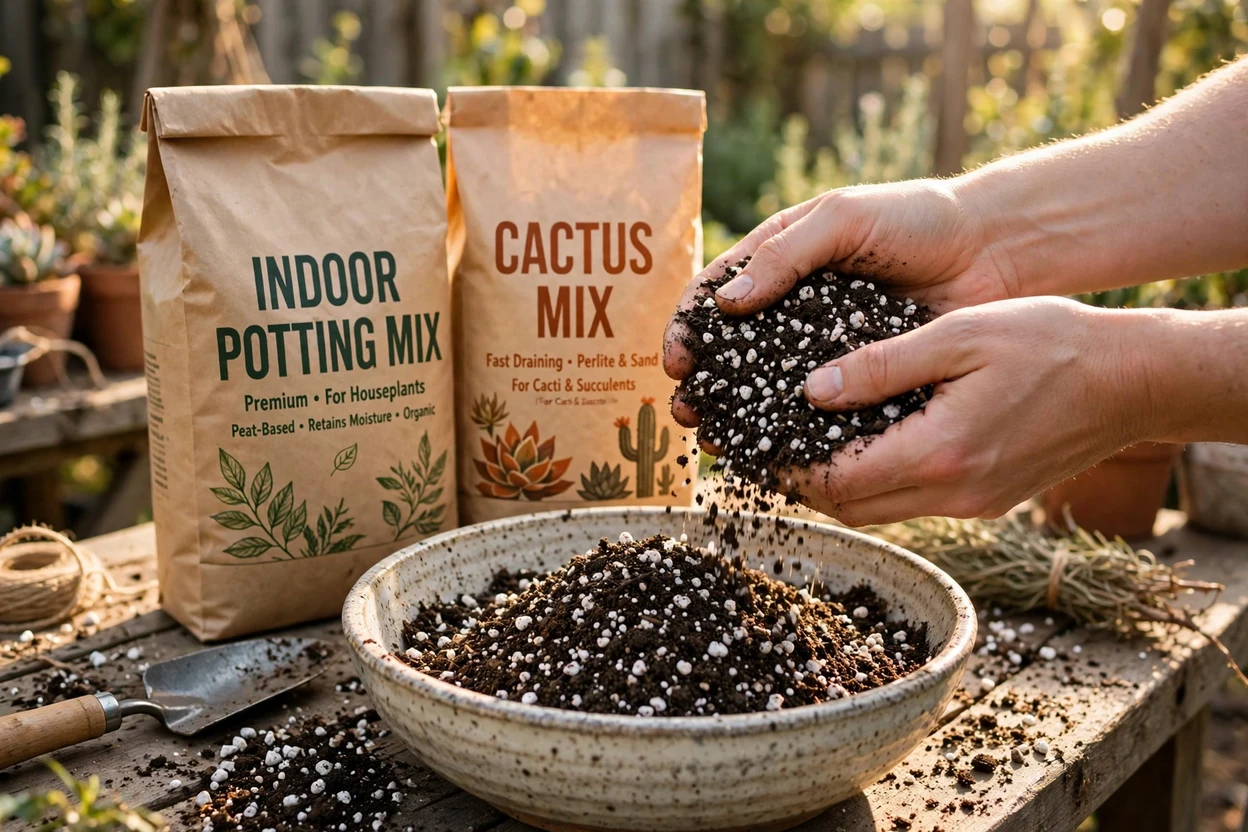
Use fresh, bagged indoor potting mix instead of garden soil, because potting mix drains freely and stays loose around roots. Plant type decides the blend. Most tropical houseplants thrive in a peat- or coco coir-based mix with perlite, while snake, jade and ZZ plants need a faster-draining cactus and succulent mix.
The table below compares the main potting mix types sold at US garden centers.
| Mix Type | Main Ingredients | Best For |
|---|---|---|
| All-purpose indoor mix | Peat or coco coir, perlite | Spider plants, pothos, most tropicals |
| Cactus and succulent mix | Coarse sand, perlite, pumice | Snake, jade and ZZ plants |
| Aroid mix | Orchid bark, coco coir, perlite | Monstera and philodendron |
| Orchid mix | Orchid bark, sphagnum moss | Orchids only |
Never use garden soil indoors. Inside a pot it compacts into a dense block that drains poorly, and it can also bring insects and weed seeds indoors along with disease.
Need extra drainage? Blend 2 parts all-purpose potting mix with 1 part perlite or pumice. Succulents get even faster drainage from a 1-to-1 blend of cactus mix and pumice, a combination that suits jade and snake plants well.
Skip mixes with moisture-holding crystals for succulents. Those crystals keep the root zone wet for long stretches, and that’s exactly the condition jade and snake plants can’t tolerate.
What You Need Before Potting an Indoor Plant
Potting an indoor plant takes a new pot with drainage holes, fresh potting mix, clean pruners or scissors, and a work surface you can get dirty. Set up first. Gather every supply before the plant leaves its old pot so the exposed roots spend as little time drying out as possible.
Use this supply checklist:
- A new pot with a drainage hole, 1 to 2 inches (2.5 to 5 cm) wider than the old one
- Fresh potting mix matched to the plant
- Perlite or pumice for extra drainage
- Clean pruners or sharp scissors
- A butter knife or soil knife to free stuck roots
- Gloves, which matter most for ZZ plants and plants with irritating sap
- Newspaper, a tarp or a large tray
- A watering can and a saucer
Wipe blades with 70% isopropyl alcohol before you start and again between plants, because clean tools stop root diseases from spreading through your collection. It takes seconds.
How to Repot a Plant Step by Step
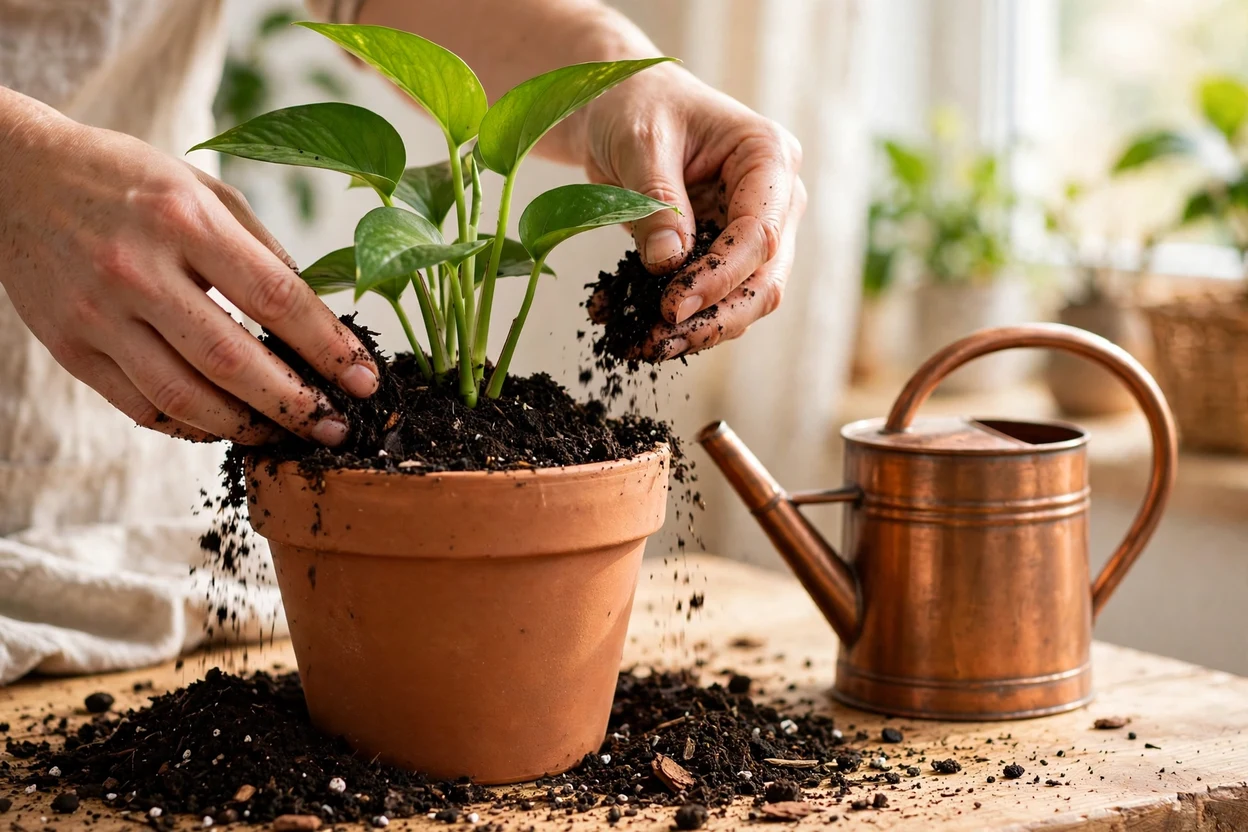
To repot a plant, water it a day ahead, slide it out of its pot, loosen the roots, set it on fresh mix at the original depth, backfill, and water thoroughly. These 8 steps work for most tropical houseplants, while the succulent exceptions appear in the species section further down the page. Succulents simply differ.
How do you repot a plant without damaging it? Follow these steps in order:
- Water the plant thoroughly 1 to 2 days before repotting so the roots are hydrated and the root ball holds together. Skip this step for snake, jade and ZZ plants, which go into new pots dry.
- Prepare the new pot by covering the drainage hole with a coffee filter or mesh square, then add enough fresh potting mix that the top of the root ball sits about 1 inch (2.5 cm) below the rim. Skip any gravel layer, because gravel pushes the soggy zone up toward the roots.
- Remove the plant by tipping the pot on its side, supporting the base of the stems with one hand, and squeezing or tapping the pot until the root ball slides free. Run a butter knife around the inside wall if roots stick.
- Inspect the roots for health. Healthy roots are firm and white, tan or orange, while rotten roots are brown or black, mushy and sour-smelling.
- Loosen the root ball by teasing circling roots outward with your fingers. For a tightly root-bound plant, make 3 or 4 vertical cuts about ½ inch (1.3 cm) deep down the sides, and prune dead roots with clean pruners.
- Position the plant in the center of the new pot so the original soil line sits level with the new mix.
- Backfill around the root ball with fresh potting mix, then tamp the soil lightly to remove large air pockets without packing it hard.
- Water thoroughly until water drains from the bottom, empty the saucer after 15 minutes, and place the plant in bright, indirect light for the first week.
Should you loosen the roots before repotting? Yes, whenever roots circle the pot. Roots left in a tight spiral keep circling inside the new pot instead of growing outward into the fresh mix around them.
Leave a loose, fibrous root ball alone. A plant that isn’t root-bound needs no teasing at all, and any extra handling only tears the fine feeder roots it depends on.
Should I Water a Plant Before or After Repotting?
Water most tropical houseplants 1 to 2 days before repotting and again right after, but keep succulents such as jade and snake plants dry and wait about a week before their first watering. The reason is simple. A dry rest lets roots broken during repotting seal over before they meet moisture, and that sealing step is what prevents rot.
The table below compares watering timing for common houseplant types.
| Plant Type | Before Repotting | After Repotting |
|---|---|---|
| Tropical foliage plants | Water 1 to 2 days ahead | Water thoroughly right away |
| Spider plants | Water 1 to 2 days ahead | Water thoroughly right away |
| Jade and other succulents | Let soil dry completely | Wait about 7 days |
| Snake plants | Let soil dry completely | Wait about 7 days |
| ZZ plants | Let soil dry completely | Wait 5 to 7 days |
Watering ahead hydrates tropical roots and helps the root ball slide out of the old pot in one piece instead of crumbling apart. Succulents work the other way. Their dry roots handle bruising better than wet ones.
After the first watering, go back to your normal schedule. The finger test works well. Push a finger 1 to 2 inches (2.5 to 5 cm) into the mix and water tropicals when that depth feels dry, but water succulents only when the whole pot is dry.
Repotting Snake, Jade, Spider and ZZ Plants
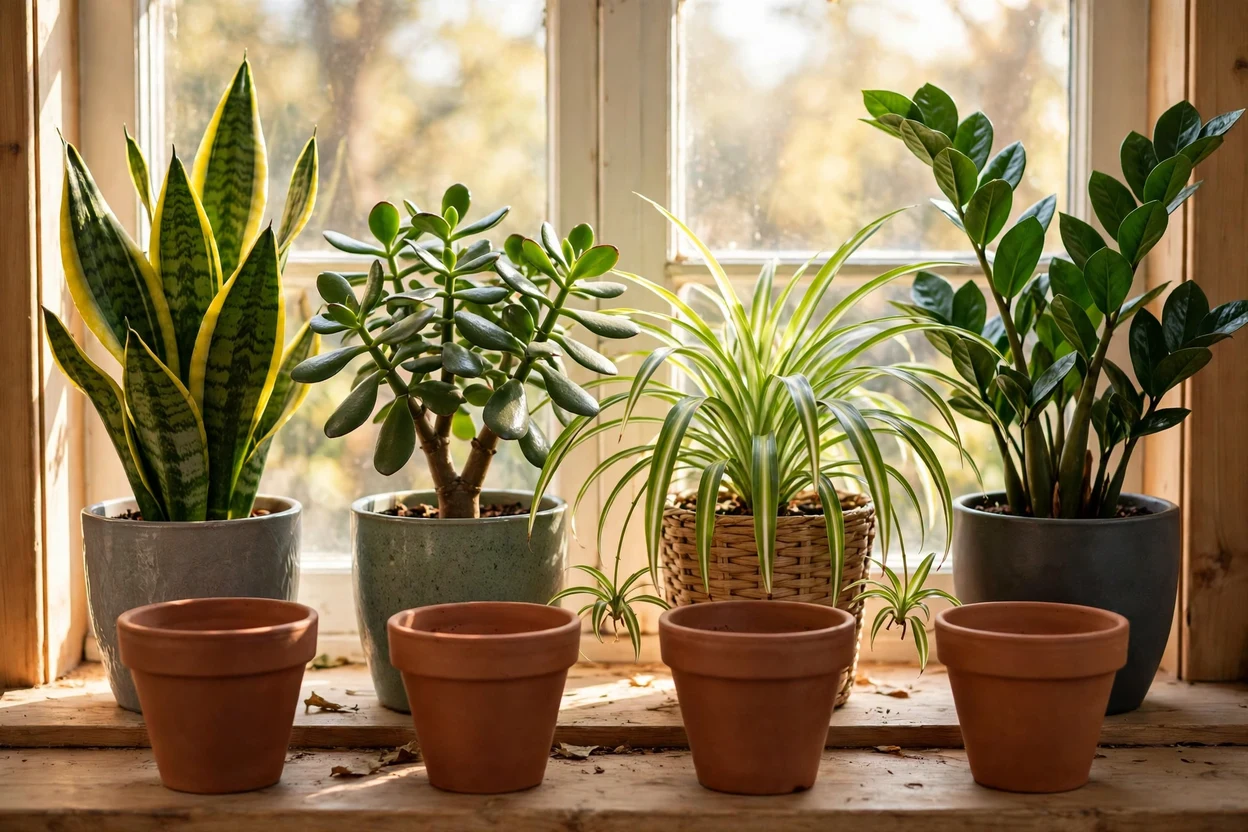
Snake, jade and ZZ plants are drought-tolerant and want fast-draining mix, snug pots and a dry rest after repotting, while spider plants prefer standard potting mix and immediate watering. Patience pays here. All four tolerate being slightly root-bound, so there’s no rush to repot them until their roots begin to crowd or damage the pot.
The table below compares repotting rules for these four popular houseplants.
| Plant | Best Mix | Best Pot | Repot Every | First Watering |
|---|---|---|---|---|
| Snake plant | Cactus and succulent mix | Heavy terracotta | 2 to 3 years | After about 7 days |
| Jade plant | Cactus and succulent mix | Wide, heavy and shallow | 2 to 4 years | After about 7 days |
| Spider plant | All-purpose indoor mix | Plastic or glazed ceramic | 1 to 2 years | Right away |
| ZZ plant | Succulent mix or perlite blend | Sturdy plastic or terracotta | 2 to 3 years | After 5 to 7 days |
How to Repot a Snake Plant
Snake plant (Dracaena trifasciata), formerly sold as Sansevieria trifasciata, spreads through underground rhizomes. It rarely needs a move. Repot it only when those rhizomes crowd the pot, which typically shows up as bulging plastic walls or cracked terracotta pots.
Snake plants grow tall and top-heavy, so choose a heavy terracotta or ceramic pot just 1 to 2 inches (2.5 to 5 cm) wider than the old one. Fill it with cactus and succulent mix.
Knowing how to repot a snake plant also means knowing how to divide one, since a crowded clump can become several smaller plants. Here’s how to split it:
- Slide the plant out of its pot and brush away old mix to expose the rhizomes.
- Cut through the rhizome with a clean, sharp knife, leaving each piece with at least one leaf cluster and healthy roots.
- Let the cut surfaces dry for 1 to 2 days until they callus.
- Plant each division at its original depth in cactus and succulent mix.
- Wait about a week, then water thoroughly.
Keep snake plants away from pets. The American Society for the Prevention of Cruelty to Animals (ASPCA) lists snake plant as toxic to cats and dogs.
How to Repot a Jade Plant
Jade plant (Crassula ovata) stores water in its thick leaves and stems, which is exactly why it rots so quickly when left in wet, dense soil. Dryness is your friend. Learning how to repot a jade plant starts with bone-dry soil.
Grip the trunk, not the branches. Jade branches snap easily, so ease the plant out by holding the base of the trunk and letting the pot slide away. Shake off the old mix and trim any black or mushy roots.
Set the jade in a wide, heavy pot filled with cactus and succulent mix. Weight matters. Older jade plants grow top-heavy over the years, and a solid terracotta or glazed pot keeps them from tipping over.
Hold off on water for about a week so broken roots can callus, then give the plant a deep, thorough soak. Pet owners, take note. The ASPCA lists jade plant as toxic to cats and dogs.
How to Repot a Spider Plant
Spider plant (Chlorophytum comosum) grows thick, white tuberous roots that store water and expand fast. Those tubers often push soil above the rim or crack thin plastic pots, which signals that the plant needs more room. Take the hint.
The easiest answer to how to repot a spider plant is a pot 2 inches (5 cm) wider, all-purpose indoor mix, the crown at soil level, and an immediate watering. Spider plants handle root disturbance well.
Large spider plants divide easily. Pull or cut the root ball into sections, making sure each one carries its own leaves and a healthy share of tubers.
Pot the small plantlets, called pups or spiderettes, in their own little containers of moist mix so they can root and grow. This one’s pet-friendly. The ASPCA lists spider plant as non-toxic to cats and dogs.
How to Repot a ZZ Plant
ZZ plant (Zamioculcas zamiifolia) grows from potato-like rhizomes that store water, which lets the plant tolerate drought and tight pots for long stretches. It’s in no hurry. Repot it when rhizomes distort the pot or lift the plant above the soil.
Squeeze the nursery pot to loosen it. If rhizomes are wedged inside, cut the pot away. Set the plant at its original depth in succulent mix or a blend of 2 parts potting mix to 1 part perlite.
The key to how to repot a ZZ plant is patience with water. That part’s easy to rush. Wait 5 to 7 days before the first watering so damaged roots have time to seal over before they touch moisture.
To divide a ZZ plant, separate the rhizome clumps by hand or with a clean knife, keeping stems and roots on each piece. Wear gloves. ZZ plants contain calcium oxalate crystals that irritate skin and mouths.
Is It Normal for a Plant to Droop After Repotting?
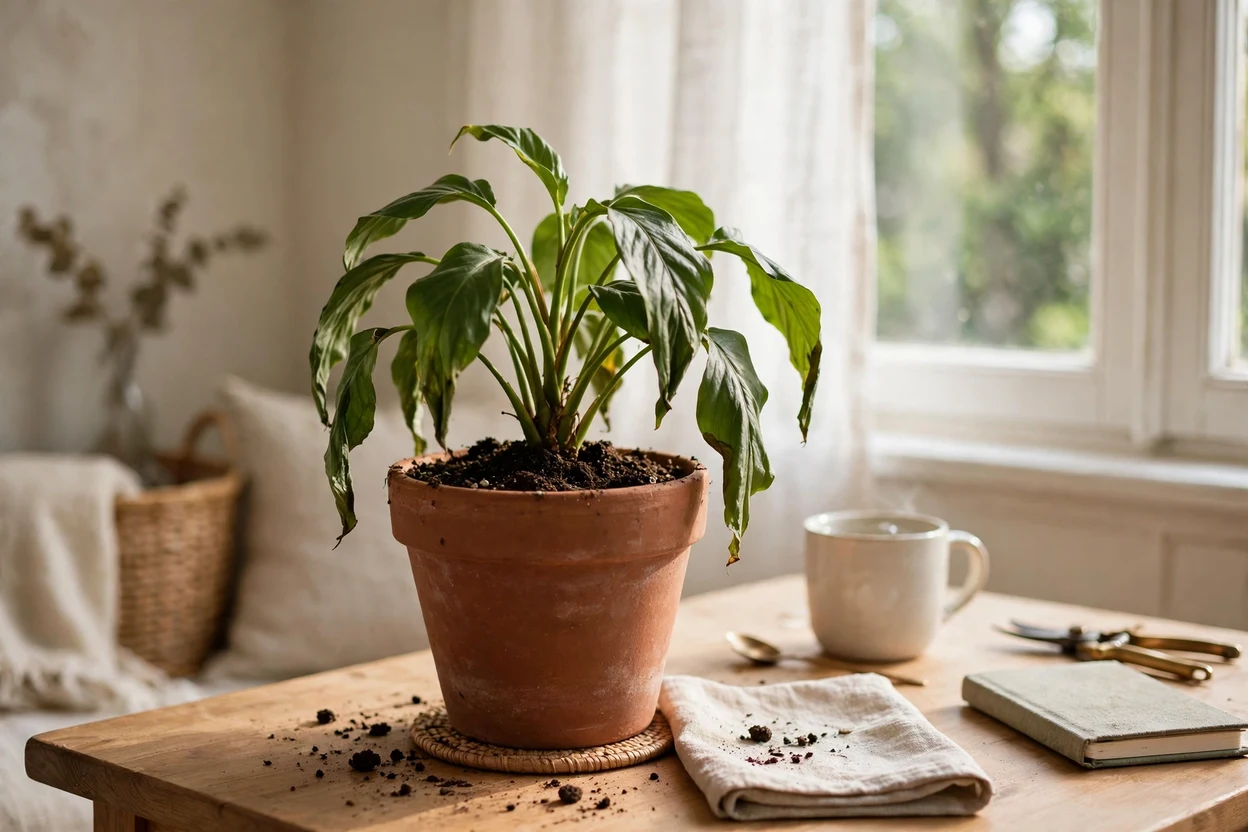
Yes, mild drooping after repotting is normal transplant shock, a short stress response while damaged roots regrow and adjust to fresh potting mix. Give it time. Most healthy houseplants bounce back within one to three weeks in bright, indirect light, provided they’re watered correctly and left unfertilized for about a month.
Why does a plant look sad after repotting? Blame the root hairs. The fine hairs that absorb water tear during handling, so the plant briefly drinks less than it did in its old pot.
The table below matches common post-repot symptoms with causes and fixes.
| Symptom | Likely Cause | Fix |
|---|---|---|
| Drooping leaves | Transplant shock | Bright indirect light, steady watering |
| Yellow lower leaves | Overwatering in fresh mix | Let the top inch (2.5 cm) dry first |
| Brown, crispy edges | Roots dried out during repotting | Water thoroughly and raise humidity |
| Soft, mushy stems | Root rot from wet soil | Unpot, trim rot, use drier mix |
| Wilting in wet soil | Pot too big or root rot | Move to a smaller pot |
| Leaf drop on succulents | Watered too soon | Stop watering until soil dries |
Skip fertilizer for 4 to 6 weeks after repotting. Many bagged mixes already contain starter fertilizer, and tender new roots burn easily when extra feed lands on top of it. Wait it out.
Placement matters early on. Keep the plant out of direct afternoon sun for the first week, and keep it clear of heating vents or air conditioning drafts during that stretch too.
Common Repotting Mistakes to Avoid
The most common repotting mistakes are choosing a pot that is too big, using garden soil, planting deeper than before, and fertilizing right away. Every one is avoidable. Each mistake either traps water around the roots or stresses a plant that’s already recovering, which slows growth and invites root rot.
The table below pairs each mistake with its result and a fix.
| Mistake | Result | Fix |
|---|---|---|
| Pot too large | Soggy soil and root rot | Go up 1 to 2 inches (2.5 to 5 cm) |
| Garden soil | Compaction and pests | Use bagged potting mix |
| Gravel at the bottom | Water pools near roots | Fill the pot with mix only |
| Planting too deep | Stem rot | Keep the original soil line |
| Packing soil hard | Roots lose air | Tamp lightly |
| Fertilizing right away | Root burn | Wait 4 to 6 weeks |
| Pulling by the stem | Torn stems and roots | Tip the pot and support the base |
To repot a plant without killing it, avoid these seven errors and match the timing of that first watering to the type of plant you’re working with. It’s that simple.
Frequently Asked Questions
Can You Repot a Plant in Winter?
No, not unless an emergency forces it, such as root rot, a broken pot or roots bursting out of the container. Growth slows in winter. Roots recover poorly then, so schedule routine repotting for March through June.
Can You Reuse Old Potting Soil?
Yes, if the previous plant was healthy and pest-free. Break up the clumps and pull out old roots, then blend the soil 1 to 1 with fresh mix before using it again. Discard soil from rotted or infested plants.
Do You Need a Pot with Drainage Holes?
Yes. Without holes, water collects at the bottom of the pot and slowly rots the roots sitting in that standing water. Keep the plant in a holed nursery pot inside any decorative container that lacks drainage.
Do ZZ Plants Like Being Root-Bound?
Yes, within limits. Water-storing rhizomes make snug pots ideal, but move the plant once rhizomes deform the pot or push the plant upward.
Can You Repot a Plant into the Same Pot?
Yes. Trim up to a quarter of the outer roots and scrub the pot clean before adding fresh mix around the root ball. This keeps a large plant at its current size while renewing its soil.
Conclusion
Knowing how to repot a plant turns a stressful chore into a quick spring routine: pick a pot 1 to 2 inches (2.5 to 5 cm) wider, match the mix to the plant, and time the first watering to its type. Those three choices prevent most repotting failures.
Start this spring by checking every plant’s drainage holes and root ball. A calendar helps. Marking the date ensures fast growers get a fresh pot every 12 to 18 months and slow growers every 2 to 3 years.
Repotting plants on a steady cycle keeps roots healthy and soil airy, so growth stays even. It pays off. As your collection grows, repotting houseplants also becomes the easiest way to divide favorites and share new plants with friends.
Related guides: Best Fertilizer for Indoor Plants: A Gardener’s Feeding Guide by Plant Type and Light, How to Grow Asparagus: Planting, Care, and Harvest Guide