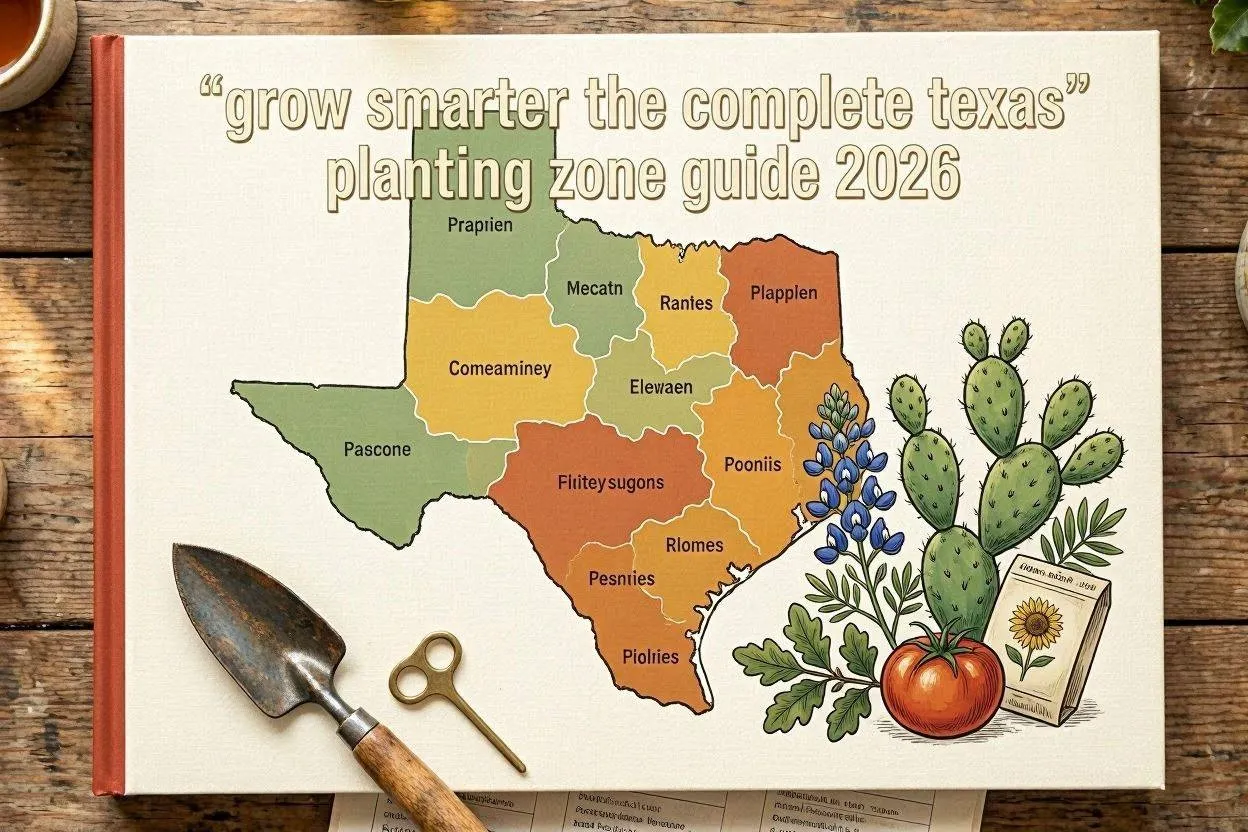
Texas spans nine USDA Plant Hardiness Zones, from 6b in the northern Panhandle to 10b on South Padre Island. Your zone tells you the coldest winter temperature your area typically hits, so you know which perennial plants will survive there. No other state in the continental U.S. covers this wide a temperature range, which is why a plant that thrives in Houston can freeze to death in Amarillo.
This guide breaks down every zone, the cities in it, exact frost dates, and the plants suited to each region. It also covers two factors most planting guides skip entirely: heat and, for gardeners weighing multiple climate systems, how USDA zones relate to other regional models.
Heat-tolerant, drought-resistant plants perform reliably in nearly every Texas zone: tomatoes, peppers, okra, lantana, salvia, rosemary, native grasses, and Texas wildflowers like bluebonnets and black-eyed Susans. Start there if you want a low-risk plant list before diving into zone specifics below.
What Is a USDA Plant Hardiness Zone?
A USDA (United States Department of Agriculture) Plant Hardiness Zone measures the average lowest winter temperature a location experiences each year. The USDA updated this map in 2023 using climate data from 1991–2020, replacing the older 2012 version.
Each zone covers a 10-degree Fahrenheit range and splits into two 5-degree half-zones, labeled “a” for the colder half and “b” for the warmer half. A plant tagged “hardy to zone 8” survives winters in zones 8 and warmer, but risks dying in zone 7 or colder.
A note on other zone systems: AHS Heat Zones (covered in detail below) measure summer heat stress rather than winter cold, and matter a lot in Texas gardening. Some plant tags also reference Sunset Climate Zones, a system used mainly in western states — it’s not commonly applied to Texas, so this guide focuses on USDA and AHS, the two systems that actually drive plant selection here.
Texas Planting Zones by Region
Texas’s size creates nine distinct zones across four climate regions.
| Region | USDA Zones | Winter Low Range |
| Panhandle & North Texas | 6b–7b | -5°F to 10°F (-20.6°C to -12.2°C) |
| North Central & East Texas | 8a–8b | 10°F to 20°F (-12.2°C to -6.7°C) |
| Central & South Texas | 9a–9b | 20°F to 30°F (-6.7°C to -1.1°C) |
| Gulf Coast & Rio Grande Valley | 10a–10b | 30°F to 40°F (-1.1°C to 4.4°C) |
Texas Planting Zones by City
Find your city below to identify your zone without looking up a ZIP code.
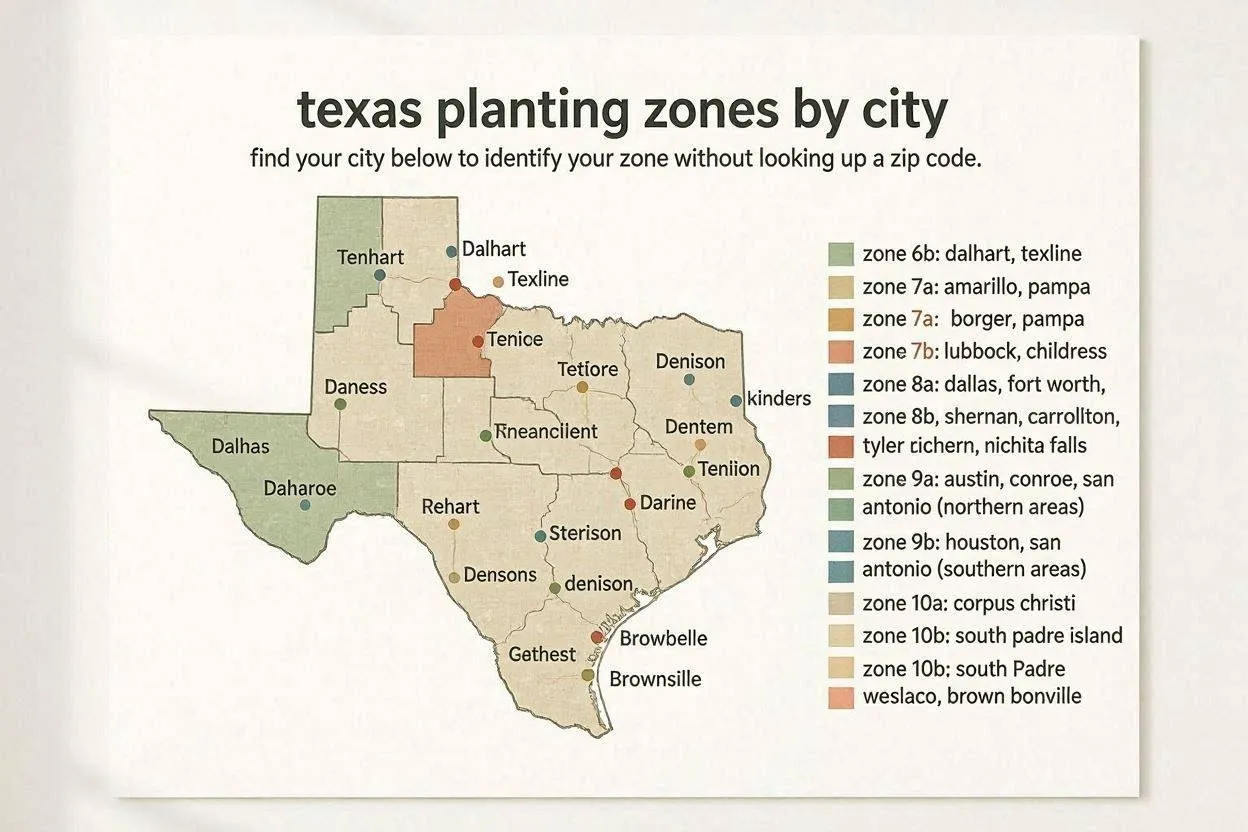
- Zone 6b: Dalhart, Texline
- Zone 7a: Amarillo, Borger, Pampa
- Zone 7b: Lubbock, Childress
- Zone 8a: Denison, Sherman, Wichita Falls
- Zone 8b: Dallas, Fort Worth, Carrollton, Richardson, Tyler
- Zone 9a: Austin, Conroe, San Antonio (northern areas)
- Zone 9b: Houston, San Antonio (southern areas)
- Zone 10a: Corpus Christi
- Zone 10b: South Padre Island, Weslaco, Brownsville
If your city sits near a zone border, check your exact ZIP code on the USDA’s lookup tool, because elevation and distance from water shift the boundary by several miles.
Texas Frost Dates by City
Frost dates set your planting window each year and vary by up to seven weeks across the state.
| City | Last Frost | First Frost | Growing Season |
| Amarillo | April 15 | October 25 | 193 days |
| Dallas | March 1 | November 21 | 265 days |
| Austin | February 21 | December 1 | 283 days |
| San Antonio | February 21 | November 21 | 273 days |
| Houston | Rare | Rare | 320+ days |
| Corpus Christi | Rare | Rare | 330+ days |
Plant frost-sensitive crops after your last frost date. Harvest or protect them before your first frost date arrives.
The AHS Heat Zone Map: Texas’s Missing Factor
Cold hardiness alone doesn’t predict plant survival in Texas. The American Horticultural Society (AHS) Heat Zone Map measures how many days per year a location exceeds 86°F (30°C), and most of Texas falls into heat zones 8 or 9, meaning 90 to 150+ days of extreme heat annually.
A plant rated for your USDA cold zone can still fail if it can’t handle Texas summers. Roses, hydrangeas, and Japanese maples often struggle in Central and South Texas heat even though their USDA zone rating fits. Check both maps before buying, not just the cold-hardiness label on the tag.
How the 2023 Map Changed From 2012
Texas warmed measurably between the two USDA map versions. In 2012, the state ranged from zone 6a to 10a. The 2023 update shifted this to 6b through 10b, a half-zone increase across most of the state.
Dallas-Fort Worth moved from zone 8a to 8b, a 4°F rise in average minimum winter temperature. This shift opens the door to marginally hardy plants that previously failed to overwinter, though a single hard freeze, like February 2021’s -4°F event in North Texas, can still kill zone-appropriate plants. Buy one zone colder than your rating for insurance against unusual cold snaps.
Some older gardening resources still reference the 2012 boundaries — if a plant tag or guide lists Dallas as zone 8a rather than 8b, it hasn’t been updated since 2023.
Best Plants by Zone
Native and drought-tolerant species consistently outperform imports across Texas because they evolved for the state’s temperature swings and low rainfall.
- Zone 6b–7b (Panhandle): Red yucca, American beautyberry, false indigo, coral honeysuckle, bee balm. These tolerate hard freezes and benefit from a fall mulch layer to protect roots through winter.
- Zone 8a–8b (North & Central Texas): Texas sage, Turk’s cap, Gulf muhly grass, crepe myrtle, Texas lantana. Plant in full sun with well-drained soil; most establish quickly with light supplemental watering.
- Zone 9a–9b (South & Gulf Coast): Firebush, esperanza, azalea, Texas bluebonnet, cedar sage. Azaleas need acidic, well-draining soil and benefit from a thick mulch bed to retain moisture through hot summers.
- Zone 10a–10b (Rio Grande Valley): Hibiscus, bougainvillea, citrus trees, palm varieties rated for tropical heat. Prune citrus lightly after fruiting and water deeply but infrequently to encourage strong root growth.
2026 Texas Planting Calendar
Timing shifts by zone, so use your specific zone rather than a single statewide date.
- Zones 6b–7b: Start warm-season vegetables indoors in early March 2026. Transplant outdoors after April 15.
- Zones 8a–8b: Direct-sow warm-season crops between March 15 and April 1, 2026. Plant fall crops by September 1.
- Zones 9a–9b: Plant warm-season vegetables from late February through March 2026. A second fall planting window opens in October.
- Zones 10a–10b: Grow warm-season crops nearly year-round, with a short pause only during the hottest weeks of July and August.
Vegetables vs. Ornamentals: Different Rules Apply
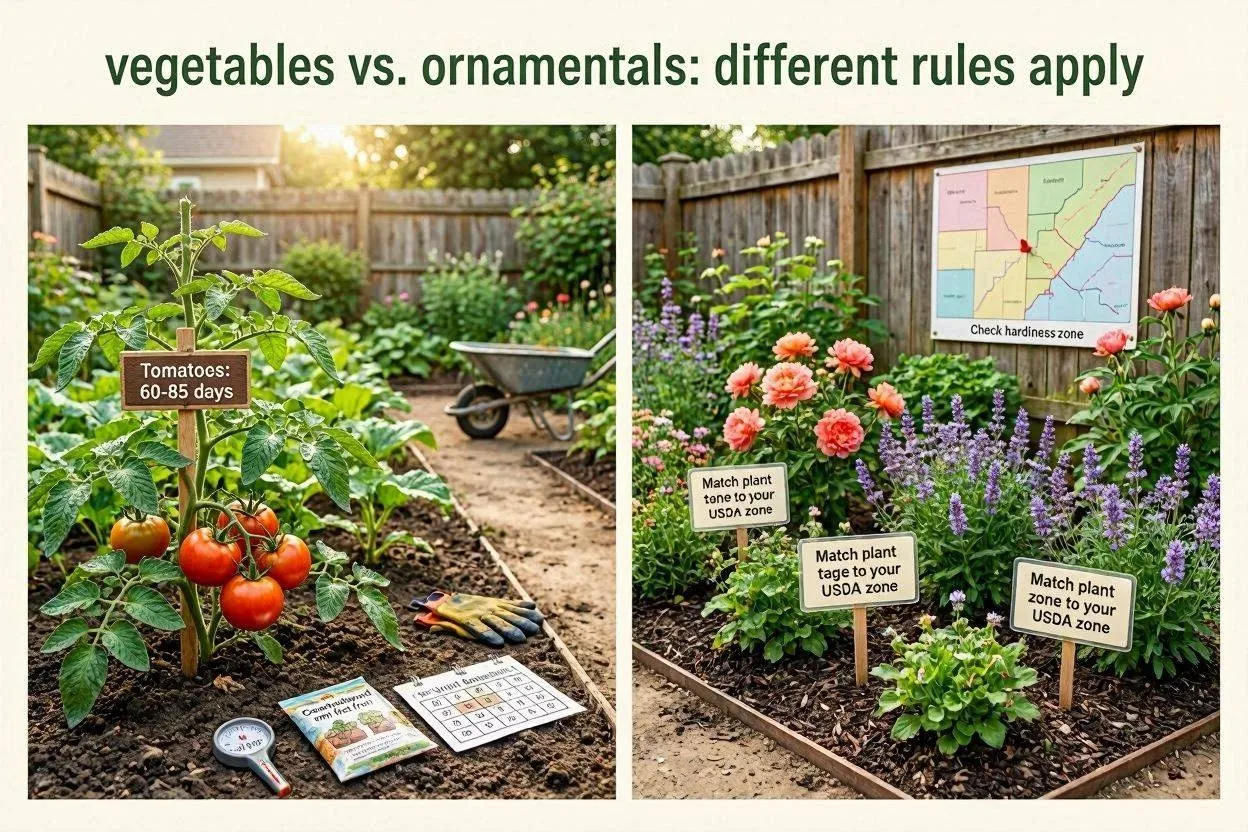
Vegetable timing depends on frost dates and soil temperature, while ornamental timing depends on the plant’s hardiness zone rating.
For vegetables: count backward from your first frost date to know how many growing days a crop needs. Tomatoes need 60-85 days; they must go in the ground early enough to mature before fall frost hits.
For ornamentals and perennials: match the plant tag’s zone rating to your USDA zone, then plant in early spring or fall when soil temperatures sit between 55°F and 75°F (13°C to 24°C) for the strongest root establishment.
Zone-by-Zone Care and Planting Technique
Knowing your zone is only step one — how you plant, water, and maintain your garden matters just as much as what you put in the ground.
Planting technique: Dig a hole twice as wide as the root ball but no deeper, so the crown sits level with the surrounding soil. Loosen circling roots before backfilling, water deeply right after planting, and avoid fertilizing at planting time — let the roots establish first.
Watering: Newly planted shrubs and perennials need deep watering two to three times a week for the first month, tapering to once a week as roots establish. In zones 9a–10b, where summer heat is intense, water early in the morning to reduce evaporation and fungal risk.
Mulching: Apply 2–3 inches of mulch (shredded bark, pine straw, or compost) around the base of plants, keeping it a few inches clear of the stem or trunk to prevent rot. Mulch conserves moisture, suppresses weeds, and moderates soil temperature swings — especially valuable in zones 6b–8a, where winter temperature drops are sharpest.
Pruning: Prune spring-flowering shrubs right after they bloom; prune summer- and fall-flowering plants in late winter while dormant. Removing dead or crossing branches improves airflow and reduces disease pressure, which matters more in the humid Gulf Coast zones (9b–10b).
Soil amendment: Texas soils range from alkaline clay in Central Texas to sandy, fast-draining soil along the coast. Work in compost or aged manure before planting to improve structure and nutrient availability, and test soil pH if you’re growing acid-loving plants like azaleas or hydrangeas, which struggle in the alkaline soils common around Austin and San Antonio.
Fertilizing: Feed most ornamentals and shrubs once in early spring with a balanced, slow-release fertilizer. Avoid heavy nitrogen feeding after late summer, since it pushes tender new growth that’s vulnerable to an early frost.
Common Texas Gardening Mistakes to Avoid
Even zone-appropriate plants fail when a few common habits work against them.
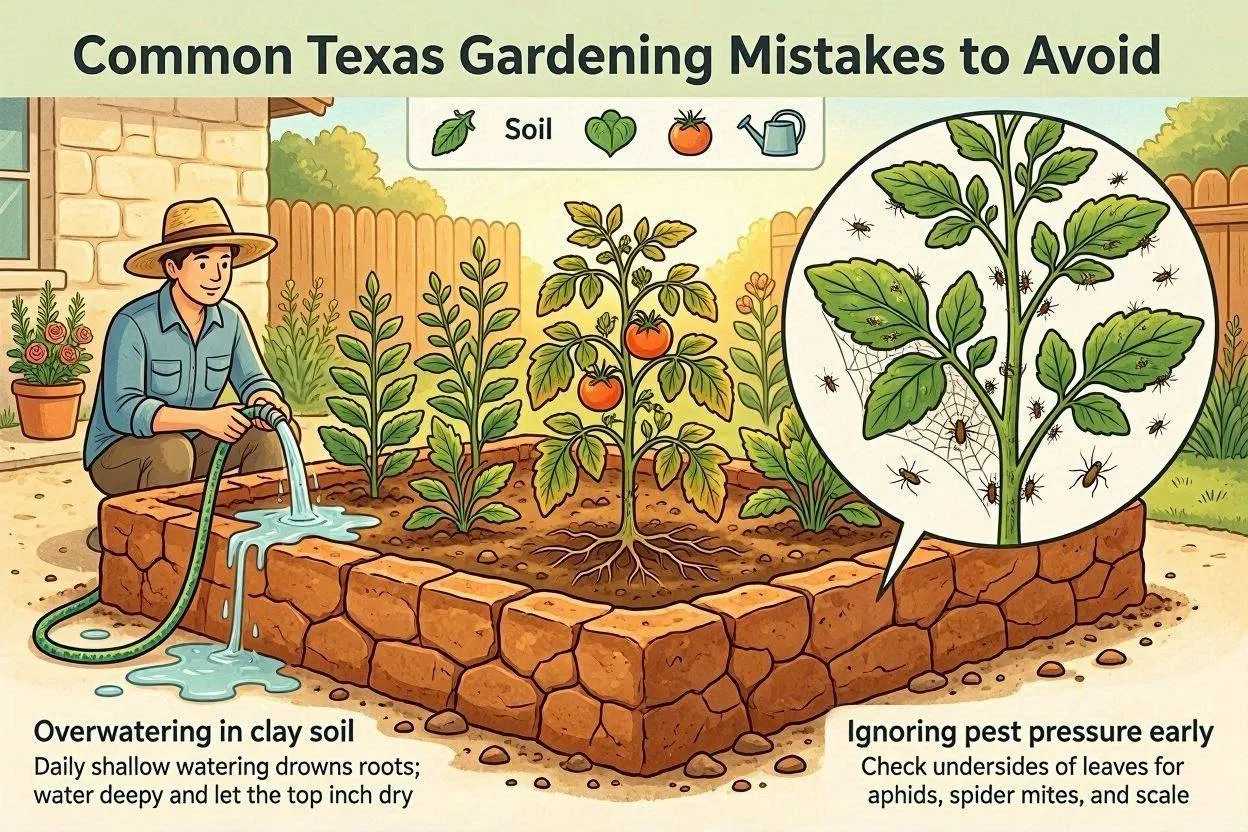
Overwatering in clay soil. Central Texas’s dense clay drains slowly, so daily watering often drowns roots instead of helping them. Water deeply but less frequently, and let the top inch of soil dry out between waterings.
Ignoring pest pressure early. Aphids, spider mites, and scale insects thrive in Texas heat and multiply fast. Check the undersides of leaves weekly during summer, and treat small infestations with insecticidal soap before they spread to the rest of the bed.
Mowing lawns too short. St. Augustine and Bermuda lawns, the two most common in Texas, stress out and go dormant early if cut below 2–3 inches. Raise the mower deck in peak summer heat to help grass retain moisture and shade its own root zone.
Planting containers with poor drainage. Container gardening is popular for patios and small yards, but pots without adequate drainage holes waterlog roots fast in Texas’s heavy summer rains. Elevate pots slightly and choose containers with multiple drainage holes.
Skipping winter protection in borderline zones. Gardeners in zones 7b–8a sometimes treat their USDA rating as a guarantee. Cover marginally hardy plants with frost cloth during hard freezes rather than assuming the zone rating alone will protect them.
How to Find Your Exact Zone by ZIP Code
Enter your ZIP code into the USDA’s official Plant Hardiness Zone lookup tool at planthardiness.ars.usda.gov. The tool returns your precise zone based on 30 years of local climate station data, which is more accurate than a citywide estimate, since zones can shift within a single county due to elevation changes.
Ready to Plant?
Match your zone to your plant list, mark your frost dates on the calendar, and order your seeds or transplants before your 2026 planting window opens. Browse our zone-specific plant guides to build a garden suited to your exact corner of Texas.
FAQs
What planting zone is most of Texas in?
Most of Texas falls in zones 8a through 9b. Dallas and Fort Worth sit in zone 8b, while Austin, San Antonio, and Houston sit in zones 9a and 9b.
Did Texas planting zones change in 2023?
Yes. The 2023 USDA map shifted Texas from a 6a–10a range to 6b–10b, reflecting roughly 4°F of average winter warming since the 2012 map.
Can I use the same planting zone for vegetables and flowers?
No. Vegetables follow frost dates and days-to-maturity counts, while ornamentals and perennials follow the USDA hardiness zone rating on the plant tag.
How many growing zones does Texas have?
Texas has 9 USDA hardiness zones, ranging from 6b in the northern Panhandle to 10b on South Padre Island.
Should I trust my city’s zone or check my exact ZIP code?
Check your exact ZIP code. Zones shift within counties due to elevation and distance from water, so a citywide estimate can be off by a half-zone.
What are the easiest plants to grow across most of Texas?
Heat-tolerant, drought-resistant species do well statewide regardless of exact zone: tomatoes, peppers, okra, lantana, salvia, rosemary, native grasses, and wildflowers like bluebonnets and black-eyed Susans. Fine-tune from there using your specific zone’s plant list above.
Conclusion
Texas gardening success starts with knowing your exact zone, not just guessing based on the state’s reputation for heat. Nine zones, from 6b in the Panhandle to 10b on South Padre Island, mean a plant list that works in Amarillo can fail completely in Houston, and the reverse holds just as true.
Pair your USDA hardiness zone with the AHS heat zone, your local frost dates, and soil type, and you cut plant loss significantly compared to buying whatever looks good at the nursery. Lawn care, raised beds, container gardening, and pest control all shift by region too, so treat this guide as a reference to revisit each season rather than a one-time read.
Zones shift over time, as the 2023 update proved. Check your ZIP code yearly, adjust your plant and lawn choices as needed, and build a garden that holds up against Texas’s extremes instead of fighting them.