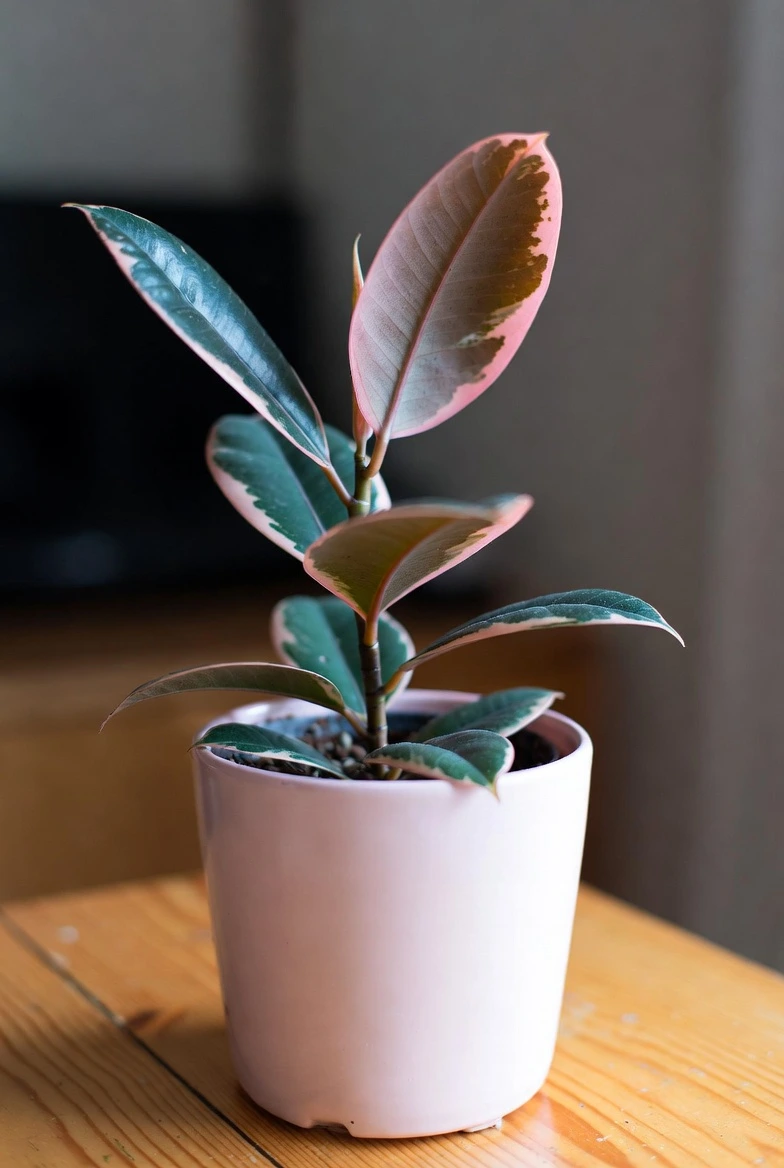
I killed my first pink rubber plant in three months. Overwatered it to death while thinking I was being a great plant parent.
Here’s what nobody tells you: pink rubber plants are actually easier than most houseplants once you understand what they actually need. Not what Pinterest says they need. What they actually need.
Why Pink Rubber Plants Turn People Into Plant People
My pink rubber plant sits in my living room right now. It’s tripled in size since I figured out the basics. The pink variegation on those leaves? That’s what hooks everyone. But here’s the thing – that pink color is also your biggest clue about plant health. When you mess up rubber plant care indoor, the pink fades first.
I learned this after moving mine six times in one month trying to find the “perfect spot.”
Light: Where Most People Screw Up Pink Rubber Plant Care
Bright indirect light isn’t optional. It’s the difference between a pink rubber plant and a sad green one.
Here’s what works:
- East-facing windows are perfect (I use this)
- 4-6 feet from south or west windows works great
- Never direct afternoon sun (learned this the expensive way)
My plant sits about 5 feet from a west-facing window. The leaves stay pink and glossy. When I had it right against the window? Burned leaves within two weeks.
The pink color fades when light drops below what the plant needs. You’ll notice the newer leaves come in more green than pink. That’s your sign to move it closer to light.
- Pro move: Rotate your plant a quarter turn every month. I do this when I pay rent. Easy to remember.
Watering: The Thing That Kills Most Pink Rubber Plants
This is where I murdered my first one. Stop watering on a schedule. Seriously. Your plant doesn’t care that it’s Sunday.
Here’s my actual system:
- Stick your finger 2-3 inches into soil
- Dry and crumbly? Water deeply
- Still moist? Wait two more days
When I water, I drench the entire pot until water runs out the drainage holes. Then I let it drain completely before putting it back in the decorative pot.
Overwatering signs:
- Yellow leaves (especially lower ones)
- Mushy stems
- Leaves dropping like crazy
Underwatering signs:
- Leaves curling inward
- Crispy leaf edges
- Dull appearance
I check my plant every 3-4 days in summer. Every 7-10 days in winter. The soil dries slower when it’s cold and the plant grows slower.
Temperature and Humidity for Pink Rubber Plant Care
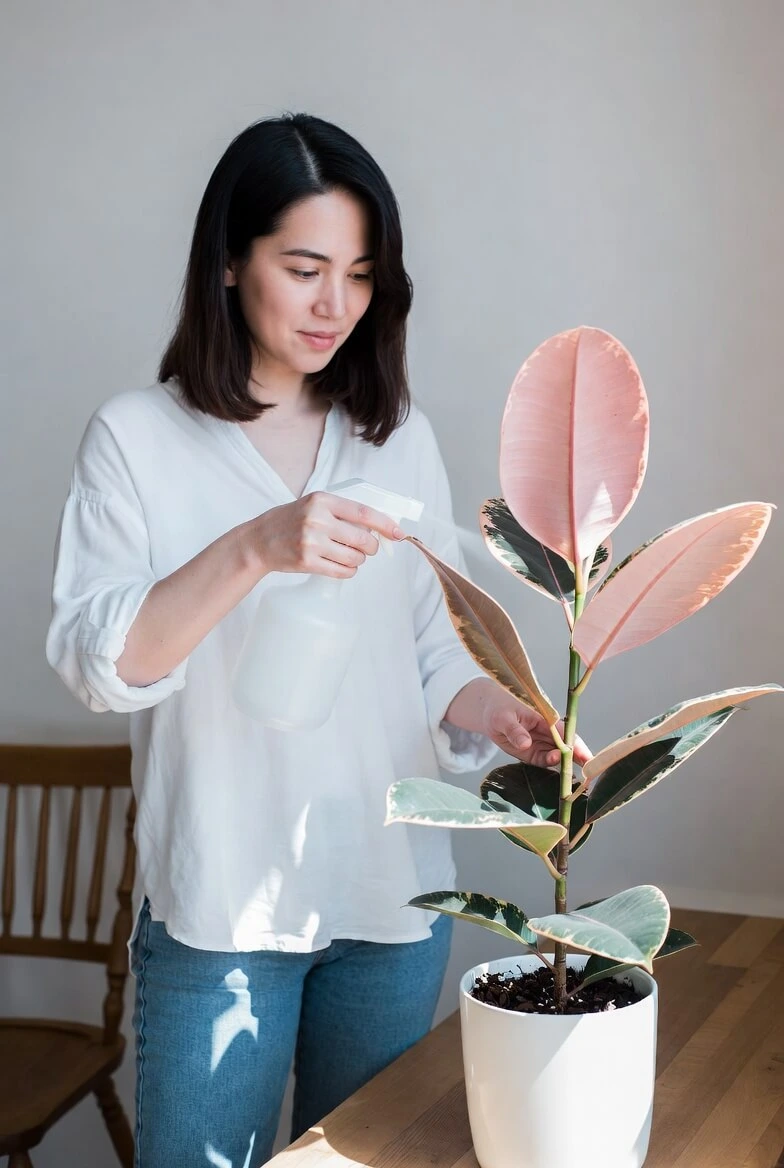
Keep it between 65-85°F. If you’re comfortable in a t-shirt, your plant is fine. Cold drafts kill these plants faster than anything except overwatering. I learned this when I left mine near a drafty window in January. Lost six leaves in one week.
Keep away from:
- Air conditioning vents blowing directly on it
- Heating vents
- Drafty doors and windows in winter
- Anywhere that gets below 50°F
Humidity? Normal room humidity works fine. I don’t mist mine. Never have. It’s doing great. If your house is super dry (below 30%), run a small humidifier nearby during winter. That’s it.
Soil and Potting: Set It Up Right From Day One
Use well-draining soil. This is non-negotiable for proper rubber plant care indoor.
My mix:
- 50% regular potting soil
- 25% perlite
- 25% orchid bark
You can also just buy a good houseplant mix with perlite already in it. That works fine.
The pot needs drainage holes. No exceptions. I don’t care how pretty that ceramic pot without holes is. Your plant will die in it. Terra cotta pots dry out faster. Plastic holds moisture longer. I use plastic because I travel for work and can’t water as often.
Repotting Pink Rubber Plants (When and How)
These plants grow fast when conditions are right. I repot mine every spring.
Signs it’s time:
- Roots coming out drainage holes
- Water runs straight through without absorbing
- Growth has completely stopped
- Plant is top-heavy and tips over
Go up only 2-3 inches in pot diameter. I moved from a 6-inch pot to an 8-inch pot last spring. Spring is the best time for rubber plant propagation and repotting. The plant is actively growing and recovers faster.
Rubber Plant Pruning: How to Keep It Under Control
Pruning keeps your plant bushy instead of leggy. I prune mine every spring right before the growing season.
Here’s my process:
- Use clean, sharp scissors
- Cut just above a leaf node
- Wear gloves (the sap is sticky and irritating)
- Save the cuttings for propagation
The milky white sap will leak from cuts. It’s latex. Some people are allergic. I wipe it off with a damp paper towel.
Pruning benefits:
- Controls height
- Encourages bushier growth
- Removes damaged leaves
- Creates propagation material
I cut my plant back by about 1/3 each spring. Sounds aggressive but it bounces back stronger.
Rubber Plant Propagation: Making More Plants
Want more pink rubber plants? Propagation is surprisingly easy.
I propagate in water:
- Cut 4-6 inch stem sections with 2-3 leaves
- Remove bottom leaf
- Place in water (change weekly)
- Wait 4-6 weeks for roots
- Plant in soil when roots are 2 inches long
The pink variegation comes through in the new plants if you propagate from pink-variegated stems. I’ve made four new plants from my original one. Gave three to friends. They all survived.
Fertilizing Pink Rubber Plants
Feed yours every 2-4 weeks during spring and summer with diluted liquid fertilizer. I use a balanced houseplant fertilizer at half strength. Full strength burns the roots. Learned that one the hard way too.
Stop fertilizing in fall and winter. The plant isn’t actively growing. You’re just creating salt buildup in the soil.
Common Problems With Pink Rubber Plant Care
- Yellow leaves: Usually overwatering. Check your watering habits.
- Brown crispy edges: Underwatering or low humidity.
- Pink fading to green: Not enough light. Move it closer to a window.
- Leaves dropping: Could be overwatering, cold drafts, or normal lower leaf drop as the plant grows.
- Pests: I’ve dealt with spider mites once. Sprayed with diluted neem oil weekly for three weeks. Problem solved.
Rubber Plant Indoor Benefits Nobody Talks About
Beyond looking good, pink rubber plants actually do useful stuff:
- Air purification (removes formaldehyde and other toxins)
- Humidity boost (releases moisture through leaves)
- Low maintenance once established
- Fast growth gives you visible progress
Mine grew 18 inches in one growing season. It’s incredibly satisfying to watch.
For more indoor plant care tips, check out our guides on [other popular houseplants] and [indoor gardening basics].
Pink Rubber Plant Care FAQs
How often should I water my pink rubber plant?
Check the soil every few days. Water only when the top 2-3 inches are completely dry. This usually means every 5-7 days in summer and every 10-14 days in winter.
Why is my pink rubber plant losing its pink color?
Not enough light. Pink variegation requires bright indirect light. Move it closer to a window or add a grow light.
Can I grow a pink rubber plant in low light?
No. It will survive but lose the pink coloring and become leggy. These plants need bright indirect light minimum.
Is pink rubber plant toxic to pets?
Yes. The latex sap is toxic to dogs and cats. Keep it out of reach if you have pets.
How big do pink rubber plants get indoors?
Usually 6-10 feet tall over several years. You can control height through regular rubber plant pruning.
The Real Secret to Pink Rubber Plant Care
Consistency beats perfection. I’m not a perfect plant parent. I forget to water sometimes. I don’t always fertilize on schedule. But my plant is thriving because I got the basics right: good light, proper watering technique, and well-draining soil.
Start there. Everything else is just optimization. Your pink rubber plant doesn’t need you to be perfect. It needs you to be consistent with the fundamentals. Do that, and you’ll have a stunning plant that grows like crazy and makes your space look expensive.
Read More Blogs at Zoned Garden.