New flooring changes a property more than almost any other renovation. The floor sets the look of a room, decides how much cleaning you do each week, affects how sound carries, and takes a beating from foot traffic, furniture, and seasonal changes in temperature and humidity.
Picking an attractive surface is only part of the job. Floors that last and stay comfortable depend on what sits underneath them: the structural subfloor, moisture barriers, acoustic layers, and how heat moves through the assembly. This applies whether you’re refitting a busy retail storefront or remodeling a living room in the suburbs. Here’s how to approach a flooring upgrade the right way.
1. Evaluate Traffic, Moisture and Space Requirements
Before you look at samples, look at the rooms. Note how much traffic each space gets, whether it sees water or humidity, and what it’s used for. Homes and commercial buildings put different demands on a floor, so the material should match the room.
Commercial and High-Traffic Environments
Retail stores, medical offices, and hospitality venues need floors that hold up to wear, don’t take much upkeep, and resist slips.
Luxury Vinyl Tile (LVT) and Plank (LVP): With a heavy-duty commercial wear layer, LVP and LVT are waterproof and convincingly mimic wood or stone. They handle constant foot traffic and rolling carts or equipment without much complaint.
Commercial Carpet Tile: Because carpet tiles are modular, you can pull up a single stained or worn square and drop in a new one. No full-room tear-out, which keeps costs down in corporate offices.
Moisture-Prone Residential Zones
Full bathrooms, laundry rooms, basements, and entryways need a waterproof, non-porous floor. Otherwise water works its way into the subfloor, which leads to rot and mold.
Porcelain Tile: Porcelain is dense and close to non-porous. It shrugs off spills and standing water and lasts for decades.
Rigid Core SPC Vinyl: Stone Plastic Composite (SPC) vinyl planks are fully waterproof, and their rigid core hides small dips and bumps in the subfloor. That makes them a good fit for basements and kitchens.
2. Upgrade the Structural Subfloor Foundation
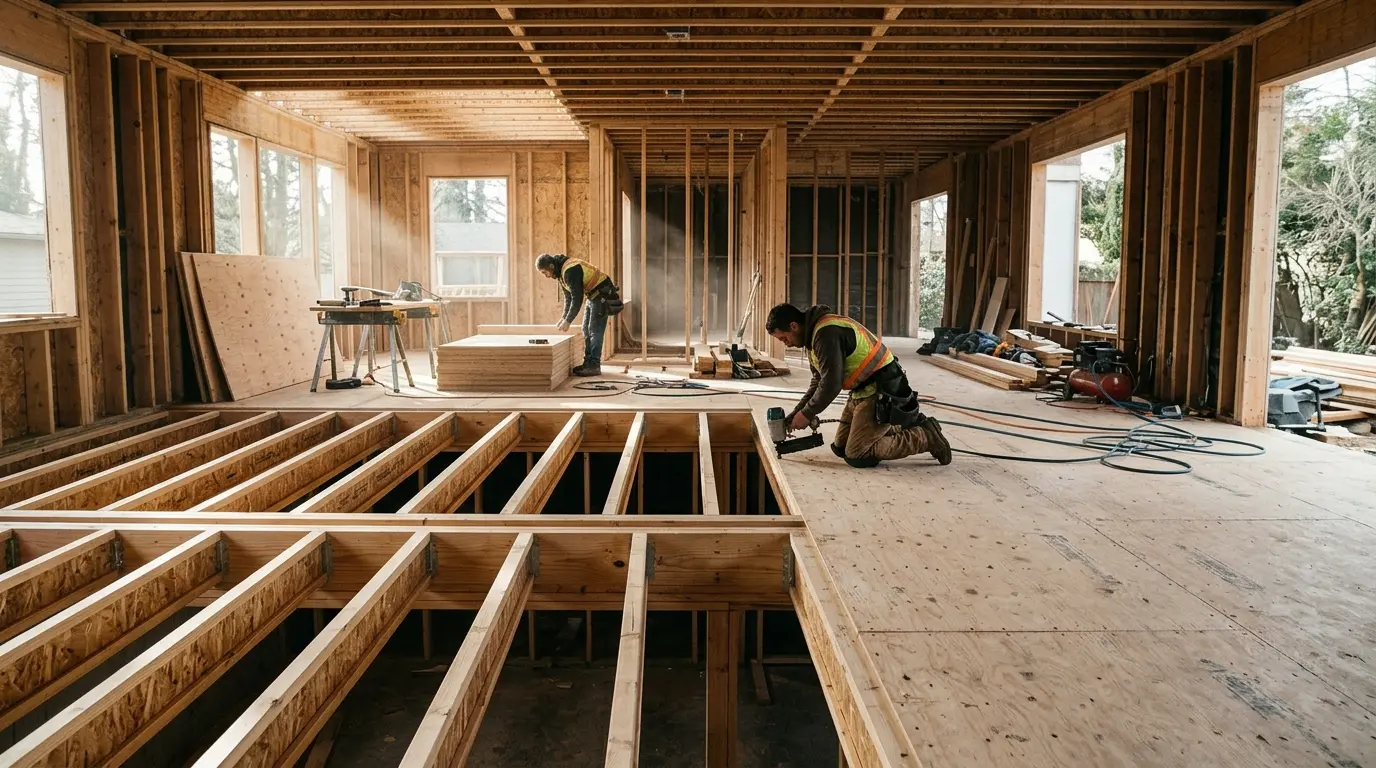
A finished floor can only be as flat, quiet, and durable as the subfloor beneath it. Put expensive flooring over a surface that’s uneven, damaged, or flexes underfoot, and you’ll see the problems show through: telegraphing, cracked tiles, separating seams, and squeaks that never go away.
Subfloor Leveling and Stabilization
Make sure the wood or concrete substrate is flat, clean, and solid before any new flooring goes down.
Self-Leveling Underlayments: A cementitious self-leveling compound poured over an uneven concrete slab gives you a smooth, level base. Large-format tile and glue-down luxury vinyl both need this.
Subfloor Fastening and Replacement: Screw down loose wood subfloor panels to stop squeaks, and replace any OSB or plywood with water damage before the underlayment goes in.
3. Integrate Subfloor Radiant Heating for Comfort and Efficiency
If you’re installing a hard-surface floor, underfloor radiant heating is worth serious consideration. Ceramic tile, natural stone, engineered hardwood, and vinyl can all feel cold underfoot, especially in winter or when they sit on a concrete slab.
Radiant heating turns the whole floor into a gentle, even heat source. Forced-air systems blow dust and allergens around and push dry, warm air up toward the ceiling. Radiant heat works from the floor up, and it does it quietly.
Temperature Control and Material Compatibility
Resilient floors need the right subfloor assembly when paired with radiant heat. It has to move heat quickly while keeping the surface safe from sudden temperature spikes. Learning the technical requirements for heated flooring under vinyl floor installations helps property owners pick conductive boards that give steady, even warmth without harming the floor’s structure or finish.
4. Modernize with High-Performance Surface Materials
The best finished floor balances how it looks with how long it will last. These are the surface materials most worth considering for modern homes and commercial properties.
Engineered Hardwood
Engineered hardwood gives you the look of real timber with better stability. A real wood veneer sits on top of cross-stacked layers of high-grade plywood, so it expands and contracts with seasonal humidity far less than solid wood does.
Best Applications: Living rooms, dining areas, executive offices, and upstairs hallways in homes.
Key Benefits: Strong resale value, genuine wood grain, and it works well with low-profile radiant heating panels.
Porcelain and Natural Stone Tile
Porcelain tile is a modern design staple. It comes in large-slab sheets and other big formats, along with very realistic marble prints. Because it’s fired at extremely high temperatures, it’s very hard and resists liquids.
Best Applications: Commercial entryways, restaurant dining rooms, home kitchens, and high-end bathrooms.
Key Benefits: An extremely hard-wearing surface, full fire resistance, and easy sanitizing.
High-Density Laminate
Today’s laminate uses high-definition photographic layers and textured embossing to imitate reclaimed wood and natural stone closely. A dense fiberboard core and a tough resin wear layer make it a scratch-resistant floating floor that won’t stretch your budget.
Best Applications: Rental properties, well-used bedrooms, and commercial spaces with moderate traffic.
Key Benefits: Resists scratches and stains, costs less than most alternatives, and installs quickly with click-lock joints.
5. Prioritize Acoustic Control and Sound Absorption
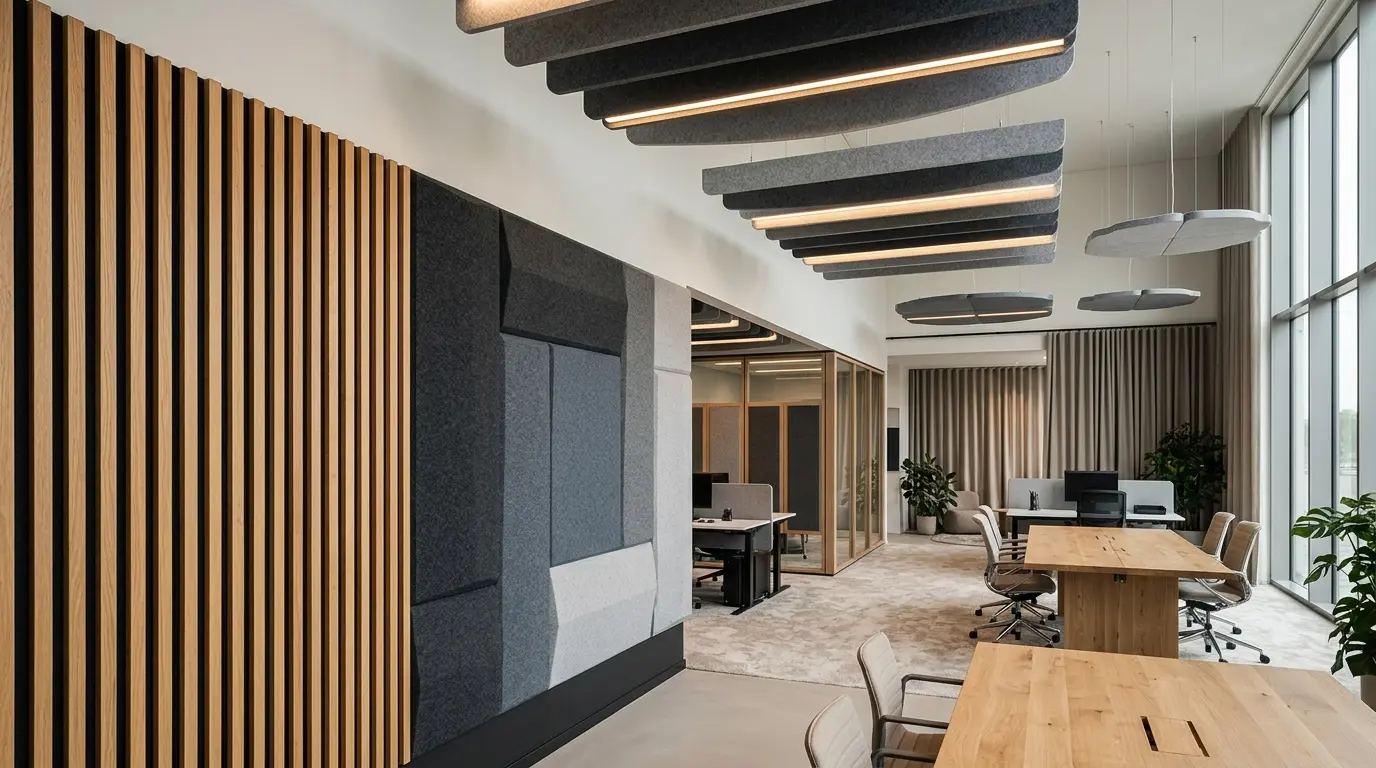
Sound affects how comfortable a room feels, particularly in apartment buildings, two-story houses, and busy offices. Hard floors bounce sound around, causing echo, and they carry footstep noise down to the floor below.
Acoustic Underlayment Solutions
A high-density sound-dampening underlayment under a floating or glued floor cuts impact noise and raises the floor’s Impact Insulation Class (IIC) and Sound Transmission Class (STC) ratings.
Cork Underlayment: A natural, eco-friendly choice that adds some thermal insulation and does a very good job of muffling footsteps under wood and laminate.
Mass-Loaded Rubber and Foam: Engineered rubber membranes soak up impact vibration and footfall noise under luxury vinyl, engineered hardwood, and tile backer boards.
6. Strategic Room-by-Room Upgrade Recommendations
To get the best return, match each upgrade to how the room is actually used:
Executive Offices and Conference Rooms
Pair commercial-grade engineered hardwood or plush carpet tile with an acoustic underlayment for a quiet, professional space.
High-Traffic Retail Outlets
Choose glue-down LVT with a thick wear layer, or polished porcelain tile. Both are easy to clean daily and stand up to heavy impact.
Residential Living Areas
Lay engineered hardwood or high-definition laminate over a low-profile radiant board subfloor assembly. You get a good-looking floor that stays warm.
Bathrooms and Spa Suites
Combine non-slip porcelain tile with an underfloor radiant heating grid. No more cold tile in the morning, and the floor dries faster.
Conclusion
A flooring upgrade lets you improve how your home or business looks, add to its value, and make it more comfortable to live or work in. Assess traffic in each room, level the subfloor, add acoustic insulation, and build in energy-efficient radiant subfloor heating, and your new floors will perform well for decades.