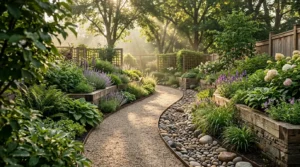
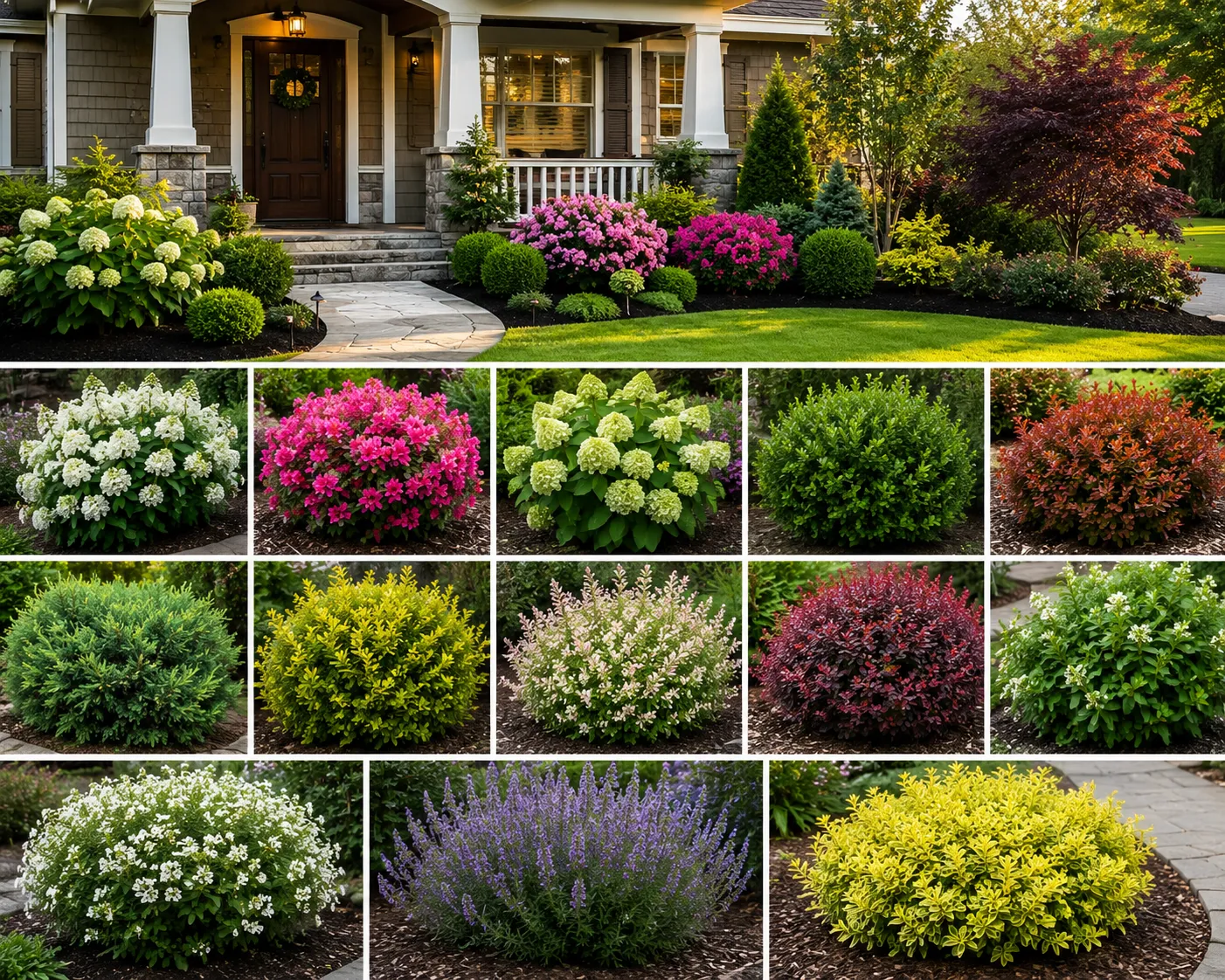
The 13 best shrubs for a front yard are Hydrangea, Boxwood, Azalea, Spirea, Knockout Rose, Dwarf Arborvitae, Rhododendron, Nandina, Weigela, Mugo Pine, Abelia, Dwarf Fothergilla, and Japanese Pieris. Each one delivers reliable curb appeal, tolerates typical front-yard conditions, and stays manageable without constant pruning.
Front yards create the first impression of a home. The right shrubs do 3 things at once: add structure that holds the bed together year-round, deliver seasonal flowers or color that makes the property stand out, and stay proportional to the house so windows don’t get blocked and the facade doesn’t get swallowed.
This guide gives exact heights in feet and meters, USDA hardiness zones, bloom seasons, sun and soil needs, and a layered planting strategy for 13 shrubs — so every plant earns its place in the bed.
Quick Reference: All 13 Front Yard Shrubs at a Glance
| # | Shrub | Type | Height | USDA Zones | Best Feature |
|---|---|---|---|---|---|
| 1 | Hydrangea | Deciduous | 3–10 ft (0.9–3 m) | 3–9 | Big blooms, long season |
| 2 | Boxwood | Evergreen | 1–8 ft (0.3–2.4 m) | 5–9 | Year-round structure |
| 3 | Azalea | Evergreen/Dec. | 2–8 ft (0.6–2.4 m) | 4–9 | Spring color burst |
| 4 | Spirea | Deciduous | 2–6 ft (0.6–1.8 m) | 3–9 | Easy, fast, colorful |
| 5 | Knockout Rose | Deciduous | 3–4 ft (0.9–1.2 m) | 4–9 | Continuous blooms |
| 6 | Dwarf Arborvitae | Evergreen | 2–4 ft (0.6–1.2 m) | 3–7 | No-prune structure |
| 7 | Rhododendron | Evergreen | 4–10 ft (1.2–3 m) | 4–8 | Bold spring flowers |
| 8 | Nandina | Semi-evergreen | 2–8 ft (0.6–2.4 m) | 6–9 | 4-season color |
| 9 | Weigela | Deciduous | 3–6 ft (0.9–1.8 m) | 4–8 | Hummingbird magnet |
| 10 | Mugo Pine | Evergreen | 3–5 ft (0.9–1.5 m) | 2–8 | Rugged, alpine look |
| 11 | Abelia | Semi-evergreen | 3–6 ft (0.9–1.8 m) | 5–9 | Fragrant, long blooms |
| 12 | Dwarf Fothergilla | Deciduous | 2–3 ft (0.6–0.9 m) | 4–8 | Best fall color |
| 13 | Japanese Pieris | Evergreen | 4–6 ft (1.2–1.8 m) | 5–8 | Spring chains of flowers |
How to Choose Front Yard Shrubs That Actually Work
4 decisions determine whether a front yard shrub succeeds or fails. Make these before buying anything.
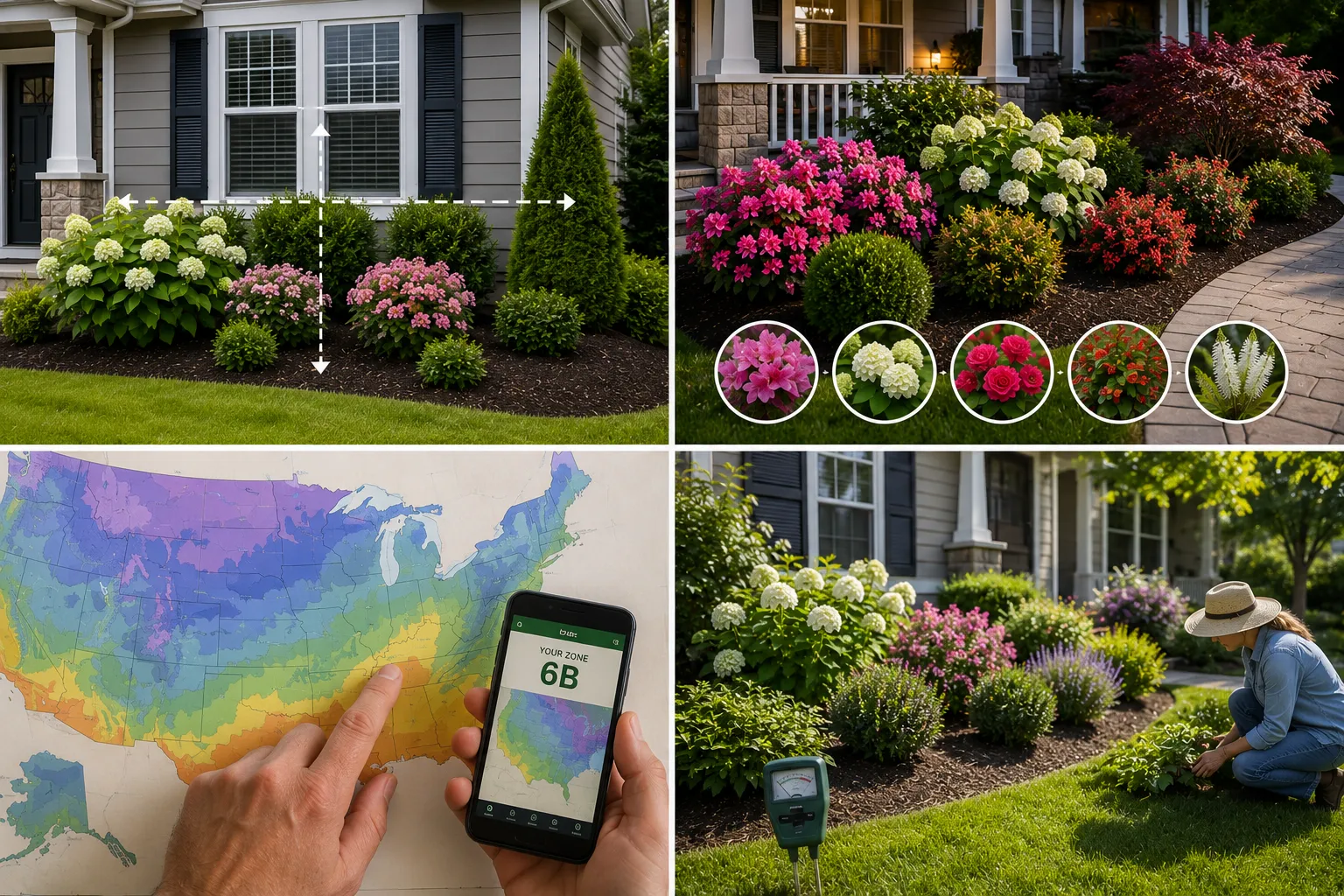
1. Match Height to House Scale
Front yard shrubs should never grow taller than the bottom of the nearest window. A 4 ft (1.2 m) window sill means your foundation shrubs cap out at 3–3.5 ft (0.9–1 m). Taller shrubs belong at corners, flanking the entry, or as back-layer anchors — never planted flat across the bed.
Measure window height before selecting any shrub. Then check the mature height on the label — not the nursery tag height, which reflects a 2-year-old plant, not a 10-year-old one.
2. Plan for 3-Season Interest
The strongest front yard shrub beds combine 3 types: spring bloomers like Azalea and Rhododendron, summer performers like Hydrangea and Knockout Rose, and fall-to-winter interest plants like Nandina and Fothergilla. A bed that peaks in May and looks dead by September misses 6 months of curb appeal.
3. Confirm Your USDA Zone
Every shrub has a minimum cold temperature it survives. Planting outside that range means winter dieback or complete loss. Find your exact zone at zonedgarden.com — then cross-check every shrub before purchasing. Most continental US gardens fall in zones 4–8.
4. Assess Sun and Soil
Front yards typically get 5–8 hours of direct sun daily. Most flowering shrubs need 6+ hours. Rhododendron and Azalea prefer 3–5 hours with afternoon shade. Soil drainage matters equally — standing water after rain signals the need for raised beds or drainage amendments before planting any shrub.
One rule that prevents most front yard planting mistakes
Never plant a shrub within 3 ft (90 cm) of the house foundation without knowing the mature spread. Most nursery shrubs look small at purchase. A ‘compact’ Hydrangea can reach 5 ft (1.5 m) wide in 5 years.
The 3-Layer Front Yard Planting System
Professional front yard planting uses 3 height layers from the house outward. This creates depth, prevents a flat-line look, and keeps every shrub visible from the street.
| Layer | Height Range | Example Shrubs | Placement |
|---|---|---|---|
| Back/Tall | 5–10 ft (1.5–3 m) | Hydrangea, Rhododendron, Viburnum | Behind windows, property corners |
| Mid | 3–5 ft (0.9–1.5 m) | Spirea, Weigela, Abelia, Knockout Rose | Flanking entry, along walkways |
| Front/Low | 1–3 ft (0.3–0.9 m) | Dwarf Boxwood, Mugo Pine, Fothergilla | Under windows, bed edges |
Plant the tallest layer against the house wall. Move to mid-height shrubs in the middle of the bed. Finish with low-growing shrubs or perennials at the bed edge. Every shrub then gets light and full visibility from the street — no plant gets swallowed by the one behind it.
Design tip
Use odd-numbered groupings — 3 or 5 of the same shrub rather than 1 or 2. A single Knockout Rose looks accidental. Three in a row reads as intentional design and has far more visual weight from the street.
13 Best Shrubs for Front Yard — Full Details
1. Hydrangea (Hydrangea species)
Hydrangea delivers the largest, most dramatic flowers of any front yard shrub. Blooms range from 6–12 inches (15–30 cm) across in white, pink, blue, purple, and red — colors determined by soil pH in macrophylla varieties. Panicle Hydrangeas (H. paniculata) are the best choice for front yards: full-sun tolerant, cold-hardy to zone 3, and reliable regardless of pruning timing.
- Hardiness — USDA Zones: 3–9 depending on variety — Panicle types zone 3, Bigleaf types zone 5
- Size — Height: 3–10 ft (0.9–3 m); dwarf varieties like Little Lime stay 3–5 ft (0.9–1.5 m)
- Light — Sun: Full sun to partial shade — Panicle types handle full sun best
- Bloom — Bloom time: July through September, longest bloom season of any front yard shrub
- Planting — Spacing: 4–6 ft (1.2–1.8 m) for individual specimens; 3 ft (90 cm) for hedge effect
Use Panicle Hydrangeas as back-layer anchors at corners or flanking the entry. Use dwarf varieties like ‘Little Lime’ or ‘Bobo’ under windows where height must stay under 4 ft (1.2 m). For zone-specific Hydrangea variety guides matched to your growing region, the plant guides by USDA zone at ZonedGarden.com help narrow the right cultivar.
Pruning note
Prune Panicle Hydrangeas in early spring before new growth starts. Prune Bigleaf types immediately after flowering — never in fall or winter, or you remove next year’s bloom buds.
2. Boxwood (Buxus species)
Boxwood is the foundation plant standard for structure and year-round greenery. Dense, fine-textured evergreen foliage holds a tidy shape with minimal pruning. Use Boxwood to anchor a bed, line a walkway, frame an entry, or create a low formal hedge along the property edge.
- Hardiness — USDA Zones: 5–9; American Boxwood (B. sempervirens) more cold-hardy than English types
- Size — Height: 1–8 ft (0.3–2.4 m); dwarf varieties like ‘Green Gem’ stay 2–3 ft (0.6–0.9 m)
- Light — Sun: Full sun to partial shade — tolerates north-facing beds better than most evergreens
- Speed — Growth rate: 3–6 inches (7–15 cm) per year — slowest on this list
- Planting — Spacing: 18–24 inches (45–60 cm) for formal hedge; 2–3 ft (60–90 cm) for individual plants
Choose blight-resistant varieties like ‘NewGen Independence’ or ‘Sprinter Boxwood’ (Buxus microphylla ‘Sprinter’) — boxwood blight has spread significantly across the eastern US and can devastate unprotected plantings. In high-deer zones, Boxwood resists browsing better than most alternatives.
3. Azalea (Rhododendron species — Azalea group)
Azalea covers a front yard in color for 2–4 weeks in spring — more intensely than any other shrub on this list. Bloom colors include white, pink, red, orange, purple, and bi-color. Most Azaleas are evergreen in zones 6–9, providing year-round foliage structure with a spectacular spring show.
- Hardiness — USDA Zones: 4–9 depending on variety; Encore Azaleas rebloom in fall in zones 6–9
- Size — Height: 2–8 ft (0.6–2.4 m); dwarf compact types stay 2–3 ft (0.6–0.9 m)
- Light — Sun: Partial shade to partial sun — 3–5 hours direct sun with afternoon shade protection
- Soil — Soil: Acidic, well-drained, organically rich — pH 4.5–6.0 is optimal
- Bloom — Bloom time: Mid-spring (April–May); Encore series reblooms September–October
Plant Azaleas on the east or north side of the house where morning sun and afternoon shade are natural. Pair with Hydrangeas and Boxwood — Azalea blooms in spring before Hydrangea peaks, extending the color season by 8–10 weeks.
4. Spirea (Spiraea species)
Spirea is the most underrated front yard shrub. It grows fast, blooms heavily, tolerates poor soil, and handles neglect better than almost anything else on this list. Double Play and Little Princess varieties stay compact at 2–3 ft (0.6–0.9 m), making them ideal for mid-layer planting under windows.
- Hardiness — USDA Zones: 3–9 — among the hardiest flowering shrubs available
- Size — Height: 2–6 ft (0.6–1.8 m); ‘Double Play Candy Corn’ stays 2–3 ft (0.6–0.9 m)
- Light — Sun: Full sun to partial shade — blooms most heavily in 6+ hours of direct sun
- Bloom — Bloom time: Spring-blooming types flower May–June; ‘Double Play’ reblooms into September
- Speed — Growth rate: 1–2 ft (30–60 cm) per year — fills a bed in 2–3 seasons
Spirea tolerates clay soil, drought, and air pollution better than Hydrangea or Azalea — making it the right choice for front yards near busy roads or in urban settings with compacted soil.
5. Knockout Rose (Rosa ‘Radrazz’ and series)
Knockout Rose blooms from May through frost — 6 straight months of flowers with zero deadheading required. The original Knockout Rose reaches 3–4 ft (0.9–1.2 m) tall and wide, fits the mid-layer perfectly, and resists black spot disease that historically made roses high-maintenance.
- Hardiness — USDA Zones: 4–9
- Size — Height: 3–4 ft (0.9–1.2 m) for original; Double Knockout slightly larger at 4–5 ft (1.2–1.5 m)
- Light — Sun: Full sun — minimum 6 hours daily for best bloom production
- Bloom — Bloom time: May through November in most zones — the longest-blooming shrub on this list
- Varieties — Colors: Red, pink, coral, white, yellow; plant 3 of the same color for maximum visual impact
Knockout Roses attract hummingbirds and butterflies throughout summer. Prune hard in early spring — cut back to 18–24 inches (45–60 cm) — to promote vigorous new growth and the heaviest bloom set of the season.
6. Dwarf Arborvitae (Thuja occidentalis dwarf varieties)
Dwarf Arborvitae adds evergreen structure to front yard beds without the maintenance burden of full-size trees. Globe and pyramidal forms stay naturally compact — 2–4 ft (0.6–1.2 m) — without any pruning. Mr. Bowling Ball, Tater Tot, and Danica are the 3 most reliable dwarf varieties for front yard use.
- Hardiness — USDA Zones: 3–7
- Size — Height: 2–4 ft (0.6–1.2 m) depending on variety; Danica globe stays 18–24 inches (45–60 cm)
- Light — Sun: Full sun to partial shade
- Speed — Growth rate: 2–4 inches (5–10 cm) per year — virtually no pruning required
- Design — Use in groups of 3 for corner anchors or equally spaced along a foundation bed for repetition
Dwarf Arborvitae pairs well with Knockout Roses and Spirea — evergreen structure holds the bed in winter while deciduous companions bloom in spring and summer. In high-deer zones, apply deer repellent through the first 2 winters or choose a deer-resistant alternative like Mugo Pine.
7. Rhododendron (Rhododendron species)
Rhododendron produces spectacular clusters of bell-shaped flowers in spring — each cluster reaching 6–10 inches (15–25 cm) across in white, pink, red, lavender, or purple. The bold, leathery evergreen leaves provide structure year-round and create a formal, polished look along the front of the house.
- Hardiness — USDA Zones: 4–8 depending on variety; ‘PJM’ type hardy to zone 4
- Size — Height: 4–10 ft (1.2–3 m); compact varieties like ‘Nova Zembla’ stay 4–6 ft (1.2–1.8 m)
- Light — Sun: Partial shade — 4–5 hours of morning sun with afternoon shade protection
- Soil — Soil: Acidic (pH 4.5–6.0), well-drained, organically rich — same conditions as Azalea
- Bloom — Bloom time: April through June depending on variety
Plant Rhododendrons on the north or east side of the house. Afternoon sun in zones 6–8 causes leaf scorch and bud drop. Mulch heavily — 3 inches (7.5 cm) — to keep roots cool and moist. Rhododendron and Azalea share identical soil requirements, so they belong in the same bed.
8. Nandina — Heavenly Bamboo (Nandina domestica)
Nandina is the only shrub on this list that delivers 4 distinct seasons of interest from a single plant. New growth emerges bronze-red in spring. Foliage turns green in summer. White flower clusters appear in mid-summer. Brilliant red berries and crimson foliage carry through fall into winter. Compact varieties like ‘Fire Power’ (2–3 ft / 0.6–0.9 m) and ‘Obsession’ fit front yard beds without overpowering nearby plantings.
- Hardiness — USDA Zones: 6–9
- Size — Height: 2–8 ft (0.6–2.4 m); ‘Fire Power’ stays 2–3 ft (0.6–0.9 m)
- Light — Sun: Full sun to full shade — the most light-adaptable shrub on this list
- Wildlife — Berries attract cedar waxwings, robins, and bluebirds through winter
- Note — Non-invasive dwarf varieties are recommended; avoid straight species in warm climates where it can self-seed aggressively
Use compact Nandina as a mid-layer accent — plant 3 together between larger evergreens for year-round color variation. The contrast between Nandina’s fine-textured foliage and the bold leaves of Rhododendron or Hydrangea creates natural visual interest without any additional maintenance.
9. Weigela (Weigela florida)
Weigela produces trumpet-shaped flowers in pink, red, or white from late spring into early summer. The blooms attract hummingbirds reliably — more so than almost any other front yard shrub. Modern varieties like ‘My Monet’ and ‘Spilled Wine’ stay compact at 2–3 ft (0.6–0.9 m) with colorful foliage that remains ornamental all season even after flowering ends.
- Hardiness — USDA Zones: 4–8
- Size — Height: 2–6 ft (0.6–1.8 m); compact varieties stay 2–3 ft (0.6–0.9 m)
- Light — Sun: Full sun to partial shade — best bloom in 6+ hours
- Bloom — Bloom time: May–June primary; some varieties like ‘Sonic Bloom’ rebloom into fall
- Feature — Foliage in dark burgundy, variegated cream-green, or bright lime — ornamental all season
Prune Weigela immediately after the main spring flush — this encourages a fall rebloom on reblooming varieties and keeps the shrub compact without losing next year’s flower buds.
10. Mugo Pine (Pinus mugo)
Mugo Pine brings a rugged, architectural presence to front yard beds that no deciduous shrub provides. Dense, dark-green needles hold their color through the coldest winters. Mugo Pine grows to 3–5 ft (0.9–1.5 m) in 10 years — slow enough that most homeowners never need to prune it.
- Hardiness — USDA Zones: 2–8 — one of the most cold-hardy shrubs on this list
- Size — Height: 3–5 ft (0.9–1.5 m) at 10 years; ‘Mops’ variety stays under 3 ft (0.9 m)
- Light — Sun: Full sun — requires minimum 6 hours
- Soil — Soil: Tolerates poor, rocky, sandy, and dry soils — the most soil-adaptable evergreen here
- Water — Drought tolerant once established — needs no supplemental water after year 2 in most climates
Mugo Pine works best as a front-layer or mid-layer anchor in beds with loose, naturalistic planting styles. The chunky, dark-green mass contrasts effectively with fine-textured Spirea or the airy flower heads of Panicle Hydrangea. In zone 2–4 gardens where most ornamental shrubs struggle, Mugo Pine remains one of the few reliable performers.
11. Abelia (Abelia x grandiflora)
Abelia blooms from June through October — one of 3 shrubs on this list that reliably delivers 5 months of continuous flowers. Small, tubular white to pinkish blooms cover arching branches from early summer until the first hard frost. Glossy foliage is semi-evergreen in zones 6–9 and fully deciduous in zone 5, turning bronze-purple in fall.
- Hardiness — USDA Zones: 5–9
- Size — Height: 3–6 ft (0.9–1.8 m); ‘Kaleidoscope’ stays 2–3 ft (0.6–0.9 m)
- Light — Sun: Full sun to partial shade
- Bloom — Bloom time: June through October — second-longest bloom season on this list after Knockout Rose
- Wildlife — Fragrant flowers attract butterflies and hummingbirds reliably through summer
Abelia tolerates drought, heat, and humidity better than Hydrangea or Rhododendron — making it the better choice for zone 7–9 gardens in the Southeast and Southwest where summer stress is a major factor.
12. Dwarf Fothergilla (Fothergilla gardenii)
Dwarf Fothergilla is the best native shrub for front yard use in zones 4–8. It delivers 3 distinct seasons of interest: white bottlebrush flowers in April before leaves emerge, deep green foliage through summer, and the most vibrant fall color of any compact shrub — simultaneous orange, red, and yellow on the same plant.
- Hardiness — USDA Zones: 4–8
- Size — Height: 2–3 ft (0.6–0.9 m) tall and equally wide — fits perfectly under most windows
- Light — Sun: Full sun to partial shade — fall color intensifies significantly with more sun
- Soil — Soil: Acidic, well-drained, moist — similar to Azalea and Rhododendron
- Bloom — Bloom time: April — flowers appear before the leaves, maximizing visual impact
Use Dwarf Fothergilla as a front-layer planting in beds that already contain Azalea or Rhododendron — all 3 share identical soil needs. Group 3 Fothergilla plants together at a bed corner or along the walkway for maximum fall color impact. This shrub remains significantly underused given its performance.
13. Japanese Pieris (Pieris japonica)
Japanese Pieris (Pieris japonica) produces cascading chains of white or pink bell-shaped flowers in early spring — February through April depending on zone — making it the earliest-blooming shrub on this list. New growth emerges bright red or bronze, creating a two-tone effect that persists for 4–6 weeks. Dark, glossy leaves provide bold evergreen structure year-round.
- Hardiness — USDA Zones: 5–8
- Size — Height: 4–6 ft (1.2–1.8 m); ‘Mountain Fire’ and ‘Cavatine’ stay under 4 ft (1.2 m)
- Light — Sun: Partial shade — 3–5 hours of direct sun, protected from hot afternoon exposure
- Soil — Soil: Acidic, well-drained, moist — pH 5.0–6.0 optimal
- Bloom — Bloom time: February–April — earlier than Azalea and Rhododendron
Japanese Pieris pairs naturally with Azalea and Rhododendron — identical soil requirements, complementary bloom timing, and contrasting leaf texture. The Pieris blooms first (February–April), Azalea follows (April–May), and Rhododendron extends into June — creating a 4-month continuous spring flower sequence from 3 plants with a single soil preparation.
4 Most Common Front Yard Shrub Mistakes
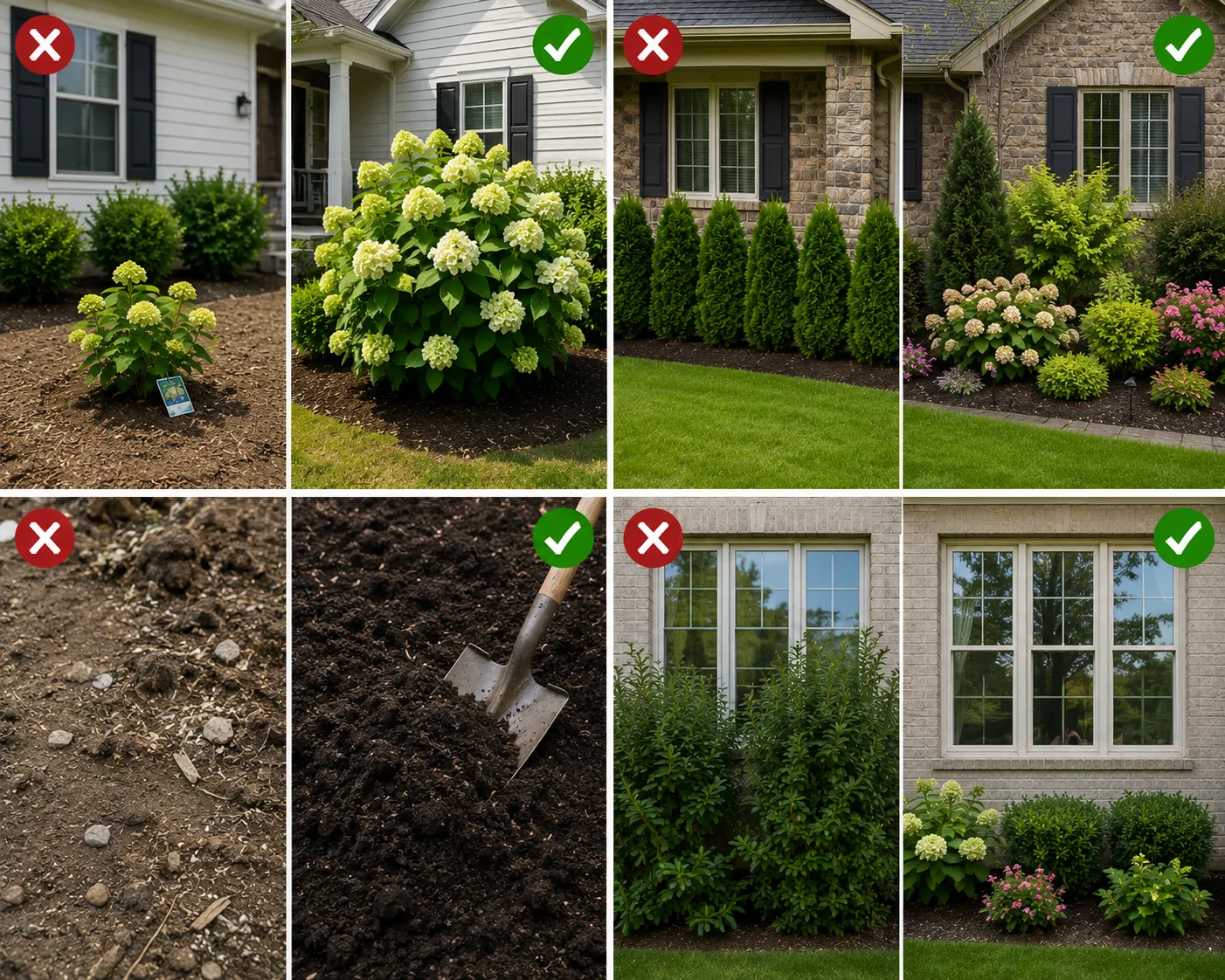
1. Buying for Current Size Instead of Mature Size
A nursery tag showing 3 ft (0.9 m) height reflects a 2-year-old plant. That same Hydrangea reaches 6 ft (1.8 m) in 7 years. Always design to the 10-year mature size, not the purchase size. Check the mature spread too — a shrub 6 ft (1.8 m) wide needs 3 ft (0.9 m) clearance from the house and 3 ft (0.9 m) from its neighbor.
2. Planting a Single Species Across the Entire Bed
An all-Boxwood or all-Arborvitae front yard offers zero seasonal color and zero resilience. One disease — boxwood blight, for example — wipes out the entire planting. Combine at least 3 species: one structural evergreen, one spring bloomer, and one summer-through-fall performer.
3. Skipping Soil Prep
Front yard soil near a foundation is often compacted backfill left over from construction. It drains poorly, contains debris, and has low organic matter. Dig each bed 18 inches (45 cm) deep, remove construction material, and amend with 4 inches (10 cm) of compost before planting. This single step determines whether plants thrive or merely survive.
4. Ignoring Mature Height Relative to Windows
Shrubs that grow above window sills block natural light, create hiding spots against the house, and reduce perceived home size from the street. Keep foundation bed shrubs — those planted within 6 ft (1.8 m) of the house — at a mature height 12 inches (30 cm) below the nearest window sill.
Frequently Asked Questions
What shrubs look good in front of a house year-round?
Boxwood, Dwarf Arborvitae, Nandina, Japanese Pieris, and Mugo Pine all provide year-round interest. Boxwood and Arborvitae hold green structure through all 4 seasons. Nandina adds foliage color changes and winter berries. Japanese Pieris delivers early spring flowers plus bold evergreen leaves. Mugo Pine provides dark green needle texture that never fades.
What are the best low-maintenance front yard shrubs?
Mugo Pine, Knockout Rose, Dwarf Arborvitae, and Spirea are the 4 lowest-maintenance options. Mugo Pine needs no pruning once established. Knockout Rose needs only one hard cut in spring. Dwarf Arborvitae grows slowly enough that trimming is optional. Spirea tolerates neglect, poor soil, and irregular watering better than any other flowering shrub on this list.
How far from the house should front yard shrubs be planted?
Plant shrubs at least 3 ft (90 cm) from the foundation wall. For large shrubs like Rhododendron or Hydrangea with a 5–6 ft (1.5–1.8 m) mature spread, start 4–5 ft (1.2–1.5 m) from the house. Shrubs planted too close trap moisture against the foundation, restrict airflow, and damage siding over time.
What front yard shrubs grow in full shade?
Azalea, Rhododendron, Japanese Pieris, and Nandina tolerate 3–4 hours of direct sun with shade for the remainder of the day. No front yard shrub performs well in dense full shade — beds facing north or shaded heavily by large trees need light-tolerant varieties and will see reduced flowering compared to plants in partial sun.
What shrubs stay small for front yard beds?
Dwarf Fothergilla (2–3 ft / 0.6–0.9 m), Dwarf Arborvitae ‘Danica’ (18–24 inches / 45–60 cm), compact Spirea ‘Double Play’ (2–3 ft / 0.6–0.9 m), and Nandina ‘Fire Power’ (2–3 ft / 0.6–0.9 m) all stay under 3 ft (0.9 m) at maturity — ideal for planting under windows or at the front edge of foundation beds.
Can I mix evergreen and deciduous shrubs in the same front yard bed?
Yes — mixing evergreen and deciduous shrubs produces the strongest front yard beds. Evergreens hold structure in winter when deciduous shrubs lose their leaves. Deciduous shrubs deliver better flowers, fall color, and seasonal change that evergreens alone never provide. A 60/40 mix of evergreen to deciduous gives year-round structure with seasonal interest.
Final Thoughts
The 13 best shrubs for a front yard give you structure, color, and seasonal interest across all four seasons — but the right 3 to 5 of those 13 depends entirely on your USDA zone, sun exposure, and how much maintenance you want to do.
Start with a structural evergreen — Boxwood, Dwarf Arborvitae, or Mugo Pine — then layer in a spring bloomer like Azalea or Rhododendron and a summer-to-fall performer like Hydrangea or Knockout Rose. Those 3 categories cover the full year and give every front yard a professional, intentional look regardless of the house style.
For plant recommendations matched to your exact USDA growing zone, browse the zone-by-zone plant guides at ZonedGarden.com — every shrub, perennial, and tree matched to the climate conditions in your specific region.