For gardeners working on patios, lawns, and home garden beds, succulent soil is a fast-draining growing medium made mostly of mineral particles like pumice, perlite, or coarse sand, blended with a small amount of organic matter. This gardening mix keeps water moving through the pot instead of sitting around the roots, which is the single biggest factor in keeping a succulent alive in any home garden setting. Most succulent deaths trace back to one cause: garden soil that holds too much water for too long.
This gardening guide breaks down the exact ratios, ingredients, and regional adjustments that separate garden soil that works from soil that slowly kills your plants, whether you’re tending a patio container, a lawn border, or an indoor garden.
What Is Succulent Soil?
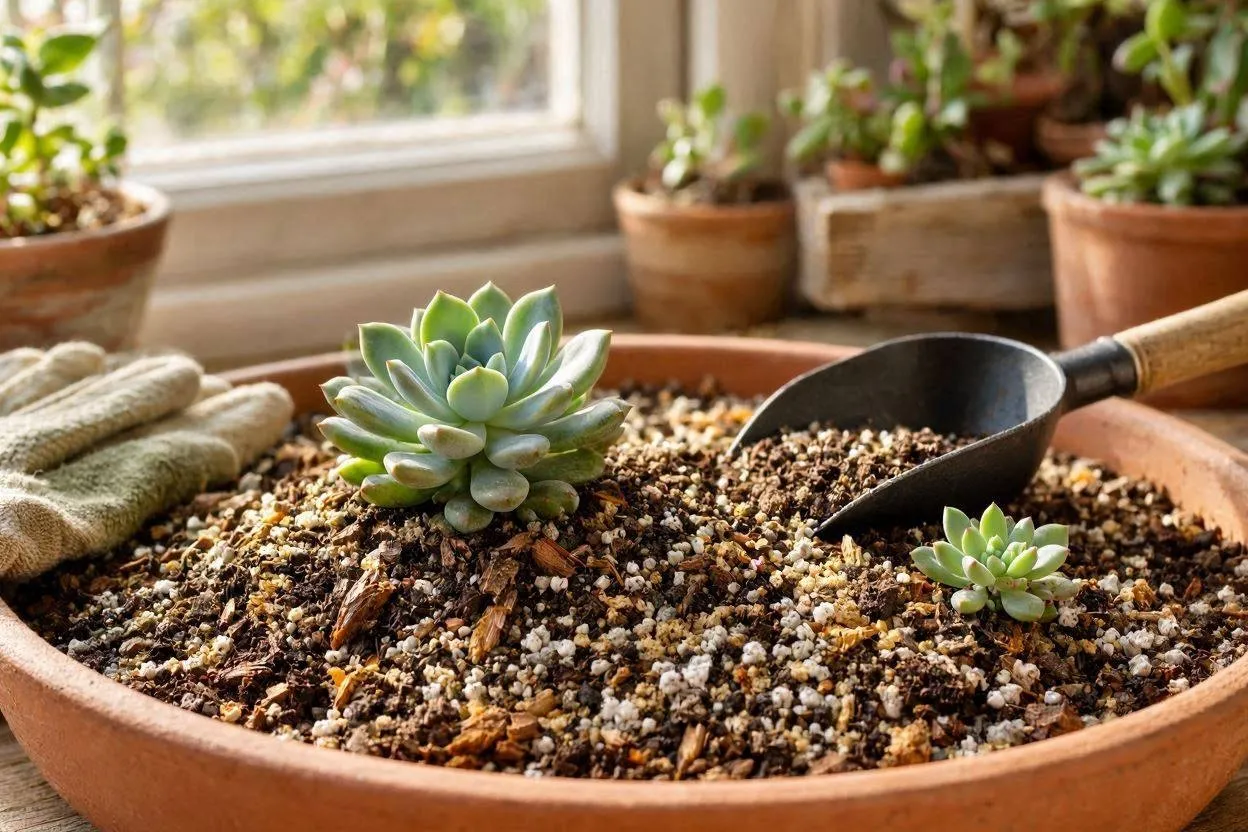
Succulent soil is a mineral-heavy growing medium designed to drain water within seconds and dry out completely between waterings. Unlike topsoil or standard potting mix, it contains little organic matter, so it doesn’t compact, doesn’t hold moisture, and doesn’t starve roots of oxygen.
Succulents evolved in arid regions where rainfall is rare and soil drains fast. Their roots expect short bursts of moisture followed by long dry stretches. A soil mix that mimics this pattern keeps roots healthy. A soil mix that holds water the way garden soil does will rot those same roots within weeks.
Why Regular Potting Soil Fails Succulents
Regular potting soil contains peat moss, compost, and other organic materials that absorb and hold water for days. Succulent roots sitting in that moisture lose access to oxygen, and oxygen-starved roots become an easy target for common rot-causing fungi that thrive in soggy garden soil.
Once root rot sets in, the plant can’t pull up water or nutrients even though the soil around it is soaked. Leaves turn translucent, mushy, or yellow, and by the time those symptoms show on top, the damage below the soil line is often already severe. Switching to a fast-draining mix before symptoms appear is far easier than reviving a plant after rot takes hold.
The Ideal Succulent Soil Mix Ratio
The ideal succulent soil ratio is 60% mineral material to 40% organic material by volume. This ratio gives roots enough grit to drain fast while still holding onto a small reserve of nutrients and moisture between waterings.
That ratio isn’t fixed for every situation. Humid climates need less organic matter because the air itself keeps soil from drying out fast. Dry climates can support a bit more organic matter since evaporation happens quickly regardless.
| Climate Type | Mineral % | Organic % | Best For |
| Arid (Southwest US) | 70% | 30% | Outdoor cactus, agave |
| Moderate (most regions) | 60% | 40% | General succulents, indoor pots |
| Humid (Southeast US) | 80% | 20% | Echeveria, Haworthia, moisture-sensitive types |
Soil pH matters just as much as texture. Succulents grow best in soil with a pH between 5.5 and 7.0. Outside that range, roots have a harder time taking up the nutrients they need, even when those nutrients are already in the soil.
Best Ingredients for Succulent Soil in Home Gardening
Perlite vs. Pumice vs. Coarse Sand
Perlite is a lightweight volcanic glass that improves drainage and aeration, but it floats to the surface over time and can wash out during heavy watering. Pumice does the same job without floating, since its density is closer to soil, which makes it the more durable long-term choice. Coarse sand adds weight and stability to top-heavy plants like tall cacti, but builder’s sand or play sand should be avoided because their fine particles compact soil instead of opening it up.
Organic Components
Coconut coir holds a small amount of moisture without compacting, breaks down slowly, and resists the mold issues that peat moss sometimes develops. Pine bark fines add structure and slow-release nutrients as they decompose. Peat moss works but retains more water than coir, so it needs to be counterbalanced with a higher mineral ratio.
Additives
Turface and calcined clay give soil extra structure and help it resist compaction over multiple growing seasons. A small amount of activated charcoal reduces bacterial buildup and controls odor in indoor pots. Dolomite lime raises pH slightly in mixes that lean too acidic from heavy peat or bark content.
3 Proven DIY Succulent Soil Recipes for the Home Garden
| Recipe | Ingredients (by parts) | Cost per Batch | Difficulty |
| Beginner Mix | 3 parts potting soil, 2 parts perlite, 1 part coarse sand | $6 | Easy |
| Gritty Mix | 1 part Turface, 1 part crushed granite, 1 part pine bark fines | $12 | Moderate |
| Budget Mix | 2 parts coconut coir, 2 parts pumice, 1 part perlite | $9 | Easy |
The Beginner Mix works well for casual houseplant collections and forgives occasional overwatering. The Gritty Mix, popularized by succulent grower communities, suits collectors with dozens of plants who want maximum root health and are comfortable watering more frequently. The Budget Mix balances cost and performance for anyone repotting several plants at once without buying specialty ingredients.
Best Store-Bought Succulent Soil Mixes (2026)
| Product | Drainage Grade | Price per Quart | Best For |
| Bonsai Jack Succulent & Cactus Mix | A+ | $1.10 | Serious collectors, rare species |
| Hoffman Organic Cactus & Succulent Soil | B+ | $0.60 | Beginners, budget shoppers |
| Black Gold Cactus Mix | A- | $0.85 | Indoor pots, mixed collections |
| Miracle-Gro Cactus, Palm & Citrus Mix | B | $0.55 | Large outdoor planters |
Pre-mixed bags save time but should still be checked for drainage speed before use. Pour water through a sample straight from the bag; if it pools instead of running through within a few seconds, add extra perlite or pumice before potting.
Succulent Soil Ratios for Your Garden Zone
Soil that works great in one garden can fail in another simply because of humidity and how fast water evaporates. The table below adjusts mineral-to-organic ratios for gardeners in different parts of the country.
| Garden Region | Example States | Recommended Ratio | Watering Frequency |
| Zones 8-10 (Arid Southwest) | Arizona, Nevada, New Mexico | 70% mineral / 30% organic | Every 10-14 days |
| Zones 6-8 (Moderate/Coastal) | California, Texas, North Carolina | 60% mineral / 40% organic | Every 12-18 days |
| Zones 7-9 (Humid Southeast) | Florida, Georgia, Louisiana | 80% mineral / 20% organic | Every 18-21 days |
| Zones 3-6 (Northern/Indoor-Heavy) | Minnesota, Michigan, New York | 65% mineral / 35% organic | Every 14-21 days |
Gardeners in humid zones need higher mineral content and longer gaps between waterings, since ambient moisture already slows evaporation from the pot.
Does Soil Mix Change by Succulent Species?
Yes, soil composition should shift based on the species. Some succulents need almost pure mineral content, while others tolerate a bit more organic matter without issue.
| Species | Mineral % | Notes |
| Lithops | 90% | Extremely rot-prone; minimal organic matter |
| Haworthia | 75% | Prefers slightly more moisture retention than most |
| Echeveria | 70% | Standard succulent ratio works well |
| Cactus (Opuntia, etc.) | 80% | Needs excellent drainage and sharp grit |
| Sedum | 65% | More forgiving of organic-heavy mixes |
Lithops in particular rot fast in anything less than a near-pure mineral mix, since their thick, water-storing leaves already hold enough moisture reserve without help from the soil.
Indoor, Outdoor & Patio Gardening: Succulent Soil by Setting
Indoor pots dry out slower due to lower light and airflow, so indoor mixes should lean toward 70% or higher mineral content even in mild climates. Outdoor planters benefit from added weight, since coarse sand or small gravel keeps pots from tipping in wind while still draining fast. Terrariums need the most mineral-heavy mix of all, often 85% or higher, because closed or semi-closed containers trap humidity with no airflow to help soil dry between waterings.
Signs Your Succulent Soil Is Wrong

Six signs point to soil that isn’t right for succulents.
- Water pools on the surface instead of draining within seconds
- Leaves turn mushy, translucent, or yellow at the base
- Soil stays damp for more than a week after watering
- A sour or musty smell rises from the pot
- Fungus gnats appear repeatedly around the soil surface
- Roots look black or brown and pull apart easily when the plant is removed from the pot
Any one of these signs justifies repotting into a faster-draining mix before the damage spreads further.
How to Repot a Succulent in Your Garden With the Right Soil
- Remove the plant from its current pot and gently shake off the old soil from the roots
- Trim away any black, mushy, or rotted roots with clean scissors
- Let the roots air-dry for 24 to 48 hours before repotting, which allows any cut surfaces to callus over
- Choose a terracotta or unglazed ceramic pot with a drainage hole, since porous material wicks away excess moisture faster than plastic
- Fill the pot one-third full with the new succulent soil mix
- Position the plant and fill in around the roots, pressing lightly without compacting the mix
- Wait 5 to 7 days before the first watering to let any remaining root damage heal
Common Mistakes When Mixing Succulent Soil
Even experienced gardeners make errors that quietly undermine drainage. Five mistakes account for most failed succulent soil mixes.
- Using fine sand instead of coarse sand. Builder’s sand and play sand pack tightly between other particles and choke off airflow, which defeats the purpose of adding sand in the first place.
- Skipping the organic component entirely. A mix that’s 100% mineral drains fast but starves roots of the small nutrient reserve they need between fertilizing sessions.
- Reusing old soil without amending it. Soil that has already gone through one or two growing seasons compacts and loses drainage capacity, even if it looked fine in the bag originally.
- Guessing ratios instead of measuring. A rough approach leads to inconsistent batches, especially when repotting multiple plants at once.
- Ignoring pot material. Even a well-mixed soil drains slower in glazed ceramic or plastic than it does in terracotta, so the pot itself needs to match the soil’s drainage profile.
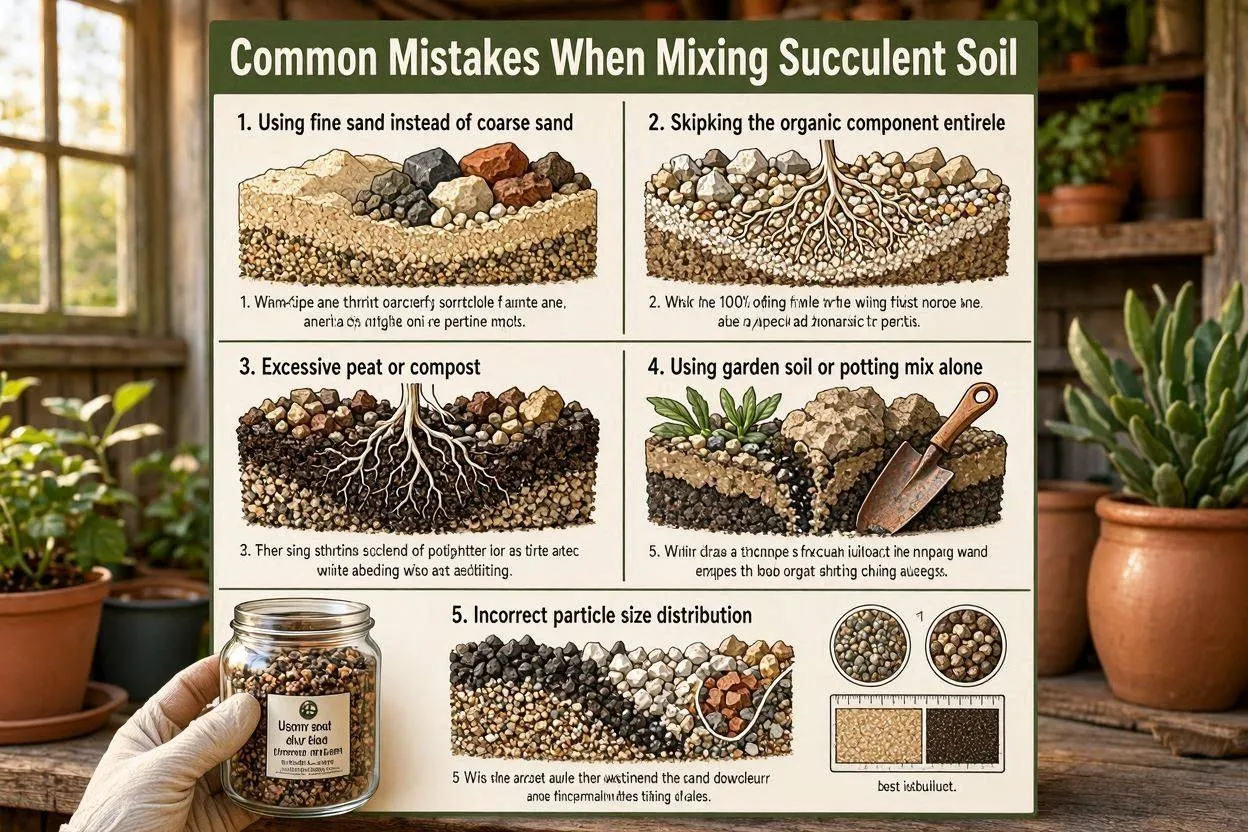
Correcting these five habits improves outcomes more than switching brands or chasing a perfect recipe ever will.
How Container Size Affects Soil Performance
Larger pots hold more soil volume, and more soil volume takes longer to dry out between waterings. A succulent moved from a 2-inch pot into a 6-inch pot needs a mix with a higher mineral ratio than before, since the extra soil mass otherwise stays wet for days longer than the roots can tolerate. Shallow, wide pots dry faster than tall, narrow ones because more soil surface is exposed to air. Matching pot depth to root size, rather than sizing up for aesthetics, keeps the soil-to-root ratio in the plant’s favor.
FAQs
Can I use regular potting soil for succulents?
No. Regular potting soil retains too much moisture and causes root rot within weeks.
What is the best pH for succulent soil?
A pH between 5.5 and 7.0 supports nutrient absorption without encouraging fungal growth.
How often should I replace succulent soil?
Replace succulent soil every 12 to 18 months as organic matter breaks down and compacts.
Can succulents grow in sand alone?
No. Pure sand lacks the organic matter succulents need for micronutrients and root anchorage.
Is perlite or pumice better for succulent soil?
Pumice outperforms perlite because it doesn’t float to the surface and holds its structure longer.
Final Thoughts
The right succulent soil comes down to drainage speed, mineral content, and matching the mix to climate and species. A 60-40 mineral-to-organic ratio works as a reliable starting point, with adjustments based on humidity, plant type, and container setting. Getting the soil right from the start prevents the majority of succulent problems before they ever begin.
Ready to repot your succulents the right way? Shop pre-mixed succulent soil blends built to the exact ratios in this guide, with fast, reliable drainage for healthier roots.