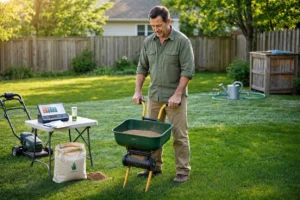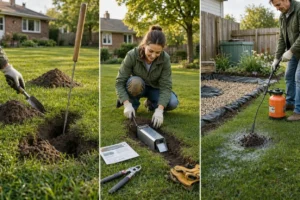
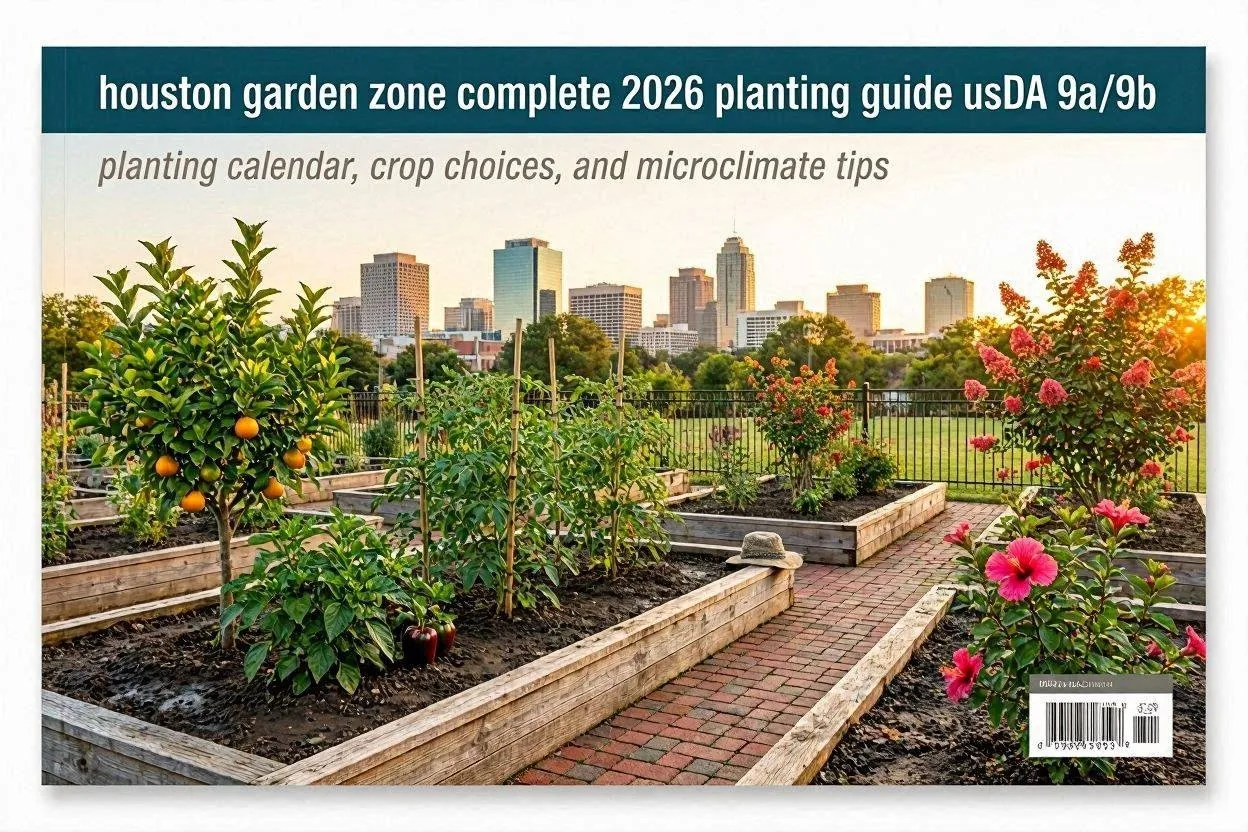
Houston sits in USDA Hardiness Zone 9a and 9b, with winter lows between 20°F and 30°F (-6.7°C to -1.1°C). Most of the city shifted from 9a to 9b after the 2023 USDA map update, giving gardeners more flexibility with cold-sensitive plants. Inner-loop neighborhoods and coastal pockets near Clear Lake run closer to 9b, while outer suburbs like Katy and Tomball stay in the cooler 9a range.
That single number doesn’t tell the whole story, though. Houston’s real growing conditions come from three things: relentless summer heat, thick humidity, and clay soil that fights you at every turn. This guide covers all of it, with exact dates and numbers you can act on today.
What Zone Is Houston In? 9a vs 9b Explained
Houston falls into two hardiness zones: 9a and 9b. Zone 9a covers areas with winter lows of 20°F to 25°F, including Katy, Tomball, and outer Harris County. Zone 9b covers 25°F to 30°F, including the Inner Loop, Montrose, Rice Village, and coastal areas near Galveston Bay.
The zone number measures one thing only: the coldest temperature your area typically hits in winter. It doesn’t measure summer heat, humidity, or rainfall. A plant labeled “hardy to Zone 9” might still die in Houston’s July heat, even though it survives every Houston winter.
Check your exact zone through the USDA’s Plant Hardiness Zone Lookup tool using your ZIP code. Don’t rely on a citywide label — a five-degree difference between 9a and 9b changes which plants survive an average winter without protection.
Houston’s Growing Conditions: Heat, Humidity, and Clay
Three factors shape every planting decision in Houston.
Summer heat. Houston records over 100 days a year above 90°F (32°C). Peak summer heat index often crosses 105°F (40.6°C). Plants need afternoon shade or heat-tolerant genetics to survive June through September without daily stress.
Humidity. Relative humidity stays between 70% and 90% for most of the year. This level of moisture in the air raises fungal disease risk — powdery mildew, black spot, and root rot all spread faster in humid conditions than in dry climates.
Clay soil. Local gardeners call it “gumbo” — a heavy, alkaline clay with a pH between 7.2 and 8.0. Dry gumbo cracks and repels water. Wet gumbo turns into dense mud that suffocates roots. Fix it by removing the top 12 to 18 inches of native soil in planting beds and replacing it with a mix of 50% screened topsoil, 30% composted mulch, and 20% expanded shale. This costs roughly $3 to $5 per square foot for a standard raised bed, depending on local supplier pricing.
Test soil pH once a year with a digital meter. Apply elemental sulfur in fall if pH reads above 7.5, and give it three to four months to work before spring planting.
2026 Planting Calendar for Houston
Houston supports three separate growing seasons: cool, warm, and tropical. Use this table to time your planting.
| Season | Months | What to Plant |
| Cool Season | October–February | Kale, broccoli, cauliflower, spinach, carrots, garlic, onions |
| Warm Season | February–May | Tomatoes, peppers, squash, beans, cucumbers, basil |
| Tropical Season | June–September | Okra, sweet potatoes, roselle hibiscus, yard-long beans |
Last frost date for 2026 falls around late January to early February. First frost typically arrives in early December. This gives Houston a frost-free growing window of roughly 300 days — one of the longest in the continental United States.
Start tomato and pepper seeds indoors in January, then transplant outdoors after the last frost. Sow okra and sweet potatoes directly into soil once nighttime temperatures stay above 65°F (18°C), usually by early June.
Best Plants for the Houston Garden Zone
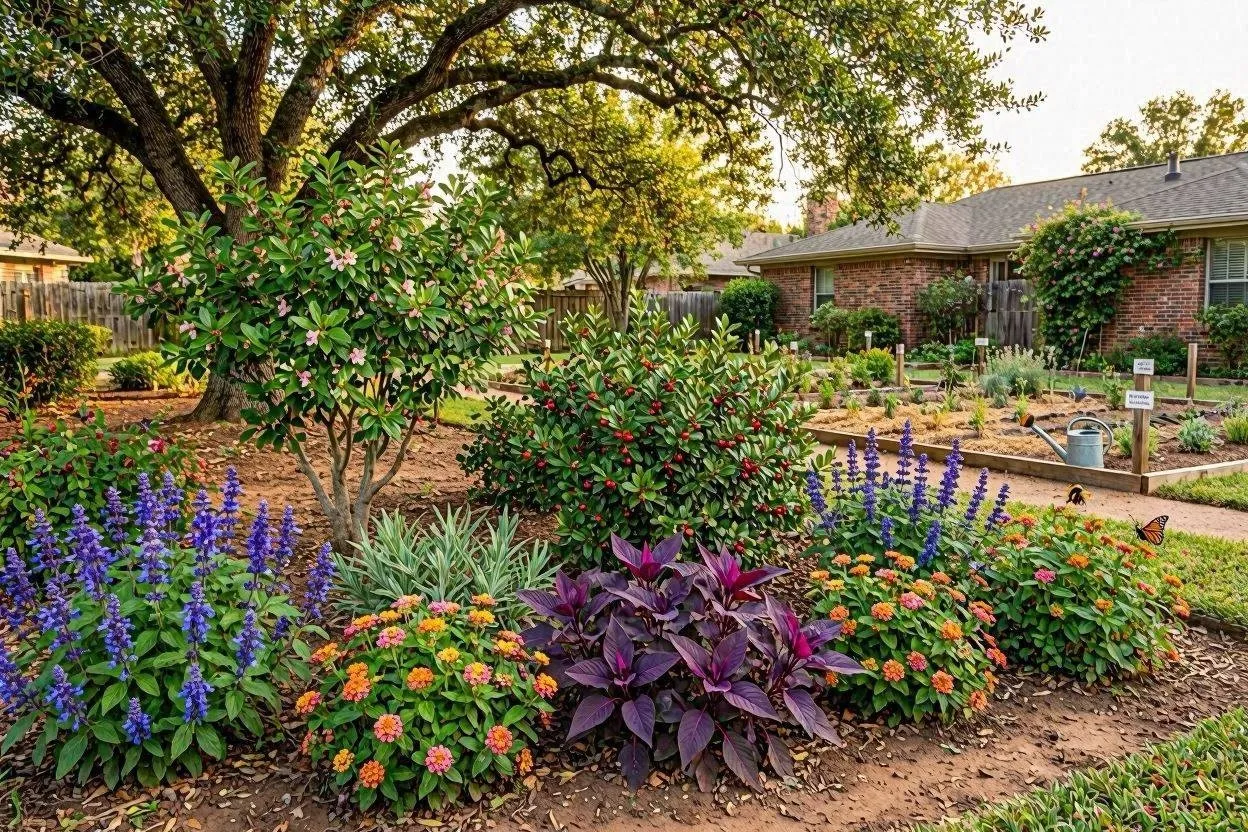
Native and heat-adapted plants outperform imported varieties in Houston’s climate.
Native trees: Live oak, Mexican plum, and yaupon holly tolerate drought once established and support local pollinators.
Perennials: Black and Blue salvia, Miss Huff lantana, and Purple Heart handle full sun, high humidity, and short dry spells without extra care.
Texas Superstar plants: This Texas A&M-endorsed program tests plants specifically for Texas heat and soil conditions. Look for the Texas Superstar label at local nurseries — every plant on the list has passed multi-year field trials in Texas climates, including Houston’s.
Avoid: Japanese maple (scorches within hours of direct afternoon sun), boxwood (root rot in clay soil), and most hybrid tea roses (require weekly fungicide in Houston humidity).
Hurricane Season Garden Prep
Houston’s growing season overlaps entirely with Atlantic hurricane season, which runs June 1 through November 30. Most gardening guides skip this. It shouldn’t be skipped.
Move container plants indoors or into a garage before sustained winds exceed 40 mph. Stake young trees with three-point guying systems, not single stakes — single stakes snap under sustained gusts. Harvest ripe vegetables early if a storm is forecast within 48 hours; wind and flooding destroy unpicked crops fast.
After a storm, check soil drainage within 24 hours. Standing water for more than two days drowns root systems in most vegetable beds. Clear debris from drainage paths immediately to prevent this.
Container and Balcony Gardening for Apartment Dwellers
Houston has one of the highest apartment-density populations among major U.S. cities, yet most gardening guides ignore container growers entirely.
Use pots with drainage holes and elevate them on pot feet to prevent water pooling during heavy rain. A 5-gallon container works for most herbs and peppers; tomatoes need at least 15 gallons for full root development. Choose a soilless potting mix with bark fines and perlite — bagged “garden soil” retains too much moisture for Houston’s humidity and causes root rot in containers.
Balconies facing west take the harshest afternoon sun. Move heat-sensitive plants like lettuce and cilantro to east-facing spots, or use 30% shade cloth during July and August.
Water Restrictions and Xeriscaping
The City of Houston and surrounding municipal utility districts issue watering restrictions during drought conditions, typically limiting outdoor watering to two designated days per week. Check your local water provider’s current schedule before planning an irrigation system.
Xeriscaping — landscaping with drought-tolerant plants and reduced turf area — cuts outdoor water use by 50% to 75% compared to traditional lawns. Replace high-water zones with native grasses like Gulf muhly or groundcovers like frogfruit, both of which survive Houston’s dry spells without supplemental irrigation once established.
5 Mistakes Houston Gardeners Make
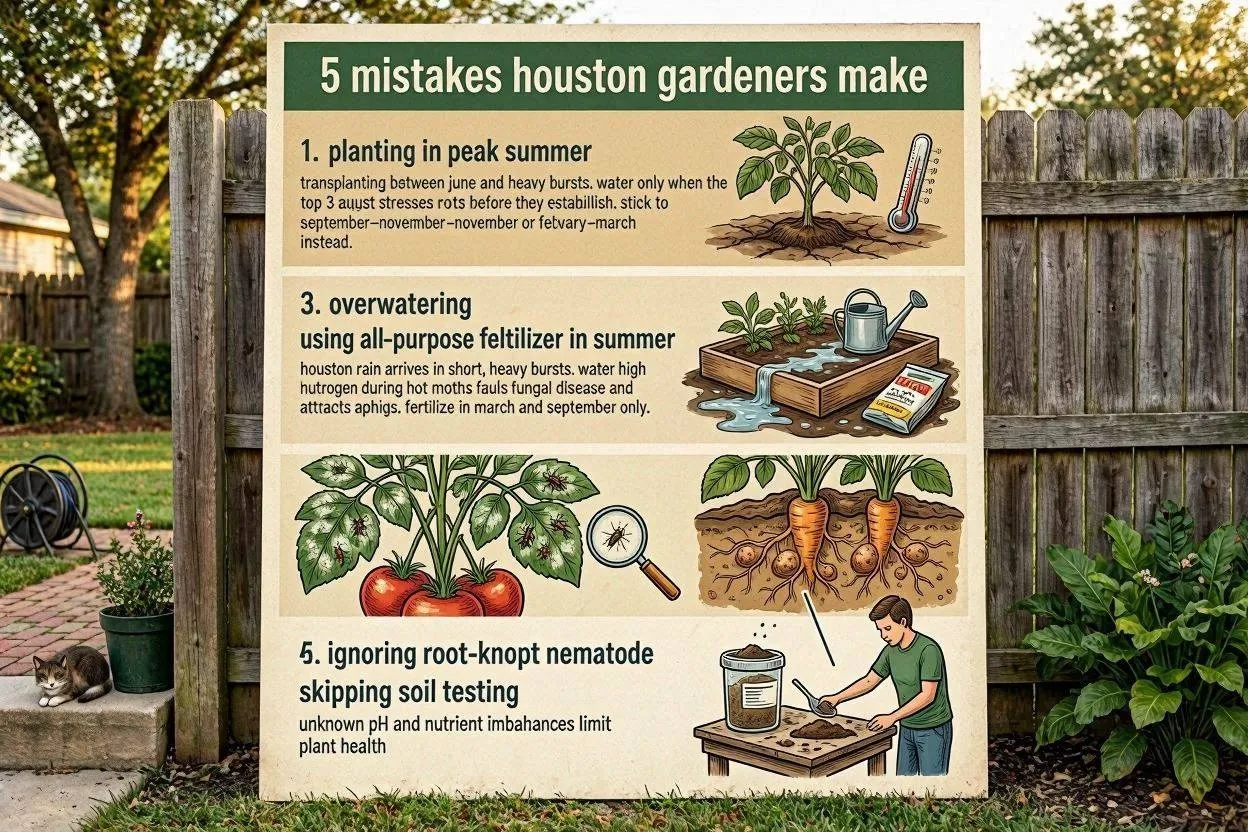
- Planting in peak summer. Transplanting between June and August stresses roots before they establish. Stick to September–November or February–March instead.
- Overwatering. Houston rain arrives in short, heavy bursts. Water only when the top 3 inches of soil feel dry.
- Using all-purpose fertilizer in summer. High nitrogen during hot months fuels fungal disease and attracts aphids. Fertilize in March and September only.
- Ignoring root-knot nematodes. These microscopic pests stunt tomatoes, okra, and peppers in Houston’s warm soil. Rotate crops yearly and plant marigolds as a fall cover crop to reduce populations.
- Skipping soil tests. Houston’s alkaline clay causes chlorosis in acid-loving plants like azaleas and blueberries. Test pH before planting, not after leaves turn yellow.
Best Lawn Grass for Houston Yards
St. Augustine grass performs best in Houston lawns. It tolerates partial shade, handles heavy clay soil, and survives Houston’s humidity better than most warm-season grasses. Mow St. Augustine at 3 to 4 inches to promote deep roots and crowd out weeds.
Three other options suit specific yard conditions:
- Bermuda grass needs full sun and frequent mowing but handles heat and foot traffic better than any other lawn grass in the region.
- Zoysia grass grows slower than Bermuda, resists drought well, and turns brown earlier in fall.
- Centipede grass tolerates shade but struggles in Houston’s heavy clay and occasional winter freezes.
Fertilize lawns lightly in March and September. Skip fertilizer entirely during peak summer heat — high nitrogen in July and August weakens grass and invites fungal disease. Watch for armyworms in St. Augustine lawns during September; they strip grass blades within days if left untreated.
Patio and Outdoor Living Spaces
A Houston garden doesn’t stop at the planting bed. Patios, raised beds near seating areas, and shaded outdoor rooms extend the growing space and make the yard usable through the hottest months.
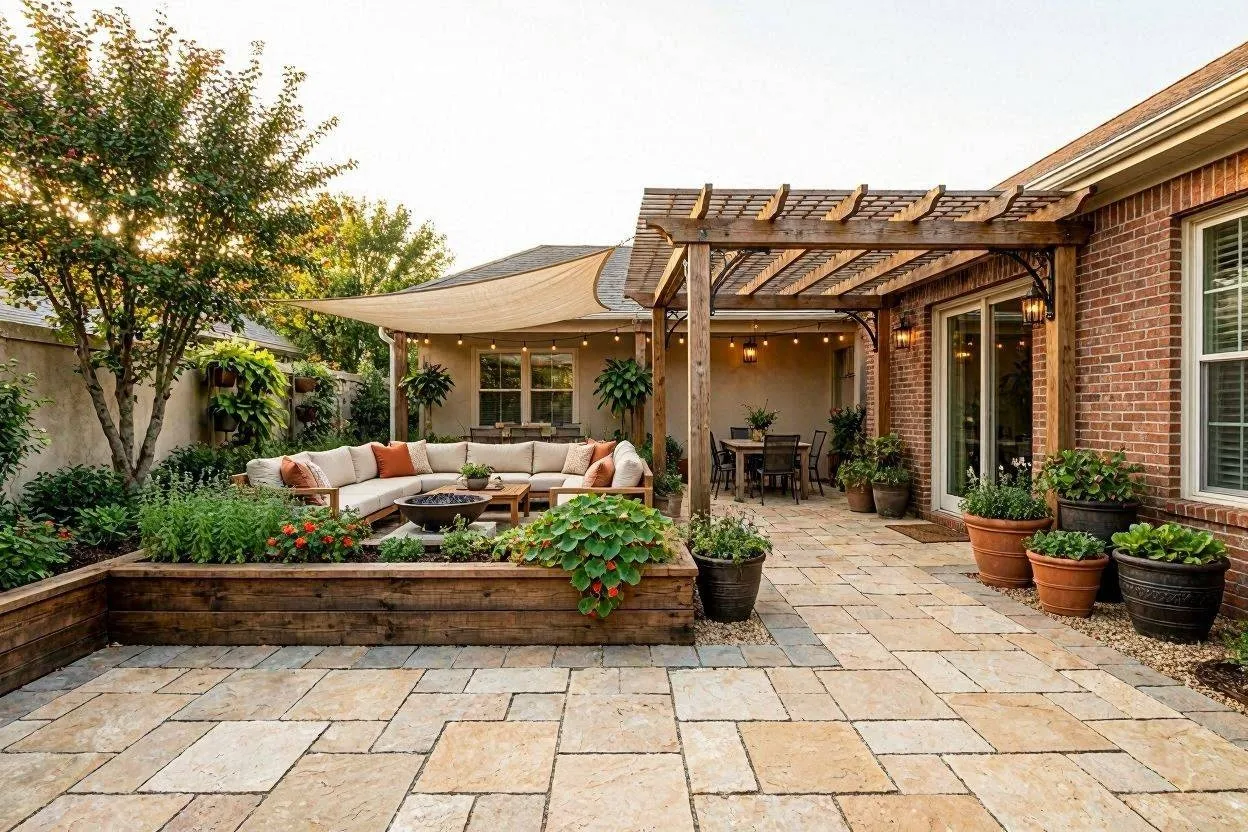
Position patio containers on the east or north side of the house to avoid direct afternoon sun. Pergolas and shade sails reduce surface temperature on patio furniture and container soil by several degrees, which matters when Houston pavement regularly exceeds 140°F (60°C) in July.
Add raised planters along patio edges for herbs and compact vegetables — basil, thyme, and peppers all do well within arm’s reach of an outdoor kitchen or dining area. Use permeable pavers instead of solid concrete near garden beds; permeable surfaces reduce runoff into clay soil and help prevent the standing water that drowns nearby plant roots after heavy rain.
For year-round outdoor comfort, pair patio landscaping with drought-tolerant border plants like Purple Heart or Gulf muhly grass, both of which need minimal maintenance and tolerate reflected heat from concrete or pavers.
Local Resources
The Harris County office of Texas A&M AgriLife Extension offers free soil testing, Master Gardener consultations, and localized planting advice specific to Houston’s microclimates. This is a stronger source for hyper-local guidance than any national gardening database, since recommendations come from agents working directly with Harris County soil and weather data.
Start Your Houston Garden This Season
Houston’s 300-day growing season rewards gardeners who plant with the local climate instead of against it. Test your soil pH this week, pick one native plant from the list above, and mark your calendar for the next planting window. Small, consistent action beats a perfect plan you never start.
Frequently Asked Questions
What zone is Houston in for gardening?
Houston is in USDA Hardiness Zone 9a and 9b, with winter lows between 20°F and 30°F (-6.7°C to -1.1°C).
Can I grow vegetables year-round in Houston?
Yes. Houston supports three planting cycles — cool season, warm season, and tropical season — but no single crop grows through all three.
When is the last frost date in Houston?
Houston’s last frost typically falls in late January to early February, giving the region roughly 300 frost-free days per year.
Why does my soil stay hard and cracked in Houston?
Houston’s native “gumbo” clay has a pH of 7.2 to 8.0 and drains poorly. Amend it with topsoil, compost, and expanded shale before planting.
Do I need to protect plants during Houston winters?
Yes, for tender or tropical plants. Cover them with frost cloth during rare freezes below 20°F, even though hard freezes happen only once every two to three years.
Conclusion
Houston’s garden zone is 9a/9b, but the zone number is only the starting point. Heat, humidity, clay soil, and hurricane season shape every planting decision more than winter cold ever will. Gardeners who succeed here work with these conditions instead of fighting them — amending soil before planting, choosing native and heat-adapted species, timing crops around three distinct growing seasons, and protecting containers before storms hit.
The reward for that effort is a 300-day growing season, one of the longest in the United States. Few U.S. cities let gardeners harvest tomatoes in May, okra in July, and kale in December from the same yard. Start with one soil test and one native plant this week, and build from there.