Most people assume you need a tropical island to grow a banana tree. You don’t. Gardeners from Phoenix to Portland are growing them in backyards, on patios, even in garages over winter, and plenty are harvesting real fruit within a year or two. The trick isn’t luck. It’s matching the right variety to your climate and following a few care steps most guides skip entirely. This one covers all of them, from picking a cold-hardy cultivar to storing a dormant rhizome through a Midwest winter.
What You Need to Know Before Planting a Banana Tree
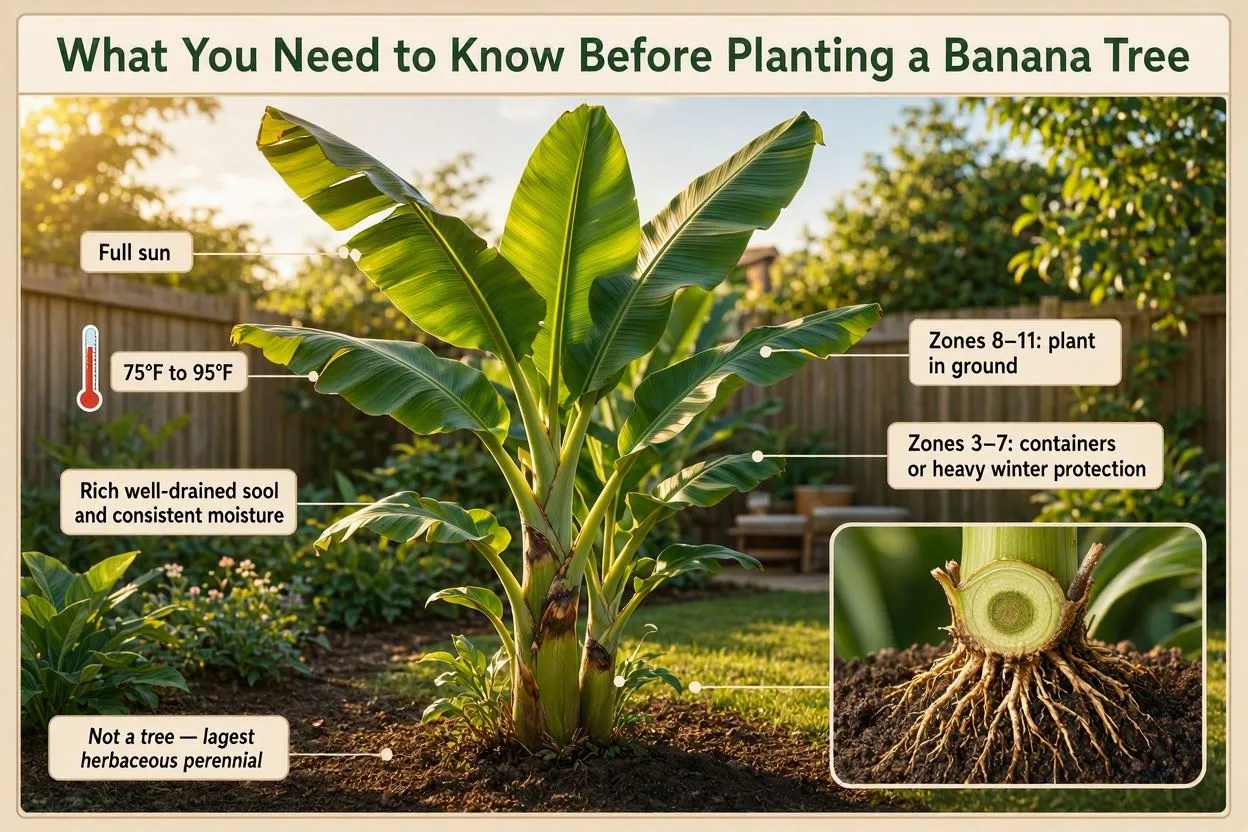
Bananas want full sun, temperatures between 75°F and 95°F (24°C to 35°C), rich well-drained soil, and consistent moisture. If you’re in USDA zones 8 through 11, you can plant straight in the ground. Zones 3 through 7 mean containers or heavy winter protection instead. Here’s a detail worth knowing before you start: a “banana tree” isn’t actually a tree. It’s the world’s largest herbaceous perennial, built from tightly rolled leaf sheaths called pseudostems rather than true wood. That distinction matters for care, because bananas can be cut to the ground and regrow from the rhizome, something a real tree simply can’t do. Fred, a home gardener in Tampa, planted a Dwarf Cavendish sucker in April 2024 and harvested his first bunch of 62 bananas fourteen months later, right in line with the plant’s usual growth cycle.
Which Banana Tree Varieties Grow Best in the USA
Dwarf Cavendish, Ice Cream (Blue Java), and Musa basjoo are the three most dependable choices for home growers in the US. Dwarf Cavendish stays compact at 4 to 6 feet (1.2 to 1.8 meters) and produces the familiar supermarket-style fruit within 9 to 12 months of steady warm growth. Ice Cream banana, also called Blue Java, tolerates temperatures down to 22°F (-5.5°C) at the root zone and produces fruit with a custardy texture that a lot of growers compare to vanilla ice cream. Musa basjoo, sometimes labeled the Japanese banana, will survive outdoor winters as far north as USDA zone 5 if you mulch the root zone heavily, but its fruit is seedy and not worth eating. Growers in Georgia, Texas, and coastal California tend to plant Ice Cream or Dwarf Cavendish; growers in zone 6 and colder usually go with Musa basjoo purely for the tropical look.
| Variety | Mature Height | Cold Tolerance | Fruit Quality |
| Dwarf Cavendish | 4–6 ft (1.2–1.8 m) | Damaged below 28°F (-2°C) | Excellent, supermarket-style |
| Ice Cream (Blue Java) | 12–20 ft (3.6–6 m) | Root-hardy to 22°F (-5.5°C) | Sweet, creamy texture |
| Musa basjoo | 10–14 ft (3–4.2 m) | Root-hardy to -10°F (-23°C) with mulch | Seedy, not edible |
| Lady Finger | 12–20 ft (3.6–6 m) | Damaged below 30°F (-1°C) | Sweet, thin-skinned |
What USDA Hardiness Zone Do You Need to Grow Bananas Outdoors?
Zones 8 through 11 support year-round outdoor growth. Zones 4 through 7 need containers or serious winter protection to keep a banana plant alive at all. If you’re gardening in zone 9 or 10, in Florida, southern Texas, or coastal Southern California, most varieties can stay in the ground uncovered. Zone 7 growers in places like North Carolina or Tennessee can keep Musa basjoo outdoors permanently if they mulch the base with 12 to 18 inches (30 to 45 centimeters) of straw or leaves before the first frost hits. Anyone in zone 6 or colder has a choice to make: dig up the rhizome each fall and store it indoors, or grow the whole plant in a container you can wheel inside. Neither is hard. Skipping winter prep in a cold zone, though, kills the plant outright in a single hard freeze.
How to Choose the Right Planting Site
Look for 8 to 12 hours of direct sunlight, shelter from strong wind, and at least 4 to 6 feet (1.2 to 1.8 meters) of clearance from structures. Wind shreds the big paddle-shaped leaves, which cuts into photosynthesis and slows fruit development, so a south-facing spot near a fence or wall often beats an open yard. Bananas also need elbow room: a single Cavendish clump can send up four or five suckers in its first season, and a crowded clump means smaller fruit because everything’s competing for the same nutrients. Skip low spots where water pools after rain. Standing water around the base leads to root rot within weeks. If you’ve got a spot near a pool or a south-facing patio wall, that little microclimate often runs several degrees warmer than the rest of the yard, which buys you extra weeks of growing season.
What Soil Does a Banana Tree Need?
Loose, fertile soil, a pH between 5.5 and 7.0, and drainage fast enough to clear a 1-foot (30-centimeter) test hole of water within an hour. Heavy clay suffocates banana roots. Pure sand drains too fast to hold onto the moisture and nutrients the plant needs during its rapid summer growth spurt. The sweet spot is native soil mixed with 30 to 40% organic matter, compost, aged manure, or leaf mold, worked into the top 12 to 18 inches (30 to 45 centimeters) before planting. One grower in Baton Rouge improved a heavy clay bed by mixing in 3 cubic feet (0.08 cubic meters) of compost per plant, and the following year’s bananas grew 30% taller than the crop planted in unamended soil. If you’re growing in a container, use a loam-based potting mix (something built on the John Innes No. 3 formula works well) blended with 20 to 30% coarse grit or perlite so it doesn’t waterlog.
How to Plant a Banana Tree Step by Step
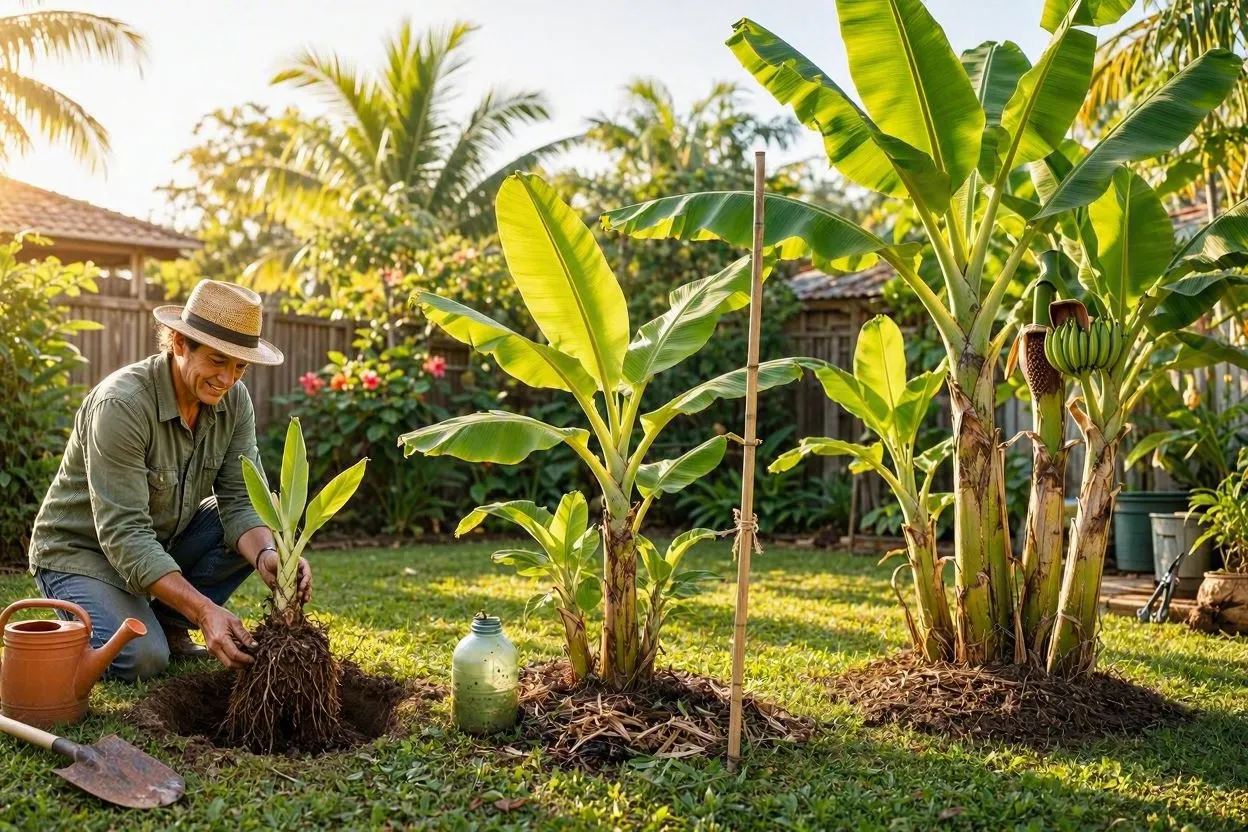
Dig a hole twice the width of the rootball, set the sucker or rhizome at the same depth it was growing before, and water thoroughly right after backfilling. Here’s the full sequence:
- Dig a hole 2 feet (60 centimeters) wide and 1.5 feet (45 centimeters) deep, loosening the soil at the bottom so roots can spread.
- Mix the excavated soil with compost at a 2:1 ratio of soil to compost.
- Trim off any damaged, discolored, or rotting sections from the sucker or rhizome before planting.
- Set the plant so its base sits level with the surrounding soil, not buried deeper than it grew in the nursery pot.
- Backfill halfway, water to settle the soil, then finish filling and water again.
- Apply a 3-inch (7.5-centimeter) mulch layer around the base, leaving a 3-inch (7.5-centimeter) gap at the stem so it doesn’t rot.
- Stake young plants taller than 3 feet (90 centimeters) if the site gets regular wind.
Plant outdoors from late spring through early summer, once soil temperatures sit reliably above 60°F (15.5°C). Bananas planted into cold soil tend to just sit there dormant for weeks instead of rooting in.
How Much Water Does a Banana Tree Need?
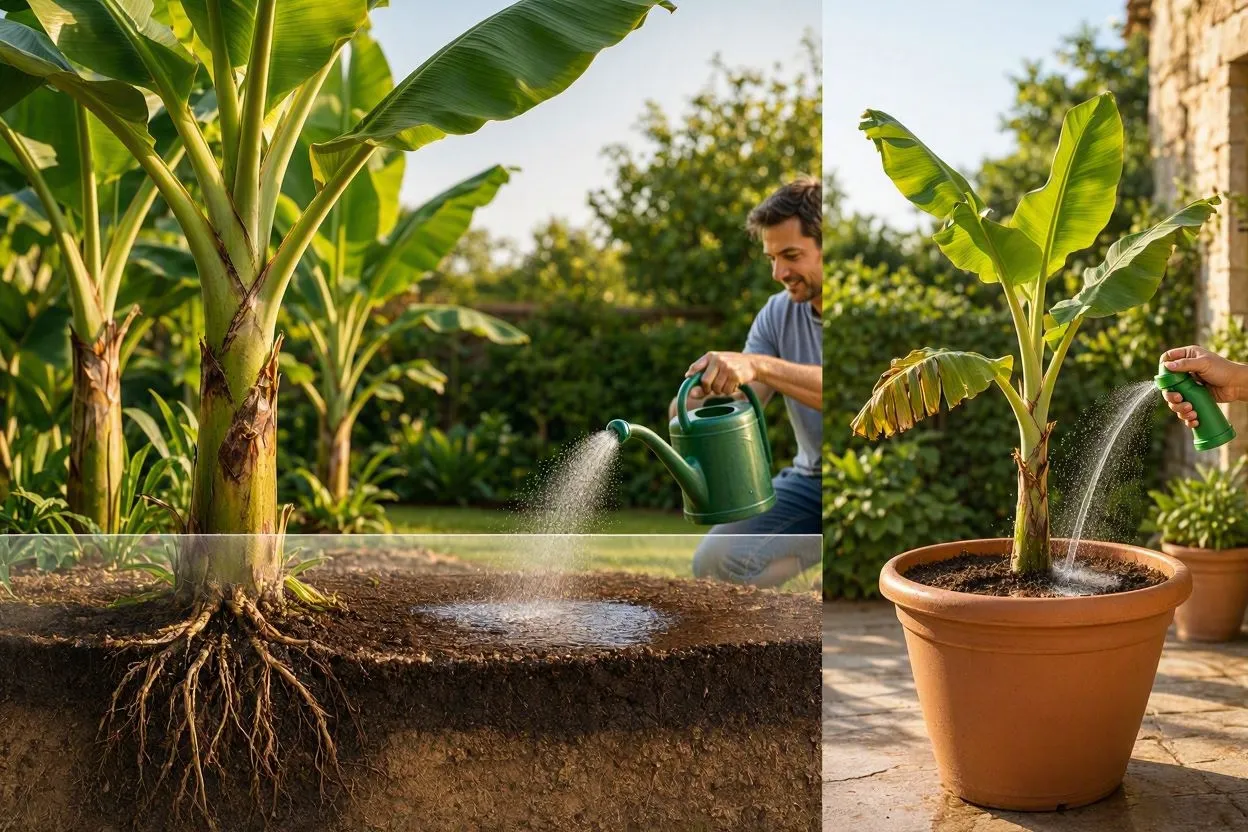
Aim for 1.5 to 2 inches (3.8 to 5 centimeters) of water a week during active growth, and daily watering for containers once summer heat climbs past 90°F (32°C). Banana roots sit shallow, in the top 12 inches (30 centimeters) of soil, so frequent moderate watering beats an occasional deep soak. If a plant wilts by midafternoon even though the soil’s still moist, that’s usually heat stress rather than drought, and misting the leaves helps more than adding water at the roots does. Cut back watering sharply once fall temperatures drop below 60°F (15.5°C); a dormant or slow-growing plant sitting in cold, wet soil develops root rot fast. One container grower in Phoenix found that watering twice a day in July kept the leaves from scorching, while the same plant only needed water twice a week by late October.
What Fertilizer Schedule Works Best for Banana Trees?
Feed monthly during the growing season with a high-nitrogen, high-potassium fertilizer, something close to an 8-2-8 or 3-1-6 ratio (nitrogen-phosphorus-potassium). Potassium specifically drives fruit and bunch development, so a feed that’s light on potassium tends to produce smaller, fewer bananas even on a plant that otherwise looks perfectly healthy. Apply granular fertilizer at the label rate every 4 to 6 weeks from April through September, then stop entirely once nighttime temperatures drop below 60°F (15.5°C). Container-grown bananas do better on a diluted liquid feed every two weeks instead, since potting soil holds fewer reserve nutrients than a garden bed does. And even though bananas are heavy feeders, don’t go over the label rate. Over-fertilizing burns the shallow root system and shows up as browning leaf tips within days.
How to Grow a Banana Tree in a Container
Use a container at least 15 gallons (57 liters), fill it with a loam-based potting mix, and plan to move it indoors before the first fall frost. Stick to a dwarf variety, Dwarf Cavendish or Dwarf Red Cavendish stay manageable at 4 to 6 feet (1.2 to 1.8 meters), while standard varieties will outgrow most pots within two seasons. Repot every spring into a container 2 to 3 inches (5 to 7.5 centimeters) wider, since root-bound bananas stop putting on new growth. During summer, keep the container somewhere it gets at least 8 hours of direct sun, then bring it in near a south-facing window once nights drop below 55°F (13°C). A grower in Portland kept a Dwarf Cavendish in a wheeled 20-gallon (76-liter) planter for three years, rolling it into a heated garage every November and back onto the deck every May. It finally fruited in year three.
How to Overwinter a Banana Tree in Cold Climates
You’ve got two options: cut it back and store the rhizome indoors, or wrap the stem and mulch heavily if it’s staying in the ground. If you’re keeping the plant in the ground through a zone 6 or 7 winter, cut the foliage down to the main stem in autumn, wrap the stem in burlap or fleece, then pile 12 to 18 inches (30 to 45 centimeters) of mulch or straw over the root zone. In zone 5 or colder, dig up the rhizome after the first light frost, shake off the excess soil, let it dry for 2 to 3 days, then store it in barely damp peat moss inside a container kept between 45°F and 55°F (7°C to 13°C) in a garage or basement. Only replant outdoors after the last frost date passes in spring. A gardener in Columbus, Ohio, stored a Musa basjoo rhizome this way for five straight winters, and the plant came back over 8 feet (2.4 meters) tall every single summer.
How to Propagate a Banana Tree From Suckers
Separate a sword sucker, one with its own root system, from the base of an established plant, and replant it as an independent specimen. Sword suckers have narrow pointed leaves and a thick base, and they root faster and fruit sooner than water suckers, which have broad leaves, shallow roots, and rarely amount to much. Wait until the sucker’s at least 12 inches (30 centimeters) tall before separating it; smaller suckers usually don’t have enough root mass to survive the transplant. Cut straight down between the sucker and the mother plant with a sharp spade, keeping as many roots attached as you can, then pot it into well-draining potting mix. New suckers typically show up around the base every 6 to 8 weeks during peak summer growth, so one healthy mother plant can hand you four to six new plants in a single season.
Common Banana Tree Pests and Diseases
The usual suspects are banana weevils, mealybugs, red spider mites, and Panama disease. Banana weevil larvae tunnel into the pseudostem and rhizome, and the plant wilts and topples even when the soil looks fine. Your best defense is just clearing away dead leaf debris, since that’s where adult weevils hide and lay eggs. Mealybugs and red spider mites go after indoor and container-grown bananas especially, showing up as white cottony clusters or fine webbing on the underside of leaves, and both respond to insecticidal soap applied every 5 to 7 days for three rounds. Panama disease is the serious one: a soil-borne fungus that blocks water transport inside the stem, with no cure once it’s established. An infected plant needs to come out, soil and all, or it’ll spread. Black sigatoka, a fungal leaf spot disease common in humid climates like Florida and the Gulf Coast, causes streaking and early leaf death, and you manage it by improving airflow around the plant and stripping infected leaves the moment you spot symptoms.
Why Is My Banana Tree Not Fruiting?
Nine times out of ten it comes down to insufficient warmth, too short a growing season, or a plant that just hasn’t matured yet. Bananas need 9 to 15 months of consistent temperatures above 60°F (15.5°C), ideally close to 80°F (27°C), before they’ll produce a flower stalk, so a plant grown outdoors in a short-season climate can run out of warm months each year before it ever gets there. A plant that gets cut back to the ground every winter, standard practice in zones 6 and 7, restarts its growth clock each spring and may need two or three full seasons to bank enough warm growing time to flower at all. Underfeeding causes a similar problem: a plant low on potassium pours its energy into leaves instead of fruit. If your plant is otherwise healthy, green, and putting out new leaves regularly, the fix is usually just more time in warmth, or a bigger pot with better sun.
How Long Does It Take to Grow a Banana Tree to Fruiting?
Figure 9 to 15 months of warm, consistent growth before the first flower stalk shows up, then another 2 to 4 months for the fruit to mature. Dwarf Cavendish grown in ideal conditions, full sun, 80°F to 90°F (27°C to 32°C), regular feeding, often fruits at the faster end of that range, around 9 to 12 months from planting a sucker. Plants in marginal climates, containers moved indoors for winter, or gardens that see the occasional cool snap usually take the full 15 months or longer. Once the flower stalk (called the bell) emerges and the hands of bananas form along it, the fruit needs 60 to 120 days to fill out and reach harvest size. Bananas are picked green and ripened off the plant rather than left to ripen in place, by the way, not a mistake growers make. After harvest, cut the mother stem back to ground level. It only produces one bunch in its lifetime before a new sucker takes over.
Banana Tree Care Checklist by Season
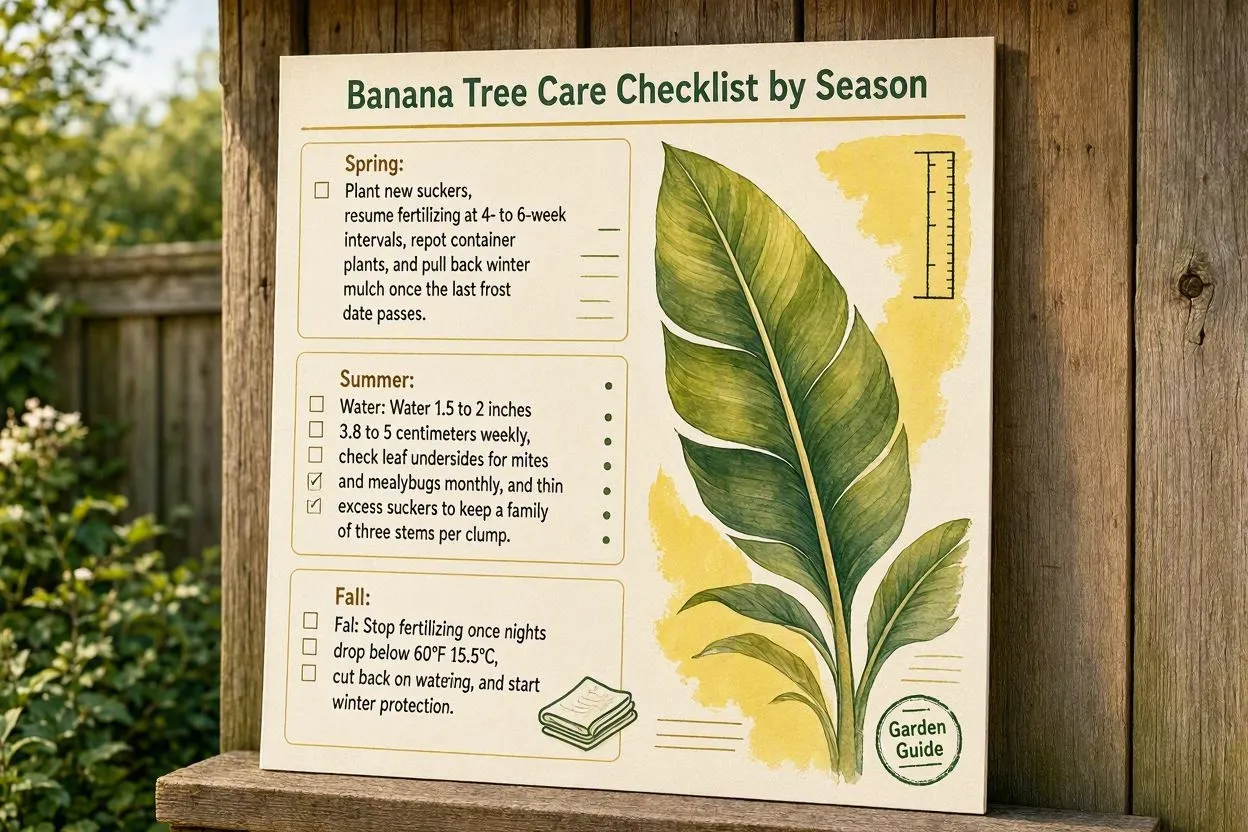
- Spring: Plant new suckers, resume fertilizing at 4- to 6-week intervals, repot container plants, and pull back winter mulch once the last frost date passes.
- Summer: Water 1.5 to 2 inches (3.8 to 5 centimeters) weekly, check leaf undersides for mites and mealybugs monthly, and thin excess suckers to keep a family of three stems per clump.
- Fall: Stop fertilizing once nights drop below 60°F (15.5°C), cut back on watering, and start winter protection or rhizome storage before the first frost.
- Winter: Store dormant rhizomes at 45°F to 55°F (7°C to 13°C), or keep in-ground plants wrapped and mulched, and check stored rhizomes monthly for rot.
FAQs
Does a banana tree come back every year?
Yes. The rhizome sends up new stems each year in USDA zones 7 through 11 as long as the roots survive winter, even if frost kills off all the foliage above ground.
Can you grow a banana tree from a store-bought banana?
No. Commercial bananas like Cavendish are seedless hybrids propagated only from suckers or tissue culture, not from anything found inside the fruit itself.
How tall does a banana tree get?
Anywhere from 4 feet (1.2 meters) for Dwarf Cavendish up to over 20 feet (6 meters) for Gros Michel, depending on variety and growing conditions.
Do banana trees need full sun or shade?
Full sun. Aim for 8 to 12 hours of direct light daily for strong fruit production and healthy pseudostem growth.
Is Epsom salt good for banana trees?
Yes. It supplies magnesium, apply 1 tablespoon (15 milliliters) per gallon of water monthly, and it corrects the yellowing between leaf veins that shows up in magnesium-deficient soil.
Conclusion
Growing a banana tree in a US garden really comes down to matching the variety to your climate: Dwarf Cavendish and Ice Cream for zones 8 through 11, Musa basjoo for anyone in zones 5 through 7 who wants the tropical look without expecting fruit. Soil rich in organic matter, about 2 inches (5 centimeters) of water weekly, and monthly potassium-heavy feeding during the growing season cover most of what a banana plant needs to thrive. Winter protection is what separates a plant that survives for years from one that dies in the first hard freeze, whether that means wrapping the stem in mulch or digging up the rhizome for indoor storage. Plant a sucker this spring, give it 9 to 15 months of warm growth and steady care, and you could be looking at your first bunch of fruit by next year.