All you really need is a pit, some water or soil, and a warm windowsill. Give it six to eight weeks, and you’ll have roots and a stem. The pit can come straight from whatever avocado you had for lunch, so the whole project costs nothing beyond what’s already sitting in most kitchens. Here’s the full method, from picking a seed that’ll actually sprout to transplanting a young tree that can live indoors for years.
What You Need to Grow an Avocado Seed
The water method takes a viable seed, four toothpicks, a glass or jar, water, and a warm spot near sunlight. The soil method swaps the glass and toothpicks for a 6-inch pot and some well-draining potting mix.
- A ripe avocado (Hass, Fuerte, or Ettinger are the three you’ll most often find in US grocery stores)
- Four wooden toothpicks
- A clear glass or mason jar, wide enough that the seed can rest above the rim
- Filtered or dechlorinated tap water
- A pot with drainage holes, 6 to 8 inches (15 to 20 centimeters) across, for when it’s time to transplant
- A well-draining potting mix, ideally something blended for houseplants or citrus
- A spot that stays between 65°F and 80°F (18°C to 27°C) with bright, indirect light
Start with a ripe, unbruised avocado. Seeds from underripe or overripe fruit sprout at noticeably lower rates, since the embryo inside a damaged or immature pit often just doesn’t develop.
How to Prepare an Avocado Seed for Planting
Rinse the pit under warm water, rub off any clinging flesh with your fingers, and leave the thin brown seed coat alone. That coat is protecting the embryo underneath.
- Cut around the avocado lengthwise with a knife, twist the two halves apart, and lift the seed out with a spoon rather than a blade. A knife blade nicks the seed more often than you’d think, and a nick can kill the embryo inside.
- Rinse the seed under warm water and rub off the pulp by hand.
- Figure out which end is up: the pointed end is the top, where the stem will eventually emerge. The flatter, rounder end is the bottom, where roots form first.
- Leave the brown papery skin in place. Some gardeners peel it off to speed up water absorption, but that skin also guards against mold, so leaving it intact is the safer bet for beginners.
Don’t let the seed sit out and dry for more than a day or two, since it loses viability fast. Start the same day you open the avocado if you can, or wrap the seed in a damp paper towel inside a sealed bag for no more than 24 hours if you need to wait.
How to Grow an Avocado Seed in Water (Toothpick Method)
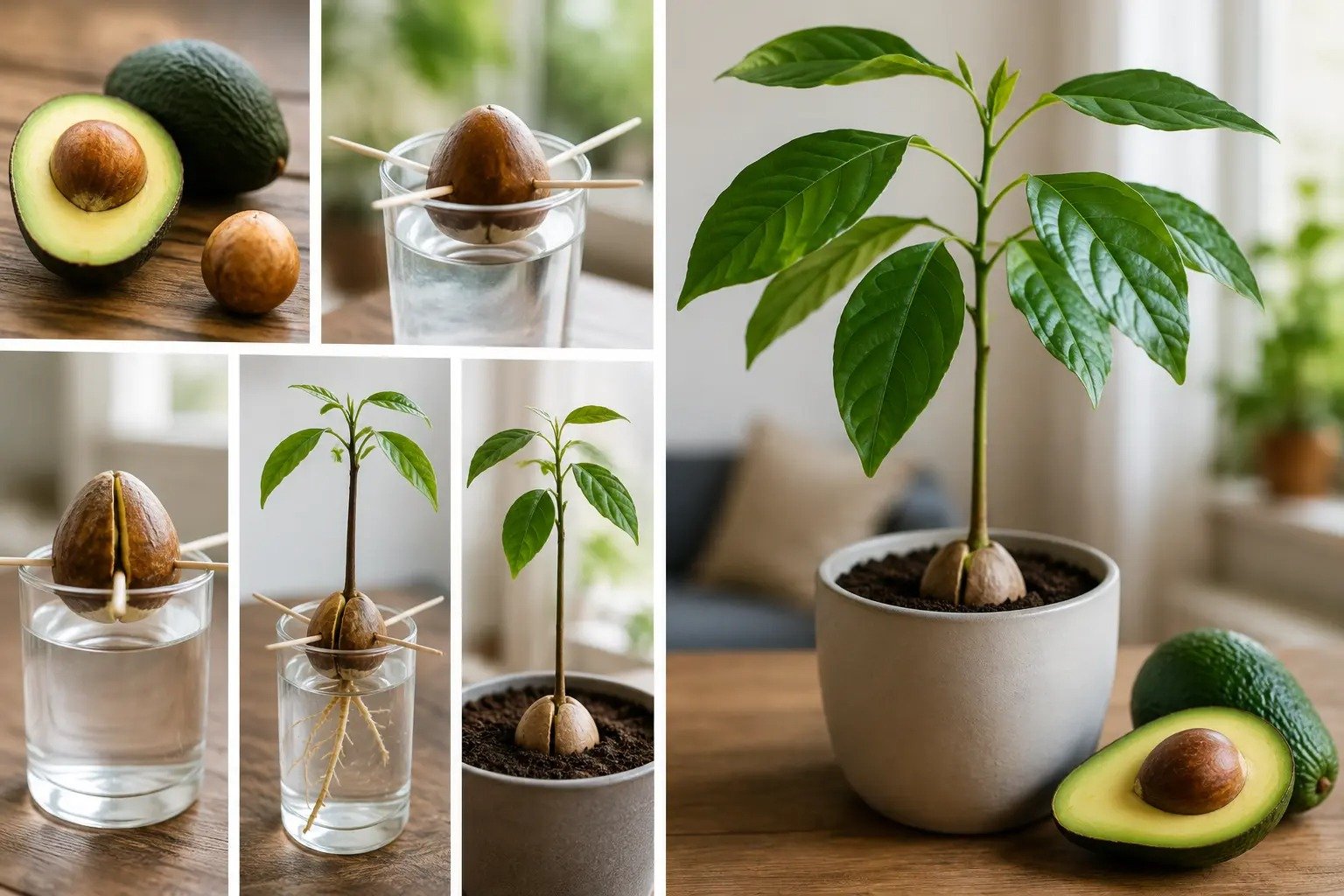
Push three or four toothpicks into the seed at a slight downward angle, then rest them on the rim of a water-filled glass so the bottom third of the seed stays submerged.
- Push the toothpicks about a quarter-inch (0.6 centimeters) into the seed, spacing them evenly around the widest point.
- Fill the glass until the water reaches roughly 1 inch (2.5 centimeters) up the seed’s flat bottom.
- Set the glass somewhere with bright, indirect light that stays between 65°F and 77°F (18°C to 25°C), a windowsill or countertop usually works.
- Change the water every 5 to 7 days. This keeps bacteria and mold from taking hold.
- Top off the water level between changes. Evaporation can expose the root tip and stall growth if you’re not paying attention.
Somewhere between 2 and 4 weeks in, a crack usually appears across the seed, followed by a thin taproot pushing out the bottom. That taproot is the main root structure, the one that anchors the plant and does the first work of absorbing water before any side roots show up. A shoot typically follows from the top of the seed another 2 to 4 weeks later, so the whole sequence, from suspending the seed to seeing a visible stem, tends to run 6 to 8 weeks.
This method gives you a front-row seat to germination, which is why it’s the go-to for classroom projects and for anyone who wants visual proof before committing to a pot. The tradeoff: a submerged seed sits in standing water for weeks, so the rot risk is a bit higher than with soil.
How to Grow an Avocado Seed in Soil
Soak the seed in warm water at 104°F to 125°F (40°C to 52°C) for 30 minutes, slice a thin layer off the pointed tip, then plant it upright with the cut end poking above the soil.
- Soak the cleaned seed in warm water for 30 minutes. The heat softens the seed coat and speeds up water uptake.
- Slice a thin sliver off the pointed top so the pale tissue underneath is exposed.
- Fill a 6-inch (15-centimeter) pot with a well-draining, sandy potting mix.
- Push the seed into the mix pointed end up, leaving the top third above the surface.
- Water thoroughly until it drains from the bottom of the pot, then keep the mix damp, not soaked, for the next 4 to 8 weeks.
You lose the visual drama of watching a taproot push out through water, but soil tends to produce a sturdier root system from day one, and it skips the transplant shock that water-grown seedlings sometimes hit when they move from liquid to solid ground. Nebraska Extension research backs this up too: soil germination tends to beat water on speed, mostly because the seed never has to adjust to a second growing medium partway through.
How Long Avocado Seed Germination Takes
Most seeds take 6 to 8 weeks, though some sprout in as little as 4 and others take up to 3 months before showing any sign of life.
| Growing Stage | Water Method Timeline | Soil Method Timeline |
| Seed splits open | 2–4 weeks | 2–3 weeks |
| Taproot appears | 3–5 weeks | 3–4 weeks |
| Shoot emerges | 5–8 weeks | 4–7 weeks |
| Ready to transplant | 8–12 weeks | 6–10 weeks |
If a seed shows zero activity after 3 months, it’s probably not going to sprout, so go ahead and replace it. Pots are cheap, and you probably have more than one lying around, so start two or three at once instead of betting everything on a single seed. Germination rates only run 60 to 80 percent even under good conditions, so the odds favor whoever hedges.
How to Transplant an Avocado Seedling
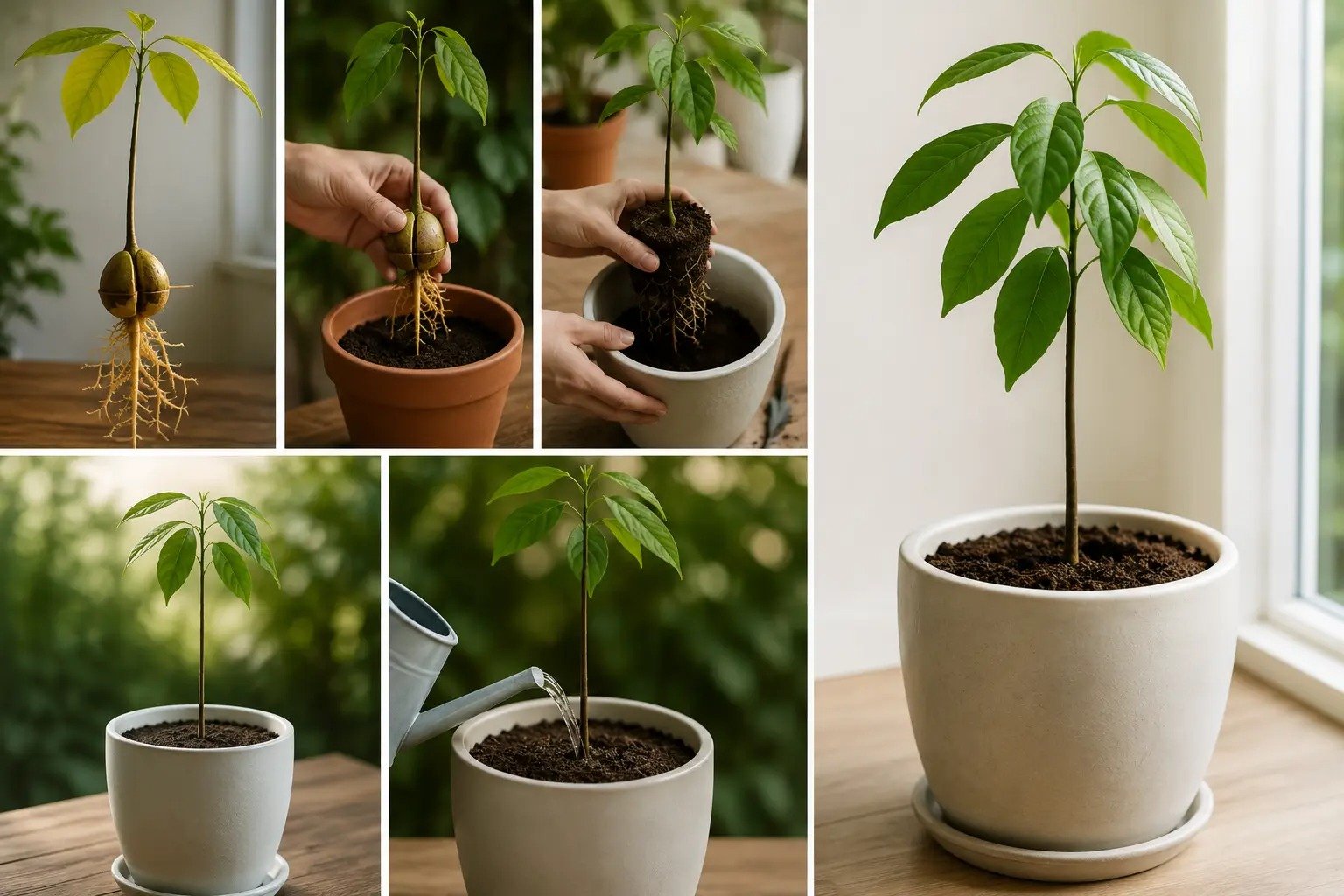
Once a water-grown seedling’s stem hits 6 inches (15 centimeters) and the roots have branched into several visible offshoots (not just one taproot), it’s ready to move into soil.
- Remove the toothpicks gently. Try not to snap the taproot at the base.
- Fill a 6- to 8-inch (15- to 20-centimeter) pot with well-draining potting mix, leaving a shallow well in the center.
- Set the seed into the well, so the top half stays above the soil line, then backfill around the roots without burying the stem itself.
- Water immediately after planting until it drains from the pot’s bottom holes.
- Once the stem reaches 6 inches (15 centimeters), cut it back by half. This forces the plant to branch out instead of growing as one tall, leggy stalk. Skip this step, and you’ll end up with a thin, top-heavy plant that struggles to hold up its own leaves.
Soil-started seedlings skip the transplant step entirely, since they’re already growing in their permanent home the moment the tip pokes above the surface.
How to Care for an Avocado Plant Indoors
An avocado houseplant wants bright, indirect light for 6 or more hours a day, water whenever the top inch (2.5 centimeters) of soil feels dry, and room temperatures between 60°F and 85°F (15°C to 29°C) year-round.
- Light: A south- or west-facing window works well. Direct, unfiltered sun through glass can scorch young leaves, so a sheer curtain or a bit of distance from the pane helps prevent burn.
- Water: Check the soil with a finger before every watering. When the top inch feels dry, water thoroughly and let the excess drain fully rather than leaving the pot sitting in a saucer of standing water.
- Fertilizer: Feed with a balanced houseplant fertilizer every 6 to 8 weeks in spring and summer. Skip it entirely in fall and winter, when growth naturally slows down anyway.
- Pruning: Pinch off the newest leaves every time the stem adds another 6 inches (15 centimeters). Regular pinching keeps the plant fuller and bushier instead of tall and unbranched.
- Repotting: Bump the plant into a container one size up whenever roots start circling the drainage holes, usually about once a year while it’s young and growing fast.
Humidity matters more here than for most houseplants, since avocados evolved in the humid forests of Mexico and Central America. A pebble tray filled with water under the pot, or the occasional misting, raises humidity without waterlogging the roots.
Common Avocado Seed Problems and How to Fix Them
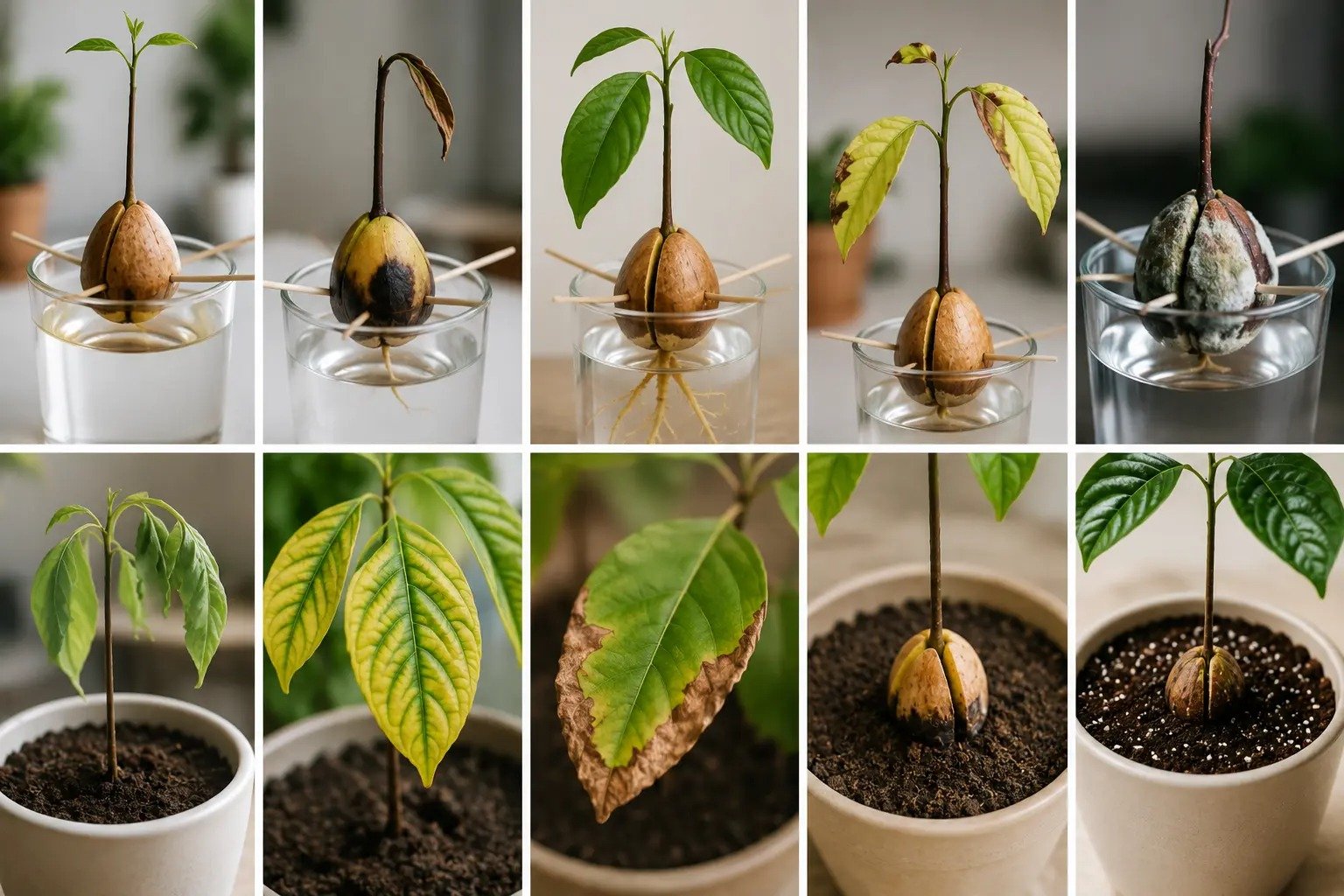
Most failures come down to four things: mold from too much moisture, a seed planted upside down, chlorinated tap water, or a pit that dried out before you got to it.
| Problem | Likely Cause | Fix |
| White fuzzy growth on the seed | Mold from stagnant water or poor airflow | Rinse the seed, switch to fresh water, cut away any visibly rotted tissue |
| No taproot after 8 weeks | Seed planted upside down, or the pit dried out before starting | Replace the seed and double-check that the flatter end faces down |
| Seed splitting apart completely | Rough handling, or a drop during a water change | Support the halves with a rubber band if the taproot’s still attached; discard it if the taproot has detached |
| Brown, mushy roots | Overwatering or chlorinated water damaging root tissue | Switch to filtered or dechlorinated water and cut back on watering |
| Yellowing or curling leaves after transplant | Underwatering, low humidity, or transplant shock | Water consistently and raise humidity with a pebble tray for 2 weeks |
A seed cracking open isn’t a bad sign. It’s a normal, expected part of germination. The crack lets the root and shoot push through the seed coat, and most seeds split cleanly along a natural seam without hurting the embryo inside.
Will an Avocado Grown From Seed Produce Fruit?
Occasionally, but usually not before 10 to 15 years, and seed-grown trees revert to unpredictable genetics, so most never flower or fruit indoors at all.
Commercial avocado trees are grafted: a fruiting branch (the scion) gets fused onto the root system of a separate, hardier tree (the rootstock). Grafted trees fruit within 3 to 4 years because the scion already came from a mature, proven tree. A seed-grown tree doesn’t get that head start, so it needs a decade or more before it even reaches reproductive maturity, assuming it gets there at all indoors.
Avocado flowers throw in another wrinkle. Each one opens twice across two consecutive days, acting as female on the first opening and male on the second. Growers call this dichogamy, and it evolved to push cross-pollination between different trees, which makes fruit set from a single potted tree unlikely even once it starts flowering. If fruit is the goal, a grafted nursery tree is almost always the better bet over a seed.
Is an Avocado Plant Toxic to Pets?
Yes. Avocado plants are toxic to dogs, cats, birds, and several other animals, mainly because of a fungicidal compound called persin found in the leaves, bark, seed, and skin.
Persin causes vomiting, diarrhea, and labored breathing in dogs and cats, and the risk is even more serious for birds and rabbits, where even a small amount can be fatal. If you’ve got pets at home, keep the plant out of reach, whether it’s a sprouting seed in a glass or a mature tree in a pot, and get any pet that’s chewed on avocado leaves or stems to a vet right away.
FAQs
How do I know which end of the avocado seed is up?
The pointed end faces up; the flatter, rounder end faces down. Roots come from the flat bottom; the stem grows from the pointed top.
Can I plant an avocado seed directly in soil without water first?
Yes, and it often germinates faster than the water method while skipping the transplant shock that can come with moving a seedling from liquid to soil.
Why is my avocado seed cracking open?
That’s normal. The split lets the root and shoot emerge from inside the seed coat.
How often should I change the water for a seed suspended in a glass?
Every 5 to 7 days. Stagnant water breeds bacteria and mold, which can rot the seed before roots even form.
Do avocado trees grown from seed ever produce avocados?
Rarely, and only after 10 to 15 years. Most seed-grown trees never fruit indoors; grafted nursery trees get there in 3 to 4 years instead.
Conclusion
Growing an avocado seed rewards patience more than skill. Rinse the pit, pick water or soil, keep the temperature steady between 65°F and 80°F (18°C to 27°C), and wait 6 to 8 weeks for roots and a stem. What you end up with is an attractive, low-maintenance houseplant that can stick around for years, even if fruit rarely follows without a graft. Start two or three seeds at once, watch for early signs of mold or rot, and keep the finished plant away from pets. A spare pit turns into a thriving tree with almost no cost and no special equipment.