Basil has a reputation for being fussy, but that’s mostly undeserved. Most people who struggle with it aren’t lacking a green thumb. They’re just missing a few numbers: how warm the soil needs to be, how much water is too much, when to prune, when to plant. Once those details click into place, basil turns into one of the easiest herbs a home gardener can grow, and one of the most rewarding. A single plant left to thrive can keep a kitchen stocked in fresh pesto all summer.
This guide walks through the entire process of learning how to grow basil, from choosing seeds to storing the harvest for winter. Along the way you’ll find exact figures instead of vague advice: soil temperatures, watering schedules, spacing distances, and frost dates by hardiness zone. Whether you’re planting in a raised bed, a balcony pot, or a sunny windowsill, the fundamentals don’t change much. What changes is how you apply them.
What Basil Needs to Grow
Basil wants six to eight hours of direct sun a day, soil with a pH between 6.0 and 7.0, and about 1 to 1.5 inches of water weekly. Give it those three things and most of the rest takes care of itself.
Sweet basil, or Ocimum basilicum, is the classic type most gardeners picture when they think of how to grow basil. It’s a warm-season annual through and through. A hard frost kills it outright, and it has no chance of overwintering outdoors anywhere in the continental US. Soil temperature trips up more beginners than almost anything else. Seeds germinate best between 75°F and 85°F, and if you plant into cold, damp soil, they’ll rot before a single sprout appears.
Raised beds tend to warm up faster than ground-level soil in spring, which is part of why gardeners using them often report quicker germination and bushier plants by midsummer. Loose, compost-amended soil helps too, since basil roots don’t like fighting through compacted dirt.
Best Basil Varieties for US Gardens
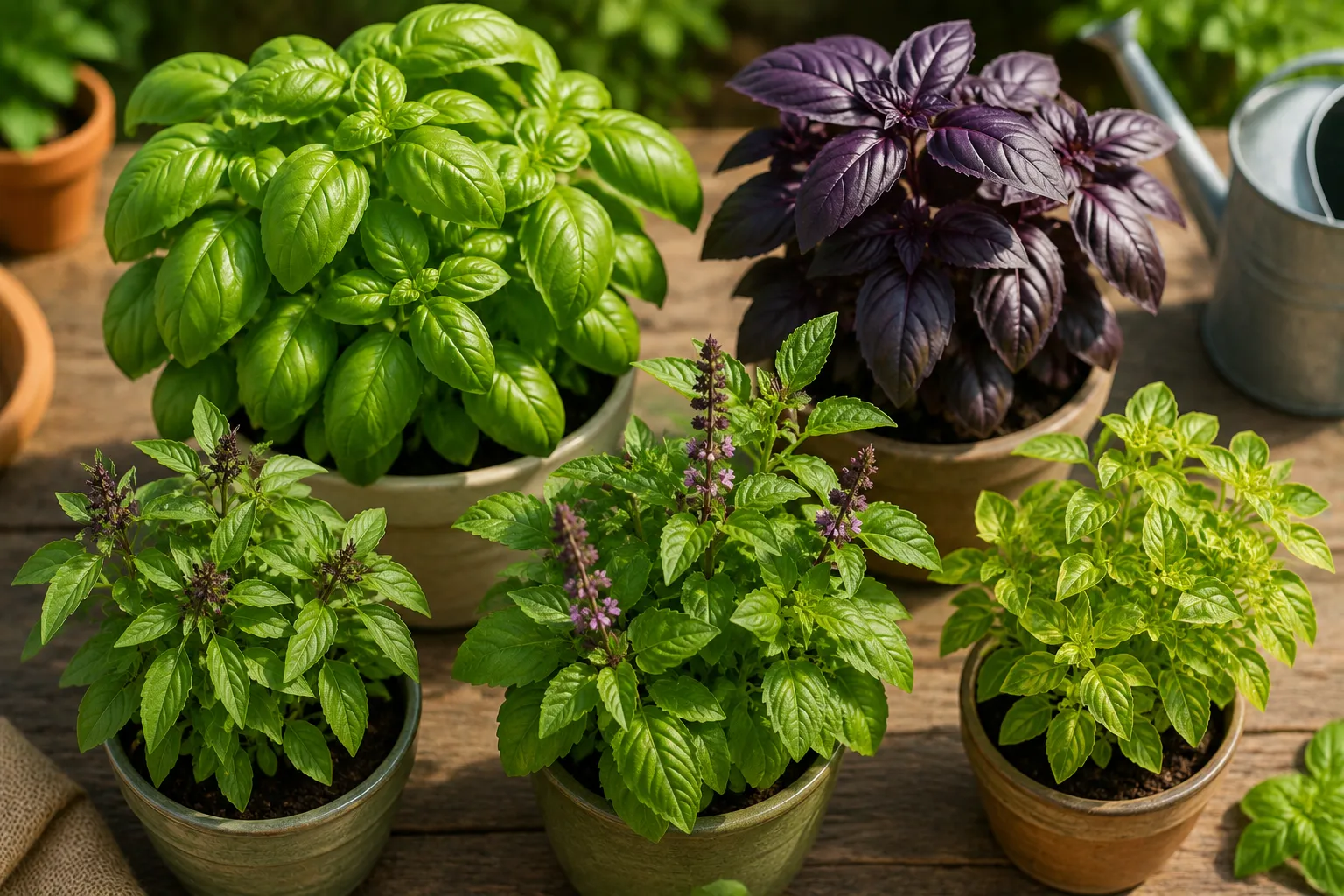
If you only grow one variety, make it Genovese. It’s the standard for a reason: big, glossy leaves, a classic sweet-peppery flavor, and it’s the backbone of traditional pesto.
That said, plenty of other varieties are worth a spot in the garden depending on what you’re after. Thai basil has an anise-and-clove edge that holds its own in stir-fries and curries, standing up to heat better than sweeter types. Lemon basil, often sold as ‘Mrs. Burns’ Lemon, brings a citrusy brightness that works well muddled into drinks or tossed into a salad dressing. Purple varieties like ‘Purple Ruffles’ look striking in a border or container, though the flavor is a bit milder than the green cultivars.
Anyone gardening in the Southeast or along the Gulf Coast should think seriously about disease resistance before picking seed. Downy mildew has wiped out entire Genovese crops in humid climates over the past decade, which pushed breeders to develop resistant options. ‘Prospera’ and ‘Amazel’ were bred specifically to fight off that fungal disease, and they hold up far better than traditional Genovese once humidity climbs.
For gardeners who’d rather lean on trial data than trial and error, the Royal Horticultural Society’s Award of Garden Merit list is a decent shortcut. ‘Salvo’, ‘Aroma 2’, and ‘Pluto’ all made the cut after performing consistently well across multiple growing trials.
When to Plant Basil
The safe window is two to three weeks after your last spring frost date, once nighttime temperatures settle above 50°F. Jump the gun and you’ll likely lose the whole batch to a late cold snap, or watch the plants sit there sulking instead of growing.
Utah State University Extension recommends holding off on direct-sowing seed outdoors until soil temperatures hit 75°F to 85°F. In most of the northern US, that doesn’t happen until late May or early June, so patience actually pays off here.
Timing shifts a lot depending on where you garden. In USDA Hardiness Zones 3 through 6, outdoor planting usually falls between late May and mid-June. Zones 7 through 9 get a head start, often planting by late April. Down in Zones 10 and 11, you can put basil in the ground almost any time frost isn’t a threat, though summer heat above 95°F can stall growth just as effectively as cold does, triggering early flowering as the plant tries to reproduce under stress.
Starting seeds indoors six weeks before your last frost date shortens the wait considerably. It’s a small effort upfront that buys you a first harvest weeks earlier than direct-sowing would.
Starting Basil From Seed Indoors
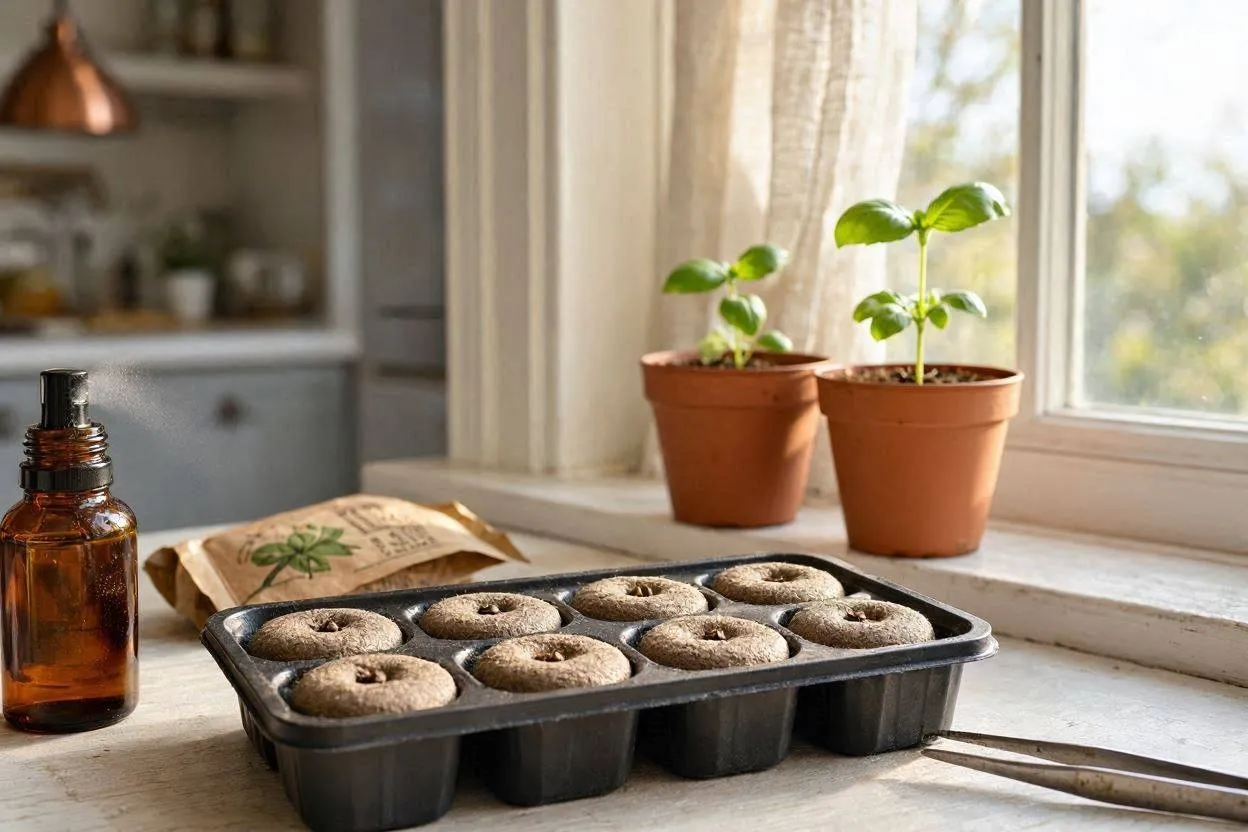
Sow seeds about a quarter inch deep in a seed-starting mix, keep the soil between 70°F and 75°F, and expect germination somewhere between 6 and 14 days.
Fill small pots or trays with peat-free seed compost or a decent seed-starting mix, then scatter the seeds thinly across the surface. Resist the urge to drop them in clumps. A light dusting of soil or vermiculite on top holds in moisture without smothering anything underneath.
Basil doesn’t germinate all at once, so don’t panic if nothing’s poked through by day seven. Some seeds sprout within a week; others take closer to two. That spread is normal, not a sign anything’s wrong.
Once seedlings are up, keep them under a grow light for 12 to 13 hours a day, and water every two to three days rather than sticking to a rigid daily routine. Overwatering at this stage is how you get damping off, a fungal disease that collapses seedlings right at the soil line, often within days. Watering from below, letting the tray soak moisture up through the drainage holes, keeps the surface dry and cuts that risk considerably.
Once the first true leaves appear (the second set, distinct from the rounder seed leaves that show up first), it’s time to move seedlings into individual 3-inch pots with fresh, peat-free potting mix.
Hardening Off and Transplanting Basil Outdoors
Give seedlings 7 to 10 days to harden off before they go into the ground, gradually stretching their outdoor exposure from two hours up to a full day.
Plants raised indoors, under steady light and temperature, aren’t ready for real sun, wind, or swinging temperatures. Skip this step and you’ll likely see transplant shock or scorched leaves within days of moving them outside.
A workable schedule looks something like this: two hours of outdoor sun on day one, four hours on day two, six on day three, adding two more hours each day after that. By day seven or eight, once nights stay reliably above 50°F, the seedlings should be tough enough for their permanent spot.
Space transplants 10 to 12 inches apart. Dig a hole a bit bigger than the root ball, work in a handful of compost, and set the plant at the same depth it was growing at in its pot. Water deeply right after transplanting so the roots settle in without stress.
Growing Basil in Containers
Containers at least 8 inches wide and deep, filled with well-drained potting mix and set in full sun, work fine for basil. This is one of the more forgiving herbs for pot culture since its root system stays fairly compact.
Drainage matters more than most people expect. Roots sitting in waterlogged soil for even a few days can develop rot fast, so a container without drainage holes is a bad bet no matter how nice it looks. Terracotta dries out quicker than plastic or glazed ceramic, which helps in humid climates but can work against you in hot, dry ones where you’ll be watering constantly.
In a larger planter, you can fit up to four plants per square foot, spacing them 6 to 8 inches apart. Container basil dries out faster than garden-bed basil across the board, especially in terracotta or on a hot deck in July, so checking soil moisture daily during peak summer heat is worth the thirty seconds it takes.
Watering and Fertilizing Basil
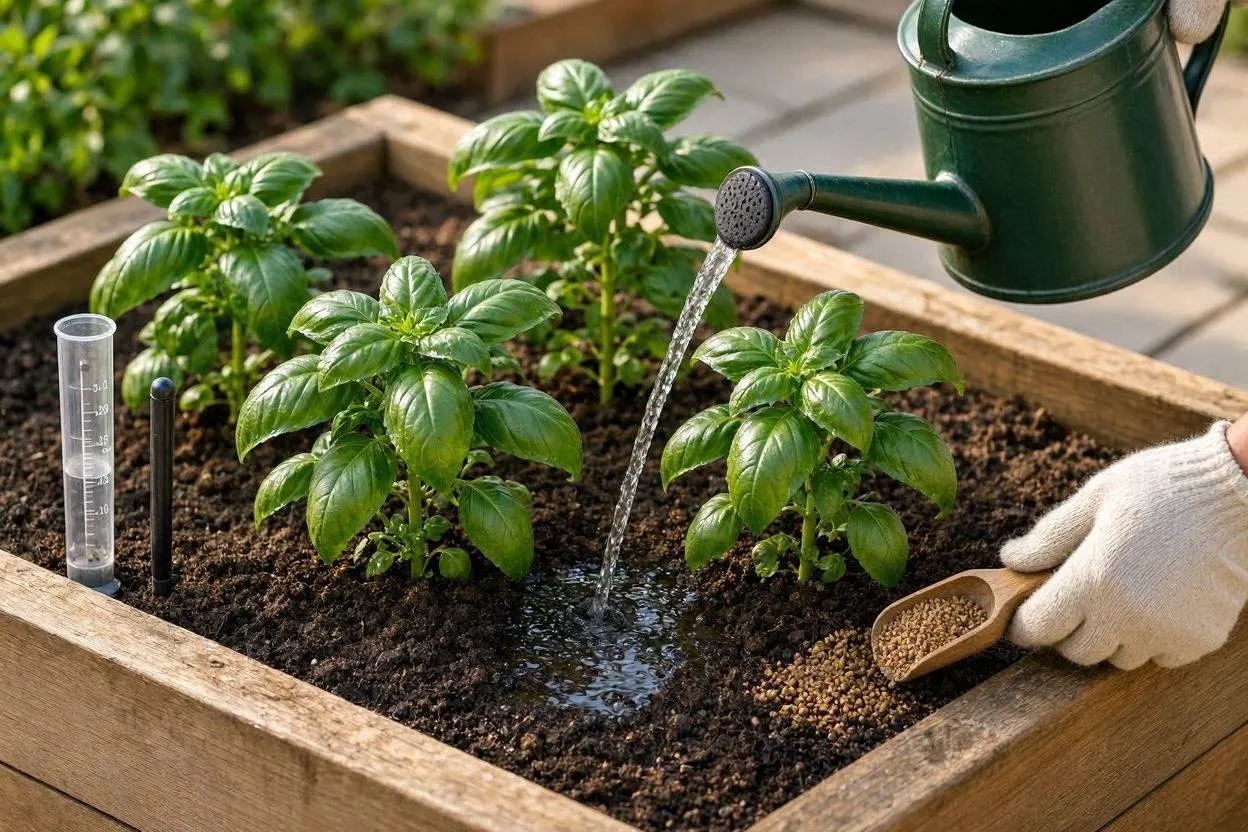
Aim for 1 to 1.5 inches of water a week, applied at the base rather than sprayed overhead. Consistency matters more than the exact volume. Basil that dries out and gets soaked in cycles turns stressed fast, which speeds up flowering and flattens the flavor.
Drip irrigation is worth setting up if you’re growing more than a plant or two. It delivers water efficiently and keeps the foliage dry, which cuts down on fungal issues considerably. Morning watering beats evening watering for the same reason: it gives leaves time to dry out before cooler night temperatures and lingering moisture create the perfect setup for grey mould and powdery mildew.
Fertilizer needs come down to where the plant is growing. In-ground basil in decent soil rarely needs more than an initial compost boost. Containers are a different story. Their limited soil volume runs out of nutrients faster, so an organic liquid fertilizer every two to three weeks keeps leaf production steady. Skip potassium-heavy formulas like tomato feed, though. Those push the plant toward flowering instead of the leafy growth you actually want.
Pruning for a Bigger Harvest
Once plants hit 6 to 8 inches tall, start pinching stems just above a leaf node every two weeks. This one habit does more for total yield than almost anything else you can do.
Basil branches out at each node, the spot where a pair of leaves meets the stem. Cut just above that point and the plant splits into two new stems instead of one, effectively doubling leaf output over time. Leave it unpruned and a single stem just keeps growing taller with far less to show for it.
Pruning also buys time before flowering sets in. Once basil bolts, leaf production drops off and the flavor turns bitter fast. Pinching off flower buds the moment they show up keeps the plant in leafy growth mode longer, though flowering is going to happen eventually by mid to late summer no matter how diligent you are about it.
One rule worth remembering: never harvest more than a third of a plant’s total foliage in a single session. Take more than that and you’ll stress the plant enough to slow its recovery for weeks.
Companion Planting
Basil pairs well with tomatoes, peppers, oregano, and marigolds, all of which share similar sun and water needs. Tomatoes and basil are the classic combination, both in the garden bed and later on the plate. Some gardeners swear tomatoes grown near basil taste better, though there’s no solid science backing that particular claim up. What is better documented is basil’s scent, which repels aphids and mosquitoes and makes it a genuinely useful plant to have near an outdoor seating area.
Marigolds add another layer of pest protection, particularly against nematodes lurking in the soil. Chamomile, lettuce, and parsley round out a productive bed without stepping on basil’s nutrient needs.
One thing to avoid: planting basil too close to rue or sage. Both can stunt its growth.
Basil Pests and Diseases
Aphids, slugs, and Japanese beetles are basil’s most common pests, while downy mildew and root rot are its most damaging diseases.
| Problem | Symptoms | Control |
| Aphids | Clustered on new growth, sap-sucking | Insecticidal soap or strong water spray |
| Slugs and snails | Ragged holes in leaves | Remove hiding spots, use traps or barriers |
| Japanese beetles | Skeletonized leaves | Row covers, hand removal |
| Downy mildew | Yellow patches on top of leaves, gray fuzz underneath | Remove infected leaves, water at soil level, choose resistant cultivars |
| Root rot | Wilting despite moist soil, blackened roots | Improve drainage, avoid overwatering |
| Basil shoot blight | Dark streaks on stems, leaf spots | Space plants for airflow, avoid overhead watering |
Downy mildew deserves extra attention since it’s become common enough in commercial basil production that breeders developed resistant cultivars specifically to fight it. It spreads through wind-borne spores and thrives in humidity, so anyone gardening in a muggy climate should get in the habit of checking leaf undersides weekly for that telltale gray fuzz before it spreads through the whole bed.
Growing Basil Indoors Year-Round
A full-spectrum LED grow light, positioned 12 to 18 inches above the plants and run for 12 to 14 hours a day, lets basil grow indoors through every season.
Natural window light almost never provides enough intensity in winter, even in a south-facing window. Plants stretch toward whatever light they can find, ending up with thin stems and pale, weak leaves. A dedicated grow light fixes that problem outright and makes a January basil harvest just as realistic as a July one.
The soil, water, and pruning routine stays the same indoors as out. Temperature is easier to manage indoors, but airflow isn’t automatic the way outdoor wind is. A small fan running a few hours a day cuts fungal risk and helps stems grow sturdier by mimicking the resistance they’d get outside.
How to Harvest Basil
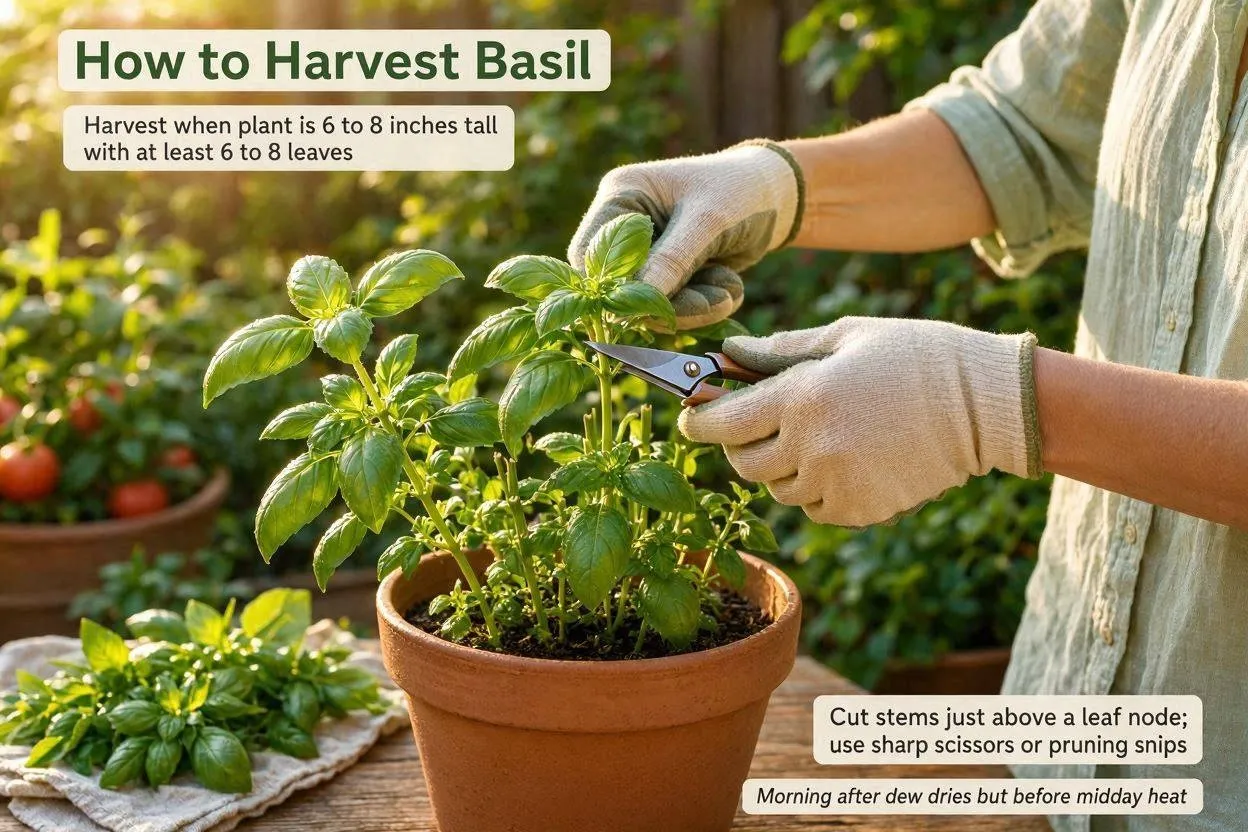
Basil is ready once plants reach 6 to 8 inches tall with at least 6 to 8 leaves. Cut stems just above a leaf node, using sharp scissors or snips rather than pulling leaves off by hand, which can tear the stem.
Morning is the best time to harvest, after the dew dries but before the day heats up. That’s when the leaves carry the highest oil concentration and the best flavor.
A single well-maintained plant produces roughly half a cup of usable leaves a week during peak summer growth. Multiply that across five to ten plants per household member if you want enough for fresh eating all season plus extra to preserve.
Drying and Freezing Basil
For long-term storage, hang bundled stems in a shaded, well-ventilated spot for 5 to 10 days, or freeze whole leaves in ice cube trays with water or olive oil.
Drying suits pantry storage well. Kept in an airtight jar out of direct light, dried basil holds its flavor for about a year. If you’re short on time, oven-drying at 150°F to 200°F for 3 to 5 minutes gets the job done much faster.
Freezing keeps more of the fresh flavor but changes the texture. Whole leaves frozen in ice cubes hold up noticeably better than loose leaves, which turn mushy once thawed. Pesto freezes particularly well, portioned into ice cube trays and popped out through the winter as needed. Either way, frozen basil keeps for 3 to 6 months before the flavor starts to fade.
FAQs
Does pinching basil flowers encourage more leaves?
Not once they’ve formed. Pinching flowers after they appear often triggers more buds instead. Prune before flowering starts to keep leaf growth strong.
How long does basil take from seed to harvest?
Usually 60 to 90 days, depending on variety and light levels. Starting seeds indoors shortens the outdoor growing window needed before that first harvest.
Can basil survive a light frost?
No. It’s highly frost-sensitive and suffers damage even just below 40°F. Cover plants or move containers indoors ahead of any cold snap.
Why is my basil turning yellow?
Usually overwatering, nitrogen deficiency, or root rot from poor drainage. Check soil moisture and drainage first before touching the fertilizer.
How much basil does one plant yield weekly?
About half a cup of usable leaves during peak summer growth. Actual yield depends on variety, pruning habits, and how much sun the plant gets.
Conclusion
Learning how to grow basil really comes down to a short list of habits: warm soil to start, steady water throughout, and a pruning session every couple of weeks once the plant gets going. The mistakes that trip up most beginners, like planting too early, overwatering seedlings, or skipping the hardening-off period, are all easy to sidestep once the timeline makes sense. Whether you’re working with a single pot on a windowsill or a full garden bed, the fundamentals stay the same: sun, drainage, warmth, and a pair of scissors used often enough to keep the plant working for its next harvest.