Container Gardening Guide
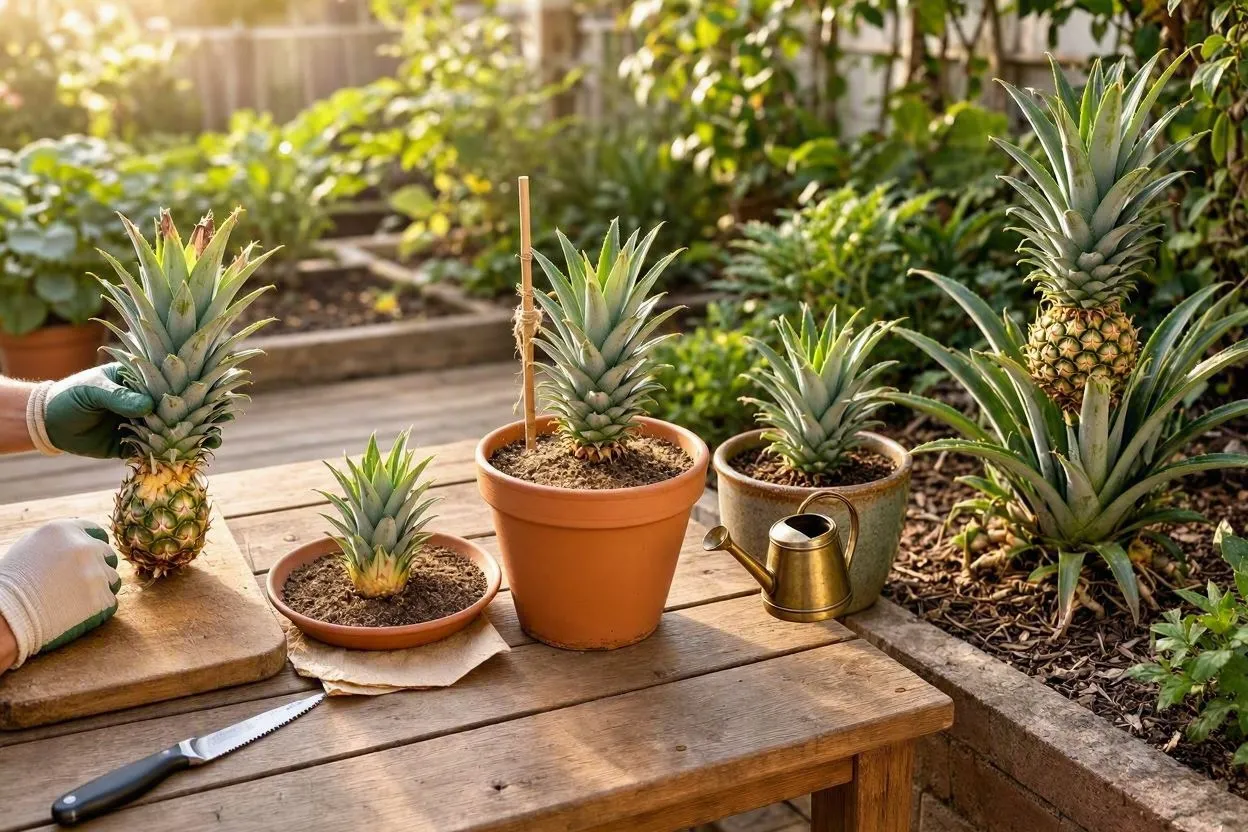
You can grow a pineapple houseplant from the leafy crown of any fresh supermarket pineapple, and it costs nothing beyond the fruit you were already buying. As a container gardening project, it’s about as low-commitment as propagation gets: the crown roots in 5 to 8 weeks in a warm, bright spot, though the plant that follows takes 18 to 36 months to actually produce fruit, which is the part most guides gloss over. The crown you’d normally throw away carries a ring of dormant root buds at its base, and those buds wake up the moment the cut tissue dries and meets moisture again.
What a Pineapple Plant Actually Is
A pineapple is a terrestrial bromeliad named Ananas comosus, not a tree. It grows as a herbaceous perennial: a rosette of stiff, sword-shaped leaves rising from a short central stem, reaching 3 to 4 feet (0.9 to 1.2 m) tall and 3 to 5 feet (0.9 to 1.5 m) wide at maturity.
Belonging to the bromeliad family explains two things that surprise first-time growers. The leaves absorb water and nutrients directly, so the root system stays small and the plant transplants easily. Those same leaf bases form a shallow central cup that holds water, the same trick you’d see on Spanish moss and other bromeliad relatives.
One rosette produces exactly one fruit. After fruiting, the mother plant declines and dies, handing the propagation job off to whatever offsets it produced along the way, which is why pineapple is as much a houseplant project as a fruit-growing one.
Can You Grow a Pineapple Outdoors Where You Live?
Pineapples survive outdoors year-round only in USDA hardiness zones 10 through 12. Frost kills the foliage outright, and temperatures near 28°F (-2°C) damage leaves badly enough that the plant rarely comes back, which rules out in-ground growing across nearly the entire continental US.
| Your Zone | Outdoor Strategy | What Happens in Winter |
| Zones 11–12 (South Florida, Hawaii, Puerto Rico) | Plant directly in the ground | No protection needed |
| Zone 10 (Southern Florida, coastal Southern California) | Plant in the ground in a sheltered spot | Cover on rare frost nights |
| Zone 9 (Central Florida, Gulf Coast, parts of Texas and Arizona) | Container or ground with protection | Cover or move under shelter below 40°F (4°C) |
| Zones 1–8 (everywhere else) | Container only | Indoors from first frost to last frost |
Gardeners in Michigan and Maine pull this off every year anyway. A 5-gallon (19 L) pot on a south-facing windowsill from October through May, then out on the patio the rest of the summer, produces a plant that’s identical to one grown in Miami. It’s just slower.
How to Choose a Pineapple That Will Root
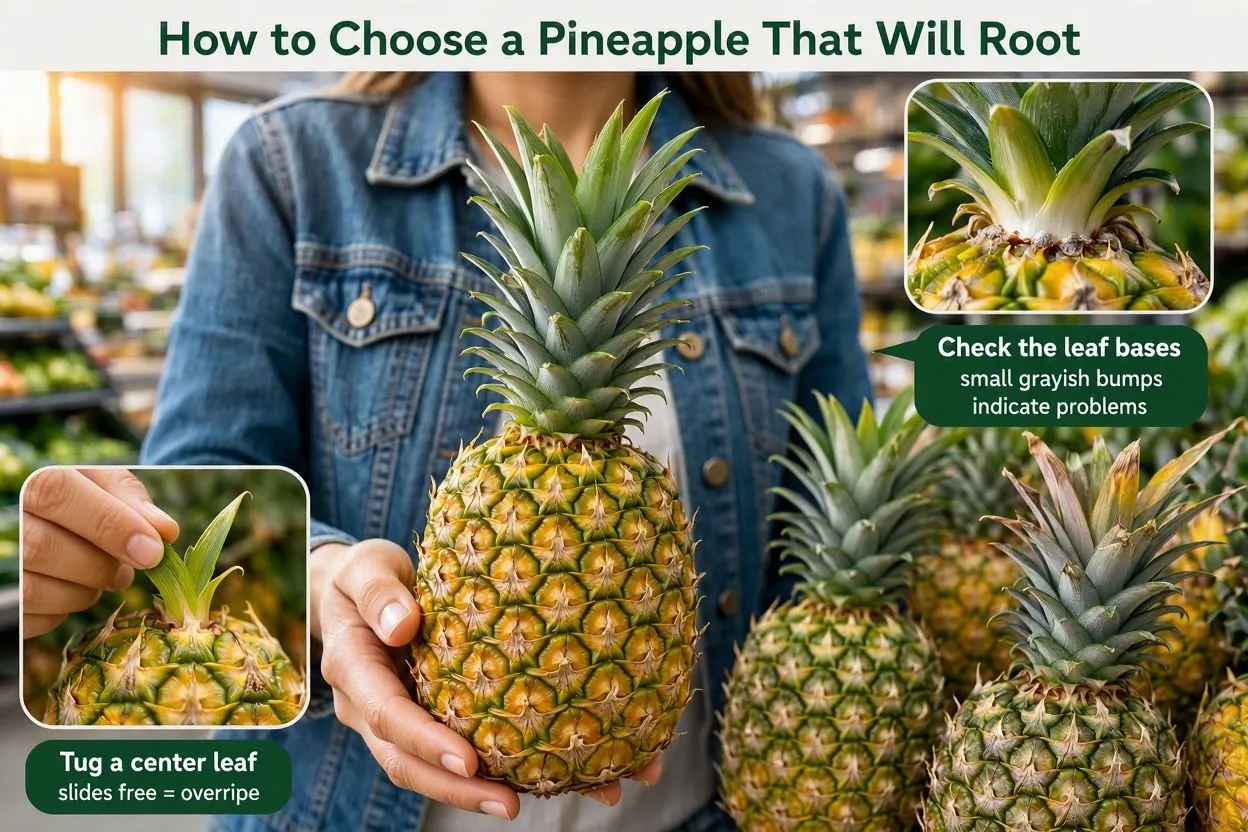
Pick a fruit with firm, deep-green leaves and golden-brown skin. Overripe pineapples produce crowns that rot instead of rooting, so skip anything with gray, yellow, or shriveled foliage.
Two quick checks at the produce shelf save you two months of waiting on a crown that was never going to work:
- Tug a center leaf. If it slides free with light pressure, the fruit’s overripe. Put it back.
- Check the leaf bases. Small grayish bumps where the leaves meet the fruit mean scale insects, and those hitch a ride home with the crown.
Ripeness runs bottom to top, so more gold across the shell means sweeter flesh. But a pineapple that smells fermented at the base has gone past the point where the crown tissue stays viable.
Which Pineapple Varieties Grow Best at Home
Most American supermarket pineapples are MD-2, sold as Gold or Extra Sweet, and MD-2 crowns root just as reliably as any other variety for a home gardener. You get whatever the store happened to stock, so variety mostly matters if you’re buying a nursery plant rather than starting from a saved crown.
| Variety | Fruit Size | Home-Growing Notes |
| MD-2 (Gold, Extra Sweet) | 3–5 lb (1.4–2.3 kg) | Most common crown you’ll find; low acid, few suckers to manage |
| Smooth Cayenne | 4–6 lb (1.8–2.7 kg) | Nearly spineless leaves, easier to handle in a small garden |
| Sugarloaf | 3–6 lb (1.4–2.7 kg) | White flesh, edible core, an interesting pick for collectors |
| Red Spanish | 2–4 lb (0.9–1.8 kg) | Spiny leaves, tolerates rough handling and neglect |
| Ananas comosus var. bracteatus | Under 1 lb (0.45 kg) | Ornamental dwarf, grown for variegated pink-and-cream foliage rather than fruit |
Specialty nurseries occasionally sell rooted plants of named varieties, which shaves a full year off the growing timeline compared with starting from a crown.
How to Prepare the Crown for Rooting
Twist the crown off rather than cutting it. Twisting separates the tissue cleanly at its natural break point and leaves no wet flesh behind. Grip the leaves in one hand, the fruit in the other, and turn firmly until the crown pops loose.
Any pulp still clinging to the base will rot, in water or soil, and take the crown down with it. If you cut instead of twisted, trim the flesh away down to the pale core.
Next, peel 1 to 2 inches (2.5 to 5 cm) of the lowest leaves downward and off. Underneath is a ring of small brown nubs, the root primordia. These are the dormant buds every new root will grow from, and exposing them is the whole point of this step.
Some growers shave paper-thin horizontal slices off the base instead, until the brown ring shows. That works too, but going past 1/4 inch (6 mm) of stem tissue starts cutting into the buds themselves.
Set the prepared crown on its side, out of direct sun, for 1 to 2 days. Drying lets the wound callus over, and callused tissue resists the bacterial soft rot that takes down a meaningful share of crowns planted straight away.
Water Rooting vs. Direct Soil Planting
If you want proof the crown is alive, go with water. If you’d rather skip a step, go with soil.
| Factor | Water Method | Direct Soil Method |
| Time to visible roots | 2 to 4 weeks | 5 to 8 weeks, hidden underground |
| Success confirmation | Visible through the jar | Tug test only |
| Root quality | Fine, water-adapted; some die back after potting | Adapted to soil from day one |
| Maintenance | Water changed every 2 days | Kept evenly moist |
| Best for | First-time growers | Growers who’ve rooted crowns before |
The Water Method
Sit the crown in a clean glass jar with the bare stem submerged 1/2 to 1 inch (1.3 to 2.5 cm), leaves clear of the waterline. Keep it in bright, indirect light and change the water every second day to stop bacterial film from forming.
Roots show up as white threads within 2 to 4 weeks. Wait until several reach 3 inches (7.6 cm) before potting, since shorter roots snap during the transfer. Browning outer leaves during this stretch is normal; the crown has only actually failed if the center dries out completely.
The Direct Soil Method
Bury the callused stem in a 6- to 8-inch (15 to 20 cm) pot of coarse potting mix, deep enough that the first ring of leaves rests right at the soil surface. Water thoroughly, let it drain, then seal the whole pot inside a clear plastic bag.
That bag turns into a humidity chamber. The University of California Cooperative Extension recommends holding it at 75 to 80°F (24 to 27°C) in bright indirect light, and rooting takes 5 to 8 weeks. Open the bag once new growth appears at the center of the rosette, then move the pot into direct sun over the following week.
How to Pot a Rooted Pineapple Crown
Use a 6- to 8-inch (15 to 20 cm) container filled with cactus and succulent mix. Plant the crown so the roots sit below the soil line and every leaf stays above it. Bury the lower leaves and you’ve invited crown rot right at the point where the plant is most vulnerable.
Pineapples care more about drainage than rich soil. Cactus mix works straight from the bag; a homemade blend of 2 parts potting soil to 1 part perlite and 1 part coarse sand does the same job for less money. Aim for a soil pH between 4.5 and 6.5, since pineapples evolved on acidic river-drainage soils in South America.
Terracotta beats plastic for beginners, since the porous walls pull excess moisture out of the root zone. Whatever material you use, make sure the pot has a drainage hole.
Firm the mix around the stem and water once. Then hold off until the top inch (2.5 cm) dries out, and keep the soil evenly moist for the next 6 to 8 weeks while the roots settle in.
How to Care for a Pineapple Plant
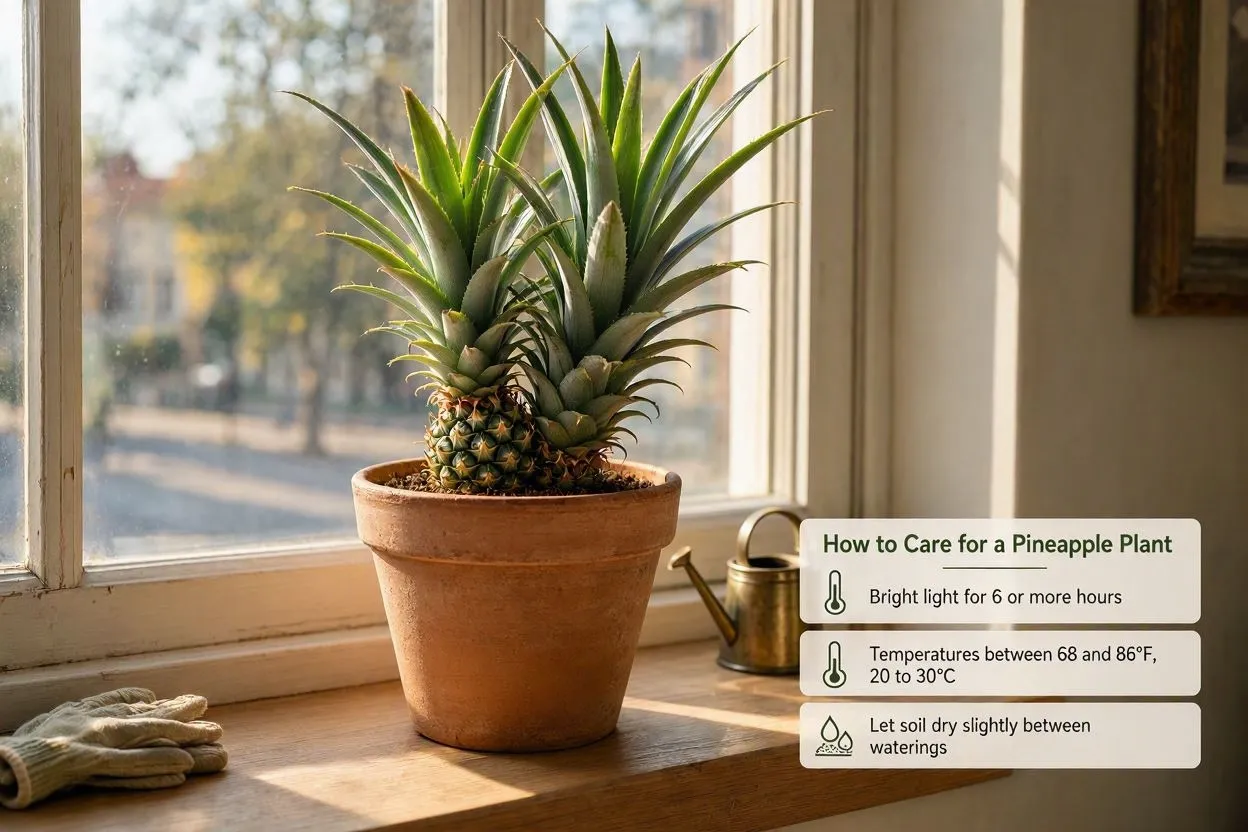
Once potted, a pineapple settles into the same routine as any other container houseplant: consistent light, steady warmth, and a light hand with the watering can. Pineapples need 6 or more hours of bright light, temperatures between 68 and 86°F (20 and 30°C), and soil that dries out slightly between waterings. Hold those three conditions steady and the plant takes care of the rest.
Light
Give it the brightest spot you have, ideally a south-facing window or full outdoor sun. Growth slows noticeably below 6 hours of direct light. Growers north of roughly 40° latitude (Chicago, Denver, Boston) benefit from a full-spectrum grow light running 12 hours a day between November and February.
Temperature
Growth stops below 60°F (15.5°C) and stops again above 90°F (32°C). The sweet spot, 68 to 86°F (20 to 30°C), happens to match normal household temperatures. Bring outdoor plants in once nights drop below 60°F (15.5°C), and acclimate them gradually over 7 to 10 days come spring so the leaves don’t scorch.
Water
Water when the top 1 to 2 inches (2.5 to 5 cm) of mix feels dry, which usually works out to about once a week indoors. Pineapples handle a dry spell far better than soggy soil. Overwatering kills more container pineapples than every pest combined.
During warm weather, pour a little water into the central cup formed by the leaf bases. That’s how bromeliads take up moisture in the wild. Empty it before winter, though; stagnant water sitting in the rosette through cold months causes heart rot, and heart rot is fatal.
Drought shows up as light green leaves fading to yellow or red and curling at the edges. Brown leaf tips can mean either underwatering or overwatering, so check the soil before you touch anything.
Fertilizer
Feed with a balanced slow-release organic fertilizer around 5-5-5 NPK during spring and summer, or a diluted liquid houseplant food once a month. Cut back to every other month through winter.
Foliar feeding actually works on pineapples, unlike most fruit plants, because of those absorbent leaves. Spraying diluted fertilizer across the foliage every 6 weeks during the growing season noticeably speeds things up.
Repotting
Step the plant up as it fills each container:
- Move to a 10- to 12-inch (25 to 30 cm) pot once new center leaves appear, usually 3 to 6 months after potting.
- Move to a 5-gallon (19 L) pot at roughly 12 months.
- Leave it there permanently.
The small root system makes repotting low-risk. A pineapple lifted, moved, and replanted the same afternoon usually shows no setback at all.
Why Your Pineapple Plant Isn’t Growing
As with most container gardening problems, a stalled pineapple plant almost always traces back to insufficient light, cold temperatures, or overwatering. Work through the symptoms below before you assume the plant is dead.
| Symptom | Cause | Fix |
| No roots after 8 weeks | Temperature below 70°F (21°C), or fruit flesh left on the crown | Start a new crown at 75–80°F (24–27°C) |
| Mushy, dark crown base | Bacterial soft rot from skipping the drying step | Discard the crown; dry the next one for 2 full days |
| Brown leaf tips | Underwatering or overwatering | Check soil moisture, then trim tips with clean scissors |
| Yellow or brown center leaves | Heart rot from water sitting in the cup | Empty the cup; move the plant somewhere warmer |
| Pale, stretched leaves | Insufficient light | Move to a south-facing window or add a grow light |
| Healthy plant, no flowers after 24 months | Vegetative maturity reached without a bloom trigger | Apply the ethylene treatment further down |
| Fruit falls sideways on a long stalk | Genetic trait of the parent plant | Stake the stalk; propagate from a different plant next time |
Pests and Diseases That Affect Pineapple Plants
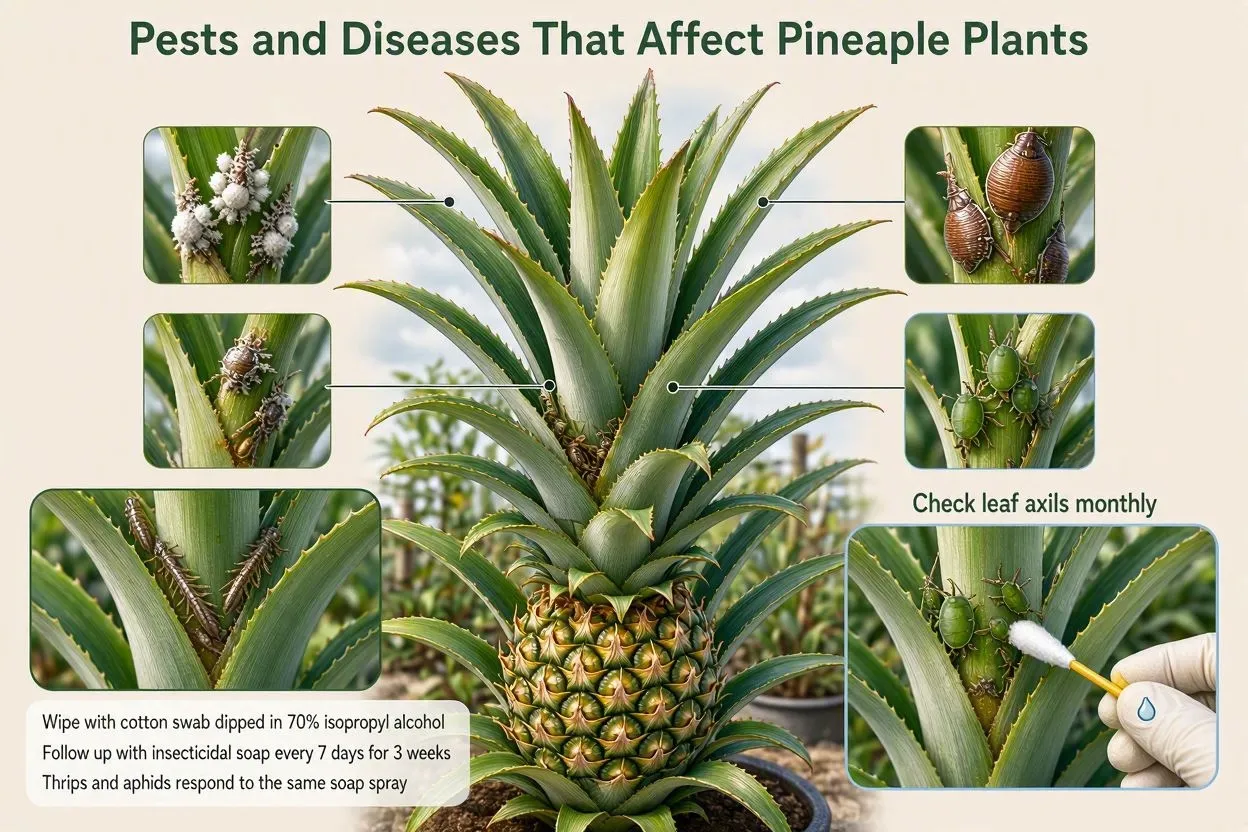
Mealybugs, scale insects, thrips, and aphids cause nearly every pineapple pest problem, and all four hide in the leaf axils. Check where the leaves meet the stem once a month; that’s where infestations start.
Wipe mealybugs and scale off with a cotton swab dipped in 70% isopropyl alcohol, then follow up with insecticidal soap every 7 days for 3 weeks to catch the next generation. Thrips and aphids respond to the same soap spray, minus the alcohol step.
Root and heart rot kill more container pineapples than insects do. Both come from the same cause: water that can’t drain. A pot with an open drainage hole, a mix that’s at least 25% perlite or coarse sand, and a dry central cup through winter prevent both.
Sunscald hits fruit that flops sideways and exposes its shell to full afternoon sun. Drape a few of the plant’s own leaves over the fruit, or shade it with cloth, to avoid the pale, leathery patches that follow.
How Long Does It Take to Grow a Pineapple?
With care sorted, the question that actually matters is timing. A crown-grown pineapple takes 18 to 36 months to flower, plus another 5 to 6 months for the fruit to ripen. Plants grown from suckers fruit a good deal sooner, often within 12 to 18 months.
| Stage | Timeline From Planting | What You’ll See |
| Root formation | Weeks 2–8 | White roots, no top growth |
| Root establishment in soil | Weeks 7–14 | First new leaves at the center |
| Original leaves die back | Months 6–12 | Outer leaves brown; trim them off |
| Vegetative maturity | Months 12–24 | 30 to 40 leaves, plant 3 ft (0.9 m) across |
| Flowering | Months 18–36 | Red-purple flower spike from the center |
| Fruit development | 5–6 months after flowering | Green fruit turning gold from the base |
Speed comes down almost entirely to light and warmth. A Florida grower with a plant outdoors year-round hits flowering near the 18-month mark, while the same crown on an Ohio windowsill takes closer to 36.
How to Force a Pineapple Plant to Flower
Seal the plant in a clear plastic bag with a ripe apple for 7 to 10 days. The ethylene gas the apple gives off triggers flowering. Only try this once the plant has at least 30 leaves; younger plants just ignore the signal.
Ethylene is a natural plant hormone that shifts pineapples from making leaves to making flowers, and this apple trick is the home-gardening version of a trick commercial growers use with synthetic ethylene sprays.
- Water the plant thoroughly two days beforehand.
- Place two or three ripe apples at the base of the plant, or apple slices directly in the central cup.
- Cover the plant and pot with a large clear bag and seal it around the base.
- Keep the bagged plant in bright shade for 7 to 10 days, out of direct sun.
- Remove the bag and apples, then get back to normal watering and feeding.
Reddening at the center of the rosette shows up 10 to 15 days after treatment, and a flower spike follows within 6 to 10 weeks. If nothing happens, try again after 3 months, a single treatment doesn’t always take on the first try.
Ripe bananas work about as well as apples. Both fruits hit peak ethylene right at the edge of overripeness, so just use whatever’s about to go into the compost anyway.
When to Harvest a Pineapple
Cut the fruit once at least half the shell has turned gold and the base smells sweet. Pineapples build no additional sugar after harvest, so cutting early is the one mistake you can’t take back.
Slice through the stalk with a serrated knife about 2 inches (5 cm) below the fruit, leaving the mother plant intact. Home-grown fruit usually weighs 1 to 3 pounds (0.5 to 1.4 kg), smaller than a typical supermarket pineapple but denser and noticeably sweeter.
A ripening fruit attracts raccoons, squirrels, and rats within days of turning gold. Growers in Florida and Texas commonly slip a mesh bag or wire cage over the fruit a month before harvest. Once it’s cut, a home-grown pineapple ripened fully on the plant tends to taste sweeter than the supermarket version, since store-bought fruit is picked green to survive shipping.
How to Grow More Plants From Suckers and Slips
For gardeners who want to expand a collection, one pineapple plant produces two kinds of offsets: suckers that grow between the leaves, and slips that form on the fruit stalk beneath the fruit. Both root faster than crowns and fruit roughly a year sooner, making them the propagation method of choice for anyone past their first plant.
Suckers regrow every time you remove them, so a healthy mother plant can supply offsets for two or three cycles. Slips don’t work that way, remove one and the plant won’t make another. Slips also pull energy from the fruit itself, so pulling them at 4 to 6 inches (10 to 15 cm) gets you a new plant and a bigger pineapple at the same time.
Harvest a sucker by gripping it close to the base and twisting while you pull. Offsets around 8 inches (20 cm) long come away cleanly and can go straight into soil, no drying or water-rooting needed.
Leave the suckers attached instead, and you get a ratoon crop: a second round of fruit from the same clump with no replanting required. Ratoon fruit tends to run smaller, since the plants are now competing for light and nutrients in a crowded rosette.
What This Container Garden Project Costs
Starting from a crown costs $0 beyond the fruit itself. Outfitting the basic gardening setup through maturity runs $25 to $45 total, and nothing on this list gets used up in a single season. Prices below are rough US estimates and will drift with location and season.
| Item | Cost | Notes |
| Pineapple with crown | $3–6 | You’re eating the fruit regardless |
| 6-inch (15 cm) starter pot | $3–5 | Terracotta preferred |
| 5-gallon (19 L) final pot | $12–20 | One-time purchase |
| Cactus and succulent mix, 8 qt (7.6 L) | $7–10 | Enough for two repottings |
| Slow-release 5-5-5 NPK fertilizer | $10–15 | Lasts several years |
| Grow light (zones 1–6 only) | $25–60 | Optional outside northern winters |
Frequently Asked Questions
Do pineapples grow on trees?
No. They grow on low, ground-level plants roughly 3 feet (0.9 m) tall, with the single fruit forming at the center of a leaf rosette.
How many pineapples does one plant produce?
One. Each rosette flowers once and produces a single fruit, then dies back while its suckers carry the cycle forward.
Can you grow a pineapple from seed?
Yes, though commercial fruit is usually seedless. Seeds that do turn up as small black specks near the shell germinate in 6 months and need 4 to 6 years to fruit.
Are pineapple plants toxic to cats and dogs?
No. The ASPCA lists pineapple as non-toxic to both, though the stiff leaf spines can scratch a curious pet.
Should you cut off the dying original leaves?
Yes. Trim browned outer leaves at the base with clean scissors once new growth appears at the center, typically during the first year.
Conclusion
Knowing how to grow a pineapple matters far less than just starting one. The barrier to entry is a fruit already sitting in your kitchen, and the technique is closer to any other houseplant propagation project than people expect. Root two crowns instead of one; a meaningful share fail for reasons no amount of technique can prevent.
Mark your calendar 18 months out. That’s the earliest point the plant hits 30 leaves and responds to the apple treatment, and a pineapple bagged with two ripe apples at month 18 can be sitting on your counter, gold and ready to cut, before month 30.