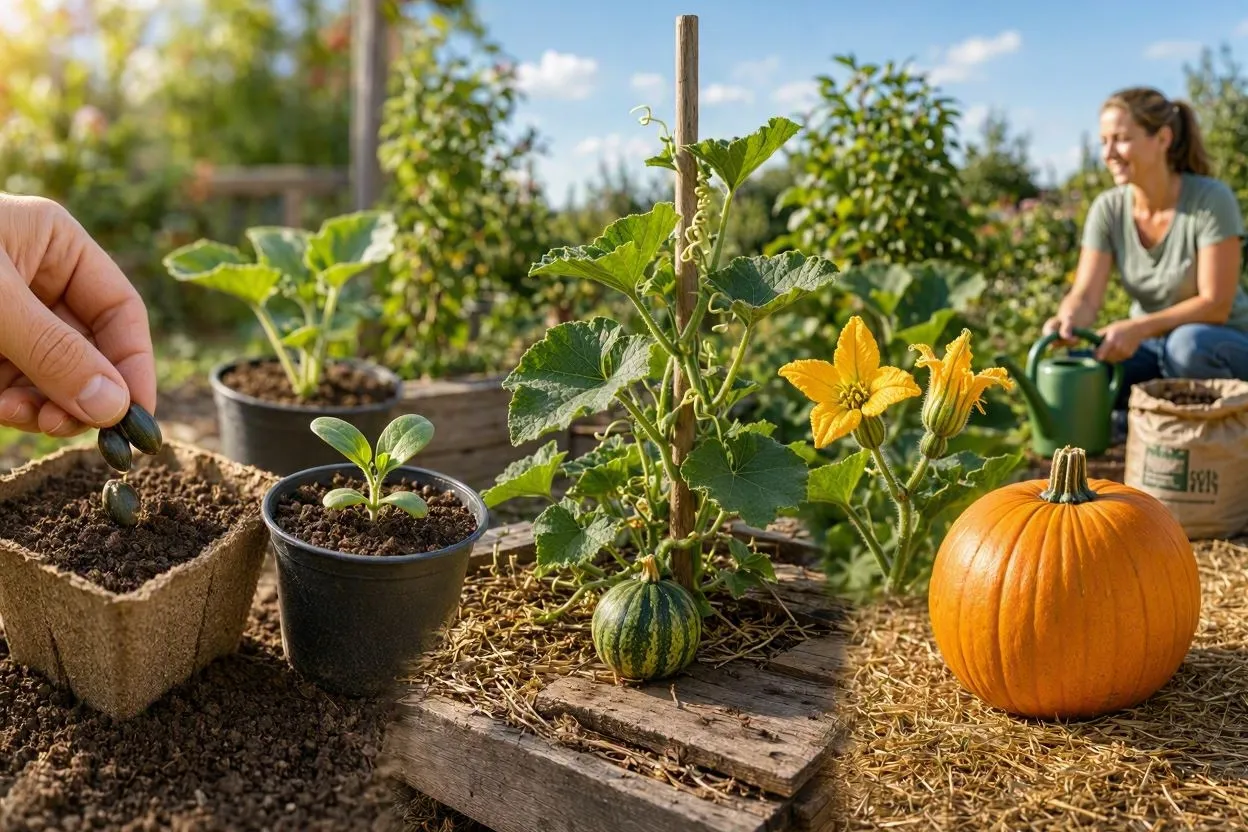
Pumpkin gardening starts with the same fundamentals as any vegetable garden crop: sow seeds 1 inch (2.5 cm) deep in warm, compost-rich garden soil after the last frost, space plants 4 to 6 feet (1.2 to 1.8 m) apart in the garden bed, water deeply once a week, and harvest 90 to 120 days later when the rind is hard and fully colored. Pumpkins need full sun, at least six hours a day, and steady moisture during flowering. Get those four gardening basics right and the rest of the season mostly takes care of itself.
Gardening for pumpkins rewards patience more than skill. Miss the timing window, though, and a garden plant can lose weeks it never gets back.
When to Plant Pumpkins
Plant pumpkin seeds outdoors once soil temperature reaches 65°F to 70°F (18°C to 21°C) and all frost danger has passed. Cold soil rots seeds before they sprout, so checking soil temperature with a simple probe thermometer beats guessing by the calendar.
Timing shifts by region:
| Region | Planting Window | Notes |
| Northern US and most of Canada | Late May to mid-June | Wait until soil warms past 65°F (18°C) |
| Southern US | Early July | Still leaves enough runway for a fall garden harvest |
| UK and Ireland | Start indoors in April, transplant late May | Move seedlings out once nighttime temperatures hold above 50°F (10°C) |
| Australia | September through November | Pumpkins go in for a late summer to autumn harvest, since seasons run opposite to the Northern Hemisphere |
Counting backward from a target harvest date works better than counting forward from a planting date. Garden planners aiming for a specific harvest date should subtract the variety’s days-to-maturity, then add two extra weeks as a buffer for a cool or wet stretch. That buffer matters more than most gardening guides admit.
Choosing a Garden Site and Preparing the Soil
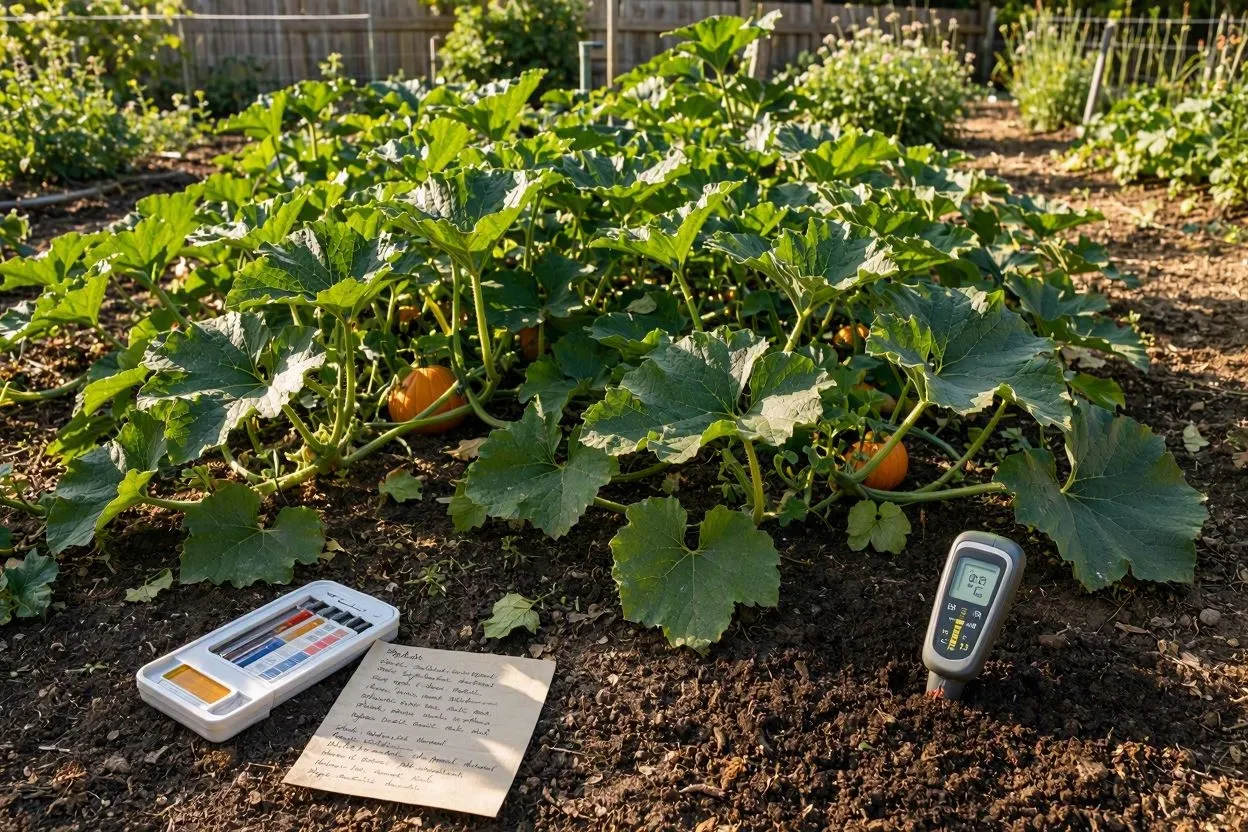
Choose a garden site with full sun and rich, well-drained soil, since pumpkins need six hours of direct light daily and struggle in compacted or waterlogged garden ground. Soil pH between 6.0 and 6.8 gives roots the best access to nutrients, and a test taken the season before reveals exactly what’s missing, nitrogen, phosphorus, or organic matter, rather than leaving fertility to guesswork.
Vining varieties sprawl 10 to 20 feet (3 to 6 m) and need 50 to 100 square feet (4.6 to 9.3 square meters) of room each, so plant them near a bed’s edge where runners can spread onto open lawn. Bush varieties stay compact and suit smaller yards instead.
Mix 2 to 4 inches (5 to 10 cm) of aged compost or well-rotted manure into the top 6 inches (15 cm) of soil before planting. Heavy clay benefits from raising the bed into a mound; sandy soil already drains fast and needs extra compost more than height. A mound 3 to 6 inches (7.6 to 15 cm) tall and about 3 feet (0.9 m) across warms faster than flat ground, giving seedling roots a head start right when germination matters most.
Planting and Care
How to Plant Pumpkin Seeds
To plant pumpkin seeds, sow them 1 inch (2.5 cm) deep, pointed side down, with four to six seeds per hill, then thin to the two strongest seedlings once true leaves appear. Planting extra seeds accounts for uneven germination, which happens even under good conditions.
Spacing depends entirely on the variety being grown:
- Vining types need hills spaced 4 to 6 feet (1.2 to 1.8 m) apart, with rows 10 to 15 feet (3 to 4.6 m) apart.
- Semi-bush varieties need 4 feet (1.2 m) between hills and 8 feet (2.4 m) between rows.
- Miniature pumpkins do fine with plants every 2 feet (0.6 m) in rows spaced 6 to 8 feet (1.8 to 2.4 m) apart.
- Bush varieties fit into tighter spaces, needing just 3 to 4 feet (0.9 to 1.2 m) between individual plants.
Water each hill thoroughly right after sowing, keeping the soil consistently moist until germination, which usually takes 5 to 10 days at 70°F (21°C). Seedlings that dry out in their first week rarely recover fully, so daily checks matter more early on than later in the season.
Gardeners in short-season climates can start seeds indoors in biodegradable peat pots 2 to 4 weeks before the last frost, then transplant the whole pot into the ground to avoid disturbing the sensitive taproot. Pumpkins resent root disturbance; a plant transplanted bare-root often stalls for a week while it recovers.
Watering and Feeding Pumpkin Plants
Water pumpkin plants deeply, giving them 1 to 2 inches (2.5 to 5 cm) per week, increasing that amount during flowering and fruit set when the plant’s water demand roughly doubles. Shallow, frequent watering encourages weak, surface-level roots instead of the deep root system pumpkins actually need.
Drip irrigation or a soaker hose works better than overhead sprinklers, since wet foliage invites powdery mildew and other fungal problems. Watering early in the morning, if a sprinkler is the only option available, gives leaves time to dry before nightfall.
Pumpkins are heavy feeders. Fertilizer needs change as the plant moves through each growth stage:
| Growth Stage | Fertilizer Focus | Example Ratio |
| Planting through early vine growth | Nitrogen-heavy, to build strong vines | 10-10-10 or similar balanced blend |
| Flowering | Phosphorus-rich, to support bloom and fruit set | 5-10-5 or 5-15-5 |
| After fruit set | Potassium added, to support fruit development | 5-15-15 or a potassium-boosted feed |
Too much nitrogen late in the season produces enormous leaves and disappointing fruit, a common mistake among first-time growers chasing bigger vines instead of bigger pumpkins.
Mulching around the base with straw, shredded leaves, or plastic sheeting conserves soil moisture and suppresses weeds. Organic mulch shouldn’t go down until soil temperature exceeds 75°F (24°C), because it insulates the ground and can actually slow early-season warming.
Pumpkin Gardening Tips & Best Practices
Good pumpkin gardening comes down to a handful of habits that experienced gardeners repeat every season, regardless of garden size or climate:
- Rotate garden beds. Avoid planting pumpkins or other cucurbits in the same garden bed two years running, since soil-borne pests and diseases build up in the same spot over time.
- Keep the garden weeded early. Weeds compete hardest with young pumpkin seedlings for water and nutrients in the first few weeks; a clean garden bed at planting time pays off all season.
- Test garden soil annually. A simple soil test kit, available at most garden centers, flags pH or nutrient gaps before they show up as stunted vines.
- Match variety to garden space. Home gardeners with small yards get better results from bush or container varieties than from vining types bred for open garden rows.
- Keep a garden journal. Logging planting dates, fertilizer applications, and pest sightings from one gardening season to the next makes it easier to spot patterns and improve yields over time.
These gardening fundamentals apply whether the plot is a backyard vegetable garden, a raised garden bed, or a container garden on a patio.
Pollination: Male Flowers, Female Flowers, and Hand-Pollination
Do pumpkin plants need help with pollination? Yes, in gardens with few bees, since pumpkins rely almost entirely on insect pollination and rarely self-pollinate through wind alone. Without pollinators, plants produce plenty of flowers and no fruit at all.
Telling Male and Female Flowers Apart
Male flowers open first, usually 7 to 10 days before the females, and their job is simply to attract bees to the vine early. Female flowers appear later and only stay open for a single day. Tell the two apart this way:
- Male flowers grow on a plain, straight stem with no swelling underneath.
- Female flowers show a small round bulge at the base, the unfertilized fruit waiting for pollen.
- Male flowers usually outnumber female flowers by a wide margin, especially early in the season.
- Female flowers close permanently once pollinated, while an unpollinated one drops off within a day or two.
How to Hand-Pollinate Pumpkins
To hand-pollinate pumpkins, pick a freshly opened male flower in the morning, remove its petals, then dab the pollen-covered center directly onto the female flower’s stigma. A small paintbrush or cotton swab works just as well if a spare male flower isn’t handy. Hand-pollination takes less than a minute per flower and dramatically improves fruit set in gardens where bee activity runs low.
Plant bee-attracting flowers, such as marigolds, zinnias, or borage, near the pumpkin patch to pull more pollinators toward the vines. Avoid spraying any insecticide during daylight hours when blossoms are open; if a pest treatment is unavoidable, apply it at dusk once bees have finished foraging for the day.
Common Pumpkin Pests and Diseases
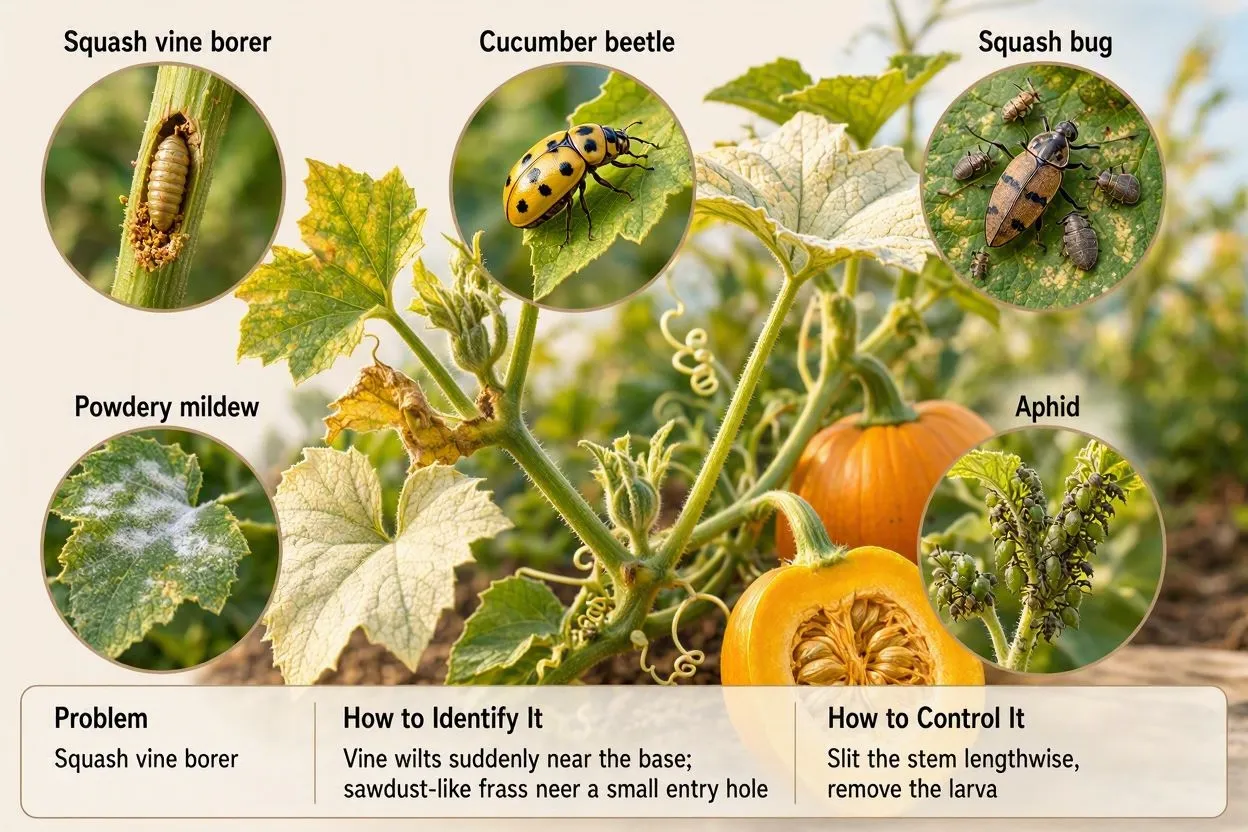
Which pests and diseases most commonly affect pumpkin plants? Squash vine borers, cucumber beetles, squash bugs, aphids, and powdery mildew cause the majority of pumpkin crop losses. Catching each one early keeps a minor problem from wiping out an entire vine.
| Problem | How to Identify It | How to Control It |
| Squash vine borer | Vine wilts suddenly near the base; sawdust-like frass near a small entry hole | Slit the stem lengthwise, remove the larva, then bury the damaged section in soil to encourage new roots |
| Cucumber beetle | Yellow-and-black striped or spotted beetles feeding on leaves and stems | Use row covers until flowering, then hand-pick beetles or apply an approved insecticide at dusk |
| Squash bug | Gray-brown, shield-shaped bugs; clusters of bronze eggs on leaf undersides | Check leaf undersides weekly, crush egg clusters, trap adults under boards overnight |
| Aphids | Small green or black insects on new growth; sticky honeydew residue on leaves | Spray with insecticidal soap or a strong stream of water |
| Powdery mildew | White, powdery coating on leaf surfaces, starting with older leaves | Water at the base only, improve airflow between plants, apply a sulfur or potassium bicarbonate fungicide at first sign |
Powdery mildew alone accounts for a large share of reduced yields in humid climates, since infected leaves die back early and expose developing fruit to sunscald. Choosing a mildew-resistant variety cuts that risk substantially before the season even starts.
How to Grow Giant Pumpkins
How do you grow giant pumpkins that weigh over 100 pounds (45 kg)? Select a jumbo variety, such as Atlantic Giant, allow 150 square feet (14 square meters) of space per plant, then limit each vine to a single developing fruit. Everything else about giant-pumpkin growing follows from that one decision to sacrifice quantity for size.
Follow these steps once the plant starts flowering:
- Remove the first two or three female flowers without letting them set fruit, forcing the plant to build more leaf area first.
- Let one pumpkin set successfully, then pinch off every new female flower that follows afterward.
- Pinch the growing tip off each vine once it reaches roughly 10 to 15 feet (3 to 4.6 m) beyond the chosen fruit, since unchecked vine growth competes with the pumpkin for resources.
- Bury vine joints in soil every few feet to encourage secondary rooting, which increases the plant’s overall nutrient and water uptake.
- Rotate the developing pumpkin gently every few days for an even shape.
- Place a board or thick cardboard underneath the fruit to prevent ground contact and rot.
- Shade the pumpkin during peak afternoon heat to prevent skin splitting, a real risk once daily growth rates hit several pounds.
Growing Pumpkins in Containers or Small Gardens
Can pumpkins grow in containers? Yes, in containers of at least 5 gallons (19 liters) for mini varieties, or 10 to 20 gallons (38 to 76 liters) for standard-sized types, provided drainage holes are present. Container growing suits balconies, patios, and gardens too small for a sprawling vine.
Choose compact or bush varieties bred for limited space, since giant vining types quickly overwhelm any container. Fill the pot with a light, fast-draining potting mix, then water more frequently than in-ground plants, since containers dry out faster in direct sun. A drip tray underneath catches runoff without letting roots sit in standing water.
Vertical trellising works well for smaller pumpkin varieties, letting the vine climb instead of sprawl. Support developing fruit with a sling made from netting or old pantyhose once a pumpkin reaches golf-ball size, since a heavy fruit hanging unsupported can snap the vine.
When and How to Harvest Pumpkins
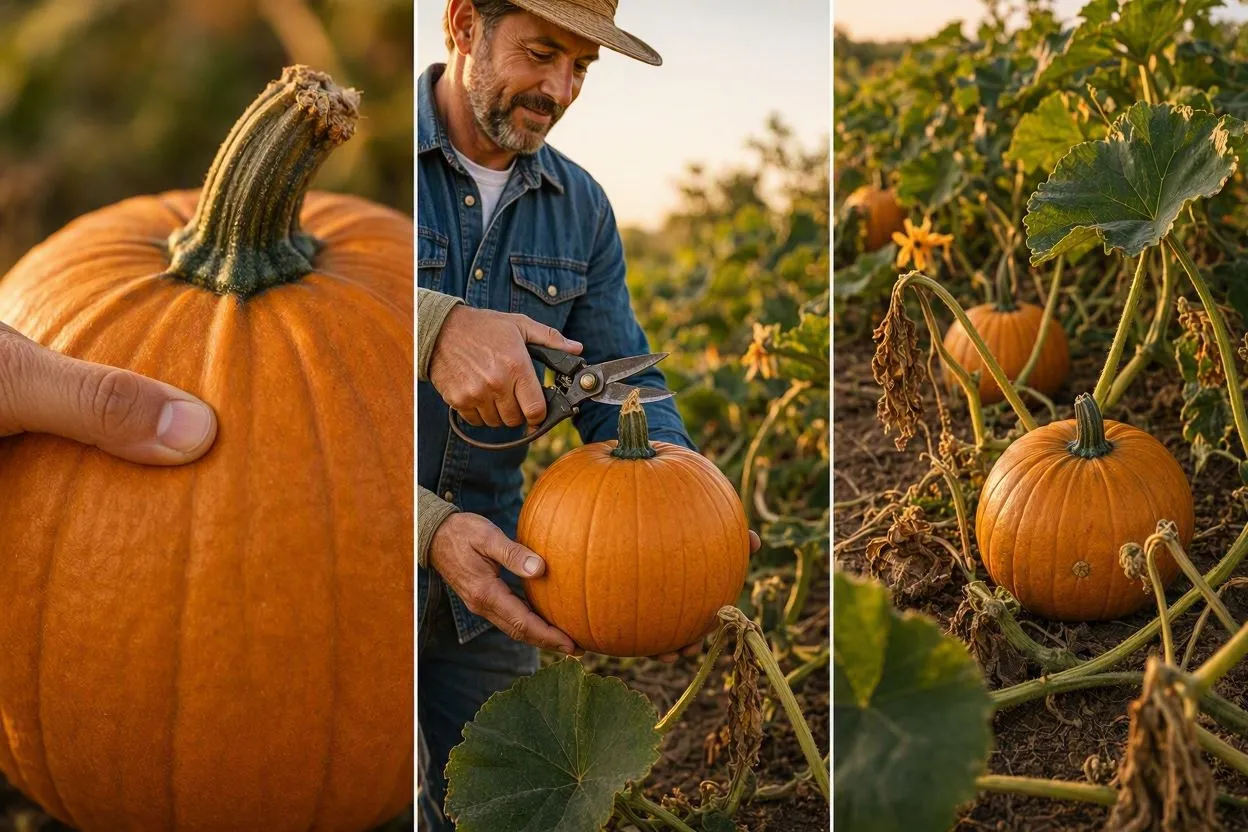
When are pumpkins ready to harvest? A pumpkin is ready once the rind turns fully colored, resists a thumbnail’s puncture, and the nearby vine starts drying and browning. Most varieties hit that point 45 to 55 days after pollination, though cultivar and weather shift the window either way.
Cut the fruit free with sharp pruning shears rather than twisting or snapping the stem. Leave 3 to 4 inches (7.6 to 10 cm) of stem attached, the part growers call the “handle,” since a missing handle invites rot fast. Gloves help too: pumpkin vines carry sharp prickles that scratch bare skin.
Frost changes the calculus. Pick before the first hard freeze even if a pumpkin hasn’t fully colored, since light frost damages skin and shortens storage life. Left alone in mild weather, a healthy vine can keep ripening fruit for another week or two.
Curing and Storing Pumpkins
How long do pumpkins last in storage? Properly cured pumpkins store for 2 to 3 months in a cool, dry space held at 50°F to 55°F (10°C to 13°C) with 50 to 60 percent humidity. Skipping the curing step cuts that window down considerably.
Cure freshly harvested pumpkins by setting them in direct sun for 10 to 14 days, which hardens the rind, seals the stem wound, and improves flavor. Bring pumpkins indoors overnight if frost threatens during the curing period, since even a light freeze at this stage causes soft spots that spread quickly.
Keep storage conditions consistent with this checklist:
- Store pumpkins where they won’t touch each other, allowing air to circulate freely around each fruit.
- Choose a basement, unheated garage, or root cellar that stays frost-free and reasonably dry.
- Check stored pumpkins weekly for soft spots or mold.
- Remove any rotting pumpkin immediately, since one spoiled fruit speeds decay in the whole batch.
Anyone wondering how to grow pumpkins successfully season after season should treat storage as part of the growing process, not an afterthought tacked on once harvest ends. The habits that produce a healthy vine, rich soil, consistent watering, and careful pest control, are the same habits that produce fruit sturdy enough to last through winter.
Putting It All Together
Growing pumpkins from seed to harvest takes roughly 90 to 120 days and rewards attention at four specific points: planting timing, pollination, pest management, and harvest timing. Miss any one of those windows and yield or storage life suffers, even when everything else goes right.
First-time growers often focus entirely on watering and forget that pollination failure causes far more crop loss. Checking for female flowers each morning during bloom season, then hand-pollinating if bee activity looks thin, solves a problem most gardeners never realize they have until the season’s nearly over.
FAQs
Does growing pumpkins require full sun?
Yes, pumpkins need at least six hours of direct sunlight daily. Partial shade slows growth and reduces fruit size, so choose the sunniest spot in the garden.
Can you grow pumpkins from store-bought pumpkin seeds?
Yes, though cross-pollination with other cucurbits sometimes affects the next generation’s traits. Clean and dry the seeds fully before storing them for spring planting.
Do pumpkin vines need pruning?
No, pruning isn’t required, though trimming vine tips after fruit sets redirects energy toward the pumpkins instead of continued vine growth.
Should pumpkins touch the ground while growing?
Slide a board or cardboard beneath each fruit once it forms. This prevents soil contact, which causes rot and attracts pests looking for easy entry points.
Can pumpkins survive a light frost on the vine?
No, even a light frost damages the skin and shortens storage life. Harvest before the first frost, or cover vines overnight if one is forecast.
Conclusion
Successful pumpkin gardening comes down to matching four things correctly: timing, garden soil, water, and pollination. Get the planting window right, keep the garden bed fed with compost, water deeply rather than often, and step in with hand-pollination if bees are scarce. Everything from vine size to pumpkin weight to how long the harvest lasts in storage traces back to those early gardening decisions. Whether the goal is a handful of pie pumpkins for the kitchen garden or one giant contender pushing past 100 pounds, the fundamentals covered here apply the same way, gardening season after gardening season.