A beautiful garden usually gets planned around plants, flowers, pathways, and seating areas. Water access rarely gets the same attention. But anyone who waters containers regularly, cleans tools, fills watering cans, or rinses off freshly picked vegetables knows how much a well-placed outdoor tap can save you.
Instead of tucking a faucet behind a shrub like it’s something to hide, you can build it into the garden’s design. With the right placement, materials, and plants around it, a simple watering station can feel like it belongs there, not like an afterthought bolted on.
Start With the Way You Actually Use Your Garden
Before you pick plants or decide on finishes, think about where you actually need water.
A patio full of pots and hanging baskets benefits from a nearby water source; it saves you from hauling watering cans through the house. Vegetable gardeners often want a tap close to the raised beds or the potting bench. In a bigger backyard, a dedicated washing spot for muddy tools, boots, and harvested produce can be worth setting up on its own.
Location matters here mostly because you’re trying to cut down on hose-dragging and make routine maintenance less of a chore.
That said, don’t put the water point somewhere heavy foot traffic or splashing will damage nearby plants. A small paved, gravel, or stone surface around the fixture helps with drainage and keeps the area from turning into mud.
Create a Dedicated Outdoor Watering Station
One of the easiest approaches is a compact watering station against an exterior wall, a shed, or a freestanding post.
At its simplest, that’s a faucet, somewhere to store the hose, a shelf for watering cans, and a few hooks for small tools. If you rinse equipment often, a shallow outdoor basin or draining surface is worth adding too.
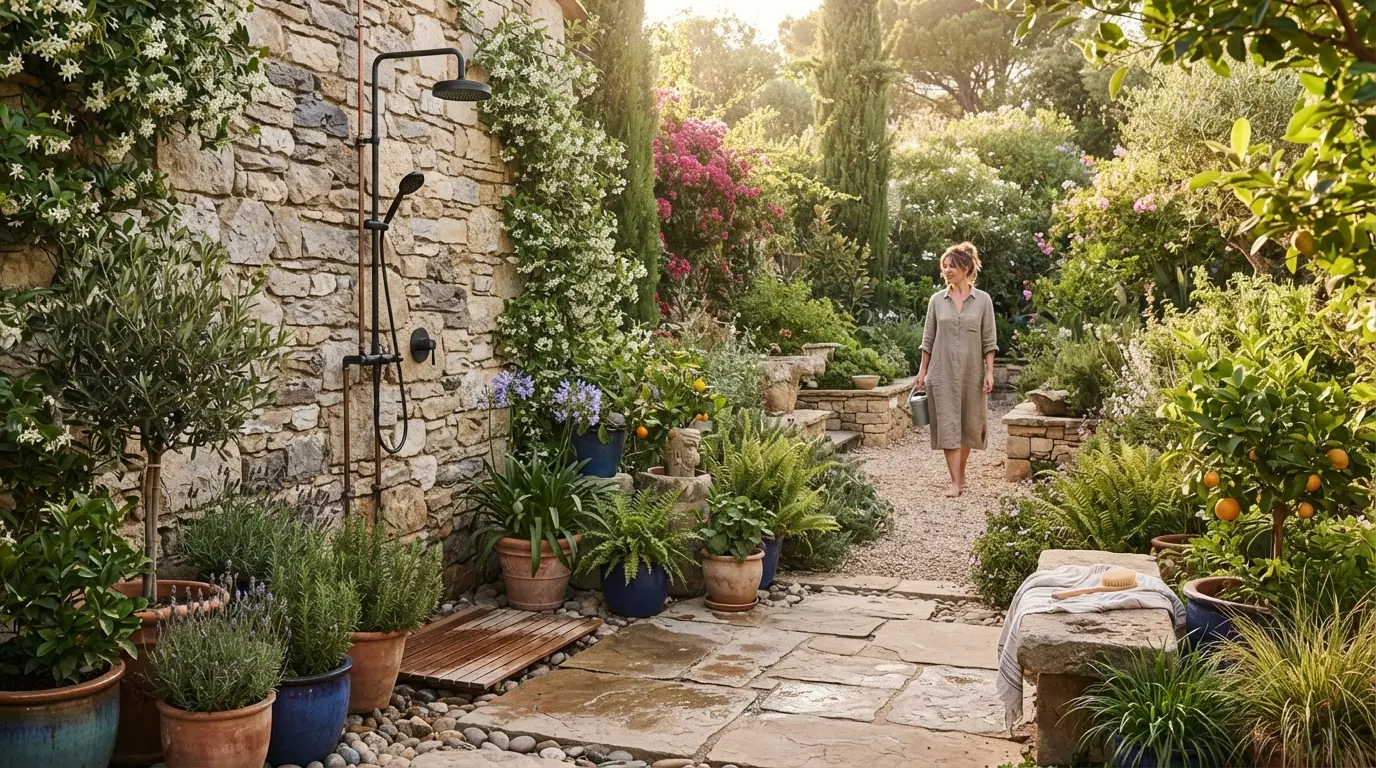
In larger gardens, outdoor shower faucets can inspire something more versatile, especially near pools, kitchen gardens, greenhouses, or anywhere people come inside with muddy feet. Just make sure you’re using outdoor-rated fixtures installed properly for your climate, plumbing, and winters.
Natural materials tend to blend better into a planted garden than anything polished or indoor-looking. Timber screens, stone, brick, gravel, and weathered metal all sit more comfortably outside than sleek modern fixtures do.
Surround the Area With Plants
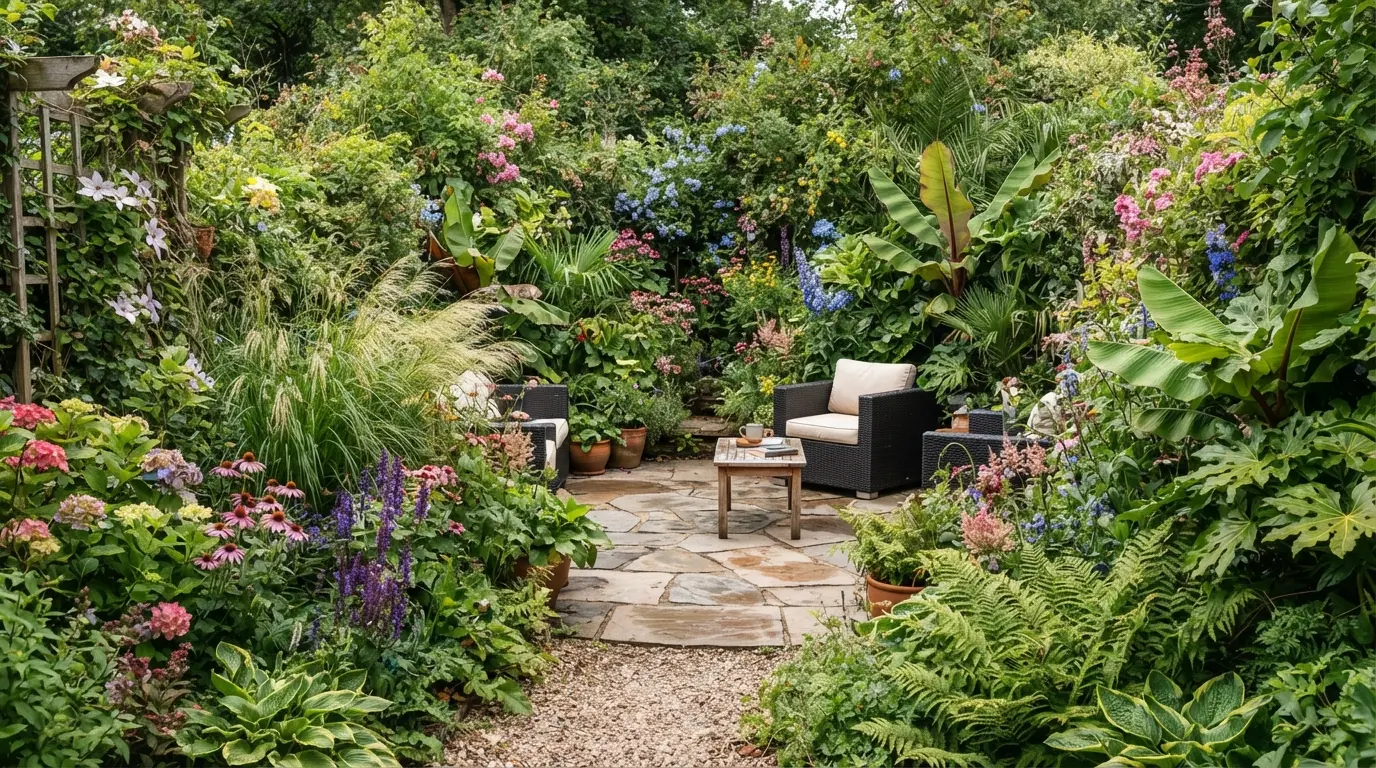
Plants are the easiest way to soften plumbing and make a utility corner feel like it was planned rather than tolerated.
Pick plants for the actual light and moisture conditions, not just how they look in photos. A sunny spot suits lavender, coneflower, salvia, or ornamental grasses. Shadier corners do better with hostas and other shade-tolerant foliage.
Containers work especially well here because you can move them around as the garden changes, and they let you add seasonal color without permanently blocking access to the plumbing.
Leave room around the faucet for maintenance. Dense shrubs and vigorous climbers might look great at first, but they make repairs a headache once they mature.
Think About Drainage Before Decoration
Any feature involving water needs somewhere for that water to actually go.
If the ground under a faucet stays wet, the area turns muddy and unpleasant to use, and constant moisture doesn’t suit plants that want freely draining soil.
Gravel is often the simplest fix. Water drains through it while the surface stays relatively clean. Permeable pavers and stone give you a more finished look if you want that.
If you’re discharging a lot of water regularly, plan the drainage properly rather than hoping the surrounding flower beds soak it all up. Check local plumbing and drainage rules too; they might apply.
Add a Potting and Flower-Care Area
A water source gets even more useful when there’s a small potting station next to it.
A weather-resistant bench gives you room to repot plants, divide perennials, prep containers, and arrange cut flowers. Keep the tools you use often, gloves, plant labels, and empty pots close by.
This setup particularly helps if you grow a lot in containers. Potted plants generally need more frequent watering than plants in the ground, so having water within reach makes the whole routine less of a hassle.
A shelf above the bench can hold small terracotta pots or supplies, while storage underneath keeps compost bags and larger containers out of view.
Bring Some Garden Character Indoors
The transition between garden and home can be designed with a bit more intention too.
A mudroom, utility room, conservatory, or kitchen entrance facing the garden can echo the materials and colors used outside. Botanical prints, natural wood, stone, green tones, and fresh or dried flowers all help tie the two spaces together.
Even functional fixtures can do this work. Bathroom sink faucets and utility-room hardware with understated finishes can complement garden-facing spaces when you repeat the same metal tones or natural textures indoors and out.
You don’t need a perfect match. A subtle echo between materials is usually enough to make the shift from outside to inside feel considered rather than accidental.
Use Flowers to Hide Utility Features—But Not Completely
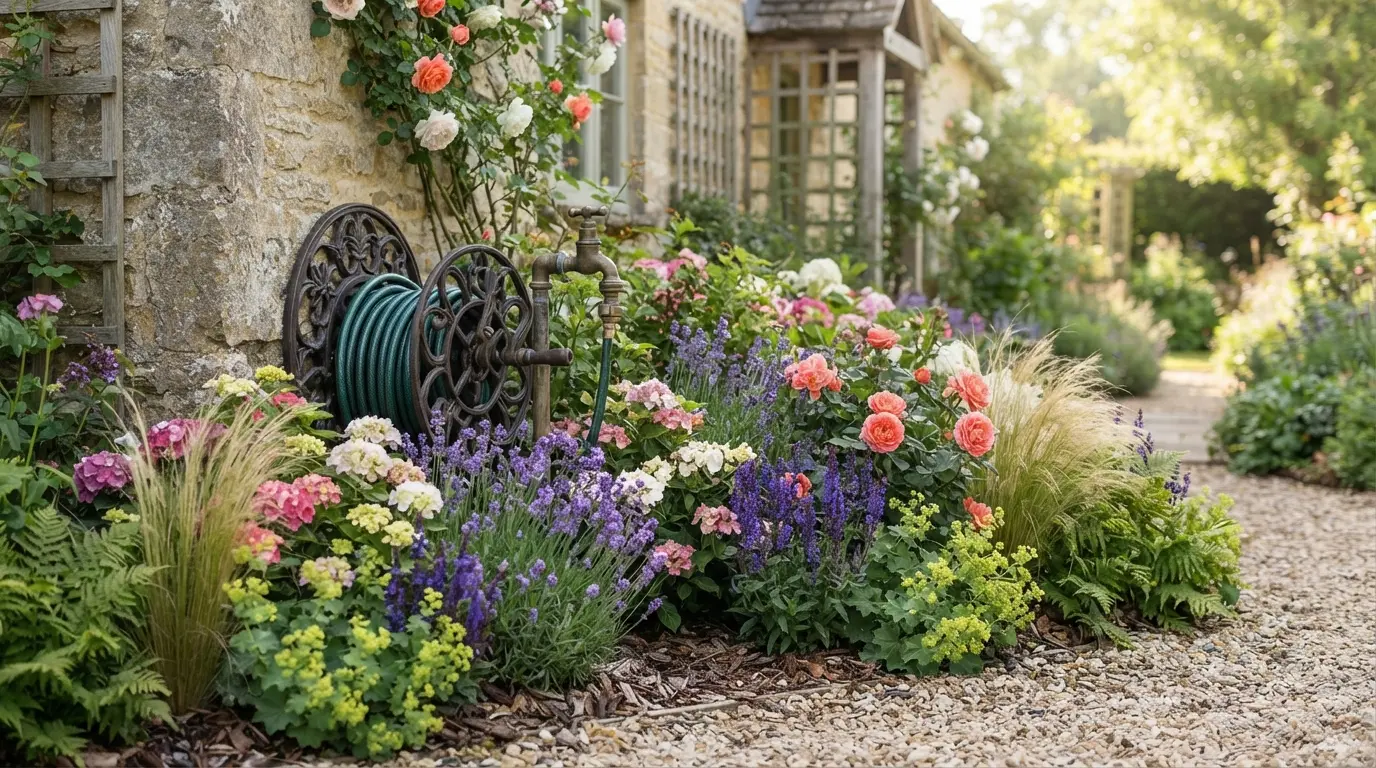
Outdoor plumbing, hose reels, pipes, and utility boxes rarely do anything for a garden view, but burying them completely under plants tends to create maintenance headaches down the line.
Partial screening works better.
Use medium-height perennials, ornamental grasses, or movable containers to pull the eye away from the hardware while keeping access points clear. Flowering plants can turn a plain utility corner into another layer of the garden instead of a blind spot.
For year-round structure, pair evergreen foliage with seasonal flowers, so there’s still some screening once the annuals and herbaceous perennials have finished for the year.
Match Plants to the Conditions Around the Water Point
Being close to a faucet doesn’t automatically make a spot suitable for moisture-loving plants.
Soil conditions there depend on drainage, sunlight, climate, and how often the tap actually gets used. A faucet on a well-drained gravel pad might barely affect the soil moisture around it. A poorly drained spot, on the other hand, can stay wet for a long time.
Watch the area for a while before you plant anything.
In sunny, relatively dry spots, drought-tolerant plants like lavender and coneflower do well once established. In partially shaded areas that stay consistently moist, plants suited to those conditions will do better than ones that aren’t.
As with the rest of the garden, matching the plant to the site works better than trying to force the site to suit the plant.
Keep the Design Simple
A garden watering station doesn’t need to turn into a full landscaping project.
In plenty of gardens, a well-positioned faucet, a tidy hose holder, a gravel drainage patch, and a handful of well-chosen plants is all it takes. Bigger spaces can add a potting bench, outdoor sink, storage, or washing area if there’s a real need for it.
The best design is the one that makes everyday gardening easier without competing with the plants themselves.
Get the water access, drainage, storage, and planting working together, and even a purely functional corner can become a genuine part of the landscape. Good design doesn’t hide the practical side of gardening; it lets it sit naturally alongside the flowers, foliage, and outdoor living spaces around it.