
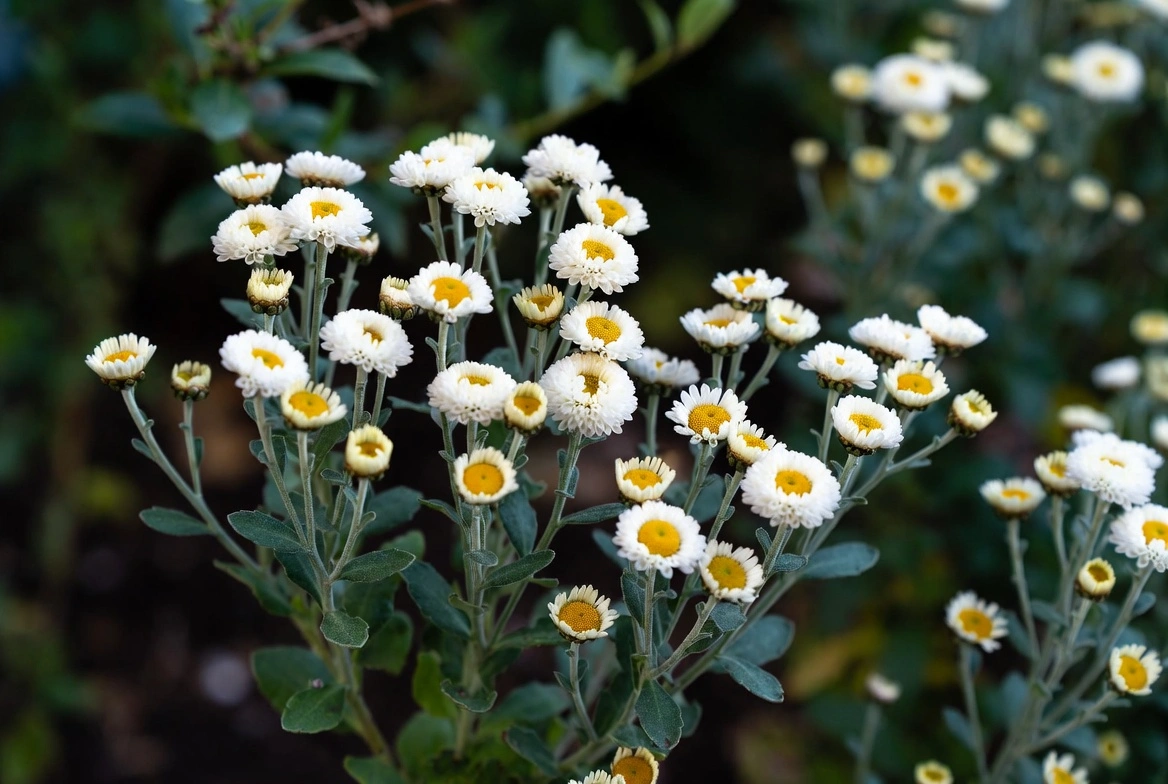
Your chrysanthemum looked perfect at the store. Three days later it’s wilting, yellowing, and you’re wondering what happened. Here’s the truth: indoor mums and outdoor mums need completely different care.
I killed four chrysanthemums before figuring this out. Turns out “easy care” depends entirely on which type you bought and where you’re growing it.
This guide covers real chrysanthemum plant care for indoor gift plants and container mums outside.
Indoor Chrysanthemum Plant Care
Indoor mums are florist varieties bred for temporary display, not permanent houseplants.
- Expected lifespan: 3-4 weeks of flowers, then done.
- Will they rebloom? Unlikely. Indoor conditions can’t replicate the day-length triggers mums need.
These are basically fancy cut flowers with roots attached.
Light for Indoor Mums
What they need:
- Bright indirect light near windows
- No direct afternoon sun
- Away from nighttime lights (confuses bloom cycle)
I kept my first mum under a porch light. Buds never opened. Moved it away and the next plant bloomed four full weeks.
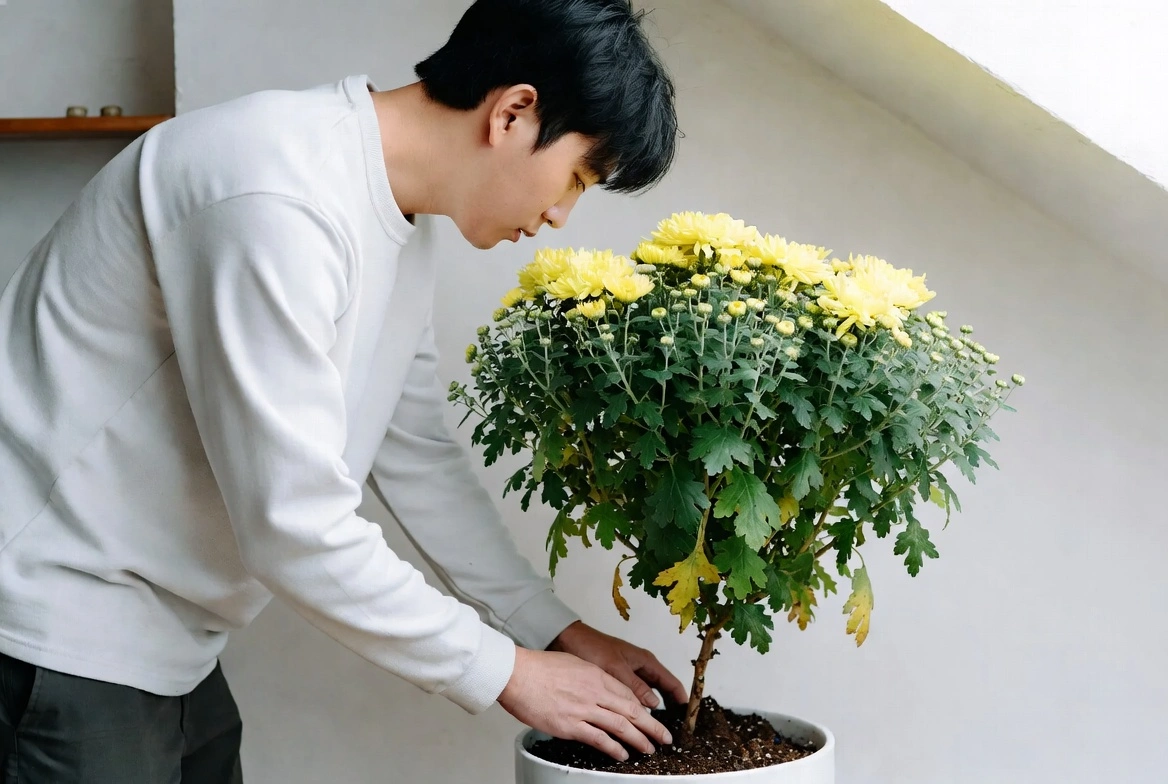
How to Take Care of Chrysanthemum Plant Watering
The rule: Moist but never soggy soil.
How to water:
- Check top inch daily
- Water at soil level (not on flowers)
- Water until it drains
- Empty saucer after 30 minutes
- Overwatering signs: Yellow leaves, mushy stems, mold on soil
- Underwatering signs: Drooping, crispy edges, wilted flowers
I check every morning. Dry top inch = water. Still damp = skip. Simple.
Temperature and Indoor Chrysanthemum Plant Benefits
- Ideal temp: 60-70°F
- Avoid: Heat vents, cold drafts, temperature swings
My first mum died in ten days next to a heating vent. Location matters more than fertilizer.
Why grow indoor mums:
- Filter air like other houseplants
- Mood boost from bright flowers
- Low commitment (3-4 weeks only)
- Better than cut flowers
Just set realistic expectations. These aren’t forever plants.
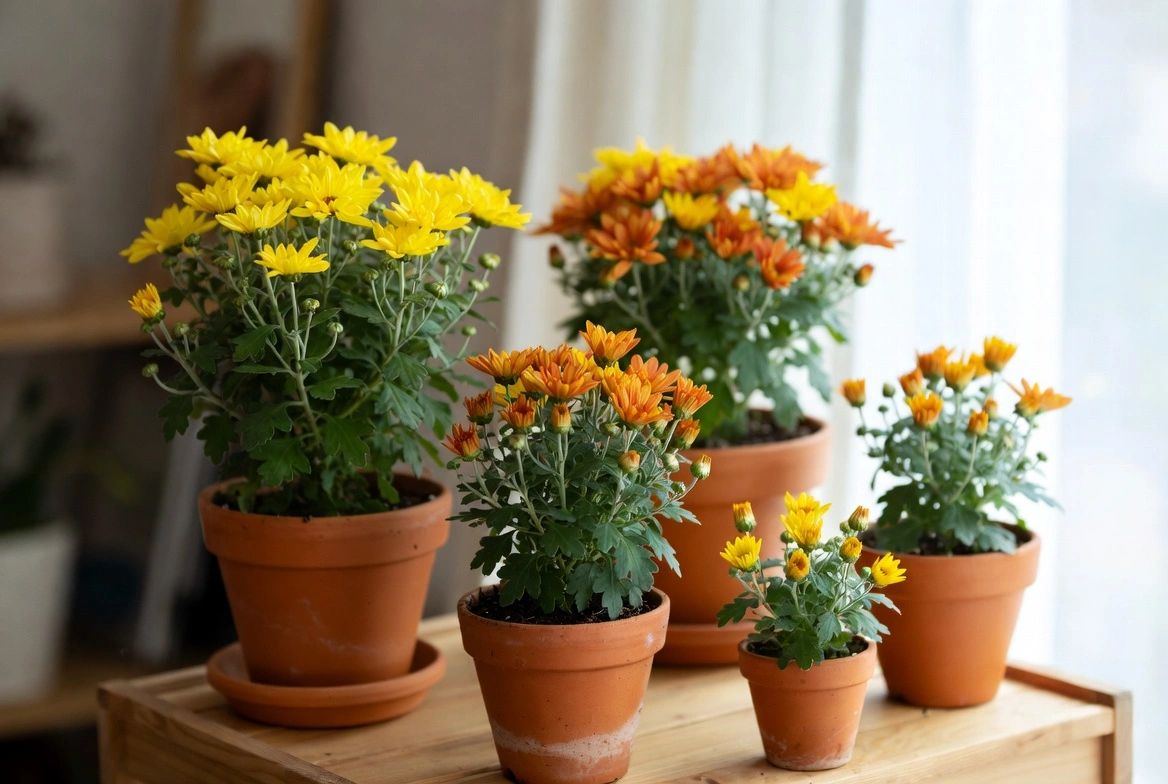
Chrysanthemum Care in Pots (Outdoor)
Garden mums in containers can be perennial if treated right.
Container Size and Soil
Minimum: 12-inch diameter, 10-inch depth
Best features:
- Drainage holes (non-negotiable)
- Heavy enough to prevent tipping
- Breathable material
Soil mix:
- 60% potting mix
- 30% compost
- 10% perlite
I tried 8-inch pots my first year. Root-bound by July, barely bloomed. Bigger = better.
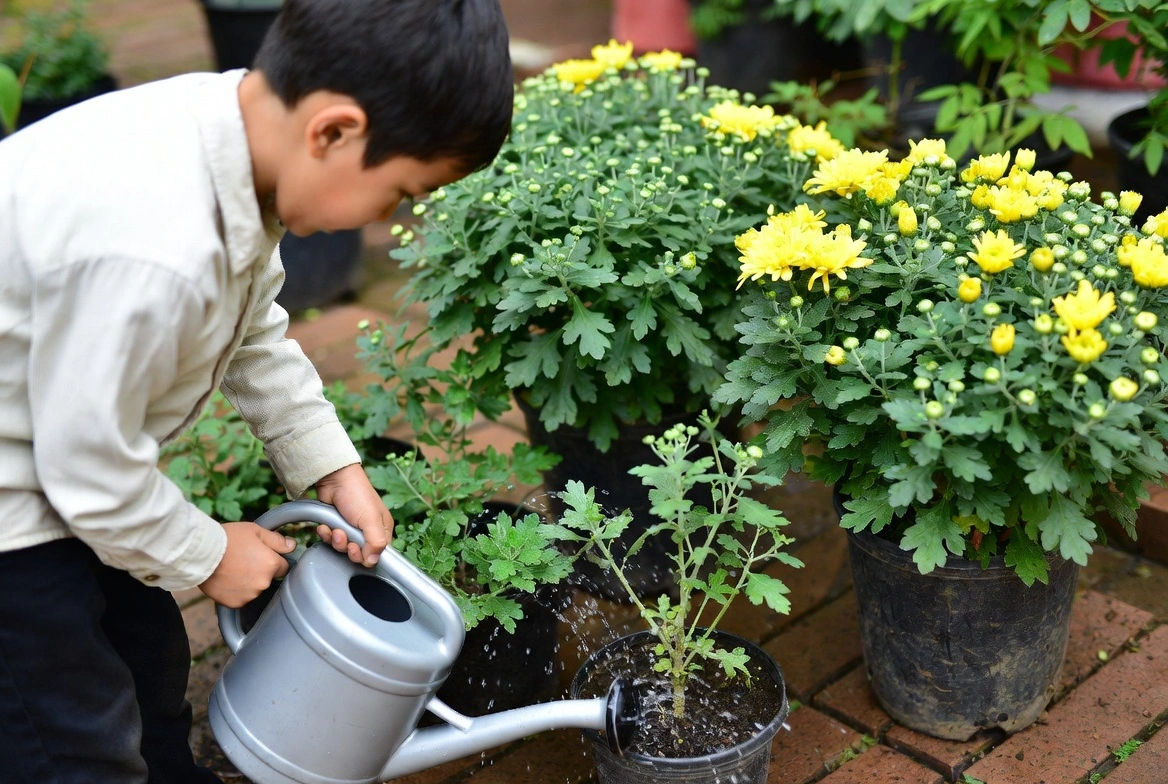
Watering Chrysanthemum Care in Pots
Caring for chrysanthemums in pots requires frequent deep watering, as container mums dry out faster than in-ground plants, and proper potted chrysanthemum care includes checking soil moisture daily and watering deeply when the soil is dry a few inches below the surface. Container mums dry way faster than in-ground plants.
- Summer: Check daily when temps exceed 80°F, may need twice daily
- Fall: Every 2-3 days, never let completely dry during bloom
Pro tip: Finger 2 inches deep. Dry = water deeply.
I lost spider mums because I didn’t check deep enough. The surface looked damp but was dust-dry two inches down.
Fertilizing and Pinching
- Spring: Balanced 10-10-10 when growth starts
- Early summer: Monthly liquid fertilizer
- Late summer: Stop completely (too much nitrogen = leaves, no flowers)
Pinching schedule:
- First: 6 inches tall (May)
- Second: 12 inches (June)
- Final: Mid-July max
Result: Each pinch doubles stems. More stems = more flowers. I pinched three times. My neighbor didn’t. His plant had 15 blooms. Mine had 80+.
Overwintering Container Mums
- Option 1: Treat as annuals (enjoy, then compost)
- Option 2: Overwinter indoors (cut to 4 inches, move to cool dark spot, water monthly)
- Option 3: Plant in ground (best survival rate)
I tried garage overwintering three years. 60% success rate. Now I plant favorites in ground, treat rest as annuals.
Common Problems
- Yellow leaves: Overwatering. Check soil moisture and drainage.
- Wilting despite watering: Root rot. Usually too late. Prevention = no standing water.
- Not blooming: Too much fertilizer or nighttime light. Stop feeding after July, move away from lights.
- Leggy plants: Insufficient sun or no pinching. I need 6+ hours of sun and spring pinching.
FAQ: Chrysanthemum Plant Care
How often should I water chrysanthemum plants?
Indoor: every 2-3 days. Containers in summer: daily in hot weather. Always check soil—water when the top inch is dry.
Can chrysanthemums survive indoors?
Florist mums bloom 3-4 weeks indoors then die. They’re temporary plants. Garden mums need winter dormancy and can’t thrive indoors long-term.
What is chrysanthemum indoor care?
Chrysanthemum indoor care includes bright indirect light, regular watering, good air circulation, and removing spent blooms to keep the plant healthy.
Do chrysanthemums need full sun?
Yes. Outdoor mums need a minimum 6 hours direct sun for healthy growth. Indoor mums prefer bright indirect light.
How do I keep potted mums alive?
Containers with drainage, quality potting mix, water when top inch dry, 6+ hours sun, and pinch stems in spring for bushier plants.
When should I stop fertilizing chrysanthemums?
Stop in late summer once buds form (August). Excess nitrogen delays blooming and reduces flowers.
Indoor mums: Bright indirect light, consistent moisture, realistic expectations. These are temporary gift plants (3-4 weeks max).
Container mums: Big pots, daily water checks in summer, spring pinching, 6+ hours sun. These can be perennial with proper care.
Biggest mistake: Treating indoor florist mums like outdoor garden mums. Completely different plants.
The Bottom Line
I wasted money on four indoor mums trying to make them permanent before accepting they’re temporary. Now I enjoy the show guilt-free and compost when done. For patio containers? I plant garden-hardy varieties in spring, pinch religiously, and they return bigger every year. Match your care to the plant type you have, and you’ll stop killing mums.