The last few minutes of gardening often create tomorrow’s mess. A muddy trowel lands beside the back door, damp gloves disappear into a bucket, and a tray of seedlings comes indoors with soil clinging to its base. By the time the boots come off, there is a trail across the floor.
A better finish starts before you reach the house. Separating loose soil, equipment, harvested food and personal washing makes the cleanup easier to manage. It also gives tools and containers the attention they need before the next planting session.
You do not need a new garden building or an elaborate outdoor washing station. A brush, a washable tray, sensible storage and a consistent order of tasks can solve many of the everyday problems.
Remove the Bulk of the Soil Before Turning On the Water
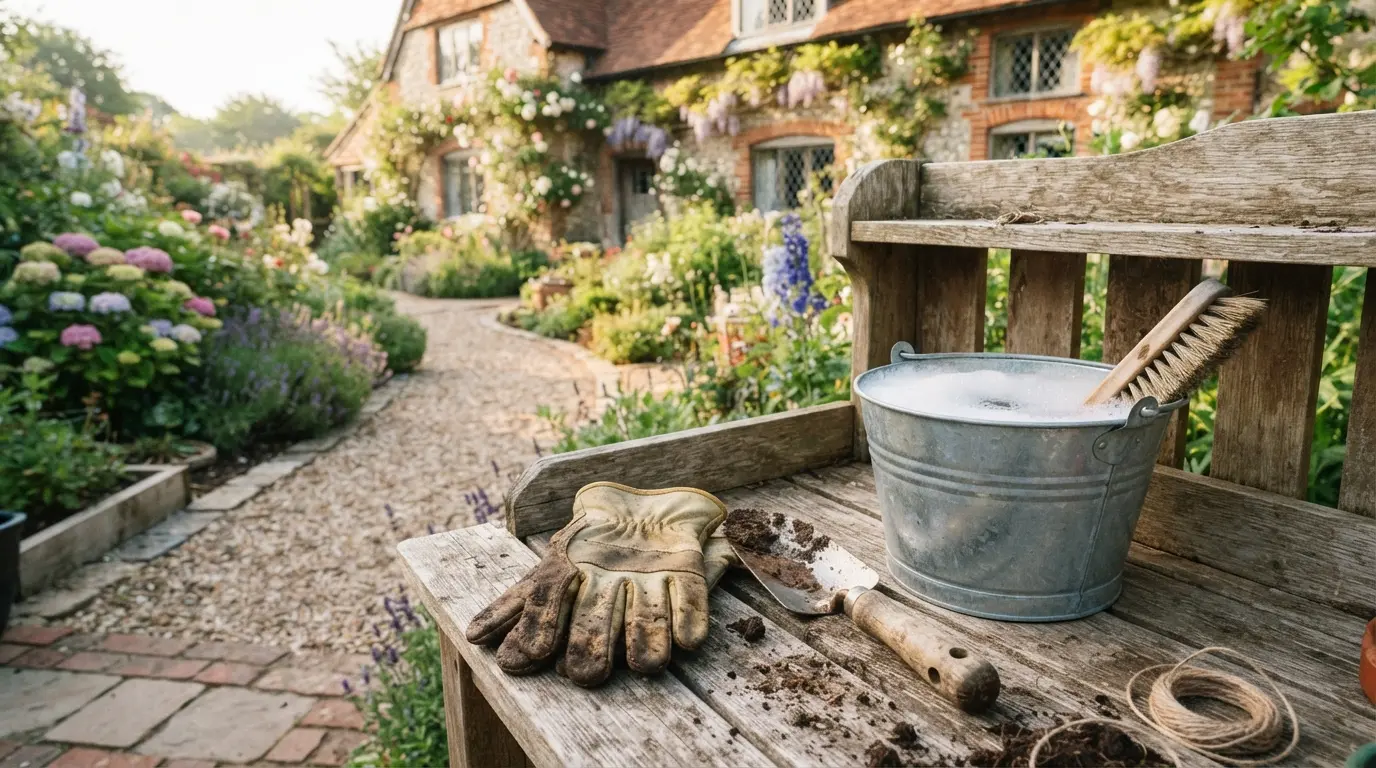
Start with the items carrying the most dirt: boot soles, spades, trowels and the undersides of plant containers. Scrape or brush off loose soil outdoors, collecting it where it will not be walked through again. Keep a stiff brush with your garden equipment so this step does not involve hunting around the house.
This is particularly useful after working in wet clay. Sending every clump straight into a sink turns a small cleaning job into a muddy basin and a clogged strainer. Remove what you can first, then wash away the residue.
Inspect equipment as you go. A loose handle, a damaged glove or a cracked seed tray is easier to deal with now than when you are halfway through the next job. Set items needing repair apart from those ready to return to storage.
Keep Tool Cleaning Separate from Harvesting
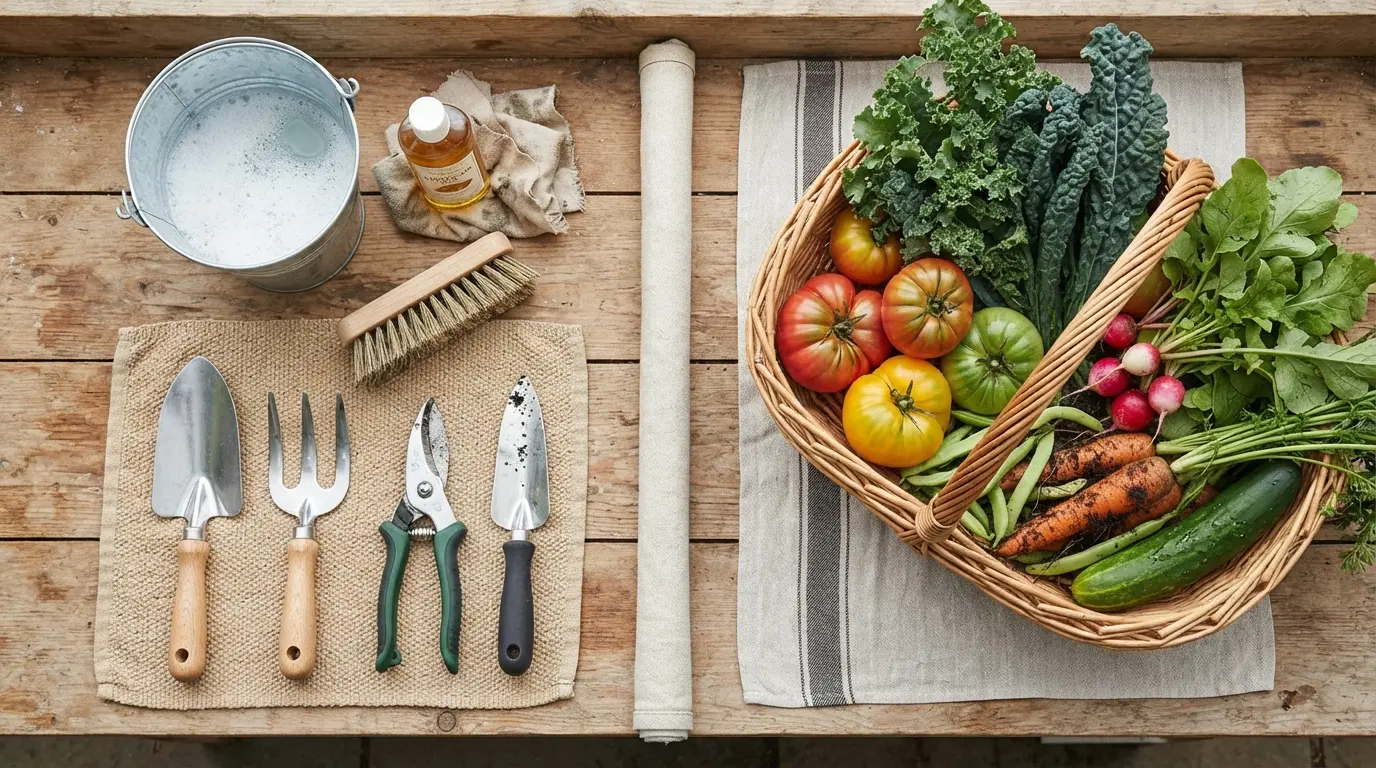
Give freshly picked vegetables, fruit and herbs their own clean container. Avoid carrying them in a bucket that has just held dirty tools or garden chemicals, even if it is the most convenient container beside the shed.
Bring the harvest to a clean food-preparation area rather than placing it on the surface used for washing pots. Wash your hands before handling it. Before preparing or eating homegrown produce, rinse it thoroughly under running drinking-quality water; soap, detergent and household disinfectants do not belong on fruit and vegetables.
A separate harvest basket makes this distinction easy to maintain. Store it somewhere clean between uses, away from compost bags, muddy footwear and the containers used for equipment cleaning.
Make the Indoor Sink Work for the Jobs You Actually Do
A utility sink is useful for rinsing small pots, washing hands and cleaning equipment that has already had its loose soil removed. Before changing any fittings, try your usual tasks at the existing sink. Can you turn a pot without striking the spout? Is there room to put a wet item down? Does water splash onto the floor when you rinse a tray?
When considering kitchen faucets for a garden-facing utility sink, compare spout reach, handle clearance and the size of the basin together. A tall fitting is not automatically more practical: the water still needs to land inside the bowl, and the handle must move freely beside the wall.
A pull-out spray can help direct water around awkward containers, provided the hose moves and returns smoothly. Keep stored items clear of its mechanism beneath the sink. Use a removable strainer to catch remaining debris, and empty it into an appropriate waste container rather than pushing the contents through the drain.
If the household has only one suitable sink, separate jobs in time. Clear away equipment and clean the sink and surrounding surface before returning the area to food preparation.
Know When Washing Tools Is Only the First Step
Soil, sap and plant debris can carry plant pathogens between tools, containers and plants. Remove visible contamination before disinfecting equipment, because remaining dirt can interfere with the treatment.
Choose a method suitable for the item and the plant disease involved, following the disinfectant label and equipment instructions. This is especially relevant after working with diseased plants or bringing tools back from another garden. Do not wait until the end of the day to address equipment that could spread disease to the next plant.
For ordinary storage, allow washed equipment to dry and follow the manufacturer’s care instructions for blades, joints and wooden handles. Keep items awaiting cleaning apart from clean tools so they do not quietly return to the ready-to-use collection.
Give Wet Equipment Somewhere to Dry
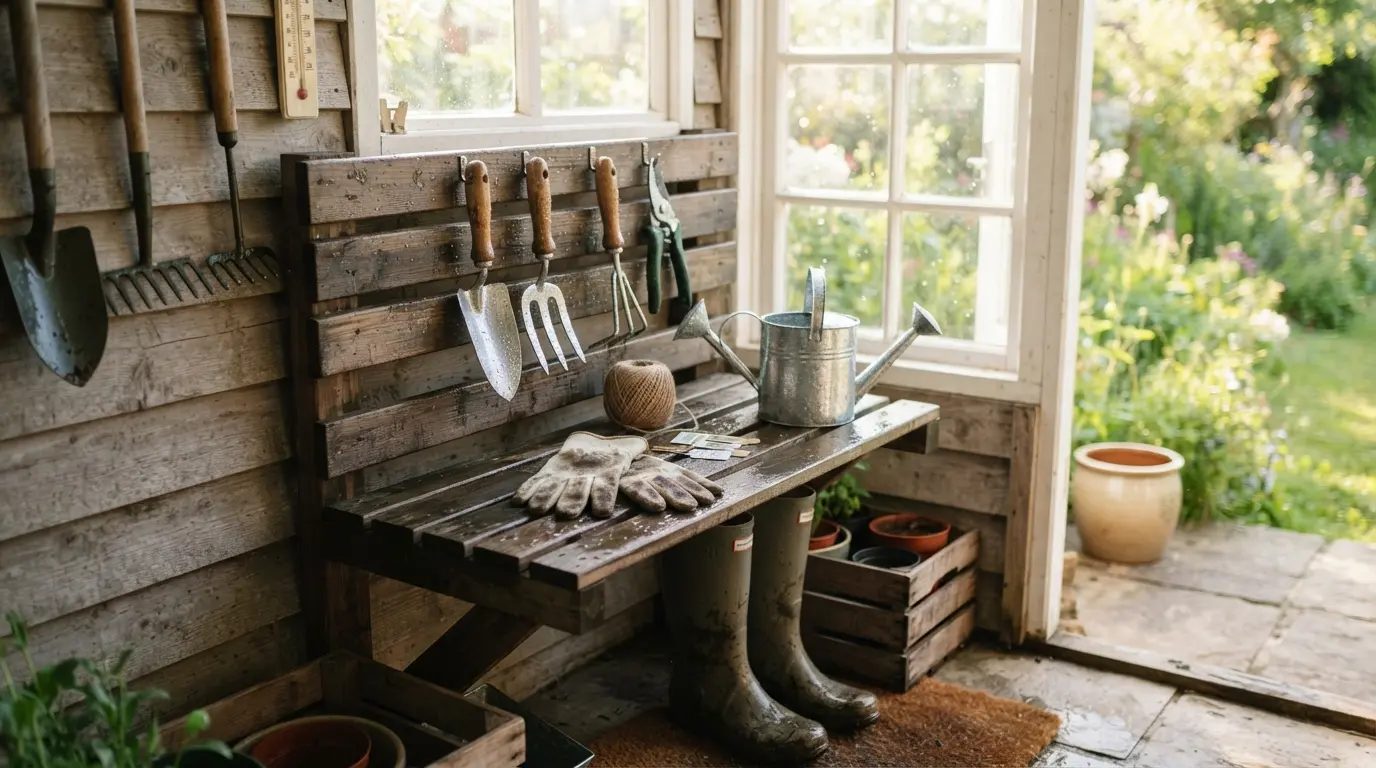
Washing creates a second task: finding space for everything while it dries. Without that space, pots end up nested while wet and gloves get pushed into a closed drawer.
Reserve a small draining area for washed containers. Arrange pots so water can escape, and leave space between trays rather than stacking them tightly. Once dry, sort them by size so the next sowing session starts with usable containers instead of a mixed pile.
Handle gloves according to their care labels. Some tolerate washing; others need a different cleaning method. In either case, avoid treating the bottom of a bucket as permanent storage for damp gloves.
A short row of hooks and a washable drying tray will often be more useful than another deep storage box. Put them close enough to the working area that using them becomes the easiest option.
Stop Muddy Footwear at One Predictable Point
Choose a consistent place to change footwear near the garden entrance. A stable seat makes boot removal easier, while a removable tray contains the grit that falls from the soles. Keep clean indoor shoes within reach so nobody has to cross the room in muddy boots to retrieve them.
Empty and clean the tray regularly. If it stays full of wet soil, every pair of boots returns to the same mess. Allow footwear to dry according to its material and care instructions before putting it into closed storage.
The arrangement should leave the doorway and walking route clear. A narrow bench in the right position can work better than a large storage unit that forces people to squeeze past it carrying plants.
Leave Personal Washing Until the Dirty Equipment Is Put Away
After a long session of digging, dividing perennials or clearing beds, it helps to have a straightforward route from the garden entrance to a washroom. Leave boots, tools and outer layers at their designated places first, then move into the clean part of the house.
If a utility-room renovation includes a shower, compare shower faucets by how comfortably the controls work and how easily the enclosure can be cleaned. A handheld spray may be convenient for personal washing and rinsing the shower surface, but the shower should not become a disposal point for clods of soil or plant waste.
Keep towels and clean clothing outside the splash area, and provide ventilation appropriate to the room. A nearby indoor shower can suit households that spend substantial time gardening, but an existing bathroom can serve the same routine without adding another installation.
Finish by Preparing for the Next Garden Session
Before leaving the cleanup area, check that the sink strainer is empty, the floor is dry and equipment needing attention has not been mixed with usable tools. Put clean containers away once they have dried, and return the brush to its place by the entrance.
Adjust the routine to the day’s work. An evening of deadheading may need little more than tool care and handwashing. Repotting a collection of containers will leave trays, pots and spilled compost to deal with. Wet-weather digging makes the boot brush and drying space more important.
The reward appears the next time you go outside: dry gloves, a clean trowel, an empty harvest basket and a clear doorway. Gardening begins with the plants instead of yesterday’s cleanup.